
You know that feeling when you walk into a beautifully designed hotel room and immediately want to cancel your real life and just live there? That feeling is completely achievable in your own bedroom — and it has almost nothing to do with budget.
The difference between a hotel room that feels luxurious and a bedroom that feels like a room you sleep in comes down to a handful of intentional decisions. I redesigned my own bedroom with this goal in mind two years ago and the difference was immediate, dramatic, and truly changed how much I enjoy being in my own home.
These 12 classy bedroom ideas translate directly from hospitality design into your personal space — and every single one makes your bedroom feel more like the best room you’ve ever stayed in.
1. Invest in Hotel-Quality Bedding
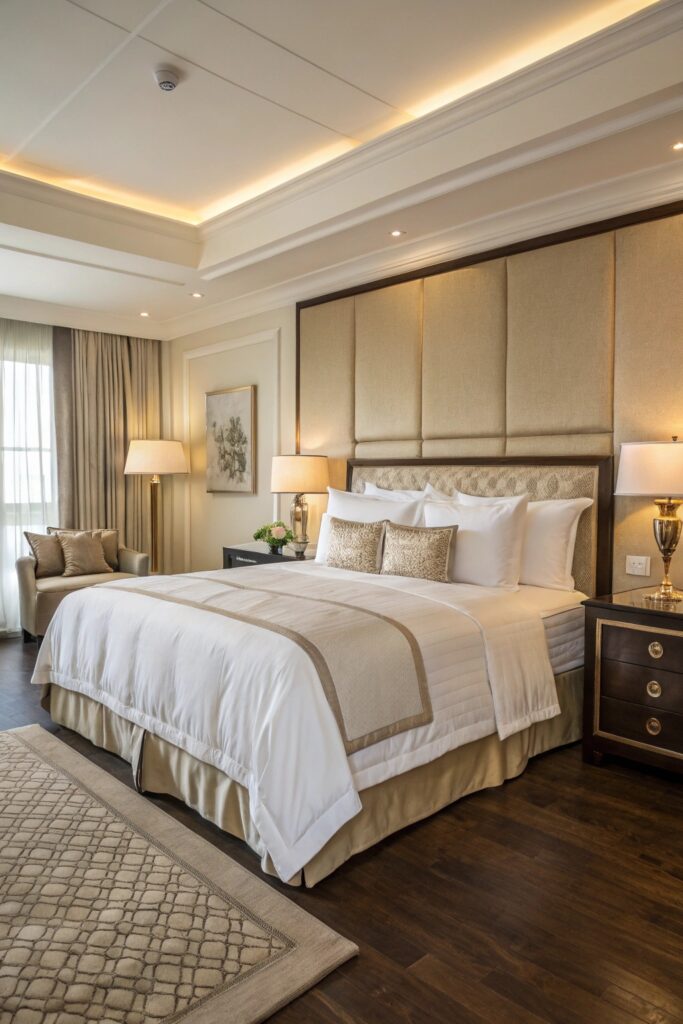
Hotel-quality bedding is the single most impactful upgrade available in any bedroom — and it’s the one area where spending more actually delivers a proportionally better experience that you feel every single night.
What makes bedding feel authentically hotel-luxurious:
- Egyptian cotton or long-staple cotton sheets at 400 to 600 thread count for the right balance of softness and durability
- A down or down-alternative duvet in a weight appropriate for your climate
- A white or cream duvet cover — hotel rooms use white bedding because it reads as clean, fresh, and luxurious universally
- Multiple pillow layers — two sleeping pillows, two euro shams, and two or three decorative pillows create that hotel bed abundance
Wash new sheets before the first use and use a quality fabric softener — the initial softness of good cotton sheets improves significantly after the first few washes. IMO, the combination of 500 thread count Egyptian cotton sheets with a quality down duvet in a crisp white cover creates the single most luxurious sleep experience available in a residential bedroom regardless of what else surrounds it.
2. Install an Upholstered Headboard
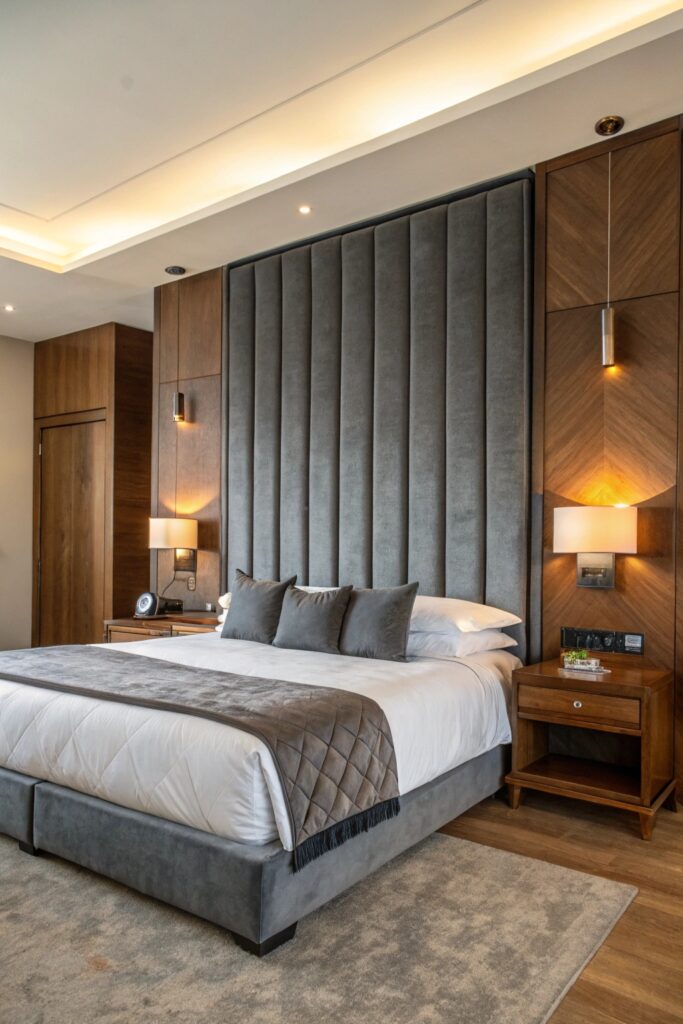
An upholstered headboard instantly gives a bedroom the finished, designed quality that hotel rooms always have — and it provides the practical benefit of a comfortable surface to lean against while reading or watching television in bed.
Upholstered headboard options worth considering:
- Floor-to-ceiling headboard panels that extend from the mattress to the ceiling for maximum drama
- A standard height upholstered headboard at 50 to 60 inches for a classic hotel look
- Channel or tufted upholstery for texture and visual interest on the headboard surface
- Neutral upholstery fabrics — cream linen, warm gray velvet, or camel bouclé — that work with any bedding palette
Mount the headboard directly to the wall rather than attaching it to the bed frame — wall-mounted headboards look more substantial and stay perfectly stable rather than shifting with the mattress. A floor-to-ceiling upholstered headboard in warm gray velvet against a neutral wall creates the bedroom backdrop that high-end hotel room photography consistently uses. 🙂
3. Use a Neutral, Cohesive Color Palette
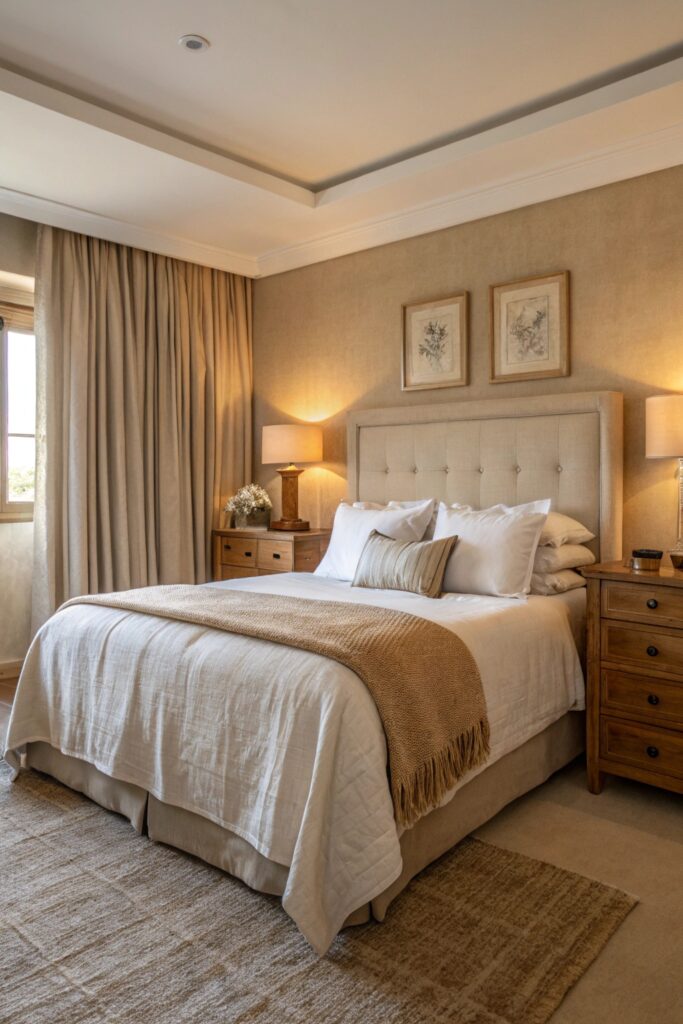
Hotel rooms feel calm and luxurious partly because they use tight, cohesive color palettes — typically two or three neutral tones that work together rather than competing with each other.
Neutral palettes that create a hotel bedroom feel:
- Warm white and camel — clean, warm, universally flattering in bedroom lighting
- Soft gray and ivory — cool, sophisticated, works beautifully with dark wood accents
- Warm greige and cream — the most versatile neutral combination available
- Deep navy and white — more dramatic, works for a boutique hotel aesthetic
Choose your palette and repeat each color across multiple surfaces — walls, bedding, curtains, and upholstery all sharing the same two or three tones creates the visual cohesion that makes hotel rooms feel so deliberately designed. The discipline of limiting your color palette is what separates a designed bedroom from one that simply contains furniture and belongings.
4. Add Layered, Dimmable Lighting
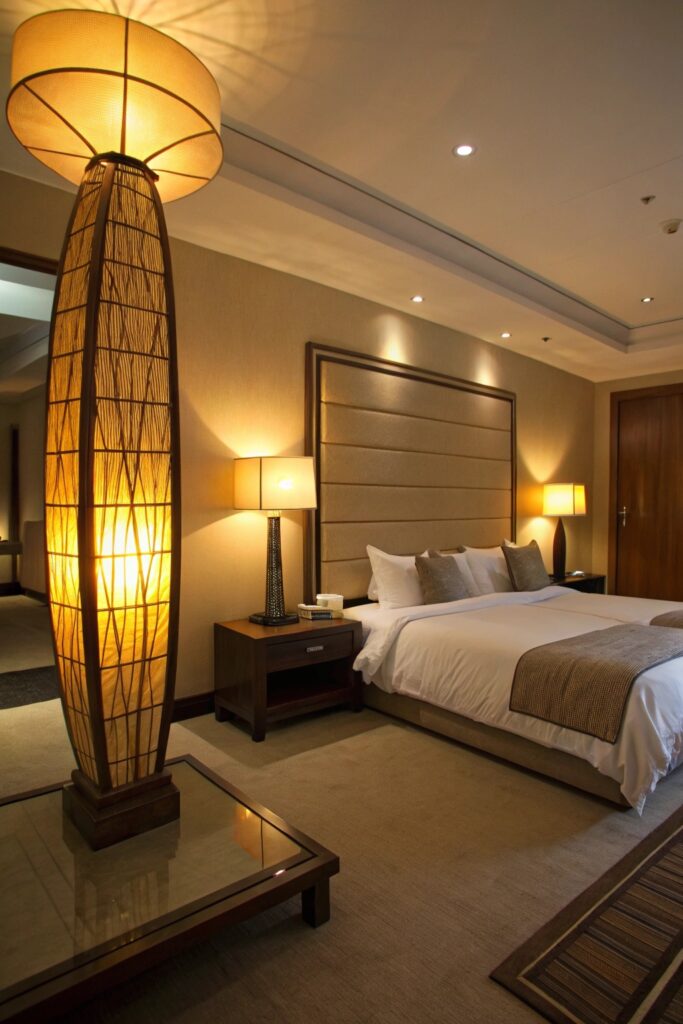
Hotel rooms never rely on a single overhead light — and implementing the same layered lighting approach in your bedroom transforms the space from functional to truly atmospheric at every time of day.
Build a hotel-style bedroom lighting plan:
- A dimmer switch on all overhead lighting for full intensity control
- Bedside table lamps or wall sconces mounted at reading height on both sides of the bed
- A floor lamp in a corner for soft ambient fill light
- Under-bed LED strip lighting for a subtle, dramatic nighttime effect
Use warm 2700K bulbs throughout — the amber tone creates the flattering, relaxing atmosphere that hotel rooms specifically engineer for their guests. Harsh cool white light makes even the most expensive bedroom feel clinical rather than luxurious. A bedroom where every light source uses a dimmer switch noticeably changes daily experience — from bright morning functionality to low, warm evening ambiance with a single adjustment.
5. Install Floor-to-Ceiling Curtains
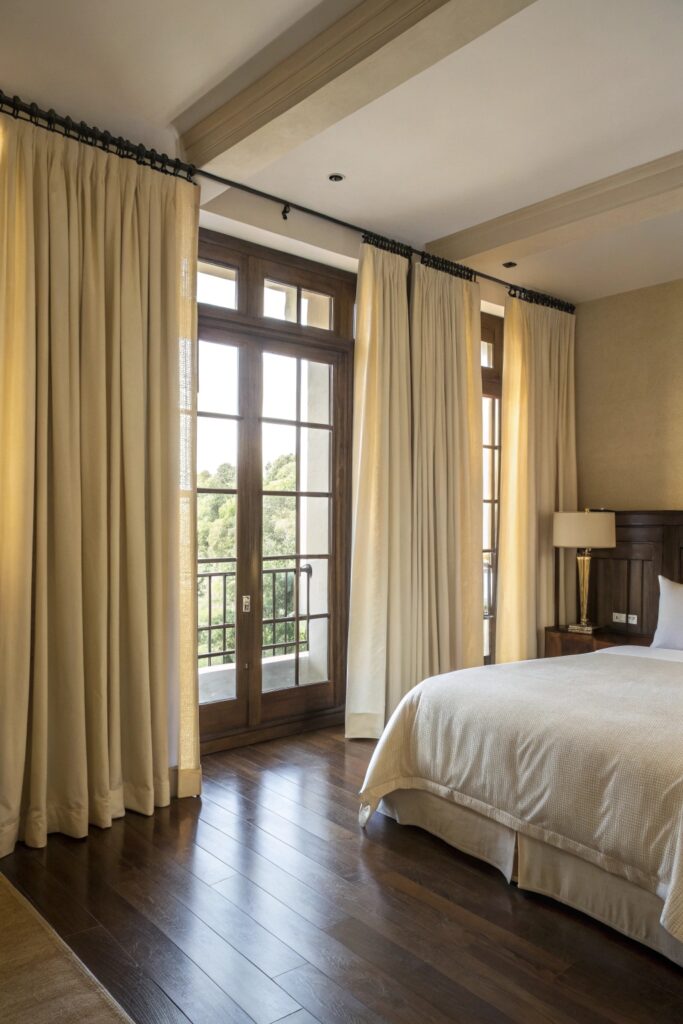
Floor-to-ceiling curtains make every bedroom look taller, larger, and more thoughtfully designed — and the visual difference between curtains hung at the window frame and curtains hung near the ceiling is dramatically disproportionate to the effort required.
Curtain installation guidelines for a hotel bedroom feel:
- Mount the rod 4 to 6 inches below the ceiling rather than at the window frame
- Extend the rod 8 to 10 inches beyond each side of the window for a full, generous look
- Choose floor-length panels that just graze or slightly puddle on the floor
- Blackout lining behind decorative fabric panels for genuine light control
Linen, velvet, and thick cotton are the best curtain fabrics for a hotel aesthetic — they drape beautifully, read as luxurious, and provide real privacy. Sheer panels are lovely but a bedroom truly needs blackout capability for quality sleep, which means layering sheers with lined panels or choosing a lined curtain from the beginning.
6. Style a Bench at the Foot of the Bed
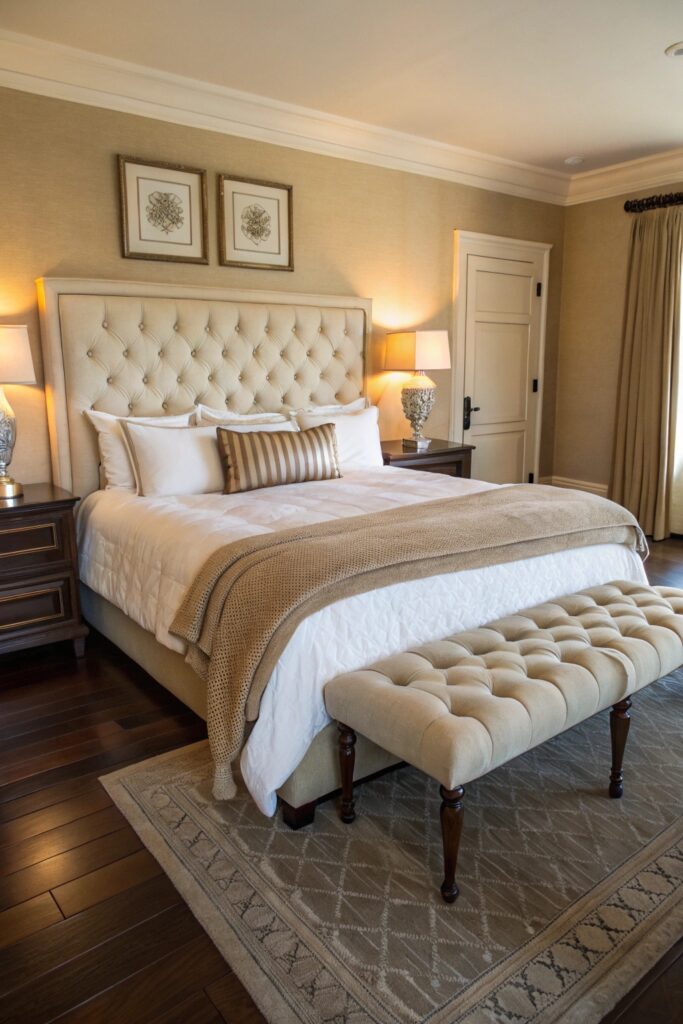
A bench at the foot of the bed is the quintessential hotel bedroom detail — practical for sitting while putting on shoes, beautiful as a design element, and the finishing touch that makes a bedroom look truly complete.
Bench options that suit a hotel bedroom aesthetic:
- An upholstered bench in velvet or linen in a complementary color to the headboard
- A tufted leather bench for a more traditional, luxurious look
- A wooden bench with cushion for a more casual, contemporary feel
- A storage ottoman that combines the bench aesthetic with hidden storage
Size the bench to approximately two-thirds the width of the bed — a bench that spans the full bed width looks too large and overwhelms the space, while a very small bench looks undersized and unconvincing. Add a folded throw blanket draped across one end for the layered, styled quality that hotel rooms achieve with this detail.
7. Keep Surfaces Intentionally Clear
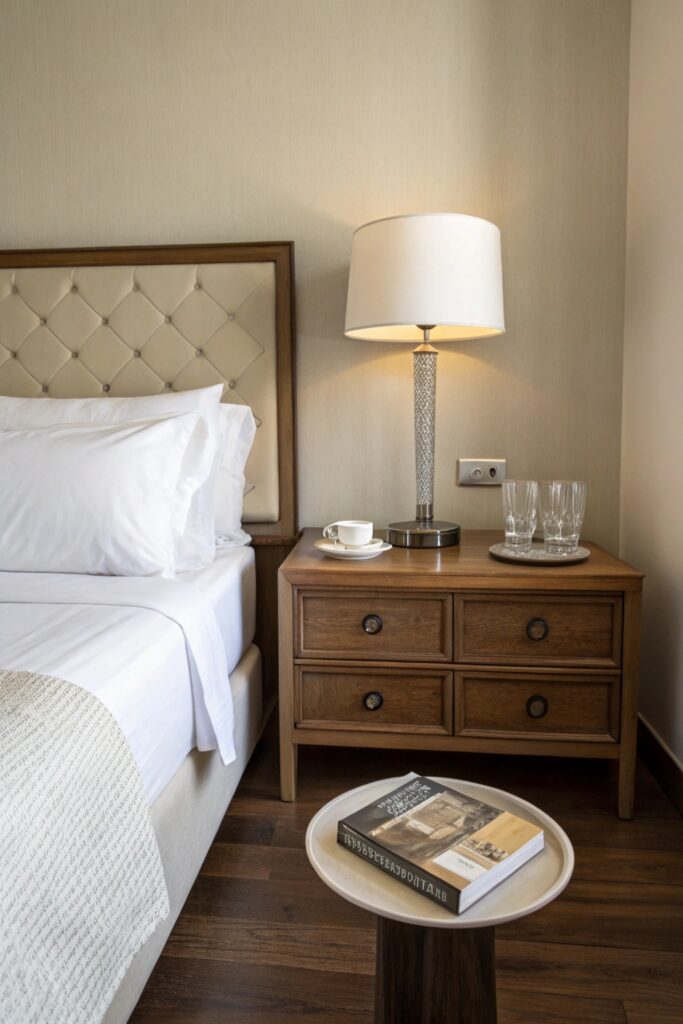
Hotel rooms feel spacious and calm partly because surfaces are deliberately empty — and replicating this discipline in your bedroom creates the same immediate sense of order and luxury.
Surface management for a hotel bedroom feel:
- Nightstands with only essentials — a lamp, a small plant, a book, and a glass of water
- No clutter on the dresser — a tray with a few meaningful objects maximum
- No clothing on chairs or the bench — everything has a dedicated storage location
- Nothing stored under the bed except in proper storage containers
The psychological impact of clear surfaces is well-documented — visual clutter creates cognitive load that prevents genuine relaxation. A bedroom where every surface is intentionally edited communicates the same message as a hotel room: this space exists for rest, and everything in it serves that purpose. That discipline is free and available immediately.
8. Add a Statement Mirror
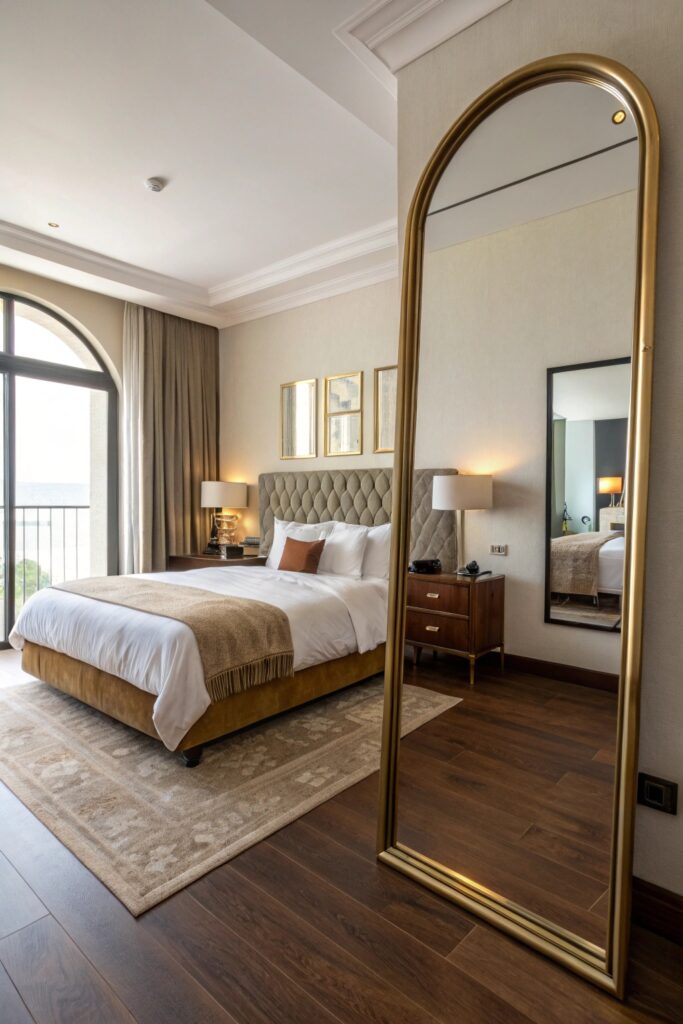
A large, beautifully framed mirror does multiple things simultaneously in a hotel-style bedroom — it expands the perceived space, reflects light, provides a functional full-length dressing surface, and adds a decorative focal point that bare walls lack.
Mirror styles that suit a classy bedroom:
- A full-length arched mirror leaned against the wall for a casual, editorial look
- A large rectangular mirror mounted on the wall above the dresser
- A vintage or ornate gold-framed mirror for a boutique hotel, maximalist aesthetic
- Two matching mirrors flanking the headboard for a symmetrical, dramatic effect
Position the mirror to reflect either natural light from a window or a beautiful view within the room — never position a bedroom mirror to reflect a cluttered or unattractive portion of the room. The mirror should double the most beautiful element visible from where it hangs, which amplifies the room’s best qualities rather than highlighting its weaknesses. FYI, a large arched mirror leaned against the wall beside a well-dressed bed creates a bedroom photograph that looks strikingly editorial.
9. Choose Quality Wood Furniture with Clean Lines
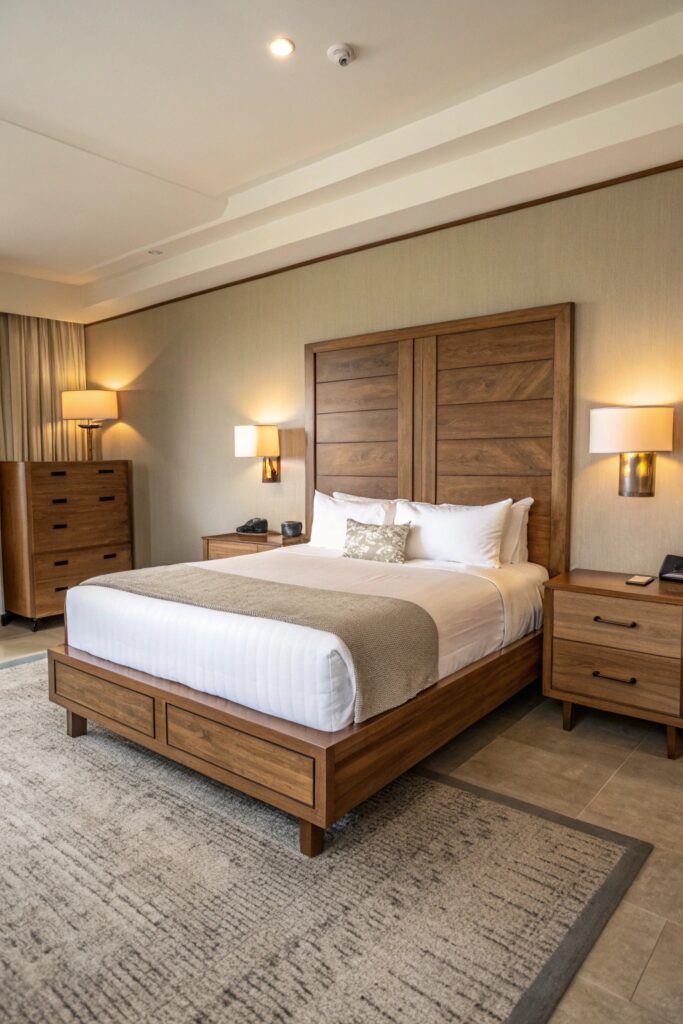
Hotel furniture succeeds because it has clean, simple lines that don’t compete with each other — and choosing bedroom furniture with the same restraint creates a room that feels curated rather than filled.
Furniture choices that create a hotel bedroom feel:
- A platform bed frame in natural wood or upholstered finish with minimal decorative detail
- Two matching nightstands at the same height as the mattress top
- A dresser with simple hardware — brushed brass, matte black, or simple chrome
- Furniture in consistent tones — all warm wood, all dark wood, or all painted
Consistency of finish across all bedroom furniture is the detail that separates a designed room from a collected one — when every piece shares the same wood tone or painted finish, the room reads as intentionally assembled rather than gradually accumulated. Even inexpensive furniture looks significantly more elevated when all pieces share a consistent finish and similar design language. :/
10. Create a Reading or Relaxation Corner
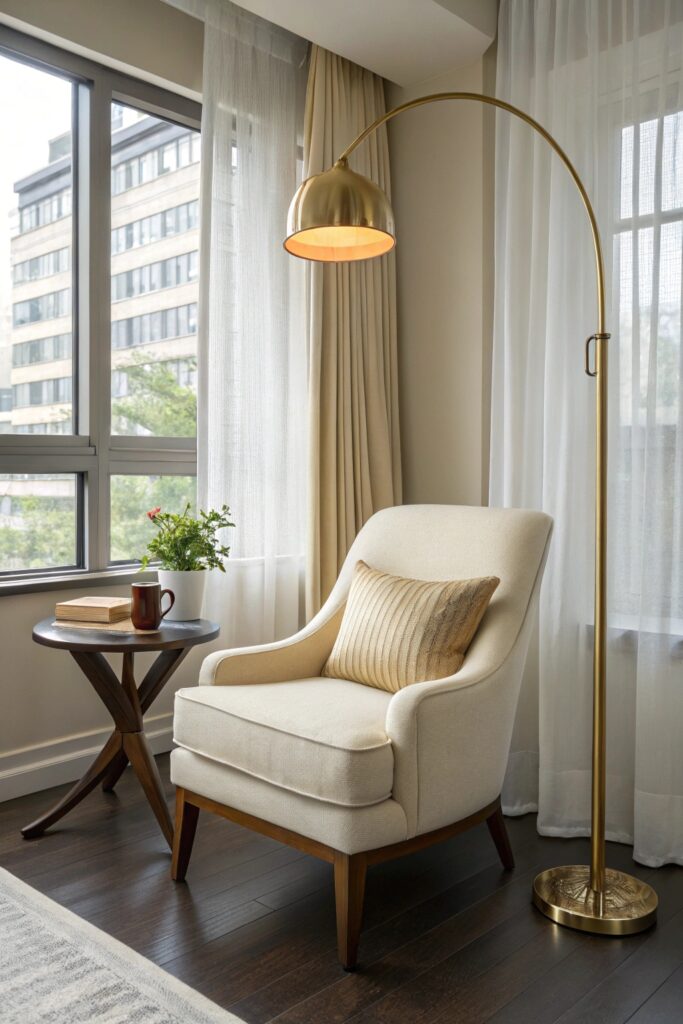
Every great hotel suite has a designated relaxation area beyond the bed — a chair, a lamp, and a small table that creates a second distinct zone within the same room for sitting, reading, or simply being somewhere other than lying down.
Elements that make a bedroom relaxation corner truly useful:
- A comfortable armchair with proper back support and generous seat depth
- A floor lamp positioned directly beside the chair for adequate reading light
- A small side table for a drink, a book, and whatever else you need within reach
- A small plant or artwork nearby to make the corner feel like a distinct space
A corner reading chair transforms how you use your bedroom — it becomes a place to decompress before sleep, to read without disturbing a partner, and to simply sit in a beautiful space doing nothing in particular. That last use is more valuable than it sounds. Position the chair to face a window or an attractive portion of the room for the best visual experience from the seated position.
11. Incorporate Scent for a Complete Sensory Experience
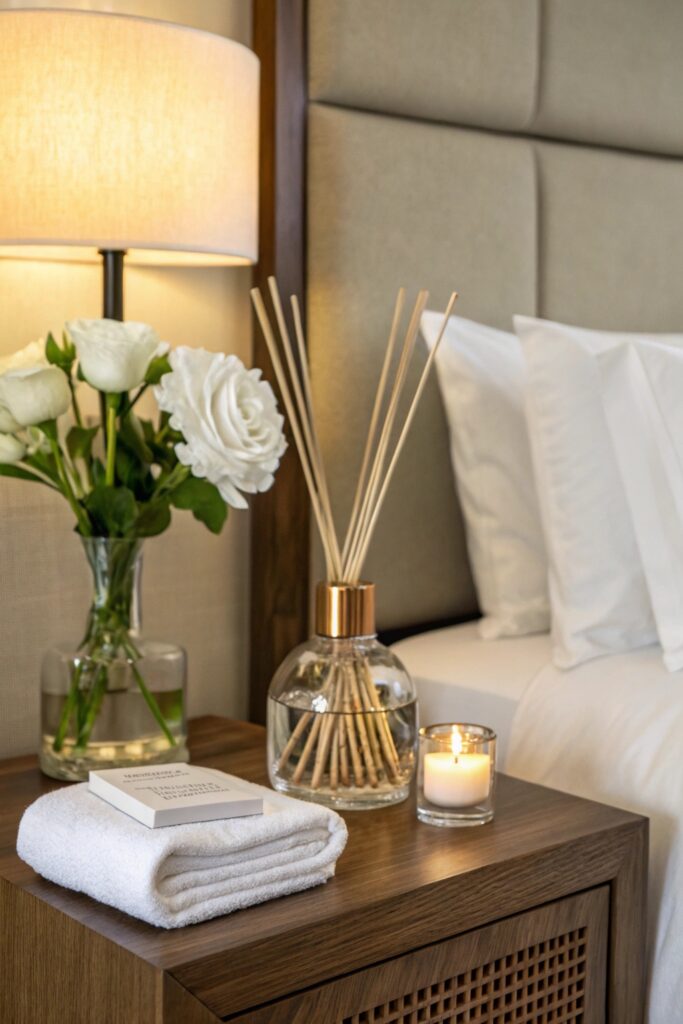
Great hotel rooms smell distinctive and intentional — and adding a consistent, beautiful fragrance to your bedroom completes the sensory experience that visual design alone cannot fully deliver.
Scent options for a hotel bedroom atmosphere:
- A reed diffuser with a clean, sophisticated fragrance — white tea, cedarwood, or vetiver work beautifully in bedrooms
- High-quality candles burned for an hour before sleep for both scent and atmosphere
- Linen spray applied directly to pillows and sheets before making the bed
- Sachets inside the linen closet so fresh bedding carries a subtle fragrance from storage
Choose one scent family and keep it consistent throughout your bedroom — mixing multiple fragrances creates sensory confusion rather than luxury. Hotels invest significantly in signature scent programs because scent creates powerful emotional associations and memories. Your bedroom should smell like somewhere you want to be — which is a surprisingly achievable goal with a $30 reed diffuser and 20 minutes of decision-making.
12. Display Art That Feels Deliberate and Personal
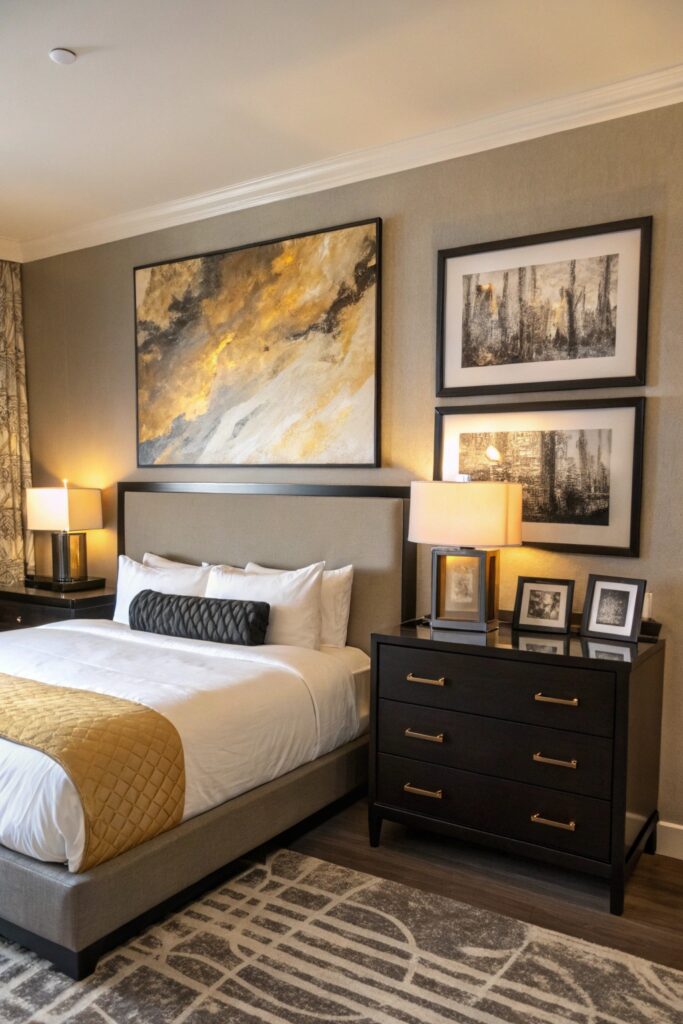
Hotel rooms always have art on the walls — but the art exists to complement the room rather than dominate it — and applying the same intentionality to your bedroom artwork creates a space that feels complete and considered.
Art selection and placement for a hotel bedroom:
- One large statement piece above the headboard or on the main feature wall
- Two matching pieces flanking the headboard symmetrically for a formal, boutique hotel look
- A single large abstract print in the room’s neutral palette above the dresser
- Black and white photography for a sophisticated, timeless hotel aesthetic
Frame all artwork consistently — same frame finish, whether all black, all natural wood, or all gold — for the visual cohesion that makes individual pieces read as a considered collection. Art above the headboard should span at least 60 percent of the headboard width to maintain proper visual proportion. Artwork that’s too small for the wall it occupies makes an otherwise elegant bedroom feel slightly unresolved.
Your Hotel Bedroom Starts Tonight
A bedroom that feels like a luxury hotel room doesn’t require a complete renovation or a designer’s budget. Hotel-quality bedding, layered lighting, clear surfaces, floor-to-ceiling curtains, and one beautiful statement piece deliver most of the transformation available.
Start with your bedding — it’s the most-used element in the room and the one that impacts sleep quality most directly. Add a dimmer switch this weekend. Hang your curtains higher. Clear your nightstand to only essentials.
You spend roughly a third of your life in your bedroom. It should feel like the best room in any building you’ve ever entered. That standard is entirely achievable — start tonight.