
A moody farmhouse kitchen balances dark, dramatic surfaces with genuine warmth — wood, textiles, warm lighting — which is what separates this style from simply painting a kitchen dark and calling it farmhouse.
Below are 10 elements that build this look, with real costs and material notes for each.
1. Dark, Charcoal Cabinetry
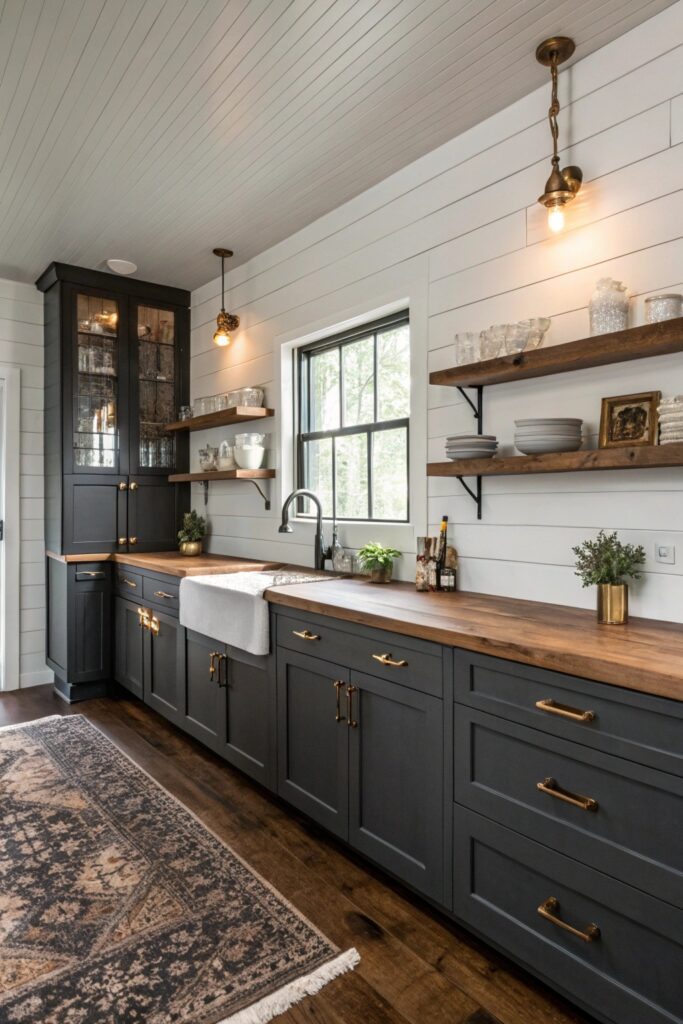
Cabinetry in deep charcoal or near-black creates the foundational moody feel this style depends on, and a matte rather than glossy finish specifically reads as more sophisticated and better hides everyday fingerprints and smudges.
Painting existing cabinets rather than replacing them is a considerably more budget-friendly way to achieve this look, typically running $300-800 in materials and labor for a full kitchen versus several thousand for new cabinetry.
2. Black Matte Fixtures and Faucets
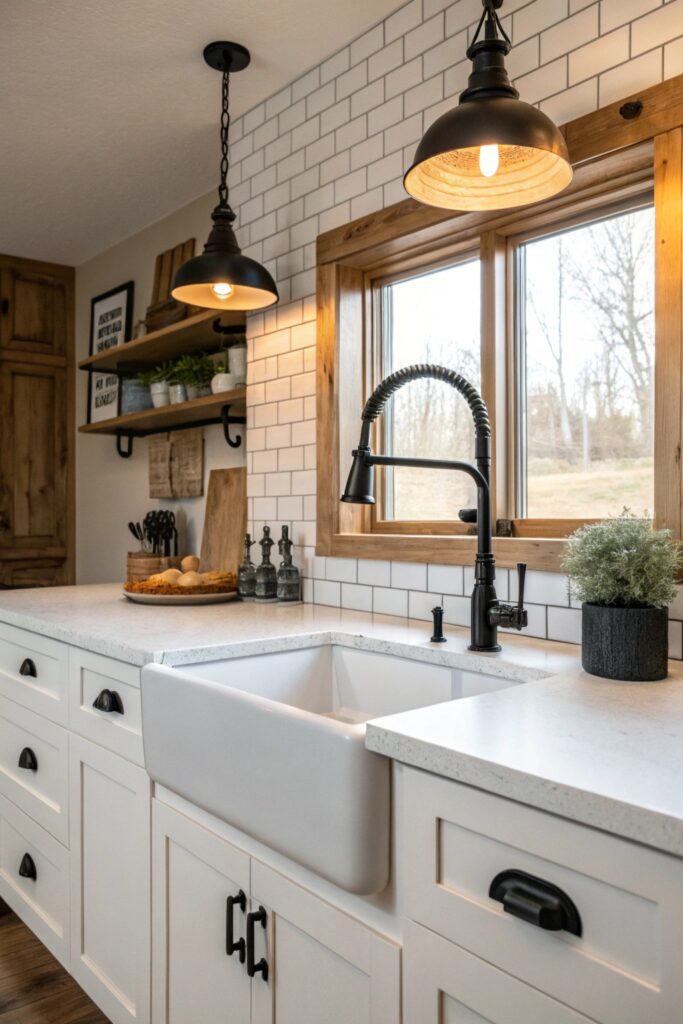
Matte black faucets, cabinet hardware, and light fixtures ($40-150 depending on the piece) reinforce the dark, moody palette in the kitchen’s functional details, not just the larger cabinetry surfaces.
Matte finishes specifically show water spots less than polished chrome, which is a genuine practical advantage at a kitchen sink that sees constant water exposure.
3. Warm Wood Beams Overhead
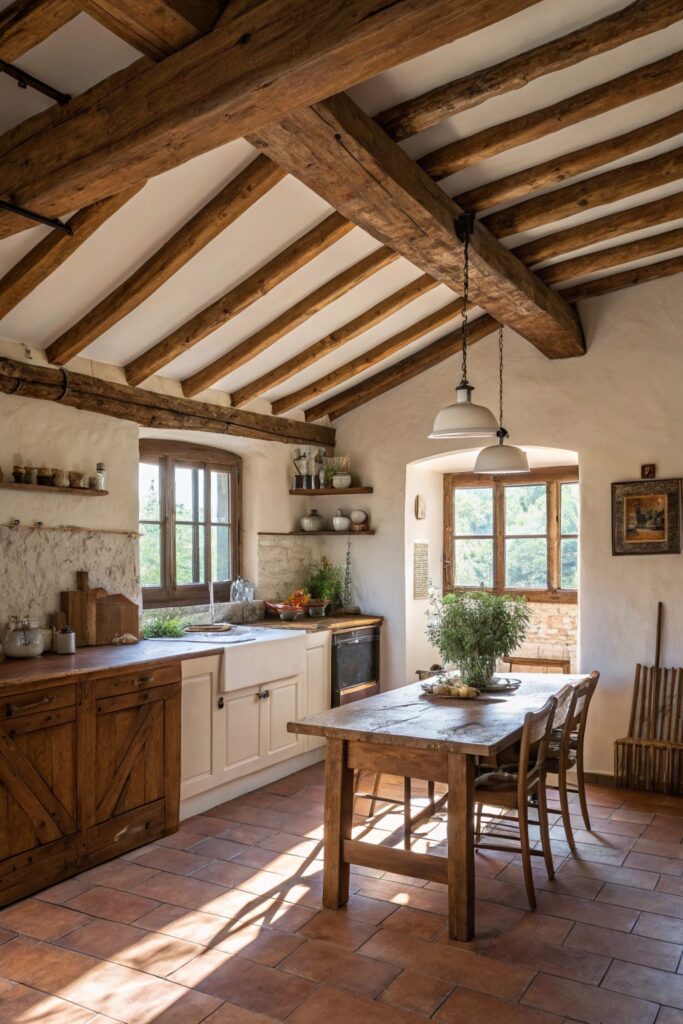
Exposed or added wood ceiling beams bring genuine architectural warmth that balances the darker cabinetry and walls, preventing the space from reading as too heavy or cave-like.
Faux beam options (lighter, hollow, and considerably easier to install than structural wood) achieve a similar visual effect for kitchens without existing structural beams to expose.
4. Deep Green Accent Walls
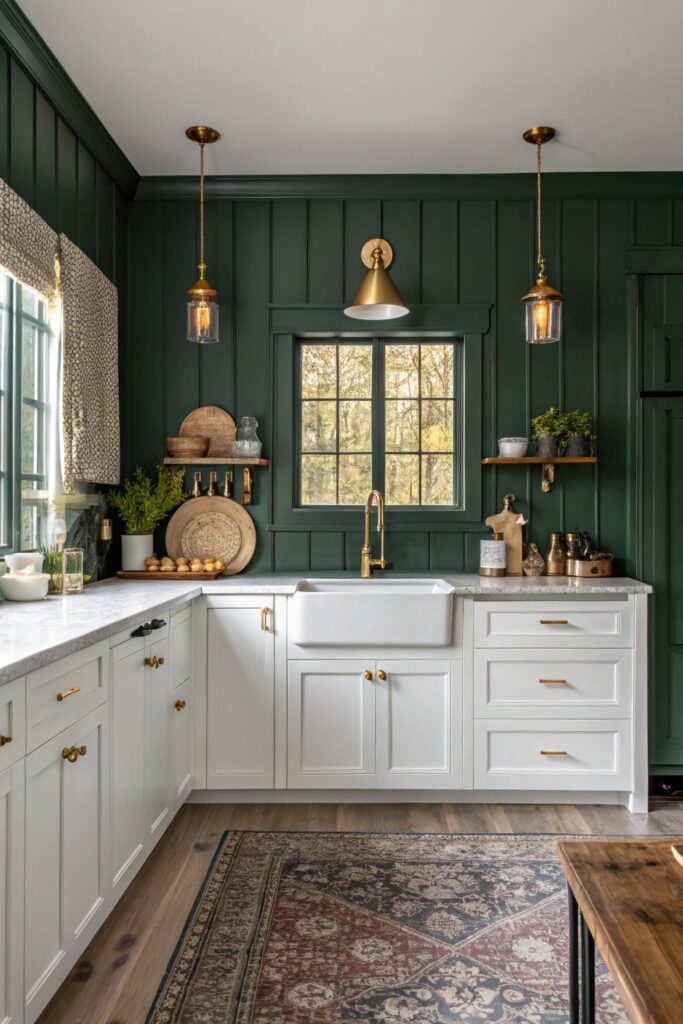
A rich forest or hunter green wall, often on a single feature wall rather than throughout, adds color depth that complements dark cabinetry without competing against it.
This works particularly well behind open shelving or as a backdrop for a range hood, giving the color a defined, contained area rather than spreading across the whole room.
5. Vintage-Inspired Lighting
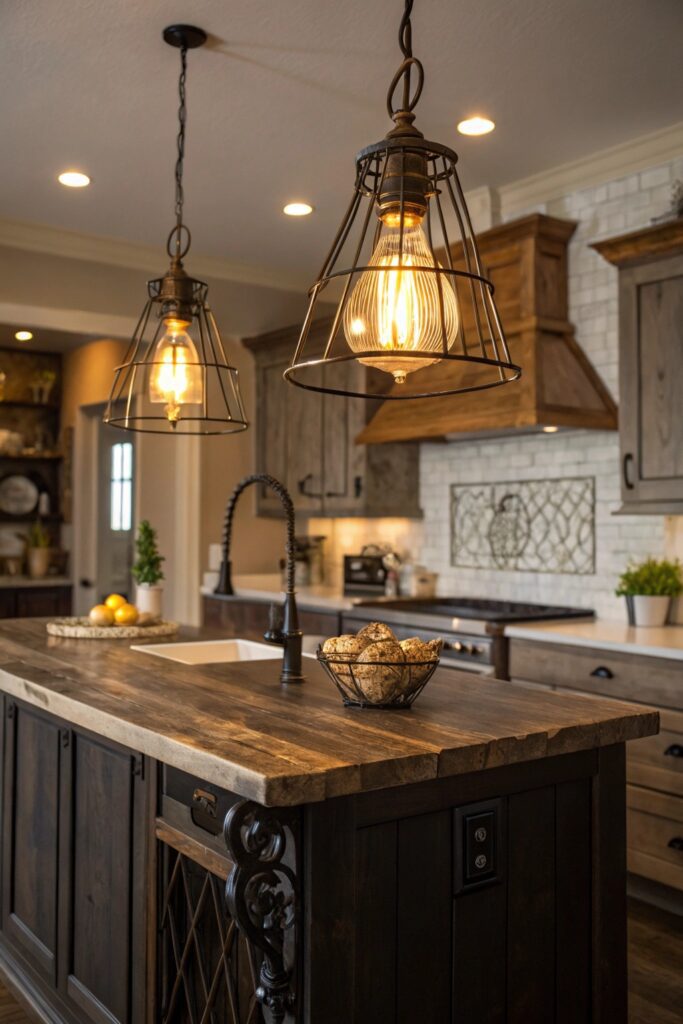
Pendant lights or sconces with an aged brass or black iron finish ($60-150 each) add period character that ties into the farmhouse aesthetic’s historical reference points.
Warm-toned bulbs (2700K or lower) matter even more in a moody kitchen than in a lighter one, since the darker surfaces absorb more light and need warmer color temperature to avoid feeling dim or cold.
6. Open Shelving With Character
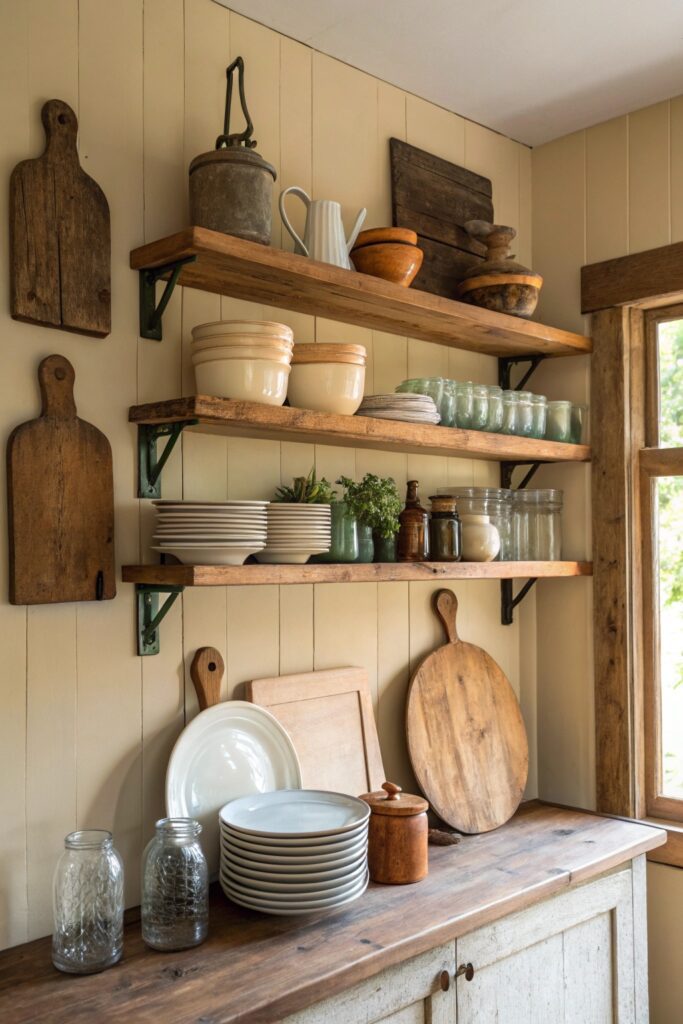
Wood open shelving, styled with a mix of ceramics, glassware, and a few plants, adds genuine personality and breaks up what might otherwise be an unbroken run of dark cabinetry.
Keep shelving styled with some negative space rather than fully packed, which reads as more curated and prevents the display from competing visually with the room’s darker overall palette.
7. Soapstone or Dark Stone Countertops
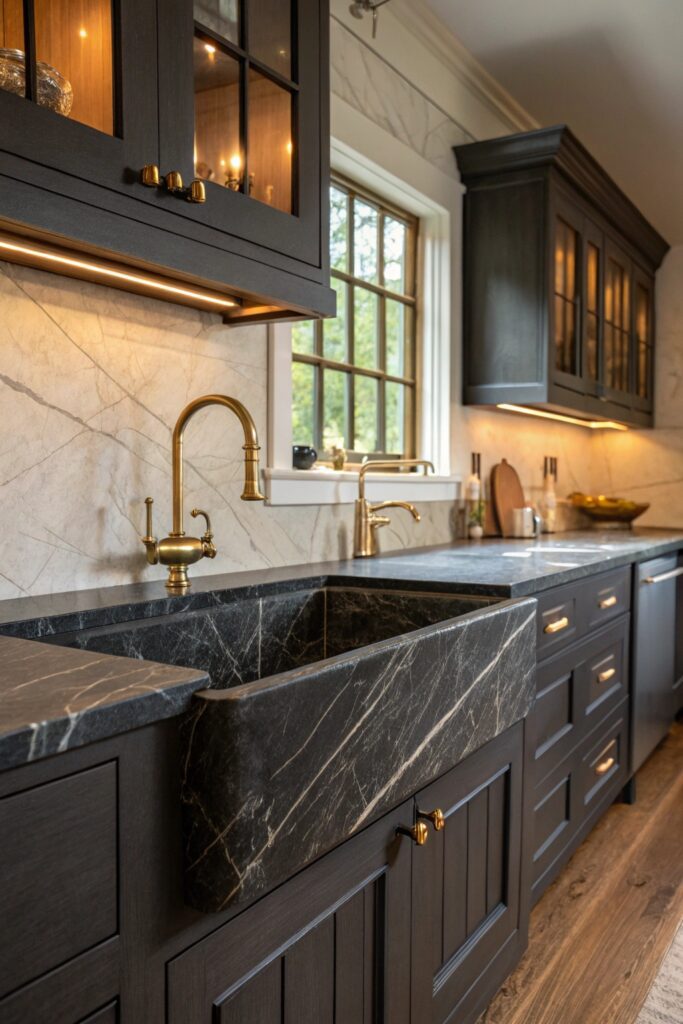
Soapstone ($70-120 per square foot installed) or a dark quartz alternative continues the moody palette onto the counter surface, and soapstone specifically develops a natural patina over time that many homeowners consider part of its appeal.
Quartz alternatives in a similar dark tone offer comparable visual impact at a lower maintenance requirement, since soapstone needs periodic oiling to maintain its characteristic deep color.
8. Textured Backsplash Tile
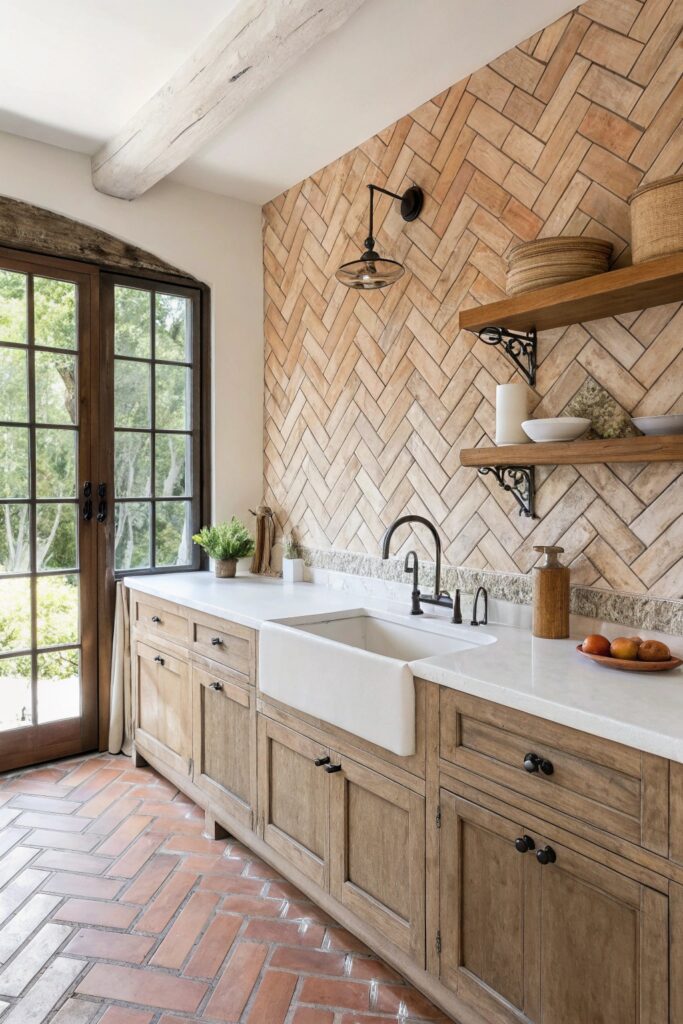
A textured or handmade-look tile in a dark or deep tone ($8-20 per square foot) adds dimension to the backsplash that a flat, glossy tile doesn’t provide, working especially well against matte cabinetry.
Zellige-style tile specifically, with its characteristic surface irregularity, brings genuine artisanal texture that pairs naturally with the overall farmhouse character this style aims for.
9. Layered Textiles and Natural Materials
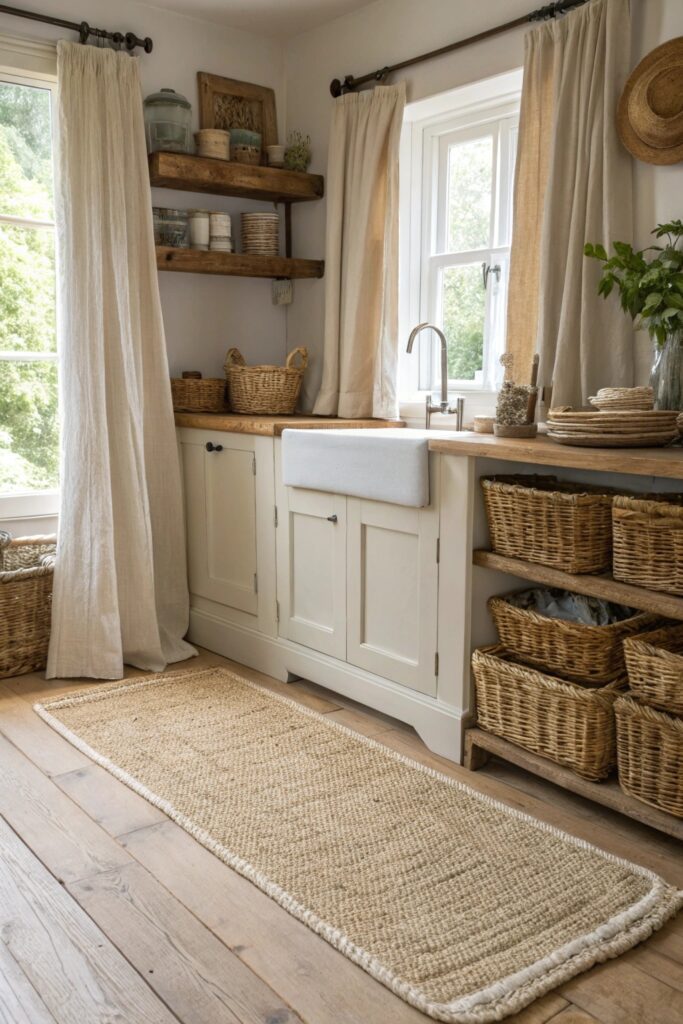
Woven baskets, linen dish towels, and a jute or wool runner add warmth and texture that balances the harder surfaces (stone, tile, dark wood) that dominate most kitchen spaces.
This is one of the lowest-cost ways to soften an otherwise dark, hard-surfaced kitchen, and textiles are easy to swap seasonally without any permanent commitment.
10. A Statement Farmhouse Sink in a Dark Finish
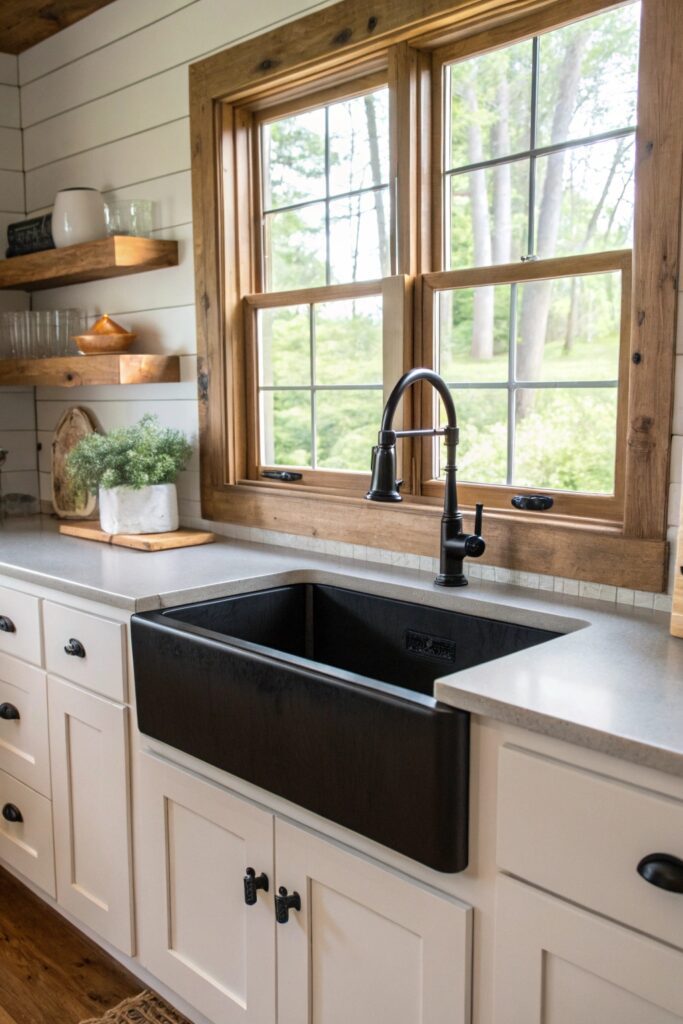
A fireclay farmhouse sink in black or a dark charcoal finish ($400-900) serves as a genuine focal point at the kitchen’s most-used workstation, continuing the moody palette into a functional fixture rather than treating it as an afterthought.
Fireclay specifically resists staining and scratching better than cast iron alternatives, which matters for a sink finish expected to hold its dark color through years of daily use.
Balancing Dark and Warm So the Room Doesn’t Feel Heavy
The most common mistake in a moody kitchen is letting the dark elements dominate without enough counterbalancing warmth — a kitchen with dark cabinets, a dark countertop, and cool-toned lighting all at once can genuinely feel oppressive rather than intentionally moody, regardless of how well each individual choice was made.
A reasonable rule of thumb: for every dark surface (cabinets, counters, floors), make sure at least one warm element sits nearby — a wood shelf, a brass fixture, a woven basket — so the eye has somewhere warm to rest rather than moving from one dark surface directly to another.
Where to Start If You’re Working With a Full Budget
Cabinetry color has the single largest visual impact of any change on this list, since it covers the most surface area in most kitchens — if you’re only making one change, repainting or refacing cabinets in a dark charcoal tone will shift the room’s whole character more than any other individual update.
Lighting is worth tackling second, both for the warm bulb temperature and any fixture updates, since a moody color palette genuinely depends on the right lighting to read as cozy rather than dim — this is the detail that most often gets underestimated relative to its actual impact on how the finished room feels.
Final Thoughts
Cabinetry color and lighting warmth matter most if you’re prioritizing only a couple of these changes, since both affect how the entire kitchen feels more than any individual fixture or material choice. Layer in wood tones and textiles once the darker foundational elements are in place, since that balance is what keeps the space feeling warm rather than heavy.