
A coffee table does more visual work in a living room than its size suggests, since it typically sits at the center of the seating arrangement and directly affects how the whole room reads.
Below are 15 coffee table approaches, with real costs and practical notes for each.
1. Go Bold With a Live-Edge Wood Table
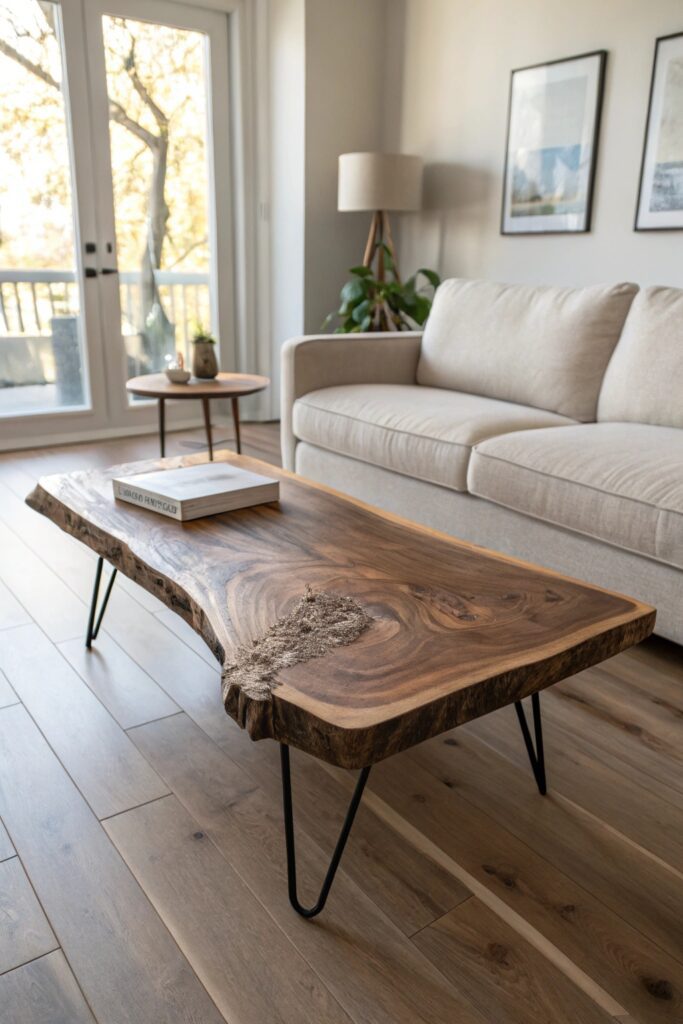
A live-edge table ($200-600 depending on wood species and size) keeps the tree’s natural bark-line edge intact, making each piece genuinely unique in a way manufactured furniture can’t replicate.
Solid wood live-edge pieces are considerably heavier and pricier than manufactured alternatives, but they’re also more durable long-term and can be refinished if the surface shows wear over years of use.
2. Try a Glass-Top Table for an Airy Feel
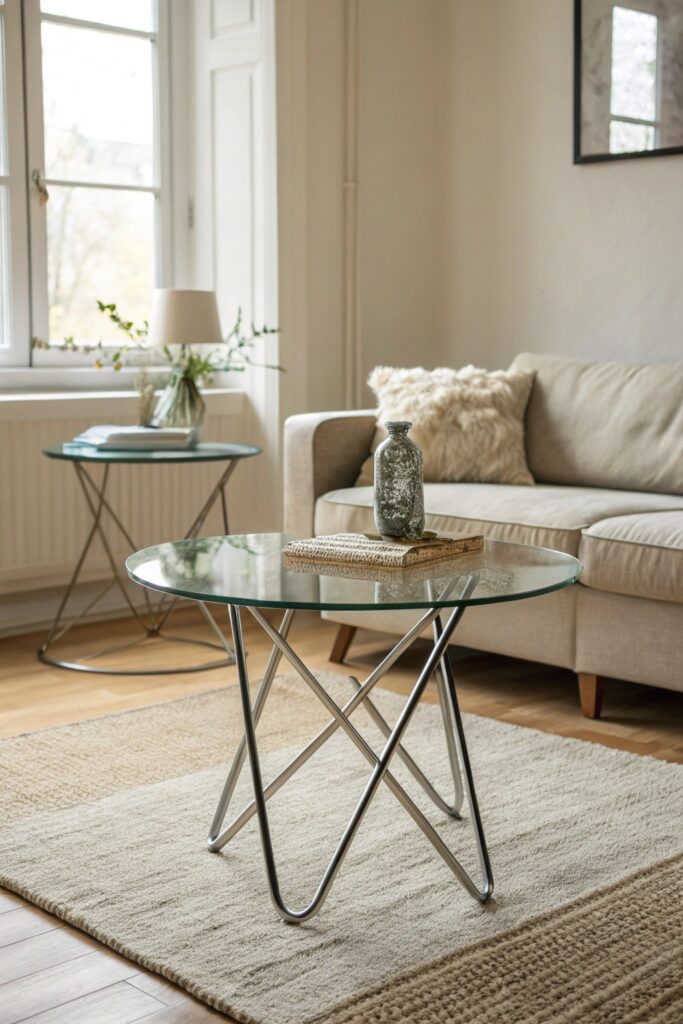
A glass-top table visually takes up less space than a solid one, which matters in a smaller living room where a bulkier table can make the whole seating area feel more cramped.
Tempered glass specifically is worth confirming before purchase, since it’s considerably more shatter-resistant than standard glass and is the safer choice for a table that sees regular daily use and occasional impact.
3. Layer Two Nesting Tables Instead of One
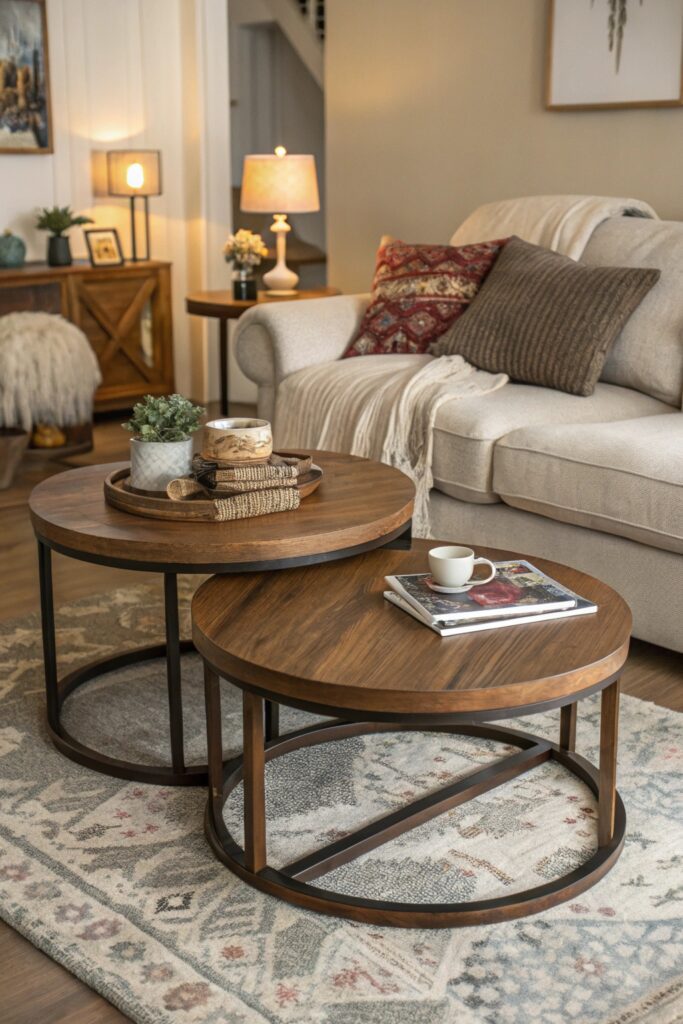
A nesting table set ($100-250) offers more flexible surface area than a single fixed table, since the smaller table can be pulled out for extra guests or additional surface space and tucked away when not needed.
This is a genuinely practical choice for smaller living rooms specifically, where the smaller nested table takes up minimal floor space when stored under the larger one.
4. Choose a Round Table for Better Flow
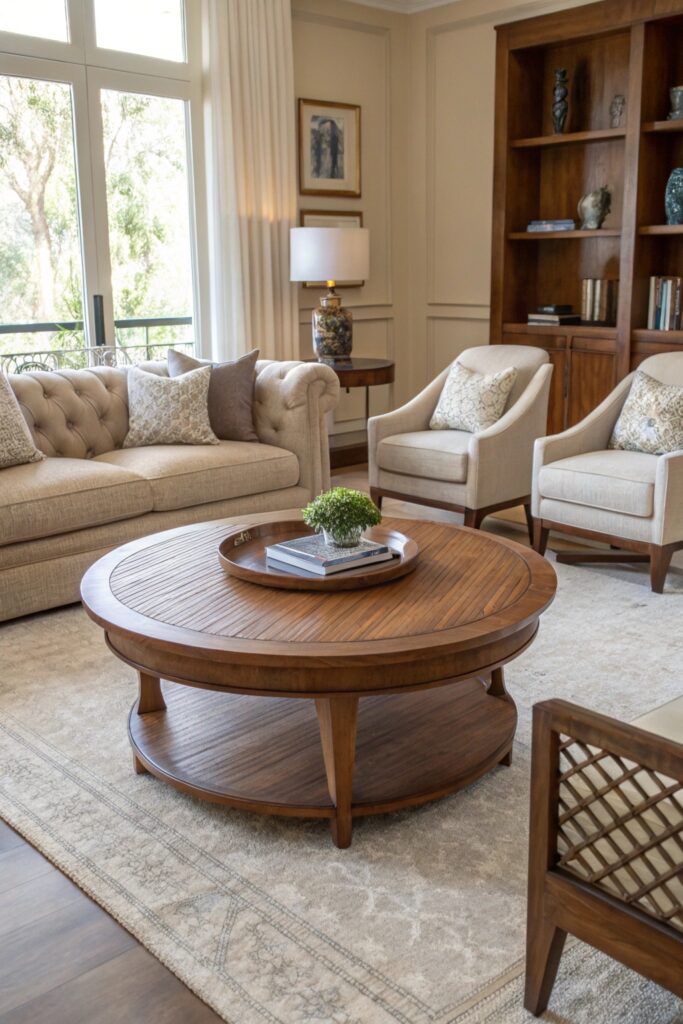
A round table eliminates sharp corners, which matters for both genuine safety (particularly with young children in the home) and traffic flow, since rounded edges are easier to navigate around in a tighter seating arrangement.
Round tables also tend to read as softer and less visually dominant than a large rectangular table of similar surface area, which can help a smaller room feel less boxy overall.
5. Add a Statement Marble Top
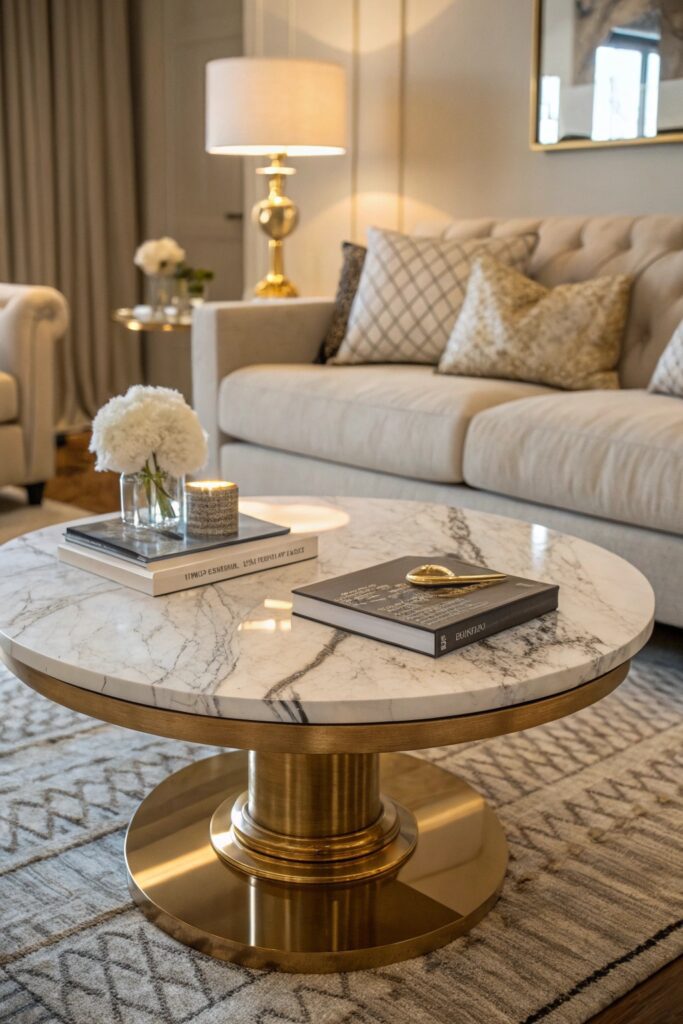
A genuine marble-top table ($300-800) brings real luxury and visual weight, while marble-look alternatives in porcelain or engineered stone ($150-350) deliver a similar appearance at a lower cost and with less maintenance.
Genuine marble requires periodic sealing to resist staining, which is worth factoring into the ongoing cost and care commitment before choosing real stone over a lower-maintenance alternative.
6. Go Vintage or Thrifted
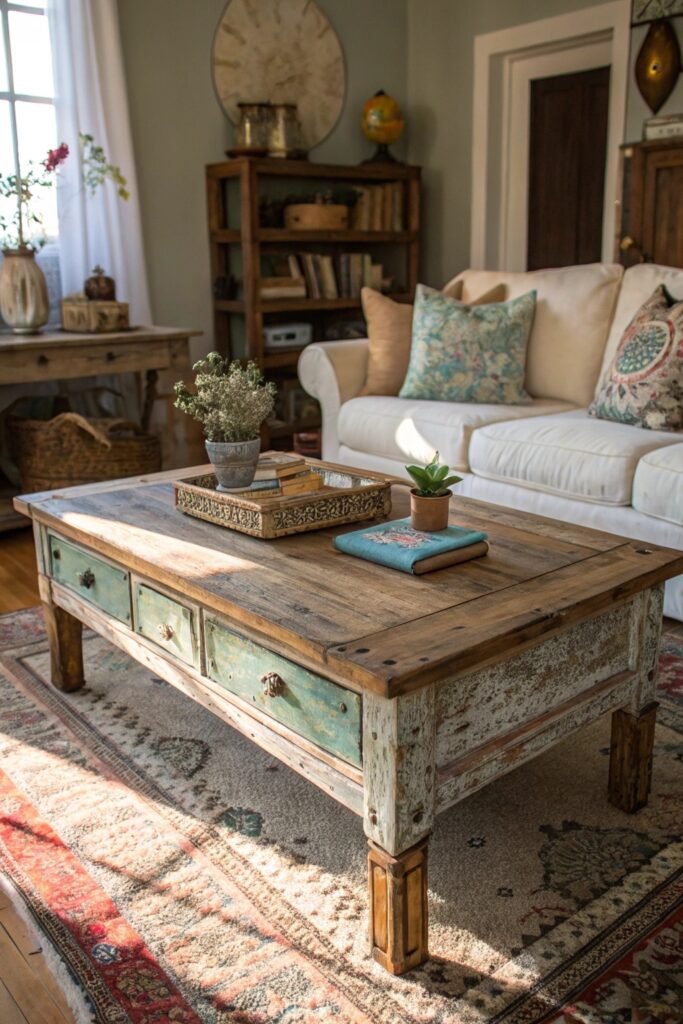
A vintage or secondhand table ($40-150 from thrift stores, estate sales, or online marketplaces) often costs considerably less than new furniture while offering genuine character that mass-produced pieces don’t have.
Check joints, surface condition, and any structural wobble carefully before buying secondhand, since refinishing a solid but cosmetically worn piece is usually straightforward, while structural repair often isn’t worth the effort.
7. Use a Storage Trunk as a Coffee Table
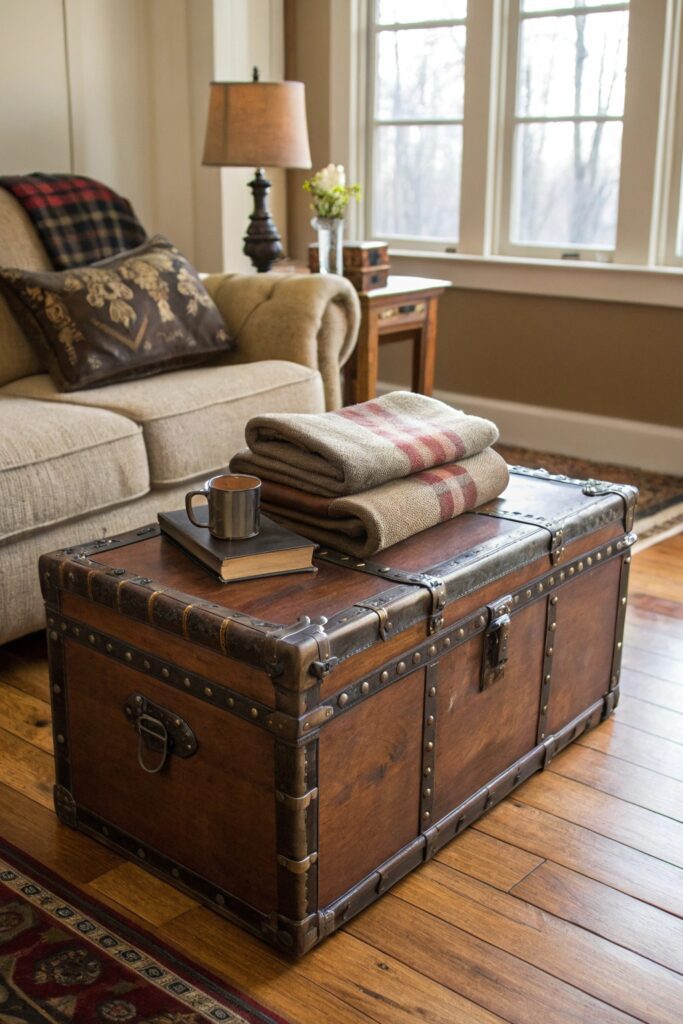
A vintage or new storage trunk ($80-250) doubles as genuine hidden storage for blankets, remotes, or games, adding function that a standard flat-surface table doesn’t provide.
This works especially well in smaller living rooms where a separate dedicated storage piece isn’t practical, letting the coffee table handle both surface and storage needs in one footprint.
8. Try an Oversized Ottoman Instead
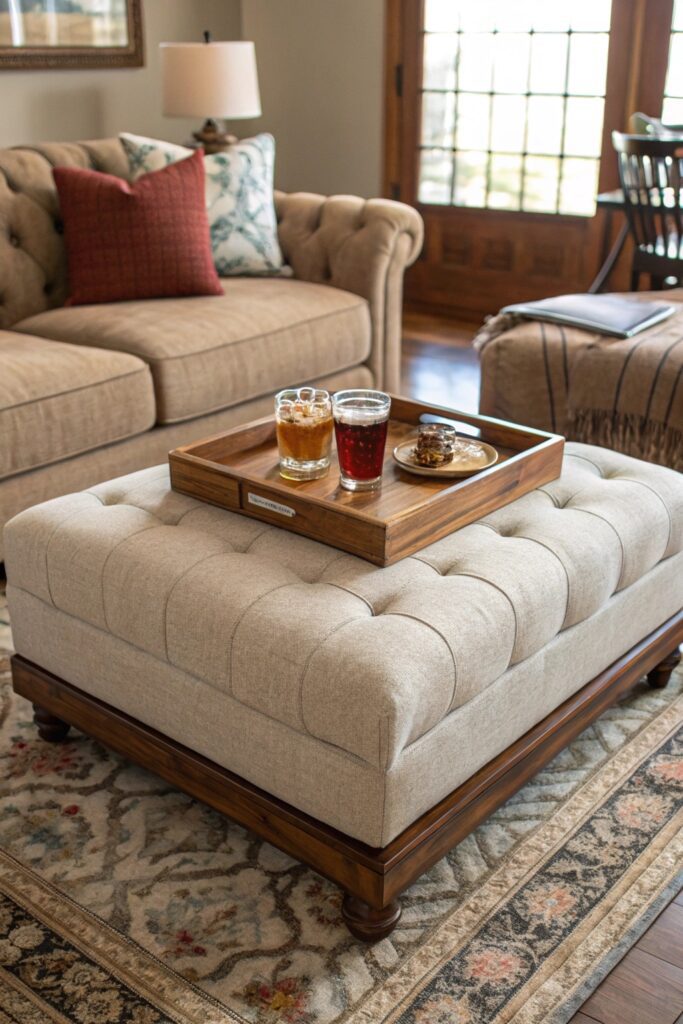
A large upholstered ottoman ($150-400) offers a softer, more casual alternative to a hard-surfaced table, and it can double as extra seating when needed, which a standard table can’t.
Add a large tray on top when using an ottoman as a coffee table, which creates a stable, flat surface for drinks and objects while still allowing the ottoman’s softness underneath.
9. Pick a Table With Hidden Storage
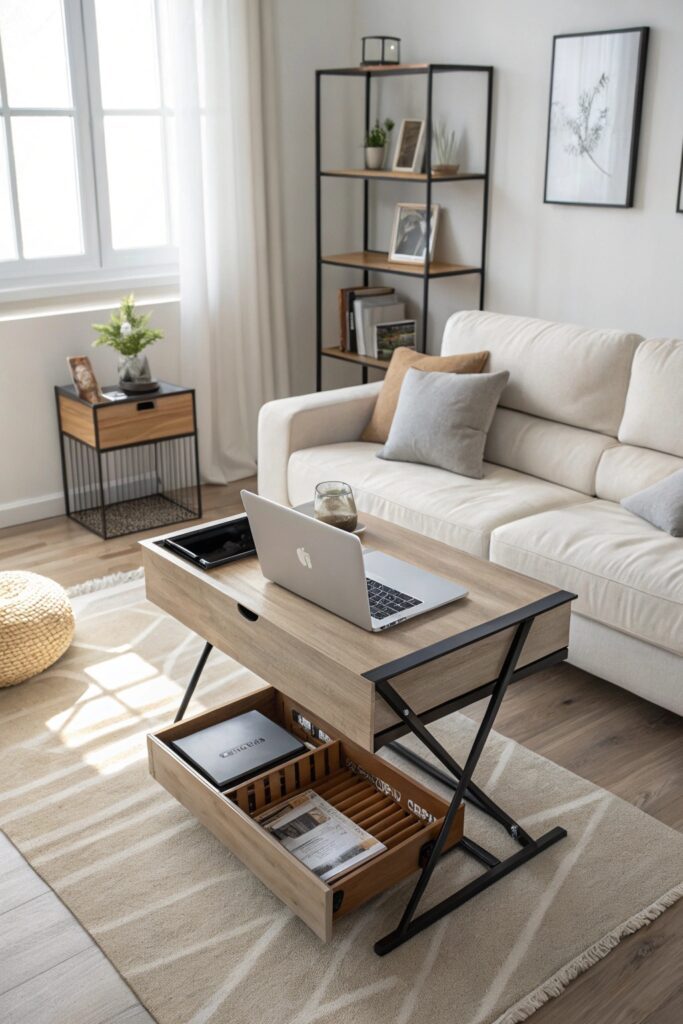
Tables with a lift-top surface or built-in drawers ($150-400) add genuine organizational function, keeping remotes, coasters, and small items accessible but out of sight.
Lift-top tables specifically double as a raised surface for laptop use or dining, which adds functional versatility beyond simple storage.
10. Mix Materials for Visual Interest
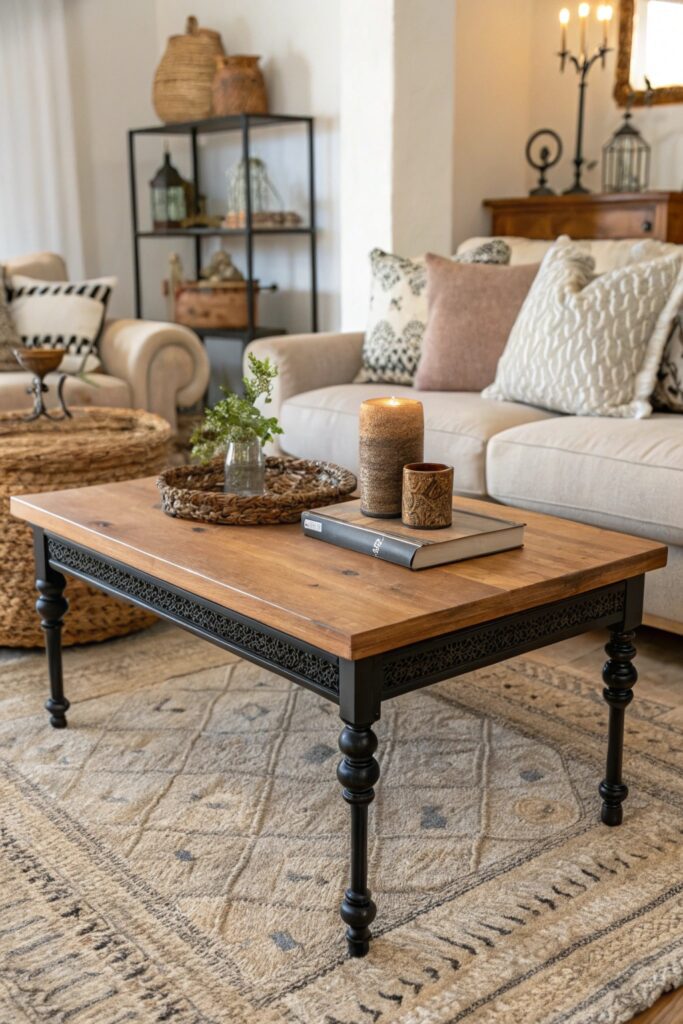
A table combining wood, metal, and glass ($150-350) adds textural variety that a single-material table can’t achieve, working especially well as a way to tie together a room with multiple existing material tones.
This approach also tends to feel more current than a uniform single-material table, since mixed-material furniture has been a consistent design direction across many recent style trends.
11. Go Low-Profile for a Modern Look
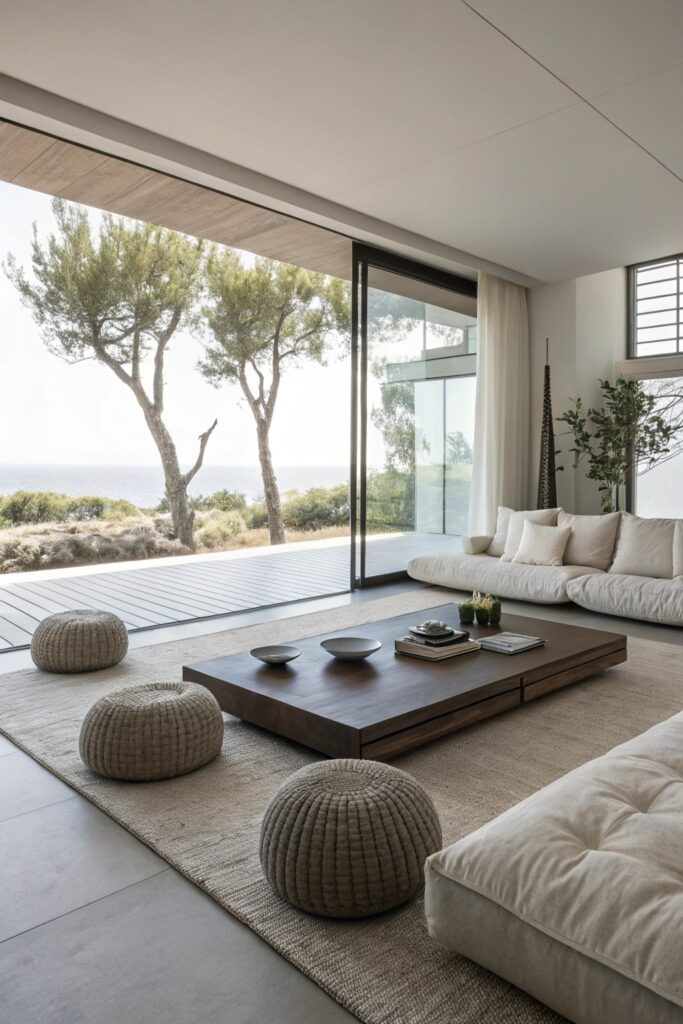
A table with a notably low profile (under 16 inches) reads as more contemporary and can make a room feel more spacious, since less visual bulk sits between the seating and the floor.
This style works particularly well paired with lower-profile seating, maintaining proportional balance between the table and the sofa or chairs around it.
12. Use Two Matching Square Tables
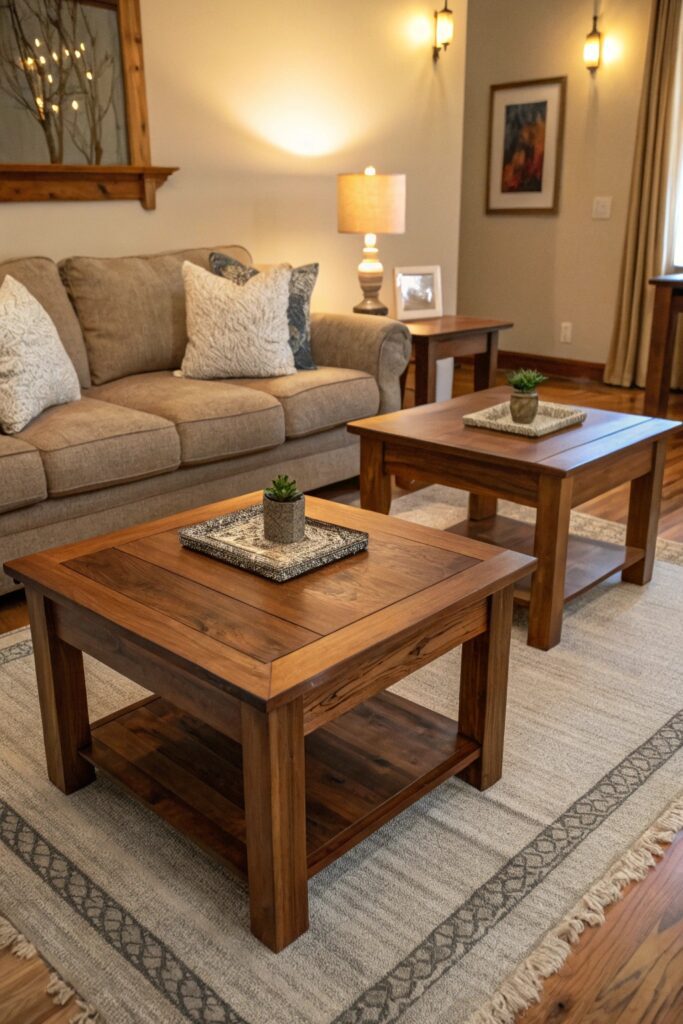
A pair of matching square tables placed together (or slightly apart) offers the same flexible configuration benefit as nesting tables, while reading as a more deliberate, architectural styling choice.
This setup works especially well in a larger living room where a single table might look undersized relative to the seating area’s overall scale.
13. Add a Tray for Instant Styling
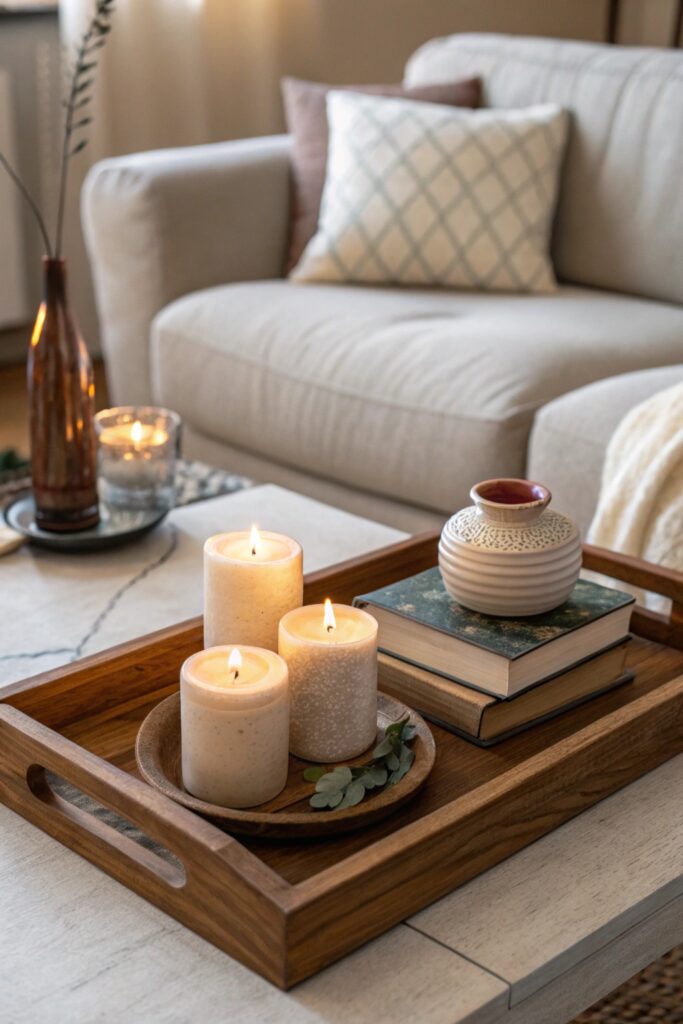
A decorative tray ($20-50) groups smaller objects (candles, coasters, a small plant) into a cohesive vignette, which reads as considerably more styled than the same objects scattered loosely across the table surface.
This is one of the lowest-cost ways to make any coffee table look more intentional, regardless of the table’s own style or material.
14. Choose a Table That Complements Your Rug
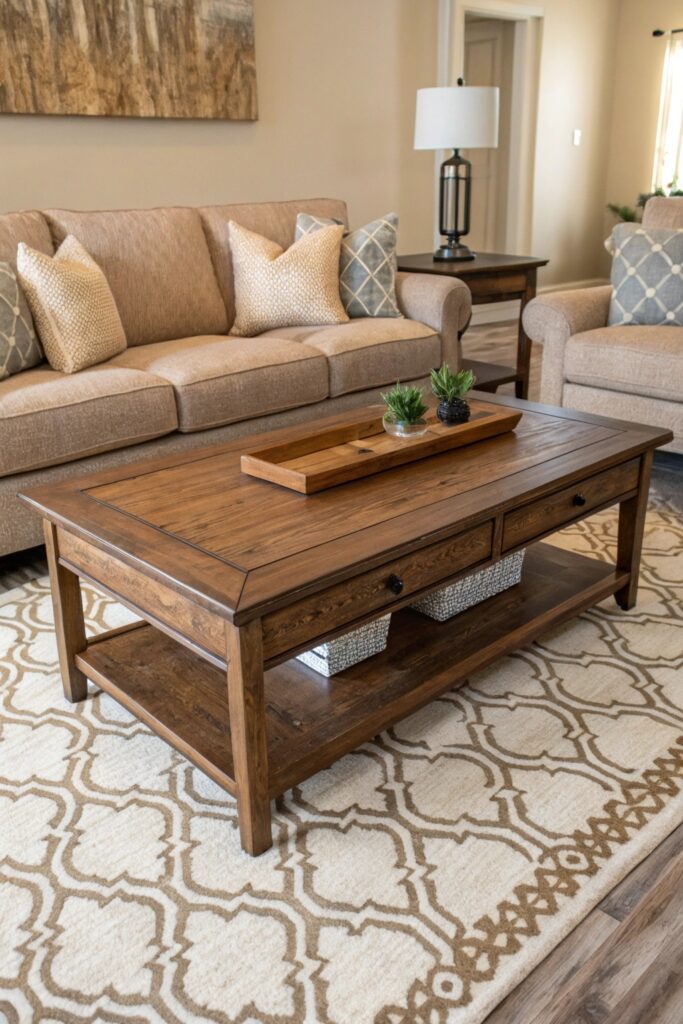
Pulling the table’s wood tone or material finish from an existing rug’s color palette creates cohesion between floor and furniture level without requiring the two pieces to match exactly.
This is worth considering specifically when purchasing a new table for a room with an existing, established rug, since matching the new piece to what’s already there is easier than coordinating everything at once.
15. Don’t Be Afraid of a Colorful Table
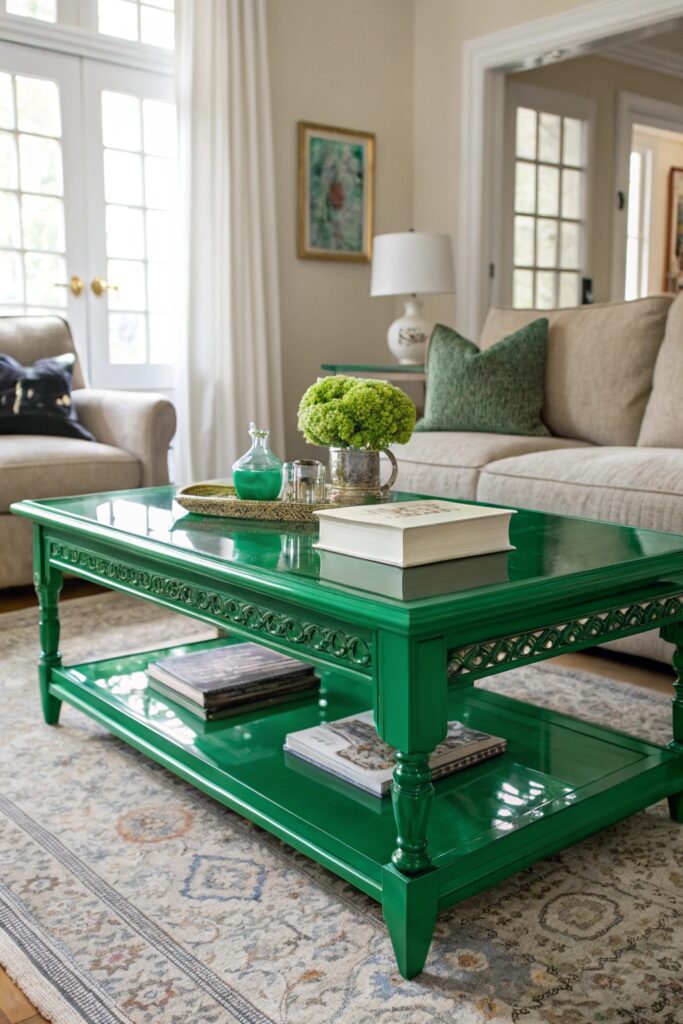
A table in a bold color ($150-350) works as a genuine statement piece, letting everything else in the room stay simpler and more neutral by comparison rather than competing for attention.
This is a lower-commitment way to introduce color into a room than a large upholstered piece or a painted wall, since a smaller furniture item is easier to change later if your taste shifts.
Final Thoughts
Scale and proportion matter more than any specific style choice — a table sized appropriately relative to your seating area and rug will read as intentional regardless of material or price point, while an undersized or oversized table undermines even an expensive, well-chosen piece.