
A dining table centerpiece works best when it adds visual interest without blocking conversation or sightlines across the table, which is the practical constraint that separates a genuinely functional centerpiece from one that just looks good in photos.
Below are 15 centerpiece approaches, with real costs and practical notes for each.
1. A Simple Bowl of Fresh Fruit
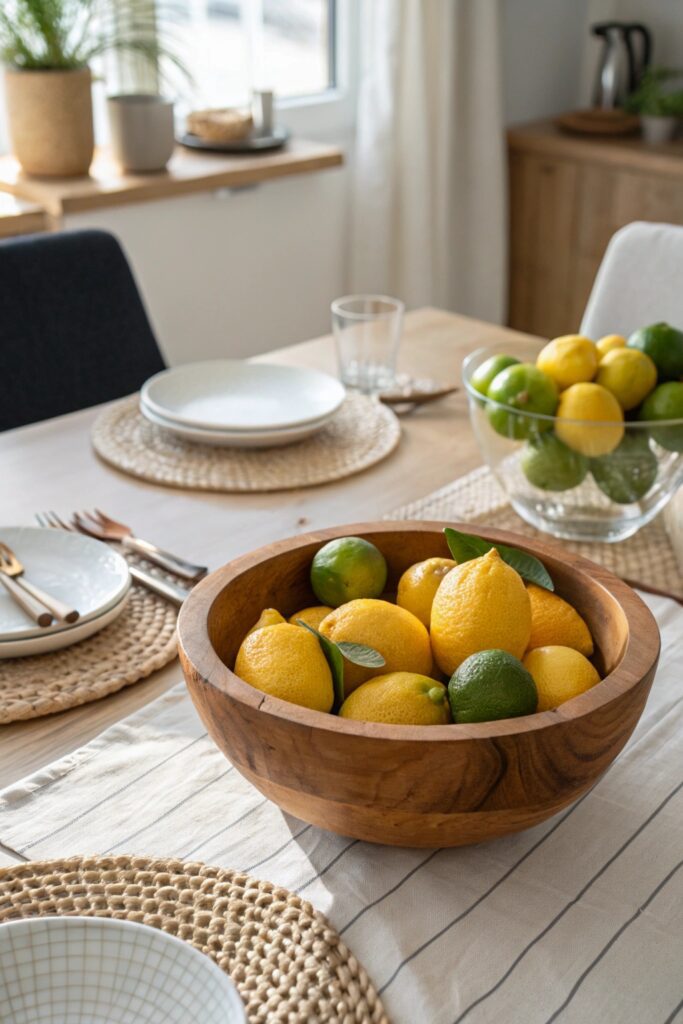
A bowl of seasonal fruit ($5-15) is one of the lowest-cost, most genuinely functional centerpieces available, since it doubles as an actual snack rather than purely decorative styling.
Choose a bowl with real visual weight (ceramic or wood rather than thin plastic) if it’s serving as the table’s main centerpiece, since the vessel itself matters as much as the fruit for how intentional the display reads.
2. A Cluster of Bud Vases
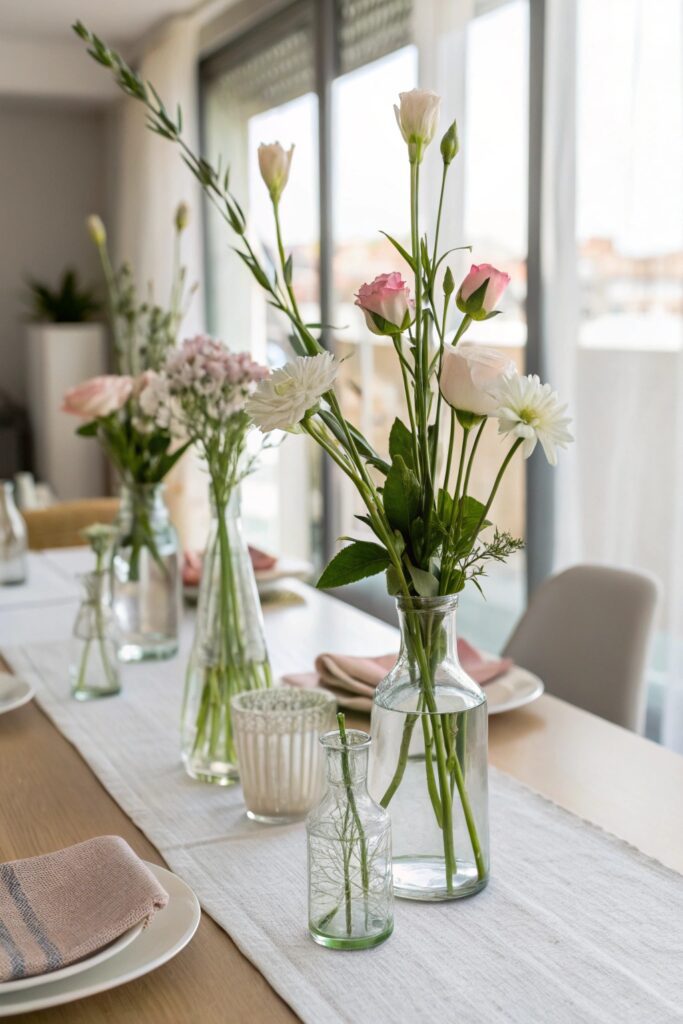
Several small bud vases ($5-10 each), each holding a single stem, create a low, elongated centerpiece that doesn’t block sightlines across the table during an actual meal.
Vary the vase heights and stem lengths slightly across the cluster rather than using identical vases throughout, which reads as more naturally arranged than a perfectly uniform row.
3. Candles at Varying Heights
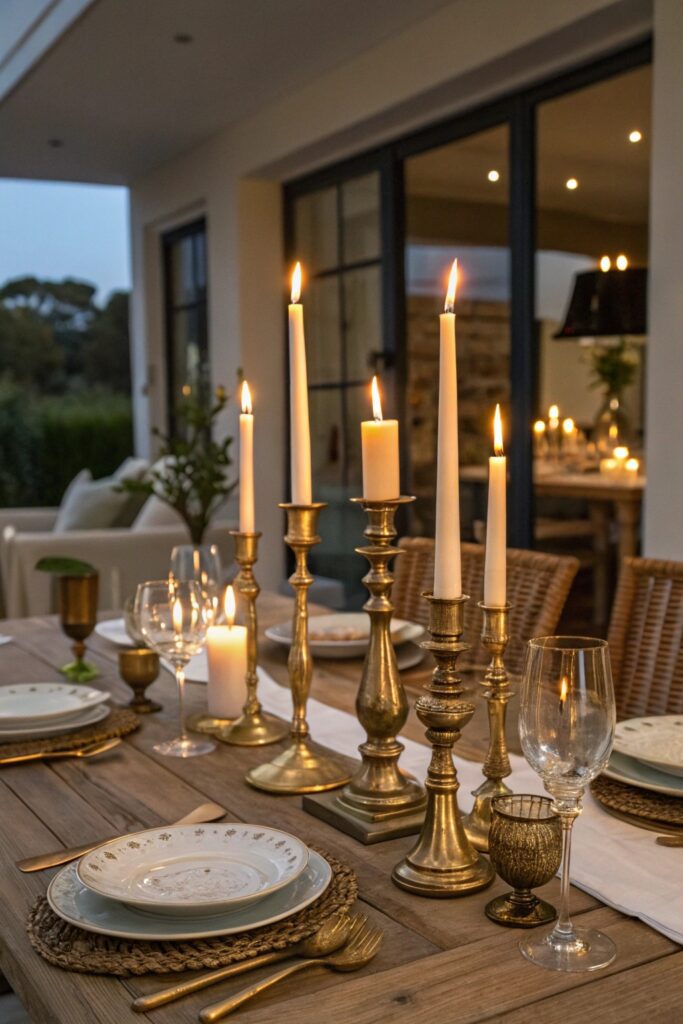
A cluster of pillar candles in different heights ($15-30 total) adds ambiance for evening meals and works as a genuine centerpiece even without any floral element.
Unscented candles are worth choosing specifically for a dining centerpiece, since scented ones can compete with the meal’s own aromas in a way that’s genuinely distracting at the table.
4. A Runner With Layered Textures
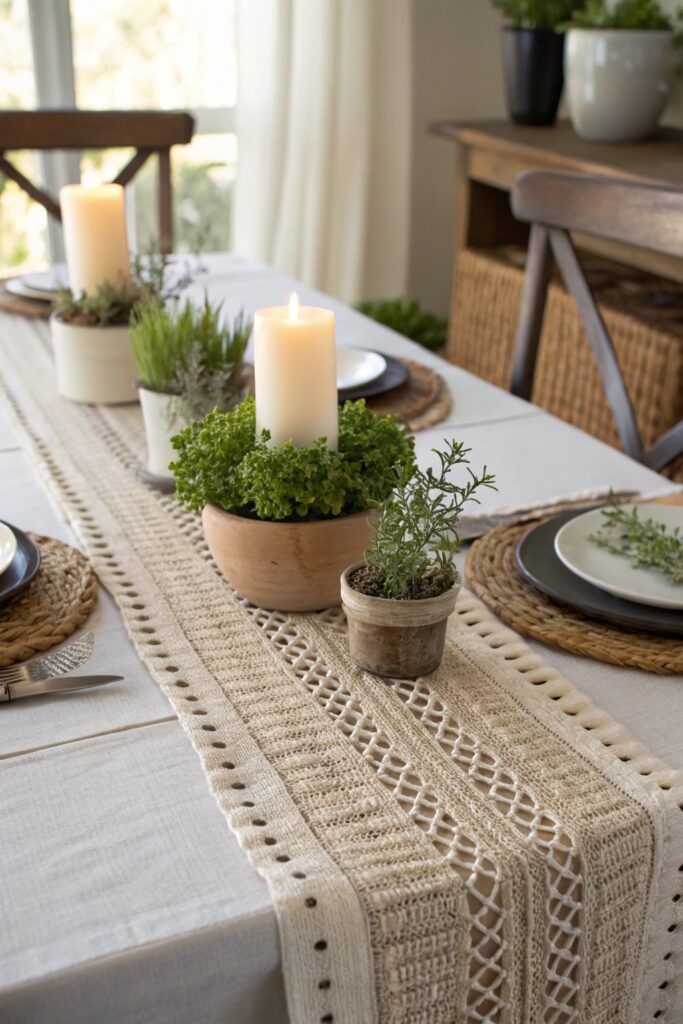
A table runner with a few smaller objects layered on top (candles, small vases, a bowl) creates a more considered, styled look than any single centerpiece element alone.
Choose a runner in a neutral base tone if layering multiple decorative objects on top, which keeps the overall look from feeling visually busy with too many competing patterns.
5. Fresh Herbs in Small Pots
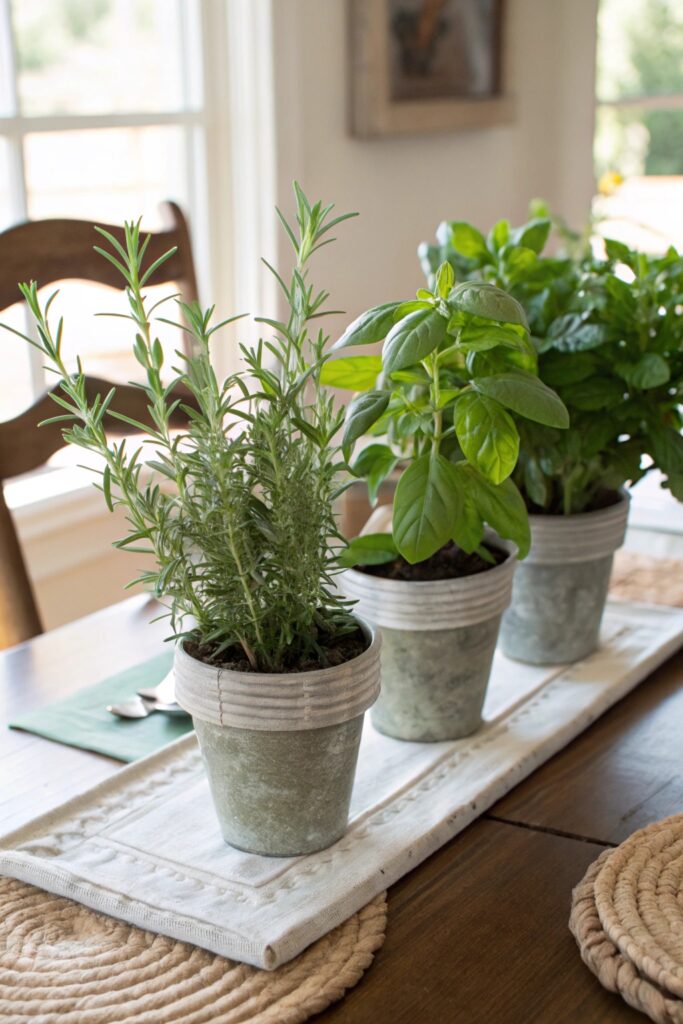
A row of small potted herbs ($3-8 each) doubles as genuine cooking ingredients and decor, and the practical function makes this centerpiece choice feel less purely ornamental than most alternatives.
Check each herb’s specific light needs against your table’s actual location, since a dining table without direct sun exposure may not support every herb variety equally well.
6. A Dramatic Floral Arrangement
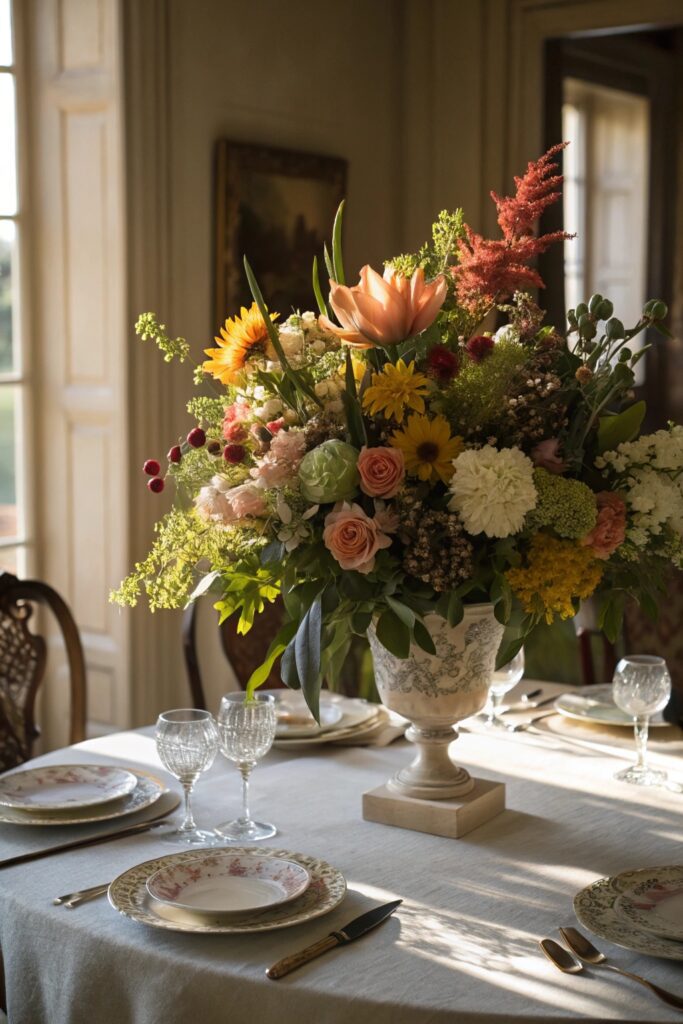
A larger, fuller floral arrangement ($30-60 depending on flowers used) works well for entertaining or special occasions, though it’s worth keeping low enough (under 14 inches) to avoid blocking conversation across the table.
Choose stems with sturdy, upright structure rather than delicate blooms that droop quickly, which holds up better to being viewed and handled around an actively used dining table.
7. A Wooden Board With Mixed Decor
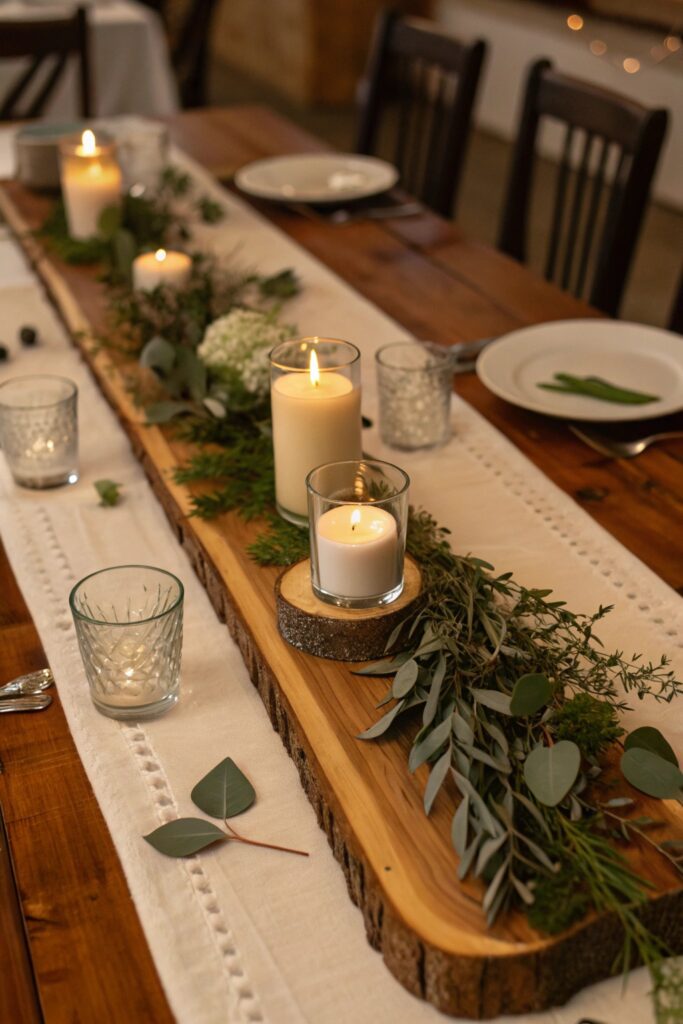
A long wood board or tray with a mix of small candles, greenery, and objects arranged along its length creates a cohesive base for a layered centerpiece without needing a dedicated vase or bowl.
Seal or treat the wood board if it will regularly hold anything wet (fresh flowers in water, condensation from candles), which prevents warping or staining over repeated use.
8. Seasonal Branches in a Tall Vase
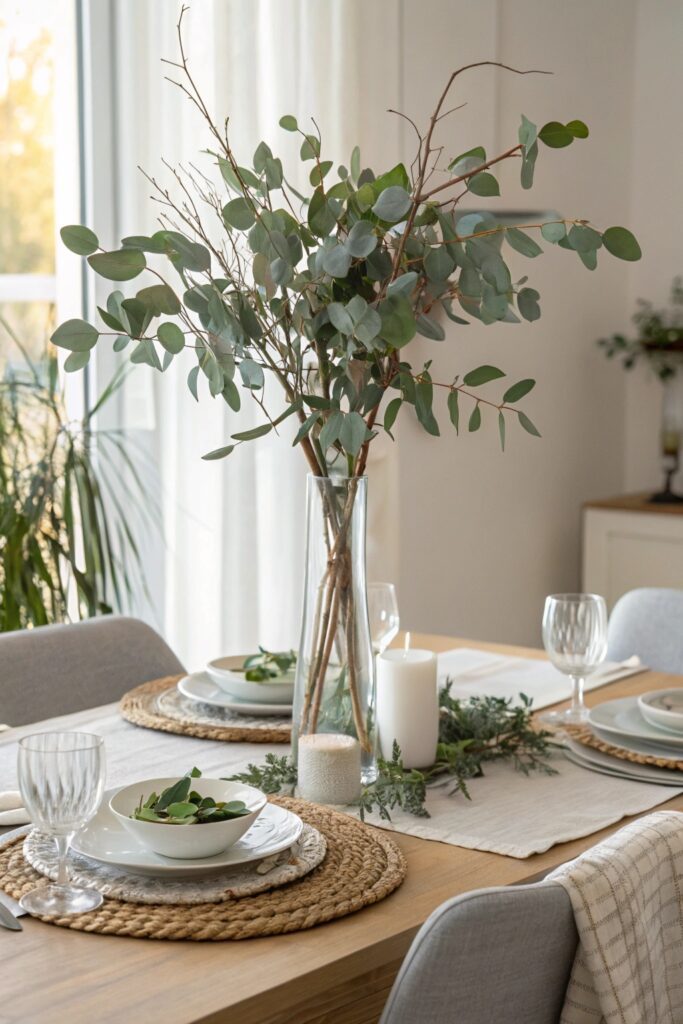
Bare or budding branches (free if foraged, or $10-20 purchased) in a tall vase add height and seasonal interest without blocking sightlines the way a wide floral arrangement at the same height would.
Let branches dry naturally in the vase rather than trying to keep them fresh, since dried branches actually hold their shape and color better over time than branches kept in water.
9. A Collection of Small Objects
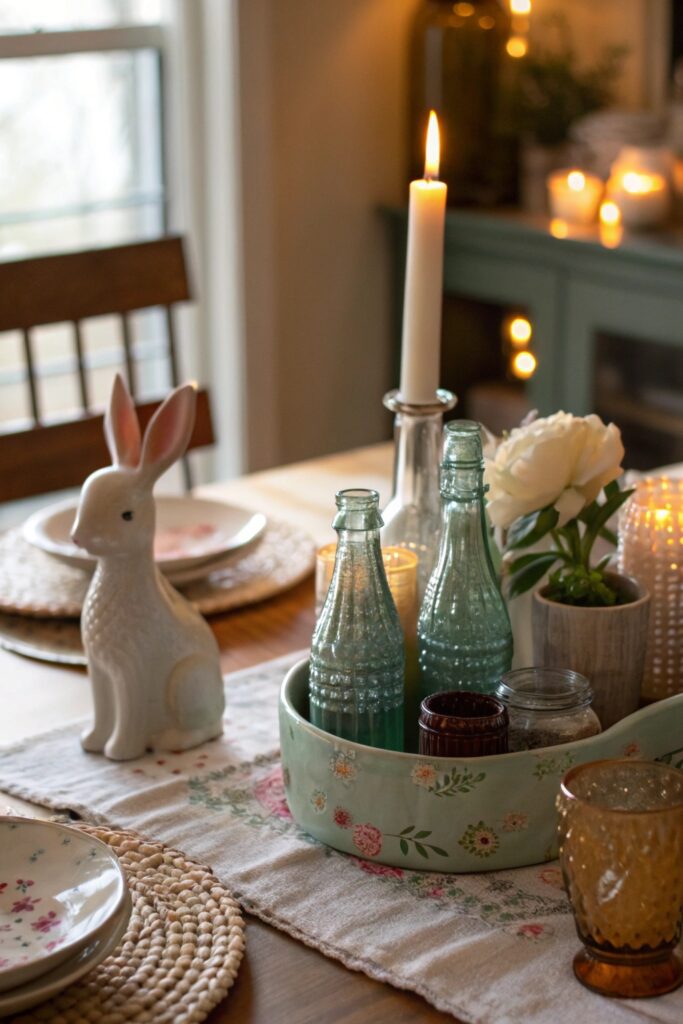
A curated cluster of small decorative objects — ceramic pieces, small sculptures, stones — creates a genuinely personal centerpiece built from items you may already own rather than requiring new purchases.
Group objects in odd numbers with varied heights, the same principle that applies to any styled display, whether on a shelf or directly on the table.
10. A Minimalist Single Stem
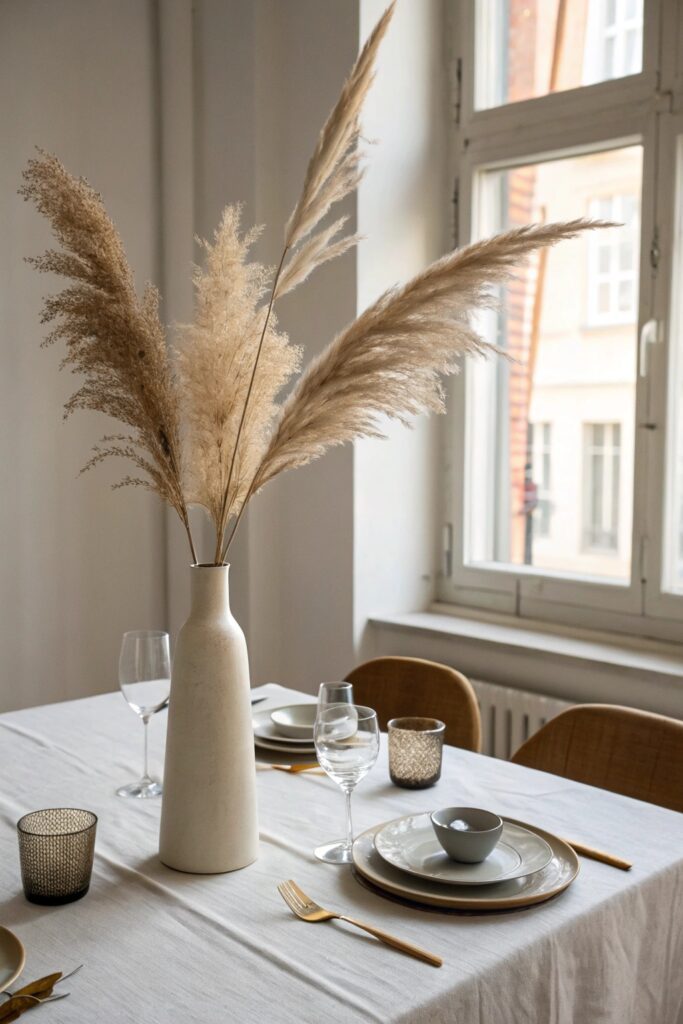
One striking flower or branch in a simple vase is the lowest-effort centerpiece on this list, and it works particularly well for everyday use where an elaborate arrangement isn’t practical to maintain.
A single dramatic stem (like a large protea or a branch of blossoms) makes more visual impact in this minimalist approach than several smaller, less distinctive flowers would.
11. Fairy Lights for Ambiance
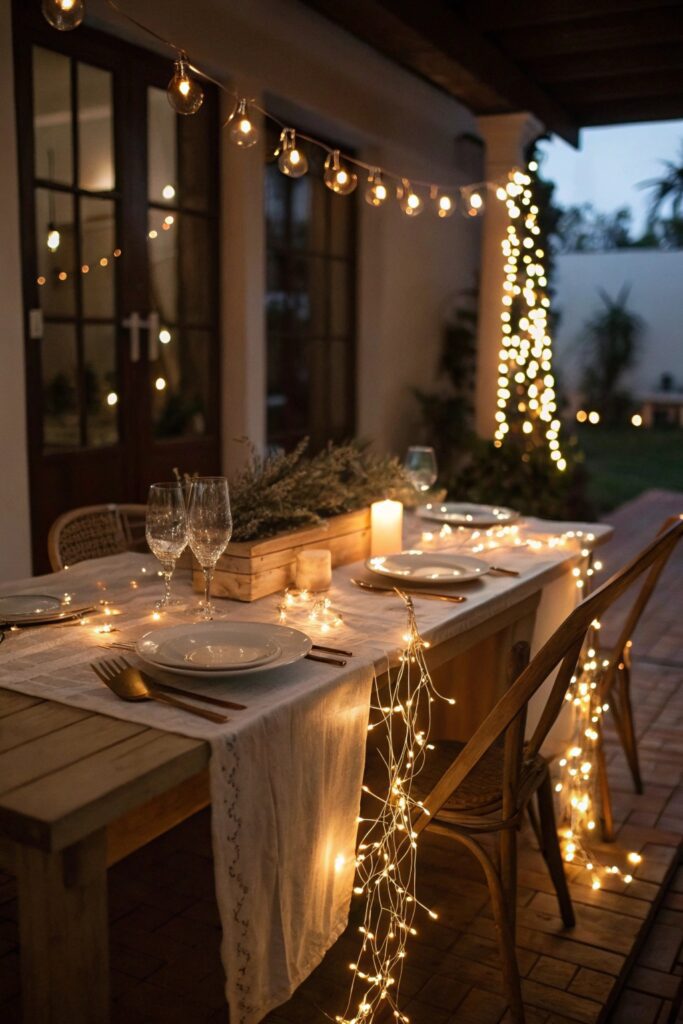
A loosely coiled string of warm fairy lights, either alone in a bowl or wrapped around other centerpiece elements, adds evening ambiance that a purely visual daytime centerpiece doesn’t provide.
Battery-operated string lights avoid the need for a nearby outlet or a visible cord running across the table, which matters for how clean the overall look reads.
12. A Themed Seasonal Display
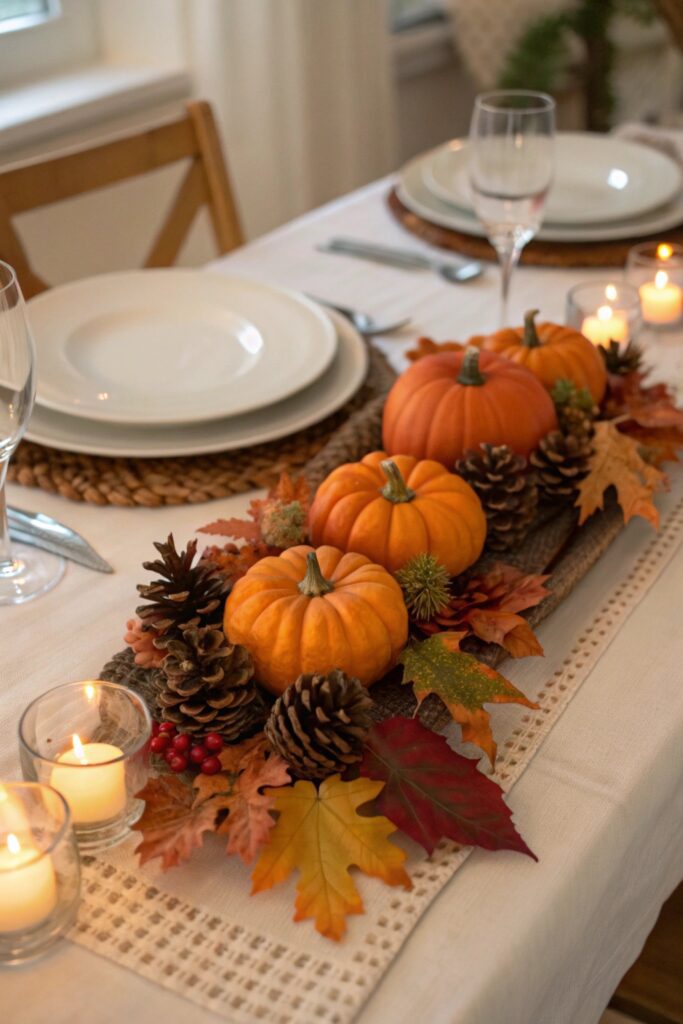
Rotating centerpiece elements seasonally (pumpkins in fall, evergreen branches in winter, fresh blooms in spring) keeps the table feeling current throughout the year without requiring an entirely new setup each time.
Store off-season centerpiece elements in a labeled bin, which makes the seasonal rotation easier to actually maintain rather than becoming a project you keep meaning to get to.
13. A Statement Bowl or Vessel
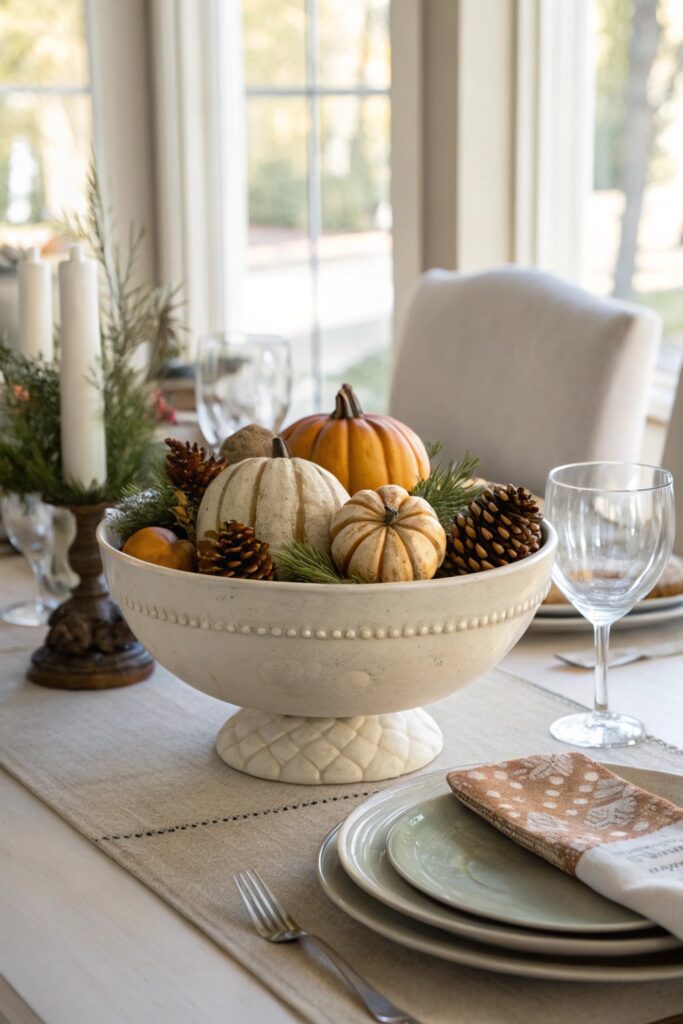
A single striking bowl or vessel ($20-50), used empty or filled with something simple like decorative balls or dried botanicals, can carry an entire centerpiece on its own design merit.
An empty statement vessel works especially well on a table that’s otherwise kept simple, letting the vessel’s own shape and material be the sole visual focus.
14. Mixed Metallic Accents
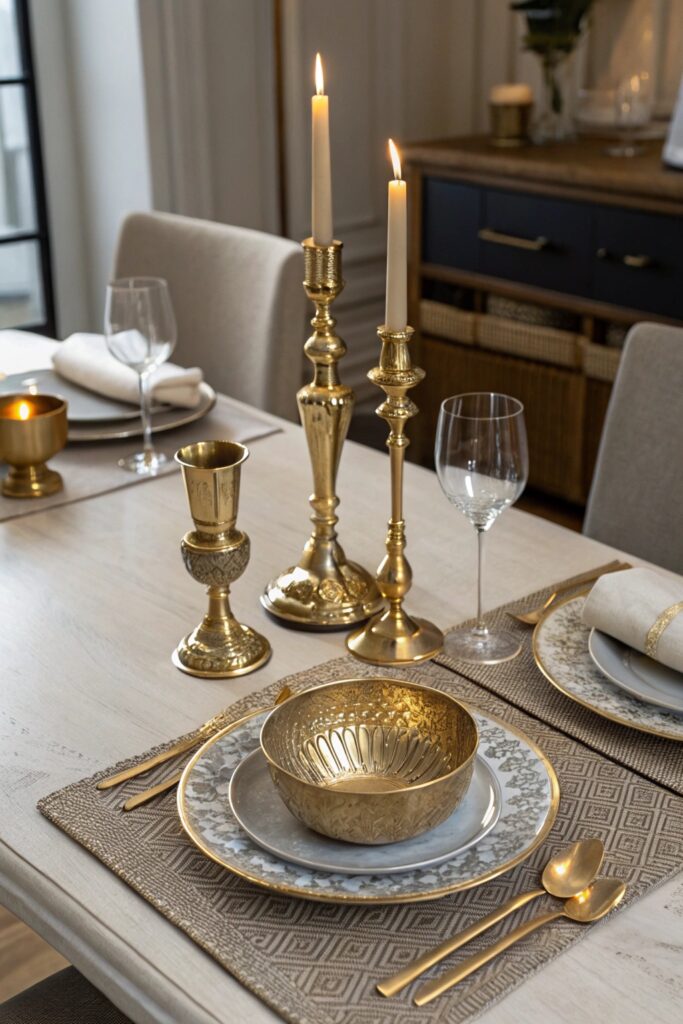
Candle holders or small objects in brass, gold, or mixed metal finishes add a touch of elevated shine that pairs well with almost any other centerpiece element, from fresh flowers to simple greenery.
Stick to one consistent metal tone (all brass or all gold, not mixed) across these accents, which keeps the look cohesive rather than visually scattered.
15. A DIY Foraged Centerpiece
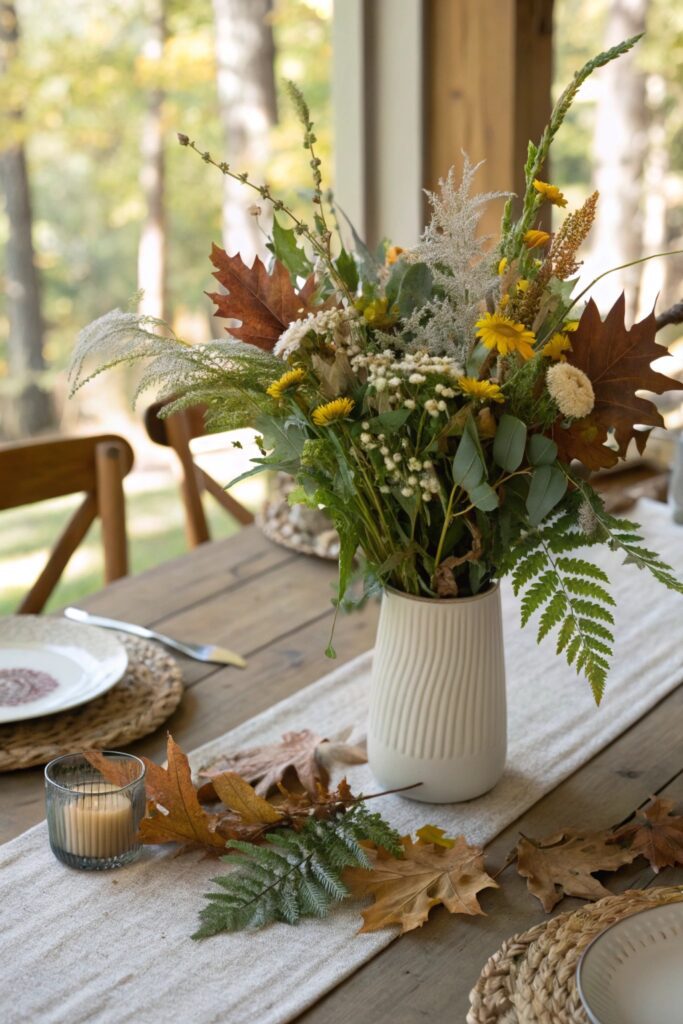
Branches, leaves, or seasonal greenery gathered from your own yard or a nearby park cost nothing and often look more genuinely natural than purchased florals, provided you’re gathering responsibly and legally.
Final Thoughts
Height matters more than almost any other factor — keeping a centerpiece under roughly 14 inches (or clustering low elements like bud vases and candles) preserves sightlines for an actual meal, which is worth prioritizing over a taller, more dramatic arrangement if the table sees regular daily use rather than only special occasions.