
A well-placed throw blanket does more to make a sofa look considered than almost any other single decor addition, and the specific folding or draping method matters as much as the blanket itself for how intentional the final look reads.
Below are 12 ways to style a throw blanket on a couch, with practical notes for each method.
1. The Diagonal Drape
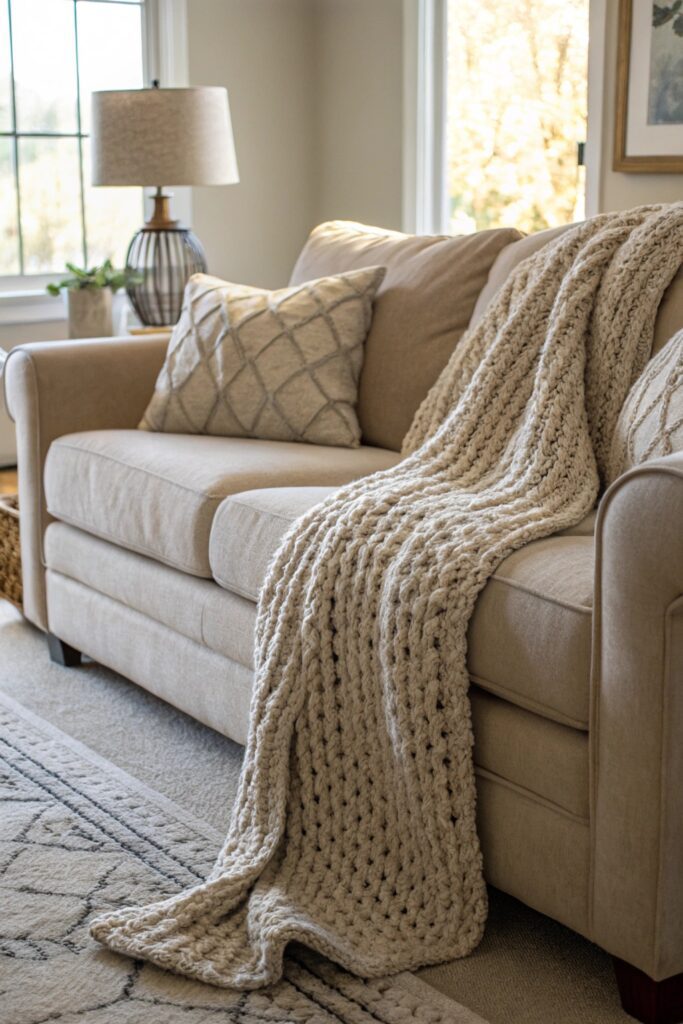
Draping a blanket diagonally across one corner of the couch, rather than centered or straight, creates a more relaxed, natural look than a perfectly folded placement, and it’s genuinely the fastest styling method to execute.
This works best with a single, larger throw ($30-50) that has enough fabric to drape convincingly without looking sparse across the diagonal line.
2. The Folded Ladder Stack
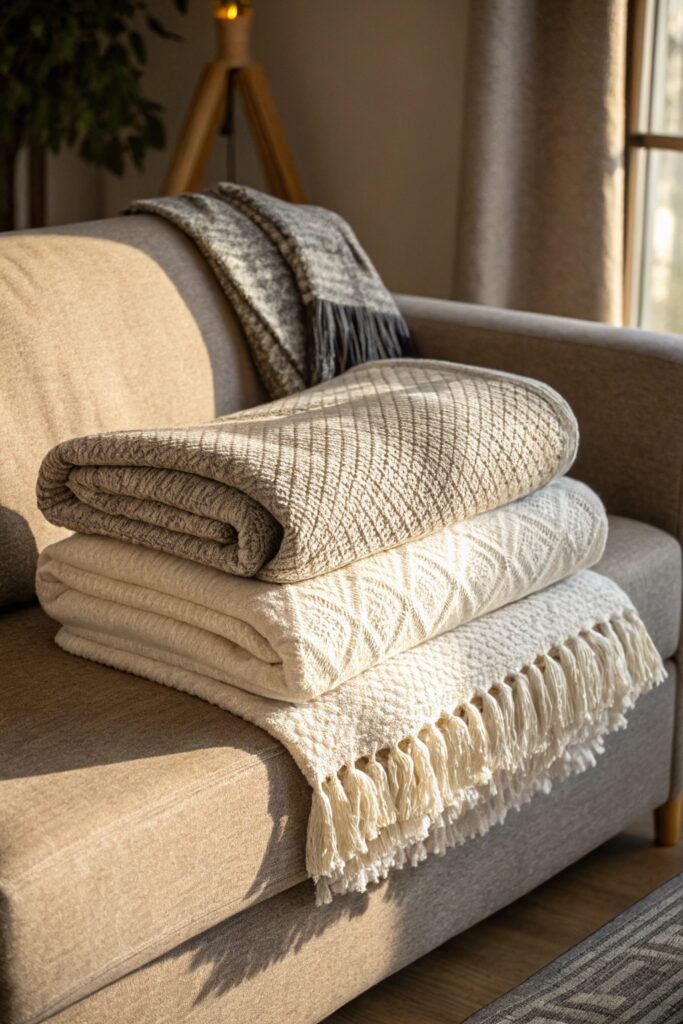
Stacking two or three folded blankets in slightly offset layers over the arm creates a considered, boutique-store look, and varying each blanket’s fold width slightly (rather than perfectly matching) reads as more intentional than uniform stacking.
This method works well specifically for using multiple throws at once, giving each one visibility rather than hiding smaller blankets underneath one larger draped piece.
3. The Half-Fold Over the Back
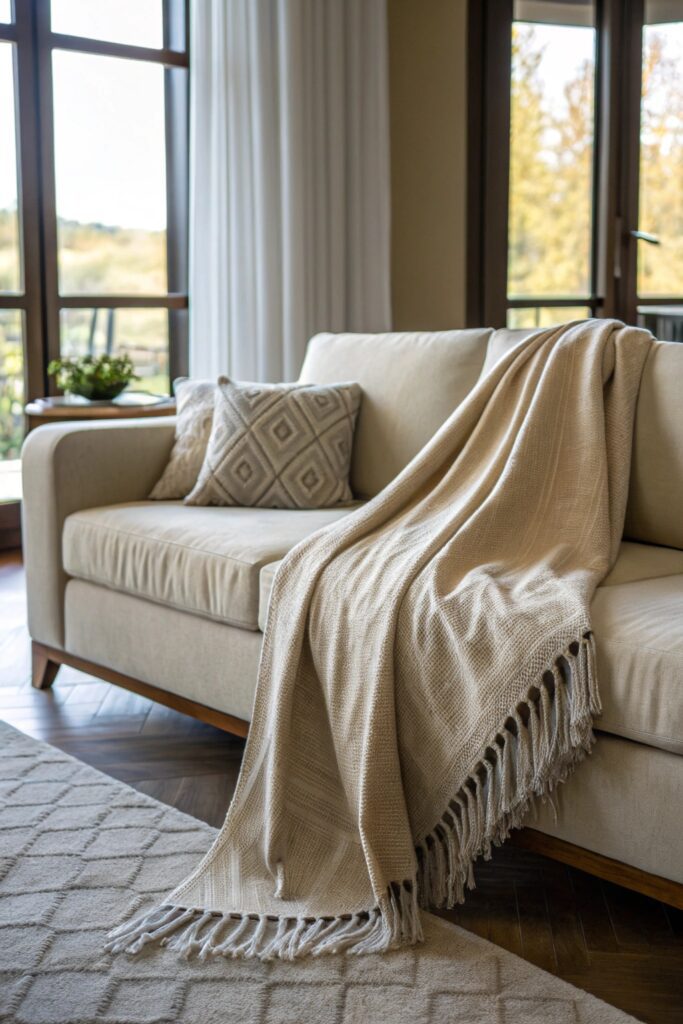
Folding a blanket in half and draping it over the couch’s back cushion, letting it hang down evenly on both sides, is a classic styling method that works particularly well on sofas without arms or with a low-profile back.
Choose a blanket with a design or texture that reads well from behind if using this placement, since the back-of-sofa visibility means both sides of the fold will be seen.
4. The Bunched Corner Toss
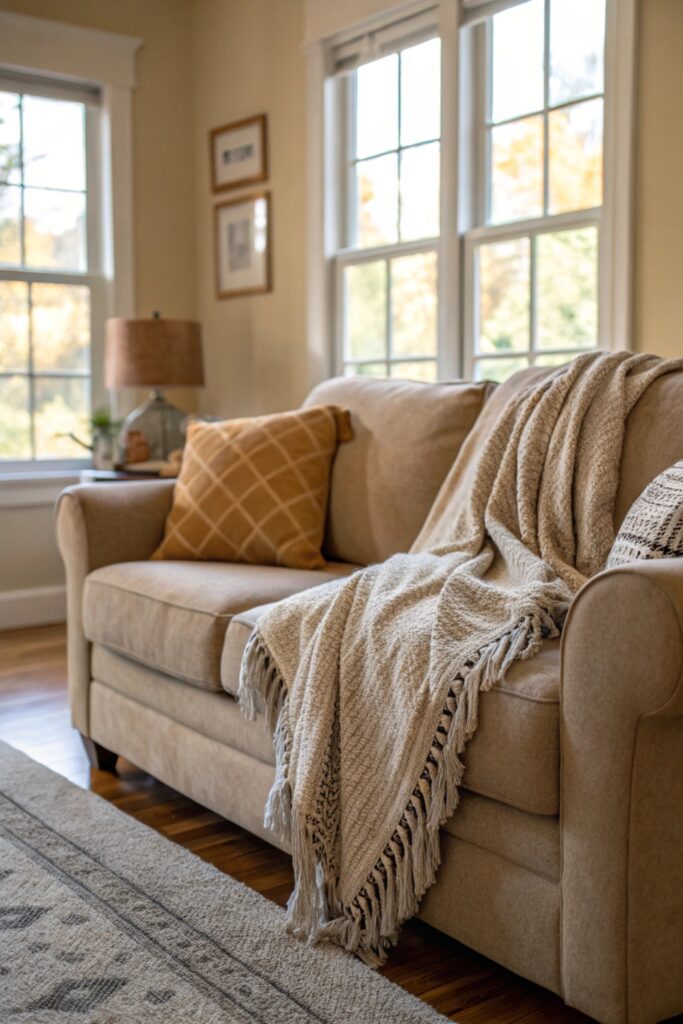
Loosely bunching a blanket into one corner of the seat cushion (rather than folding it neatly) creates a lived-in, casual look that suits a more relaxed room style better than crisp, formal folding.
This placement also keeps the blanket genuinely accessible for actual use, which matters if the throw is meant to be functional rather than purely decorative.
5. Layering Over a Patterned Throw Pillow Set
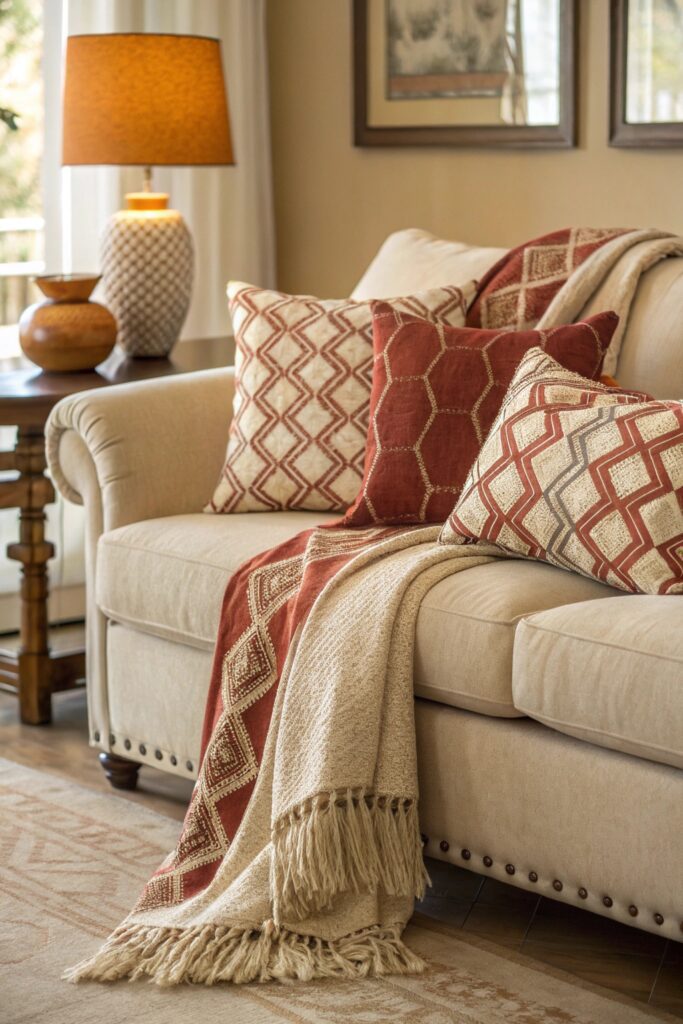
Draping a solid-colored blanket near or partially over an existing patterned pillow arrangement lets the blanket serve as a visual break between pattern-heavy pillows and the rest of the sofa, keeping the overall look from feeling too busy.
Choose the blanket’s color from within the pillow pattern’s existing palette, which ties the two elements together rather than introducing a competing new color.
6. The Single Statement Throw
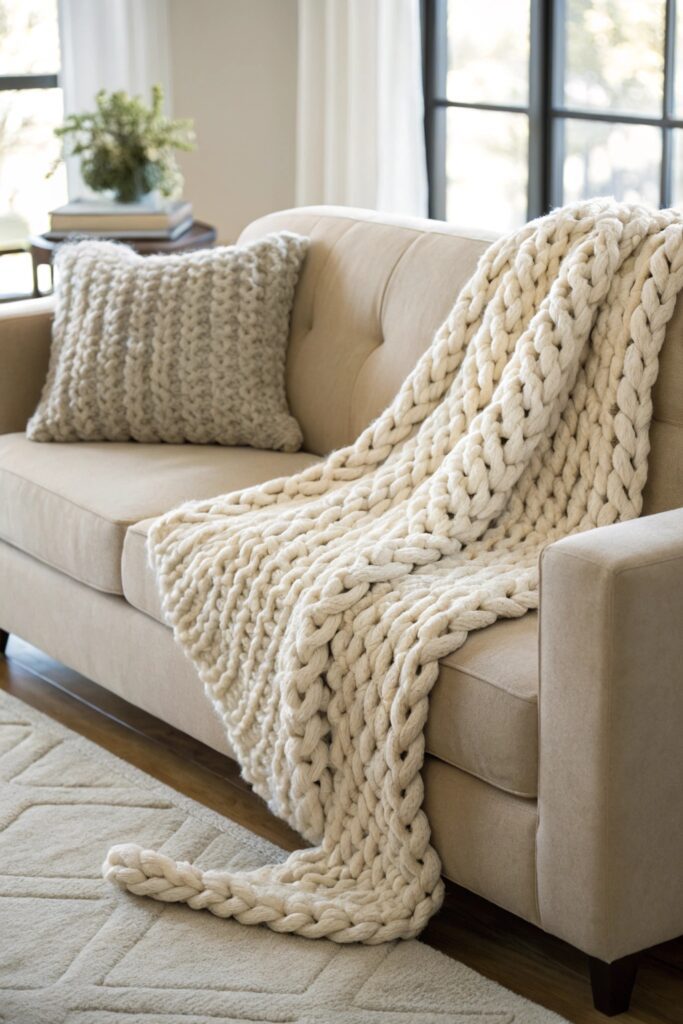
One larger, higher-quality throw ($40-80) in a bold color or texture placed simply and prominently can carry a sofa’s entire styling on its own, which is a lower-effort approach than coordinating multiple smaller blankets and pillows.
This works especially well on an otherwise plain, neutral sofa where the throw is meant to be the main visual statement rather than one element among several.
7. Mixing Textures, Not Just Colors
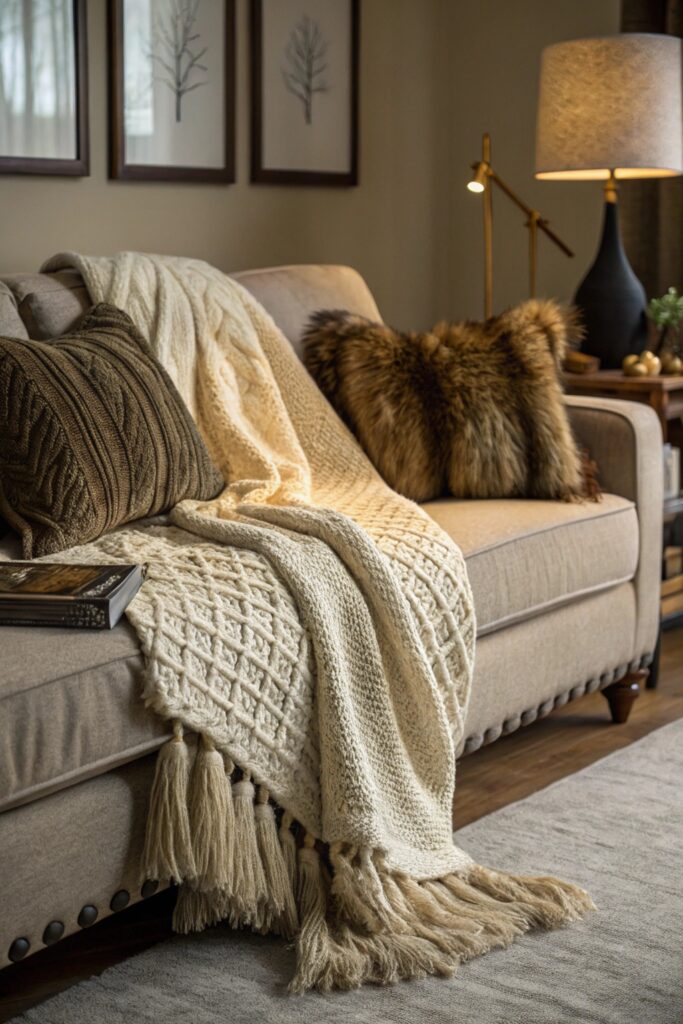
Pairing a chunky knit throw with smoother velvet or linen pillows adds tactile variety that a color-matched but texturally uniform set doesn’t achieve, since texture does real visual work beyond color coordination alone.
This is worth prioritizing over matching colors exactly — a slightly mismatched but texturally varied combination often reads as more considered than a perfectly color-coordinated but texturally flat one.
8. The Seasonal Swap
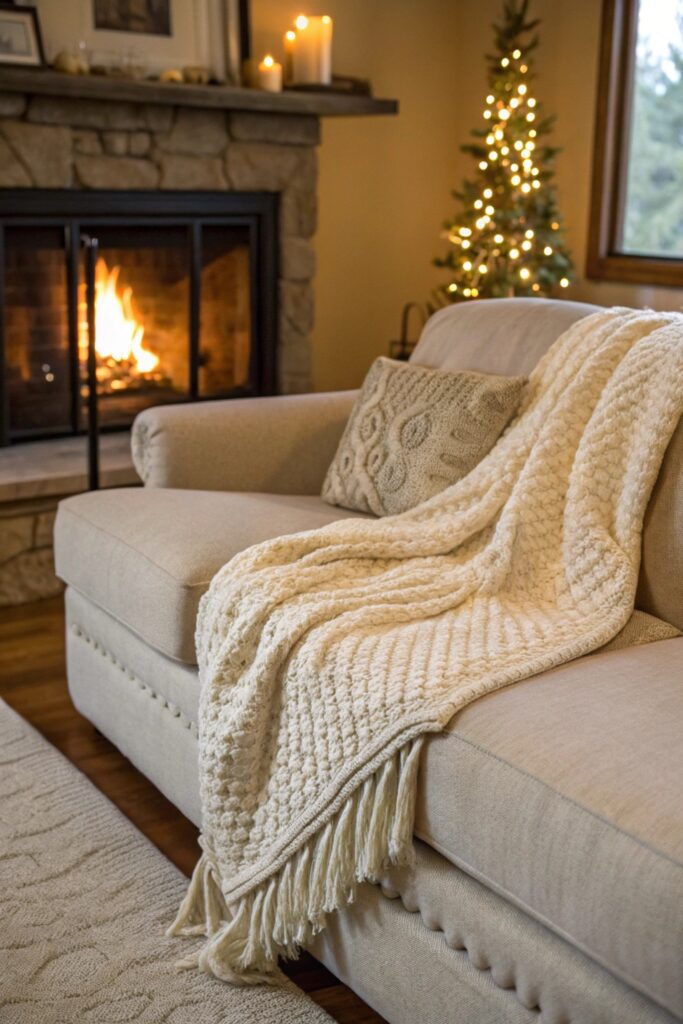
Rotating a heavier knit or faux fur throw in winter for a lighter linen or cotton one in warmer months keeps a sofa’s styling feeling current with the season, and it’s a low-cost way to refresh a room’s look without any other changes.
Storing off-season throws in a labeled bin or basket keeps this rotation genuinely manageable rather than becoming clutter accumulating in a closet.
9. Anchoring With a Neutral Base Blanket
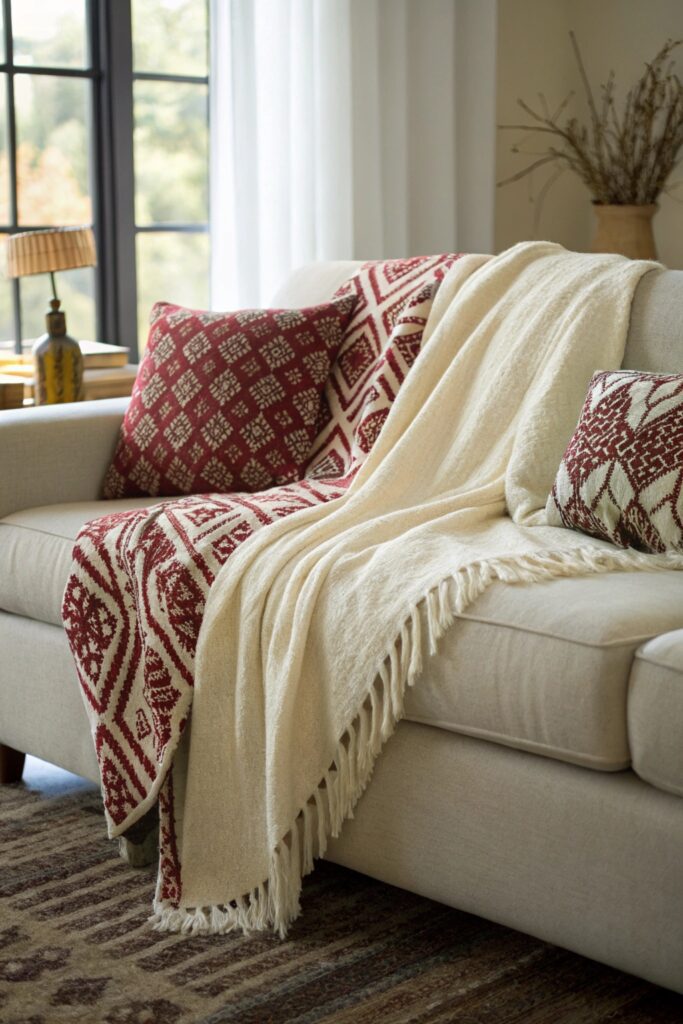
A solid neutral throw placed first, with a smaller patterned or colored blanket layered partially over it, creates depth and a sense of intentional layering that a single blanket alone can’t achieve.
This method is particularly useful if you own one bold statement blanket but want it to read as part of a considered arrangement rather than an isolated object.
10. The Armless Couch Solution
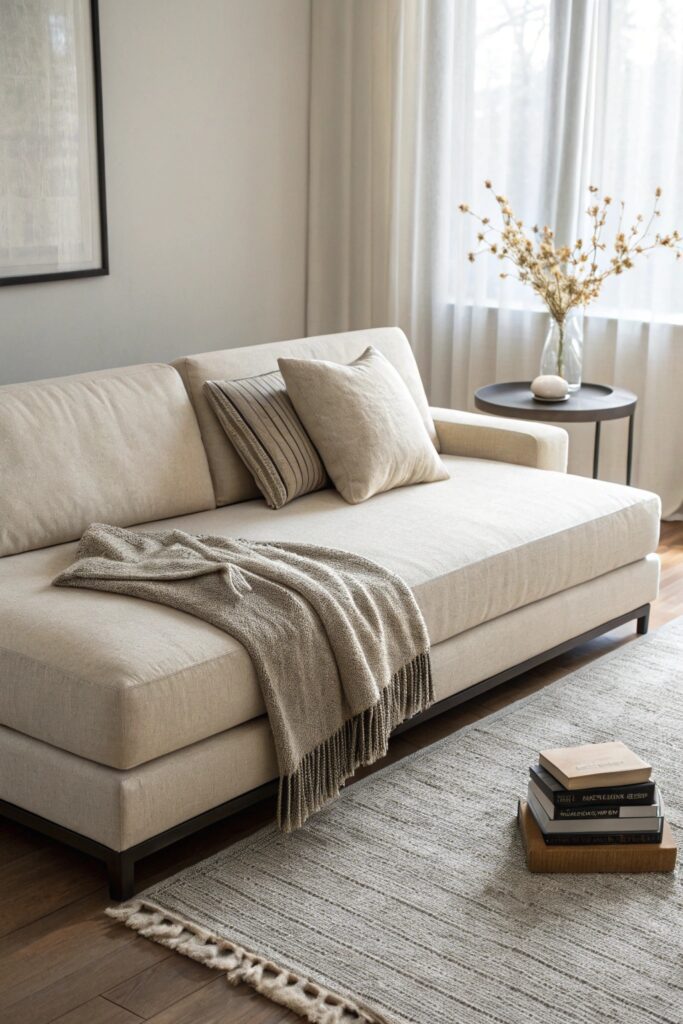
For sofas without arms, draping a blanket over one end of the backrest or bunching it into a corner of the seat cushion (rather than relying on an arm to anchor the fold) achieves a similar styled look adapted to the specific furniture shape.
A slightly heavier or textured blanket holds its placement more reliably on an armless sofa than a very lightweight, slippery fabric, which can shift out of position more easily without an arm to rest against.
11. Coordinating With Your Rug
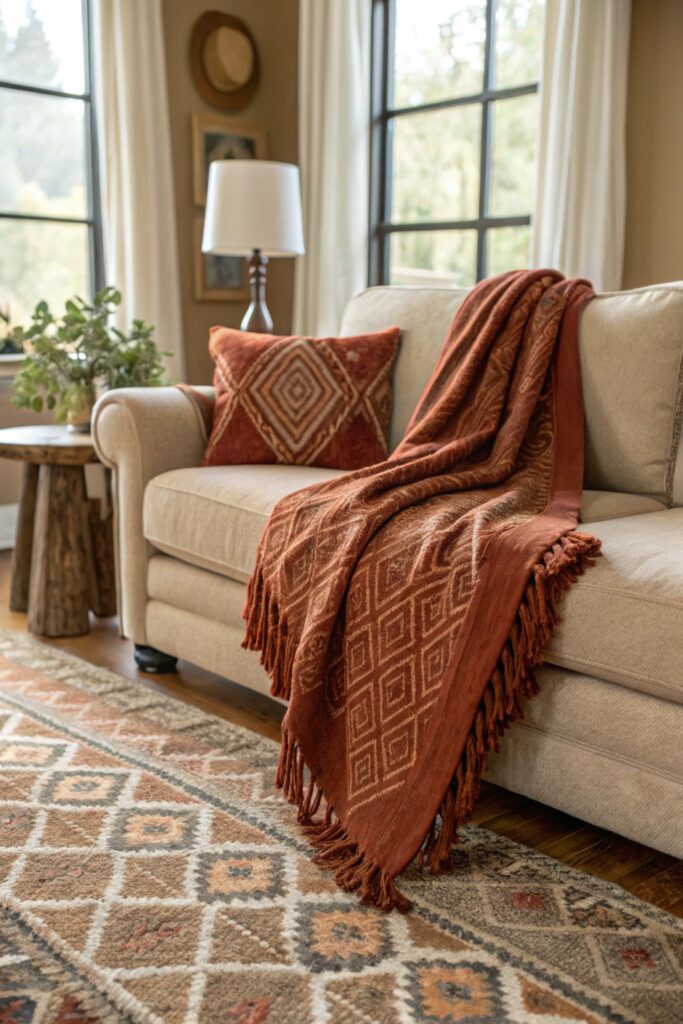
Pulling a throw blanket’s color from an existing rug’s palette ties the room’s textiles together visually, creating cohesion between floor and furniture level without needing the two pieces to match exactly.
This works especially well when the rug has a multi-color pattern — choosing just one of its secondary colors for the blanket creates connection without an overly matched, coordinated-set appearance.
12. Keeping It Practical, Not Just Pretty
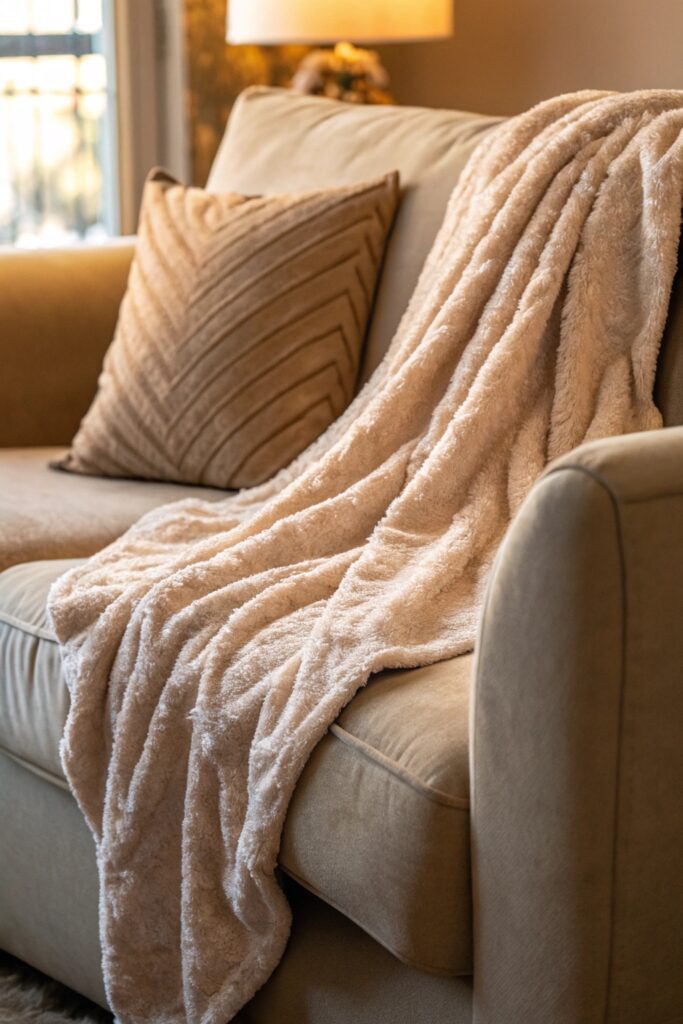
A throw blanket that’s actually used regularly (for warmth while watching TV, for instance) should be positioned somewhere genuinely easy to grab, even if that means a slightly less perfectly styled placement than a purely decorative arrangement.
Balancing styling with real accessibility — keeping at least one blanket in an easy-to-reach spot — makes the whole styling effort sustainable rather than something that gets undone the first time someone actually uses the blanket.
Final Thoughts
The diagonal drape and folded ladder stack are worth starting with if you’re new to blanket styling, since both are quick to execute and work on nearly any sofa shape. Mixing textures rather than focusing purely on color coordination is the detail that most separates a styled sofa from one that simply has a blanket on it.