
A black sofa anchors a room more visually than almost any other single furniture choice, which means the surrounding elements — wall color, lighting, texture — need to actively balance that visual weight rather than compete with it. The details below cover both the styling direction and the practical material considerations for each approach.
Below are 12 ways to build a room around this piece, with the specifics for each.
1. Black Sofa with White and Neutral Tones
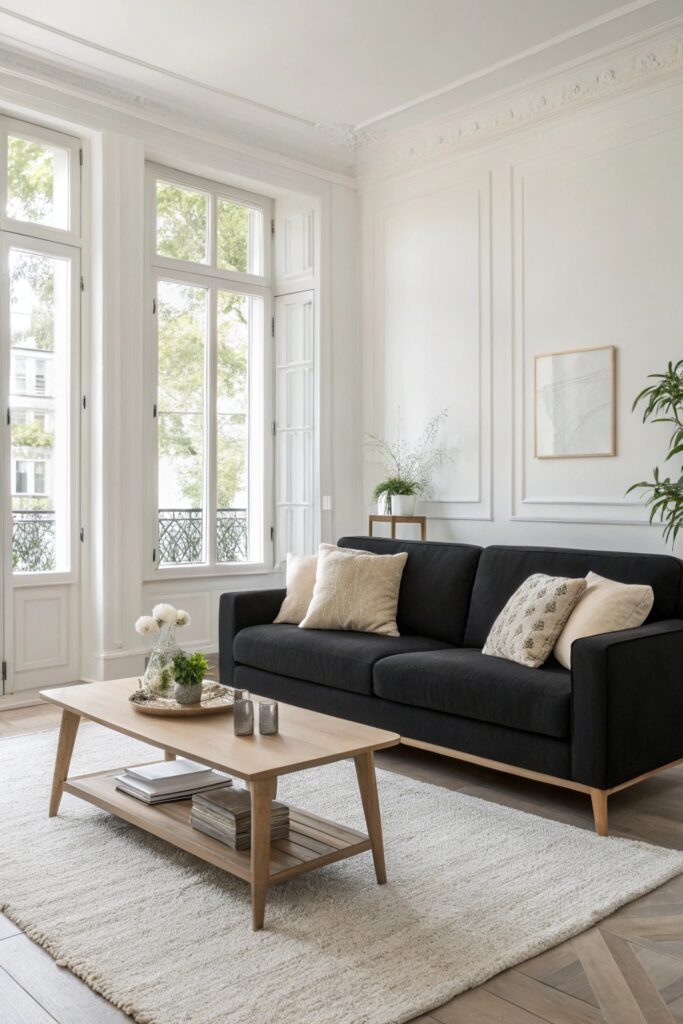
A black sofa is a substantial dark element in a room, so keeping walls and flooring lighter helps prevent the space from feeling heavier than intended — the classic 60-30-10 color rule works well here with the black sofa itself filling much of that darker portion.
2. Monochrome Black-on-Black Aesthetic
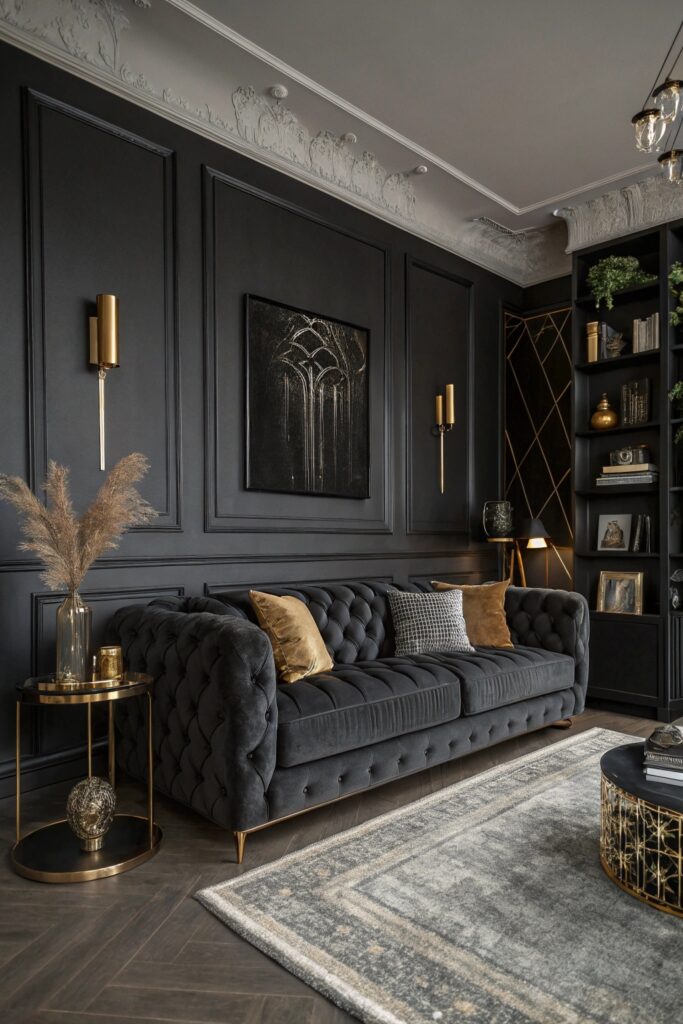
With color contrast removed from the equation, texture does the visual work instead — pairing a matte black sofa against glossy black accent pieces, or velvet against a smoother leather finish, keeps an all-black room from reading as visually flat.
3. Black Sofa with Gold and Brass Accents

Unlacquered brass develops a natural patina over time that many people want for this pairing, while lacquered brass stays uniformly shiny. Keeping gold accents to roughly 10 percent of the room’s visual elements avoids tipping the space into looking overly ornate.
4. Scandinavian Black Sofa Design
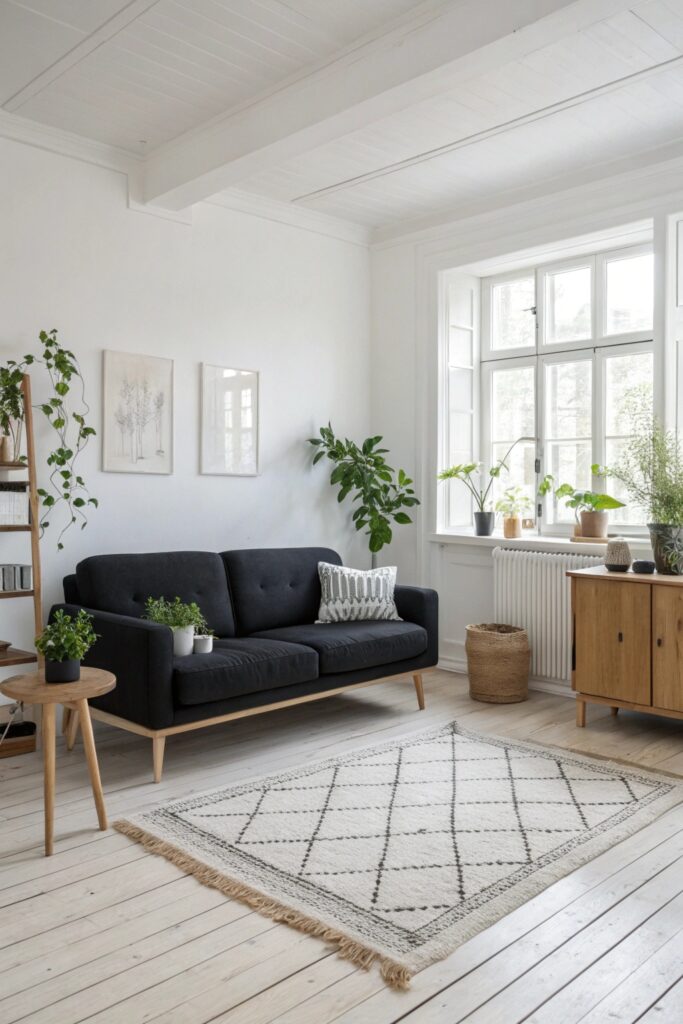
Visible tapered wood legs, rather than a fully upholstered skirted base, make a black sofa read considerably lighter and less bulky — a detail that matters more with dark upholstery than light, since a skirted black base can visually anchor the piece to the floor in a heavier way.
5. Black Sofa with Bold Color Accents
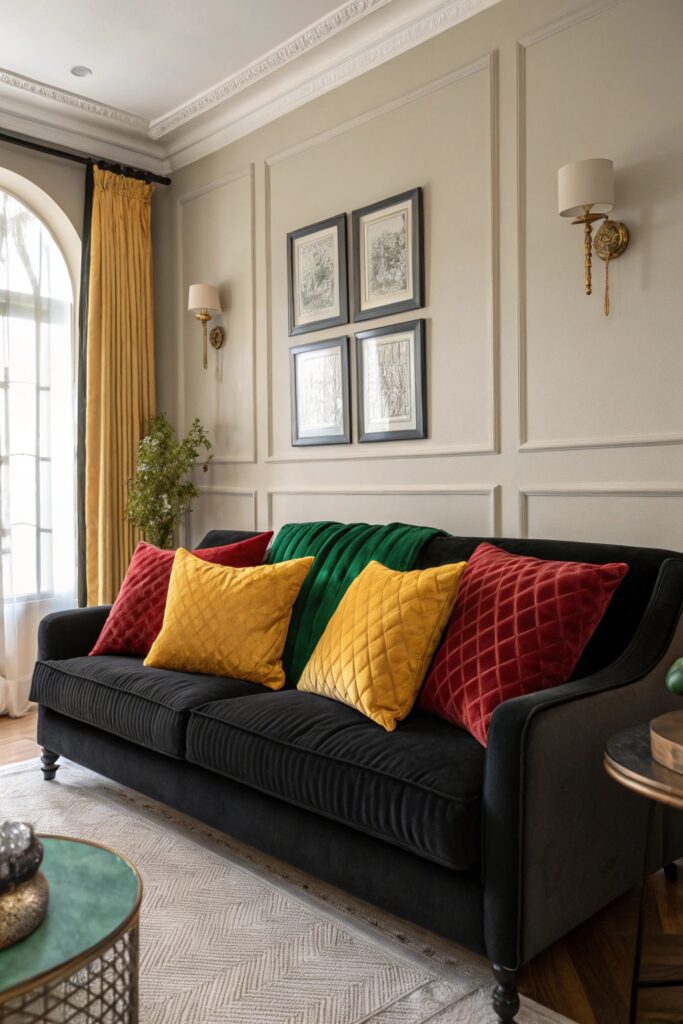
Jewel tones like emerald, sapphire, and deep amethyst read richer against black than pastel shades do, which can look washed out or faded by comparison next to such a dark, saturated base color.
6. Industrial Style Black Sofa Living Room
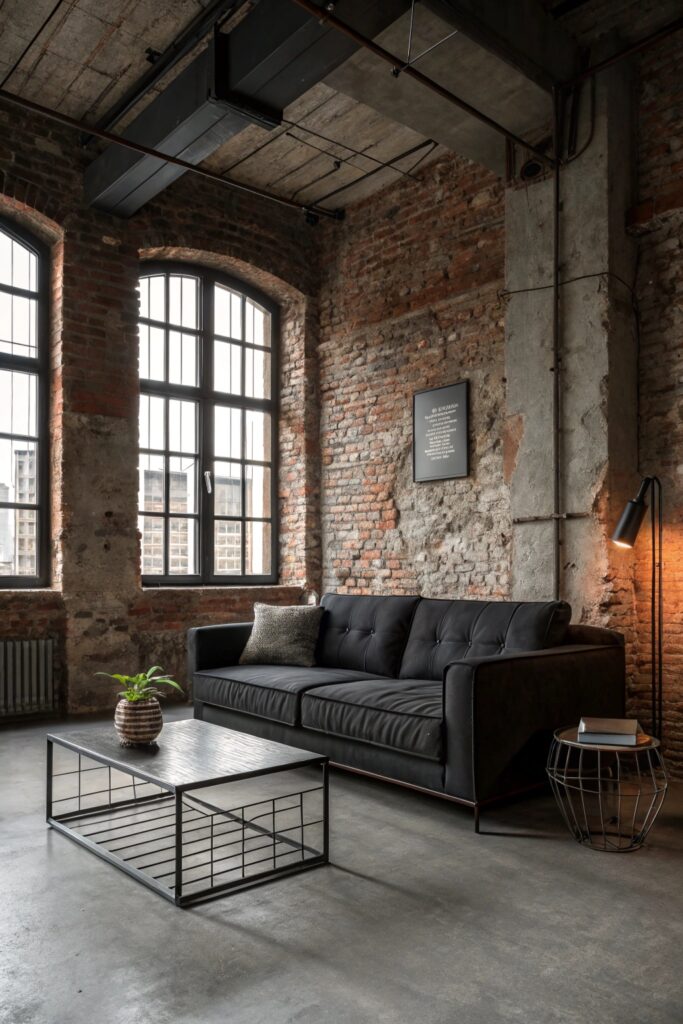
Distressed leather pairs naturally with the exposed brick, raw metal, and concrete surfaces common to this style, since the leather’s worn character echoes the intentionally unfinished quality of the surrounding materials.
7. Black Leather Sofa for a Luxe Look
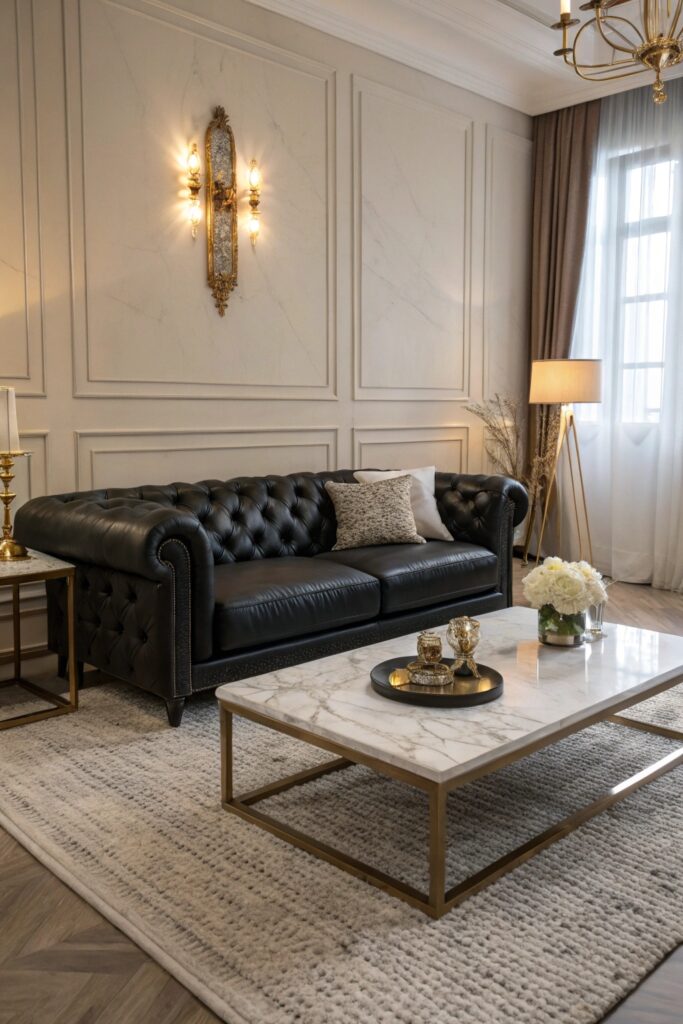
Top-grain leather develops an attractive natural patina and holds up for decades with proper care, while bonded leather — a manufactured material made from leather scraps and backing — tends to peel and crack within 5 to 7 years, a real durability difference worth knowing before purchasing. Conditioning leather every 6 to 12 months helps prevent the cracking that dry, unconditioned leather develops over time.
8. Cozy Black Sofa with Layered Textures

Chunky knit throws, faux fur accents, and varied pillow fabrics all help soften the visual weight that solid black upholstery carries on its own, adding warmth without changing the sofa’s actual color.
9. Black Sofa with Statement Wall Art
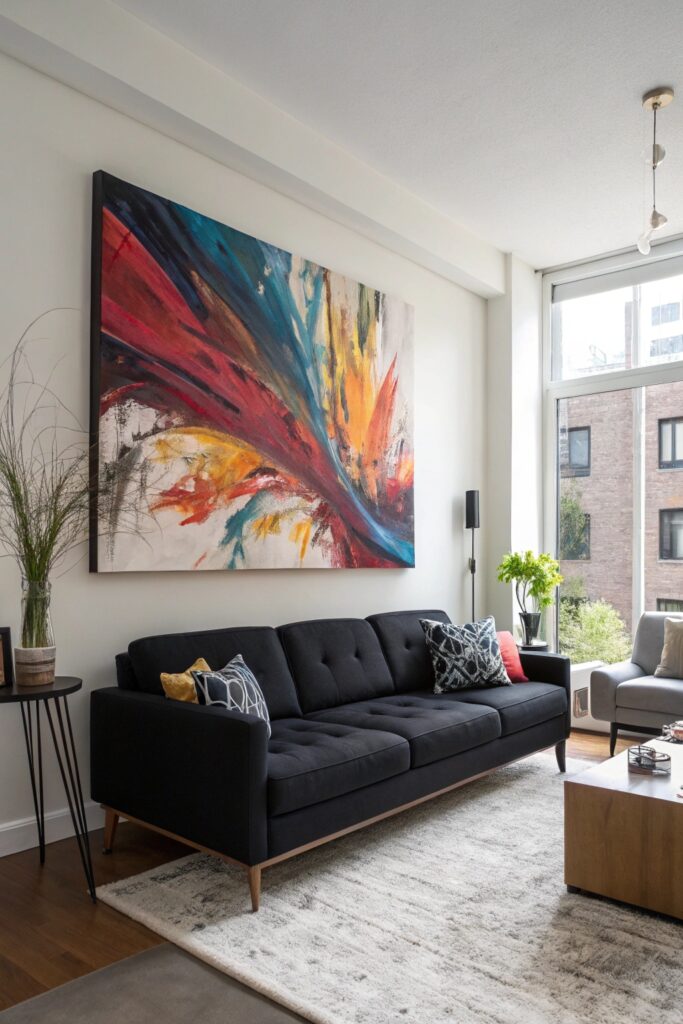
A light or white mat around framed art creates clear visual separation from a black sofa backdrop, while a dark frame can blend into the sofa below it rather than standing out as its own distinct element.
10. Black Sofa with Glass and Mirror Elements

A glass coffee table adds function without adding further visual weight next to an already substantial black sofa, unlike a solid wood table which can make the seating area feel heavier overall. Any glass tabletop in this application should be tempered safety glass, standard practice for furniture at this height.
11. Modern Minimalist Black Sofa Setup
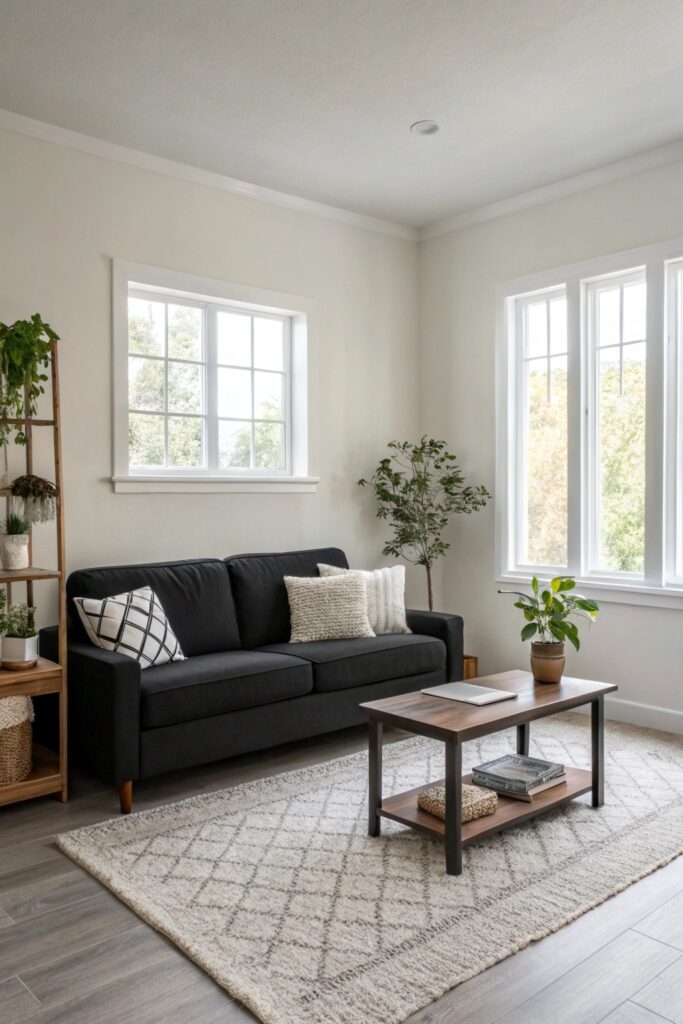
A track-arm sofa with clean, straight lines reads more minimalist than a rolled-arm or heavily tufted style, which carries more traditional, ornate visual weight even in the same black color.
12. Black Sofa with Warm Lighting Ambience

Warm bulbs in the 2700K to 3000K range read considerably cozier against black upholstery than cooler light, which can make dark furniture look flat or harsh by comparison. Since black absorbs more light than lighter-colored furniture, layering in additional lamp or accent lighting matters more in a room built around this color than it would with a lighter sofa.
Fabric Choice Affects More Than Just Looks
Velvet shows fingerprints, pet hair, and pressure marks more visibly than a tighter woven fabric like a performance blend, which matters for a household with kids or pets even though velvet is a popular choice for the rich, luxe look often associated with black sofas.
A performance fabric rated for stain resistance holds up better to daily life than standard upholstery, and many now come in finishes that closely resemble velvet or linen without sacrificing that easier maintenance.
What a Black Sofa Costs
A quality fabric sofa in black typically runs $800 to $2,000 depending on size, brand, and frame construction.
Genuine leather sofas cost considerably more, often $2,000 to $5,000 or higher, while bonded leather alternatives sit closer to fabric pricing but come with the shorter lifespan discussed above.
Cleaning and Maintenance by Material
Black fabric shows dust and lint more visibly than a patterned or lighter fabric would, since there’s no busy pattern to help hide it between regular cleanings — a fabric-rated vacuum attachment used weekly helps keep this manageable.
Leather needs a dedicated leather cleaner and conditioner rather than general upholstery cleaning products, which can dry out or discolor the surface over repeated use if they’re not specifically formulated for leather.
Measuring the actual delivery path — doorways, hallways, stairwells — before ordering a black sofa matters just as much as it would for any other large piece of furniture, and it’s easy to overlook until the piece arrives and doesn’t fit through a tight turn. Many retailers list sofa dimensions alongside a diagonal depth measurement specifically for this reason, which is worth checking against your home’s narrowest point along the delivery route.
Sitting on the actual sofa before purchasing, rather than relying entirely on photos and dimensions, remains worth the effort when possible, since seat depth and cushion firmness affect daily comfort in ways that are difficult to judge from an online listing alone.
Balance the Visual Weight Throughout the Room
The recurring theme across several of these ideas — lighter walls, visible furniture legs, layered textures, warmer lighting — is managing the substantial visual presence a black sofa brings to a room. Without that balance, a space built around this piece can start to feel darker and heavier than intended, even if every individual choice seemed reasonable on its own.
Testing fabric and leather samples against your actual wall color and lighting before committing to a specific black sofa helps confirm the undertone and finish work together, since black upholstery varies more in warmth and sheen between manufacturers than people typically expect from what seems like a single, straightforward color choice.