
An indoor pool involves considerably more mechanical planning than an outdoor one, since humidity control, condensation management, and ventilation all need to be engineered into the space rather than left to natural airflow. The details below cover both the design direction and these practical requirements for each approach.
Below are 10 indoor pool styles worth considering, with the specifics for each.
1. Minimalist Glass-Walled Indoor Pool
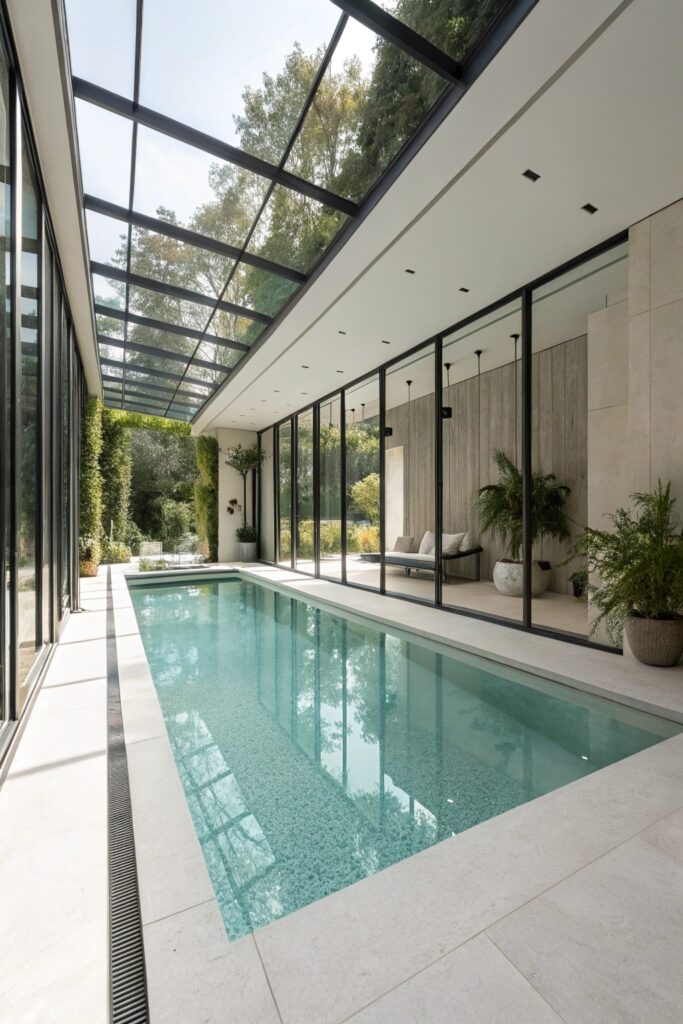
Large glass walls near a pool need to be tempered or laminated safety glass, standard practice for any glazing at this height and in this application. Indoor pools generate significant humidity, so the glass needs proper climate control behind it — without adequate dehumidification, condensation builds up on the glass and can eventually lead to moisture damage in the surrounding framing.
2. Tropical Resort-Style Indoor Pool
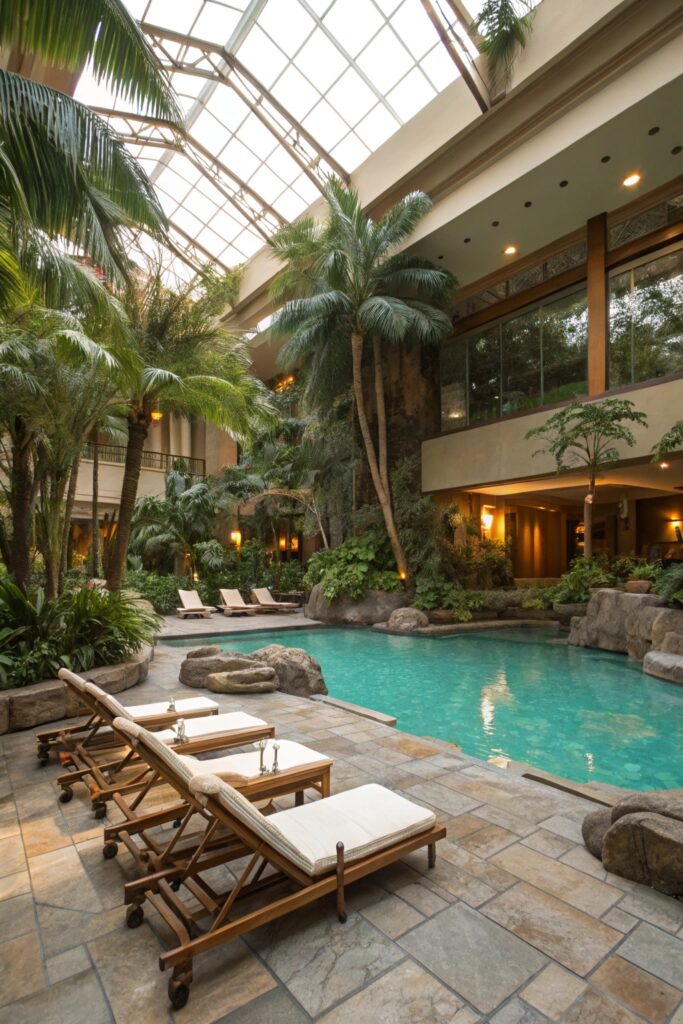
Choose plants specifically suited to high humidity and indirect light, since a true tropical environment around an indoor pool sustains species that would struggle in a typical dry indoor room. Any wood used in this space needs a finish specifically rated for constant moisture exposure, not just a standard outdoor sealant.
3. Infinity Edge Indoor Pool
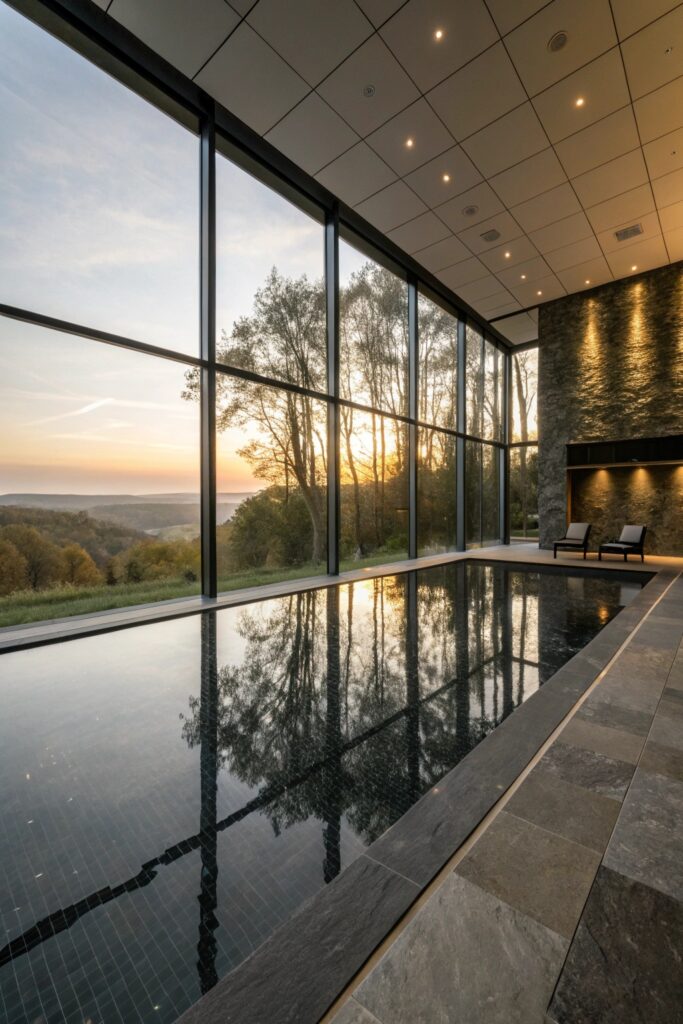
An infinity edge requires a catch basin or gutter system positioned below the overflow edge to collect and recirculate the water, which adds real engineering complexity and cost compared to a standard contained pool — this is a structural decision that needs to be planned from the start rather than added later.
4. Spa-Inspired Indoor Pool Retreat
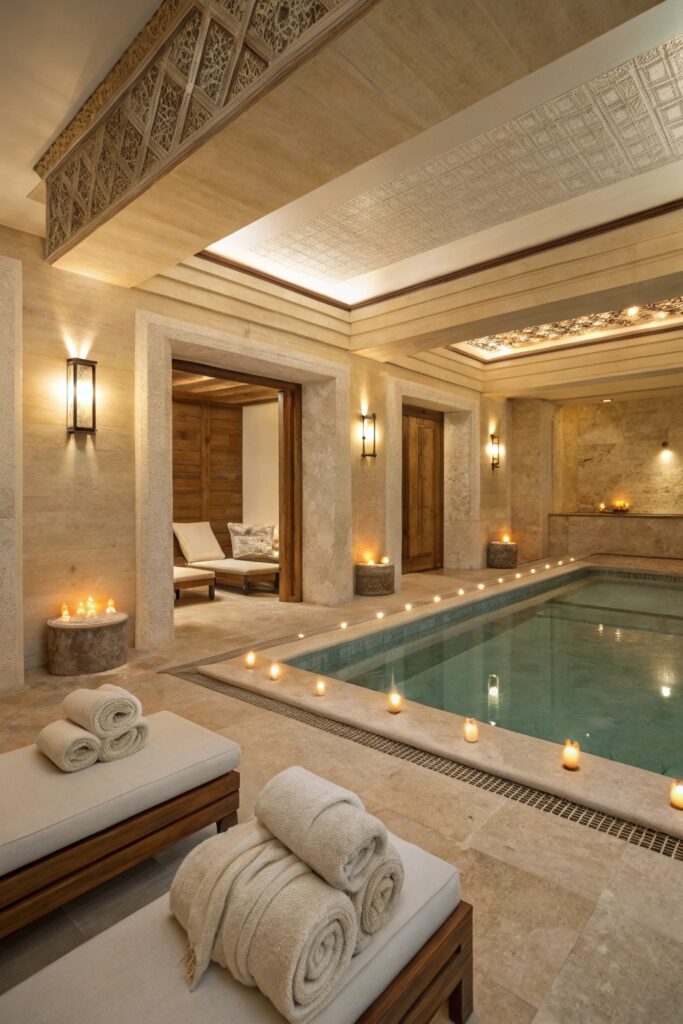
Keeping air temperature a few degrees above water temperature — commonly in the 82 to 85°F range for air against 78 to 82°F water — reduces the chill from evaporation that makes a pool room feel colder than the water temperature alone would suggest.
5. Marble Luxury Indoor Pool
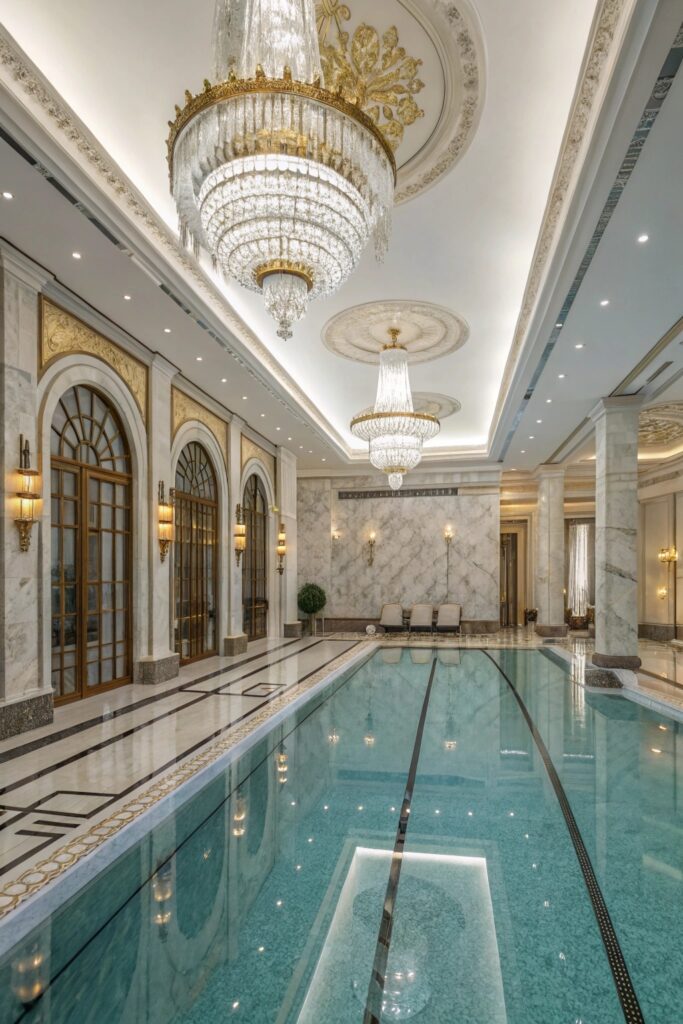
Polished marble becomes noticeably dangerous when wet, so a honed or textured finish is worth choosing specifically for pool deck areas rather than the glossy polish marble is often associated with elsewhere in a home. Pool chemicals can etch marble’s surface over time, so consistent pH-balanced water chemistry and periodic sealing matter more here than with a typical marble installation.
6. Modern Black-Themed Indoor Pool
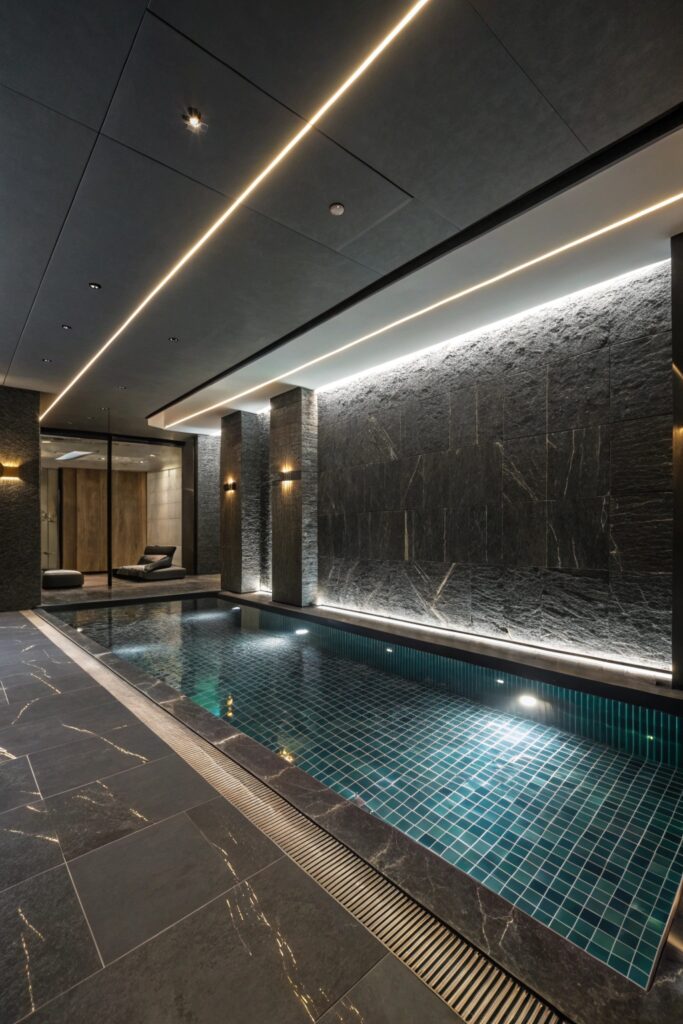
Dark pool finishes make the water appear deeper and reduce visibility to the bottom, which is worth considering carefully for safety, particularly in a household with children — a lighter finish makes it easier to see the pool floor and anyone in the water at a glance.
7. Indoor Pool with Skylight Ceiling
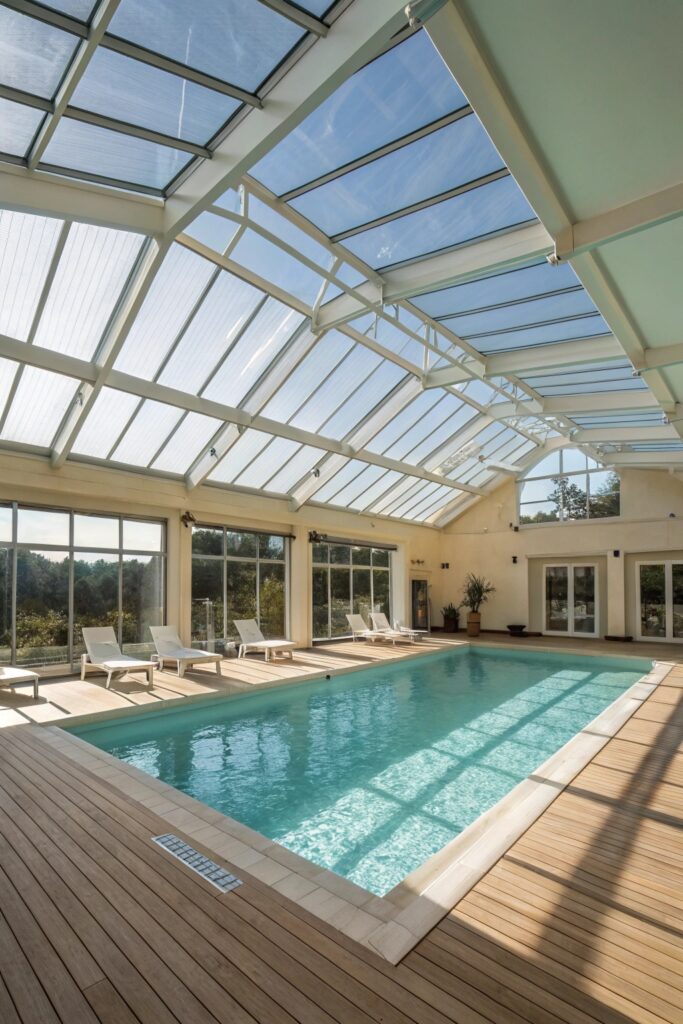
A skylight over an indoor pool is a common spot for condensation problems, since warm, moist air rising from the water meets the cooler glass surface above. Proper thermal break framing and insulation around the skylight are worth the added cost to prevent dripping condensation from becoming a recurring issue.
8. Compact Indoor Lap Pool Design
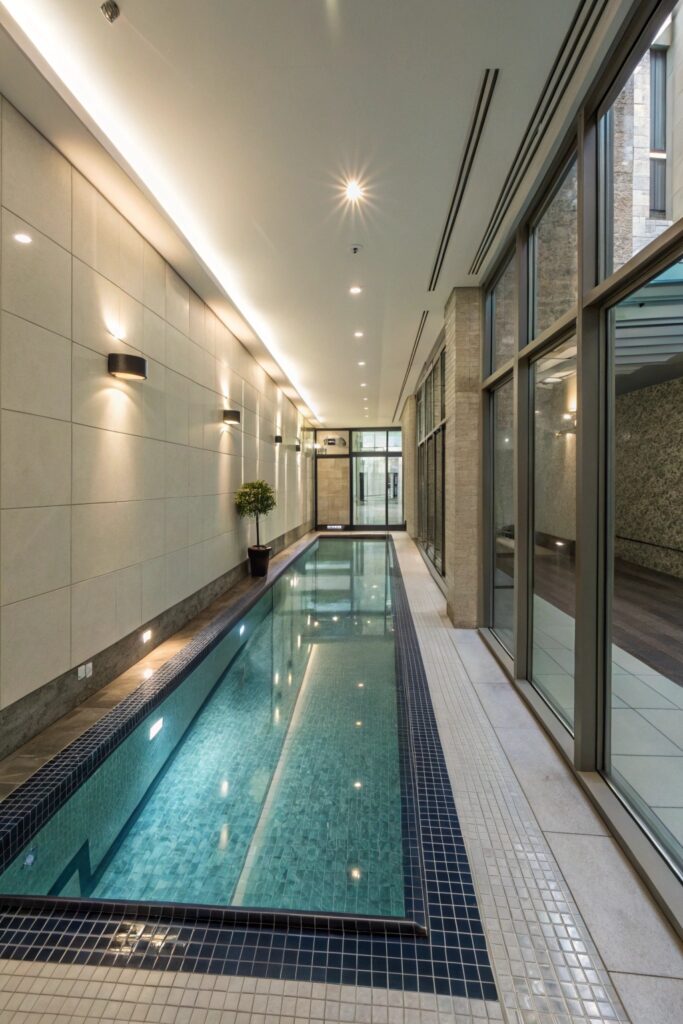
A true lap pool ideally runs at least 40 feet for meaningful swim distance, though shorter lengths are workable for general exercise use. Standard lane width is around 8 feet minimum, which is worth confirming against the available space before committing to a lap pool specifically over a smaller general-use design.
9. Rustic-Modern Indoor Pool
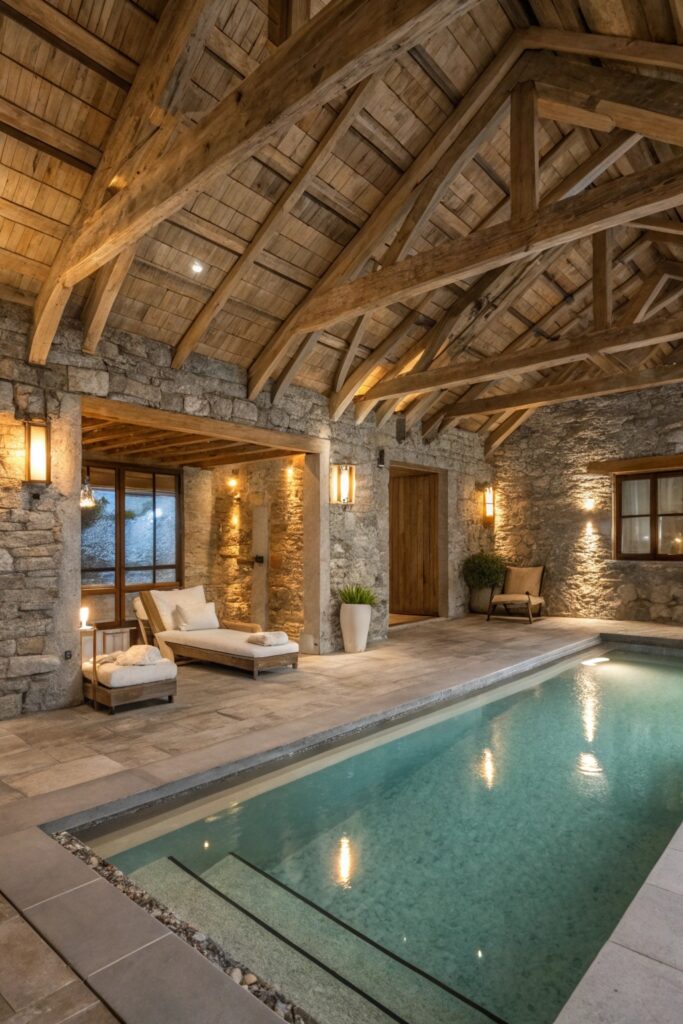
Any wood decking in this style needs a finish specifically rated for constant pool-adjacent moisture, not just standard outdoor-rated sealant, since the humidity level around an indoor pool is more sustained than typical outdoor exposure.
10. Indoor Pool with Lounge and Fireplace
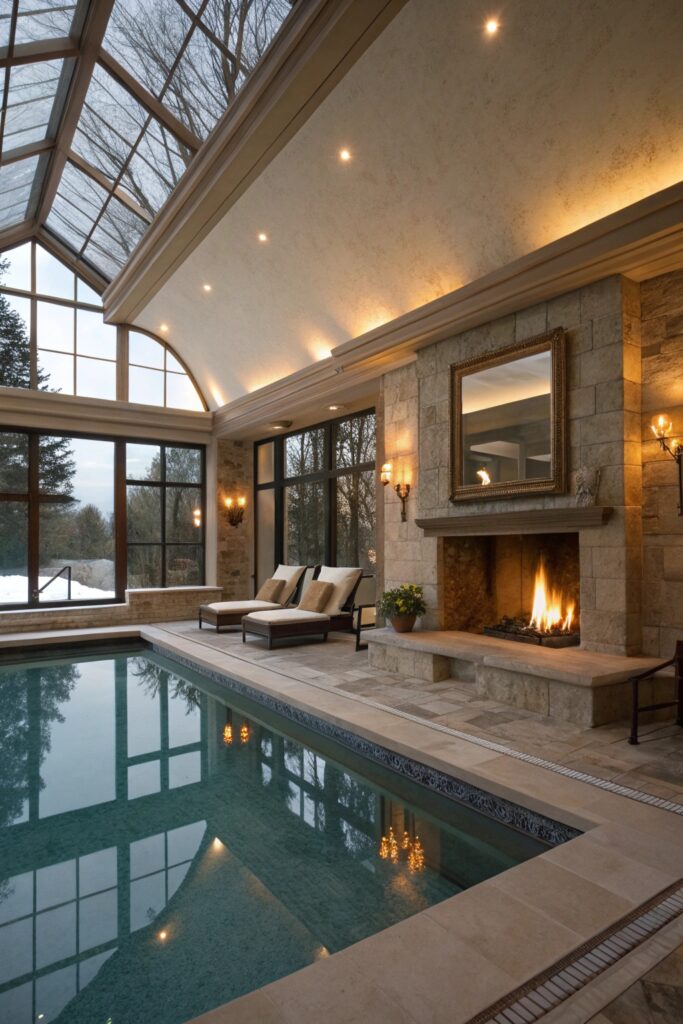
A gas fireplace in this space needs proper ventilation rated for the room’s humidity levels, and maintaining real clearance from the water is a genuine safety requirement, not just a design preference. Humidity also affects a wood-burning fireplace’s efficiency and safety, which is part of why gas units are more commonly used in pool-adjacent rooms.
Ventilation and Air Quality Considerations
Beyond humidity, indoor pool rooms need adequate fresh air exchange to manage chloramine buildup — the byproduct of chlorine reacting with organic material in the water, which is responsible for the strong “pool smell” and can affect air quality in a poorly ventilated space. A properly designed HVAC system for this room typically includes a dedicated fresh air intake rather than simply recirculating the room’s existing air.
Some indoor pool designs use an alternative sanitization system, like saltwater chlorination or UV treatment, partly to reduce the chloramine byproducts that a traditional chlorine system produces, which can make a meaningful difference in a fully enclosed indoor space compared to an outdoor pool where these compounds dissipate into open air.
What an Indoor Pool Costs
A basic indoor pool installation, including the pool itself and standard humidity control, typically starts around $50,000 to $100,000.
A fuller luxury build with premium finishes, an infinity edge, and a more robust dehumidification and ventilation system runs considerably higher, often $150,000 to $300,000 or more depending on size and the specific features involved.
Structural and Waterproofing Requirements
An indoor pool adds substantial weight to a structure, so any installation, especially on an upper floor or over a basement, needs engineering review to confirm the floor and foundation can support it. Waterproofing beneath and around the pool shell is critical, since even minor leaks in an indoor installation can cause hidden water damage to surrounding structural elements before becoming visibly obvious.
Building permits for an indoor pool typically involve more review than an outdoor installation, given the combined structural, plumbing, and ventilation systems involved — budgeting extra time for this approval process helps avoid delays partway through construction.
Ongoing operating costs are worth budgeting for separately from the initial build — heating the water, running dehumidification equipment continuously, and maintaining water chemistry all add up over a year, and an indoor pool typically runs somewhat higher in utility costs than a comparable outdoor pool since it operates year-round rather than seasonally.
Given the scale of these systems, an indoor pool is worth planning as part of a home’s original design when possible, since retrofitting one into an existing structure adds considerably more cost and complexity than building the mechanical infrastructure in from the start.
Dehumidification Is the System Most People Underestimate
A home’s standard HVAC system typically isn’t sufficient to manage the humidity an indoor pool generates — a dedicated pool dehumidification unit is usually necessary to keep moisture from damaging surrounding finishes, framing, and mechanical systems over time. This is one of the more significant costs in an indoor pool project that’s easy to underestimate when focused primarily on the pool and surrounding design.
Confirming your specific design with a pool contractor experienced in indoor installations, rather than one who works primarily outdoors, helps ensure the humidity and ventilation systems are sized correctly for your room’s actual dimensions and water surface area.