
A home yoga room’s success depends more on how it actually functions during practice — floor clearance, prop access, lighting flexibility — than on how it photographs. The details below cover both the design direction and these practical specifics for each element.
Below are 11 home yoga room ideas worth considering, with the specifics for each.
1. Choose a Calm, Quiet Corner
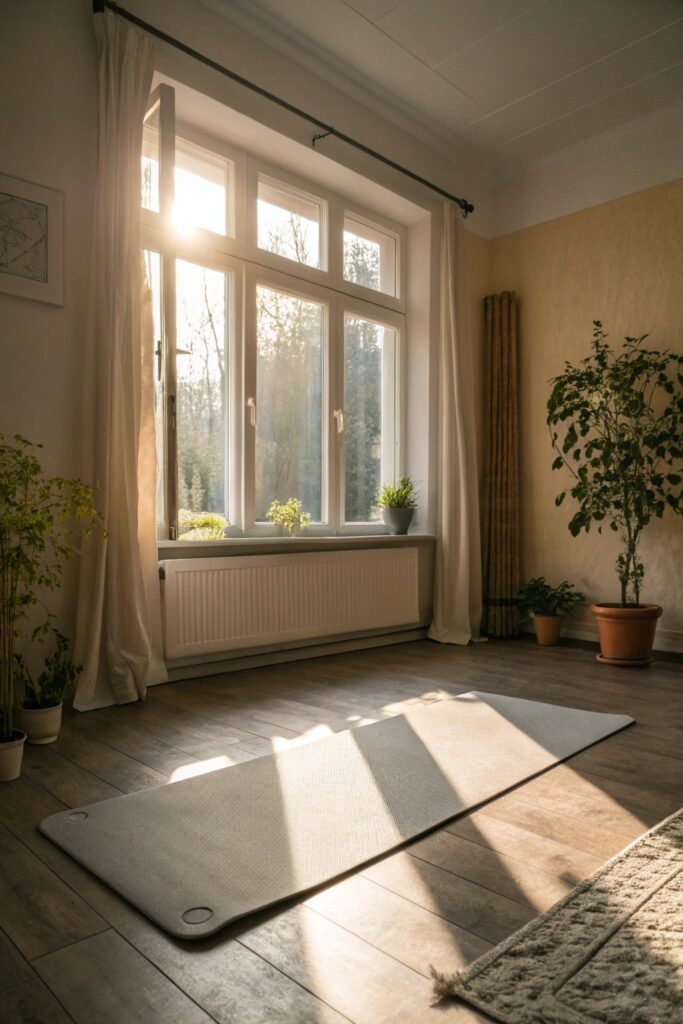
Test a few actual poses in the space before finalizing your spot, since a corner that looks right visually doesn’t always offer the roughly six by four feet of floor clearance needed for full arm and leg extension during practice.
2. Stick to a Neutral Color Palette
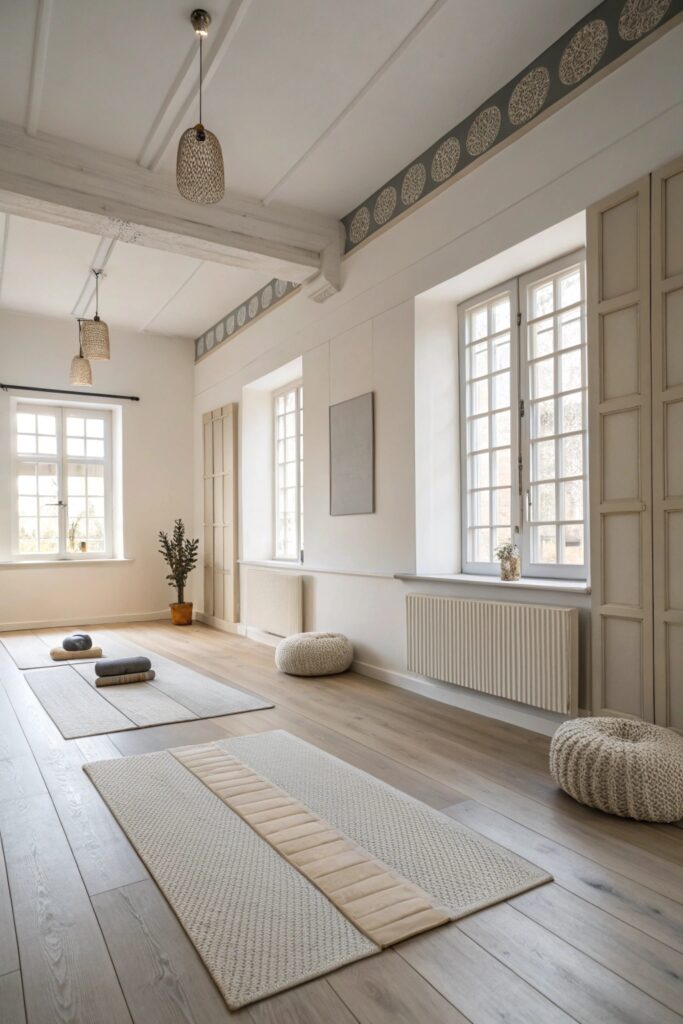
A matte paint finish reduces glare more than a semi-gloss sheen when practicing near natural light from a window, worth choosing specifically for this room’s actual use rather than defaulting to whatever finish is used elsewhere in the house.
3. Bring Nature Indoors
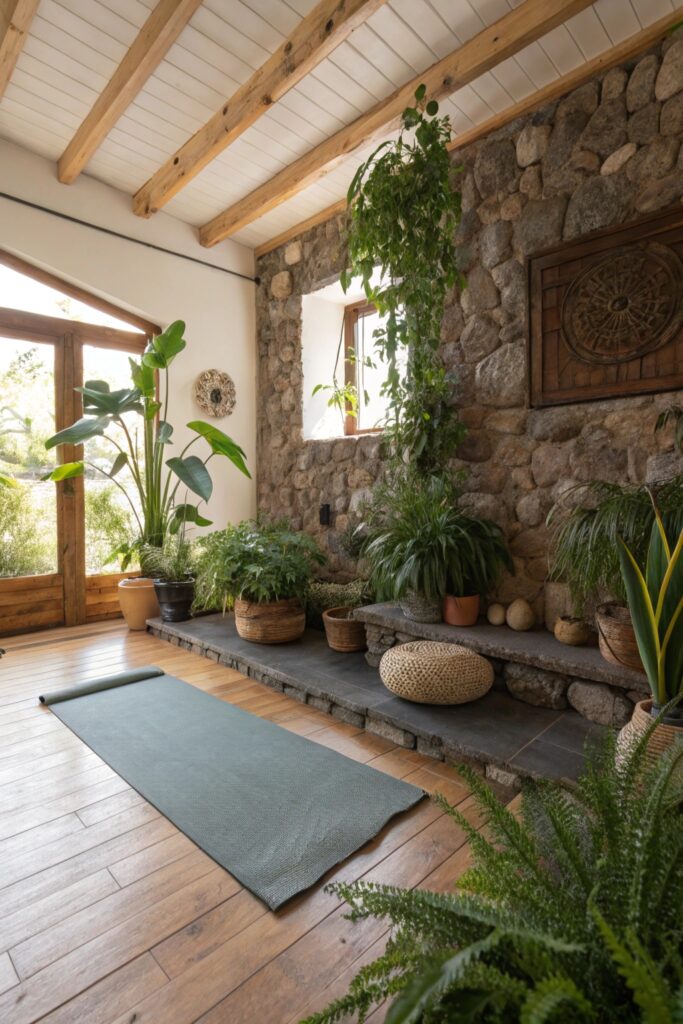
Avoid strongly fragrant plant varieties in this specific room, since a heavy scent can interfere with the breathing-focused nature of a yoga practice in a way that wouldn’t matter in most other rooms.
4. Invest in a Quality Yoga Mat
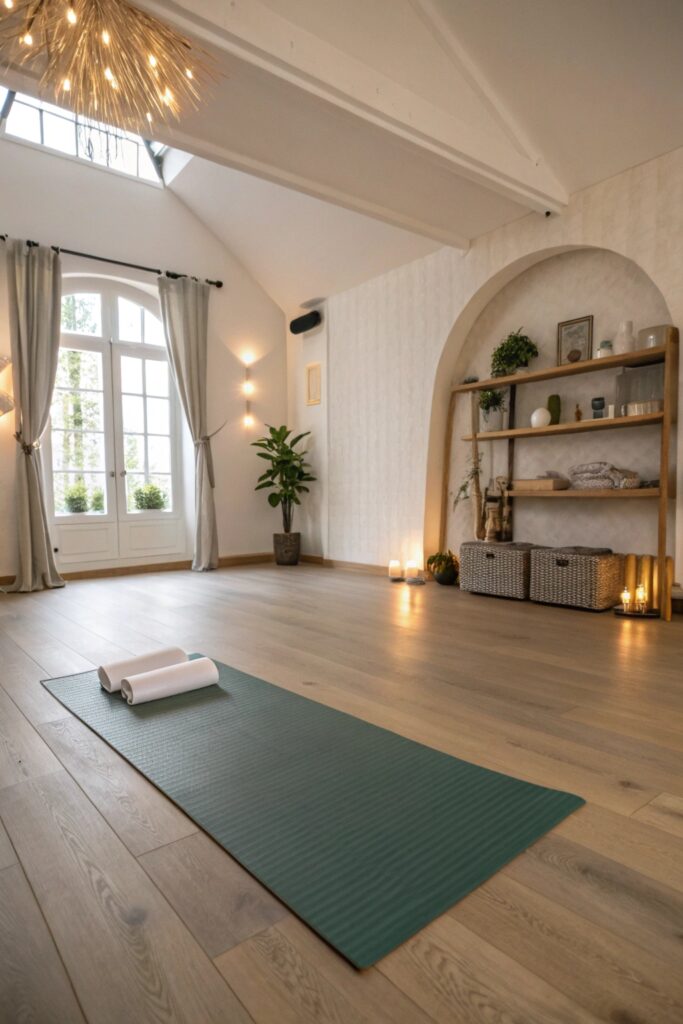
A thicker mat, six millimeters or more, feels more cushioned for seated and reclined poses but can reduce balance stability for standing poses, so choosing thickness based on which type of practice you do most often matters more than assuming thicker is always better.
5. Add Soft, Ambient Lighting
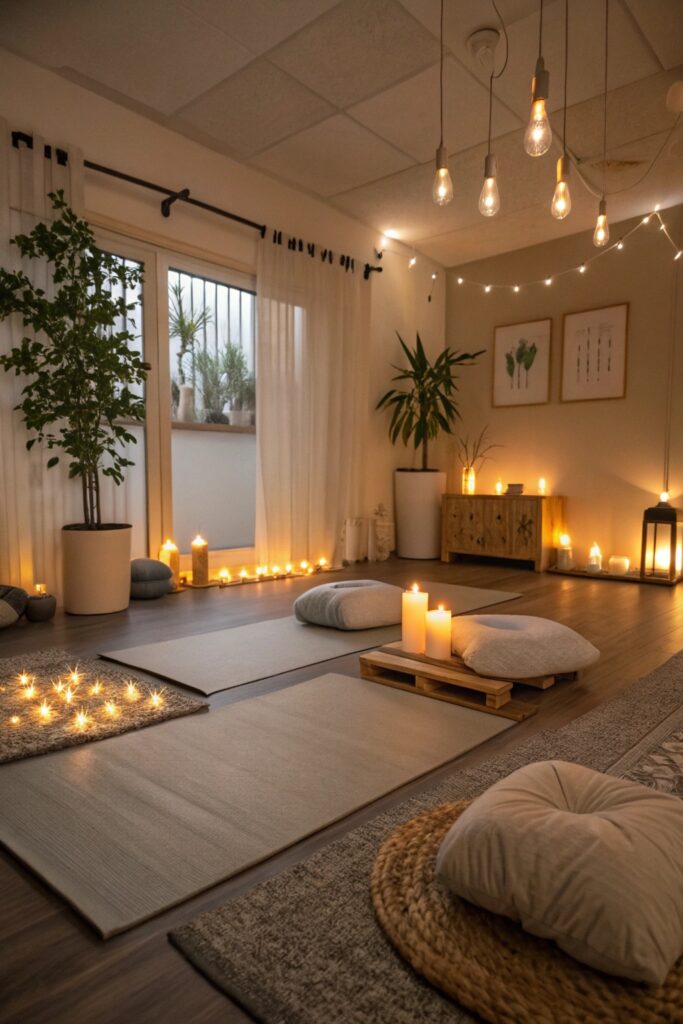
A full-range dimmer, rather than a single fixed “soft” setting, matters more here if the space serves both an energizing morning practice and a calmer evening session, since those two uses actually call for different light levels.
6. Keep It Clutter-Free
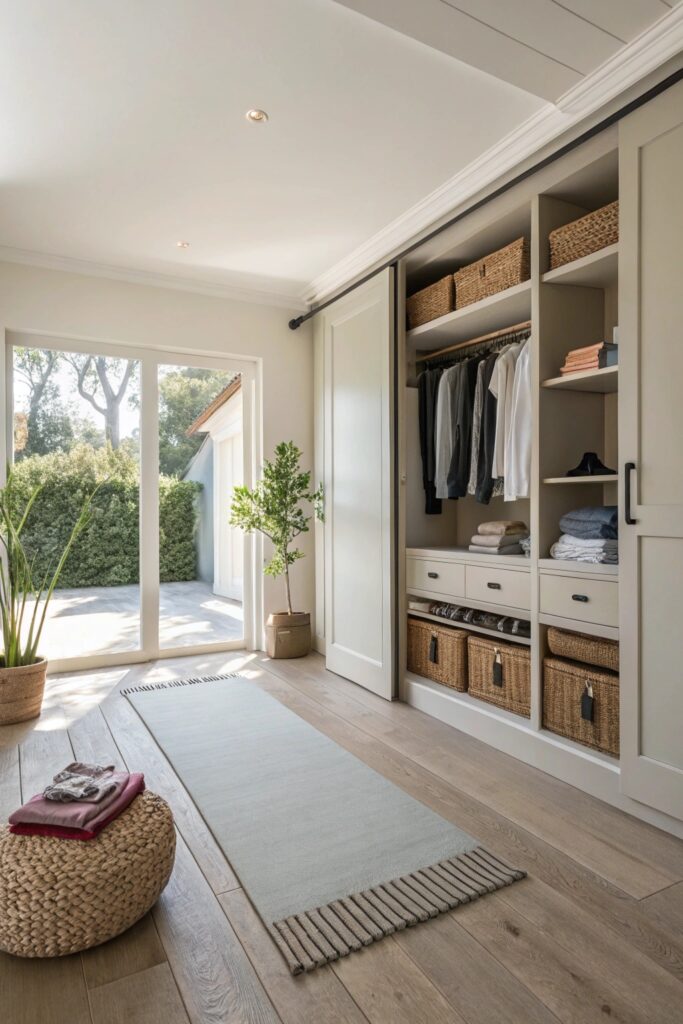
Store props like blocks, straps, and blankets within arm’s reach of the practice area itself, since needing to leave the room mid-practice to retrieve something disrupts the flow state this space is meant to support.
7. Create a Small Meditation Corner
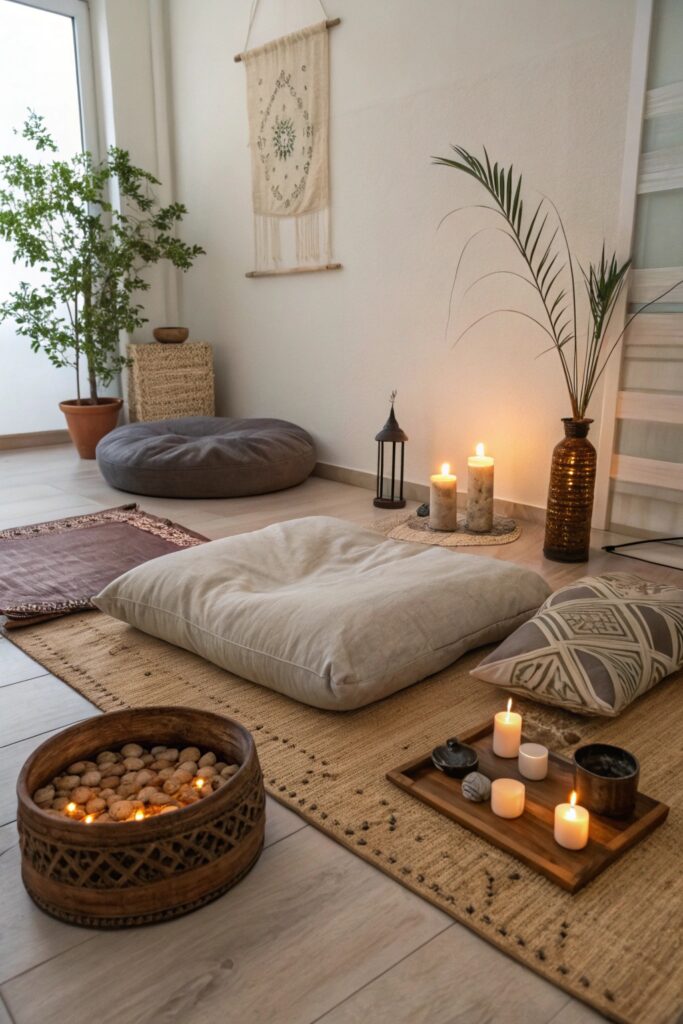
Choose a cushion with real firmness support under the sit bones specifically, not just soft padding, since inadequate support during longer seated sessions can cause real discomfort or numbness over time.
8. Use Mirrors (But Not Too Many)
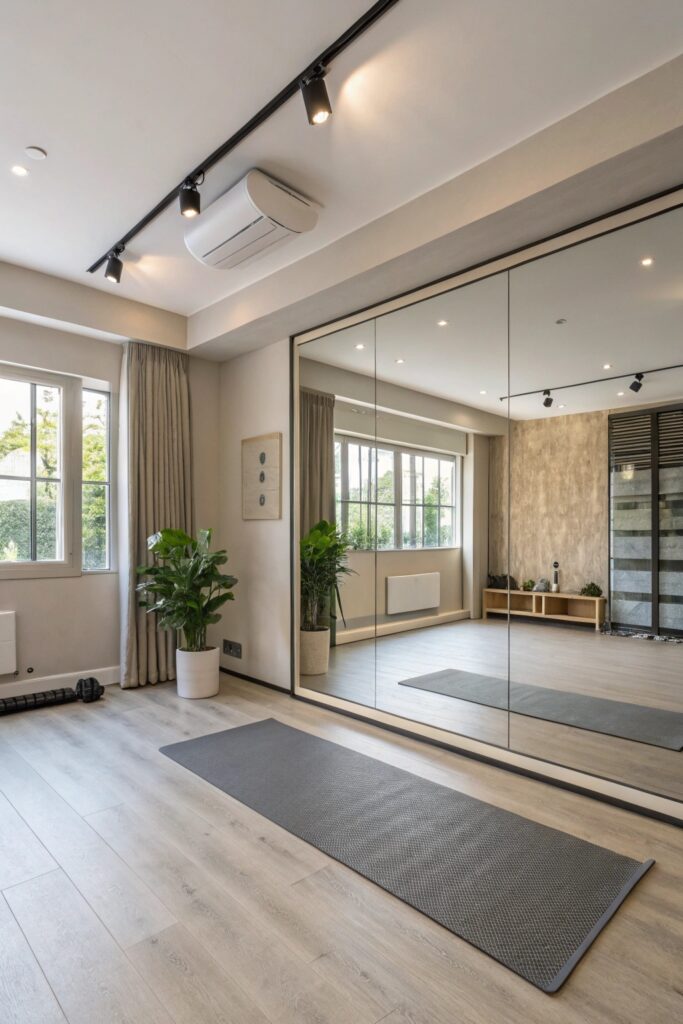
Position a mirror so it helps check alignment during standing poses without creating a distracting reflection during eyes-closed or reclined poses, a placement consideration that matters more here than in most other room types.
9. Add Calming Scents
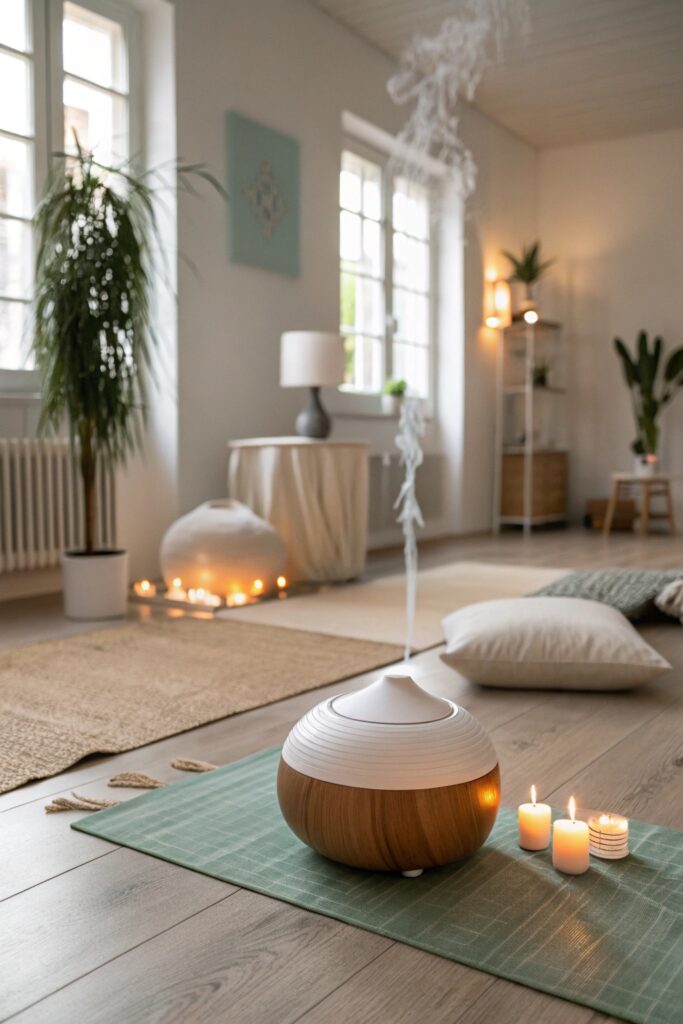
Position an essential oil diffuser away from the mat and any exposed wood flooring, since the moisture it releases alongside the scent can create a slipping risk and, over repeated daily use, potential damage to wood surfaces.
10. Incorporate Personal Touches
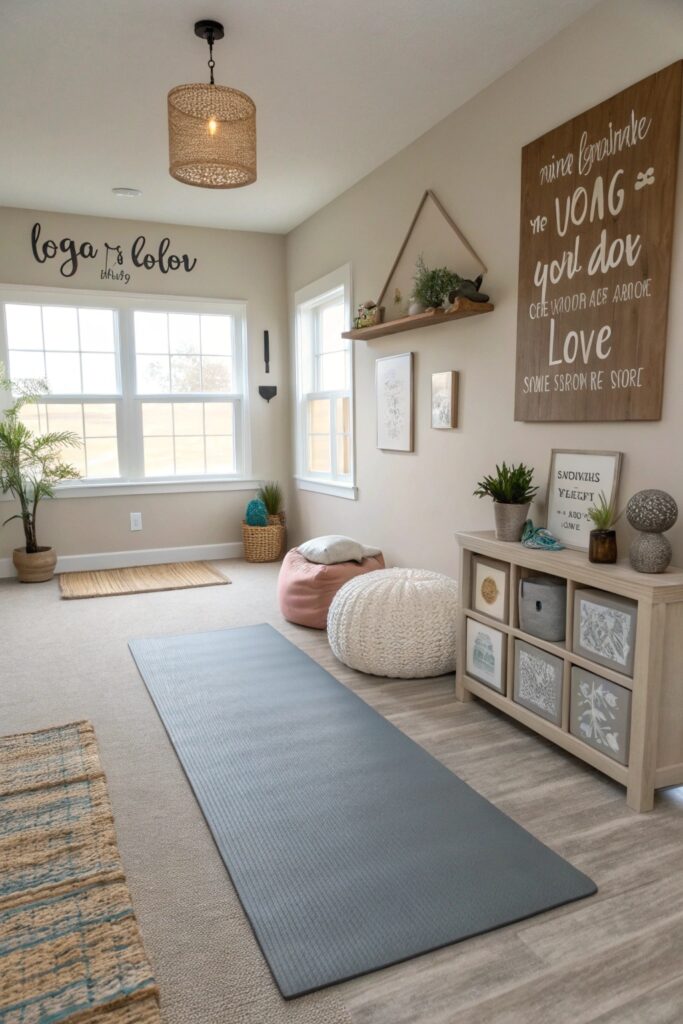
A few meaningful objects — a photo, a favorite quote, a small piece of art — help the space feel authentically yours without tipping into the visual clutter this room specifically benefits from avoiding.
11. Use Soft Textures for Comfort
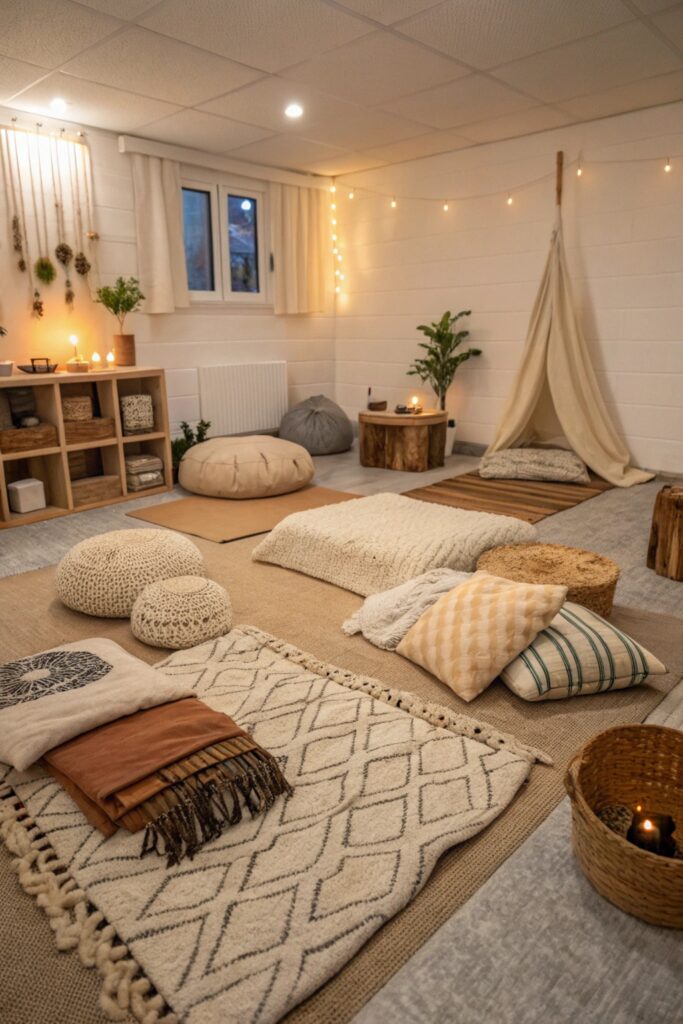
Choose machine-washable materials for any blankets or bolsters in this room, since textiles here see far more direct skin contact and sweat exposure than purely decorative textiles would elsewhere in the house.
Flooring That Supports Your Practice
A hard, slightly textured floor like cork or engineered hardwood provides better grip and support for standing poses than plush carpet, which can throw off balance during poses that rely on a stable, even surface underfoot.
If you’re practicing over an existing carpeted floor, a firm yoga mat with strong grip on both sides helps compensate, though a dedicated hard-surface area remains the more supportive long-term option if you’re able to make that change.
What a Home Yoga Room Costs
A basic setup using an existing room with a mat, cushion, and a few decor pieces typically costs $150 to $500 depending on quality.
A fuller conversion including new flooring, mirrors, and storage runs considerably higher, often $2,000 to $6,000 or more depending on the scope.
Managing Temperature and Airflow
A room that’s too warm makes an active practice uncomfortable, while one that’s too cool can be hard on the body during a slower, more meditative session, so a space with reasonably good climate control or at least a window that opens gives you flexibility to adjust as needed.
Fresh air circulation also matters for a room used for breathing-focused practice specifically, and a small fan on a low, quiet setting can help without creating enough airflow to disrupt balance during standing poses.
Sound Matters as Much as Sight
A room with hard, bare surfaces creates more echo than one with a few soft furnishings, which can make guided meditation audio or calming music sound harsher than intended — a rug, curtains, or even a few floor cushions absorb sound in a way that improves the actual listening experience.
If the space is near a noisy part of the house, a simple white noise machine or a small speaker playing consistent background sound can help mask household noise without needing to soundproof the room itself.
Testing the space at the actual time of day you plan to practice most often — early morning light differs considerably from evening light — helps confirm the lighting and overall atmosphere will actually work for your real routine, not just how the room looks at midday when most photos are taken.
A dedicated wellness space, even a small one, tends to support a more consistent practice than trying to clear space in a shared room each time, since the setup and mental transition into practice mode happens faster when the space is already ready.
Getting quotes from at least two or three contractors before starting a larger flooring or storage build-out helps confirm both pricing and their familiarity with the specific materials this room benefits from, since not every installer has equal experience with cork or other specialty flooring options suited to a dedicated practice space.
A well-designed home yoga room ultimately supports the habit itself more than any single decor choice, since the real value comes from having a space that makes it easier to show up consistently rather than one that simply looks peaceful in photos.
Even a modest corner, thoughtfully set up, can serve this purpose well.
Conclusion
Spending a few practice sessions in the space before finalizing every design decision reveals problems no amount of visual planning catches, like a mirror placement that’s distracting during certain poses or lighting that doesn’t adjust for different times of day.
Whichever combination of these ideas fits your space, prioritizing the elements that support how you’ll actually use the room daily tends to matter more than any single aesthetic choice on this list.