
A home gym’s flooring and structural considerations matter more to long-term safety than any aesthetic choice, since this is one of the few rooms where dropped or moving heavy objects are a routine, expected occurrence. The details below cover both the design direction and these practical specifics for each idea.
Below are 10 home gym ideas worth considering, with the specifics for each.
1. Turn a Spare Room into a Dedicated Gym
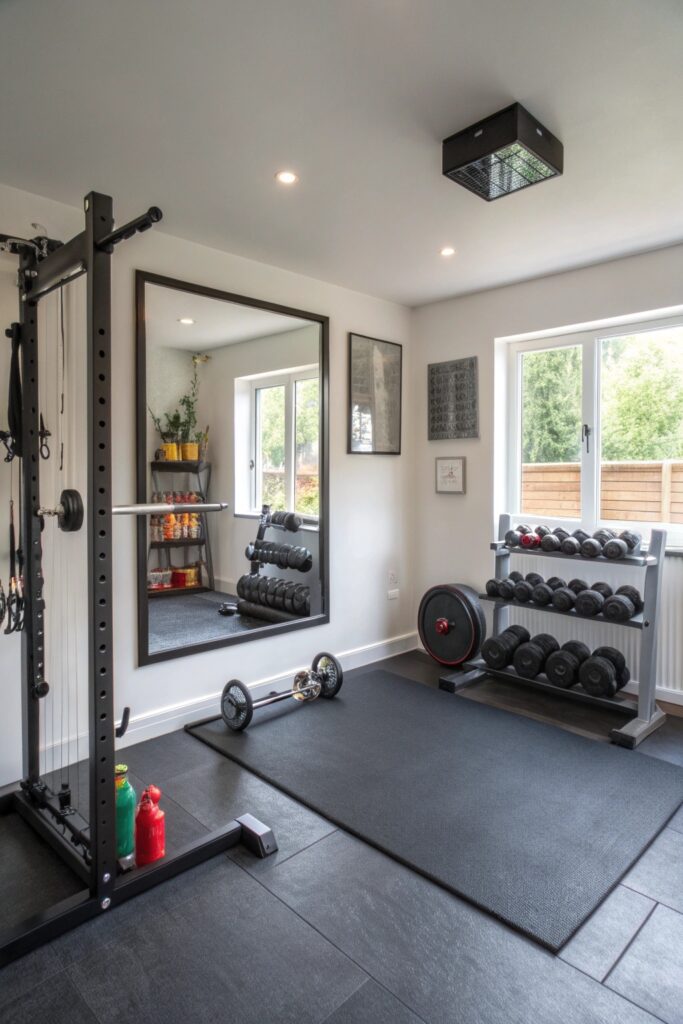
Confirm with a contractor or structural engineer whether an upper-floor room can handle concentrated free-weight training specifically, since heavy barbells and weight racks in one spot can exceed a typical residential floor’s point-load rating.
2. Build a Compact Corner Gym
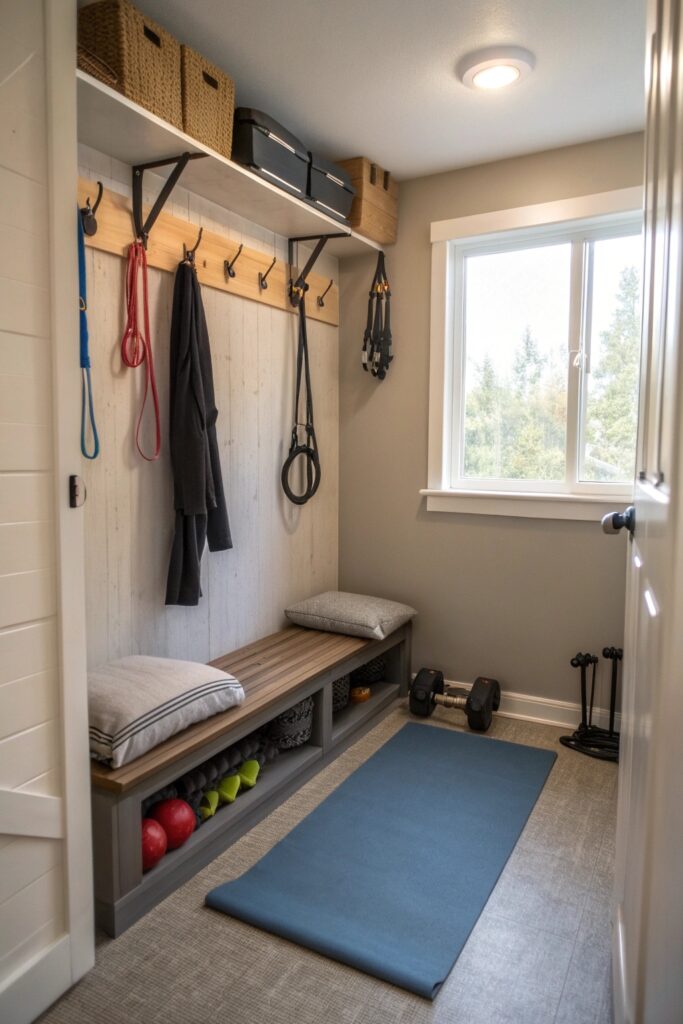
A corner setup still needs the same rubber flooring protection as a full room, since dropped weights concentrated in a smaller footprint can cause more localized impact damage than the same weight spread across a larger space.
3. Add Smart Storage Solutions
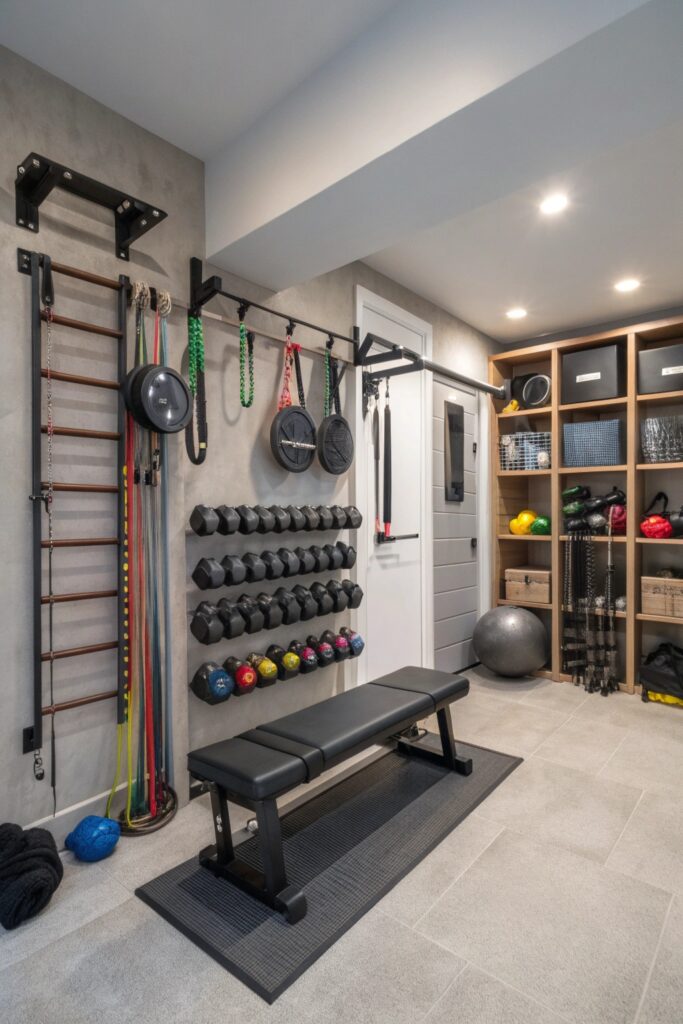
A wall-mounted rack for weights or resistance bands needs anchoring into actual studs, given the real weight gym equipment adds compared to typical household storage.
4. Install Full-Length Mirrors
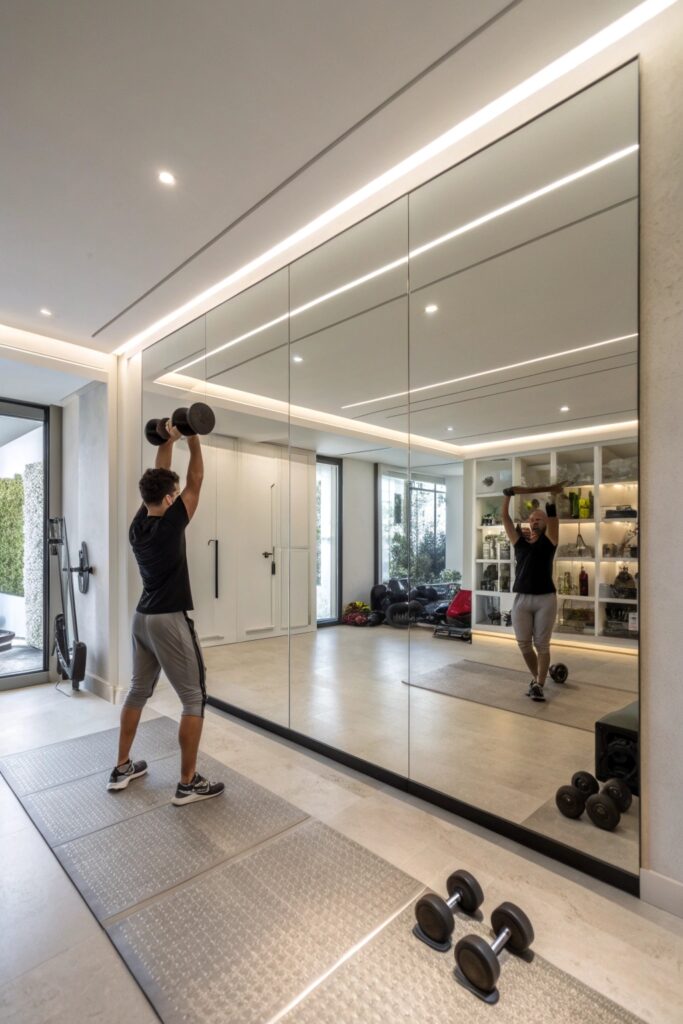
Choose mirrors with genuine shatter-resistant backing or safety film for any spot near a free-weight area, since the real risk of a dropped weight striking the glass doesn’t apply to a mirror in a bedroom or bathroom.
5. Upgrade Your Lighting Game
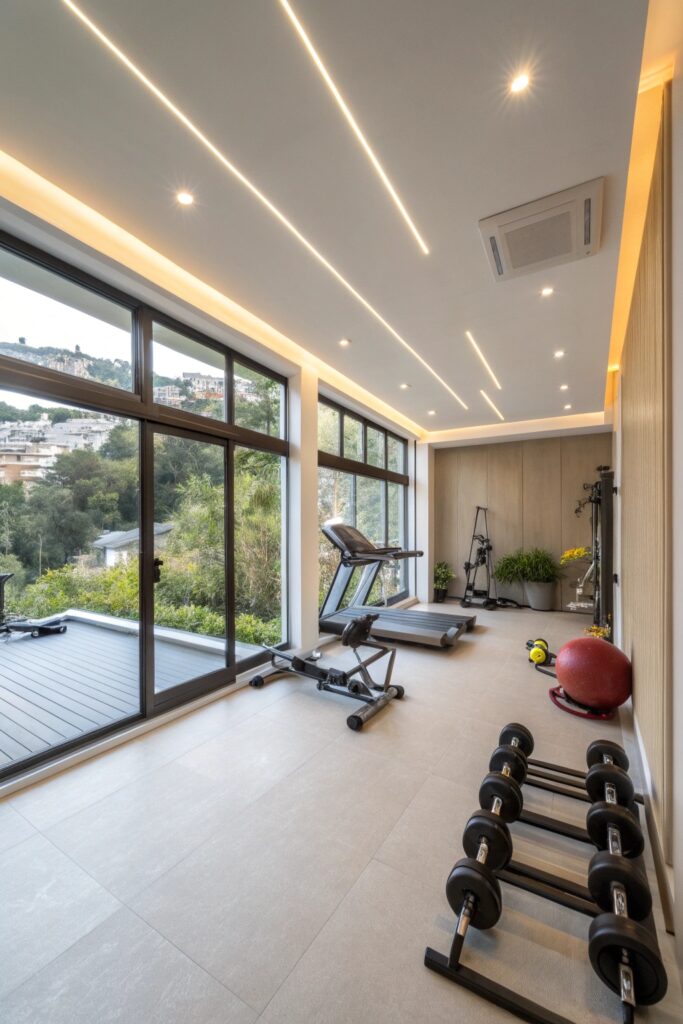
Choose enclosed or impact-protected fixtures over exposed bulbs, since equipment and resistance bands move unpredictably in this room in a way that puts lighting at more risk than in most other spaces.
6. Create a Motivational Wall
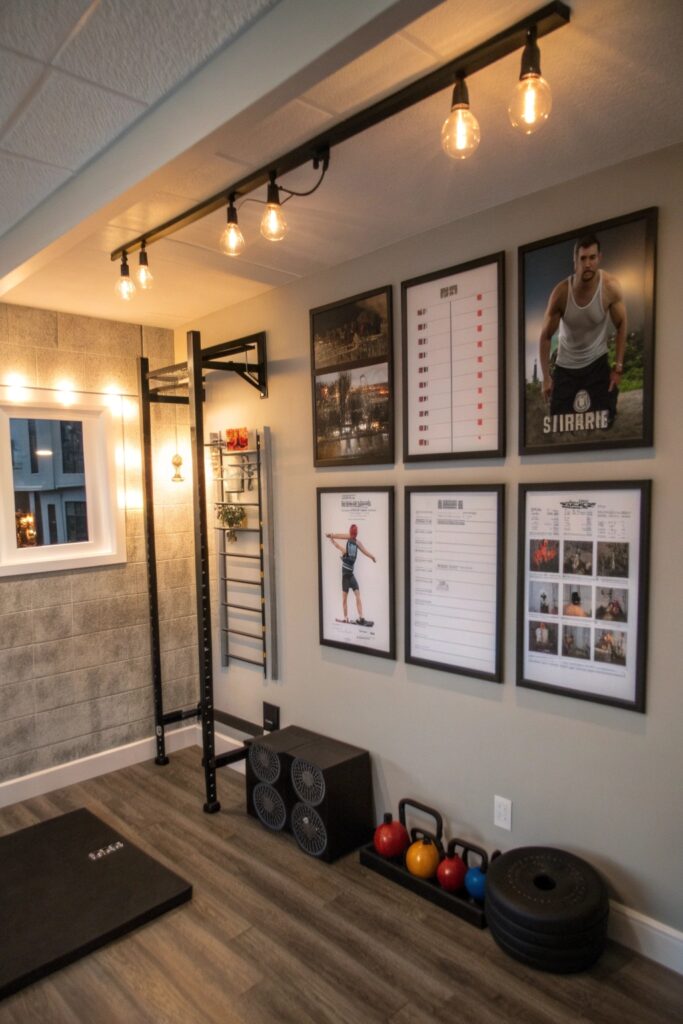
Secure any wall-mounted art or decor with anchors rated for its weight, the same standard that applies to wall-mounted pieces in any other room.
7. Invest in Multi-Functional Equipment
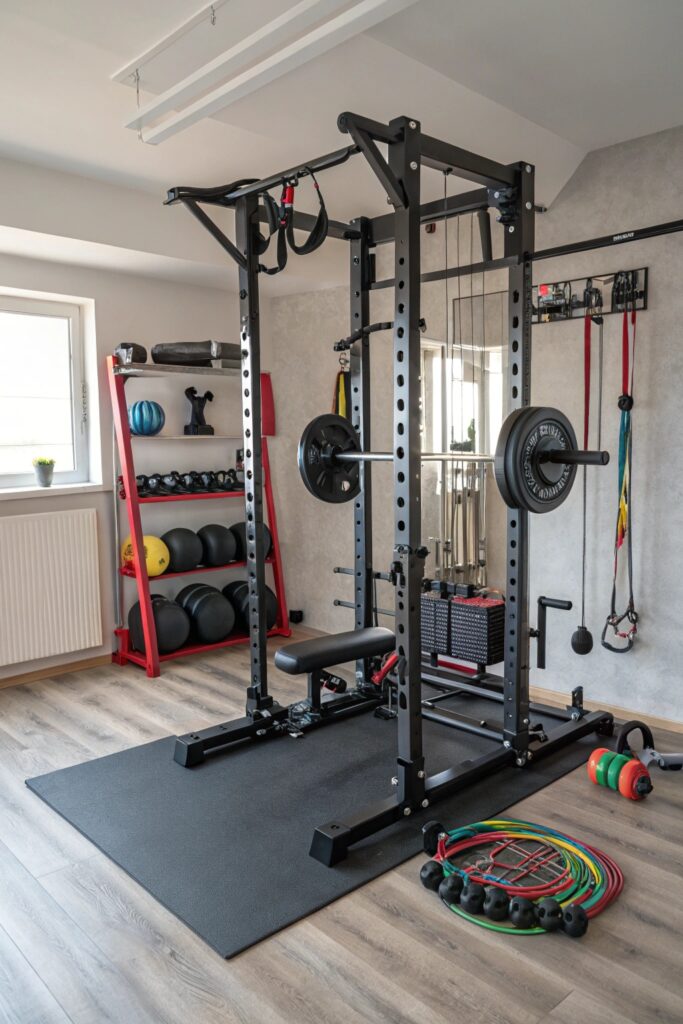
Confirm your floor can handle the actual point-load of multi-purpose equipment like an adjustable bench or cable machine specifically, since these concentrate significant weight into a smaller footprint than the same functions spread across separate machines.
8. Add a Cardio Zone
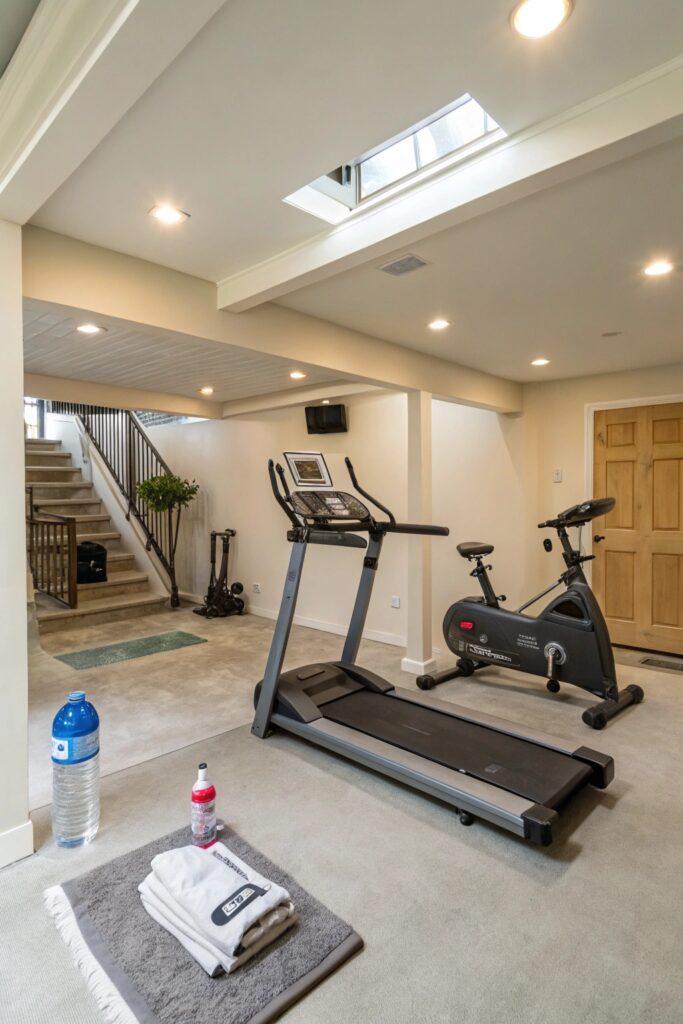
Give cardio equipment like a treadmill its own dedicated electrical circuit given the continuous motor draw, and leave real clearance around the machine’s actual footprint, since belts and moving parts often extend beyond what’s visible from the frame.
9. Sound System or Headphone Setup
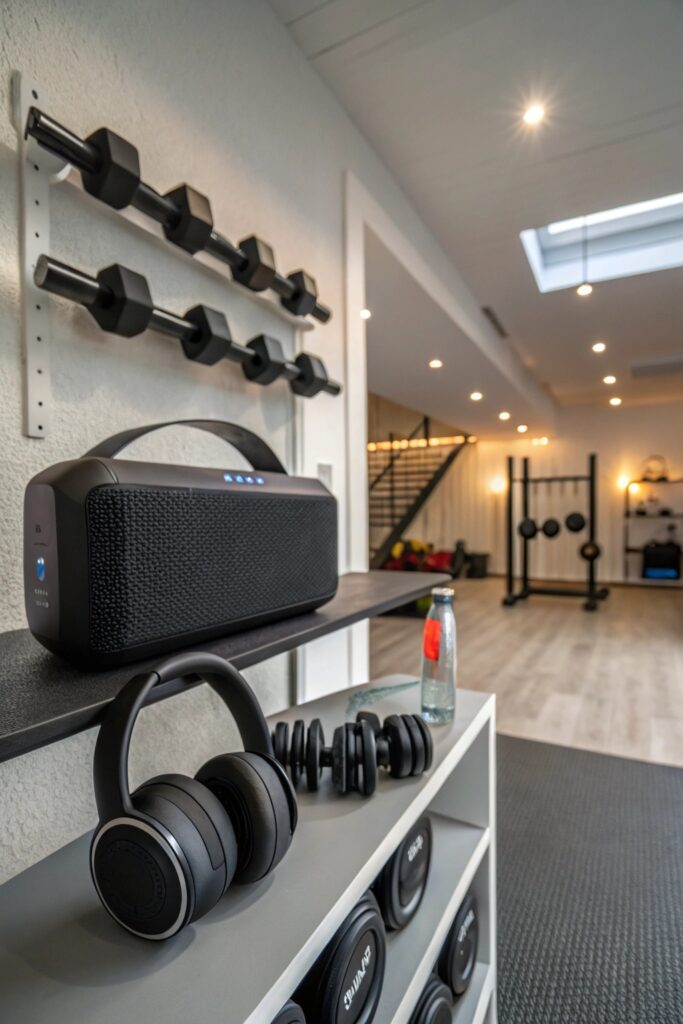
Position outlets and any wired connections away from the main workout area’s floor space, since cords underfoot become a real tripping hazard during active movement.
10. Personalize Your Space
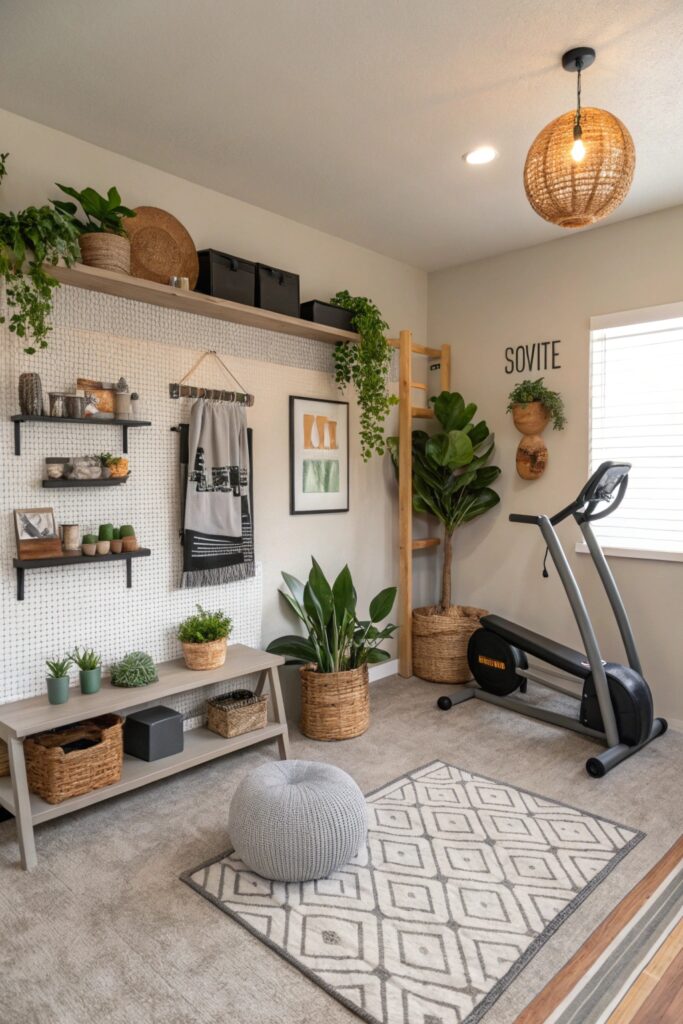
Keep personal touches like photos or decor away from areas where equipment moves or weights get set down, since this room sees more incidental impact than almost any other space in the house.
Ventilation and Temperature Control
A home gym generates more heat and humidity from actual physical exertion than almost any other room, so a dedicated fan, window, or connection to your home’s HVAC system matters more here than in a typical spare room conversion.
Basement gyms specifically benefit from a dehumidifier, since the combination of below-grade humidity and workout-generated moisture can lead to a musty smell or even mold if airflow isn’t adequate.
What a Home Gym Setup Costs
A basic setup using rubber flooring, a few pieces of equipment, and a mirror typically costs $500 to $1,500 depending on quality.
A fuller gym including a rack, multiple machines, and upgraded flooring runs considerably higher, often $3,000 to $10,000 or more depending on the scope.
Sound Considerations for Shared Homes
Dropped weights and jumping movements transmit real impact noise through floors and walls, so a gym positioned above a bedroom or shared wall with neighbors is worth reconsidering if noise is a real concern in your household.
Thick rubber flooring absorbs considerably more impact sound than a thin mat, and adding an underlayment beneath the flooring provides another layer of noise reduction if the room sits directly above a living space.
Planning for Equipment You’ll Actually Use
Buying equipment based on your realistic workout habits, rather than an idealized version of your routine, prevents a room full of underused machines taking up space that could serve a more consistent training style.
Starting with a smaller core setup and adding pieces as your routine solidifies over the first few months tends to result in better long-term equipment choices than furnishing the entire room at once before you know exactly what you’ll use regularly.
Getting quotes from at least two or three flooring installers before committing to a larger gym build-out helps confirm both pricing and their experience with rubber or specialty athletic flooring, since not every installer has equal familiarity with these materials compared to standard residential flooring.
Water and Towel Access
A small shelf or side table for a water bottle and towel keeps you from stepping away mid-workout, which sounds minor but noticeably affects how consistently people stick with a home gym routine compared to a shared space you have to leave to grab basic essentials.
If plumbing access allows, positioning the gym near a bathroom or adding a small sink nearby adds real convenience for rinsing off or filling a water bottle without walking through the rest of the house mid-session.
Checking with your homeowner’s insurance provider about whether a dedicated home gym affects your coverage is worth doing, particularly if you’re installing heavier equipment or making structural changes, since some policies treat this differently than a standard spare room.
A home gym that’s actually used regularly pays for itself over time compared to a gym membership, particularly for households with more than one person working out, though the upfront investment requires real planning to get the fundamentals right from the start.
Whichever combination of these ideas fits your space and fitness routine, prioritizing the structural, electrical, and flooring fundamentals first sets up everything else on this list, from equipment choices to the finishing decor touches, to actually work well over the long run.
Setting realistic expectations about how the room will look during actual use, not just when freshly organized, also helps — a functional home gym sees more visible clutter and wear on a daily basis than most other rooms in the house.
Conclusion
Getting a professional assessment of your floor’s actual load capacity before investing heavily in free weights or heavy equipment, particularly on an upper floor, saves real risk compared to assuming any room can handle serious strength training.
Whichever combination of these ideas fits your space, prioritizing flooring, structural capacity, and equipment clearance first tends to matter more to how safely and consistently you’ll actually use the room than any single design choice on this list.