
A calming room relies on actually reducing visual and sensory clutter — fewer objects, softer light, muted colors — rather than adding more decoration to achieve a peaceful feeling.
Below are 11 elements that build this kind of space, with practical notes for each.
1. Soft, Layered Lighting That You Control
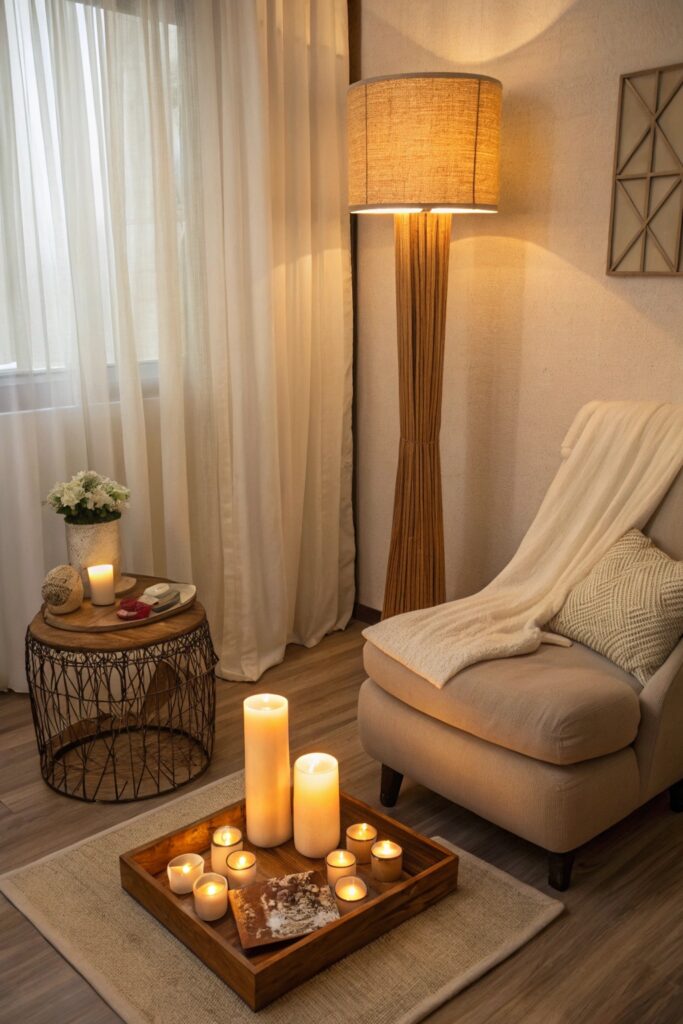
Multiple light sources at different heights meaningfully give you control over the room’s mood throughout the day, rather than relying on a single harsh overhead fixture.
Dimmer switches on at least one source let you shift the room from bright and functional in the morning to dim and restful in the evening without any extra effort.
2. A Dedicated Meditation or Breathwork Corner
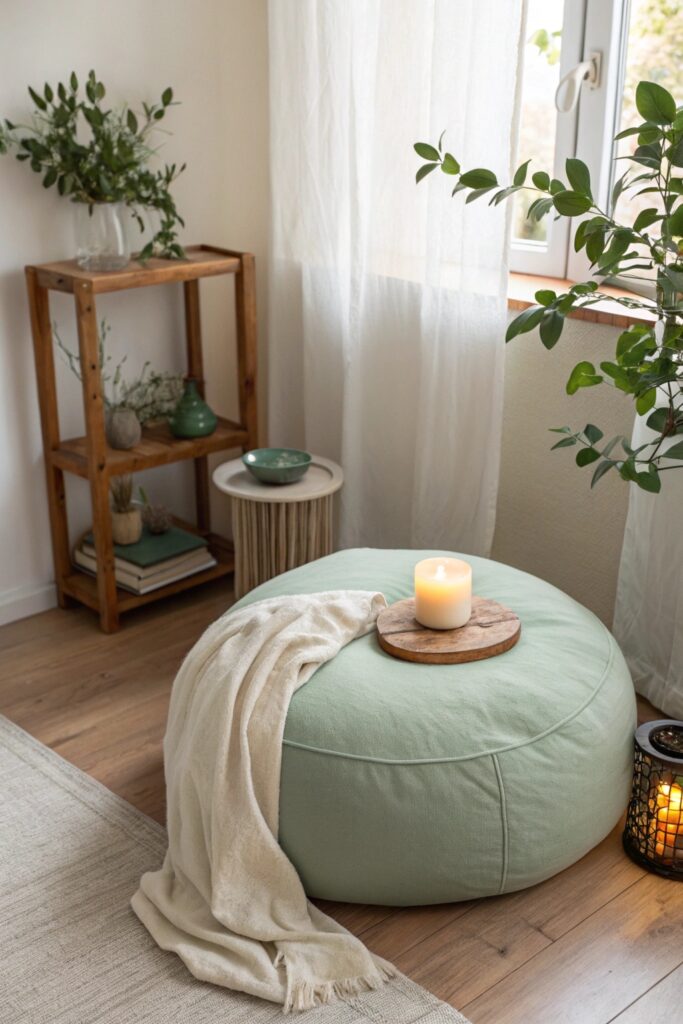
A small, clearly defined spot — even just a cushion and a low table — signals to your mind that this corner is for slowing down specifically.
Facing the spot away from doorways and screens also helps, since a clear sightline to a hallway or TV tends to pull attention right back out of the moment.
3. Natural Materials Throughout the Room
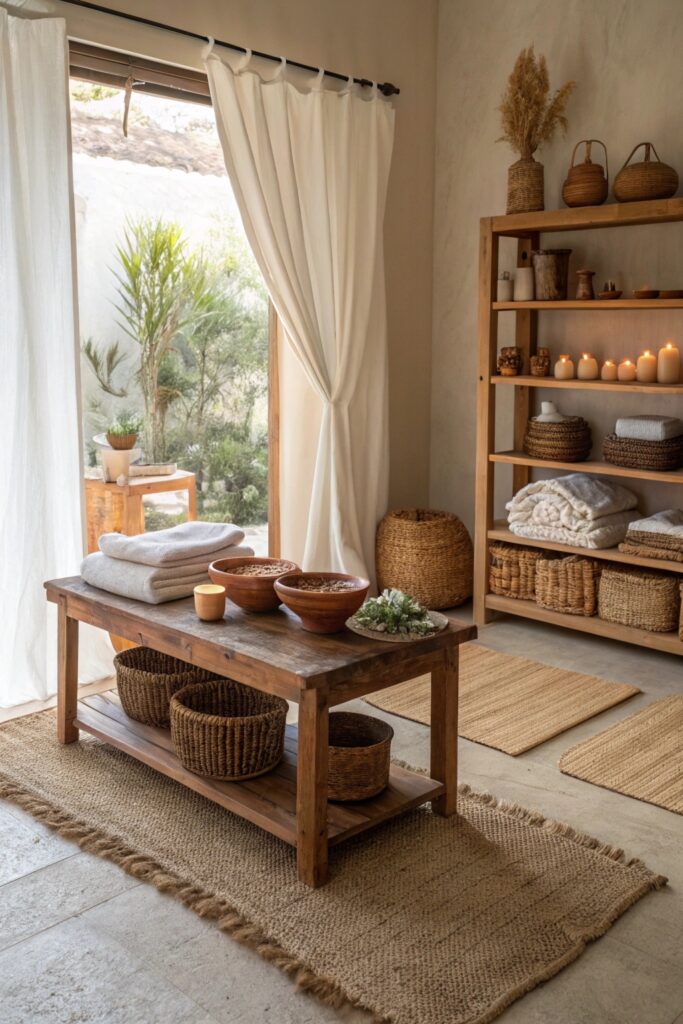
Wood, stone, and natural fibers noticeably bring a tactile warmth that synthetic materials don’t quite replicate.
Even small touches, like a wooden bowl or a stone coaster within reach, give your hands something grounding to interact with during a stressful moment.
4. Indoor Plants for Air and Atmosphere
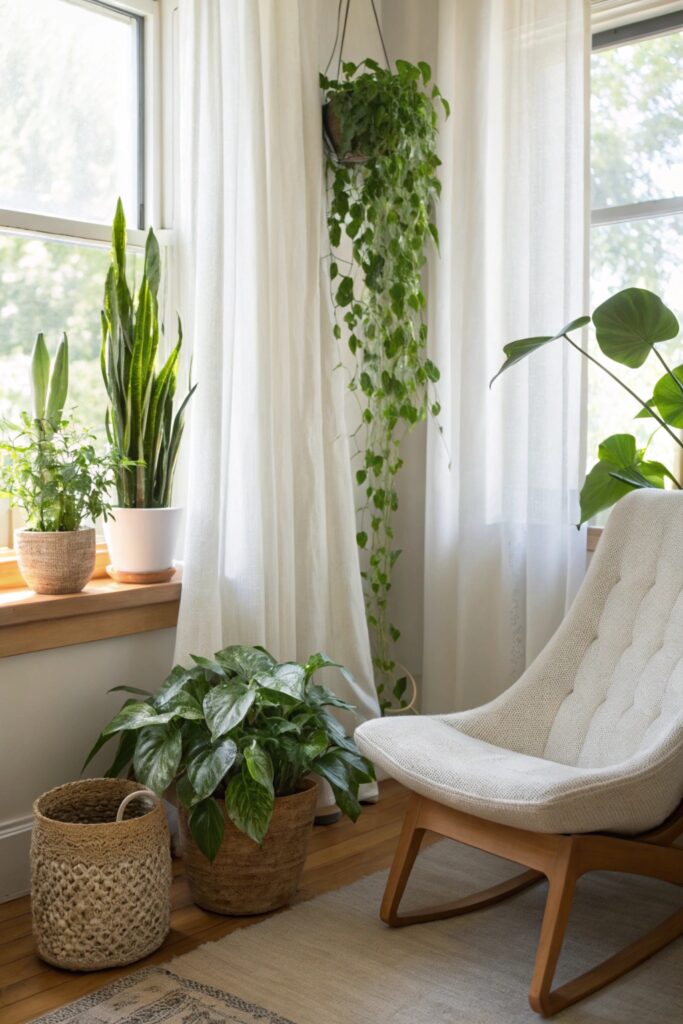
Truly low-maintenance varieties matter most here, since a struggling or dying plant works against the calm you’re trying to create.
Pothos, snake plants, and ZZ plants tolerate low light and irregular watering well, making them a safer choice than anything finicky for a room meant to reduce, not add, stress.
5. A Calming Color Palette
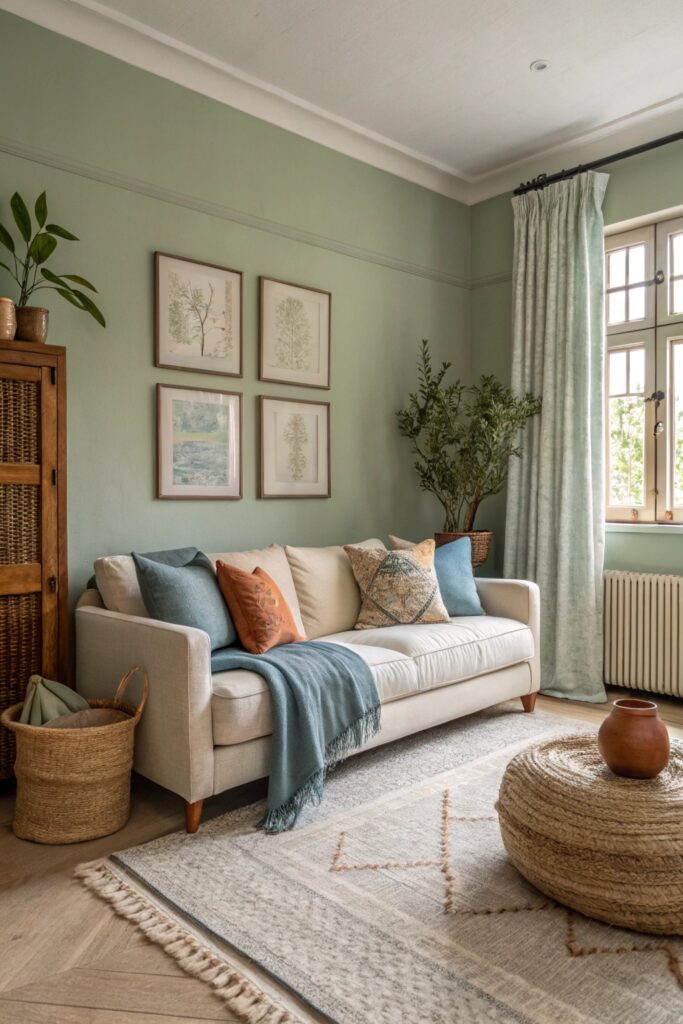
Softer, muted tones consistently read as more restful than bright, saturated colors, which tend to feel more energizing than soothing.
Sage green, warm taupe, and dusty blue are common choices because they read as calm without feeling cold or clinical the way pure white sometimes can.
6. Sound Elements — Water, Music, or Silence
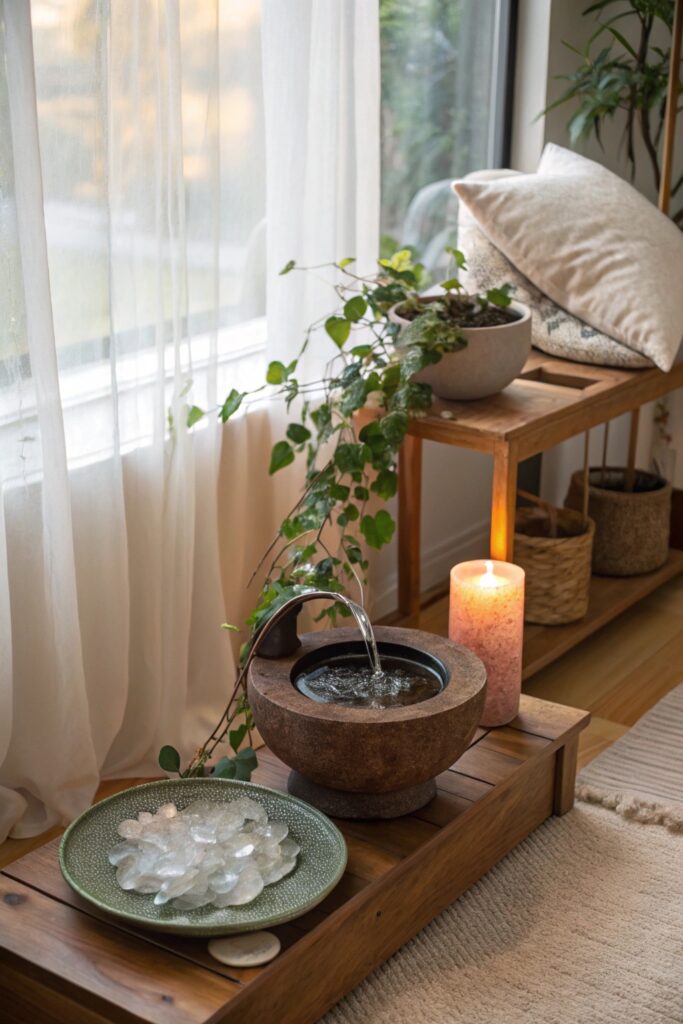
A small tabletop fountain or a speaker for soft background sound simply gives you an easy way to shift the room’s atmosphere without changing anything visual.
White noise machines work well for masking outside noise specifically, while nature sounds or soft instrumental music tend to suit active relaxation like reading or stretching.
7. Aromatherapy and Scent Design
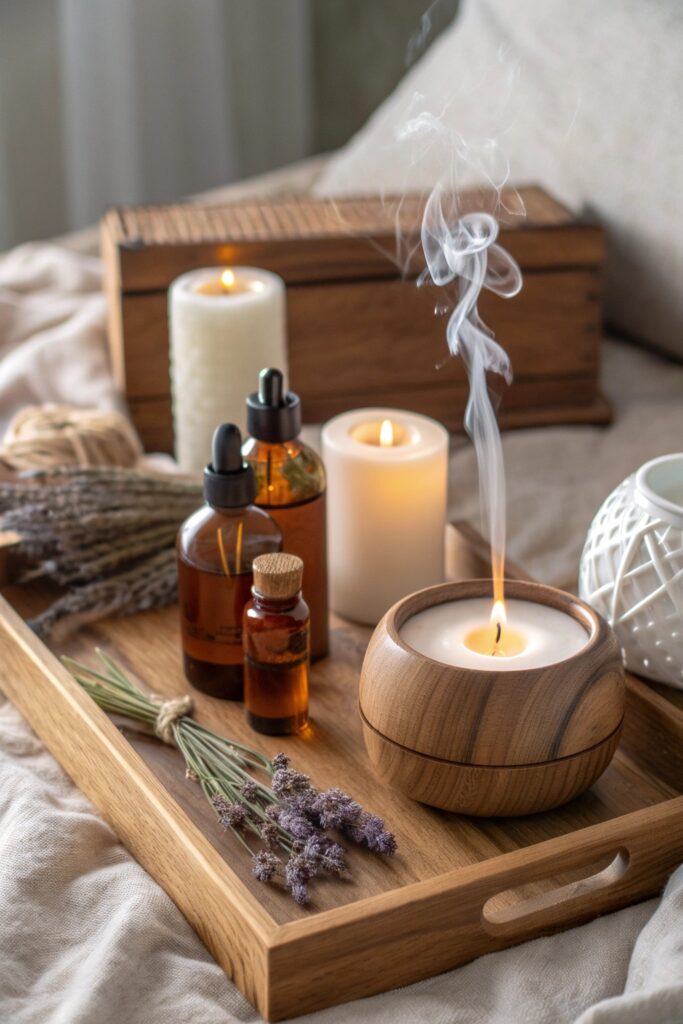
A consistent, truly subtle scent — rather than something overpowering — helps the room build an association with calm over repeated use.
Lavender, sandalwood, and chamomile are commonly used for this purpose, though the specific scent matters less than choosing one and sticking with it consistently.
8. Clutter-Free Surfaces and Intentional Simplicity
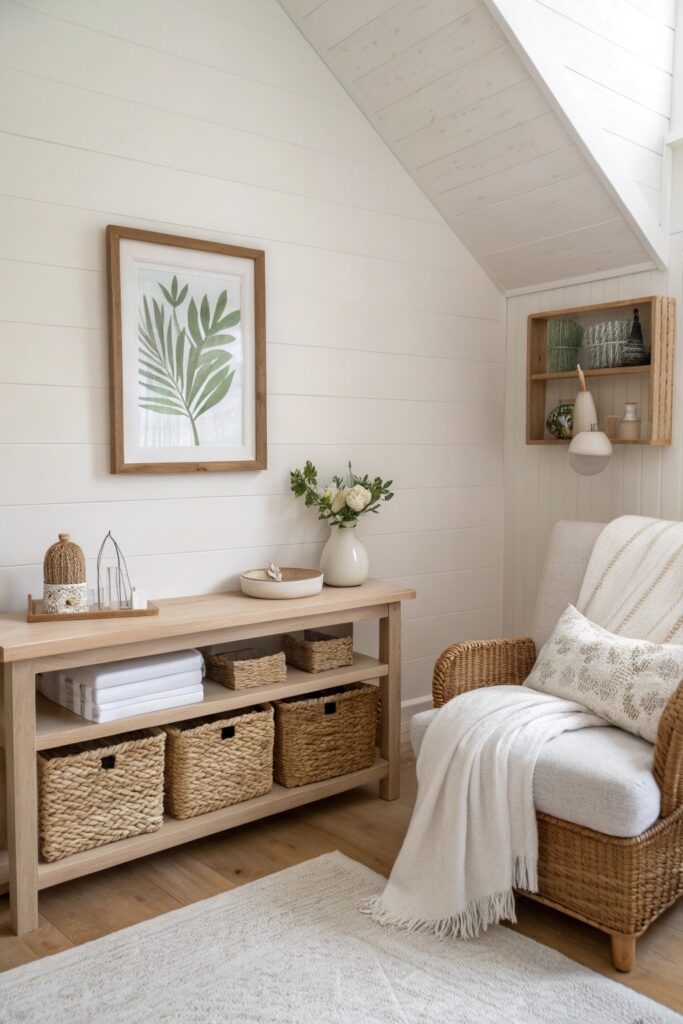
A strictly limited number of visible objects keeps the eye from having too much to process, which matters more in a room meant for winding down.
Closed storage for anything not actively in use, rather than open shelving, keeps the room’s visual field calm even when you own more than you display.
9. Soft Textiles That Invite Rest
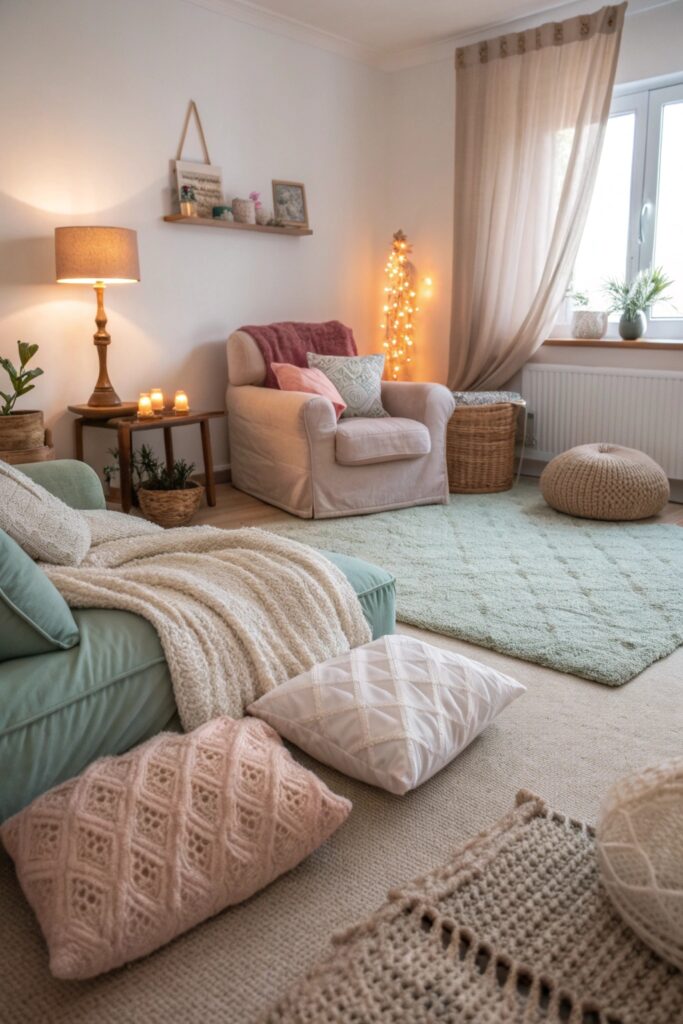
Layered blankets and cushions actually add both visual softness and a physical invitation to actually sit or lie down and stay a while.
Natural fibers like cotton, linen, and wool tend to feel better against skin over long periods than synthetic blends, which can trap heat uncomfortably.
10. A Nature View or Nature-Inspired Art
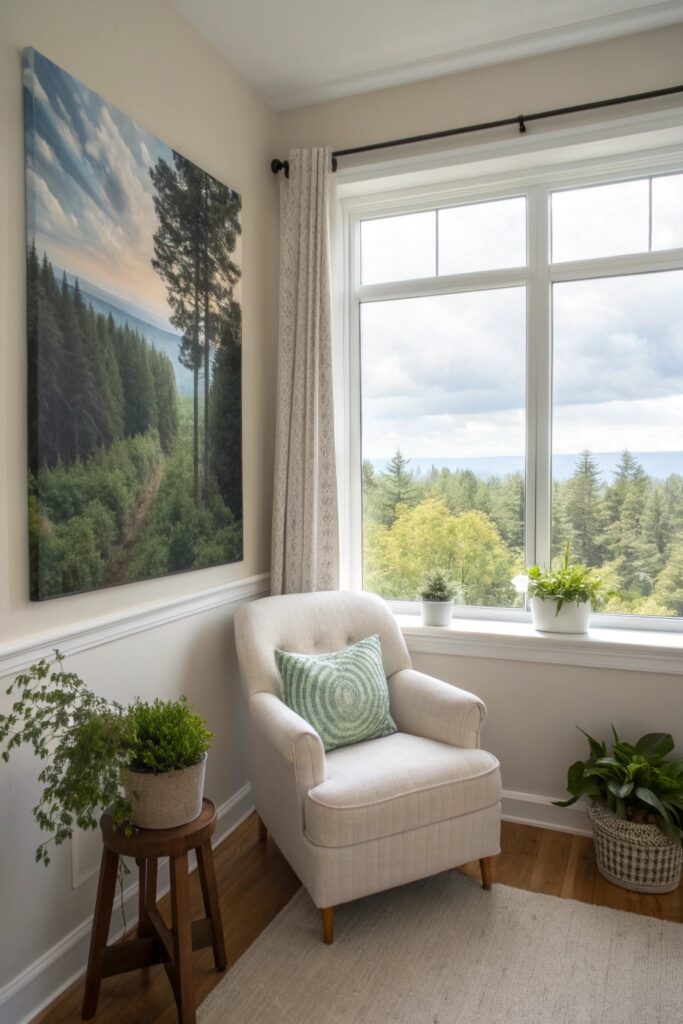
If a window view isn’t available, sufficiently large-scale nature photography or art can approximate some of the same visual effect.
Landscapes, forests, and water scenes tend to work better for this purpose than abstract art, since they give the eye something familiar and unhurried to rest on.
11. A Personal Ritual Object Collection
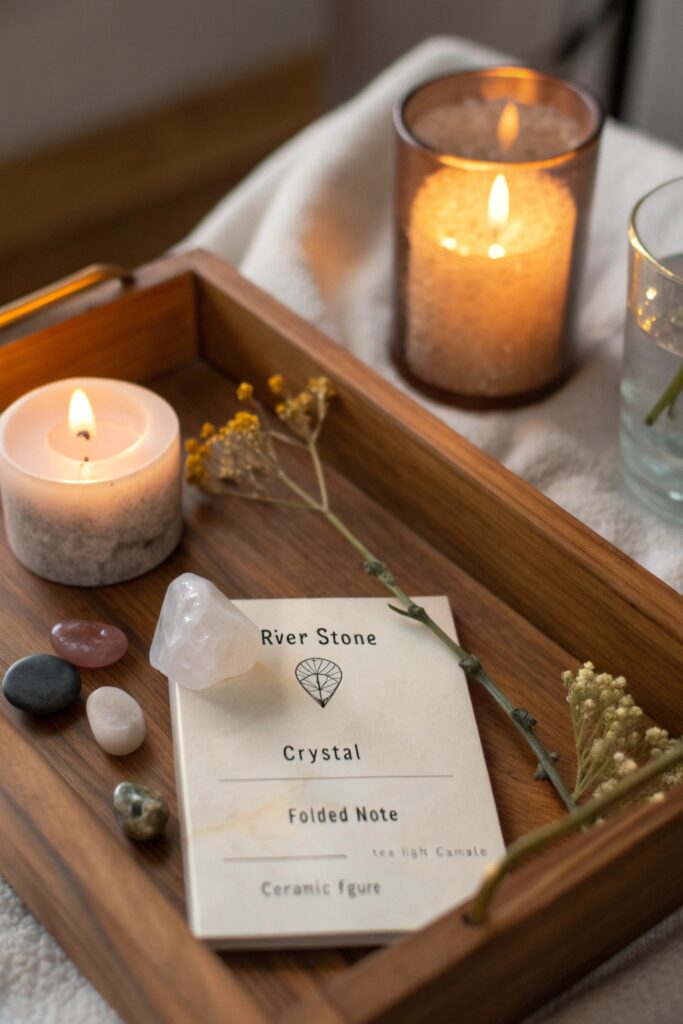
A small, truly meaningful collection — items tied to routines or memories — gives the space personal significance beyond its physical design.
A worn book, a candle from a specific trip, or a small object passed down from family all work well, since the significance matters more than the object’s appearance.
Choosing a Room With the Right Conditions
A north-facing room with soft, indirect daylight tends to work better for a healing space than one that gets harsh afternoon sun, since diffused light is easier on the eyes for extended periods of rest or meditation.
Rooms away from a home’s main traffic path, like a spare bedroom or a converted closet nook, also help reduce the chance of interruptions during actual use.
What This Kind of Room Costs to Set Up
A simple healing corner using existing furniture, a floor cushion, and a few candles typically costs $50 to $150.
A fuller room refresh including new textiles, a sound machine, and layered lighting runs higher, often $300 to $800 depending on how much you already own.
Maintaining the Space Over Time
A healing room loses its effect quickly if it becomes a dumping ground for laundry or unused exercise equipment, so setting a simple rule — nothing enters the room that isn’t part of its intended use — helps preserve the calm it was designed for.
Revisiting the scent, lighting, and textiles seasonally also keeps the space feeling intentional rather than static, since what feels calming in summer heat often differs from what feels calming in winter cold.
Involving Others Who Share the Space
If the room is shared with a partner, roommate, or family member, agreeing on basic ground rules for its use, like keeping phone calls and screens out, helps preserve its function for everyone rather than one person’s preferences overriding the space.
Setting expectations early, before the room is fully set up, tends to work better than trying to enforce new rules on an already-established space.
None of these ideas require a complete renovation or a large budget — a single well-chosen change, given time to settle into your routine, often does more than trying to implement all eleven at once.
Pay attention to how you actually feel in the space after a week or two, and adjust from there rather than assuming the first setup is the final one.
Wrapping It Up
If this calm aesthetic appeals to you beyond just one healing corner, see our guide to Stockholm style bedroom ideas for a similar approach applied to a full room.
Lighting and clutter actually matter more than any single decorative object, since both affect how the room feels the moment you walk in, before you even notice the smaller details. Start with one or two changes rather than redoing the whole room at once, since it’s easier to notice what truly helps you unwind once you’ve spent real time with a smaller shift first.