
A home sauna involves real electrical, ventilation, and material requirements alongside the aesthetic choices, since this is one of the more technically demanding spaces to get right in a home. The details below cover both the styling direction and the practical specifics that affect how well — and how safely — each element actually functions.
Below are 10 elements worth focusing on, with the specifics for each.
1. Natural Wood Haven
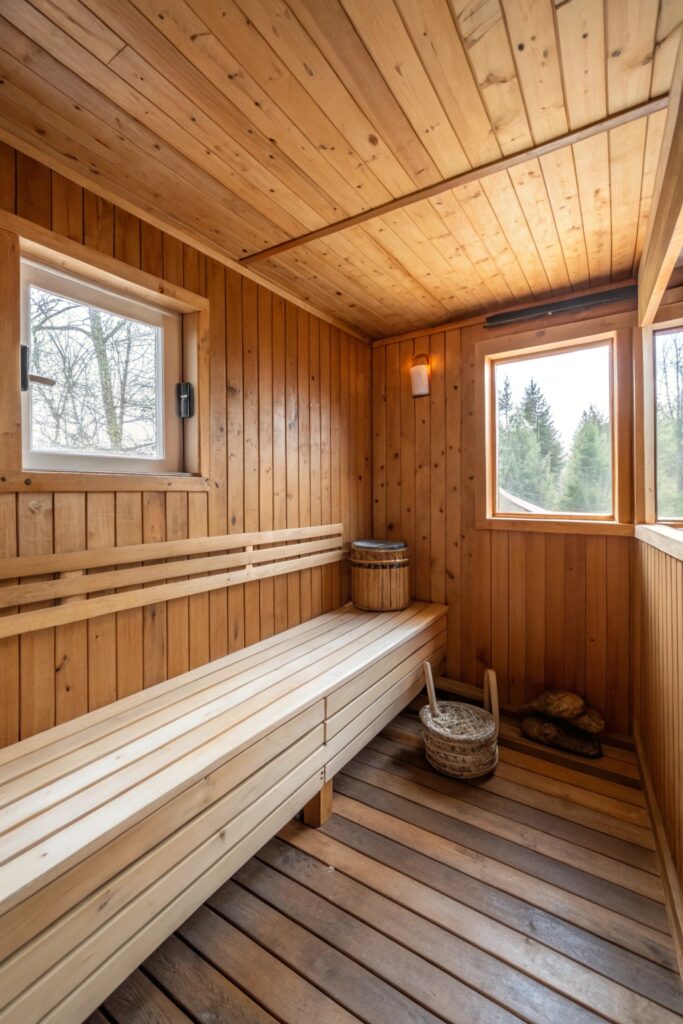
Cedar, hemlock, and aspen are the standard choices for sauna interiors specifically because they’re low in resin — high-resin woods like pine can get sticky and release a noticeable sap smell once heated. Cedar also stays cooler to the touch than denser woods, which matters directly for comfort on benches that regularly reach high temperatures.
2. Soft Ambient Lighting
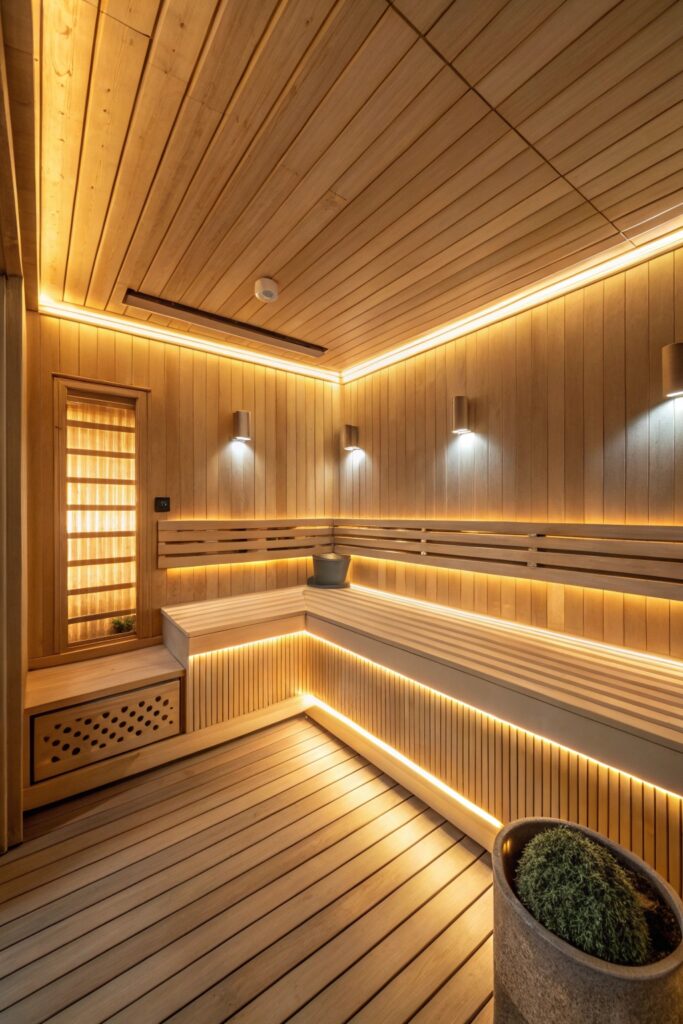
Standard light fixtures aren’t rated for a sauna’s heat and humidity, so any interior lighting needs to be specifically rated for this environment. Low-voltage (12V) fixtures are the standard choice, both for safety in a wet, hot space and because they hold up considerably better than standard household voltage fixtures under these conditions.
3. Minimalist Design for a Calming Retreat
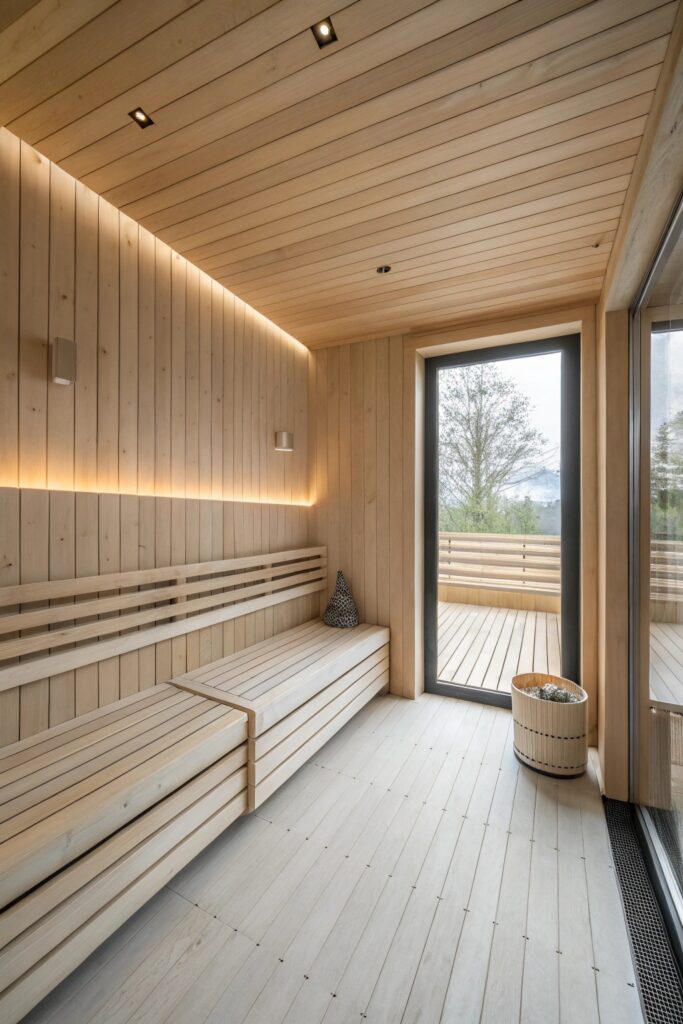
Keeping the interior free of unnecessary objects isn’t just an aesthetic choice here — fewer items inside the heat chamber means fewer materials being repeatedly heated and cooled, which extends the life of whatever is left in the space.
4. Greenery Accents in the Right Zone
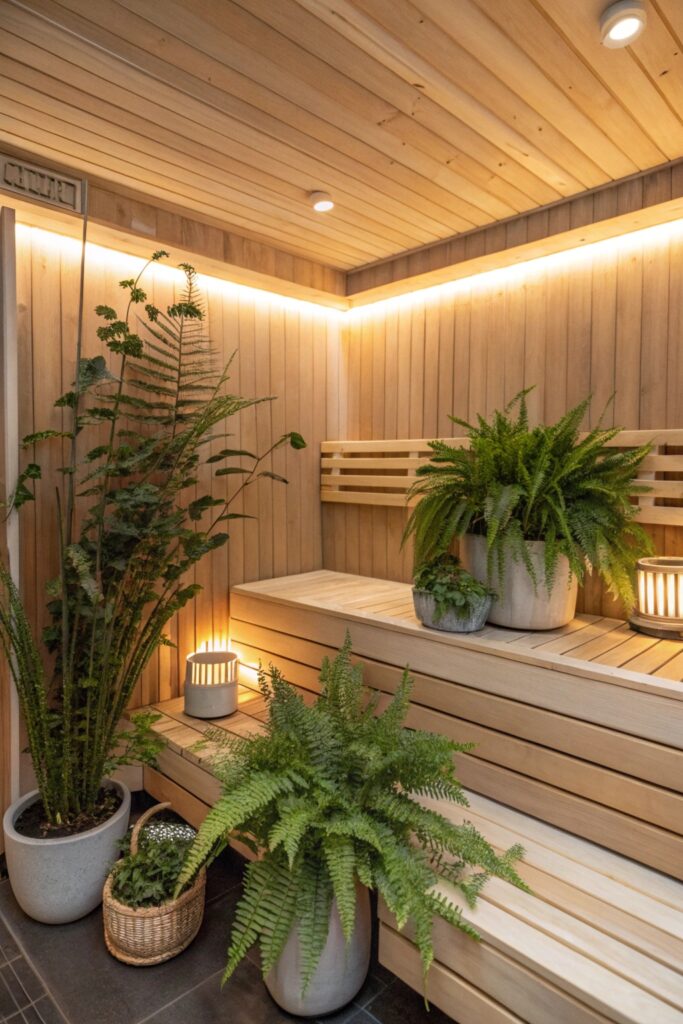
Live plants can’t survive inside the actual heated chamber, so greenery works best in the antechamber or entry area rather than the sauna room itself, where temperatures and low humidity would kill most plants within a single session.
5. Luxurious Textiles Made From the Right Materials
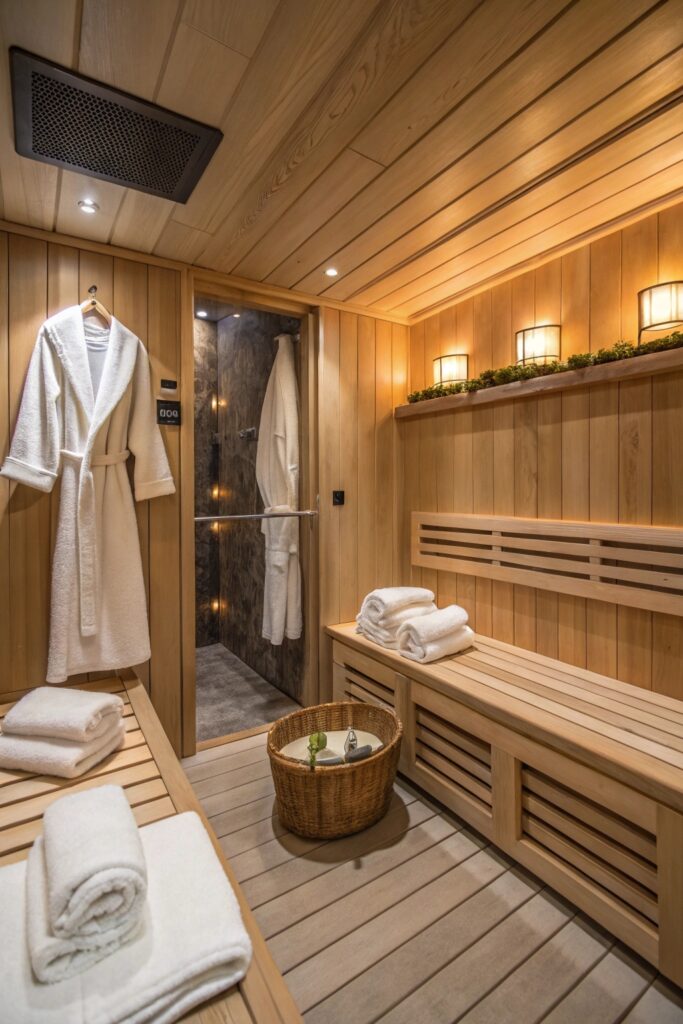
Natural fiber towels and robes — cotton or linen specifically — belong in a sauna; synthetic fabrics can soften, melt, or off-gas at the temperatures a traditional sauna reaches, which commonly run up to 190°F.
6. Aromatherapy Enhancements Done Safely
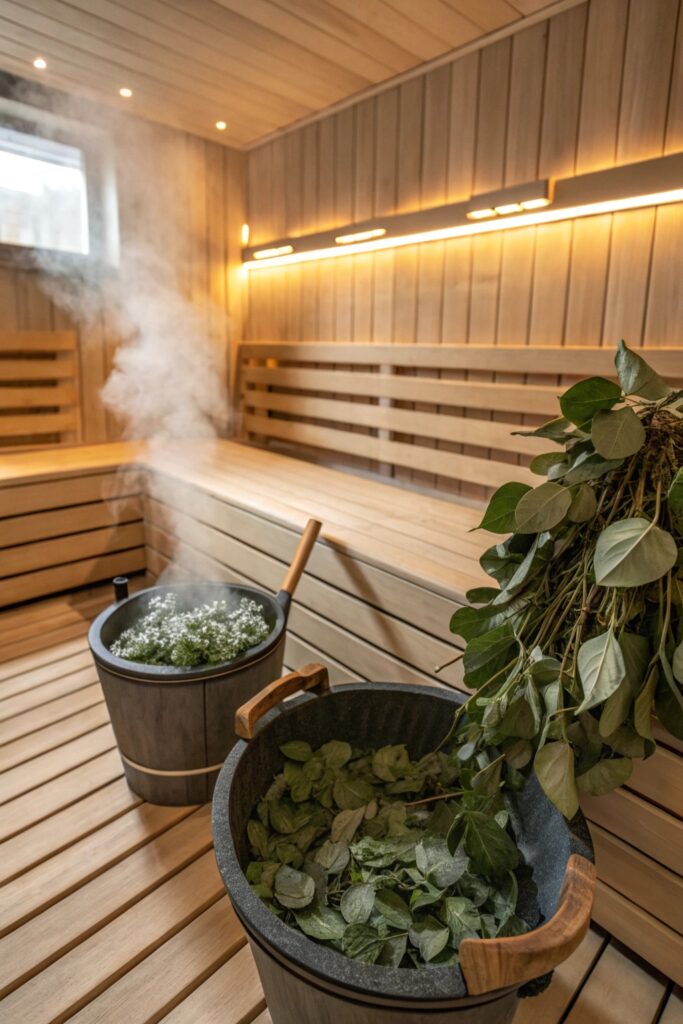
Use only sauna-specific essential oil blends properly diluted in water for löyly (the water poured over hot rocks) — undiluted oil poured directly onto hot rocks can create a smoke or fire hazard rather than the intended aromatic steam.
7. Stone or Tile Accents
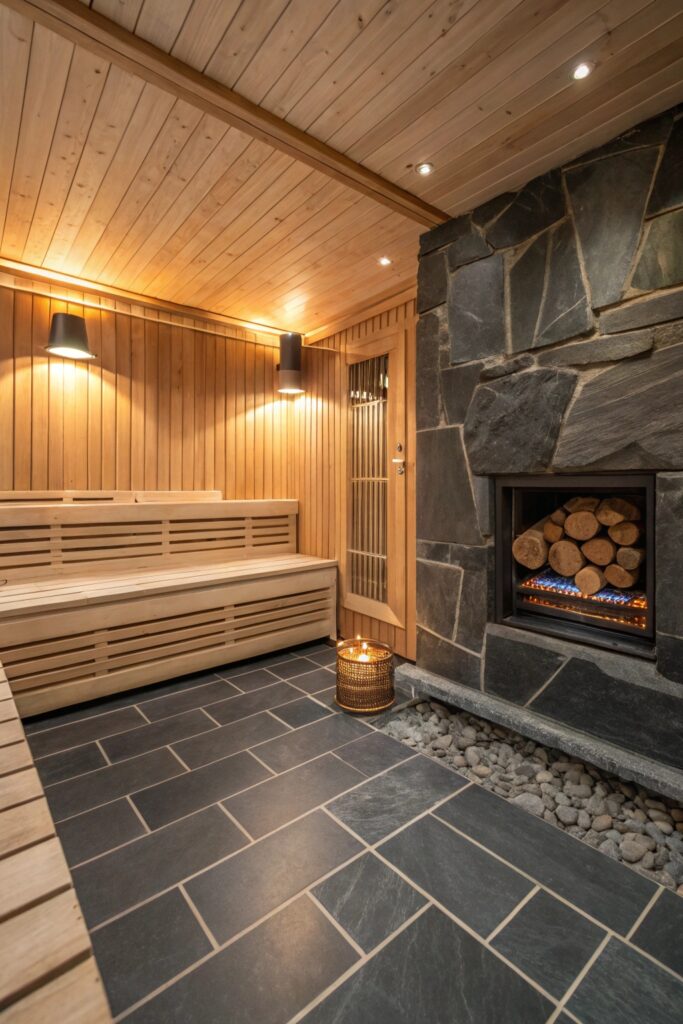
The actual heater rocks need to be a specific type — peridotite or olivine basalt are common choices — rated to withstand repeated extreme heat cycling without cracking or fracturing. Decorative stone elsewhere in the room doesn’t need this same heat rating, but the rocks in direct contact with the heater do.
8. Glass Doors and Panels
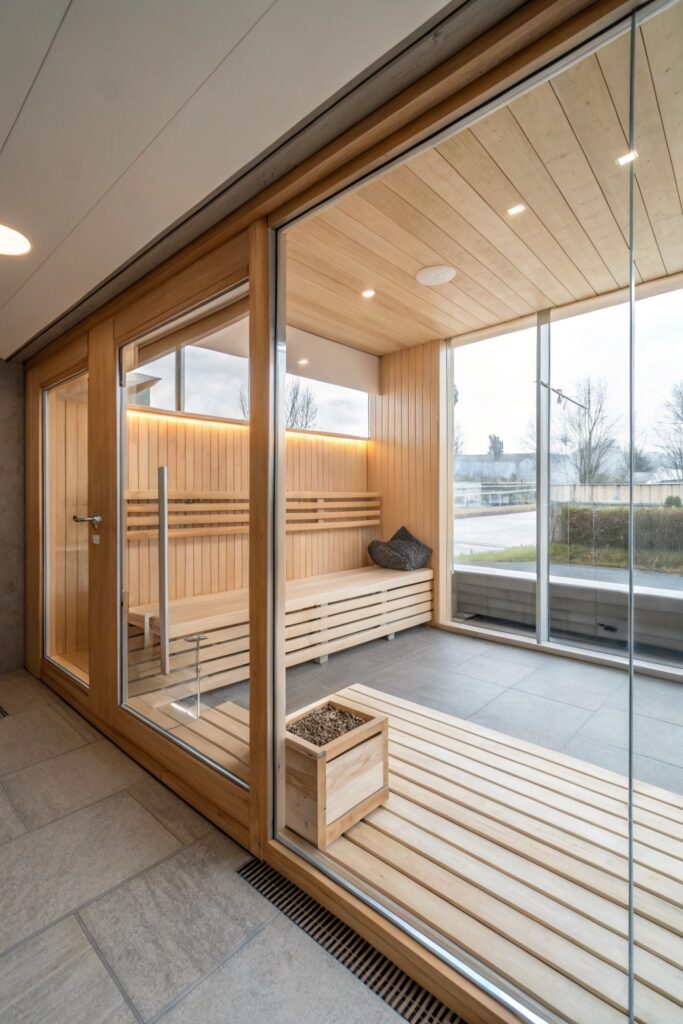
Sauna glass needs to be tempered safety glass specifically, with a proper seal and thermal break in the frame, since the door sees a significant temperature differential between the heated interior and the cooler space outside.
9. Layered Seating for Heat Zones
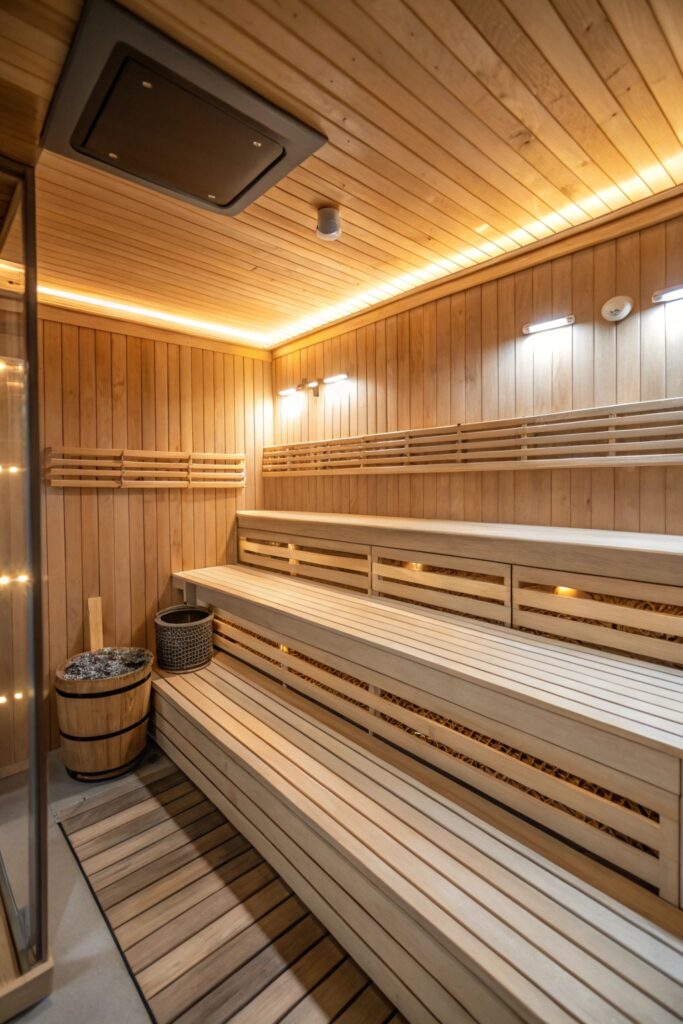
A two-tier bench setup is standard for a real functional reason, not just aesthetics — heat rises, so the upper bench (typically 35 to 40 inches high) sits in noticeably hotter air than the lower bench (around 17 to 19 inches), letting users choose their preferred intensity.
10. Decorative Accents Outside the Heat Zone
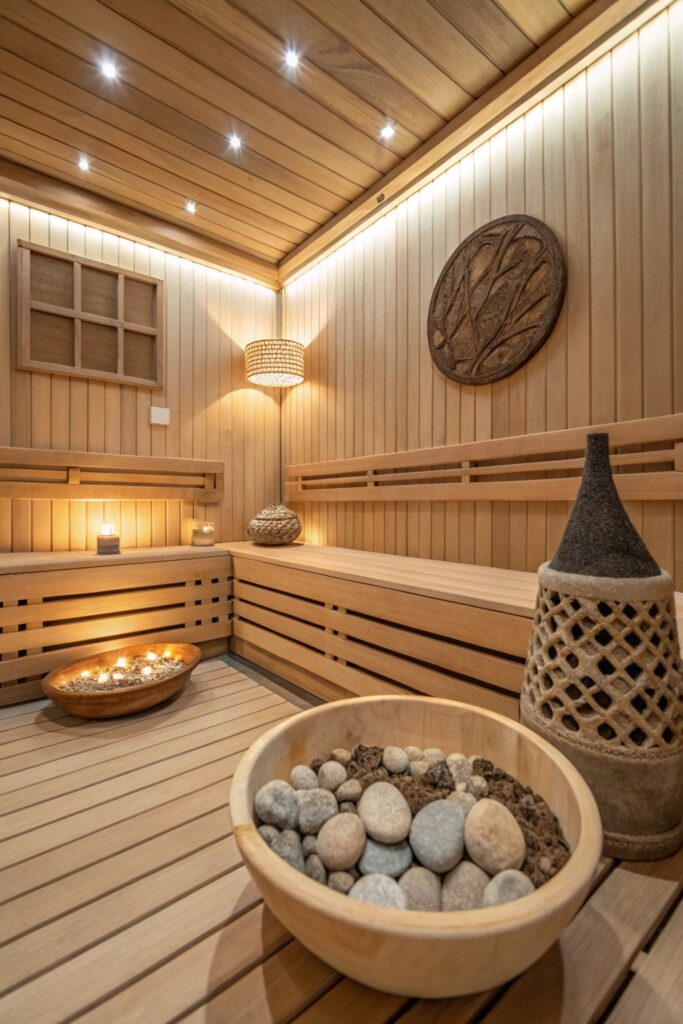
The same logic that applies to plants applies to most decor — anything not specifically rated for sustained high heat belongs in the antechamber or surrounding space rather than inside the sauna itself.
Traditional Versus Infrared: A Different Set of Requirements
A traditional sauna heats the air itself, typically reaching 150 to 190°F, while an infrared sauna heats the body more directly using panels and runs at a considerably lower ambient temperature, often 120 to 140°F. This distinction affects material choices throughout — traditional saunas need materials rated for higher sustained heat, while infrared units have somewhat more flexibility since the surrounding air stays cooler.
Infrared saunas also don’t require the same ventilation and water-related considerations as a traditional steam-generating sauna, which can simplify installation, though the panels themselves still need to be sourced and installed according to the manufacturer’s specific electrical requirements.
What a Home Sauna Costs
A basic infrared sauna kit, including installation, typically runs $3,000 to $6,000 for a small unit.
A custom-built traditional sauna with proper ventilation, electrical work, and quality wood runs considerably higher, often $8,000 to $20,000 or more depending on size and finish quality.
Maintenance That Keeps a Sauna Safe Long-Term
Wipe down benches and interior surfaces after each use to prevent moisture from sitting on the wood, and leave the door open between sessions to let the space fully dry out rather than staying closed up while damp.
Inspect the heater rocks periodically for cracking, since rocks that have deteriorated from repeated heat cycling don’t retain and release heat as effectively and should be replaced. Checking electrical connections and the heater unit itself on a regular schedule, or having a professional do so annually, catches wear before it becomes a larger safety issue.
If you’re converting an existing room rather than building a dedicated sauna structure, confirm the space can actually accommodate proper insulation and vapor barriers behind the wood paneling — skipping this step risks moisture working its way into the surrounding wall structure over time, which is a considerably more expensive problem to fix than getting the installation right initially.
A home sauna is a genuine long-term investment in daily wellbeing rather than a purely cosmetic upgrade, and the technical requirements — proper wood, rated electrical work, real ventilation — exist specifically to keep that daily use both comfortable and safe over years of regular sessions.
Getting quotes from a couple of contractors experienced specifically with sauna installations, rather than general contractors without that background, helps ensure the finished space meets both safety requirements and the practical details that make a real difference in daily comfort.
Whichever direction you take this project, treating the technical requirements as the foundation and the aesthetic choices as the layer built on top tends to produce a better long-term result than the reverse.
Electrical and Ventilation Work Needs a Licensed Professional
Most electric sauna heaters require a dedicated 240-volt circuit, which is a genuine electrical installation rather than a simple plug-in appliance — this work should go through a licensed electrician familiar with sauna-specific code requirements. Proper ventilation, typically an intake near the heater and an exhaust vent positioned differently in the room, is what actually allows the air exchange a sauna needs to function safely and comfortably, and getting this wrong affects both air quality and how evenly the space heats.
Confirming your specific local code allows a home sauna installation, and whether a permit is required, is worth doing before construction begins rather than after, since electrical and structural work of this scope typically falls under inspection requirements in most jurisdictions.