
Horses need shelter — that part isn’t up for debate. But the idea that good horse shelter has to cost a fortune? That part absolutely is. I’ve seen beautifully functional setups built for a fraction of what people assume they need to spend.
Whether you’re a first-time horse owner figuring out your property or a seasoned equestrian looking to add more covered space without draining your bank account, there’s a solution here that works for your situation.
Here are 12 horse shelter ideas that actually hold up in real conditions — practical, budget-friendly, and horse-approved. 🙂
1. Classic Three-Sided Run-In Shed
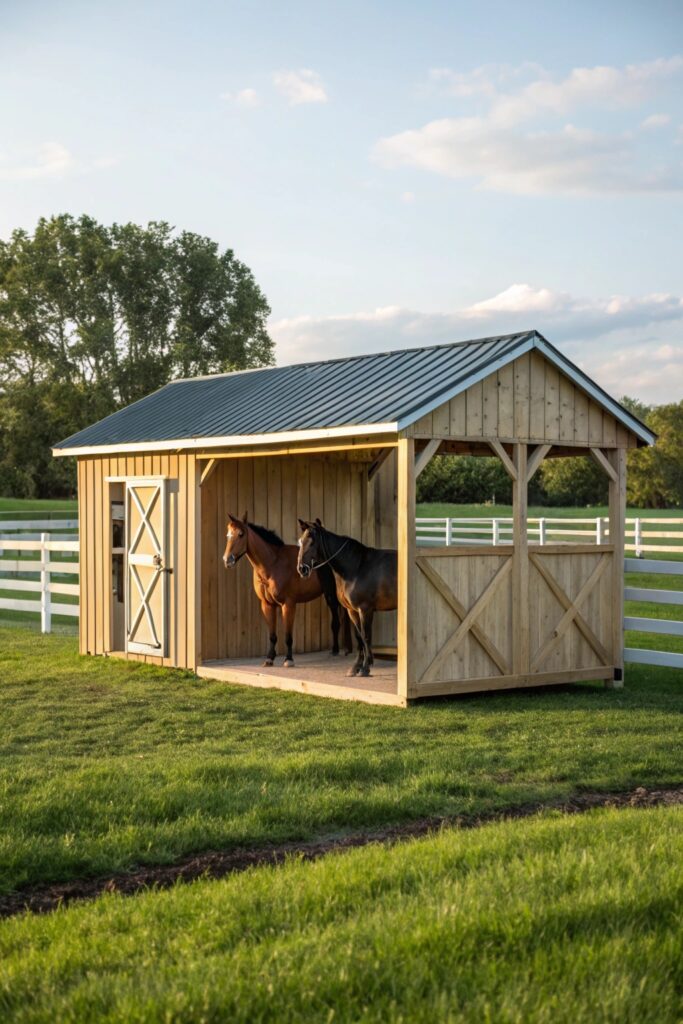
The three-sided run-in shed is the workhorse of horse shelters — pun fully intended. It’s simple, effective, and horses actually use it, which is more than you can say for some elaborate setups that look great on paper but get ignored by the actual animals.
The open front allows horses to enter and exit freely, which reduces stress and works naturally with herd dynamics. Build it with the closed back facing the direction of prevailing winds for maximum weather protection.
Key build considerations:
- Minimum size of 12×12 feet per horse for comfortable shared use
- Pressure-treated lumber for ground contact points to prevent rot
- Metal roofing — durable, long-lasting, and handles rain and snow well
- Slope the roof toward the back to direct water away from the entrance
IMO, this is the single best starting point for any horse property. It covers the basics completely without overcomplicating anything.
2. Portable Corral Panel Shelter
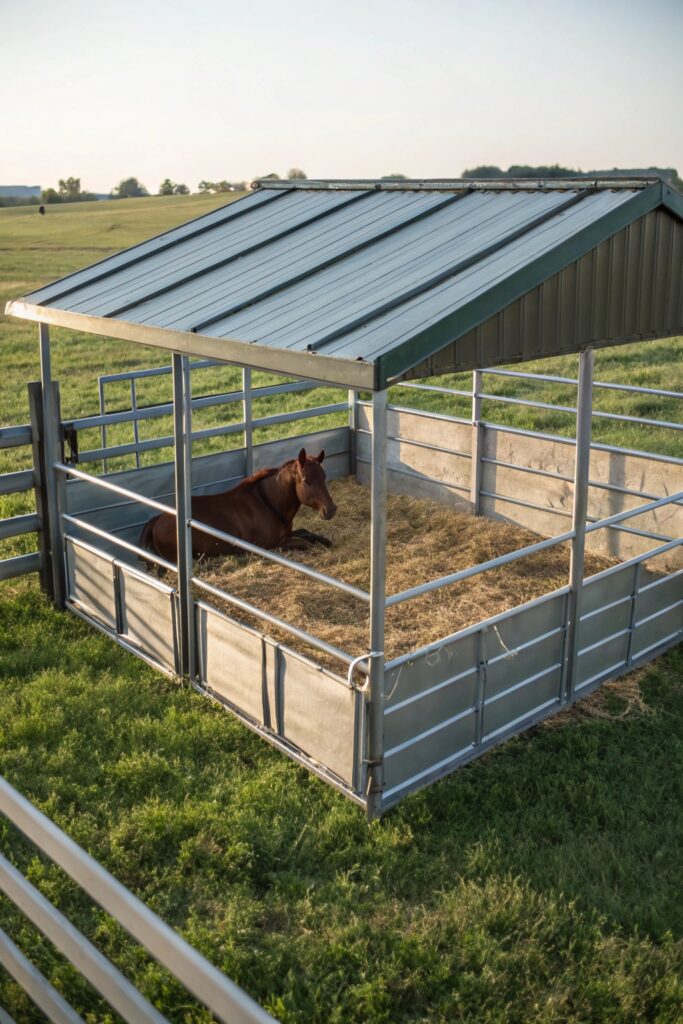
If you rent your property or need flexibility, permanent structures aren’t always practical. Portable corral panel shelters combine modular panels with a simple roof structure to create a moveable shelter you can reposition as needed.
These setups work especially well for temporary pasture rotations or horses kept at multiple locations throughout the year. The panels connect without tools and the whole structure comes apart in under an hour.
What makes this work:
- Heavy-gauge steel corral panels rated for horse contact and pressure
- Tarp or metal roof panels secured across the top for weather coverage
- No ground anchoring required in most configurations
- Fully relocatable as pasture needs change seasonally
The upfront investment in quality panels pays off over years of repeated use across different setups. Buy good panels once and they last decades.
3. Converted Carport Shelter
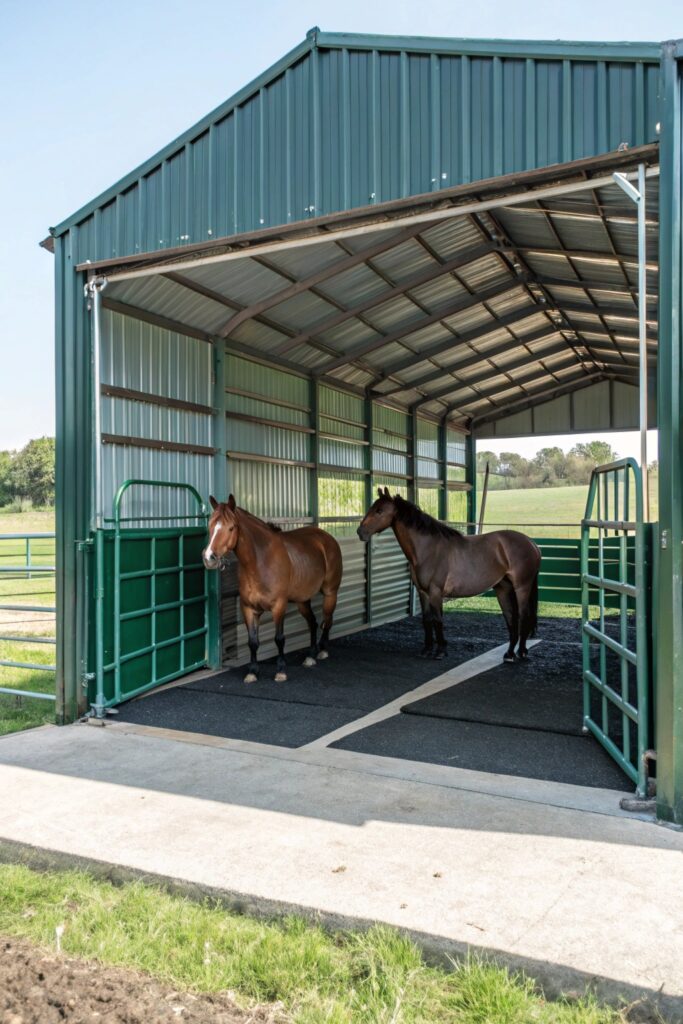
Here’s one that surprises people: a standard metal carport converts into a perfectly functional horse shelter for significantly less money than purpose-built equine structures.
Pre-engineered carport kits come in sizes that work well for one to three horses, arrive with all hardware included, and go up in a weekend with basic tools. Add some corral panels around the perimeter and you have an enclosed, covered space that functions exactly like a formal run-in shed.
Conversion tips:
- Choose a carport with a minimum 10-foot sidewall height for comfortable horse clearance
- Secure the base to ground anchors or a concrete footer for stability
- Add rubber mats to the floor for traction and comfort
- Remove or secure any sharp edges on the metal frame before horses access the space
FYI, carport kits regularly go on sale at farm supply and home improvement stores — timing your purchase right saves meaningful money.
4. Lean-To Addition to an Existing Structure
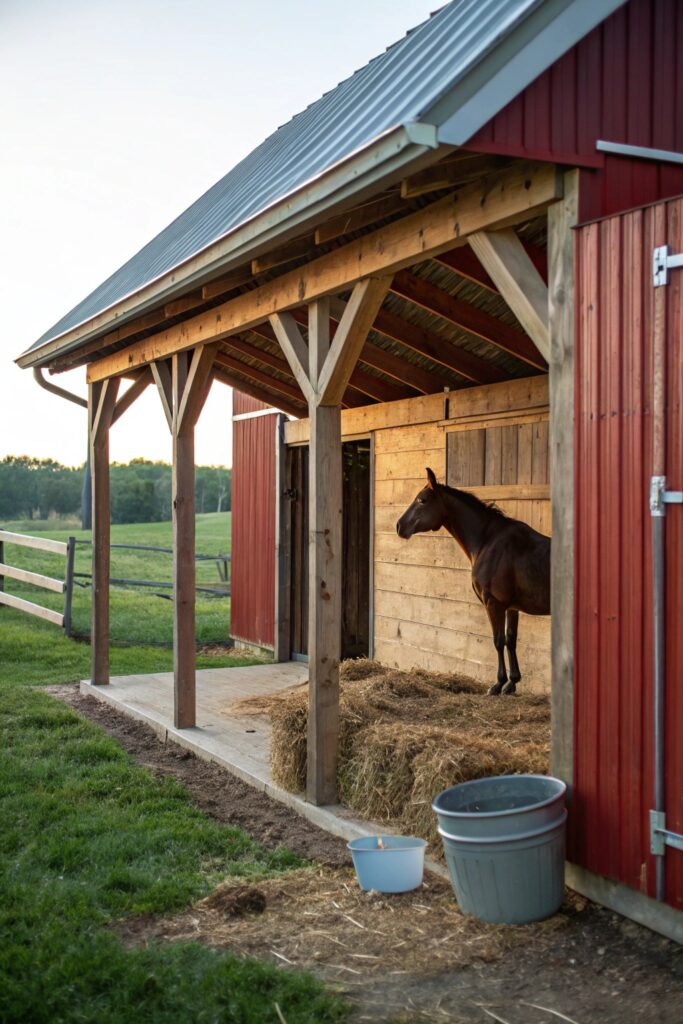
Got a barn, garage, or outbuilding already on your property? Adding a lean-to shelter off an existing structure cuts your material costs dramatically because you’re using one existing wall as the back of your new shelter.
A lean-to addition requires fewer posts, less roofing material, and minimal foundation work compared to a freestanding shed. It also connects the shelter logically to existing storage or tack space, which makes daily horse care more efficient.
Build basics:
- Attach the ridge beam directly to the existing structure’s wall using heavy-duty joist hangers
- Pitch the roof away from the existing building to direct water outward
- Match roofing materials to the existing structure for a cohesive look
- Minimum 10-foot depth from the existing wall for adequate horse space
This is one of the most cost-effective horse shelter ideas available if you already have any structure on your property to work with.
5. Round Pen With Covered Section
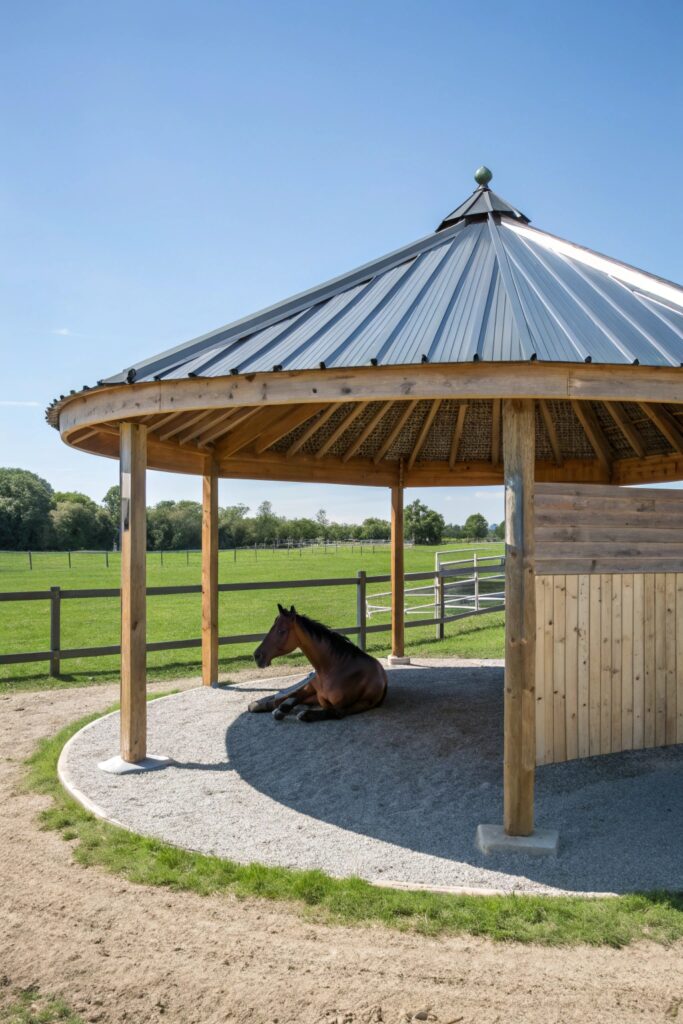
A round pen serves multiple purposes on a horse property — training, turnout, and safe containment. Adding a covered section to one side of an existing or new round pen creates a dual-purpose structure that maximizes your investment.
The covered section gives horses a rain and sun retreat without requiring a separate structure entirely. Horses in training also benefit from having a familiar sheltered spot within their working space.
What to plan for:
- Cover approximately one-quarter to one-third of the round pen circumference
- Use the same panel system as the rest of the pen for structural consistency
- Install the covered section on the north or west side to block prevailing weather
- Add a rubber mat floor under the covered section for comfort during rest
This idea works especially well for single-horse properties where space efficiency matters.
6. Hoop-Style Greenhouse Shelter
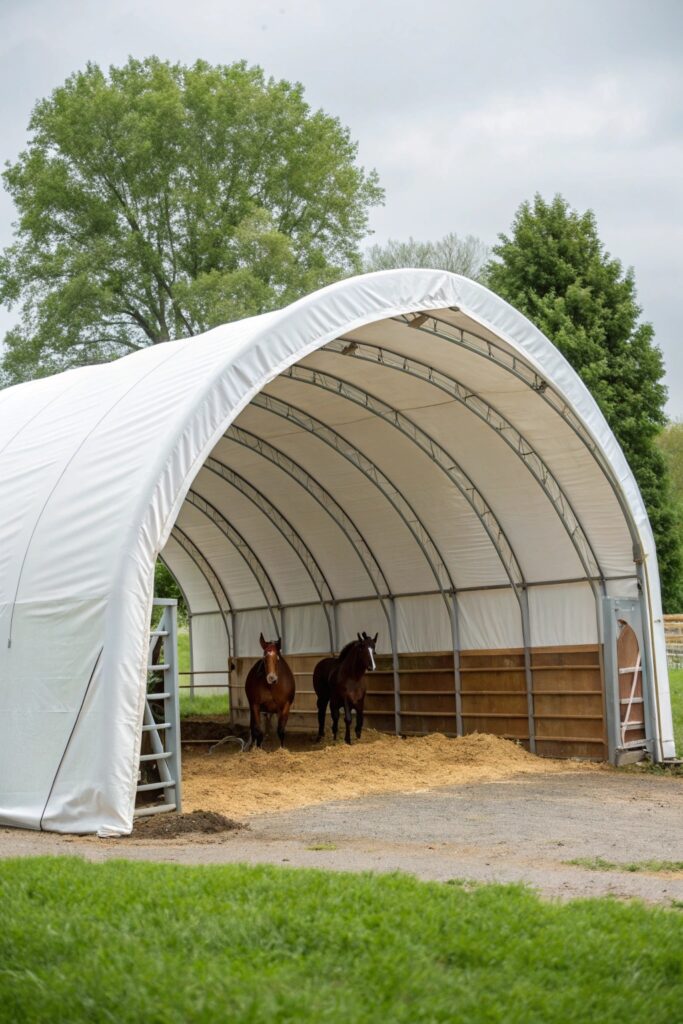
Agricultural hoop structures aren’t just for crops — they make surprisingly effective and affordable horse shelters when fitted with appropriate covering and end panels.
The curved design sheds rain and snow naturally without requiring complex framing. Large hoop structures provide generous interior height that horses appreciate, and the diffused light through the covering keeps the interior bright and comfortable.
Hoop shelter considerations:
- Choose a heavy-duty agricultural hoop kit rated for your local snow and wind loads
- Use opaque or translucent white covering rather than clear to reduce heat buildup
- Install solid end panels with a large opening on the entry end
- Anchor the base securely — horses lean and push against walls regularly
Hoop shelters cost significantly less per square foot than traditional framed structures and go up faster. For large herds needing covered space quickly, they’re hard to beat. :/
7. Timber Frame Run-In Shed
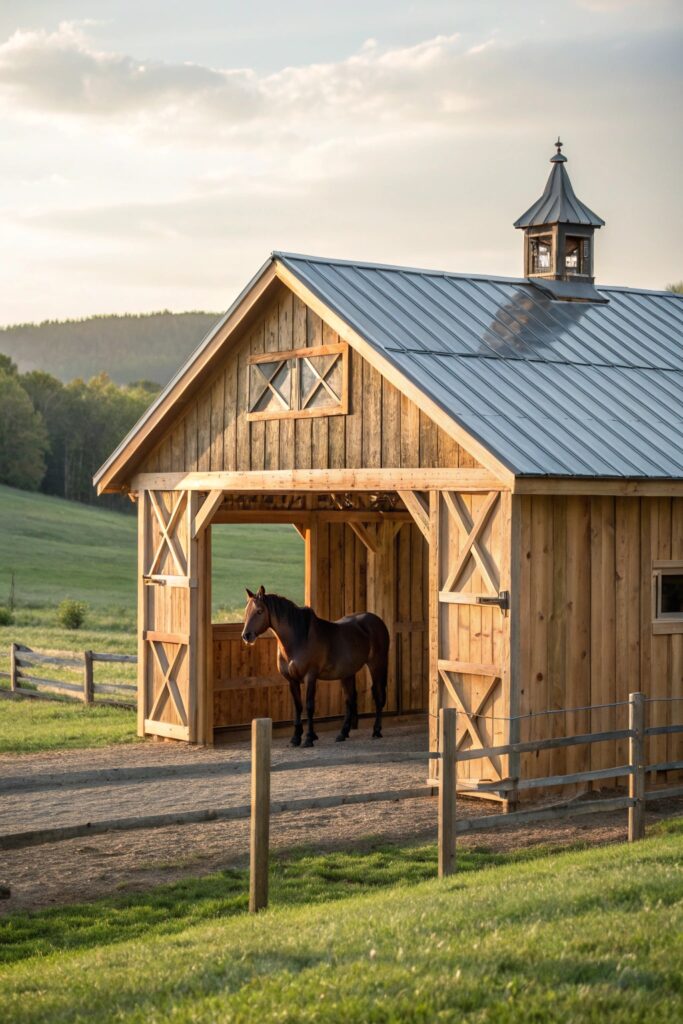
If you want something that looks as good as it functions, a timber frame run-in shed delivers a handsome, durable structure that holds up for decades and adds genuine value to your property.
The exposed timber joinery is structurally superior to standard dimensional lumber framing and handles the dynamic loads horses put on structures — leaning, rubbing, and kicking — far better than lighter construction methods.
Timber frame advantages:
- Larger structural members resist horse damage and weathering
- Open interior with no internal posts horses can injure themselves on
- Naturally beautiful — looks custom and well-built from day one
- Can be expanded with additional bays as your herd grows
You can source timber frame kits pre-cut and ready to assemble, which brings the cost down compared to hiring a traditional timber framer. The result looks anything but budget-built.
8. Repurposed Shipping Container Shelter
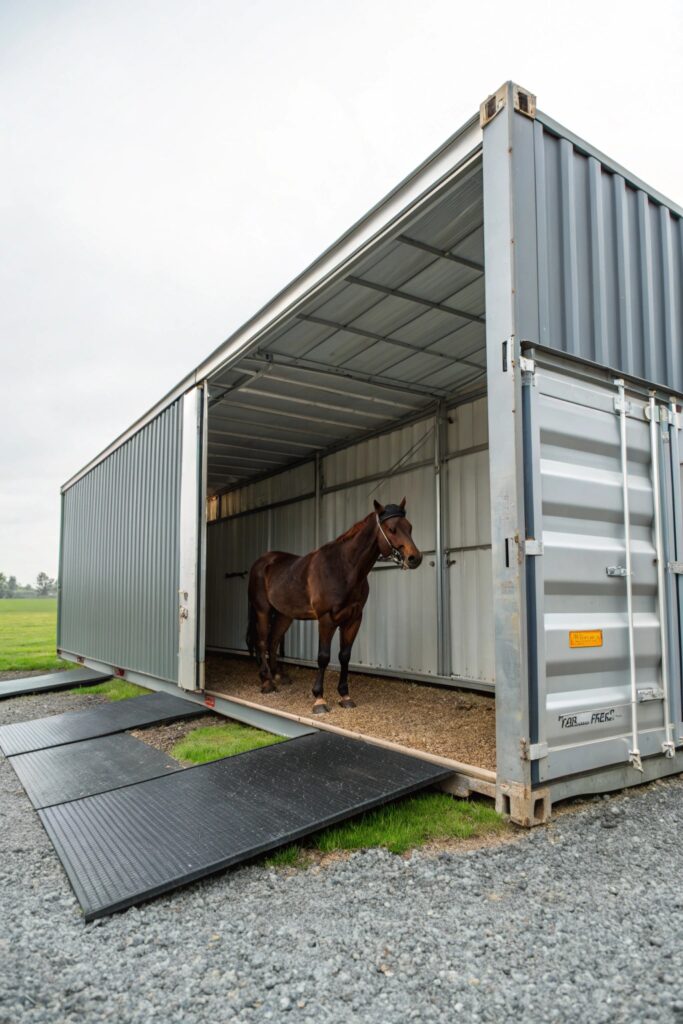
Shipping containers are structurally bombproof, weatherproof, and available in most regions at a fraction of the cost of new construction materials. A repurposed 20 or 40-foot shipping container makes an exceptional horse shelter base that requires minimal modification.
Cut open one long side, add a roof extension for additional covered space, and you have a shelter that will outlast almost any wood-framed alternative. The steel construction handles horse contact without complaint.
Modification checklist:
- Cut the long side fully open using a plasma cutter or angle grinder
- Grind all cut edges smooth to eliminate sharp metal hazards
- Add a roof extension of 8–12 feet beyond the open side for covered outdoor space
- Install rubber mats on the metal floor for traction and insulation
Horses adapt to container shelters quickly. The solid walls block wind effectively, and the structure requires almost zero maintenance once installed.
9. Shade Sail and Panel Combination
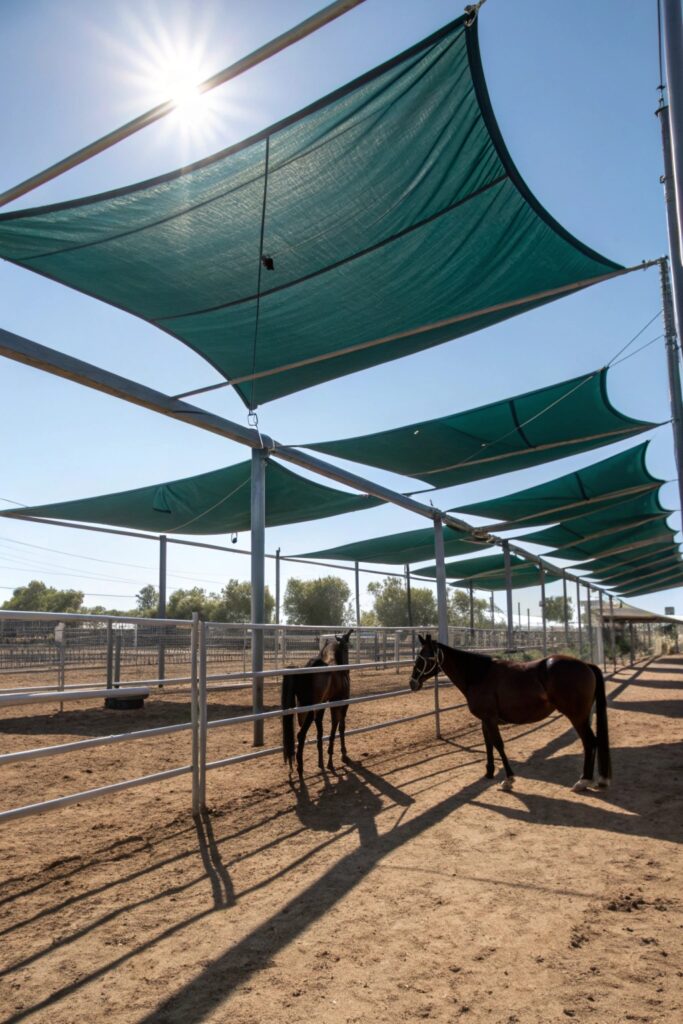
Not every climate demands a fully enclosed shelter. In hot, dry regions, a combination of heavy-duty shade sails stretched over a corral panel frame provides effective sun and light rain protection at minimal cost.
Commercial-grade shade sails block 90–95% of UV radiation, significantly reducing heat stress in horses during summer. Pair them with water misters for additional cooling in extreme heat.
Setup requirements:
- Commercial grade shade cloth rated at 90% UV block or higher
- Anchor posts set in concrete at the corners for tension stability
- Overlap multiple sail sections to cover larger areas without gaps
- Guy wires for additional tension stability in windy conditions
This approach works best as a summer solution in mild climates. In areas with heavy snow or wind, supplement with a more substantial structure for winter months.
10. Modular Stall Kit With Run-Out
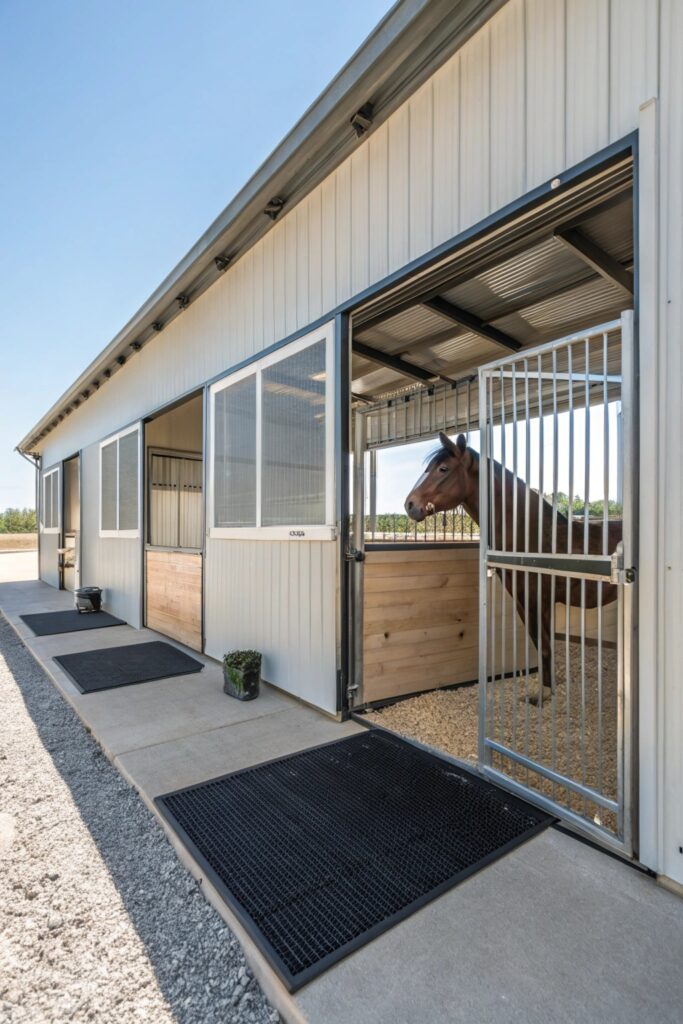
Pre-engineered modular stall kits have improved enormously in quality and now offer a genuine alternative to custom-built barns at a fraction of the cost. Many kits include attached run-out panels that give horses indoor-outdoor access — exactly what most horses prefer.
The modular design means you start with one or two stalls and add more as your herd or budget grows. Everything connects using the same hardware system, so expansion never requires starting over.
What good kits include:
- Heavy-gauge welded steel panels with smooth interior finishes
- Sliding stall doors with horse-proof latches
- Attached run-out panels that connect to existing fencing
- Roof connection hardware for adding a cover over the run-out area
Compare several kit manufacturers before buying — quality varies significantly between brands and the price difference doesn’t always reflect actual build quality.
11. Earth-Bermed or Natural Hillside Shelter
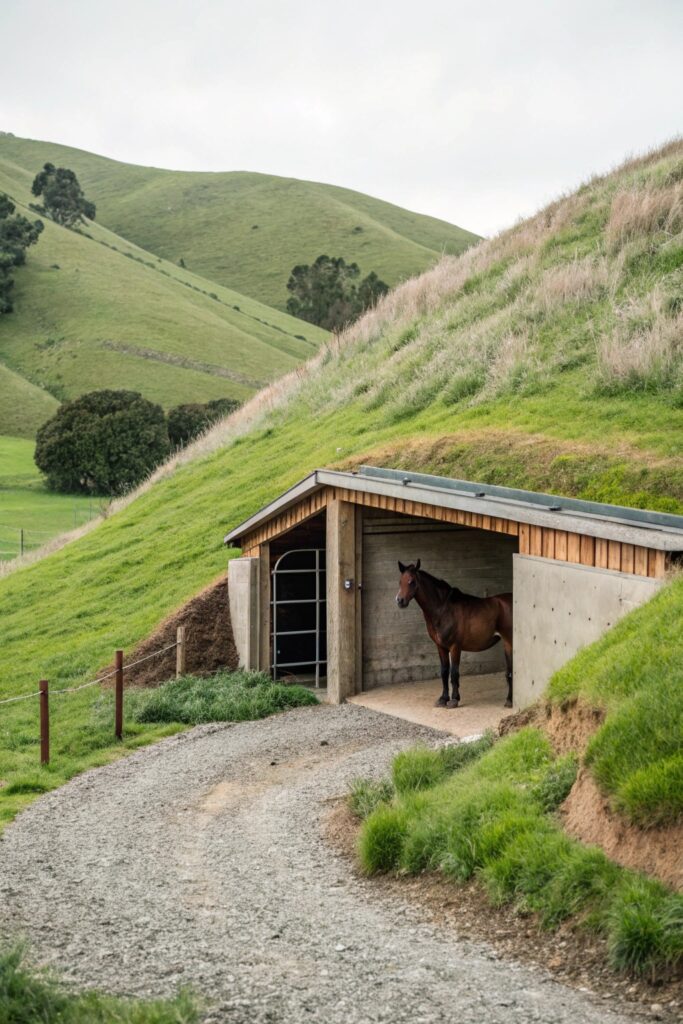
If your property has natural topography, a hillside or earth-bermed shelter uses the land itself as your primary windbreak and insulation, dramatically reducing material requirements.
Cut into a gentle slope, add a simple roof structure across the opening, and you have a shelter with naturally stable temperatures, excellent wind protection, and minimal material costs. The earth walls handle horse leaning and rubbing without damage.
Site requirements:
- A slope of 15–30 degrees works best for easy excavation and drainage
- Position the opening away from prevailing wind direction
- Install French drains around the perimeter to manage water infiltration
- Compact the floor and add gravel or mats for drainage and footing
This idea requires the right land, but when the topography cooperates, it produces one of the most naturally comfortable and cost-effective shelters possible.
12. Simple Tarp and Pole Shelter
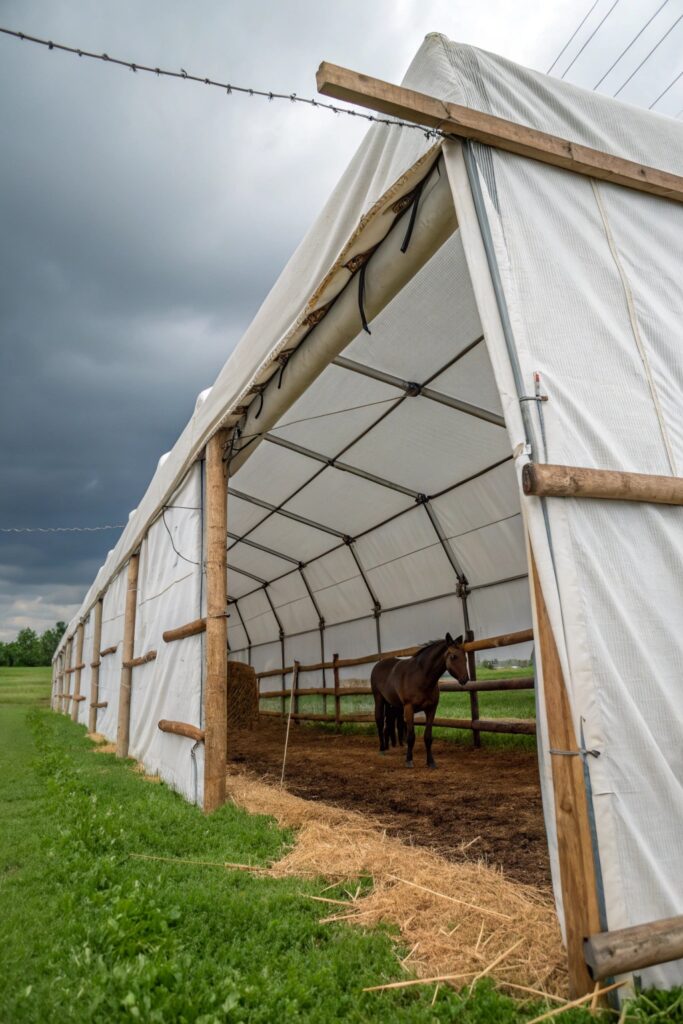
Sometimes you need shelter fast and budget is tight. A well-constructed tarp and pole shelter buys you time while you plan something more permanent, and done correctly, it holds up better than most people expect.
Use heavy-duty agricultural tarps — not the blue hardware store variety — and invest in proper pole anchoring. A tarp shelter that flaps and shifts in wind stresses horses. A taut, well-anchored setup stays calm and functions reliably.
Build it right:
- Use 12–14 mil woven poly tarps rated for agricultural use
- Set poles in concrete rather than just driving them into ground
- Run tension cables along the ridge and edges for shape retention
- Check and re-tension monthly — tarps shift with weather cycles
FYI, treat this as a temporary solution with a six-to-twelve month lifespan. Use the time it buys you to build something more permanent when your budget allows.
Wrapping It Up
Good horse shelter doesn’t require a big construction budget — it requires smart planning and the right approach for your specific property, climate, and herd size. From a simple three-sided run-in shed to a repurposed shipping container, every idea on this list delivers real protection that horses actually use.
Start with what your budget allows right now. A tarp shelter beats no shelter, a carport beats a tarp, and a proper run-in shed beats everything for long-term value.
Your horses can’t tell you what they need — but they can show you. Give them covered space, keep them out of the worst weather, and they’ll show you exactly how much a practical shelter matters.