
A small library’s shelving needs real structural attention, since books are truly one of the heaviest things people store in a home — weight capacity and proper anchoring matter more here than in almost any other decor category. The details below cover both the design direction and these practical specifics for each idea.
Below are 11 small home library ideas worth considering, with the specifics for each.
1. The Cozy Reading Nook Library
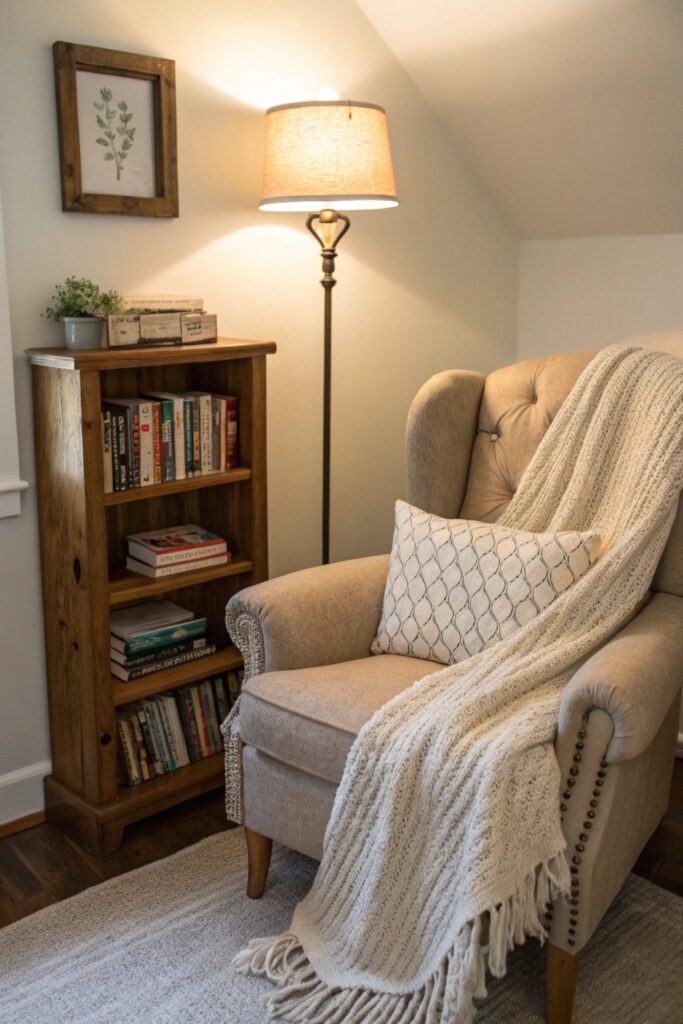
A stable, non-tip chair base matters more here than in most rooms, since this seat sees regular extended use rather than the occasional sitting a decorative chair might get elsewhere.
2. Wall-to-Wall Floating Shelves
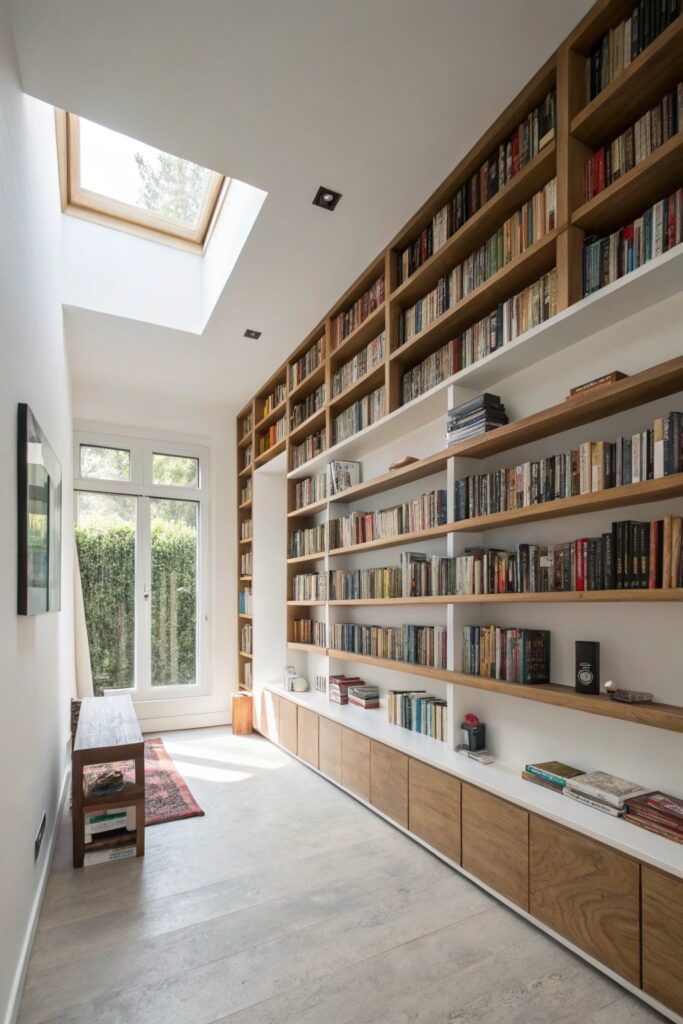
A shelf fully loaded with hardcover books can weigh 30 pounds or more per linear foot, so floating shelf brackets need a rating specifically for this load rather than the lighter capacity a generic decorative shelf bracket offers.
3. Under-the-Stairs Mini Library
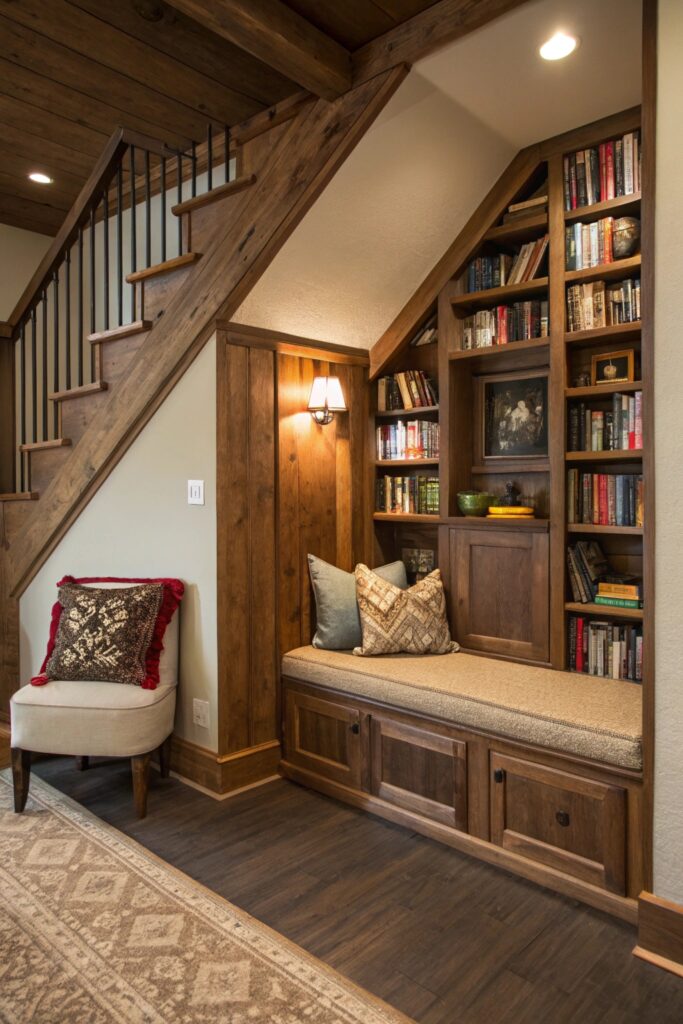
This space typically has an irregular, angled ceiling following the staircase above, so custom-built shelving usually fits and uses the space more efficiently than assuming a stock unit will work.
4. Window Seat Library Setup
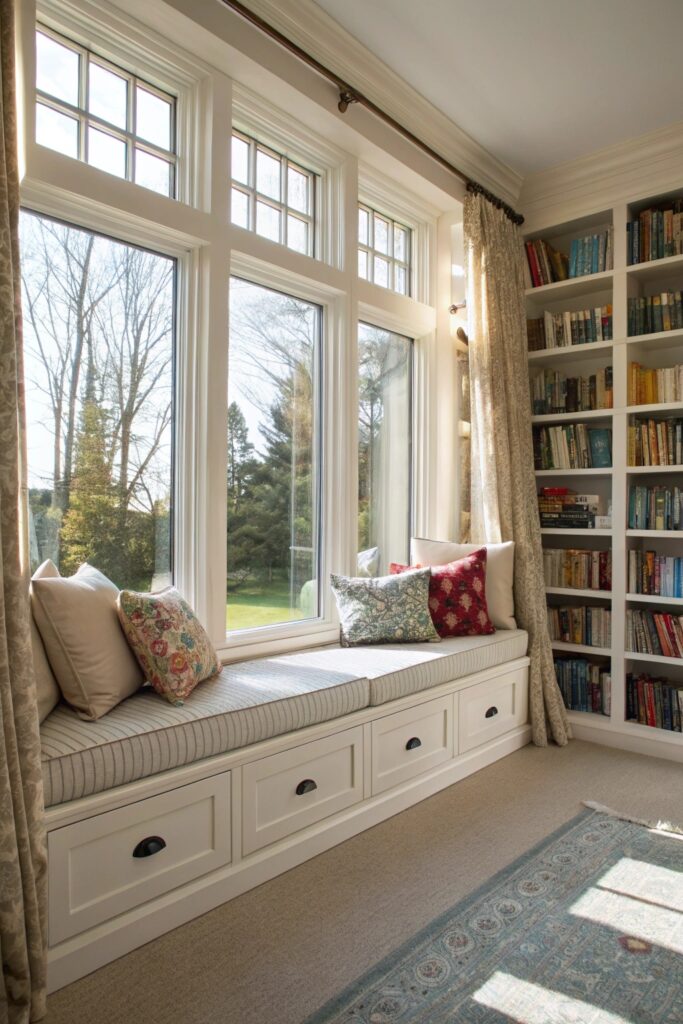
Choose fade-resistant fabric for any cushion in this spot, since direct window exposure fades upholstery faster here than almost anywhere else in the room.
5. Bookshelf Room Divider
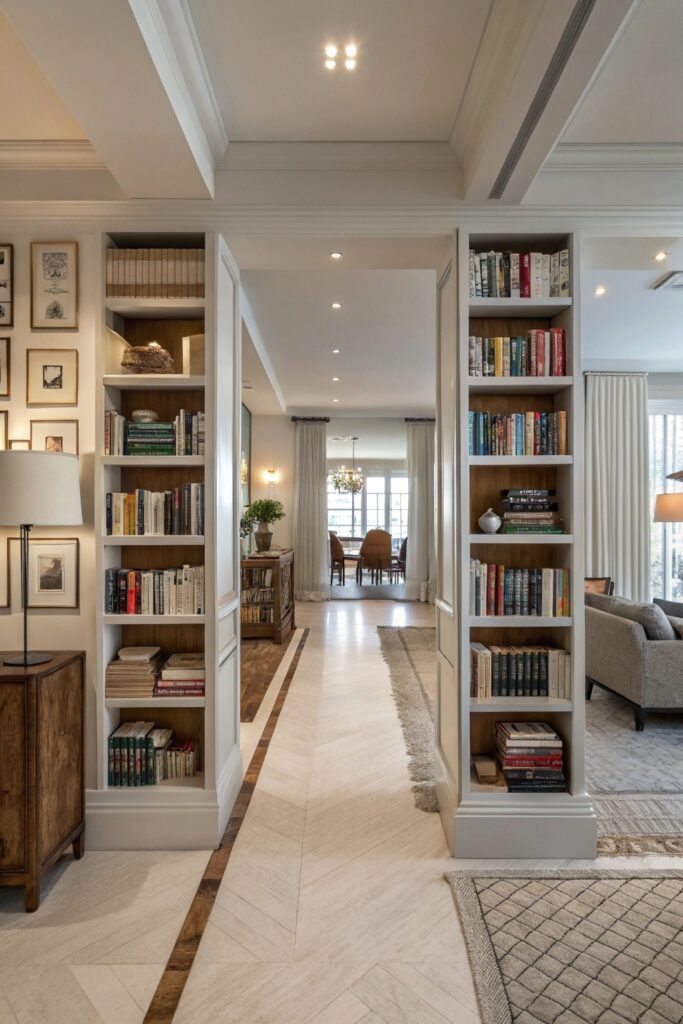
A freestanding shelf used as a room divider needs a truly more stable base and anti-tip anchoring than a wall-adjacent unit, since it lacks the wall support that helps stabilize shelving elsewhere.
6. Minimalist Scandinavian Library Style
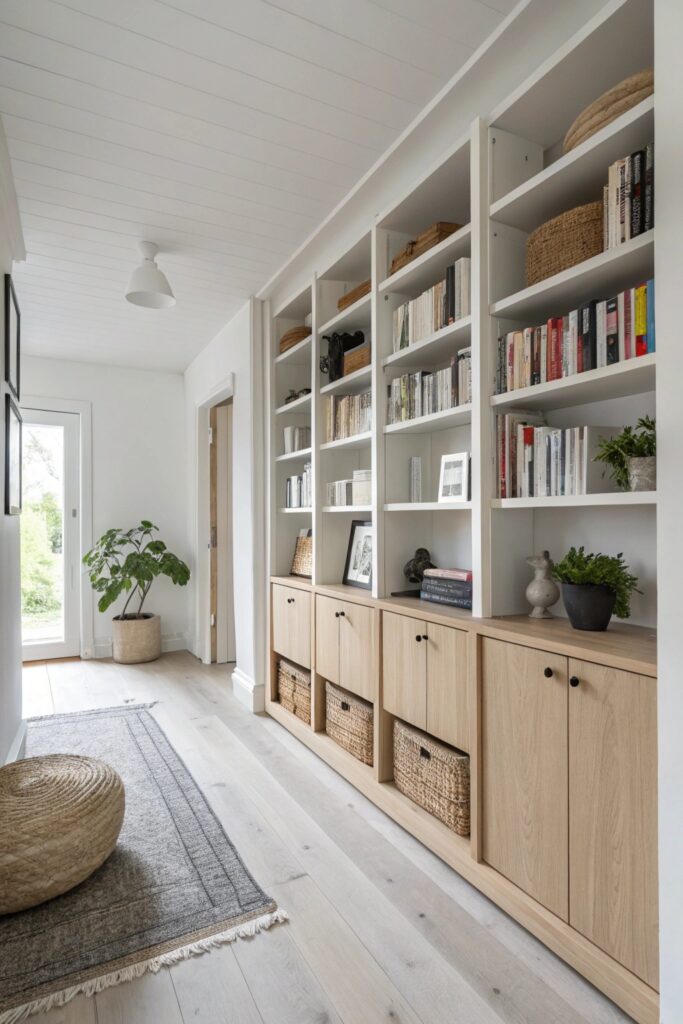
Light wood tones show dust and fingerprints more visibly than darker finishes, worth factoring in if you want this look to stay looking crisp with regular use.
7. Built-In Bookshelves for a Seamless Look
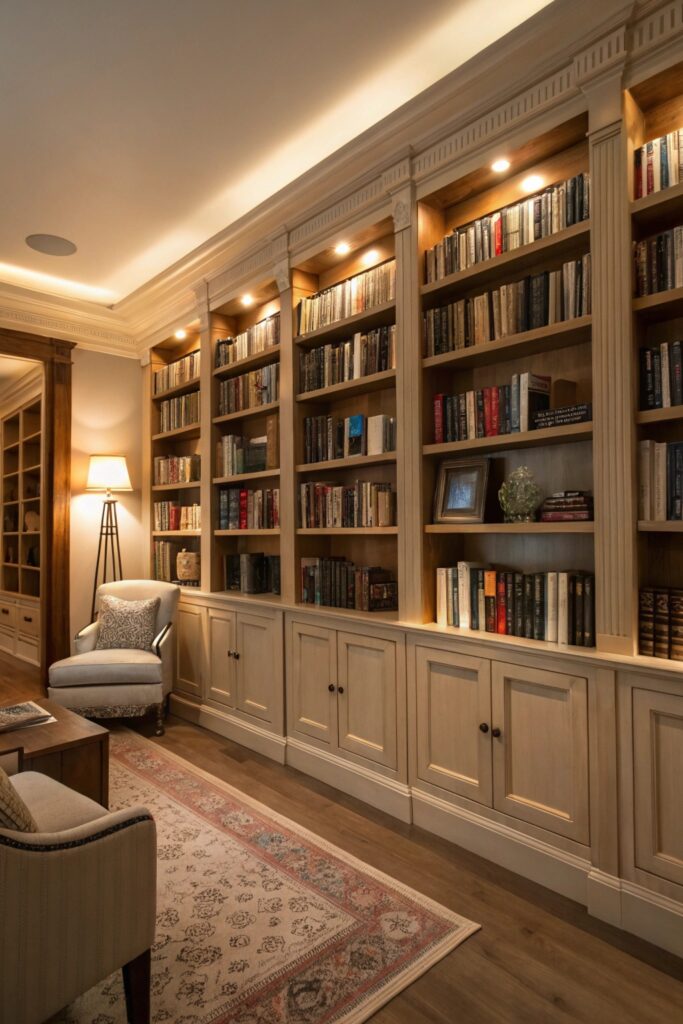
Simple built-in shelving typically doesn’t require a permit, but adding built-in lighting or making structural wall changes usually does, worth confirming with your local building department based on the specific scope of your project.
8. Ladder Shelf Library for Small Spaces
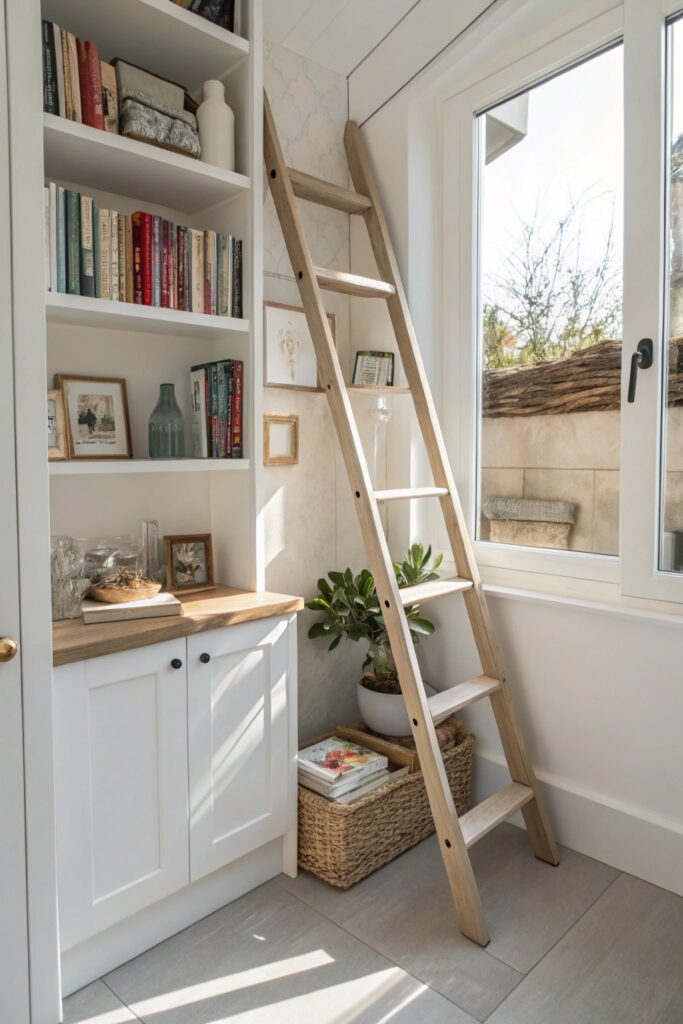
A leaning ladder-style shelf needs to rest against an actual load-bearing wall or be secured to prevent tipping, since this style is inherently less stable than a shelf anchored at multiple points.
9. Dark Academia Library Vibes
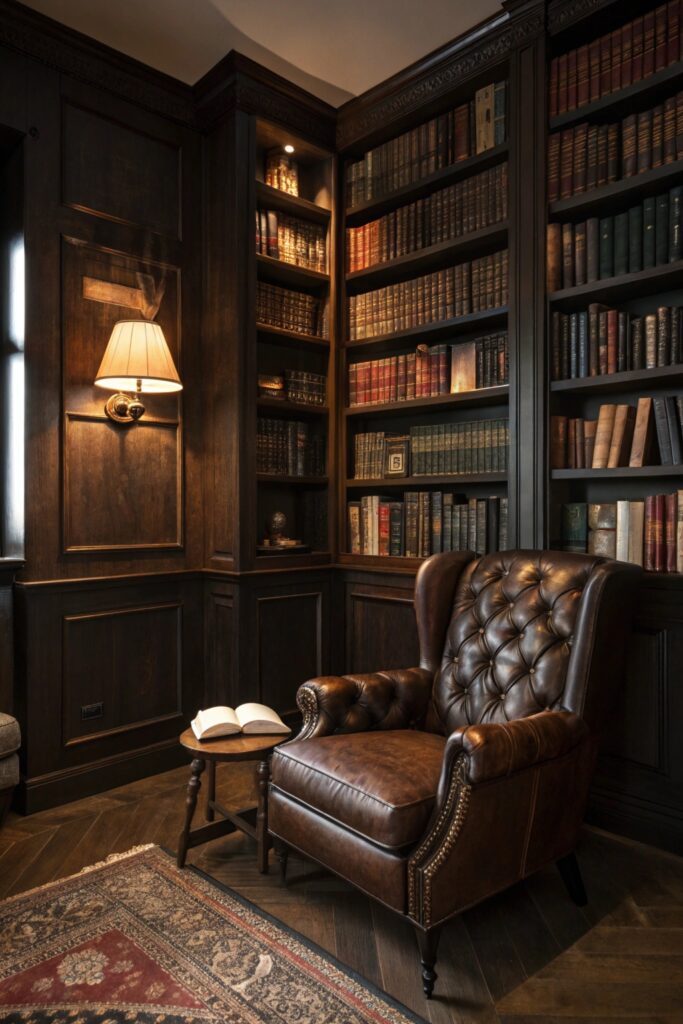
Layer in direct task lighting near the reading spot specifically, since a dark palette relies on ambient mood lighting alone less effectively for the actual act of reading than it does for atmosphere.
10. Multi-Functional Library Space
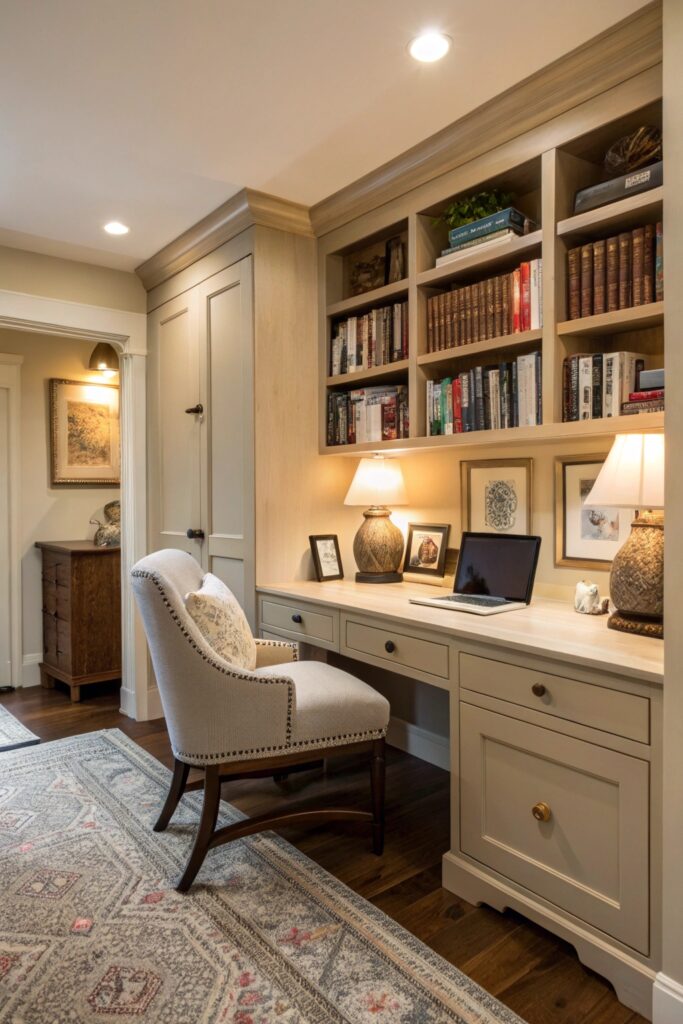
A fold-down desk or convertible piece needs hardware rated for repeated daily use rather than occasional adjustment, given how often a multi-purpose element gets reconfigured in a small, actively used space.
11. Floor-to-Ceiling Statement Shelves
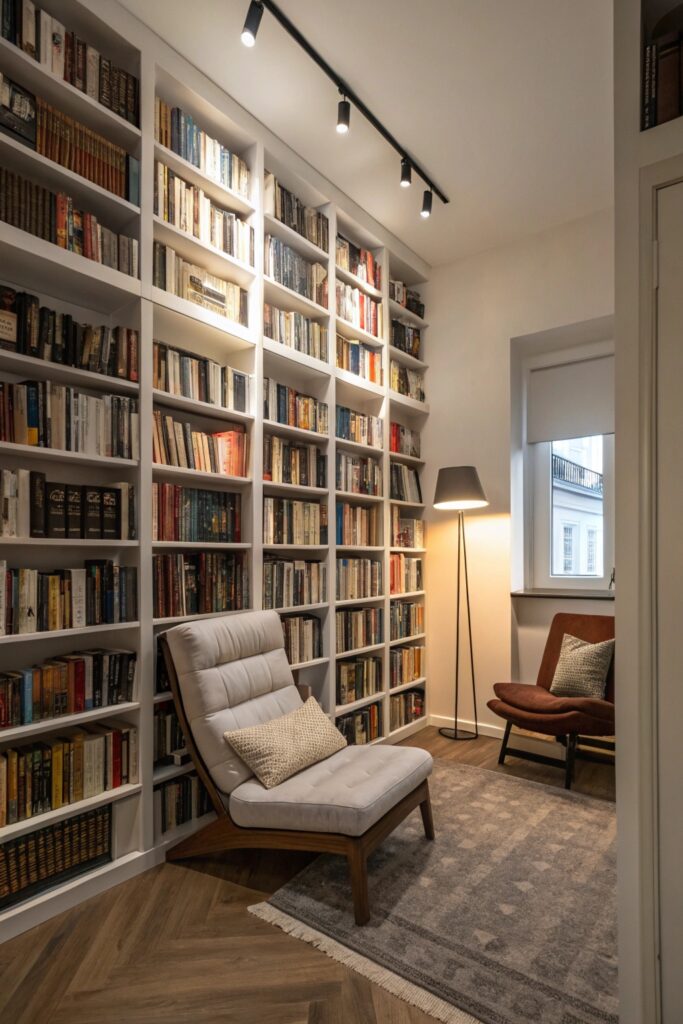
Plan for safe access to the top shelves from the start, whether a small stool or built-in step, and anchor the top of a tall unit into actual structure rather than drywall alone, given the full height and weight involved.
Organizing a Collection That Actually Grows
Leaving a bit of empty space on each shelf when you first set up the library, rather than filling every inch immediately, gives your collection room to grow without requiring a full reorganization the next time you bring home new books.
Organizing by a system that makes sense for how you actually browse — color, genre, or author — matters more than following a rigid library classification system most home collections don’t need.
What a Small Home Library Costs
A basic setup using stock shelving and a reading chair typically costs $300 to $900 depending on quality.
A fuller build including custom or built-in shelving runs considerably higher, often $2,000 to $6,000 or more depending on the scope and materials.
Protecting Books From Sun and Humidity
Direct sunlight fades book spines and can dry out and crack older bindings over time, so positioning shelves away from a south-facing window, or adding a sheer curtain to filter direct light, helps protect a collection you want to keep long-term.
Humidity swings are also worth monitoring, particularly in a basement or older home, since consistently damp conditions can lead to mold or warped pages that are difficult to reverse once they’ve set in.
Making a Small Space Feel Larger
Floor-to-ceiling shelving draws the eye upward and makes a small room feel taller than it actually is, an effect that works better here than in most rooms given how naturally shelving lends itself to vertical lines.
A mirror positioned to reflect the shelving, rather than a blank wall, doubles the visual sense of books and depth without requiring any additional square footage.
Getting quotes from at least two or three carpenters before committing to a custom or built-in shelving project helps confirm both pricing and their specific experience with irregular spaces like under-stair nooks, since not every carpenter has equal familiarity with these more complex layouts.
Lighting That Actually Supports Reading
A dedicated reading lamp positioned to shine directly onto the page, rather than relying solely on overhead ambient lighting, reduces eye strain considerably during longer reading sessions.
Warm-toned bulbs, generally in the 2700 to 3000 Kelvin range, tend to feel more comfortable for extended reading than cooler, bluer light, which can feel harsh and clinical over time in a space meant for relaxation.
A small library, done thoughtfully, tends to become one of the more frequently used rooms in a home precisely because it’s scaled for quiet, focused time rather than hosting a crowd, a real advantage over a larger, more formal library space.
Involving the whole household in choosing which books earn a spot on display versus storage elsewhere helps a shared small library feel curated rather than simply crowded with every book anyone in the house happens to own.
Whichever combination of these ideas fits your space, a small home library rewards the effort put into getting the shelving right, since this is one of the rare rooms where the underlying structure truly shapes daily use for years to come.
Taking the time to get this room right, even in a modest footprint, tends to produce a space you return to again and again, which is more than can be said for many rooms that get more square footage but far less actual daily use.
Conclusion
Confirming your shelving’s actual weight rating against your real book collection, rather than assuming any attractive shelf can handle a full library, prevents the sagging or structural failure that shows up months or years after installation.
Whichever combination of these ideas fits your space, prioritizing proper anchoring and load capacity first tends to matter more to how well the library holds up over time than any single styling choice on this list.