
A reading nook depends more on seating comfort and lighting quality than on any single decorative choice, since these are the two factors that actually determine whether the space gets used for twenty minutes or actually becomes a regular retreat. The details below cover both the styling direction and the practical specifics worth getting right.
Below are 10 approaches worth considering, with the specifics for each.
1. Window Seat Reading Nook with Natural Light
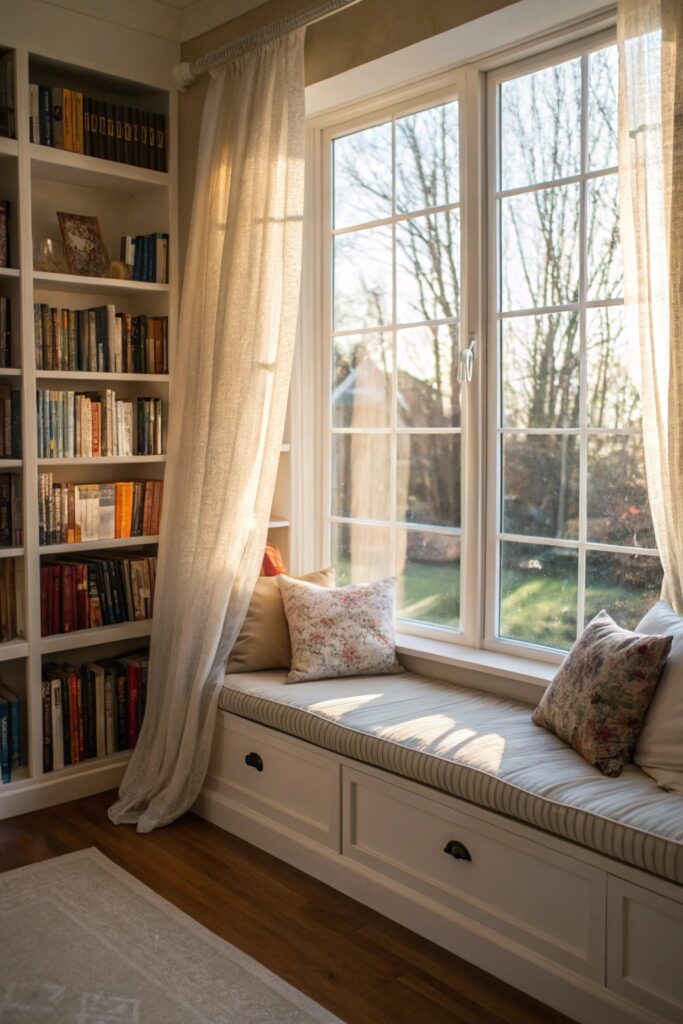
A bench depth of 18 to 20 inches gives enough room to sit with legs extended or tucked to the side, and cushioning at least 4 inches thick makes a real difference in comfort during longer reading sessions compared to a thin decorative cushion.
If the seat gets significant direct sun, a UV-protective window film helps prevent both fading on the cushion fabric and, over time, on any books left sitting in that direct light.
2. Built-In Bookshelf Corner Nook
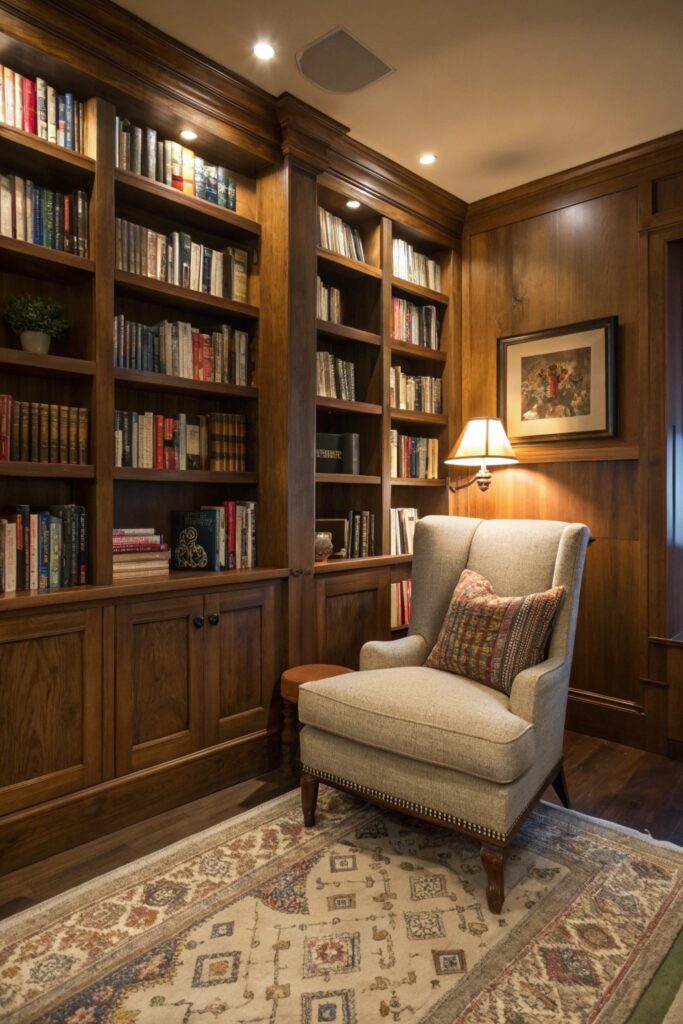
Standard shelf depth of 8 to 10 inches suits most hardcovers and paperbacks, though a deeper shelf, closer to 12 inches, accommodates oversized art or coffee table books without them overhanging the edge. A fully loaded bookshelf carries real weight, so built-in shelving needs to be anchored into studs or properly blocked framing rather than relying on drywall alone.
3. Cozy Armchair with Soft Throw Blankets
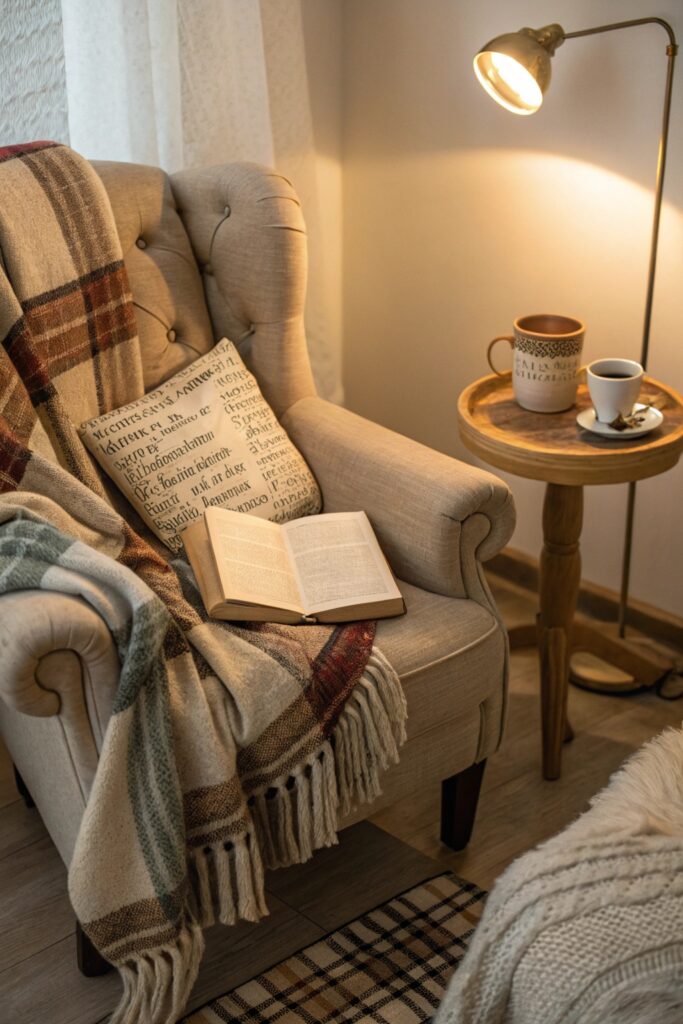
An upright, supportive chair tends to hold up better for extended reading sessions than a deeply reclined one, which can strain the neck over time if you’re holding a book at an angle for an hour or more. A stain-resistant fabric treatment is worth considering for a chair that will see regular use with drinks or snacks nearby.
4. Under-the-Stairs Reading Hideaway
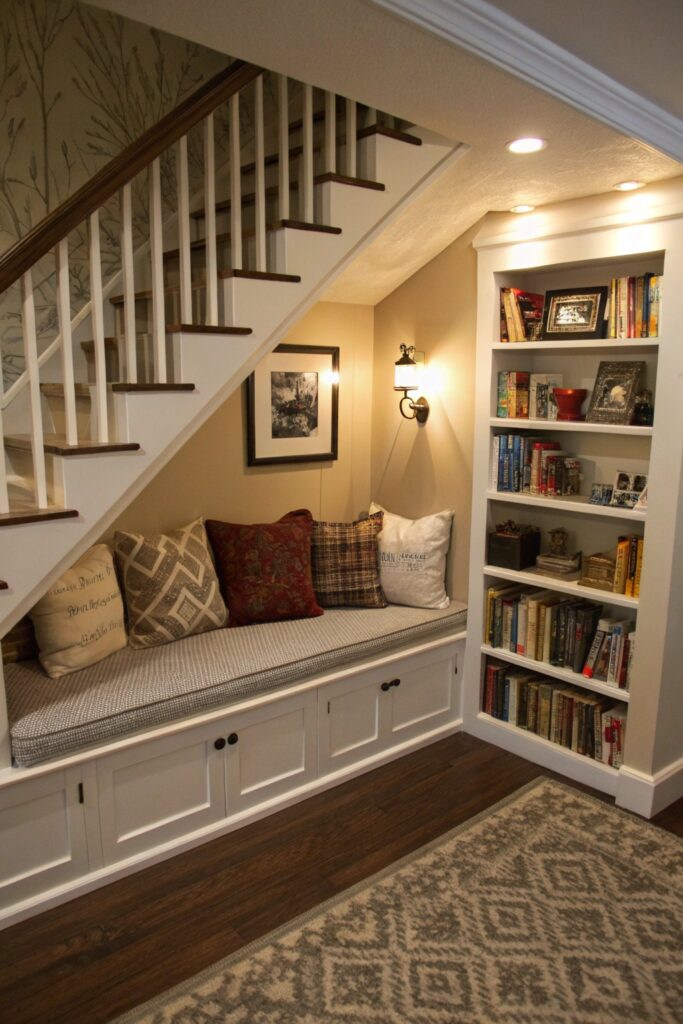
Aim for at least 4 to 5 feet of clearance at the tallest usable point of the space, which is enough for comfortable seated use even though the ceiling slopes down toward the back. If you’re considering any structural changes to the stairs themselves rather than just adding furniture into the existing space, that’s worth a professional consultation, since stair framing often plays a structural role beyond what’s visible.
5. Floor Seating Nook with Cushions and Rugs
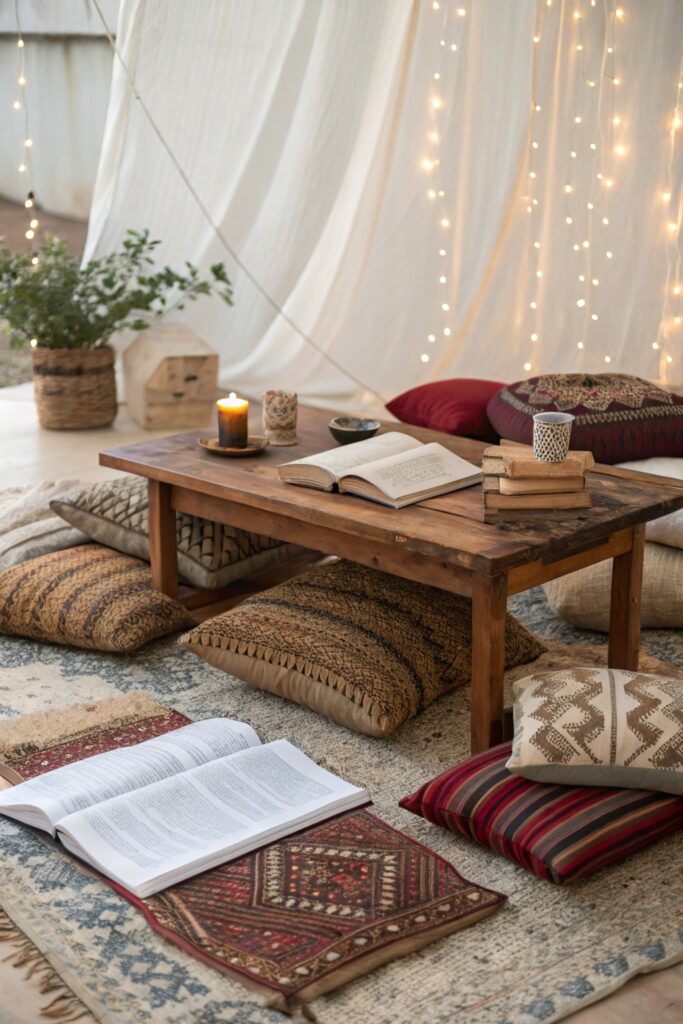
Higher-density foam cushions hold their shape considerably longer than low-density fill, which flattens out within months of regular use. A rug pad underneath the main rug adds a meaningful layer of cushioning on hard flooring, making floor-level seating noticeably more comfortable than the rug alone.
6. Minimalist Reading Nook for Calm Spaces
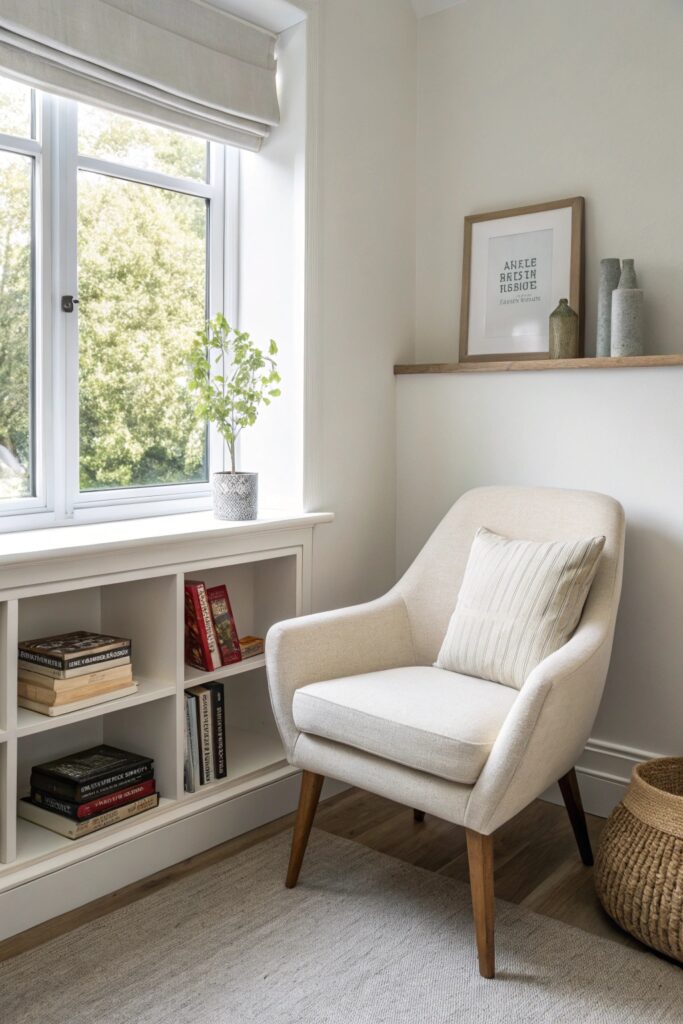
Leaving real negative space around a single chair and small side table, rather than filling every surface with decor, is what actually creates the calm this style aims for — it’s as much about what you leave out as what you include.
7. Bookshelf Wall with Ladder for a Classic Library Feel
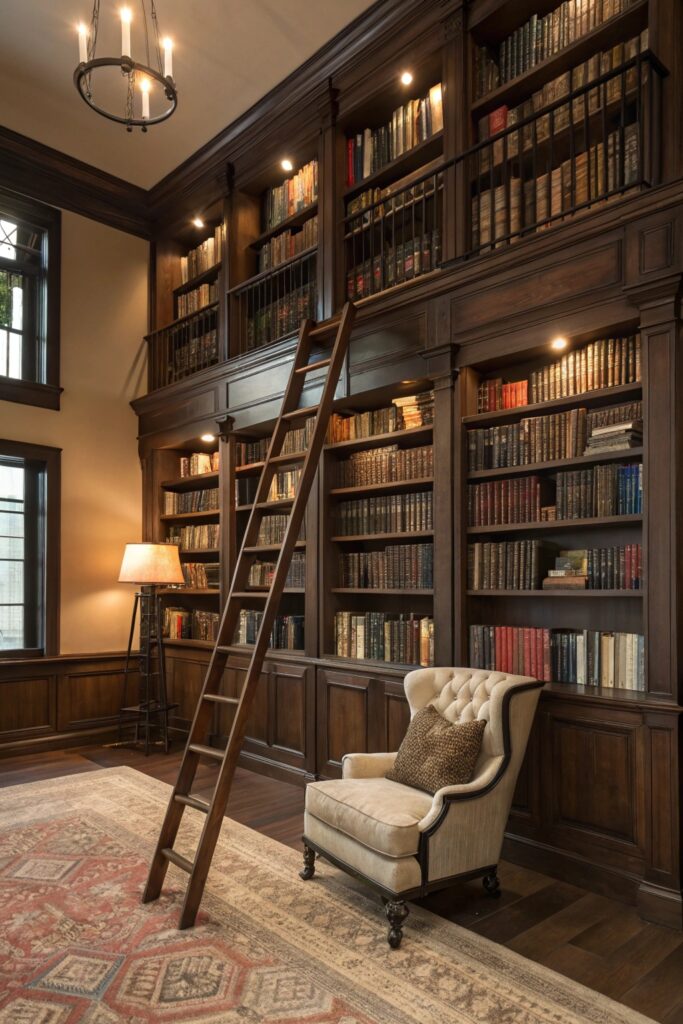
Standard rolling library ladder hardware is typically rated to support around 300 pounds, but confirm the specific rating for your hardware before relying on it. The mounting track needs to be anchored into structural blocking behind the wall, not just the shelving unit itself, since the track bears the ladder’s weight and movement.
8. Boho-Style Reading Nook with Textures
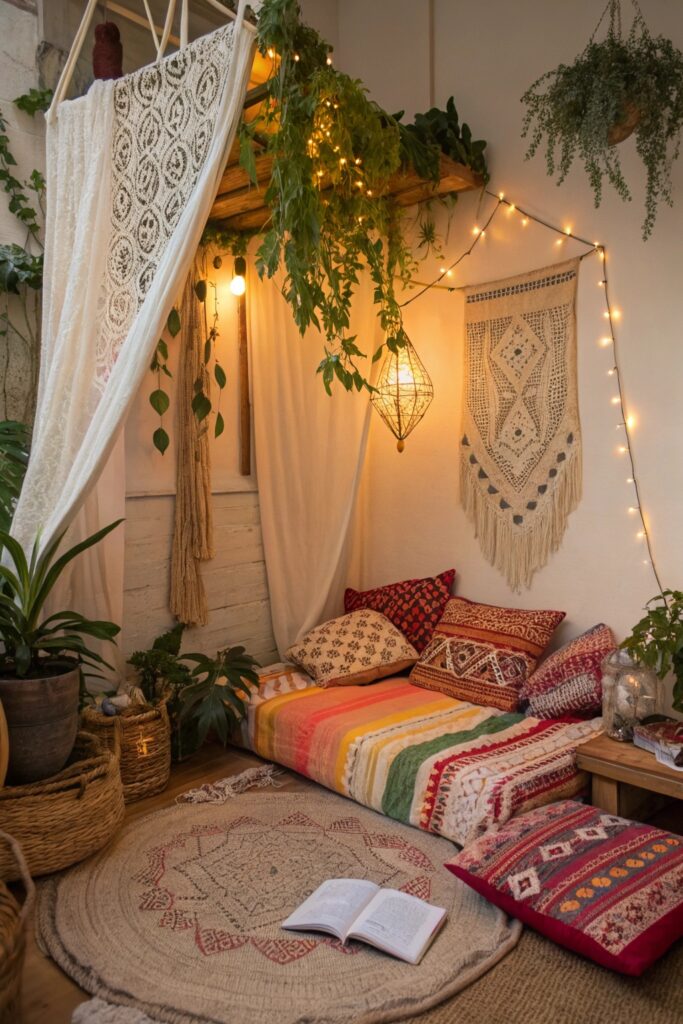
Layering a few different pattern densities — a bold macrame wall hanging against simpler solid-color floor cushions, for instance — keeps a heavily textured space from feeling visually chaotic despite the variety of materials involved.
9. Small Closet Turned Reading Nook
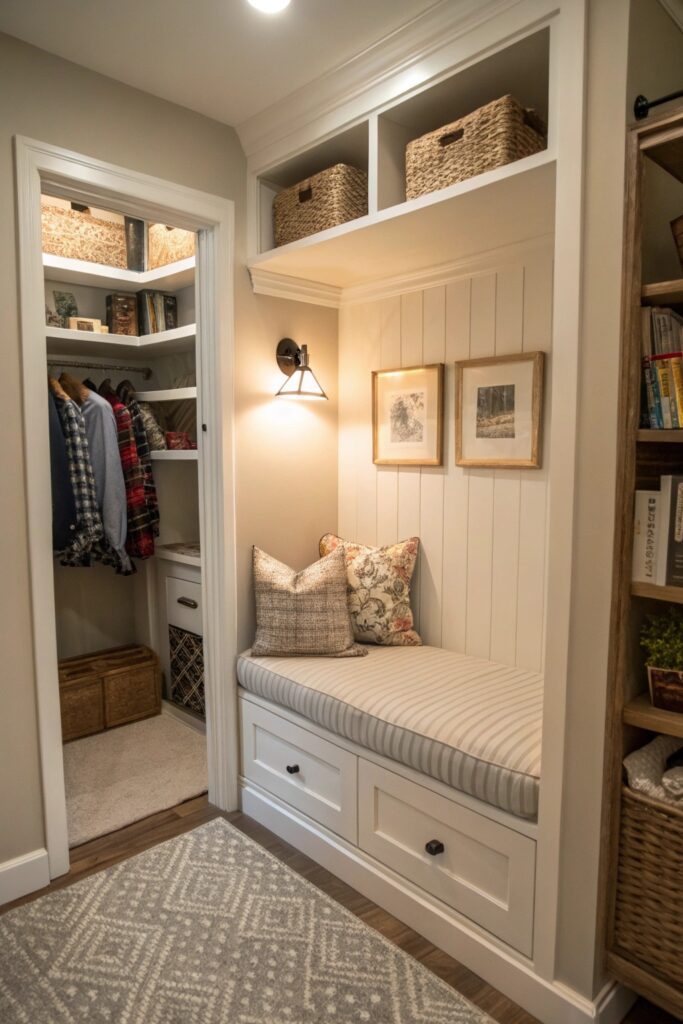
A standard reach-in closet is typically around 24 inches deep, workable for a small chair or floor cushion setup once shelving is removed. Since a closet-turned-nook is a fully enclosed space, keeping the door open or adding a small vent helps prevent the area from feeling stuffy during longer use.
10. Lighting-Focused Reading Nook for Night Readers
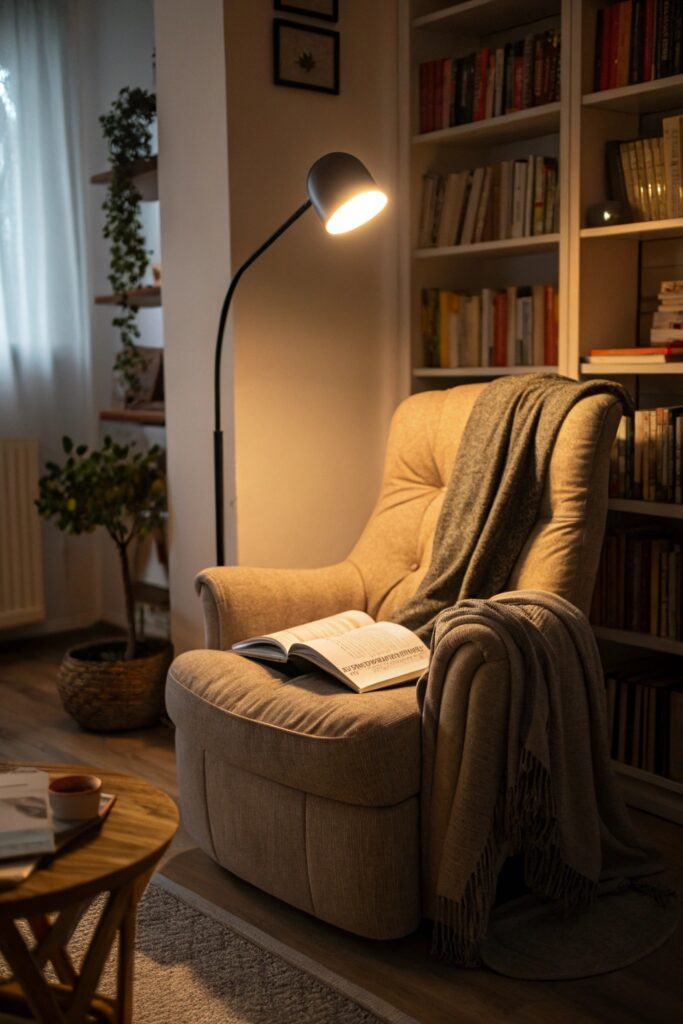
A dedicated reading lamp positioned to the side, rather than directly overhead, avoids the glare that can bounce off a glossy page from a light source shining straight down. Warmer bulbs, generally in the 2700K to 3000K range, are easier on the eyes for extended evening reading than a cooler, bluer light.
Protecting Books From Light and Humidity Damage
Direct sunlight fades book covers and yellows paper over time, so a nook positioned near a window benefits from UV-filtering glass or a sheer curtain that softens direct exposure during peak sun hours without blocking the room’s natural light entirely.
Consistently high humidity can cause pages to warp or develop mold, particularly in a converted closet or under-stairs space with limited airflow. A small dehumidifier or simply keeping the space cracked open when not in use helps prevent this in a nook that doesn’t get much natural ventilation.
What a Reading Nook Costs
A simple setup using an existing chair, a new throw, and a floor lamp can cost well under $150 if you’re working with furniture you already own.
A fuller build-out with custom shelving, a window seat, or built-in cabinetry runs considerably higher, often $500 to $2,500 or more depending on whether the work involves carpentry or structural changes.
Organizing the Books Within Reach
Keeping only current and frequently reached-for titles within arm’s reach of the nook itself, rather than trying to fit an entire collection into the immediate space, keeps the area functional rather than cluttered. Rotating in different books from a larger shelf elsewhere in the home every few weeks keeps the nook feeling fresh without requiring it to hold everything you own.
A small side table or a shallow basket works well for the book currently being read alongside a bookmark, reading glasses, or a mug, keeping those items from ending up scattered around the rest of the room.
A reading nook doesn’t need to be a large or dedicated room to work well — several of the ideas above, like a closet conversion or a corner floor cushion setup, can be built into just a few square feet of otherwise unused space, making this one of the more accessible small-space upgrades regardless of a home’s overall size.
Comfort Matters More Than the Surrounding Decor
A beautifully styled nook with an uncomfortable chair or poor lighting gets used far less than a simpler setup that’s actually comfortable to sit in for an hour. If you’re working with a limited budget, prioritizing seating support and a proper reading light over decorative extras tends to result in a space that actually gets used regularly rather than one that just photographs well.
Testing the space at the time of day you’ll most often use it — an evening reading spot needs to work well under artificial light, while a daytime nook depends more on how natural light falls into the space — helps confirm the setup actually functions the way you’re picturing before finalizing furniture placement.