
Let’s be real — basement bedrooms get a bad reputation. Dark, cold, maybe a little dungeon-ish. But here’s the thing: a basement bedroom can actually be one of the most comfortable, private, and stylish spaces in your entire home. I’ve seen truly stunning basement bedrooms that made me forget there wasn’t a single window in sight.
The secret isn’t a massive renovation budget. It’s knowing which design moves actually work below grade.
Whether you’re converting a basement for a guest room, a teenager, or yourself, these 10 ideas will help you create a space that feels truly bright, warm, and livable — not like a storage room with a mattress in it.
1. Go All-In on Light, Warm Wall Colors
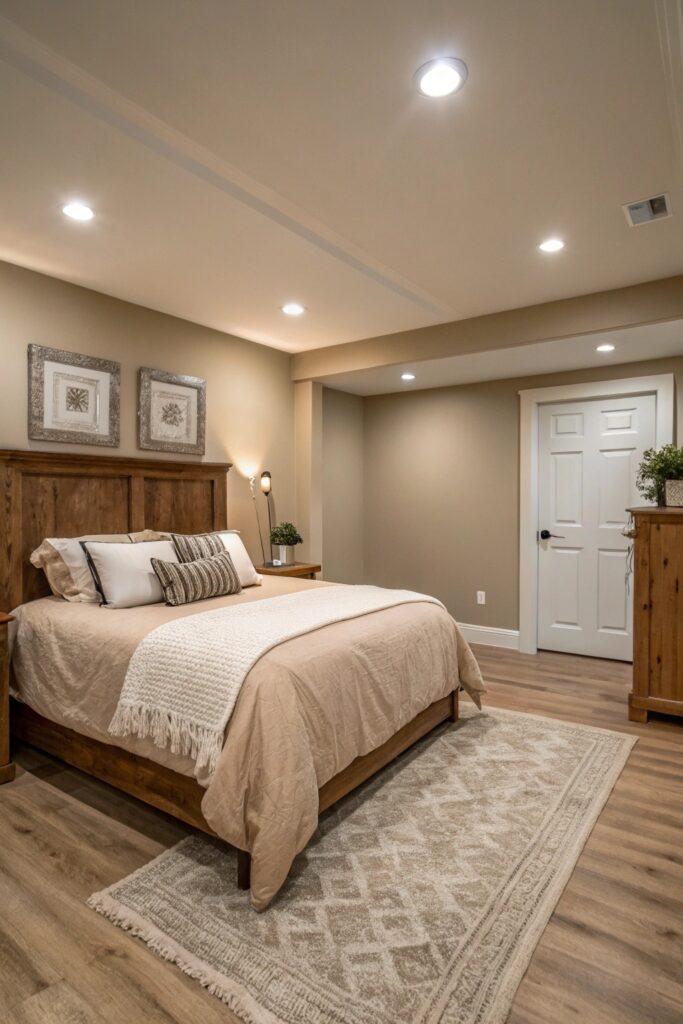
The single fastest way to brighten a basement bedroom is painting the walls a warm, light neutral tone.
Forget stark white — it reads cold and clinical in low-light spaces. Instead, reach for warm whites, soft creams, pale greiges, or light warm beiges. These shades bounce available light around the room while adding warmth that cool-toned colors simply can’t deliver underground.
Best paint choices for basement bedrooms:
- Benjamin Moore White Dove – warm, soft, universally flattering
- Sherwin-Williams Accessible Beige – cozy without feeling yellow
- Behr Crème – affordable and reliably warm in artificial light
IMO, warm greige is the single best color family for basement spaces. It works with wood tones, soft textiles, and any lighting setup you throw at it.
2. Layer Your Lighting Like a Pro
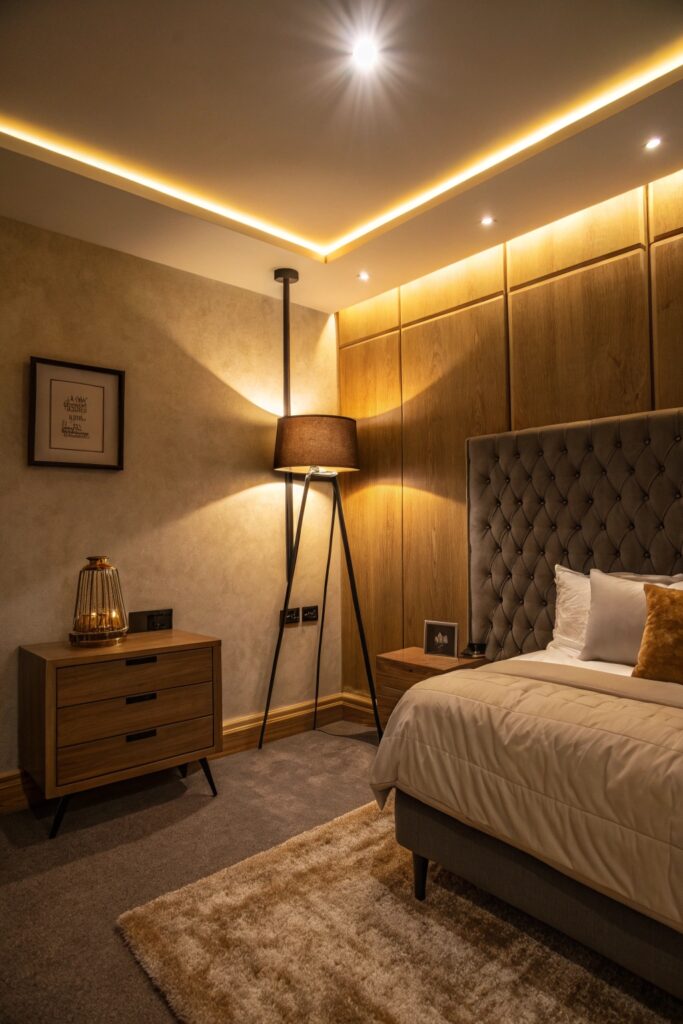
Natural light is limited in a basement — so your artificial lighting setup needs to carry the whole room. One overhead fixture will not cut it. I learned this the hard way.
Strategic lighting layers to use:
- Recessed LED downlights for general ambient coverage
- Bedside table lamps for warm, localized task lighting
- Floor lamps to fill dark corners
- LED strip lighting behind headboards or under bed frames for soft accent glow
The key detail people miss: color temperature matters enormously. Choose bulbs rated at 2700K–3000K (warm white) for a cozy, inviting feel. Cool white or daylight bulbs (5000K+) will make your basement feel like a hospital hallway. :/
3. Install Egress Windows or Enlarge Existing Ones
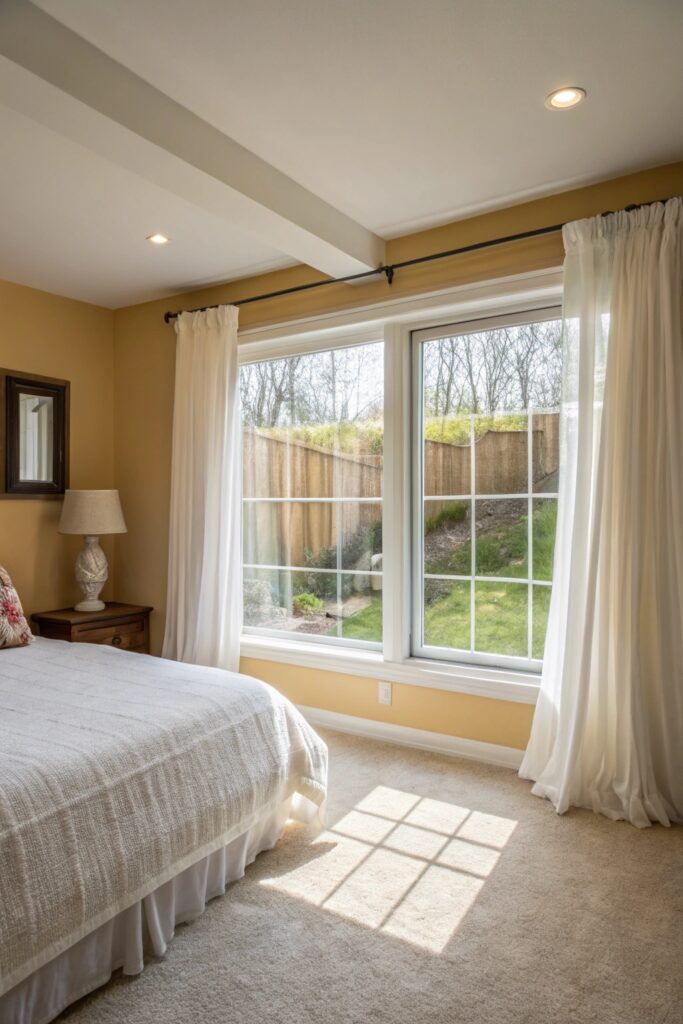
If your basement has any exterior walls, egress windows are the single highest-impact upgrade you can make. These larger, code-compliant windows flood the space with actual natural light and fresh air — two things every basement bedroom desperately needs.
Yes, it’s a bigger investment than paint. But the transformation is dramatic.
What egress windows deliver:
- Real natural daylight that no light fixture can fully replicate
- Ventilation that eliminates that classic basement mustiness
- Code compliance — required in most regions for a legal sleeping space
- Significant boost to your home’s resale value
Even enlarging one existing window makes a noticeable difference. Pair it with a window well with a reflective liner to maximize every ray of light coming through.
4. Use Mirrors Strategically
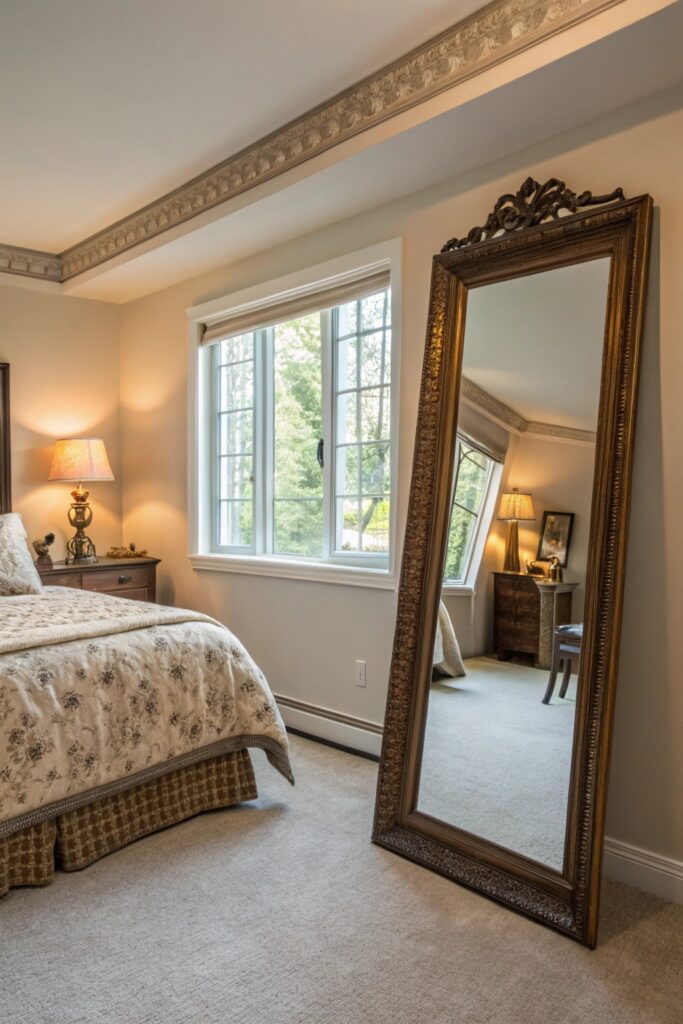
Mirrors are a designer’s best friend in any low-light space — and in a basement bedroom, they’re practically essential. A large mirror reflects both natural and artificial light, making the entire room feel bigger and brighter without touching a single fixture.
Placement strategies that actually work:
- Lean a full-length mirror against the wall opposite any window
- Install a large framed mirror above the dresser to bounce light across the ceiling
- Use mirrored closet doors to double the visual depth of the room
- Group smaller decorative mirrors on a feature wall as art
The goal is to catch and redirect whatever light exists in the space. Even a well-placed mirror opposite a lamp makes a measurable difference in how bright the room feels.
5. Choose Light, Breathable Bedding and Textiles
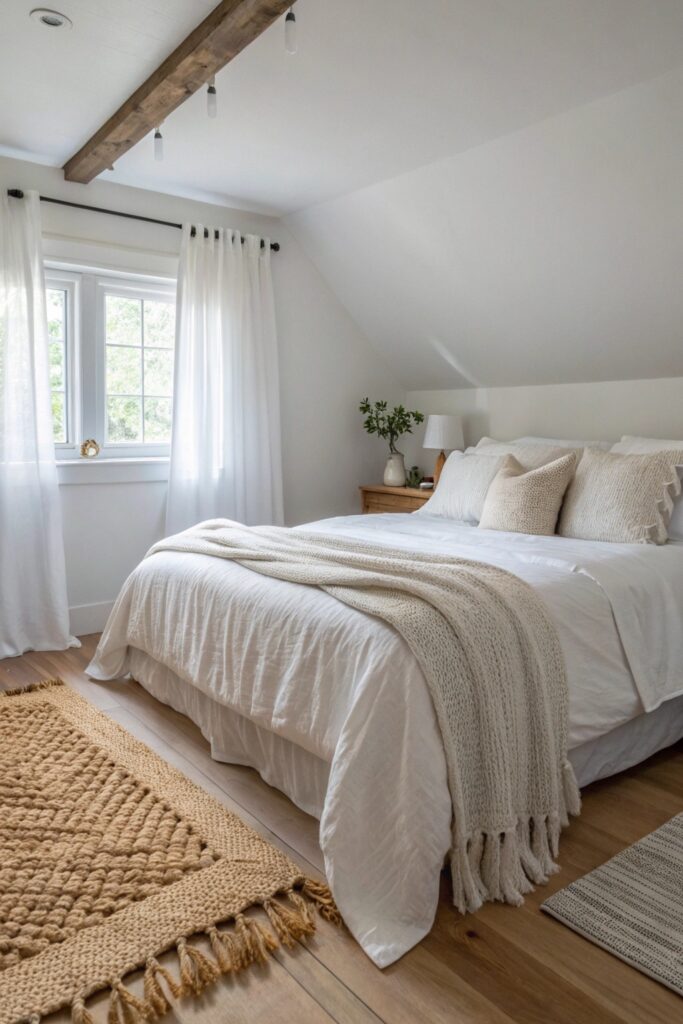
Ever walked into a basement bedroom that felt oppressively heavy? Nine times out of ten, the culprit is dark, thick textiles everywhere. Bedding, curtains, and rugs in light, warm tones do more for a room’s perceived brightness than most people realize.
Textile choices that open up a basement space:
- Linen or cotton duvet covers in white, cream, or soft sage
- Sheer curtain panels on any windows to diffuse light without blocking it
- Light-toned area rugs in wool, jute, or cotton to warm up concrete or tile floors
- Chunky knit throws in oatmeal or ivory for cozy texture without visual weight
FYI — mixing textures in light tones creates depth and warmth simultaneously. It’s one of those design tricks that looks effortless but makes a massive difference.
6. Add a Statement Headboard
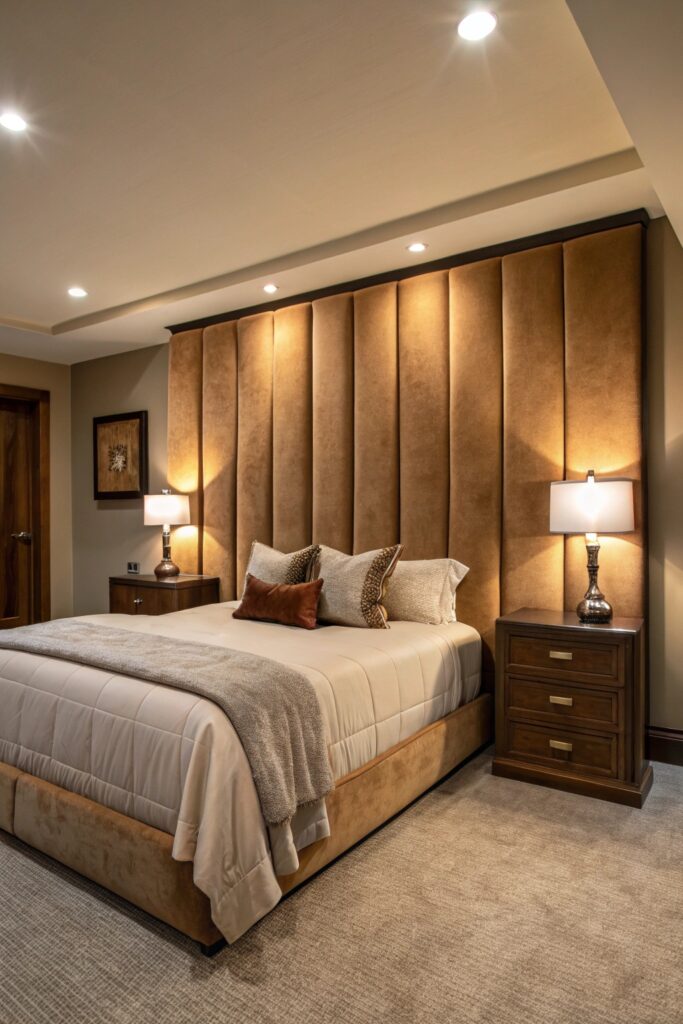
A basement bedroom can feel undefined and cave-like without strong anchor pieces. A bold, well-proportioned headboard solves this immediately by giving the room a clear focal point that draws the eye upward.
Headboard styles that work especially well below grade:
- Tall upholstered headboards in warm velvet or linen — adds height and softness
- Natural wood headboards — bring organic warmth that offsets concrete or drywall
- Cane or rattan styles — lightweight and airy, won’t visually weigh the room down
- Floating wall-mounted panels — make the ceiling feel higher than it is
Go taller than you think you need to. In a low-ceiling basement, a headboard that reaches toward the ceiling actually tricks the eye into perceiving more vertical space.
7. Use Built-In Storage to Eliminate Clutter
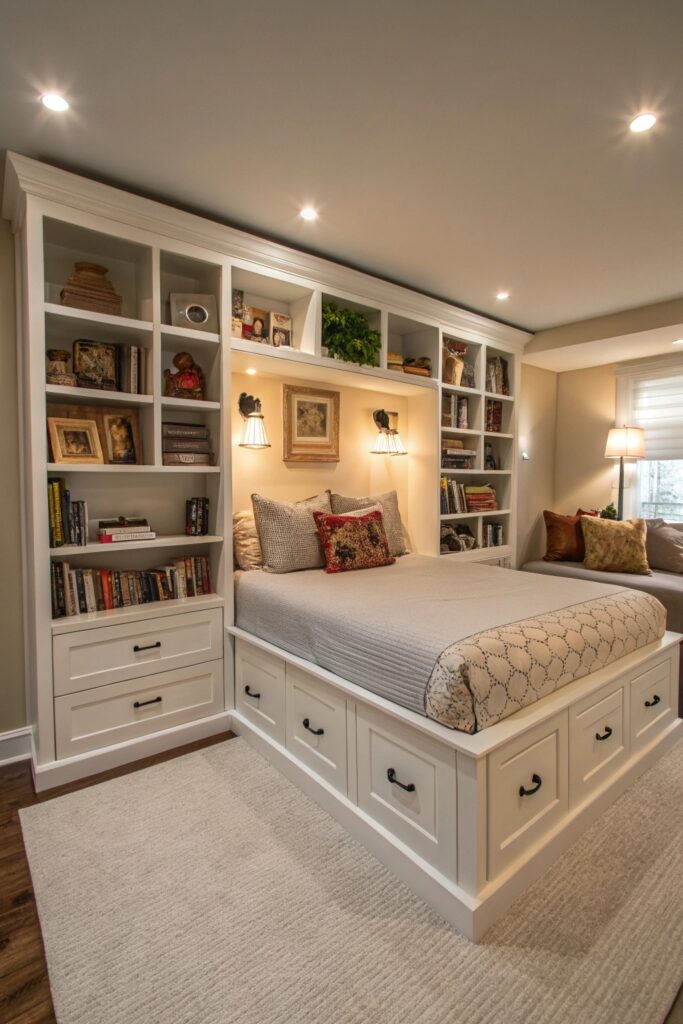
Clutter makes any small or low-light space feel suffocating — and basements are already working against you. Built-in shelving, drawers, and cabinetry keep the room organized while using wall space efficiently, leaving the floor open and the room feeling larger.
Smart built-in storage ideas:
- Floor-to-ceiling shelving flanking the bed or along a full wall
- Built-in dresser drawers beneath a window bench seat
- Under-bed storage drawers in a platform bed frame
- Recessed niches in drywall for books, lamps, or decor
Built-ins also give a basement bedroom a finished, intentional quality that free-standing furniture alone can’t achieve. When everything has a place, the room breathes — and so do you.
8. Bring in Natural Materials and Plants
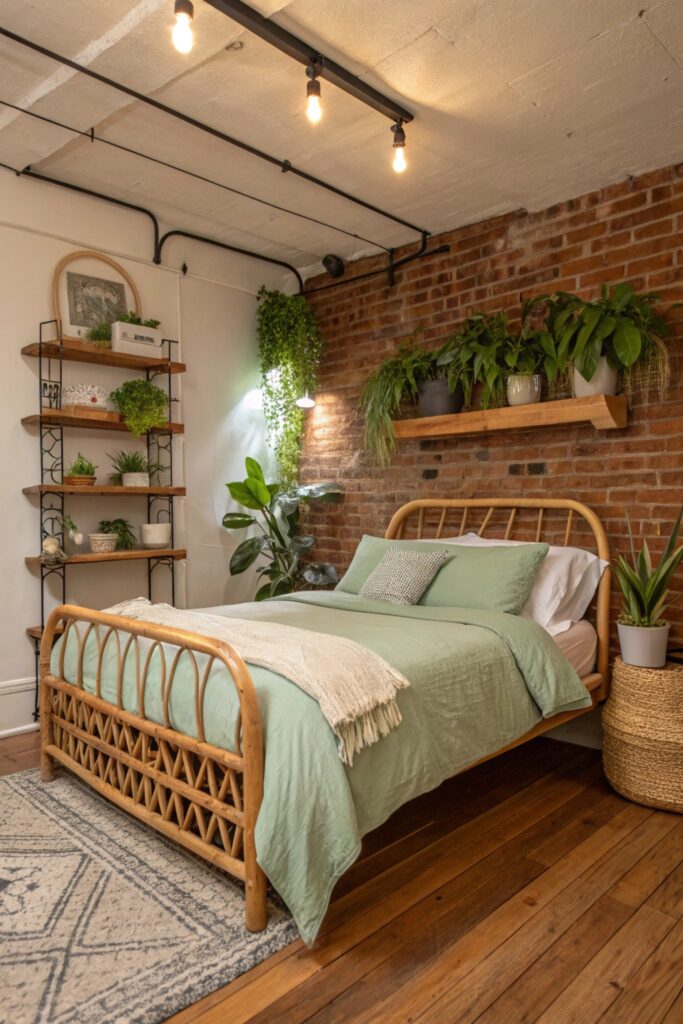
Nothing fights the underground feeling quite like bringing nature inside. Wood, stone, rattan, linen, and live plants all add organic warmth and life to a basement bedroom that might otherwise feel sterile.
Natural elements that make the biggest impact:
- Hardwood or wood-look LVP flooring instead of carpet or bare concrete
- Live plants — pothos, snake plants, and ZZ plants thrive in low-light conditions
- Wooden furniture in warm honey or walnut tones
- Exposed brick or stone accent walls if your basement structure allows it
Even a few potted plants on a shelf make a basement feel less like an underground box and more like a thoughtfully designed retreat. Start with a snake plant — they’re basically indestructible.
9. Address the Ceiling Intentionally
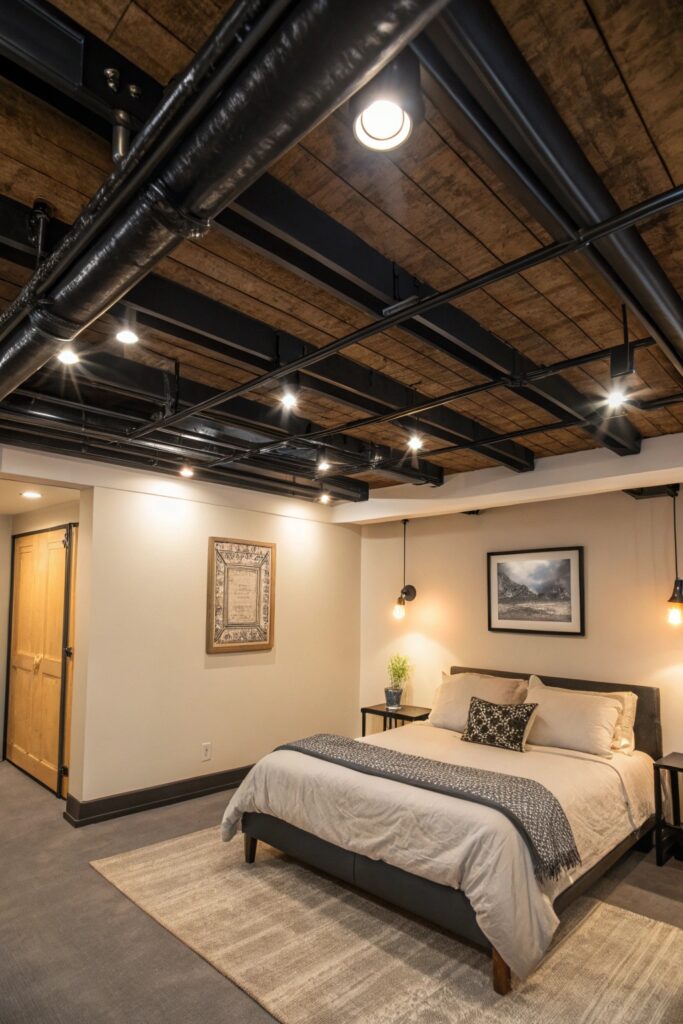
Most basement ceilings are either low drywall or exposed joists — and either one can feel oppressive if you ignore it. Treating your ceiling as a design element rather than an afterthought makes an enormous difference.
Ceiling treatment options by situation:
- Paint exposed joists and pipes matte black — it makes them disappear visually and looks intentionally industrial
- Install beadboard or shiplap paneling for a cottage-style finish
- Paint the ceiling the same color as the walls — eliminates the harsh contrast that makes ceilings feel lower
- Add recessed lighting directly into the ceiling to avoid hanging fixtures that eat headroom
Whatever you choose, be deliberate. A finished ceiling says “bedroom.” An ignored ceiling says “unfinished basement with a bed in it.”
10. Create a Cozy Reading or Lounge Nook
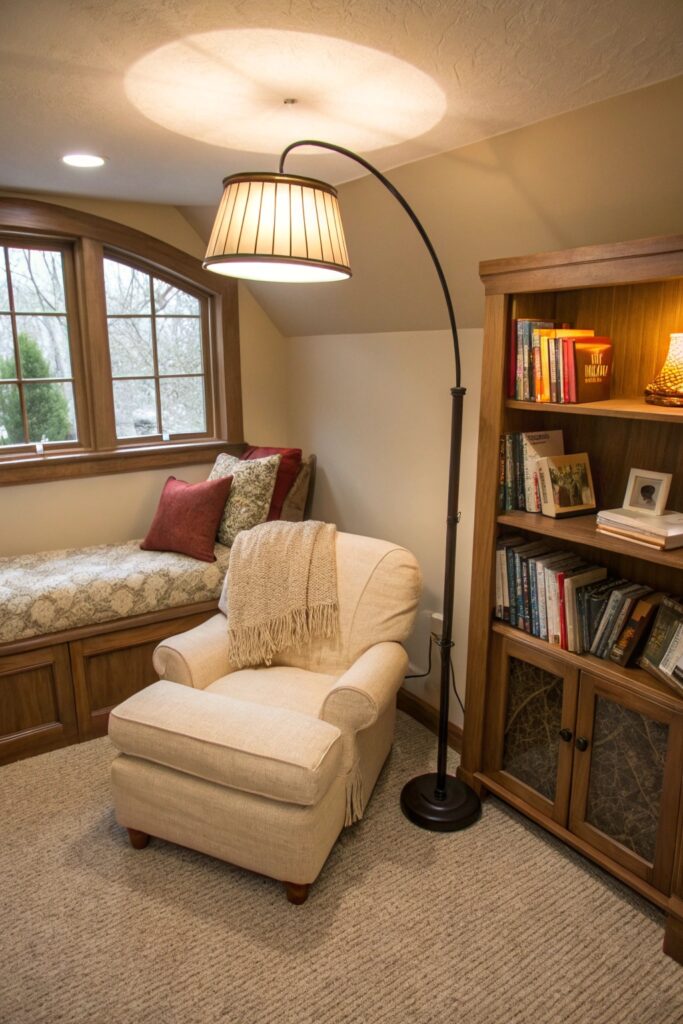
The best basement bedrooms feel like complete, livable spaces — not just rooms with a bed shoved in them. Adding a dedicated lounge or reading nook gives the room purpose and personality beyond sleeping.
Easy ways to create a nook in a basement bedroom:
- Tuck an armchair and floor lamp into a corner for a reading spot
- Build a window seat beneath an egress window with storage underneath
- Use a small loveseat or chaise at the foot of the bed for a layered, hotel-like feel
- Add a small bookshelf and gallery wall to define the nook visually
This one addition shifts the energy of the entire room. Suddenly it’s not a basement bedroom — it’s a private suite. And honestly, who wouldn’t want that? 🙂
Make Your Basement Bedroom Work for You
Checking Radon and Moisture Before You Furnish
A radon test is worth doing before converting basement space into a bedroom specifically, since this is a room where someone will spend many consecutive hours each night, more sustained exposure than most other basement uses.
Confirming the space has been free of past water intrusion, or that any prior issue has been properly resolved, matters more here too, given how much time a bedroom occupant spends breathing the room’s air compared to a occasional-use basement space.
>A basement bedroom doesn’t have to feel like a compromise. With the right lighting layers, warm color palette, intentional textiles, and a few smart design moves, you can create a space that feels truly cozy — not claustrophobic.
Start with the changes that cost the least: paint, lighting, and bedding. Then work your way toward bigger investments like egress windows or built-ins if the budget allows.
The basement bedroom you’ve been imagining is absolutely achievable. Pick two or three ideas from this list and start there — your underground retreat is closer than you think.