
A wine cellar has real technical requirements that exist independently of the style you choose — temperature stability, humidity control, and UV protection all affect how well wine actually ages, regardless of how the room looks. The details below cover both the design direction and these practical requirements for each style.
Below are 12 wine cellar styles worth considering, with the specifics for each.
1. The Classic Traditional Wine Cellar
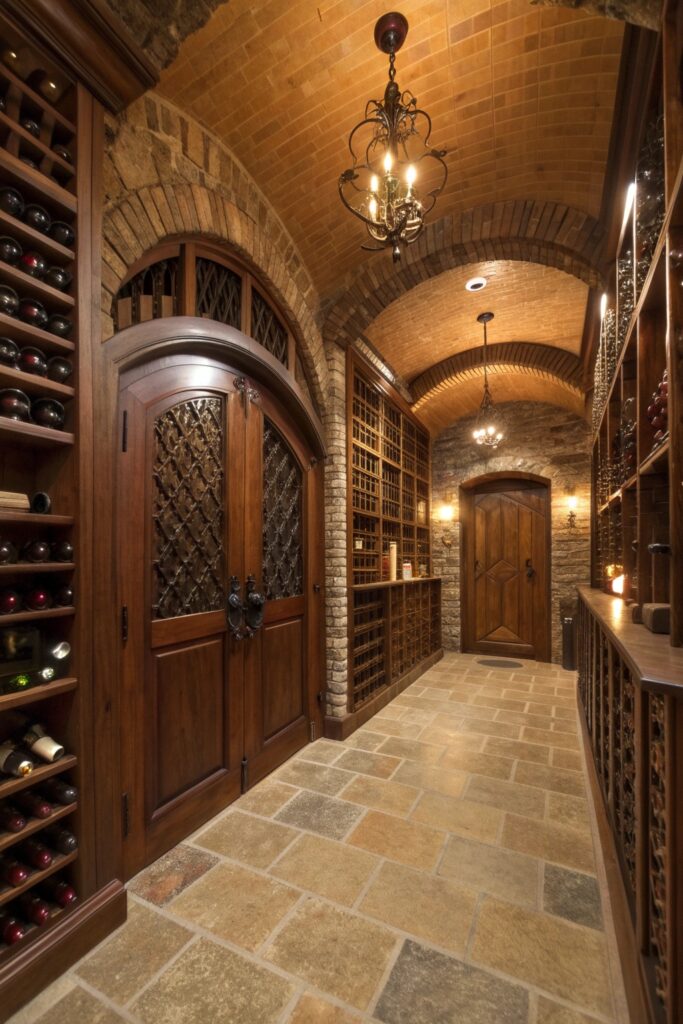
Mahogany and redwood resist warping in a humid cellar environment considerably better than standard pine, which matters over years of exposure to the consistent humidity this space requires. The traditional storage target is around 55°F, which is worth designing the cooling system around from the start.
2. Modern Minimalist Wine Cellar
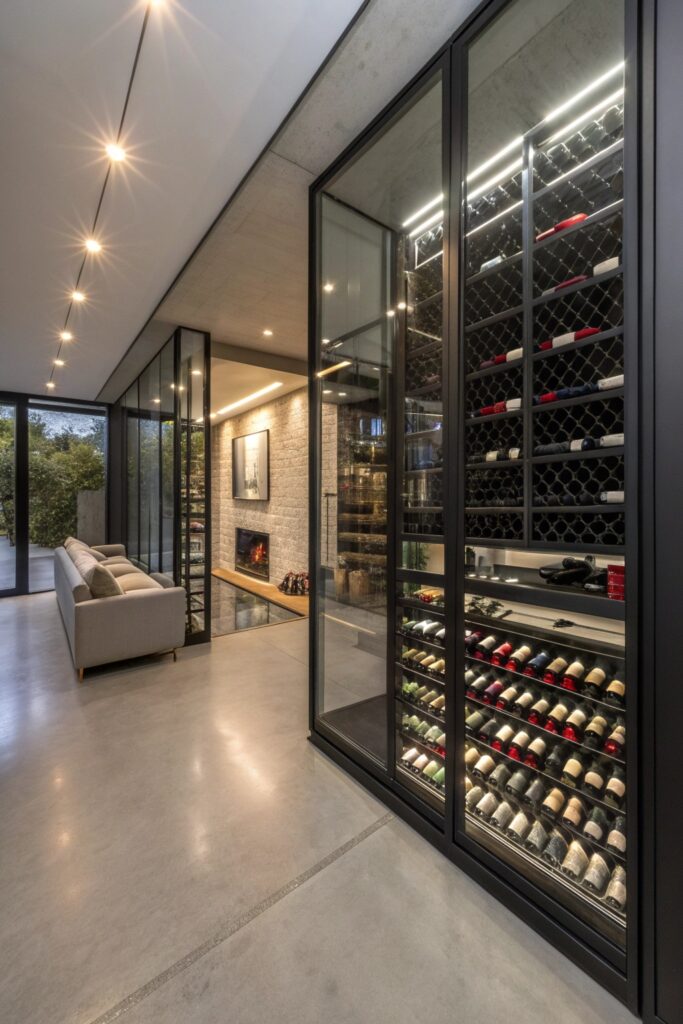
Powder-coated steel racking resists corrosion in a humid environment better than raw metal, which is worth specifying even though the sparse aesthetic might suggest simpler materials are fine — the climate control requirement doesn’t relax just because the design does.
3. Rustic Stone Wine Cellar
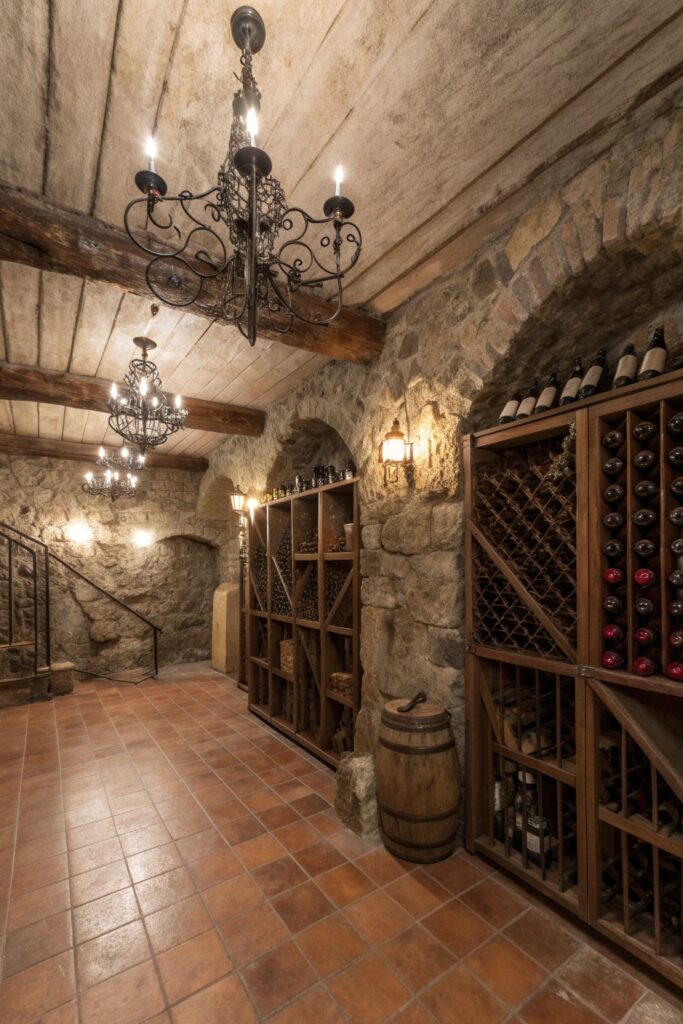
Stone provides real thermal mass that helps stabilize temperature naturally, but stone walls below grade still need a proper vapor barrier behind them to prevent ground moisture from wicking through and undermining the room’s humidity control.
4. Industrial Chic Wine Cellar
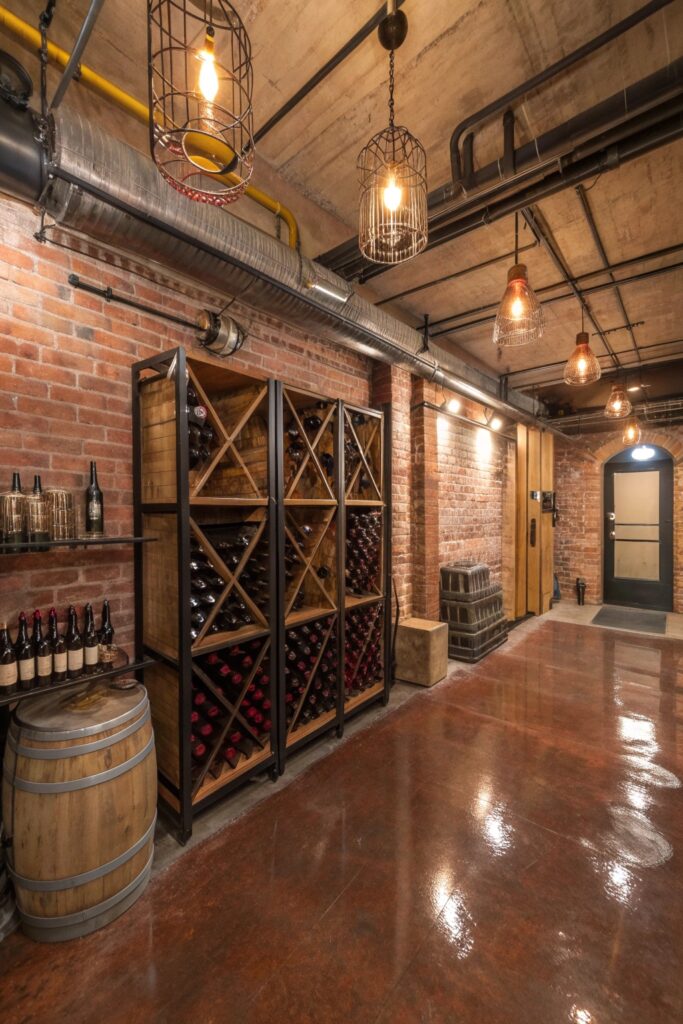
Exposed metal and pipe surfaces conduct outside temperature fluctuations more readily than insulated drywall, so this look benefits from extra insulation behind the visible industrial elements to keep the room’s climate actually stable rather than just visually appropriate.
5. Glass-Enclosed Climate-Controlled Wine Room
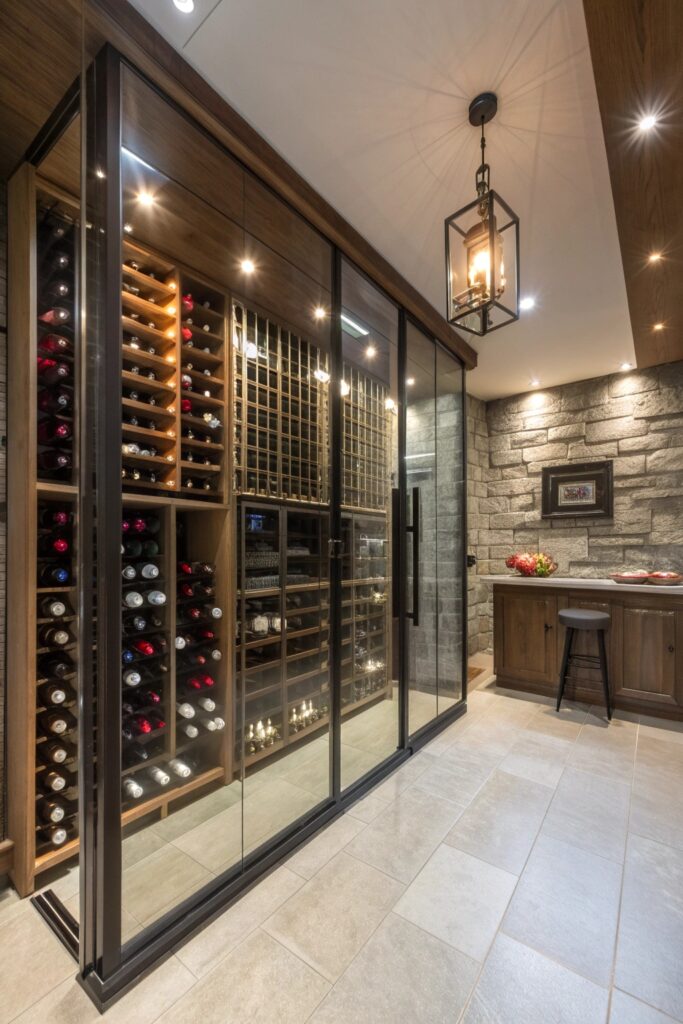
Glass walls need to be low-E or specifically UV-filtering, since ultraviolet exposure causes a real wine fault called light strike that degrades flavor over time — standard clear glass doesn’t protect against this. The enclosure also needs a properly sealed door, since a glass room that isn’t airtight undermines the climate control system’s actual efficiency.
6. Under-Stair Wine Cellar
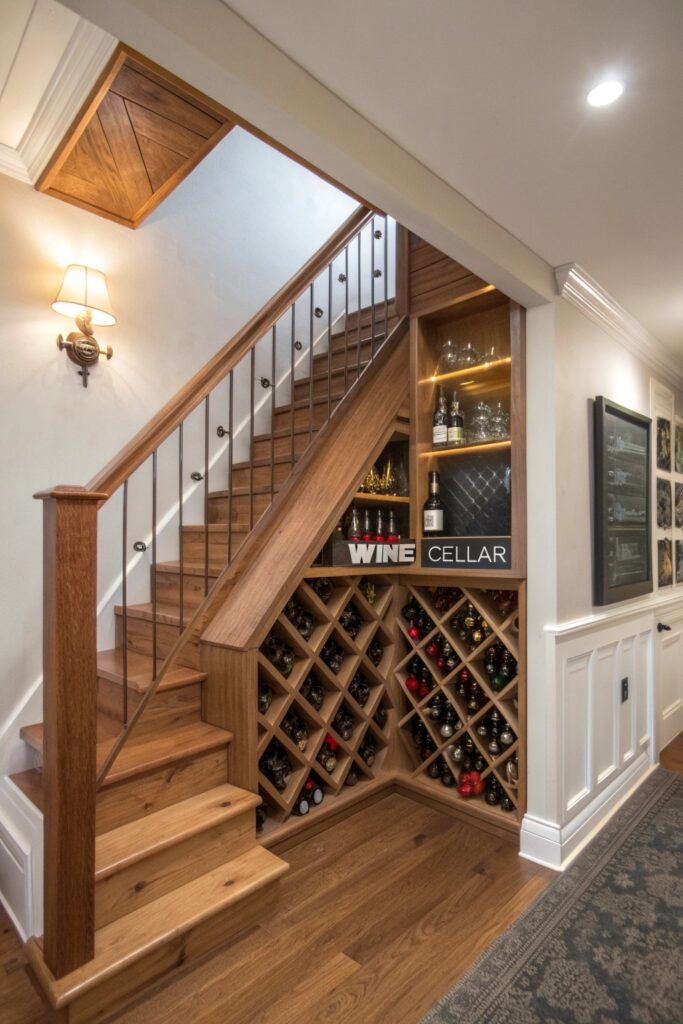
Even in this compact footprint, active air circulation matters — a small sealed space with a cooling unit but no circulation can develop uneven temperature pockets rather than the stable, consistent climate wine storage actually needs.
7. Mediterranean Wine Grotto
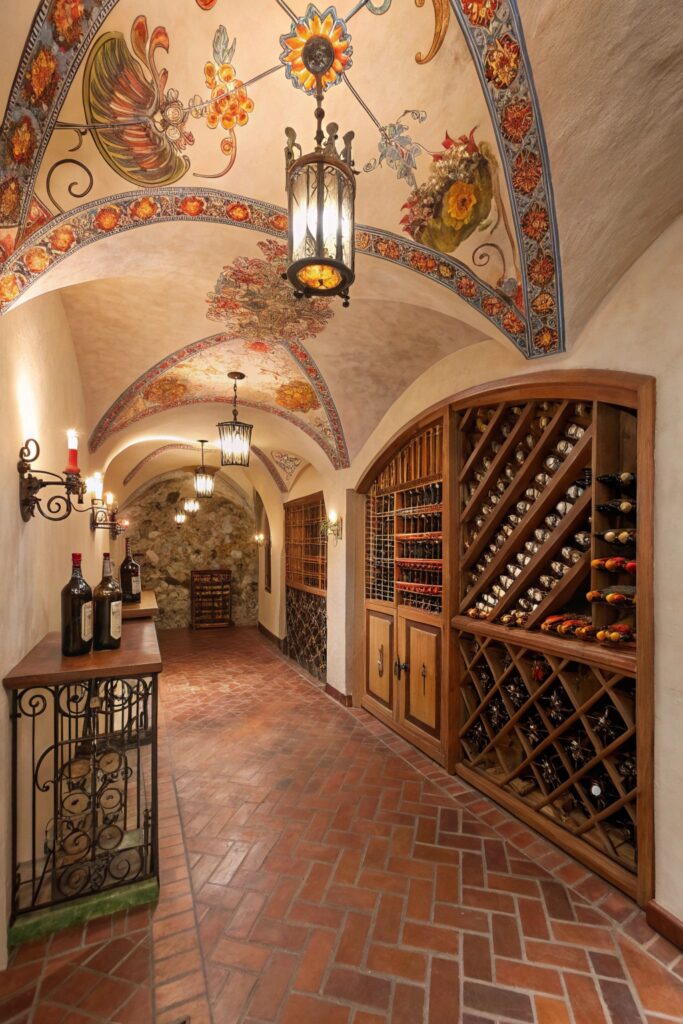
Textured plaster and warm stone tones suit this style, though the same vapor barrier and insulation requirements apply here as with any below-grade stone or masonry wine room.
8. Contemporary Wood and Concrete Wine Cellar
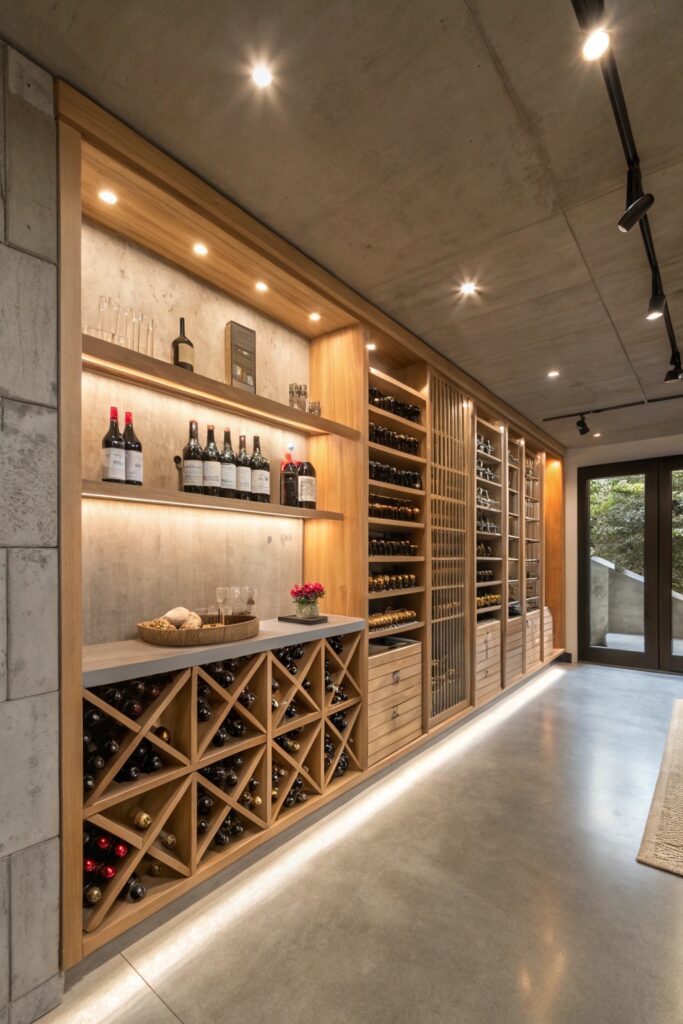
Concrete’s thermal mass does help moderate temperature swings, but freshly poured concrete needs to fully cure — often several weeks — before the room is sealed up, since curing concrete releases moisture that can throw off humidity readings if the space is enclosed too soon.
9. Repurposed Barrel Wine Cellar
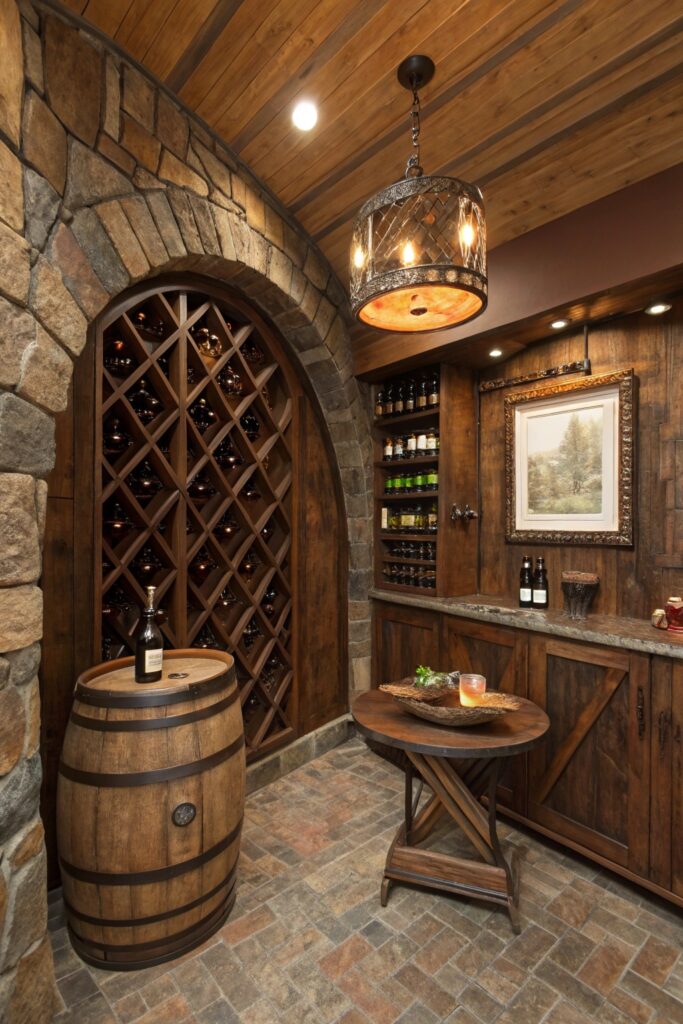
If reclaimed barrels are used for actual bottle storage rather than purely decorative furniture, the wood needs to be properly sealed and treated first, since untreated barrel wood can harbor mold in a consistently humid cellar environment.
10. Scandinavian-Inspired Wine Storage
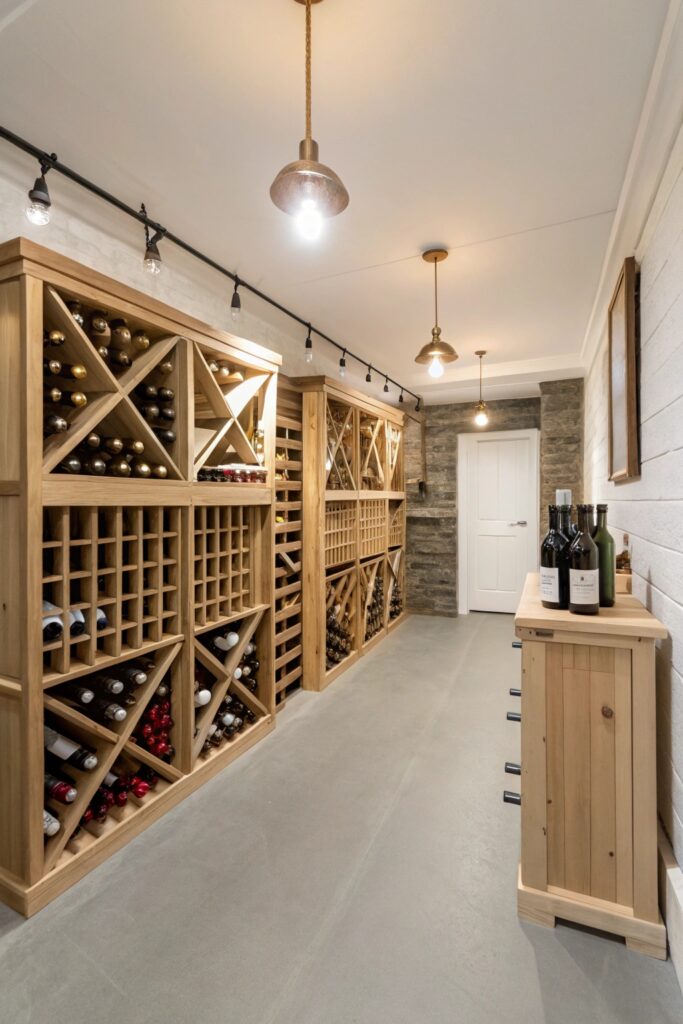
Light wood tones and clean lines define this look, and — as with the minimalist and industrial styles — the pared-back aesthetic shouldn’t come at the expense of proper insulation and climate control behind the visible design.
11. Speakeasy-Style Wine Cellar
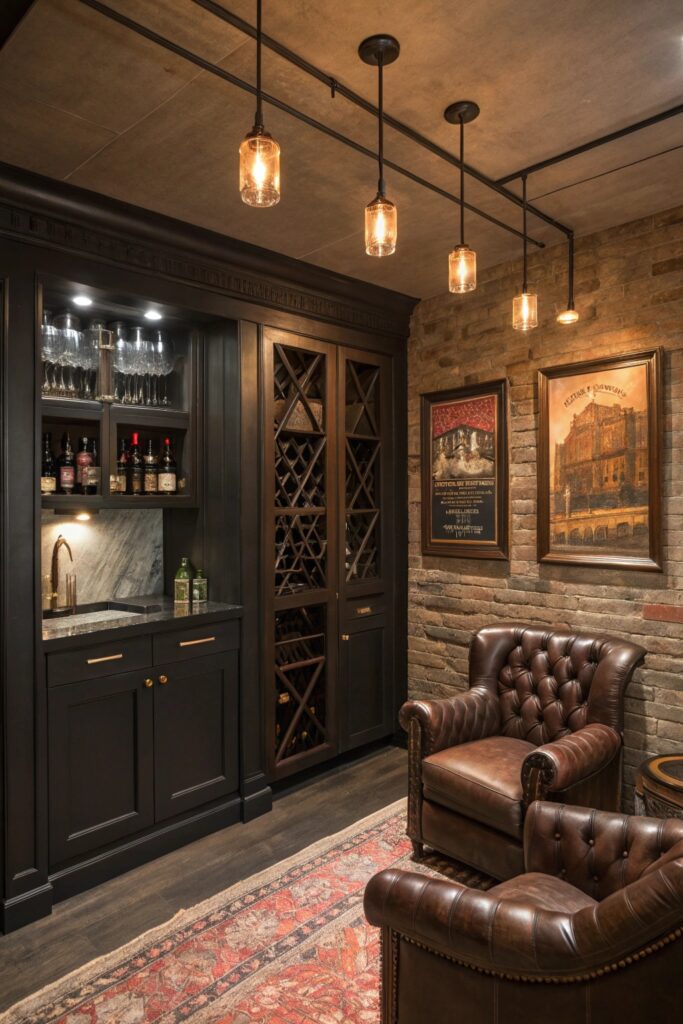
A hidden door mechanism still needs to maintain real seal integrity when closed — a concealed door that looks seamless but doesn’t seal properly defeats the climate control purpose of the room behind it.
12. Luxury Estate Wine Cellar
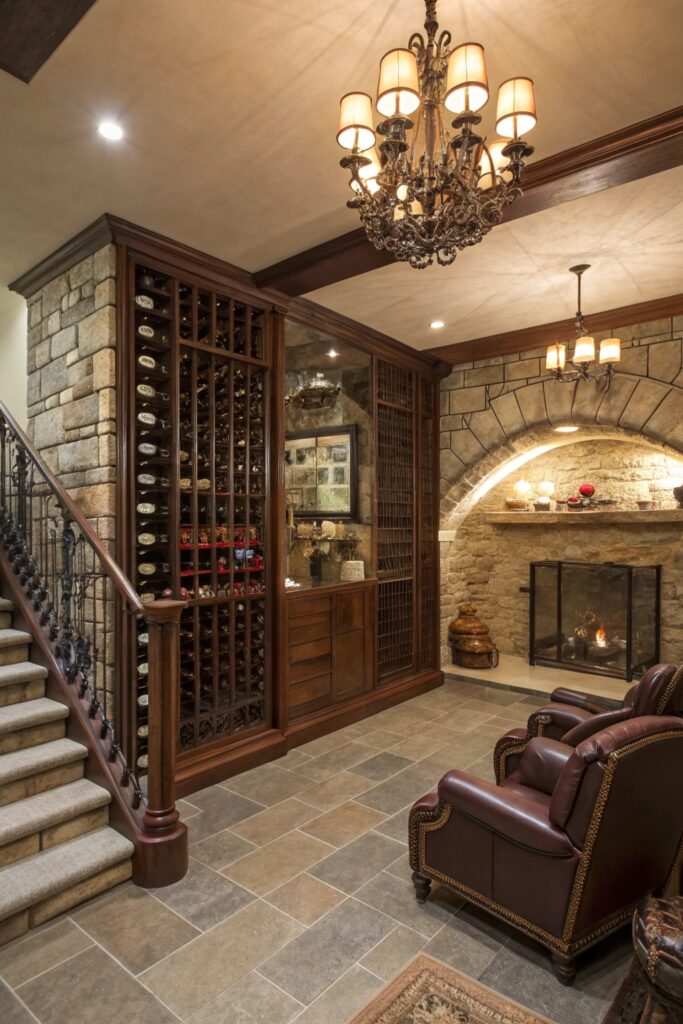
A collection at this scale typically needs a commercial-grade cooling unit rather than a residential wine fridge compressor, since residential units aren’t built to maintain stable climate across a large room’s full volume and bottle count.
Bottle Storage Orientation Matters
Wine with a natural cork should be stored on its side rather than upright, keeping the cork in contact with the wine so it doesn’t dry out and let air seep in over long-term storage. Screw-cap bottles don’t have this requirement and can be stored upright without the same concern.
Racking systems should account for this orientation from the start, since retrofitting upright display shelving into a proper horizontal aging system later is more disruptive than planning for it in the initial design.
What a Wine Cellar Costs
A basic conversion using an existing basement room, including racking and a residential cooling unit, typically costs $5,000 to $15,000.
A fuller custom build with glass enclosure, commercial-grade cooling, and premium finishes runs considerably higher, often $20,000 to $50,000 or more depending on size and materials.
Lighting Choices That Don’t Compromise Storage Conditions
LED lighting is the standard choice for a wine cellar specifically because it produces minimal heat compared to incandescent bulbs, which can create warm spots that disrupt the room’s carefully maintained temperature. LED fixtures also emit little to no UV light, avoiding the same light strike concern that makes UV-filtering glass necessary elsewhere in the design.
Keeping light levels relatively low and using fixtures on a dimmer or timer, rather than bright continuous lighting, further reduces any cumulative light exposure to bottles stored for years at a time.
Basements are naturally well suited to this kind of project since they typically run cooler and more temperature-stable than above-grade rooms to begin with, which is part of why a below-grade wine cellar generally requires less aggressive cooling equipment than trying to convert an above-grade closet or room into the same kind of storage space.
If you’re starting with a smaller collection and plan to grow it over time, designing the racking and cooling system with some extra capacity from the beginning avoids the disruption of retrofitting a larger system into a space that was only sized for the collection you had on day one.
A well-designed wine cellar tends to be one of the more distinctive features a home can offer, and getting the underlying climate control right from the start protects both the investment in the collection and the value of the room itself over the years ahead.
Whichever style resonates most, treating the climate control system as the actual foundation of the design, with the aesthetic built around it rather than added as an afterthought, produces a far better long-term result.
Final Thoughts
Across every style here, the same underlying requirements apply: a stable temperature around 55°F, humidity in the 50 to 70 percent range, protection from UV light, and minimal vibration, since basements near laundry equipment or mechanical systems can transmit vibration that disturbs sediment in aging wine over time. These factors matter more to how well your collection actually holds up than any single aesthetic choice on this list.
Working with a wine cellar specialist, rather than a general contractor unfamiliar with these specific requirements, helps ensure the finished room actually performs the way a genuine wine cellar needs to, rather than just looking like one.