
A sunroom is one of the most valuable rooms in any home — and somehow, one of the most consistently under-decorated. Most people treat it like a holding area for plants they’ve given up on and furniture that didn’t fit anywhere else. You can do so much better than that.
A well-decorated sunroom should feel like the outdoors came inside, got comfortable, and decided to stay permanently. It’s the room where natural light does the heavy lifting and your job is simply to make the space feel worthy of it.
I’ve spent considerable time obsessing over sunroom design — including my own, which went from sad wicker graveyard to easily my favorite room in the house. These 11 sunroom decorating ideas give you everything you need to create a space that actually earns its square footage.
1. Fill Every Corner with Lush Indoor Plants
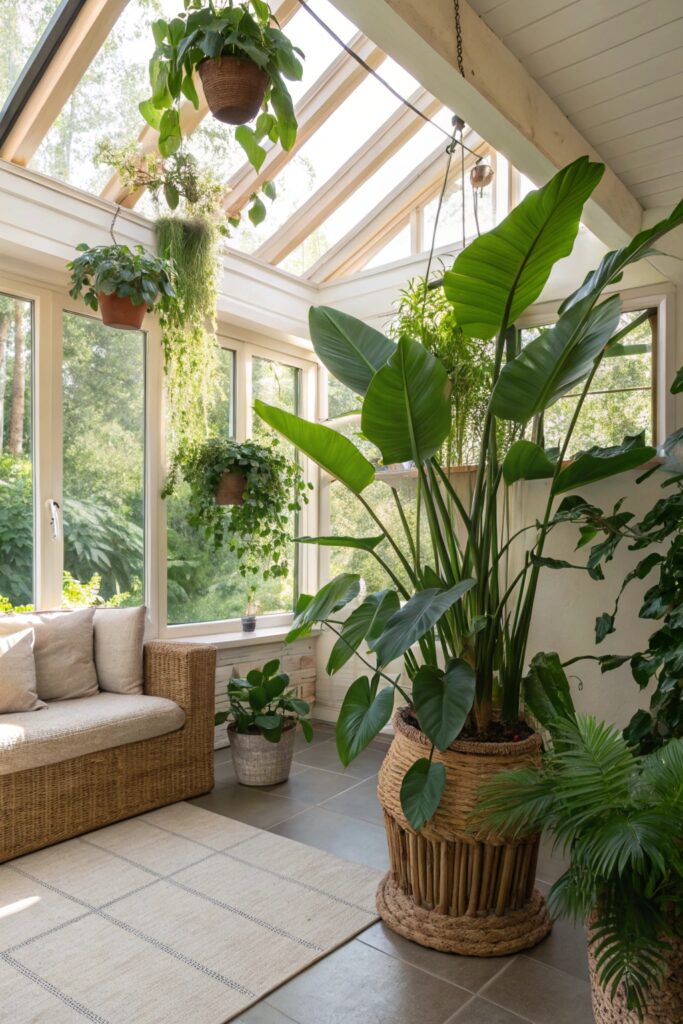
Plants are the single most essential element in a sunroom that truly brings the outdoors in — and a sunroom’s natural light gives you the ability to grow plants that would struggle anywhere else in your home.
Best plants for a sunroom environment:
- Fiddle leaf fig — dramatic height and bold leaves that love bright indirect light
- Bird of paradise — tropical, sculptural, and truly stunning in a sunny corner
- Monstera deliciosa — fast-growing, bold, and architectural in the right container
- Citrus trees — lemon or lime trees thrive in sunrooms and produce actual fruit, which feels like cheating
- Trailing pothos or philodendron — cascading from shelves and hanging planters for layered greenery
Position your largest plants in corners and beside windows to frame the space. Use hanging planters from ceiling beams or hooks to add greenery at multiple heights. IMO, a sunroom with generous plants at floor level, mid-height, and ceiling height simultaneously creates the most convincing indoor-outdoor atmosphere of any decorating approach.
2. Choose Natural Material Furniture
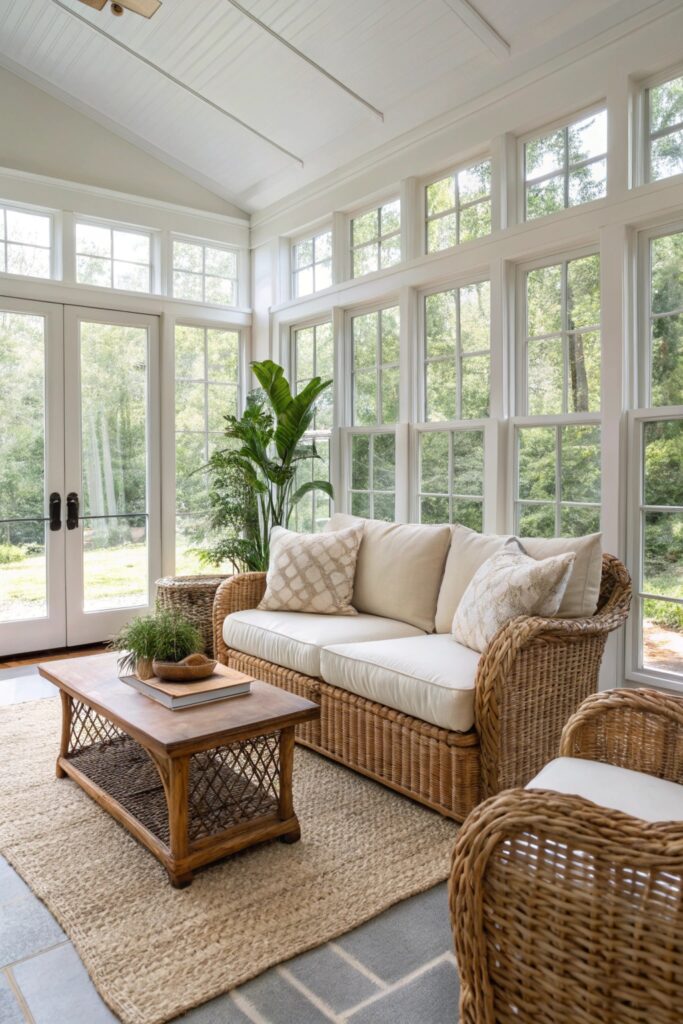
The furniture you choose in a sunroom sets the entire material tone of the space — and natural materials connect the room to the outdoor world more effectively than any other design choice.
Natural material options for sunroom furniture:
- Rattan or wicker — the classic sunroom choice for a reason; lightweight, airy, and timeless
- Teak or acacia wood — durable, beautiful, weathers gracefully even in high-humidity sunrooms
- Bamboo — lightweight, sustainable, and visually connected to nature
- Woven seagrass or water hyacinth — earthy texture that photographs beautifully in natural light
Avoid heavy upholstered furniture in solid dark fabrics — it makes a sunroom feel like a regular interior room rather than the nature-adjacent space it should be. Choose cushions in outdoor-rated fabric if your sunroom experiences temperature variation, as standard upholstery deteriorates in high-heat, high-humidity environments. Natural furniture in a sunroom looks better over time as the materials develop character and warmth.
3. Use an Earthy, Nature-Inspired Color Palette
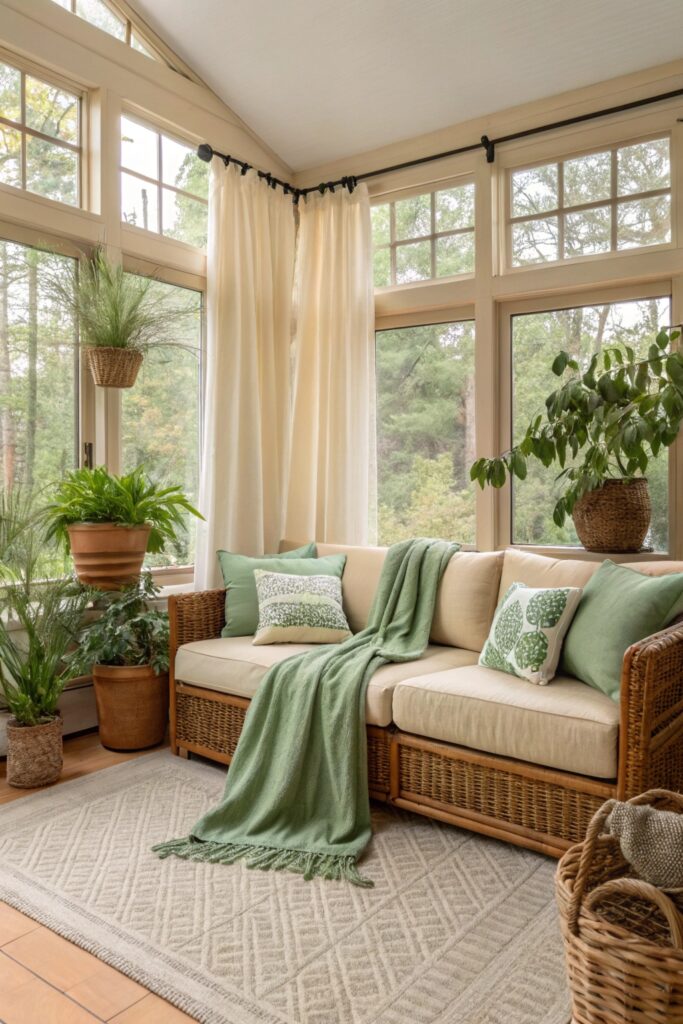
Color palette determines whether your sunroom feels like an extension of the garden or just another room with a lot of windows. The right palette blurs the boundary between inside and outside effectively.
Nature-inspired color palette options for sunrooms:
- Sage green and cream — soft, organic, universally calming
- Terracotta and warm white — earthy, sun-baked, beautifully warm
- Dusty blue and natural linen — coastal, fresh, connected to sky and water
- Olive green and cognac — rich, sophisticated, deeply nature-connected
Bring the palette in through cushions, rugs, curtains, and decorative objects rather than wall paint — most sunrooms have limited wall space due to windows. Repeat your chosen colors across multiple elements for cohesion. A sage green cushion, sage green planter, and sage green throw across a natural rattan sofa creates a color story that feels completely intentional. 🙂
4. Add a Statement Indoor Fountain or Water Feature
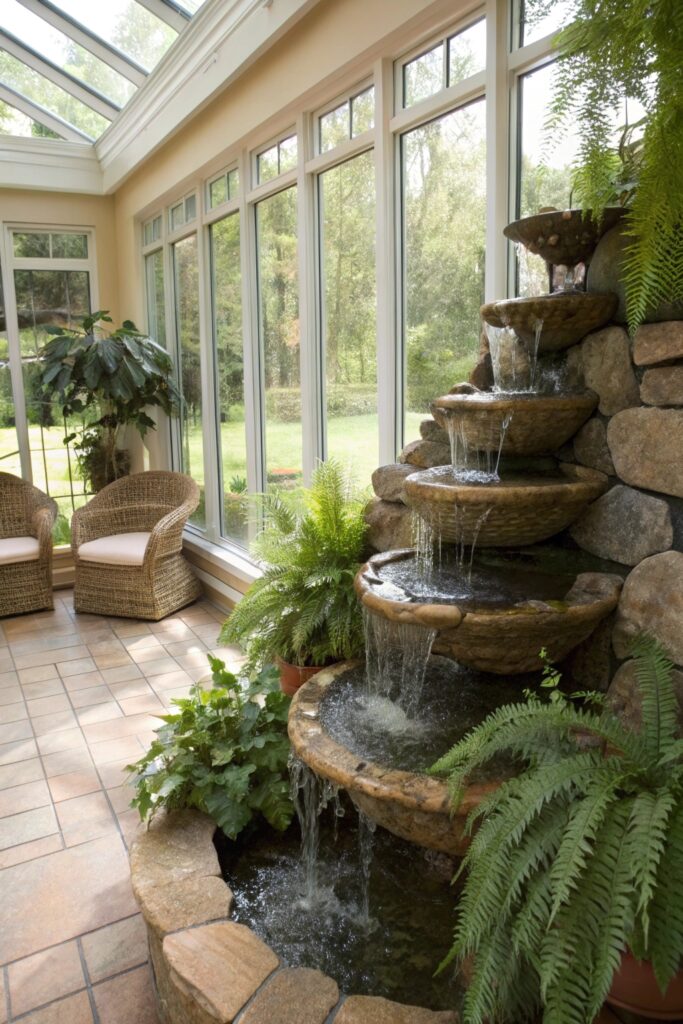
The sound of moving water is one of the most effective ways to blur the line between indoor and outdoor environments — and a well-chosen indoor fountain turns your sunroom into a truly sensory nature experience.
Indoor water feature options for sunrooms:
- Tabletop stone or ceramic fountain for a subtle, space-appropriate water sound
- Tiered garden-style fountain as a floor piece in a larger sunroom corner
- Wall-mounted water feature in slate or natural stone for an architectural statement
- Self-contained bamboo water feature for a more Eastern, zen-garden aesthetic
Choose a fountain that the sound level suits your sunroom size — a powerful fountain in a small sunroom creates noise rather than ambiance. FYI, tabletop fountains require regular water top-ups and occasional cleaning to prevent mineral buildup; factor that maintenance into your choice. The combination of natural light, living plants, and the sound of water in a sunroom creates an atmosphere that measurably resets the nervous system.
5. Install Natural Fiber Rugs to Ground the Space
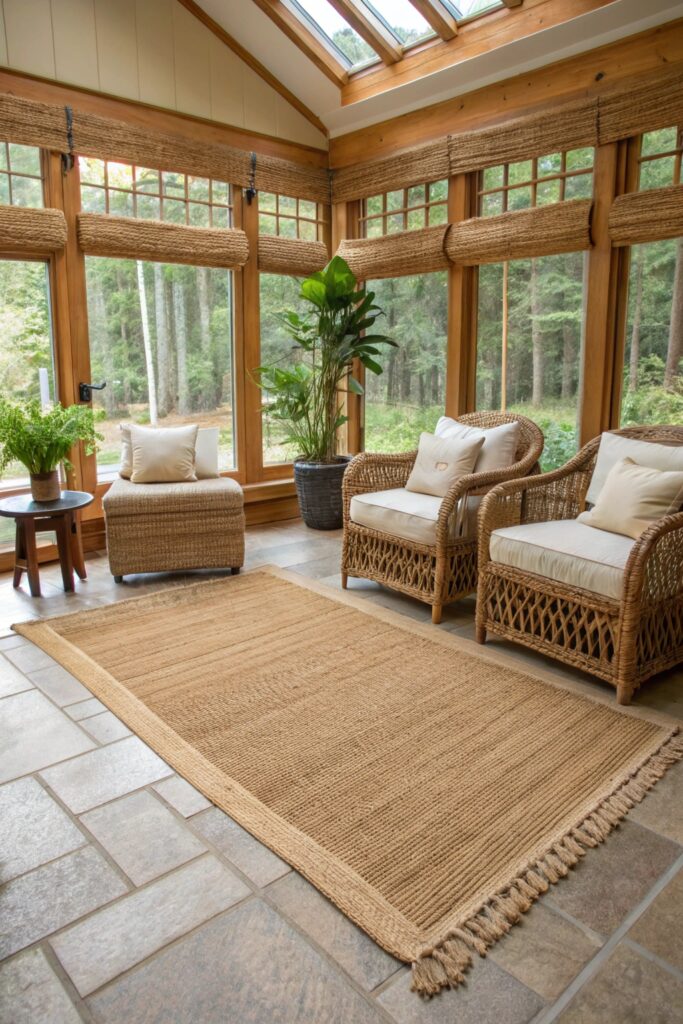
A natural fiber rug anchors your sunroom’s seating area and adds organic texture that connects every other element in the room. Without a rug, a sunroom can feel like a greenhouse with furniture dropped randomly inside it.
Best natural fiber rug options for sunrooms:
- Jute — the most affordable natural fiber option; warm, casual, and very durable
- Sisal — slightly more textured than jute; holds up well to foot traffic and sunlight
- Seagrass — moisture-resistant, making it ideal for sunrooms with temperature swings
- Wool flatweave — softer underfoot than plant-based fibers; holds color well in bright light
Size the rug generously — all furniture legs sitting on the rug makes the seating area feel intentional and grounded. A rug that’s too small for the furniture grouping makes the space look like the furniture arrived first and the rug was an afterthought. Natural fiber rugs also age beautifully in sunroom environments, developing a warmth and character that synthetic alternatives never achieve.
6. Hang Botanical Art and Nature-Inspired Prints
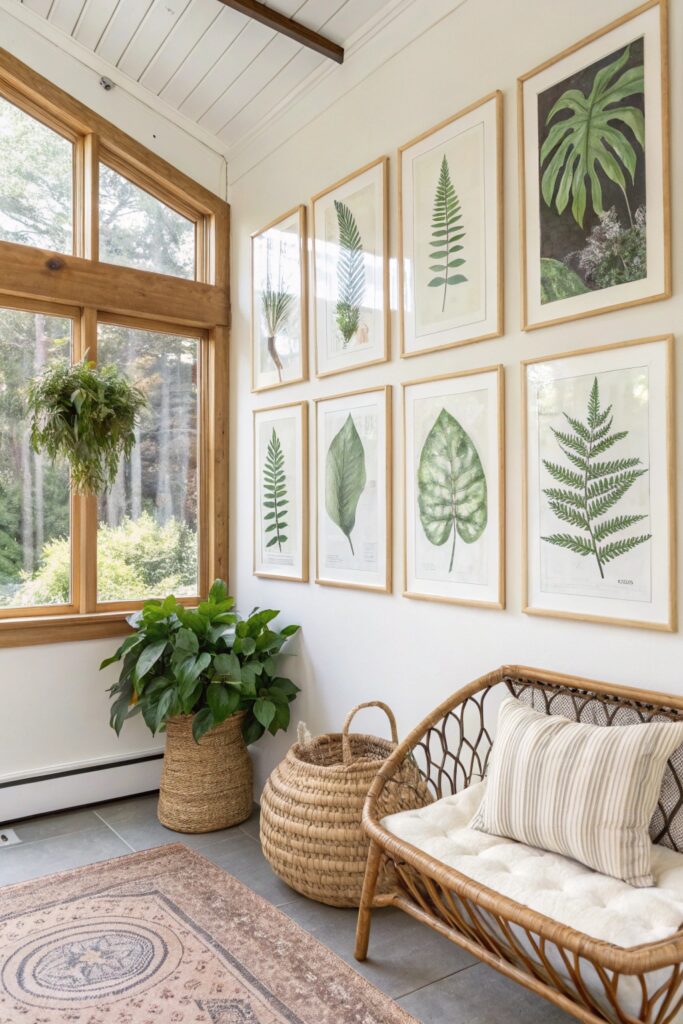
Wall art in a sunroom should reinforce the indoor-outdoor connection rather than pulling the space in a different aesthetic direction. Botanical and nature-inspired art does this better than any other category.
Art directions that work beautifully in sunrooms:
- Vintage botanical illustration prints in simple frames — classic, affordable, and endlessly versatile
- Large-scale leaf or fern photography printed at statement size
- Watercolor garden scenes in soft, muted tones
- Pressed flower or plant specimens framed as natural art objects
- Woven plant fiber wall hangings that add texture alongside visual interest
Frame botanical prints in natural wood or simple black frames and group them in a loose gallery arrangement on any solid wall in the sunroom. Alternatively, lean one large botanical print on a shelf or against the wall for a more casual, less committed display. Art in a sunroom works best when it feels collected rather than purchased as a coordinating set — variety in frame style and print type looks more genuine and more interesting.
7. Layer Textiles for Warmth and Comfort
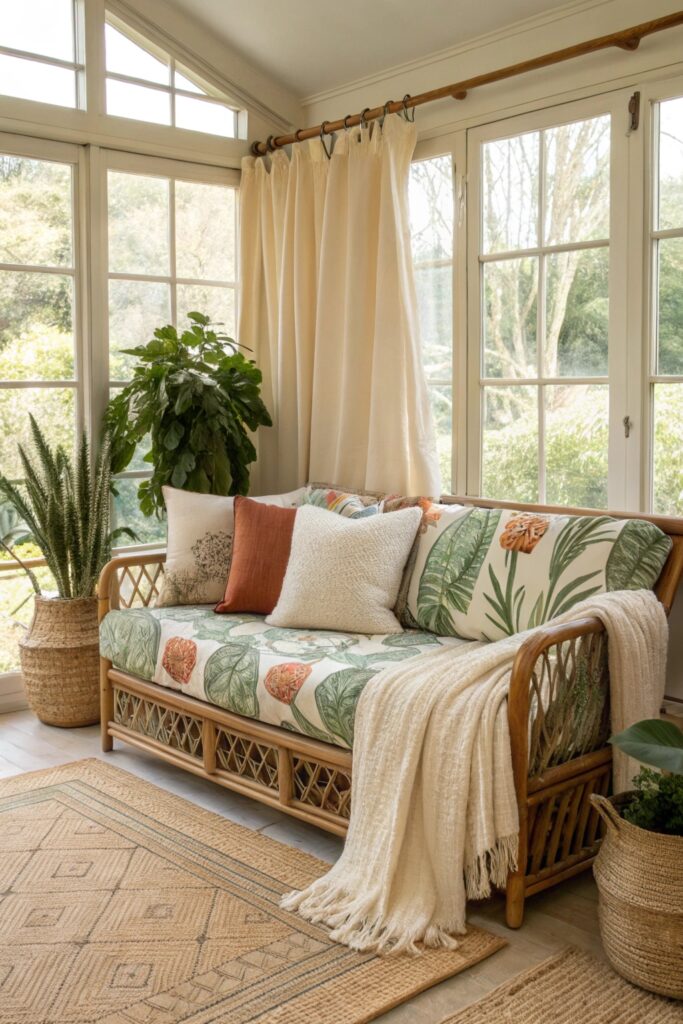
Textiles in a sunroom serve a dual purpose: they add visual warmth and they make the space noticeably comfortable enough to spend real time in. A sunroom with no soft surfaces feels temporary — like a space you pass through rather than one you stay in.
Textile layering for sunrooms:
- Outdoor-rated cushion covers in earthy or nature-inspired patterns for sofa and chair seating
- A chunky cotton or linen throw draped over the back of the sofa for cooler mornings
- Linen or cotton curtain panels in natural tones that filter rather than block light
- Decorative pillows mixing solid colors with botanical or geometric patterns
Use outdoor-rated fabric for cushions and throws if your sunroom temperature fluctuates significantly — standard indoor textiles fade and deteriorate quickly in high-UV environments. :/ A sunroom layered with soft textiles in natural tones feels like the most comfortable room in the house — which it honestly should be, given the amount of natural light it receives.
8. Create a Reading Nook in a Window Corner
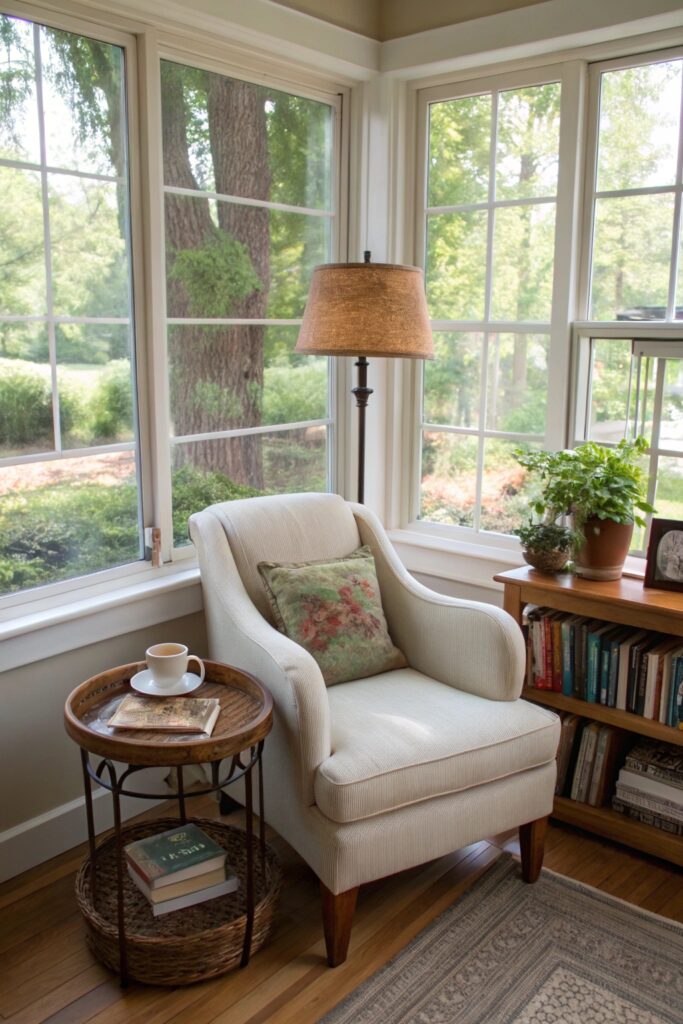
A dedicated reading nook in a sunroom window corner is one of the most coveted small-space design elements in residential interiors — and in a sunroom, it’s also one of the most achievable.
Elements that make a perfect sunroom reading nook:
- A comfortable armchair positioned to face the garden or yard view
- A small side table beside it for a drink, a book, and a plant
- A floor lamp for evening reading when natural light fades
- A built-in window seat if your sunroom architecture allows for it
Add a small bookshelf within arm’s reach of the chair — even a small two or three-shelf unit holds enough reading material to make the nook feel permanent and purposeful. A reading nook in a sunroom with garden views is the kind of space that makes people honestly reluctant to leave — which is exactly what great interior design should accomplish.
9. Incorporate Reclaimed Wood and Stone Elements
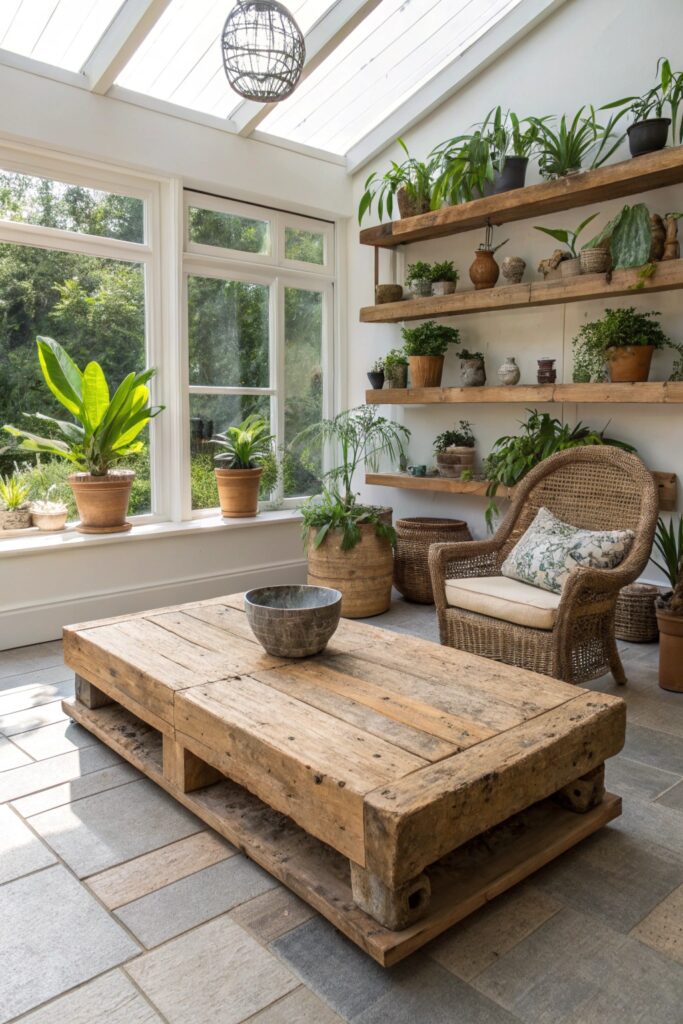
Reclaimed wood and natural stone bring the raw, organic quality of the outdoor world directly into your sunroom — and they add a permanence and history that no manufactured material can replicate.
Ways to incorporate reclaimed wood and stone:
- A reclaimed wood coffee table with visible saw marks, knots, and weathering
- Stone or pebble accent elements — a stone vase, a pebble tray, a slate side table
- Reclaimed wood shelving for displaying plants and collected natural objects
- A stone or terracotta planter collection rather than uniform ceramic containers
The beauty of reclaimed wood and natural stone in a sunroom is that these materials already look weathered and outdoor-adjacent — they belong in a space that blurs the boundary between inside and outside. Mix them with living plants and natural fiber textiles and the sunroom starts to feel less like a room and more like a curated extension of the garden itself.
10. Install Bamboo or Woven Shade Panels
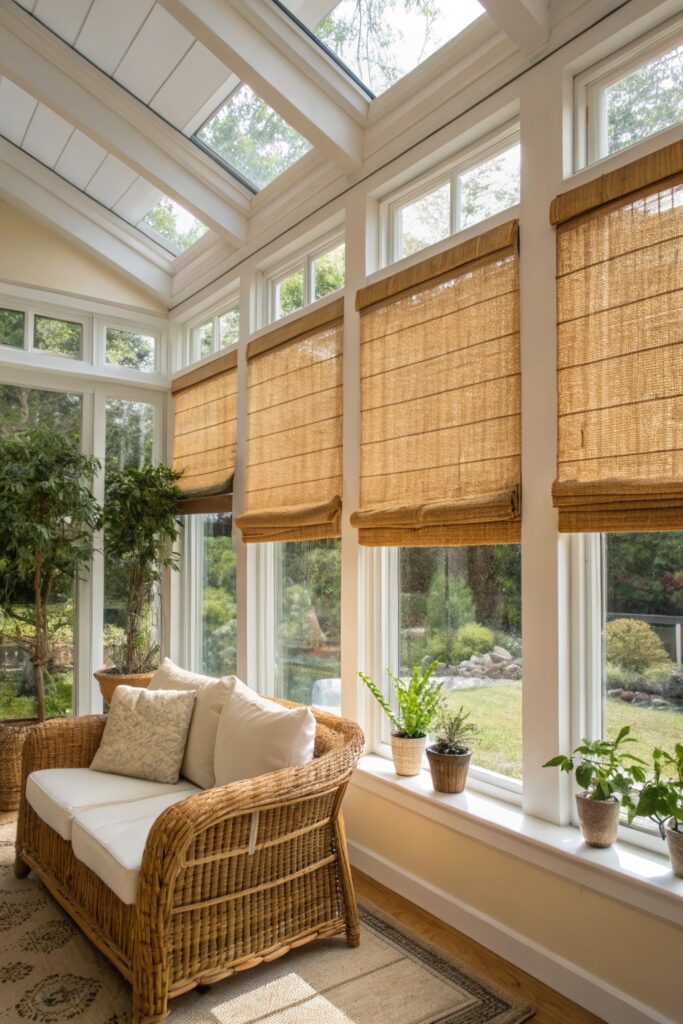
Window treatments in a sunroom need to filter light rather than block it — and bamboo or woven wood shade panels do this better than any other window covering option.
Why bamboo and woven shades work perfectly in sunrooms:
- They filter bright midday light without eliminating it entirely
- The woven texture adds natural material interest to the window itself
- They roll up completely when you want full light and unobstructed garden views
- Available in natural, honey, and dark walnut tones that complement most sunroom palettes
Mount shades inside the window frame for a cleaner, more architectural look. Add linen side panels outside the frame if you want the option of fuller light control in the evenings or for afternoon naps. Bamboo shades are significantly more affordable than Roman shades in comparable fabrics — and in a sunroom where you may have many windows to cover, that cost difference matters considerably.
11. Set Up a Sunroom Dining or Café Area
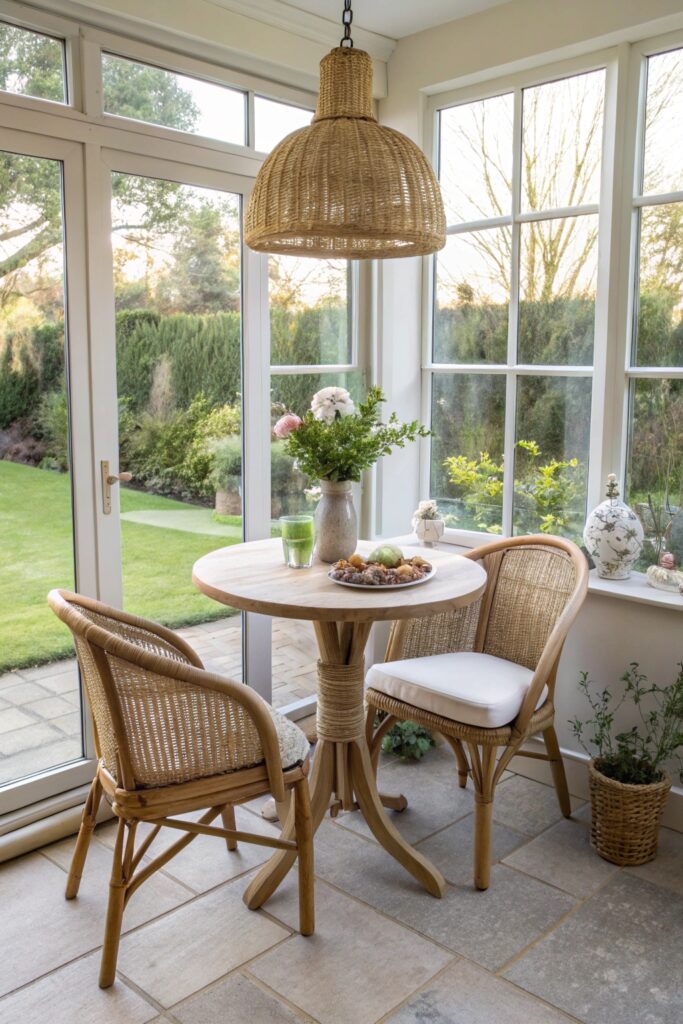
A small dining setup in a sunroom — even just a bistro table and two chairs — transforms the space from a passive sitting room into an actively used part of the home. Having meals surrounded by natural light and plants is one of life’s truly underrated pleasures.
Sunroom dining setup options:
- A small round bistro table in wrought iron or natural wood with two matching chairs
- A rattan or wicker dining set with cushioned chairs for a more casual, relaxed feel
- A farmhouse-style table with mismatched chairs for a gathered, collected look
- A fold-down wall-mounted table for sunrooms where floor space is limited
Position the dining area near the largest window or the best garden view — eating with a direct sightline to the outdoors reinforces the indoor-outdoor connection that defines a great sunroom. Add a small vase of fresh garden flowers on the table and a pendant light above for evening meals. A sunroom dining area becomes the breakfast spot people fight over every single morning. Worth every effort.
Make Your Sunroom the Best Room in the House
For more layout and furniture-focused sunroom ideas, see our companion guide to sunroom ideas.
A sunroom’s potential is enormous — and most of that potential comes from the natural light it already has. Your job is simply to furnish it with natural materials, fill it with living plants, and create comfortable spaces where people actually want to spend time.
Start with plants and furniture — those two elements establish the room’s character. Add a rug, layer in textiles, hang some botanical art, and let the natural light do what it does best.
A sunroom decorated with intention becomes the room everyone gravitates toward — for morning coffee, afternoon reading, and evening conversations that last longer than planned. Build that room. It’s worth every plant you buy for it.