Your RV survived three cross-country trips, two mountain passes, and that one questionable campsite in Nevada. The last thing it deserves is sitting exposed in your driveway, taking a beating from UV rays, hail, and whatever weather your region throws at it year-round. A good RV shelter isn’t just practical — it’s an investment protection move.
I’ll be honest — I ignored proper RV storage for way too long. Then I watched a neighbor’s camper develop serious roof damage from two winters of direct exposure. That was enough of a wake-up call for me.
Here are 12 RV shelter ideas that actually work, look great, and protect your camper the way it deserves.
1. Freestanding Steel RV Carport
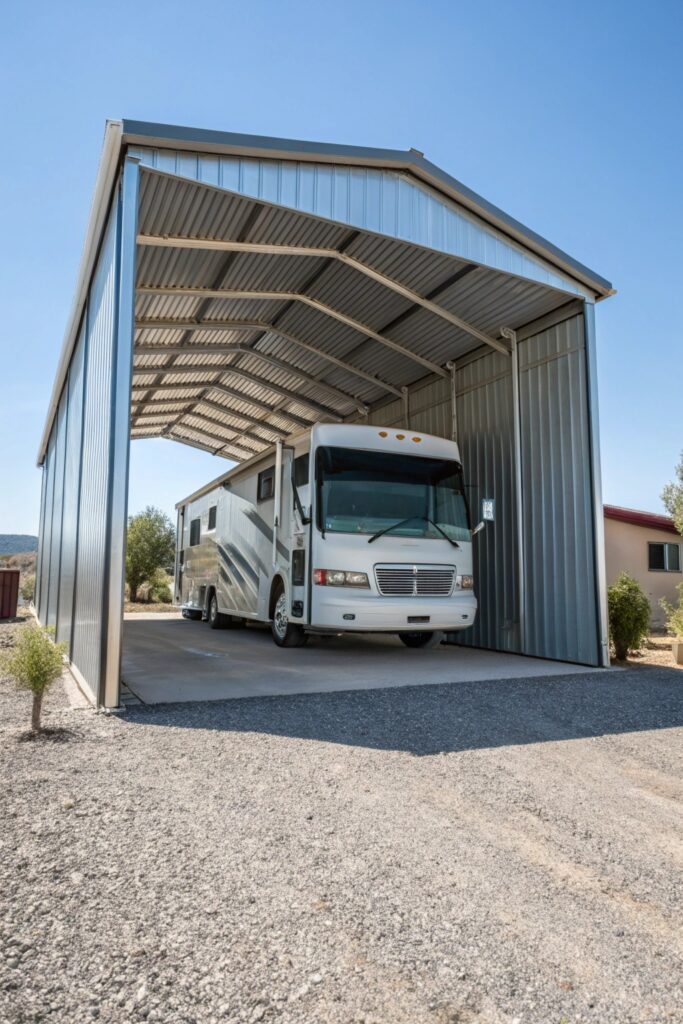
The freestanding steel carport is the workhorse of RV shelter solutions — and for good reason. You bolt it down, it goes up relatively quickly, and it delivers serious protection without requiring a full construction project. Most steel carport kits come in widths from 12 to 30 feet, so sizing up for even a large Class A motorhome is completely doable.
The galvanized steel frame handles wind, snow load, and UV exposure without flinching. Pair it with vertical-style metal roofing panels rather than flat or boxed-eave panels — vertical sheds water and snow far more efficiently.
Key features to look for:
- Minimum 14-gauge steel tubing for the frame
- Vertical roof panel orientation
- Anchor kit included for ground securing
- At least 14 feet of clearance height for tall RVs
It’s not the prettiest option, but it gets the job done reliably.
2. Wooden RV Shelter With Gable Roof
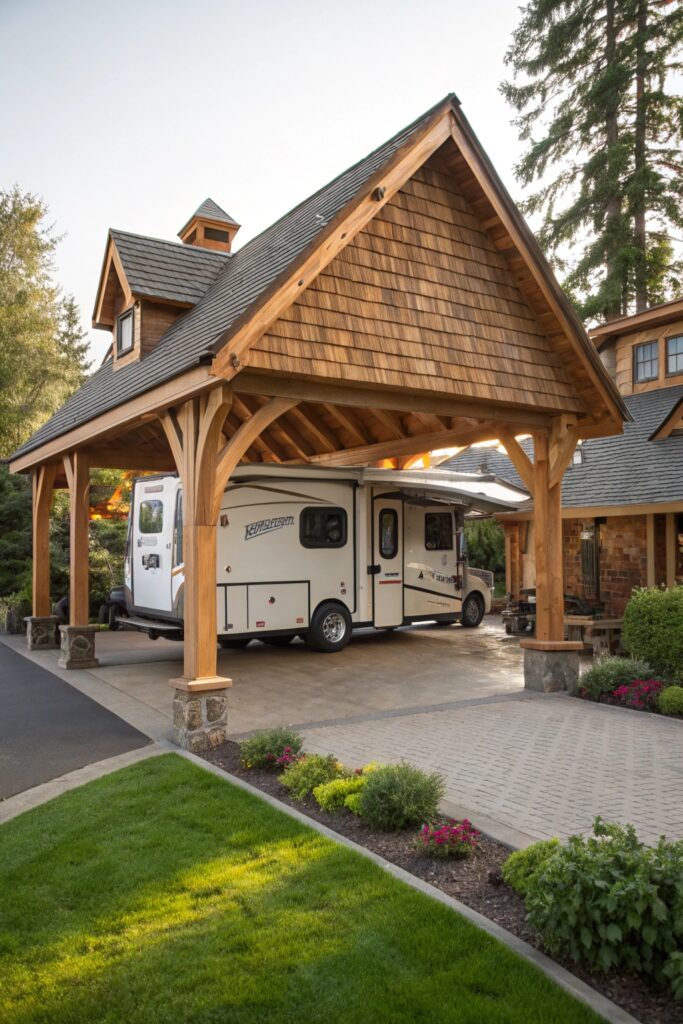
If you want your RV shelter to look like it actually belongs on your property, a wooden gable roof shelter is the move. It matches your home’s aesthetic, adds genuine property value, and looks like a planned structure rather than an afterthought. Unlike metal carports, a well-built wood shelter can truly enhance your curb appeal.
Use pressure-treated lumber for the posts and frame and cedar or composite boards for any siding or trim. A proper gable pitch sheds water efficiently and handles snow load with the right rafter spacing.
Why homeowners choose wood:
- Blends naturally with residential architecture
- Customizable size, pitch, and finish
- Can add enclosed sides later for full garage conversion
- Increases property value more than metal alternatives
This is IMO the best long-term RV shelter investment for homeowners who plan to stay put.
3. RV Garage With Full Enclosure
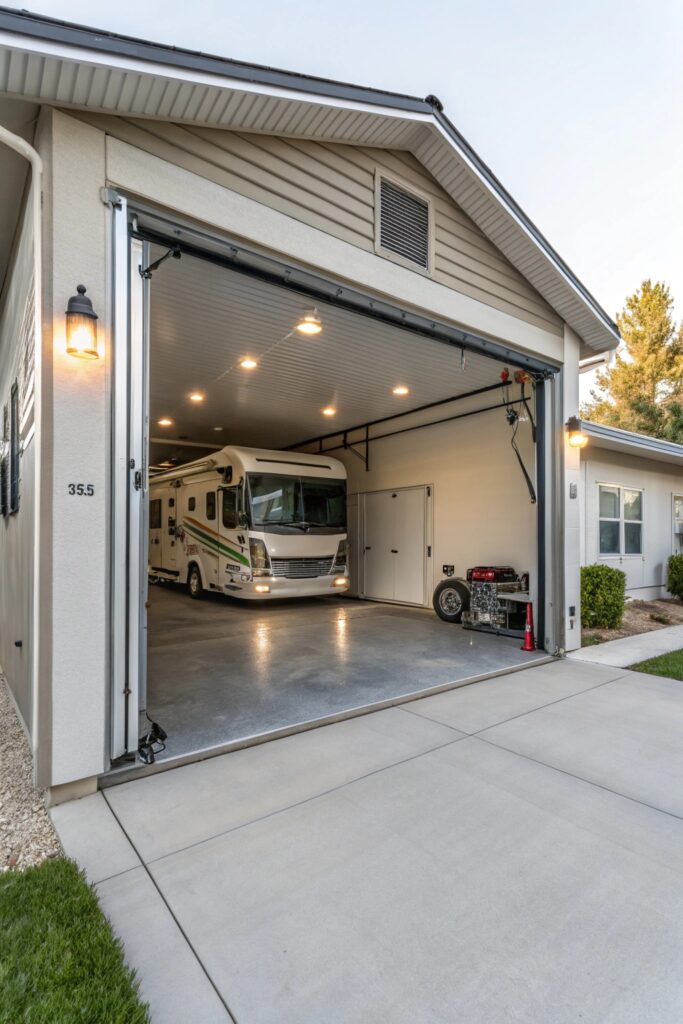
Want maximum protection? Stop halfway and build a fully enclosed RV garage. This isn’t just a shelter — it’s a dedicated structure that protects your camper from absolutely everything: weather, UV damage, theft, and nosy neighbors. It also doubles as a workshop or storage space when the RV hits the road.
You’ll need an oversized garage door — typically 14 feet wide by 14 feet tall for most Class A and Class C motorhomes. Many homeowners add a side door, windows, and electrical hookups to make the space fully functional.
Full RV garage essentials:
- 14×14 ft or larger roll-up garage door
- Electrical outlets and lighting
- Concrete floor with sealed finish
- Proper ventilation to prevent moisture buildup
Yes, it costs more upfront. But nothing protects your six-figure investment like four solid walls and a roof. 🙂
4. Fabric RV Cover Canopy
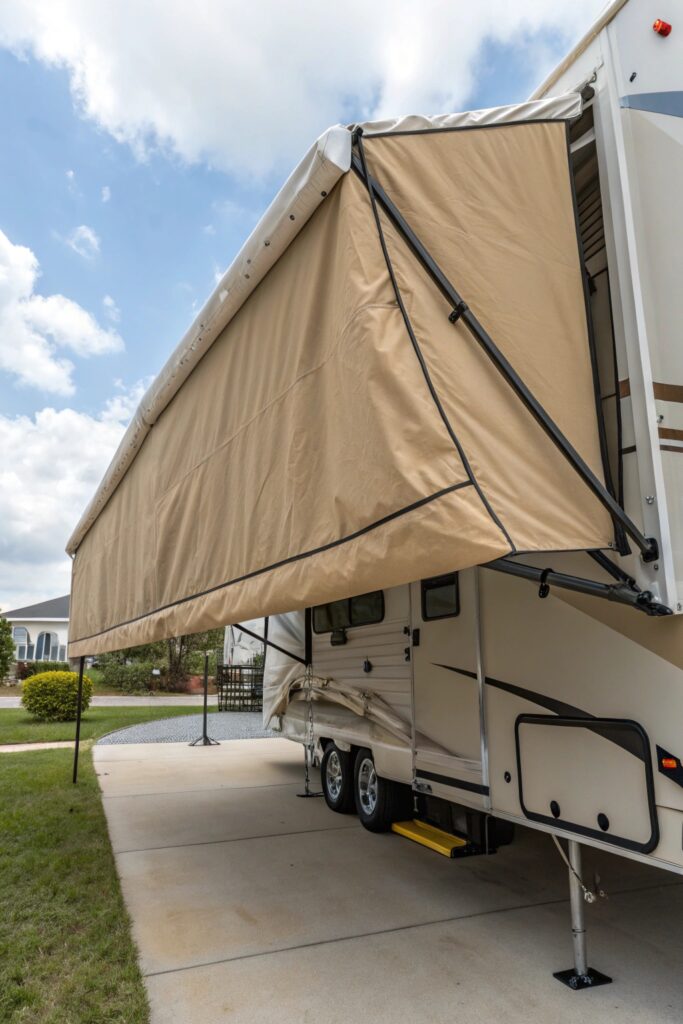
Not everyone has space or budget for a permanent structure — and that’s completely fine. A fabric canopy cover gives you solid UV and weather protection at a fraction of the cost. Modern canopy fabrics use polyethylene or polyester weaves with UV inhibitors that actually block damaging sun exposure and handle moderate rain well.
These aren’t your flimsy party tent canopies — quality RV canopies use heavy-duty frames and reinforced fabric corners designed to handle wind and weather over multiple seasons.
What to look for in a fabric canopy:
- 150–300 GSM fabric weight minimum
- UV protection rating of 90% or higher
- Powder-coated steel or aluminum frame
- Tie-down anchoring system included
FYI — fabric canopies work best in mild climates. If you get heavy snow loads, invest in a more rigid structure.
5. Lean-To RV Shelter Attached to Existing Structure
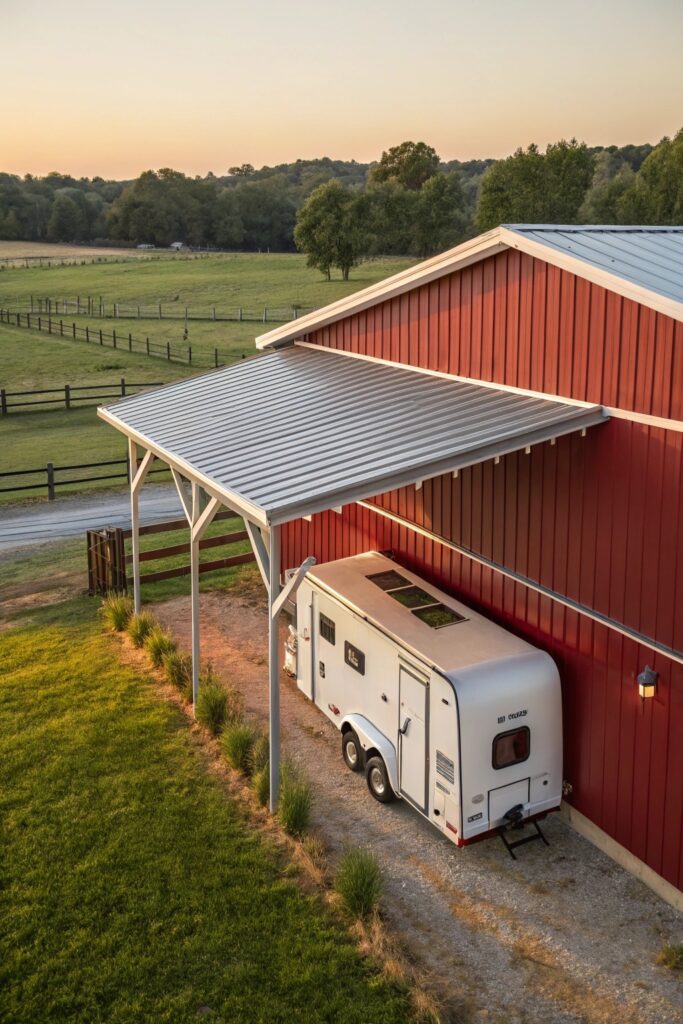
Got a garage, barn, or workshop already on your property? A lean-to RV shelter attached to that existing structure cuts your material costs significantly and uses the existing wall as one side of the shelter. You’re essentially building three sides and a roof instead of four — smart and efficient.
The lean-to style works especially well on rural or farm properties where a large barn or shop building already exists. Match the roofing material to the existing structure and the result looks completely intentional.
Lean-to shelter advantages:
- Lower material and labor cost than freestanding structures
- Uses existing structure for one full wall
- Faster to build than a standalone shelter
- Easily enclosed later with side panels or walls
Make sure your existing structure’s wall can handle the lateral load before attaching anything significant to it.
6. RV Pergola With Shade Sail Roof
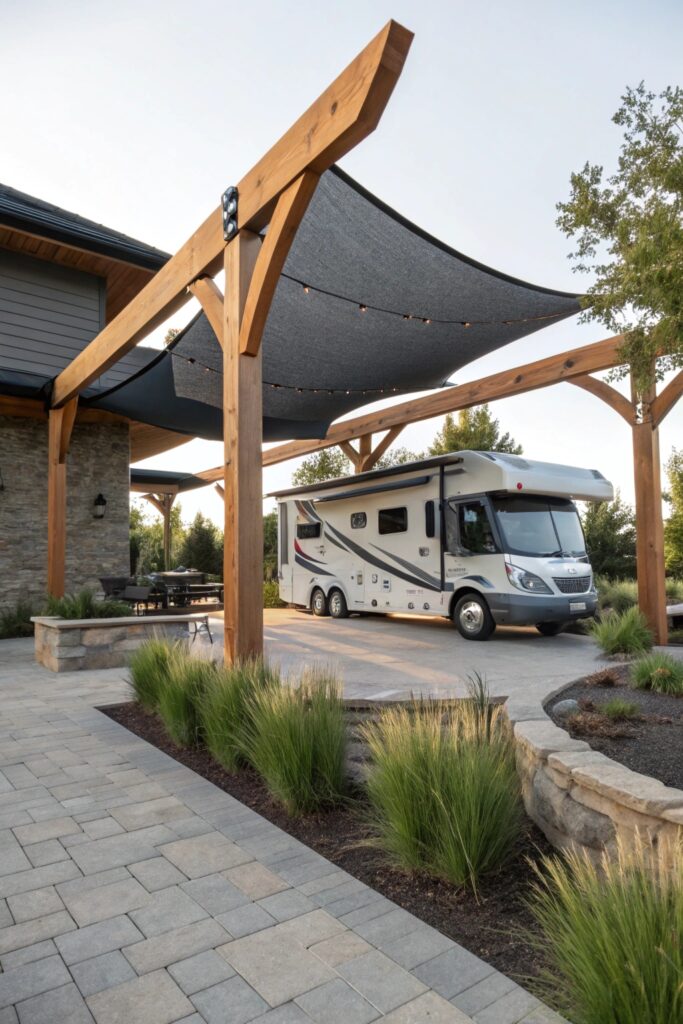
Here’s an idea that surprises most people — a pergola-style RV shelter with shade sail roofing. It sounds decorative, and it is, but quality shade sails block up to 95% of UV radiation while allowing airflow that prevents heat and moisture buildup under the cover. The open structure looks dramatically better than a metal carport in most residential settings.
Build the pergola frame from cedar, redwood, or powder-coated steel posts and attach heavy-duty commercial-grade shade sail panels across the top. The result truly looks like a designed landscape feature rather than a utility structure.
Best use cases for this style:
- Mild to moderate climates without heavy snow
- Residential properties with HOA restrictions
- Homeowners who prioritize aesthetics alongside function
- Properties where the RV is parked near the home’s main living areas
It won’t handle a blizzard, but for year-round UV protection and rain coverage it performs surprisingly well.
7. Metal Building RV Shelter With Side Walls
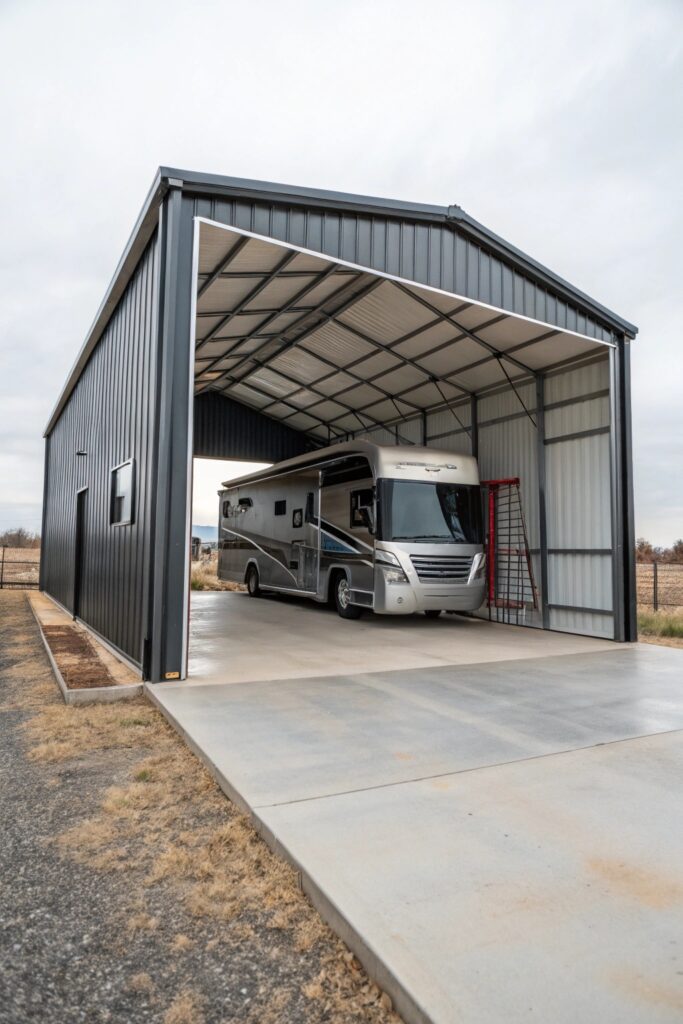
Step up from a basic carport and you get a metal building with partial or full side walls — more protection, more durability, same relatively fast installation. These pre-engineered steel building kits include framing, roofing, and wall panels that you bolt together on a prepared pad.
Most manufacturers offer open front, single side wall, or fully enclosed configurations so you choose exactly how much protection you need. The standing seam metal roof handles heavy snow loads and severe weather far better than fabric or basic carport roofing.
Configuration options:
- Open front with two side walls — most popular for RV use
- Fully enclosed with large roll-up door
- Single side wall for lean-to style installation
- Optional windows and walk-through doors
These structures typically qualify for building permits and can add legitimate assessed value to your property.
8. Greenhouse-Style Polycarbonate RV Shelter
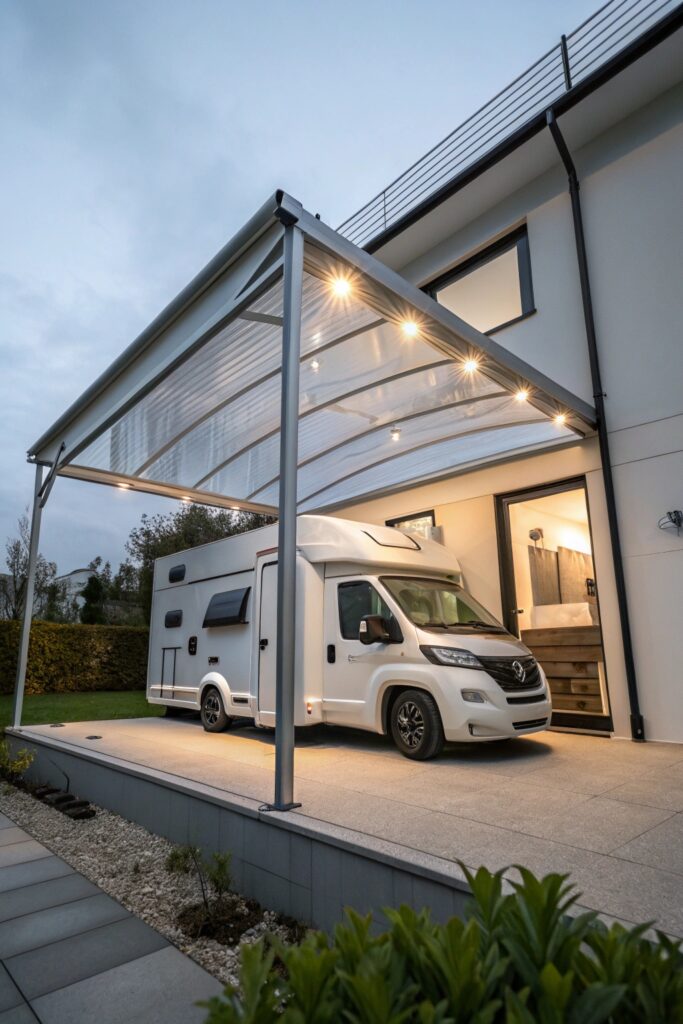
This one truly turns heads. A polycarbonate panel RV shelter uses twin-wall or multi-wall polycarbonate sheets — the same material used in commercial greenhouses — to create a shelter that’s lightweight, translucent, and surprisingly durable. The panels transmit diffused natural light while blocking UV rays and handling significant impact loads.
The translucent quality means your RV shelter doesn’t create a dark, gloomy space. The inside stays naturally lit without direct sun exposure hitting your camper’s roof and seals.
Polycarbonate shelter benefits:
- Lightweight compared to metal roofing
- Naturally diffuses light — no dark interior
- UV-blocking coating on quality panels
- Impact resistant — handles hail better than you’d expect
This style suits modern or contemporary properties particularly well. It looks architectural rather than utilitarian, which matters in many neighborhoods. :/
9. Timber Frame RV Shelter
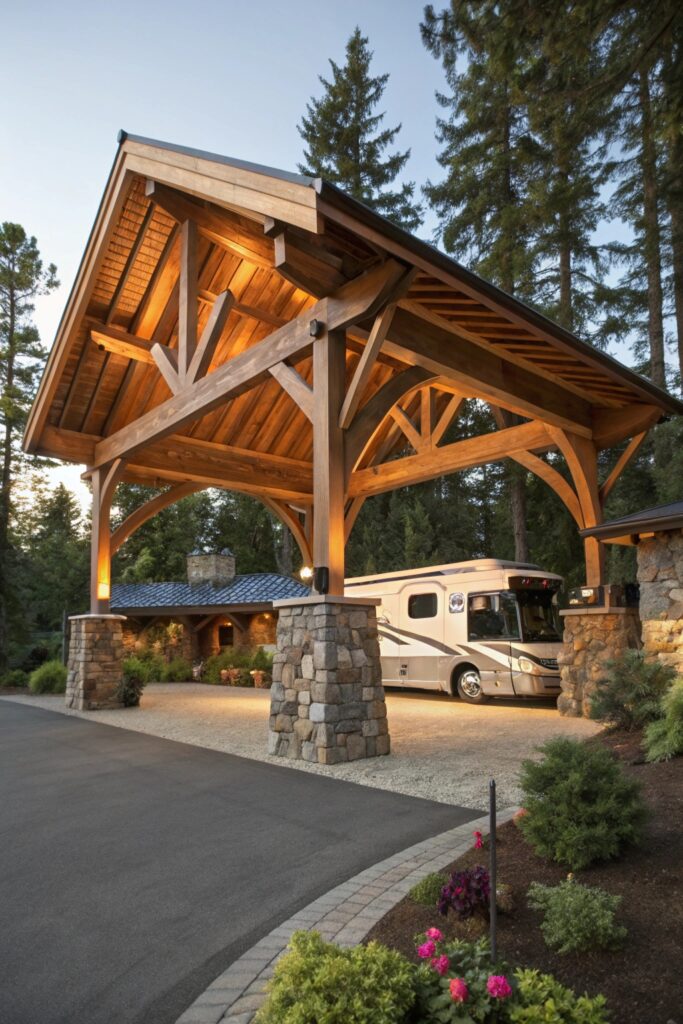
If you appreciate craftsmanship and want a shelter that looks like a permanent landscape feature rather than a utility addition, a timber frame RV shelter delivers exactly that. Heavy Douglas fir or cedar timbers, traditional joinery, and a standing seam metal or cedar shake roof — this is the shelter you build once and never replace.
Timber frame structures carry a natural warmth and permanence that metal and fabric shelters simply can’t match. They also photograph beautifully, which matters if you ever sell the property.
Timber frame design details:
- 6×6 or 8×8 posts for primary structure
- Traditional mortise and tenon joinery or modern timber screws
- Metal roofing or cedar shake for the roof
- Optional stone or brick knee walls for additional character
This is the premium option — budget accordingly. But the result is truly stunning.
10. Portable Pop-Up RV Canopy
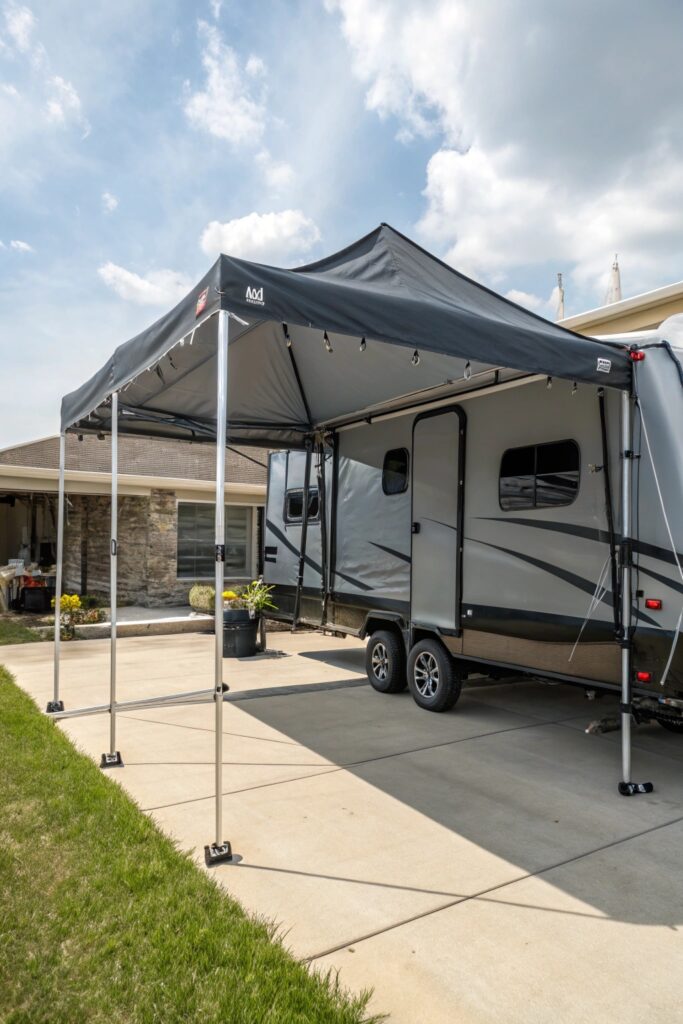
Sometimes you need protection that moves with you — and a portable pop-up RV canopy fills that gap. These aren’t permanent structures, but heavy-duty commercial-grade pop-up canopies with extended height frames and weighted base systems give you serious temporary shelter at home, at campgrounds, or at RV rallies.
Look for canopies with hexagonal or octagonal frames rather than standard square designs — they handle wind load significantly better. Some models include sidewall panels that convert them into nearly fully enclosed temporary shelters.
Best portable canopy features:
- Frame height adjustable to 13+ feet for tall RVs
- 500+ denier fabric for durability
- Weighted sandbag or stake anchor system
- UV protection rating clearly listed
These work best as supplemental or temporary shelter, not as your primary year-round solution. Manage expectations accordingly.
11. Underground or Recessed RV Storage Bay
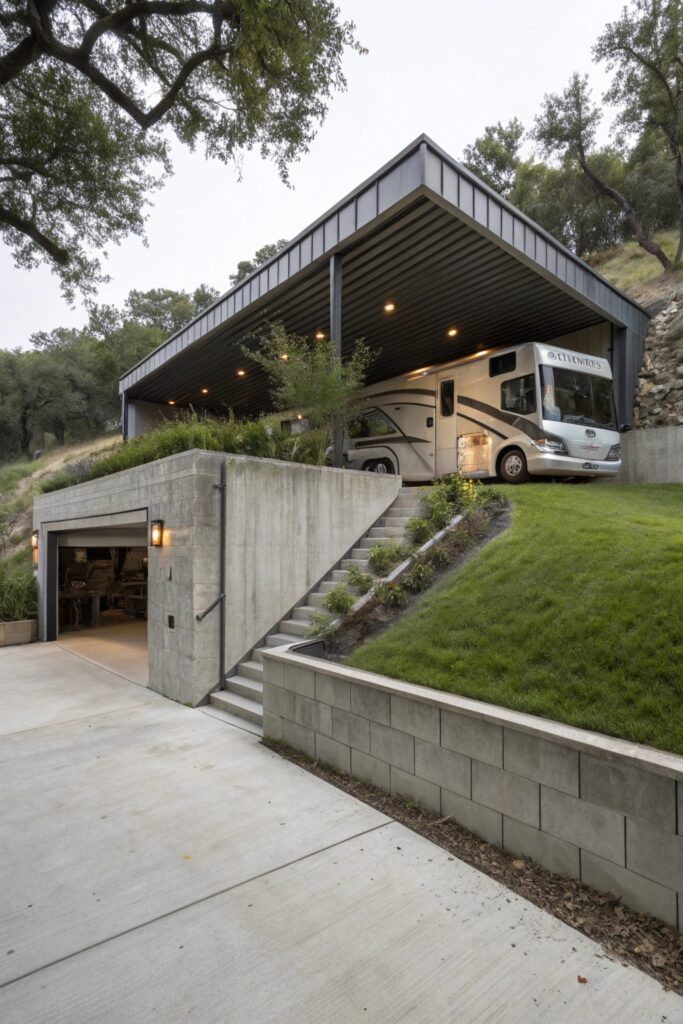
This one requires serious planning and budget — but if you’re building a new property or doing major landscaping work, a recessed or semi-underground RV storage bay is the ultimate space-saving shelter solution. You essentially park the RV into a below-grade or partially below-grade enclosure, dramatically reducing the visible profile from the street.
The retaining walls, drainage system, and access ramp all require professional engineering, but the result is a completely protected storage solution that barely impacts your property’s visual landscape.
Recessed bay requirements:
- Professional site engineering and drainage design
- Reinforced concrete retaining walls
- Proper slope and drainage to prevent water accumulation
- Cover structure over the bay opening for full weather protection
This is a premium, custom solution — not a weekend DIY project. But for properties where visual impact matters, nothing beats it.
12. Solar Panel Integrated RV Carport
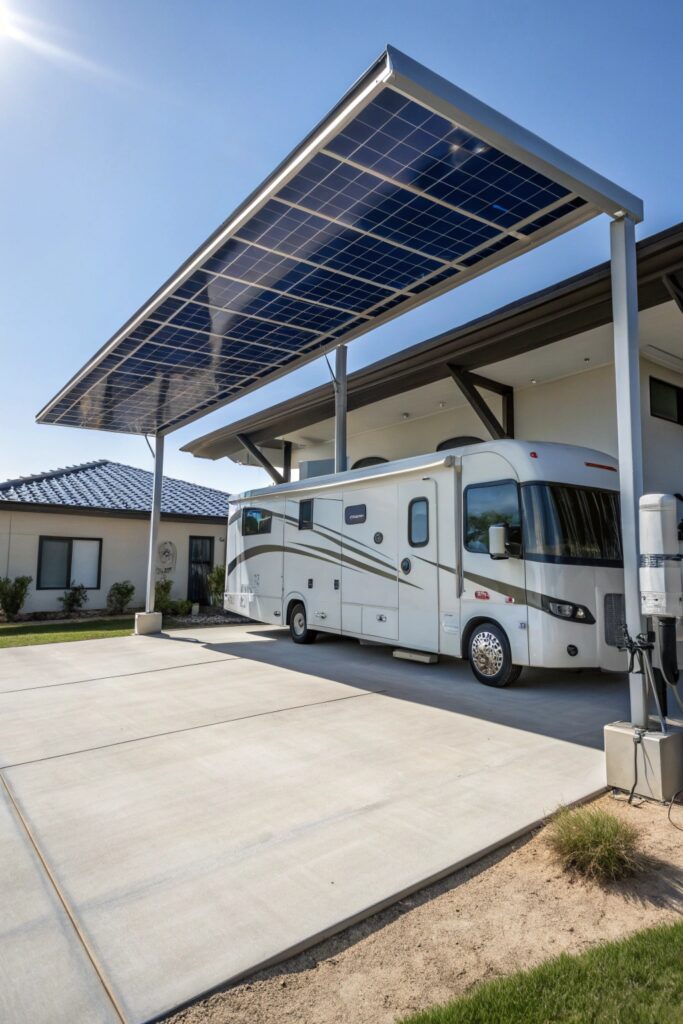
Here’s the idea that makes practical and financial sense simultaneously — a solar panel integrated RV carport uses the shelter roof as a solar array mounting surface. You protect your RV and generate electricity from the same structure. The solar panels themselves provide UV and weather protection for your camper while offsetting your home’s energy costs.
Ground-mount solar carport systems are available as pre-engineered kits that combine standard carport framing with solar panel racking hardware. Some systems even include EV charging outlets along the side — actually useful if your tow vehicle or daily driver is electric.
Solar carport system components:
- Powder-coated aluminum or galvanized steel frame
- Solar panel racking integrated into roof structure
- Optional battery storage system
- EV or RV shore power outlet wiring
The upfront cost runs higher than a standard carport, but the long-term energy savings make this one of the smartest RV shelter investments available right now.
Final Thoughts
If a shade sail roof caught your eye, see our dedicated guide to sun sail shade ideas for more on that specific approach.
Protecting your RV doesn’t have to mean choosing between function and appearance. From timber frame shelters that look like they belong in an architectural magazine to practical steel carports that just get the job done, there’s a real solution for every budget, property type, and climate on this list.
Start by figuring out your three non-negotiables — budget, protection level, and how permanent you want the structure to be. Those three factors narrow your options quickly and point you toward the right solution without overthinking it.
Your RV took you places. Give it a home worth coming back to.