
A small backyard deck’s success depends on genuine space efficiency — multi-functional built-ins, smart layout choices, and visual tricks that make a compact footprint feel considerably larger than its actual square footage.
Below are 12 small deck concepts, with real costs and practical notes for each.
1. Floating Platform Deck at Ground Level
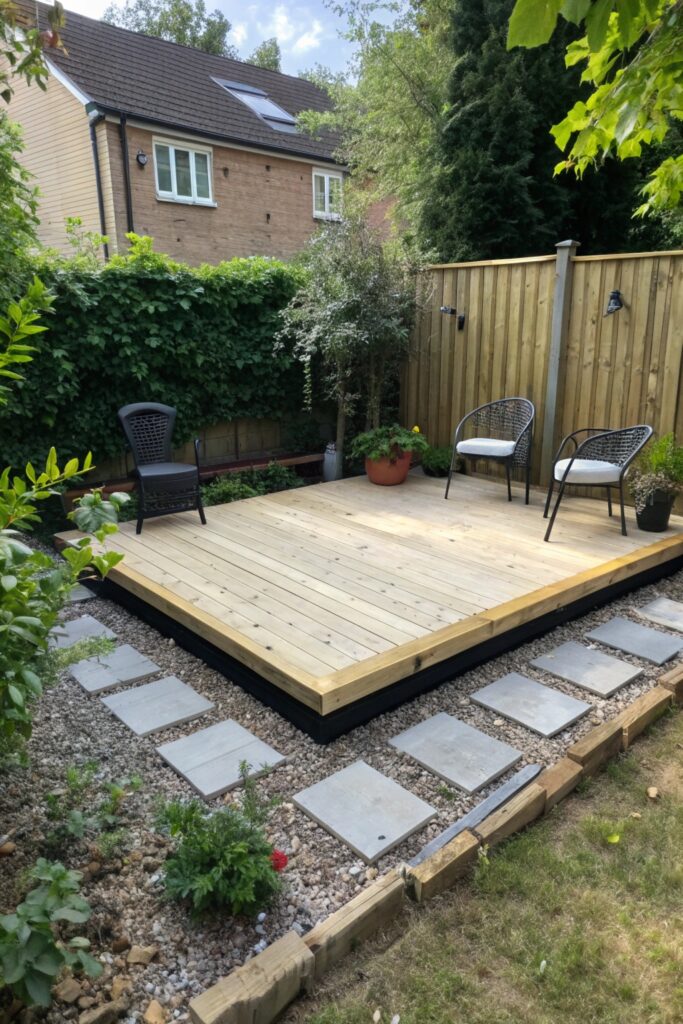
A low platform deck ($8-15 per square foot) sits close to grade without requiring railings in most jurisdictions, keeping the structure visually low-profile in a truly small yard.
Confirm your specific local code’s height threshold for railing requirements before finalizing this design, since regulations vary and a deck that’s technically low enough to skip railings in one municipality may not qualify in another.
2. Wraparound Corner Deck
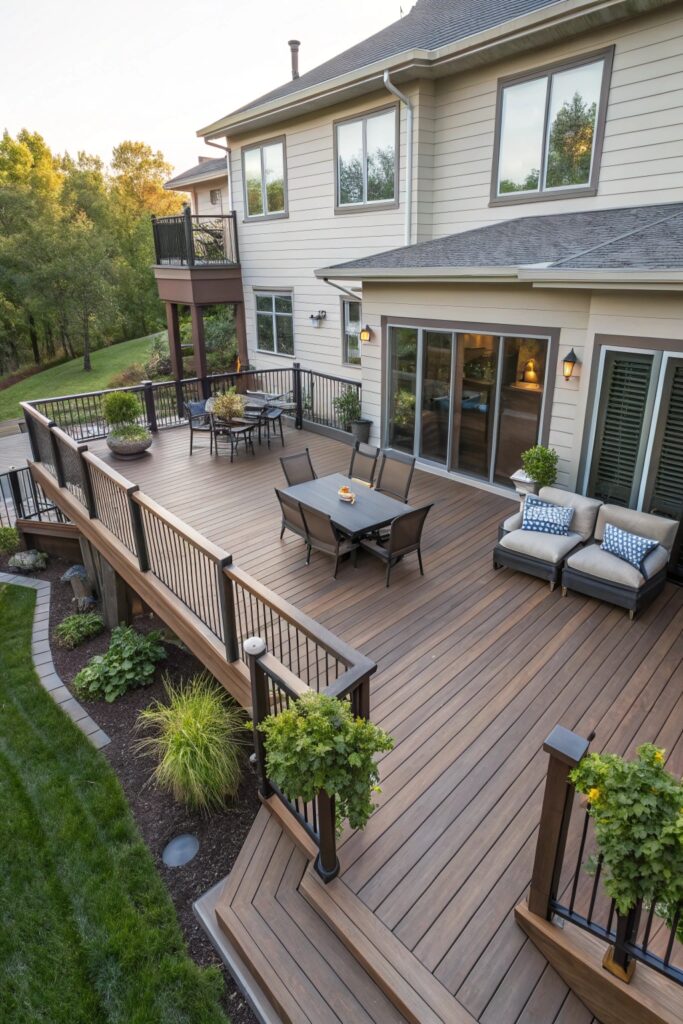
Wrapping the deck around a corner of the house uses an L-shaped footprint that makes efficient use of an irregular small yard’s actual usable space.
This layout works particularly well for a backyard with an irregular or L-shaped footprint, using corners that a simple rectangular deck design would leave unused.
3. Raised Deck With Built-In Storage Below
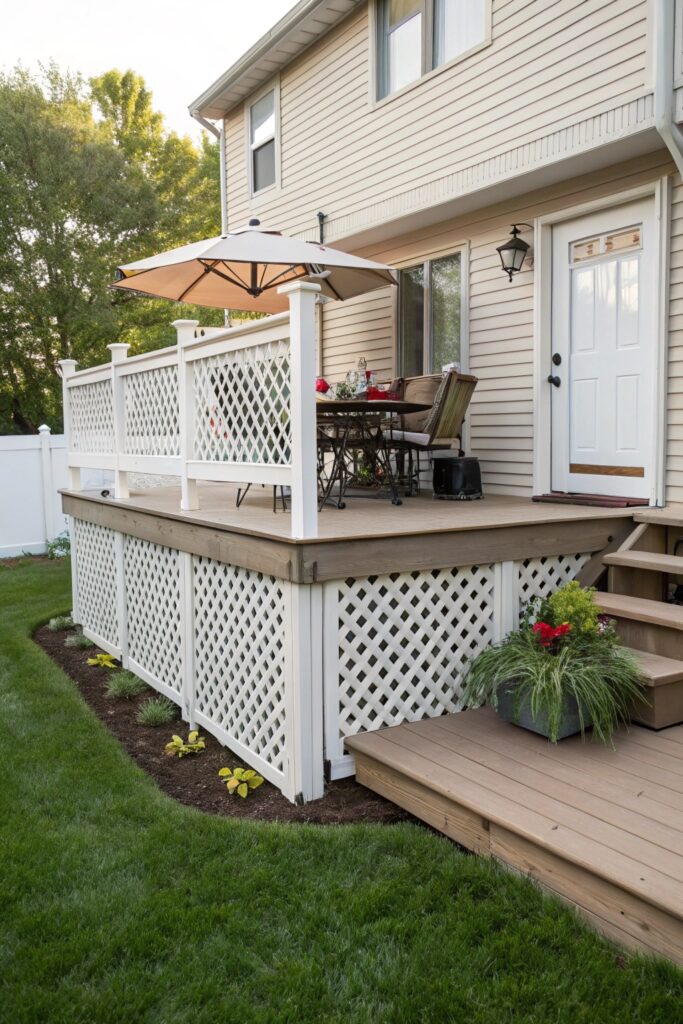
A raised deck ($15-30 per square foot including substructure) creates genuine storage space underneath for yard tools or outdoor furniture, which matters in a small yard without a shed.
Choose weather-resistant hardware and hinges for the storage access specifically, since this space will be exposed to the same outdoor conditions as the deck itself.
4. Narrow Side-Yard Deck
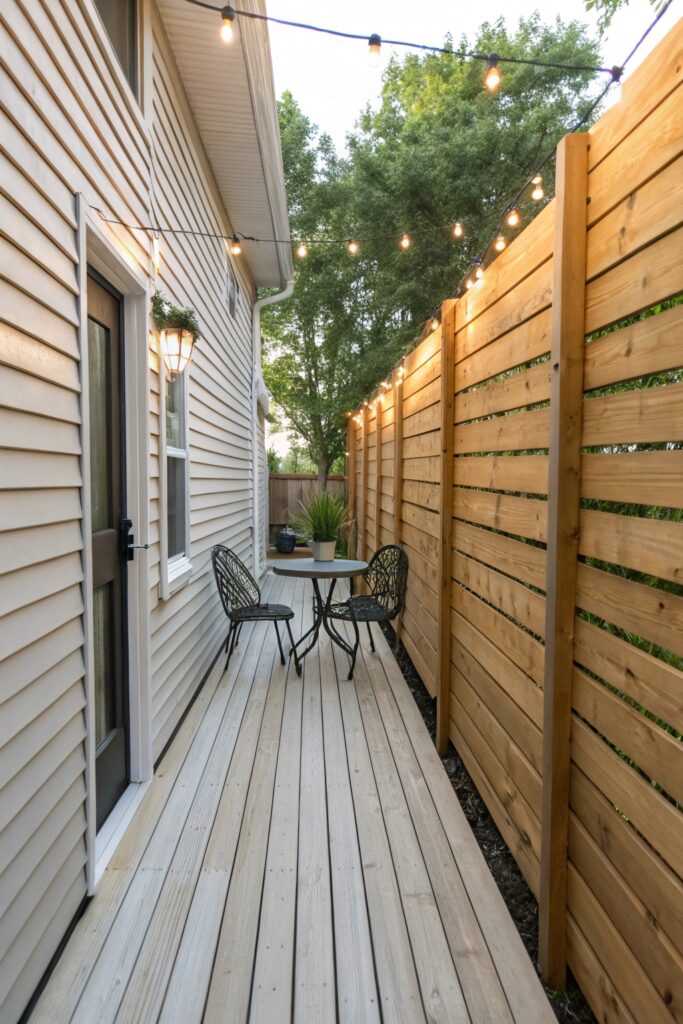
A slim deck along an otherwise unused side yard actually recovers outdoor living space from a strip most homes don’t use for anything beyond access.
Measure the side yard’s actual width carefully before committing to this layout, since even a narrow deck needs adequate clearance for comfortable passage.
5. Multi-Level Micro Deck
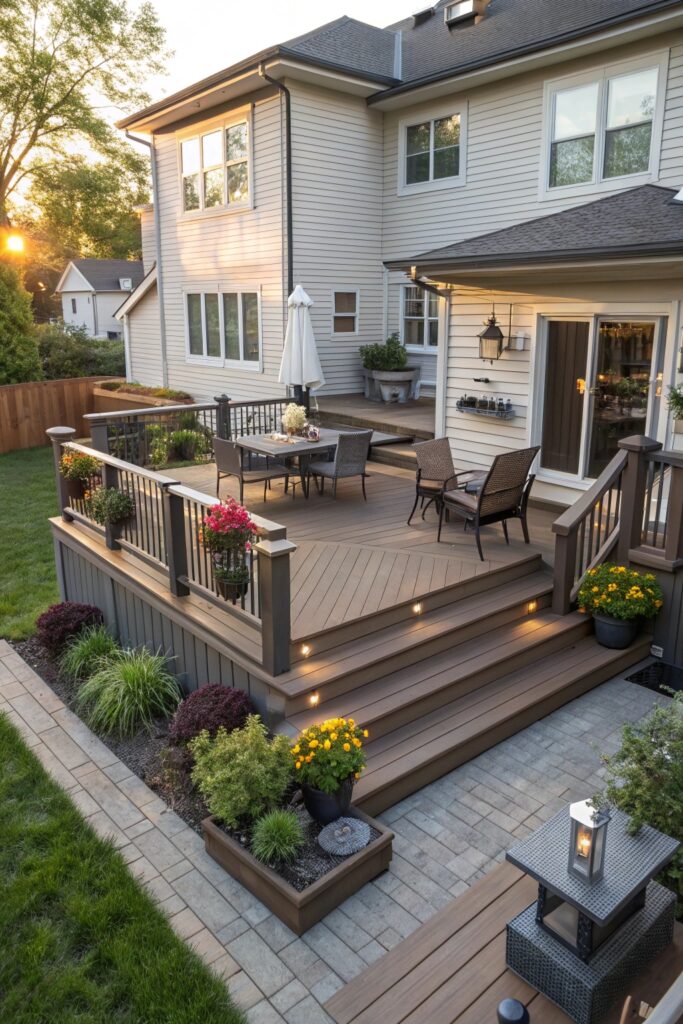
Splitting a small deck into two slightly different levels creates genuine visual and functional zoning within a compact footprint, distinguishing a dining area from a lounging spot.
A height difference of just one or two steps between levels is often enough to create genuine visual separation without requiring a complex multi-tier structure.
6. Deck With Privacy Screen Wall
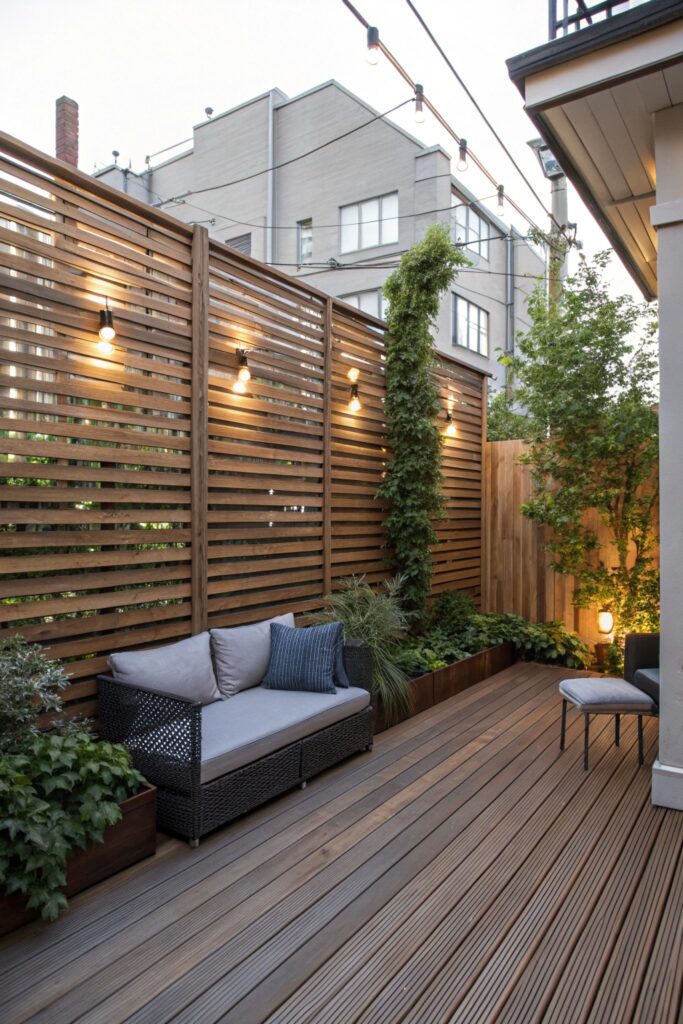
A slatted privacy screen ($20-50 per linear foot) matters noticeably more in a small backyard, where neighboring homes or fences are often considerably closer than in a larger lot.
Choose a screen material and spacing that balances privacy with airflow, since a fully solid screen can make a small deck feel more enclosed than the openness it’s meant to provide.
7. Deck With Built-In Bench Seating
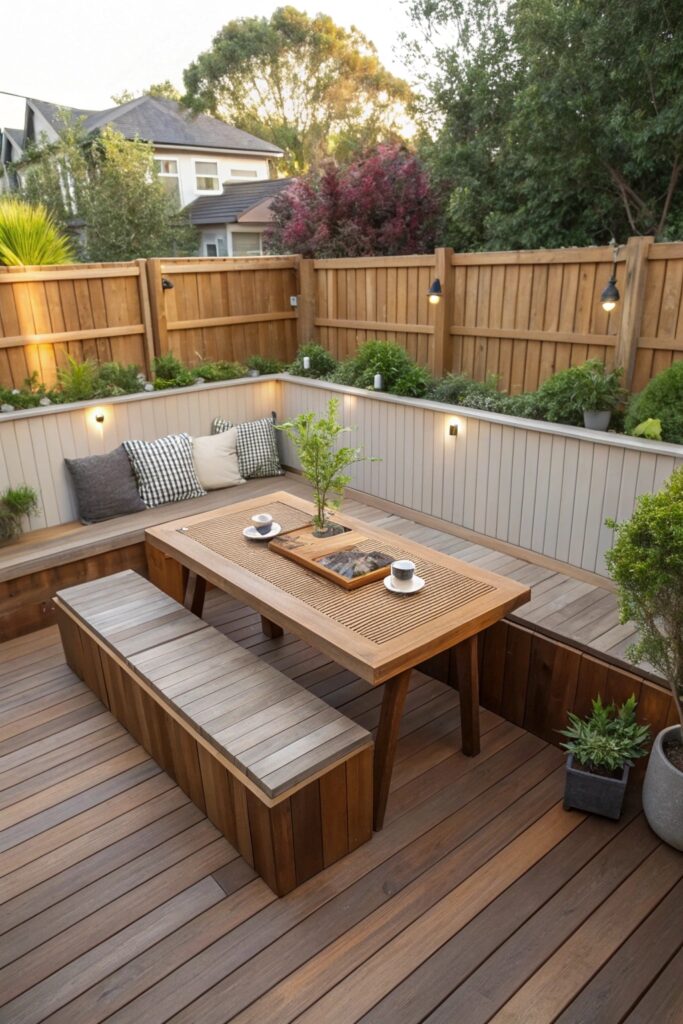
Built-in benches along a deck’s perimeter recover genuine seating capacity without requiring freestanding furniture that would otherwise consume more of the limited floor space.
Built-in benches also free up floor space for movement, which matters more on a small deck than on a larger one with room to spare regardless of furniture choices.
8. Rooftop Deck Over a Garage or Flat Roof
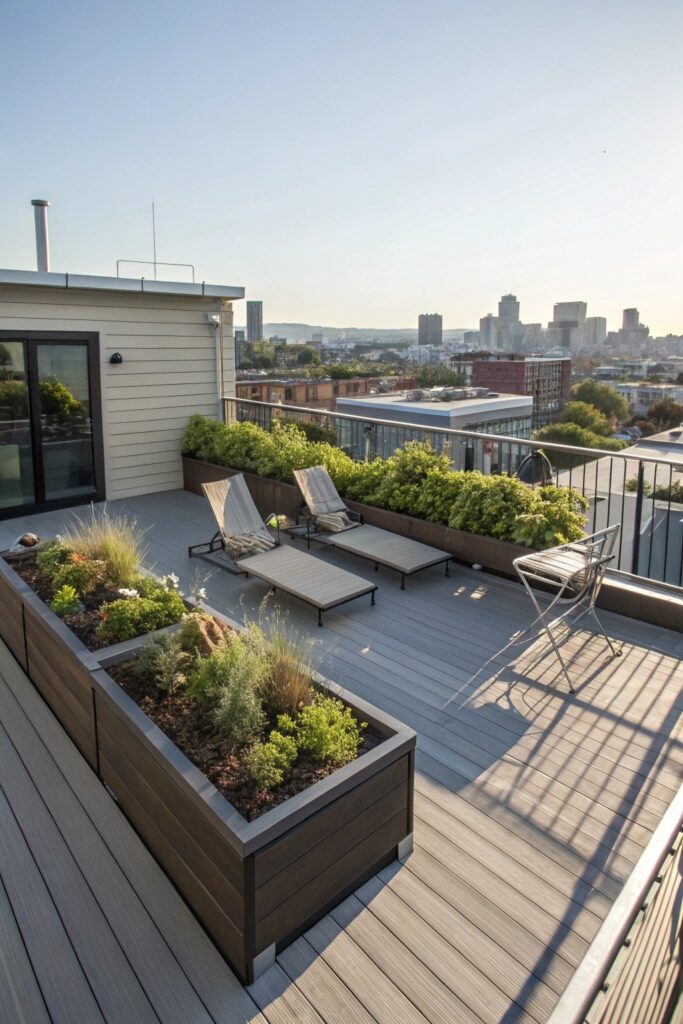
Converting an existing flat roof into deck space meaningfully adds outdoor living area without requiring any additional ground footprint at all, though this requires professional structural assessment first.
Confirm the roof’s structural load capacity with a professional before adding any deck materials, furniture, or planned occupancy, since not every flat roof is rated for this kind of conversion.
9. Deck With Pergola and String Lights
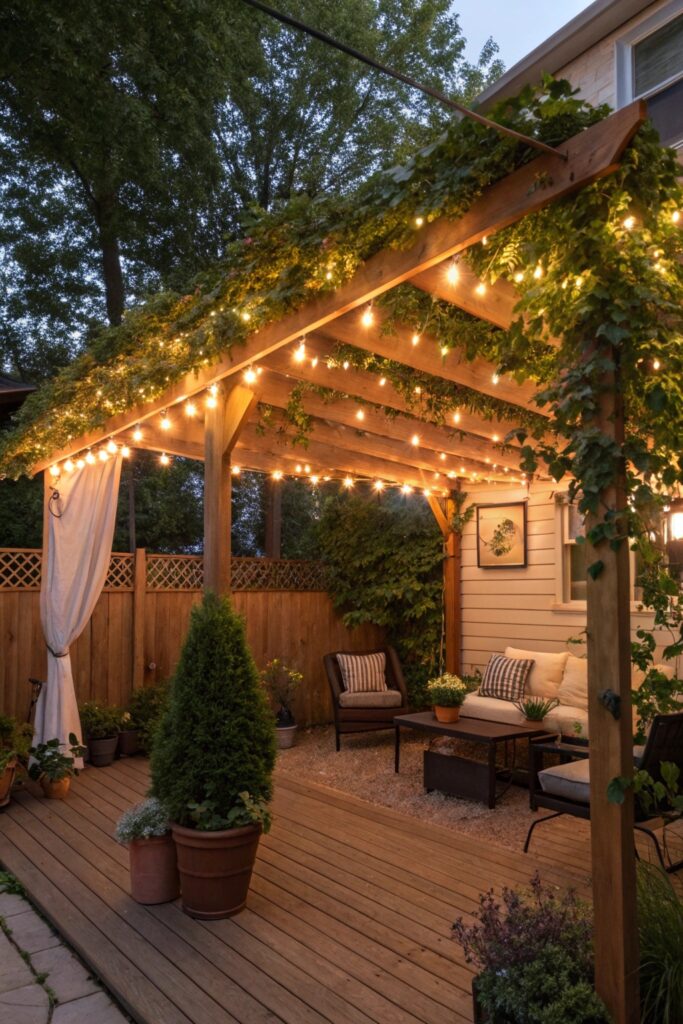
A pergola ($1,500-4,000 depending on size and material) adds genuine partial shade and vertical structure, making a small deck feel more like a defined outdoor room.
Choose a pergola design with adjustable or removable shade elements (louvers, a retractable canopy) if you want more control over sun exposure throughout the day.
10. Diagonal Decking Pattern on a Square Deck
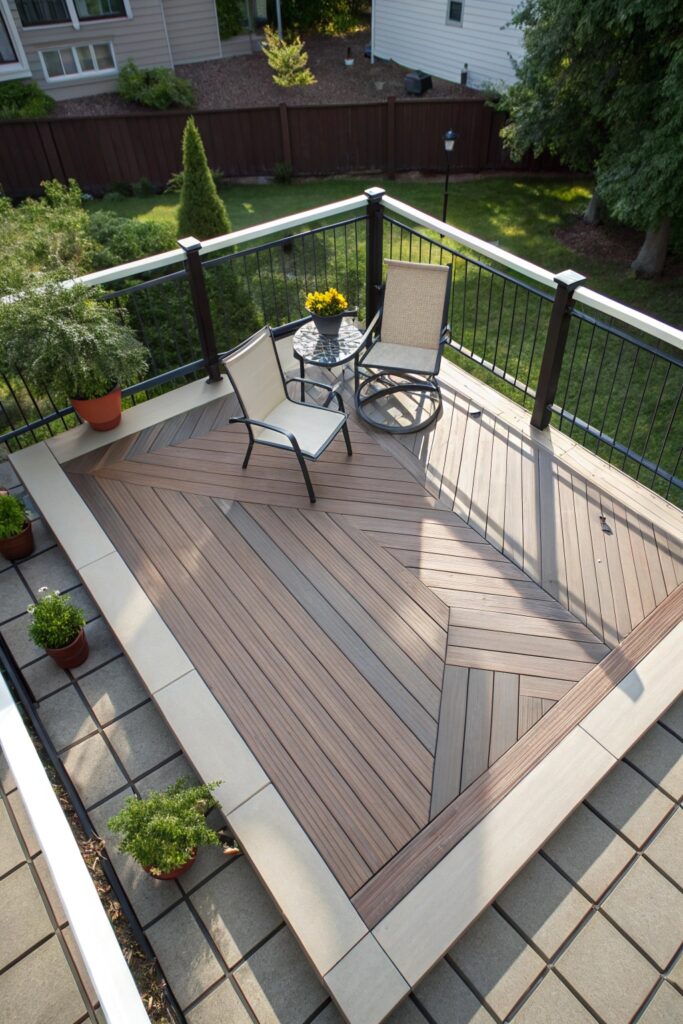
Laying decking boards at a 45-degree angle rather than straight noticeably makes a small square deck read as larger, since the diagonal lines draw the eye across the full width of the space.
This technique works best on a deck that’s already a genuine square or near-square shape, since the diagonal pattern’s visual benefit is most noticeable on that specific proportion.
11. Deck With Integrated Planter Boxes
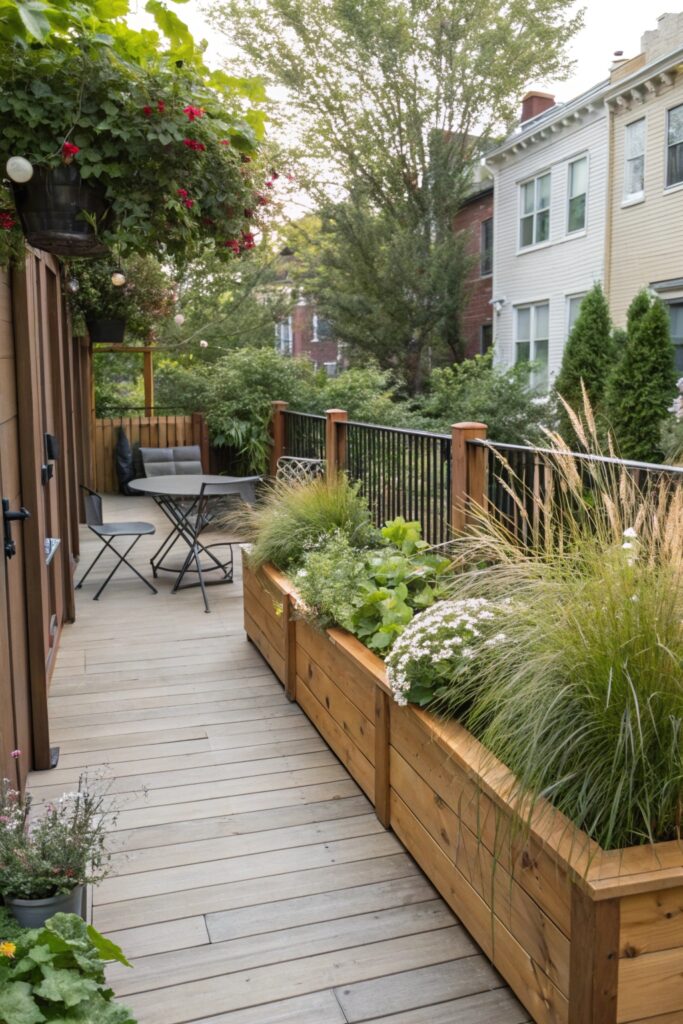
Built-in planters along a deck’s edge add genuine greenery without consuming floor space that freestanding pots would otherwise require.
Choose plants suited to your specific climate and the deck’s actual sun exposure, since built-in planters are harder to relocate than freestanding pots if the initial plant choice doesn’t thrive.
12. Compact Deck With Fire Pit Cutout
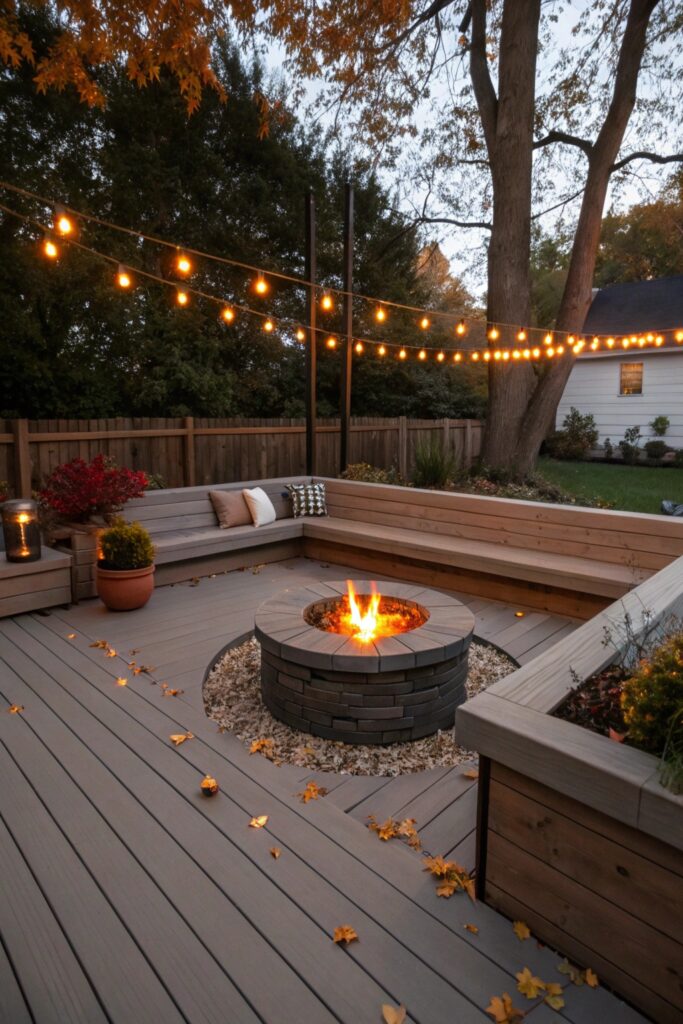
A dedicated cutout or fire-safe zone for a small fire pit lets a compact deck actually function as an evening gathering spot without requiring a separate patio area.
Choosing Materials for a Small Deck
Composite decking costs more upfront than pressure-treated wood but truly requires less ongoing maintenance, which matters more on a small deck where the material itself represents a larger proportion of the visible outdoor space than it would on a sprawling deck.
Lighter-colored decking materials also help a small deck read as more spacious, similar to how light colors work in interior small-space design, while darker woods can visually shrink an already compact footprint even when the actual dimensions haven’t changed.
Making a Small Deck Feel Larger
Keeping the railing low or skipping it entirely where local code allows preserves sightlines to the yard beyond, which matters more on a small deck than almost any material choice.
Mirrors mounted on an adjacent fence and light-colored decking both bounce more light around the space, and furniture scaled slightly smaller than you’d use indoors keeps the deck from feeling crowded the moment two or three people are on it.
Permits for a Small Deck
Many municipalities waive permit requirements for decks under a certain height and square footage, often around 200 square feet and 30 inches off the ground, though this varies enough by location that it’s worth a quick call to the local building department before starting.
Even when a permit isn’t required, checking setback rules from property lines avoids a dispute with neighbors down the road, especially on a small lot where a few feet can matter.
A small deck done well often gets more actual use than a sprawling one, simply because every inch of it has a clear purpose.
Small Deck, Big Impact
Working with a larger footprint instead? See our broader guide to decks and porches ideas for more layout options.
Built-in seating and storage matter more than any specific layout choice, since both recover genuine function from a small deck’s limited footprint without requiring additional furniture that would otherwise crowd the space. Check your local building codes and any required permits before starting construction, since deck height, railing requirements, and setback rules vary considerably between municipalities.