Walk into a well-decorated classroom and you feel it immediately — there’s energy, warmth, and a sense that something good happens in this room. Walk into a bare-walled classroom and, well, it feels like a waiting room. The walls in your classroom do more work than you probably realize.
Research consistently backs what teachers already know intuitively — students learn better in environments that feel welcoming, organized, and visually stimulating. The right classroom wall decorations don’t just look nice. They reinforce learning, build community, and make kids actually want to show up.
Whether you’re setting up your classroom for the first time or refreshing a space you’ve taught in for years, these eleven ideas will give you practical, beautiful options that work for real classrooms with real budgets.
1. Student Work Display Wall
Best for: building confidence and classroom community
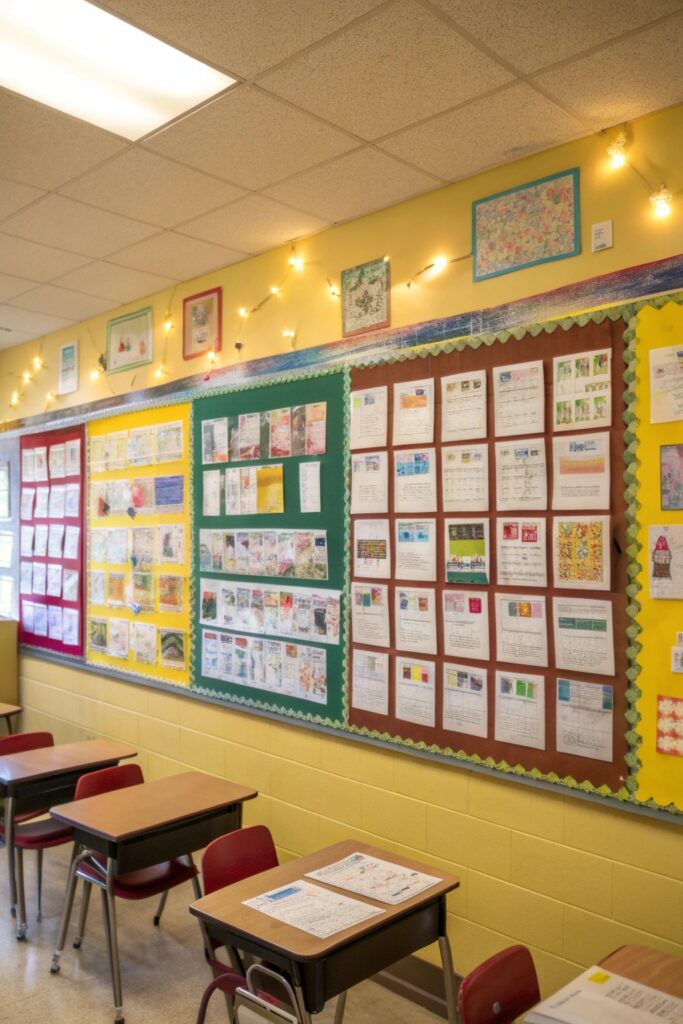
Nothing brightens a classroom faster than filling the walls with the students’ own work. A dedicated display wall for rotating student projects, writing samples, and artwork tells every kid in the room that their effort matters and their work belongs here.
- Use colorful bordered bulletin boards to frame work consistently and neatly
- Rotate displays every two to three weeks so every student gets a turn
- Label each piece with the student’s name in large, readable text
IMO, this is the single most impactful classroom wall decoration you can create — and it costs almost nothing. The look changes constantly, the students stay invested, and parents absolutely love seeing their child’s work displayed when they visit. It’s a win on every level.
2. Alphabet and Phonics Wall Strips
Best for: early childhood and elementary classrooms
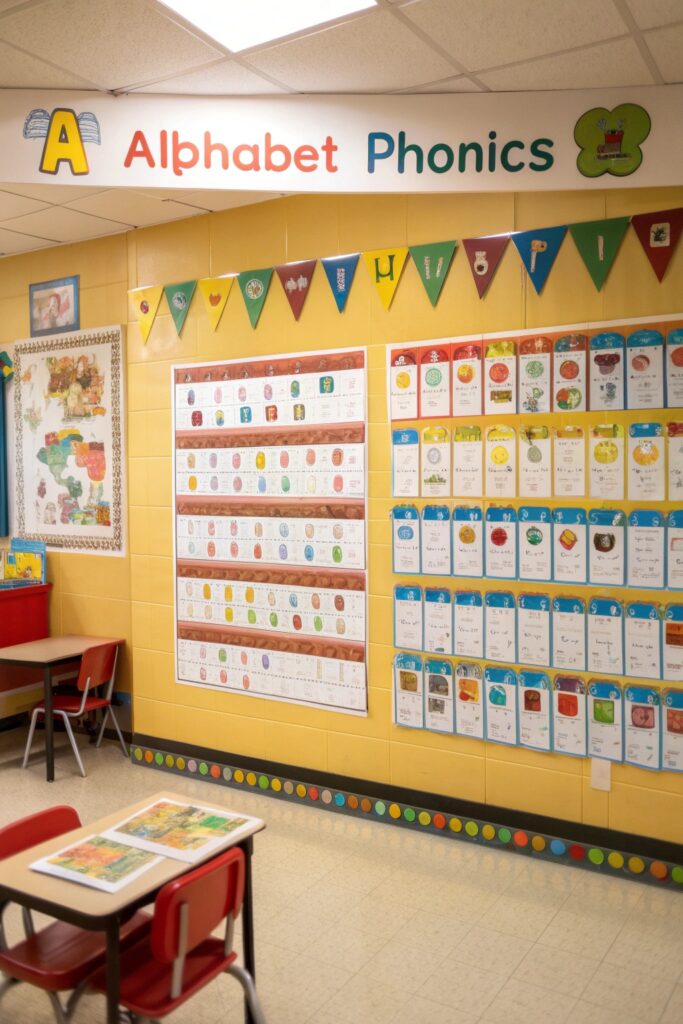
A phonics wall strip running along the top of your classroom walls gives early readers a constant visual reference they actually use. Each letter paired with a picture cue helps young students connect sounds to symbols without needing to ask every two minutes.
- Choose bright, high-contrast colors so letters are visible from every seat
- Include both uppercase and lowercase versions of each letter
- Picture cues should be simple and culturally familiar to your students
The key is placement — mount these at student eye level, not teacher eye level. A strip mounted six feet high helps nobody. Keep it reachable and readable, and you’ll watch students glance up at it constantly during writing activities.
3. World Map or USA Map Accent Wall
Best for: social studies classrooms and geography integration
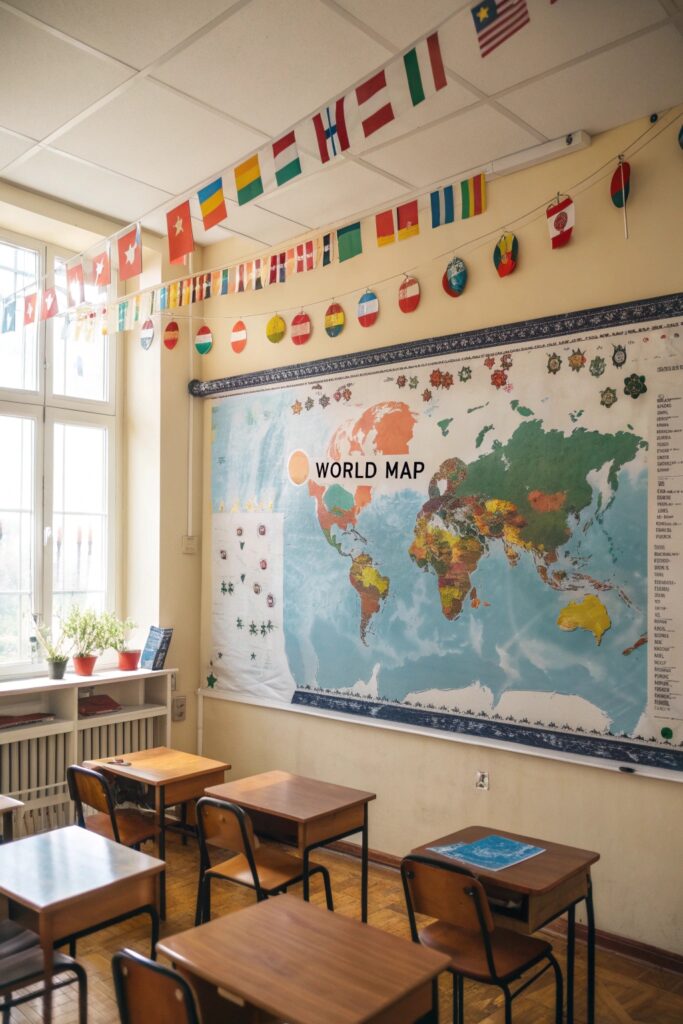
A large, colorful map as a classroom wall feature serves double duty — it’s visually striking as a decoration and endlessly useful as a teaching tool. Students start noticing it between lessons, tracing routes, finding countries, and asking questions you didn’t even plan for.
- Oversized poster maps in bright colors make the biggest visual impact
- Add removable flag pins or sticky dots to mark locations you study throughout the year
- Pair with a timeline strip below to connect geography with history
This works in any grade level. Elementary students love finding their home state. Middle schoolers use it for current events. High schoolers reference it during global history discussions. One investment, years of use.
4. Inspirational Quote Wall
Best for: creating a motivating and emotionally supportive atmosphere
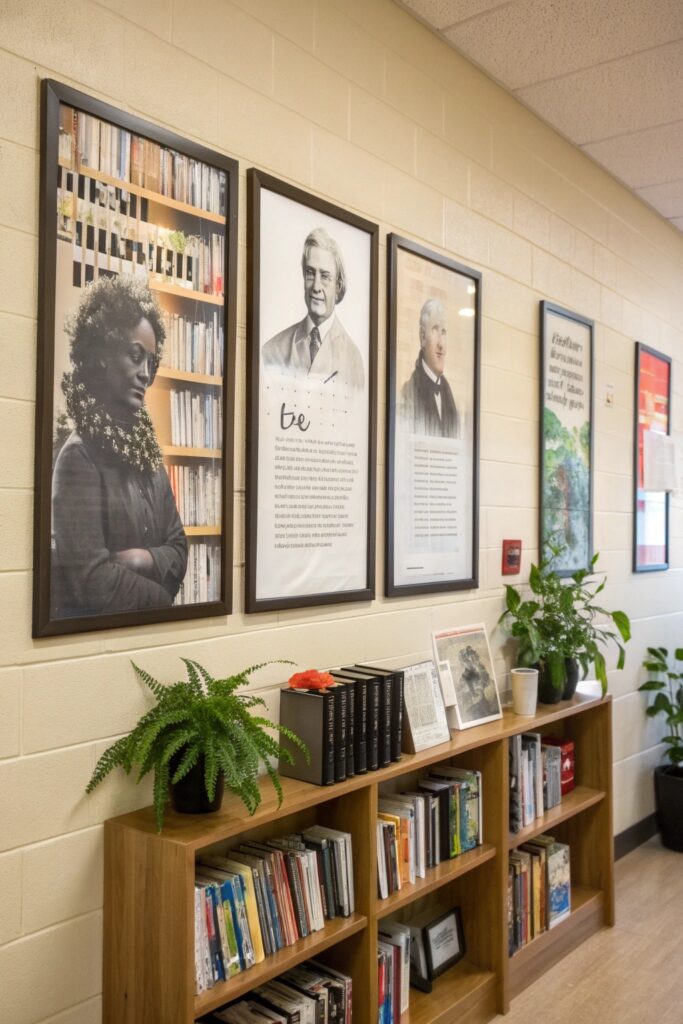
A carefully chosen set of inspirational quotes on your classroom walls sets the tone for how students think about learning, effort, and each other. The trick is choosing quotes that feel genuine rather than generic motivational poster filler :/
- Limit yourself to four or five quotes — a wall covered in quotes loses impact
- Choose quotes from diverse voices — scientists, athletes, artists, historical figures
- Use large, readable typography with simple backgrounds for maximum impact
Rotate one quote per month and spend five minutes discussing it with students. This turns passive wall decoration into an active classroom ritual. Students start memorizing them without even trying, which is honestly the best kind of learning.
5. Classroom Rules and Expectations Display
Best for: setting a clear, positive behavioral tone from day one
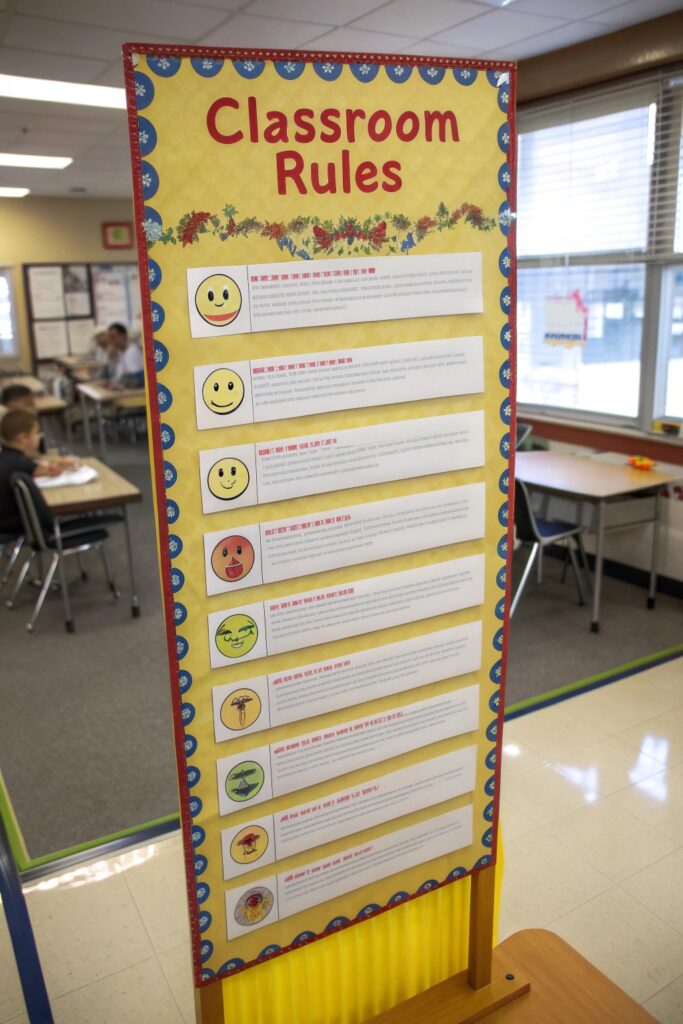
A well-designed classroom rules display does more than list rules — it communicates your values and sets the standard for how your classroom operates. Students reference it, you reference it, and it removes a lot of the “but I didn’t know” conversations.
- Frame rules as positive statements (“We listen to understand”) rather than prohibitions
- Use student-friendly language and include simple illustrations for younger grades
- Involve students in creating the rules and display their signatures alongside them
When students help create and sign the rules display, ownership follows. They remind each other of the expectations rather than waiting for the teacher to intervene. That shift alone makes the whole classroom feel different.
6. Number Line and Math Reference Wall
Best for: math classrooms and elementary multi-subject rooms
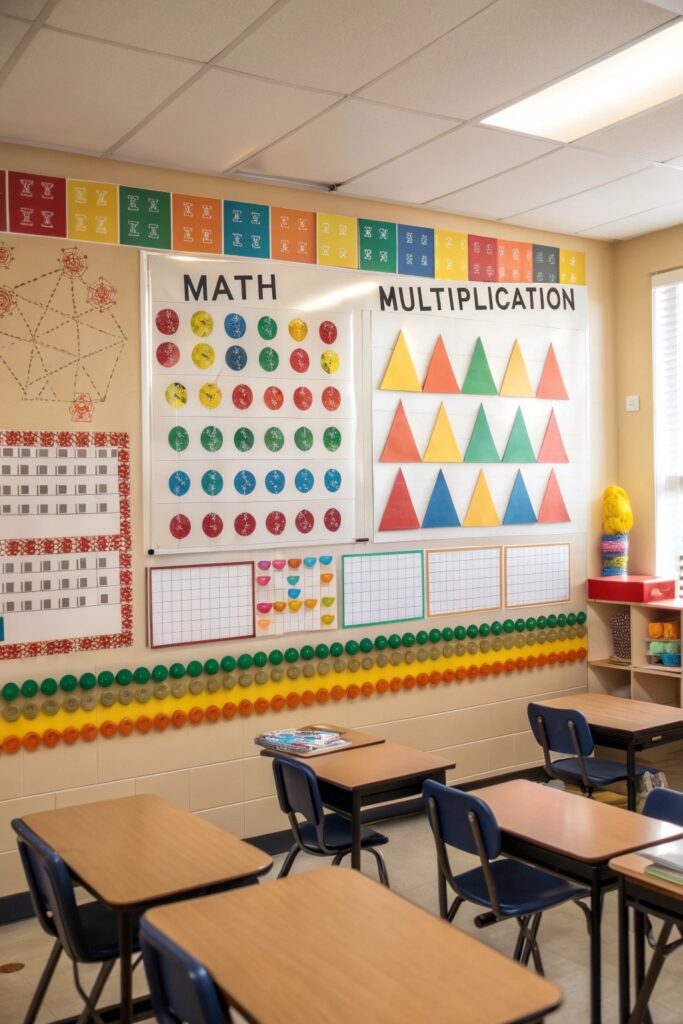
A math reference wall gives students the visual scaffolding they need to tackle problems independently. A number line, multiplication chart, geometric shapes reference, and fraction visuals all working together on one wall section create a resource students actually rely on.
- Mount a number line at student eye level spanning zero to one hundred for younger grades
- Color-code multiplication tables by factor to make patterns visible
- Include a place value chart that stays visible during all math activities
FYI — a math reference wall reduces the number of times students raise their hand to ask basic procedural questions, which frees you up to focus on students who need deeper support. That’s not a small thing when you’re managing twenty-five kids at once.
7. Reading Corner with Themed Wall Décor
Best for: elementary classrooms with dedicated reading spaces
A cozy reading corner with intentional wall decoration transforms a corner of your classroom into a destination students actually want to visit. Surround the space with book-themed artwork, reading challenge trackers, and student book recommendation cards to make it feel special.
- Themed wall decals — woodland animals, outer space, underwater — create immersive mini-environments
- Mount a “Currently Reading” board where students post what they’re reading
- Add string lights along the wall above the reading corner for warmth and coziness
The wall decoration makes the corner feel distinct from the rest of the classroom. That physical and visual separation signals to students that this space has a different purpose — and they respond to it accordingly.
8. Growth Mindset Visual Display
Best for: any grade level focused on building resilience and effort
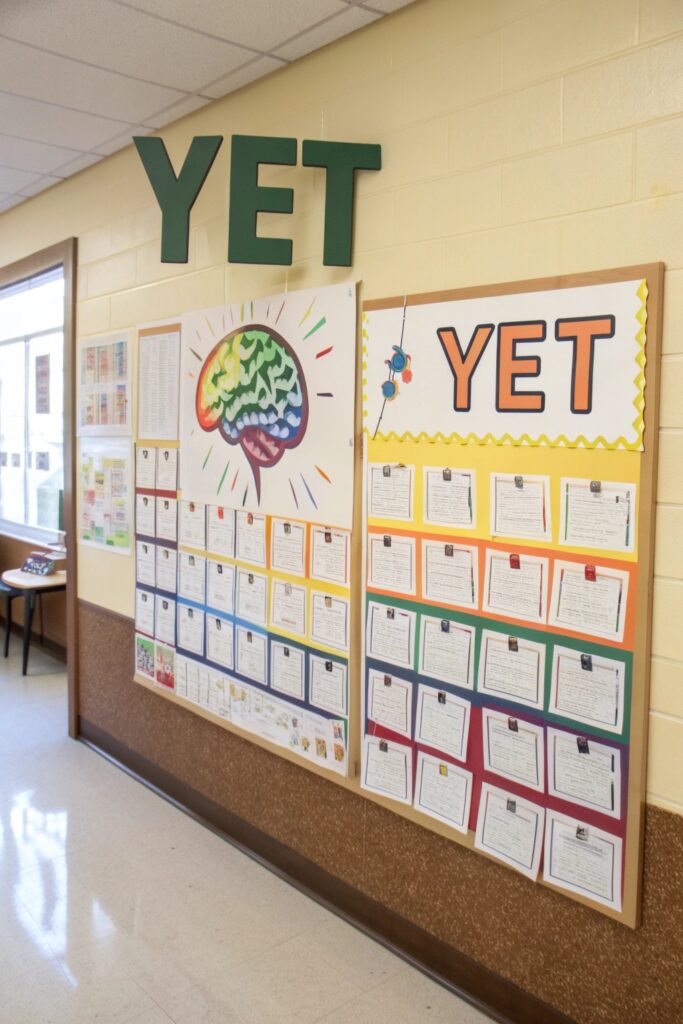
A growth mindset wall display gives students a visual vocabulary for talking about challenges, mistakes, and improvement. When the language lives on the wall, students start using it naturally in conversations — which is the whole point.
- Display “yet” language prominently: “I can’t do this… yet”
- Include a brain growth visual showing how learning physically changes the brain
- Post student goal cards nearby so the mindset connects to personal action
This works best when it’s not just decoration but a living part of your classroom culture. Reference it during lessons, point to it during difficult moments, and watch students start pointing to it themselves. That’s when you know it’s working 🙂
9. Seasonal and Holiday Themed Bulletin Boards
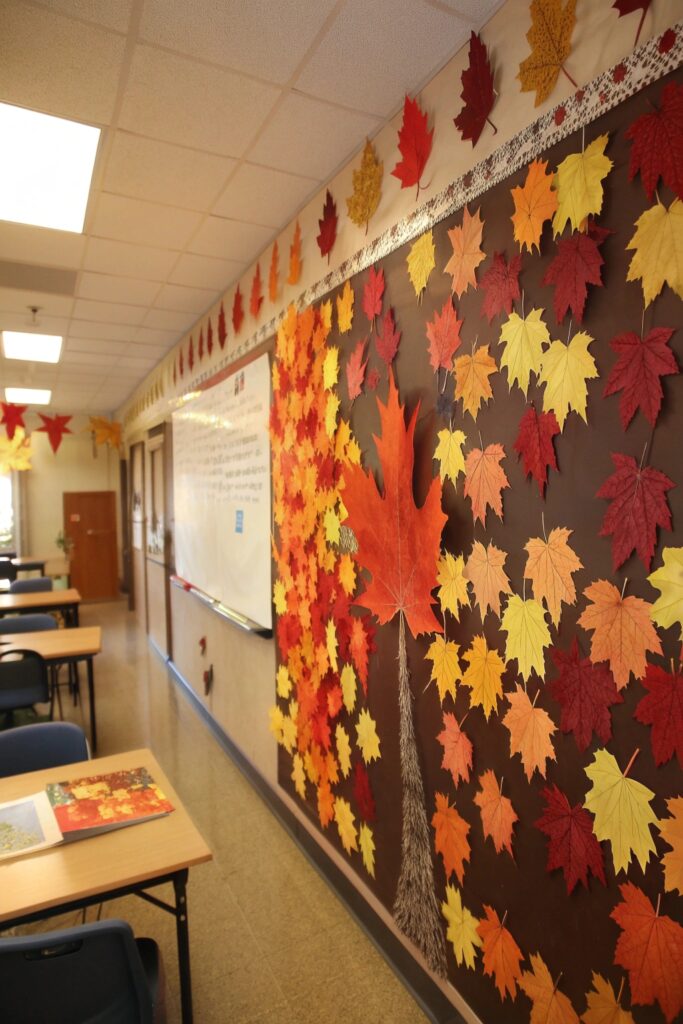
Best for: keeping the classroom environment fresh and current throughout the year
Seasonal bulletin boards give your classroom walls a natural rhythm that mirrors the school year. A back-to-school theme in September, autumn leaves in October, winter celebrations in December — each refresh gives students something new to notice and feel connected to.
- Plan your seasonal themes at the start of the year so materials are ready in advance
- Involve students in creating the decorations to reduce your workload and increase investment
- Use reusable backgrounds and borders that work across multiple seasons to save money
The key is not overdoing it. One or two seasonally updated boards keeps things fresh without turning your room into a craft store explosion. Quality and intentionality beat quantity every time.
10. Classroom Library Genre Labels and Book Wall
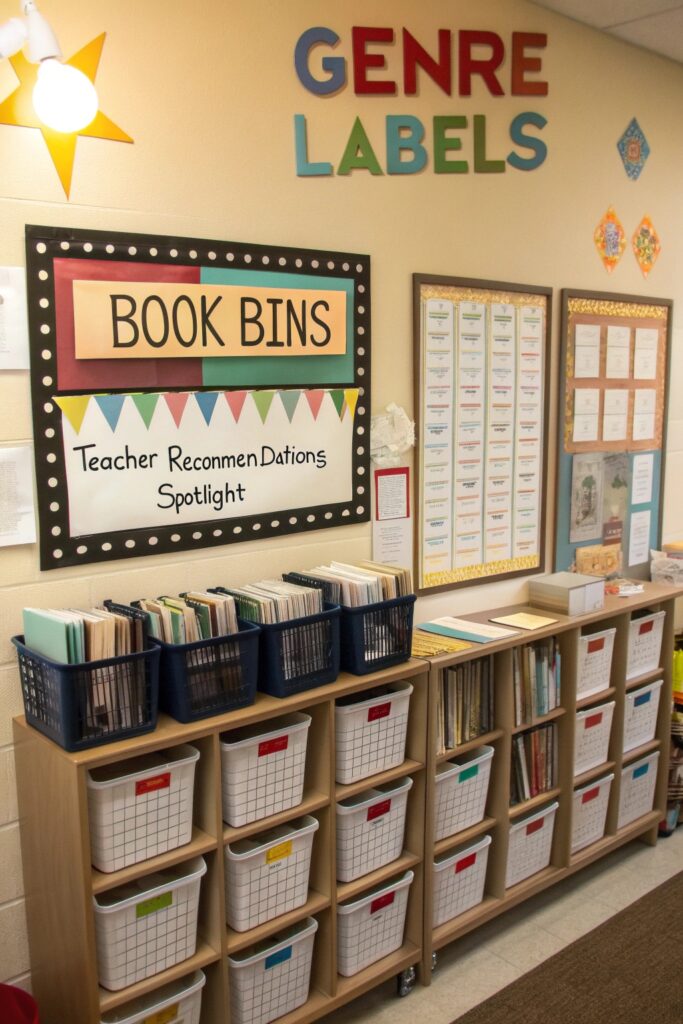
Best for: literacy-focused classrooms with classroom libraries
Turning your classroom library wall into a visual feature makes books feel like a centerpiece rather than an afterthought. Large genre label signs, a “book of the week” spotlight display, and a reading recommendation board all make the library wall a destination rather than just storage.
- Color-coded genre labels help students navigate independently without asking for help
- A “teacher recommends” spotlight with a handwritten note builds personal connection to books
- Post a reading challenge tracker on the adjacent wall so progress is visible to everyone
Students take better care of books when the library area looks intentional and respected. The visual investment signals that books matter here — and kids pick up on that message whether or not you ever say it out loud.
11. Student-Created Collaborative Mural
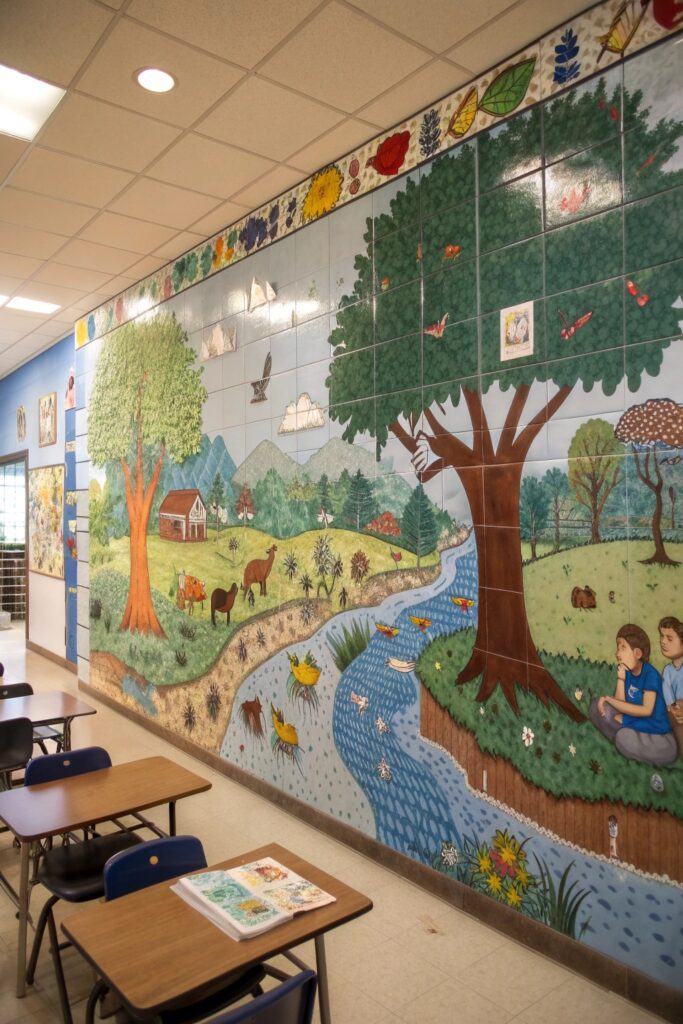
Best for: building classroom identity and creative expression
A collaborative mural created by the students themselves becomes one of the most meaningful pieces of classroom wall decoration you’ll ever have. Whether it’s a painted canvas, a large paper installation, or individual tiles assembled into one image, the result tells a story that belongs entirely to your class.
- Plan a theme that connects to curriculum — ecosystems, community, historical events
- Assign each student a section or tile so every student contributes equally
- Display it prominently on a main wall where students see it every single day
The mural changes how students feel about the room — it’s theirs in a way that store-bought decorations never will be. Every year’s class leaves a mark, and that tradition builds something truly special over time.
Transform Your Walls, Transform Your Room
For the overall room aesthetic beyond the walls, see our companion guide to boho classroom decor ideas.
Your classroom walls carry more weight than paint and paper. They communicate your values, support your teaching, and tell every student who walks through the door what kind of place this is going to be.
You don’t need to implement all eleven ideas at once. Start with two or three that fit your grade level and your personal style, then build from there. The best classroom walls evolve throughout the year as your students grow and your community develops.
Pick one idea from this list and put it up this week. Watch how your students respond. That reaction will tell you everything you need to know about what to do next.