
A mudroom cabinet system works best when it’s built around your household’s actual daily routine — how many people need storage, what gear you’re managing, and how much closed versus open storage you actually want.
Below are 10 cabinet styles worth considering, with practical notes for each.
Looking to combine your mudroom with a laundry area? See our companion guide to mudroom laundry room combo ideas.
1. Floor-to-Ceiling Locker-Style Cabinets
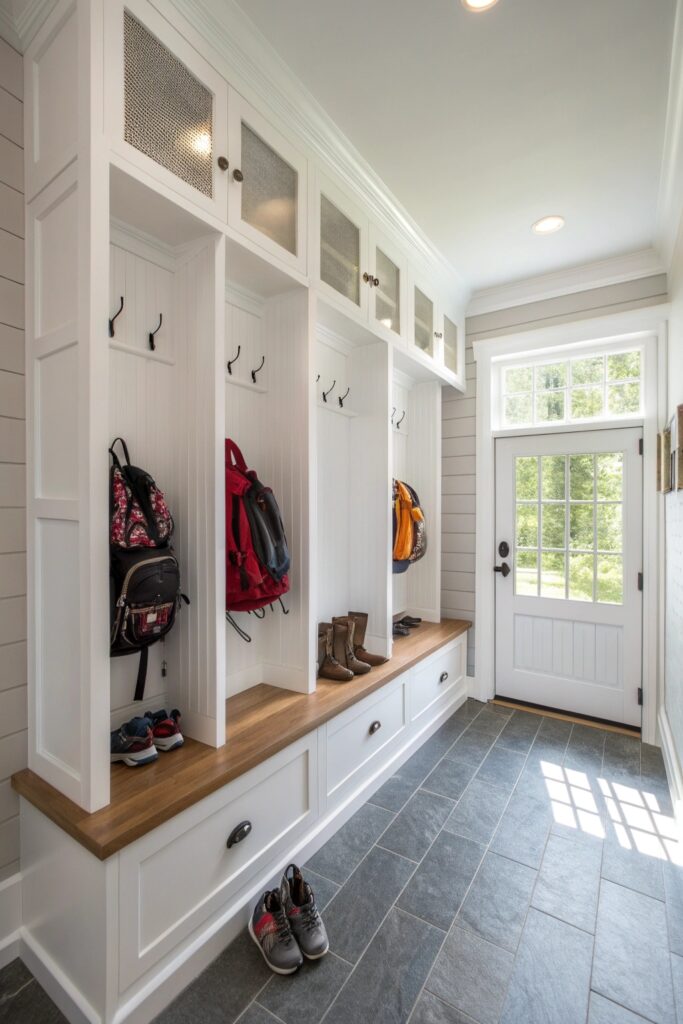
Individual locker sections work well for a household where each person needs their own dedicated storage spot rather than shared cubbies.
Choose a durable material for the locker interiors specifically, since these surfaces take direct contact from wet boots and bags on a daily basis.
2. Bench with Built-In Cabinet Storage Below
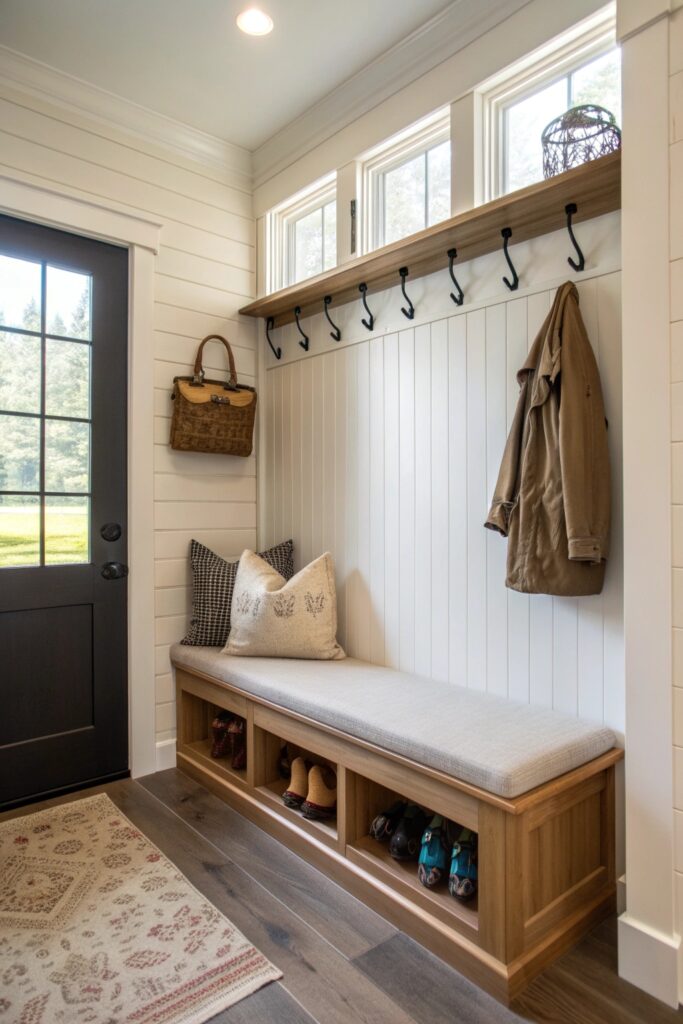
A bench with closed storage underneath keeps shoes and bulkier items out of sight while still providing a spot to sit while putting them on.
Choose a bench height comfortable for putting on shoes, typically around 18 inches, rather than prioritizing the storage capacity below at the expense of usability.
3. Open Cubby Cabinets with Labeled Baskets
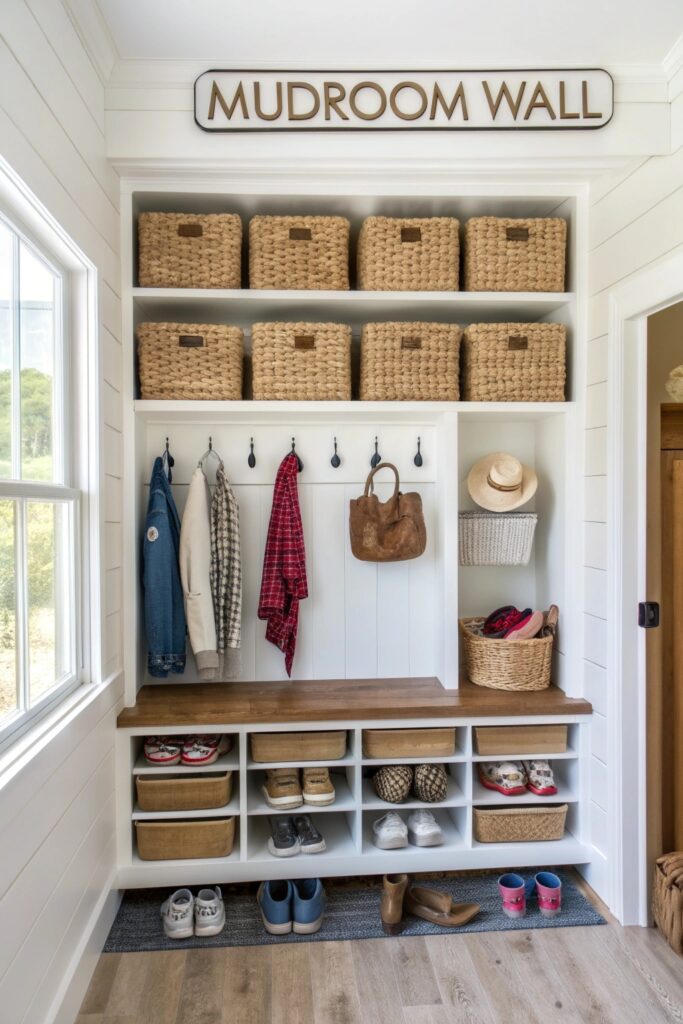
Labels matter more here than in other storage systems, since open cubbies rely on everyone actually returning items to the correct labeled spot.
Choose baskets in a uniform size and material, which keeps the overall look cohesive even as the specific labeled contents vary.
4. Shaker-Style Cabinet Wall with Integrated Hooks
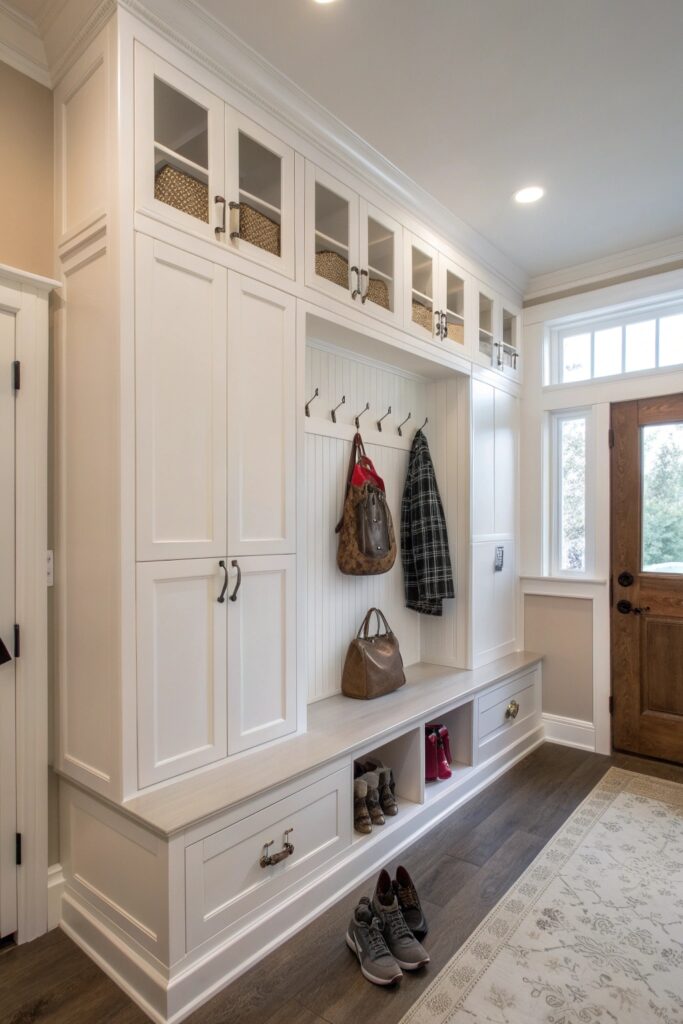
Shaker fronts suit a wide range of home styles, making this a safer long-term choice if you’re not fully committed to a more specific aesthetic.
Confirm the integrated hooks are spaced with genuine consideration for coat width, since hooks placed too close together make it hard to hang bulkier winter jackets side by side.
5. Sliding Door Mudroom Cabinet
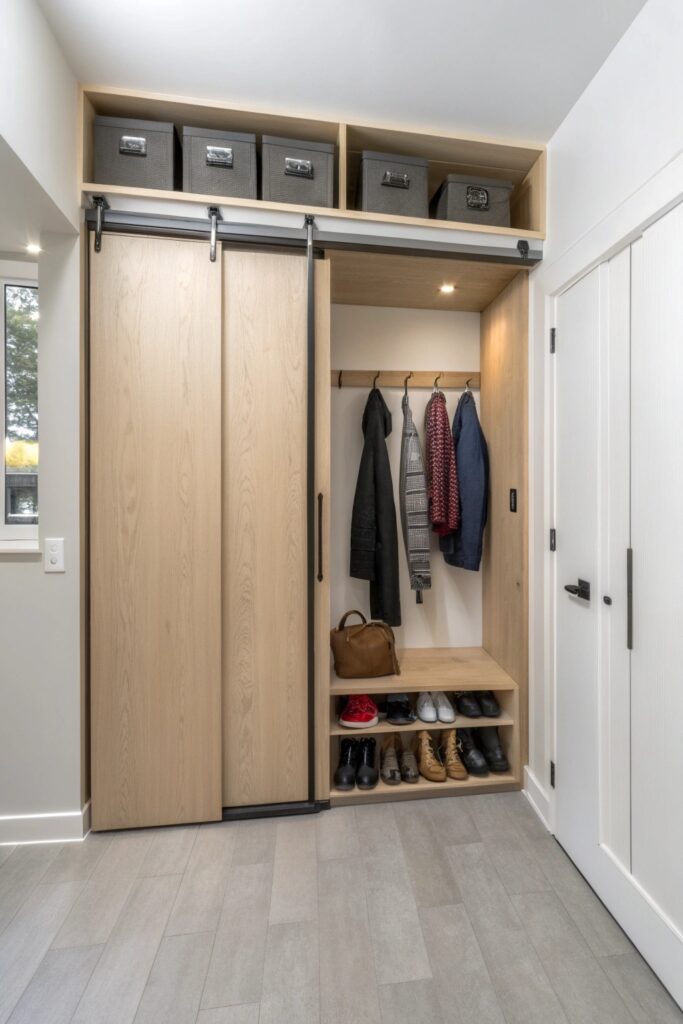
Sliding doors save floor space in a narrower mudroom, since they don’t need clearance to swing open the way traditional hinged doors do.
Choose smooth-rolling hardware for the sliding mechanism, since a door that sticks or drags becomes a daily annoyance in a space used multiple times a day.
6. Mudroom Cabinet with Drop Zone Countertop
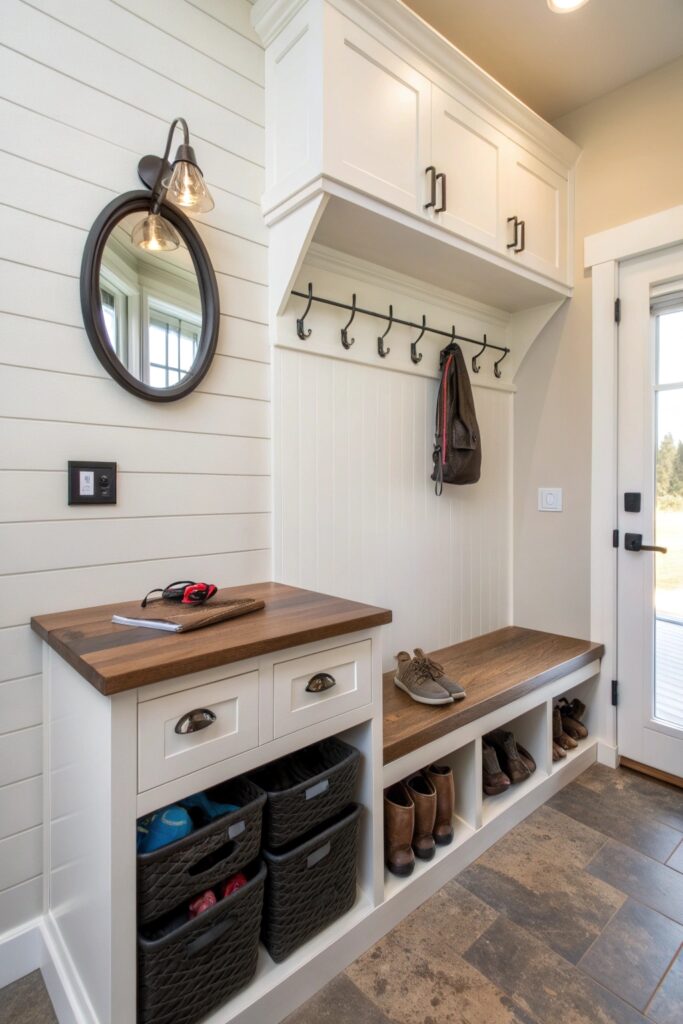
A countertop surface gives you somewhere to set down mail, keys, and bags without them piling up on the floor or a bench.
Choose a countertop material resistant to scratches and water rings, since this surface will see keys, wet umbrellas, and bags set down regularly.
7. Tall Pantry-Style Cabinet for Coats and Gear
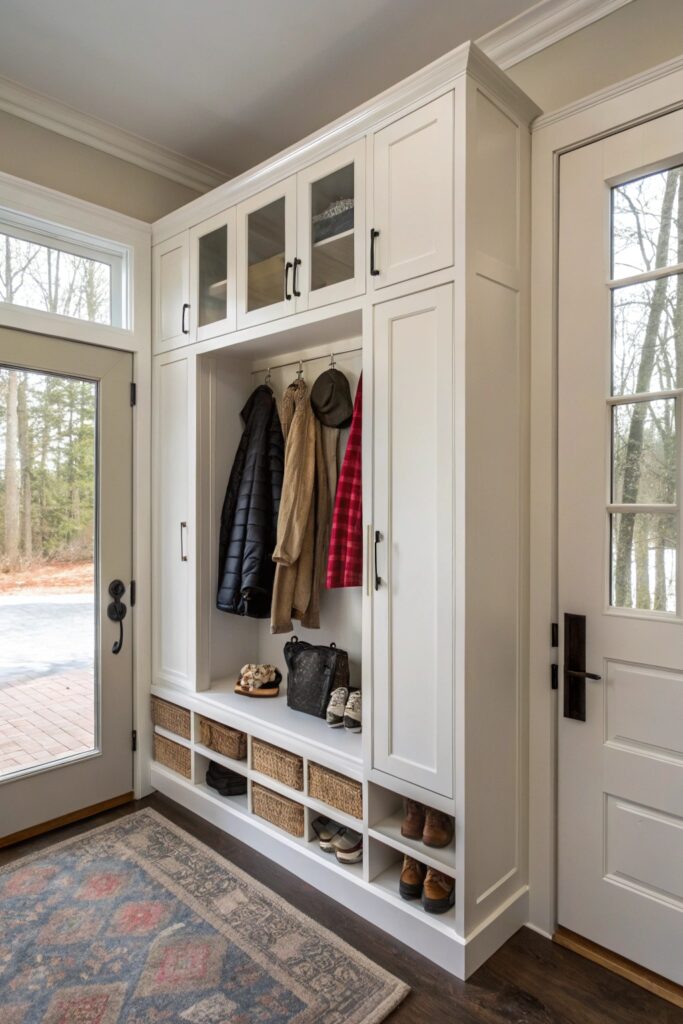
A single tall cabinet works well in a smaller mudroom where floor space for a full wall of built-ins isn’t available.
Confirm the cabinet’s genuine depth accommodates your specific gear, since bulkier winter coats need more clearance than lighter jackets worn in milder seasons.
8. Floating Wall Cabinet with Shoe Drawer Below
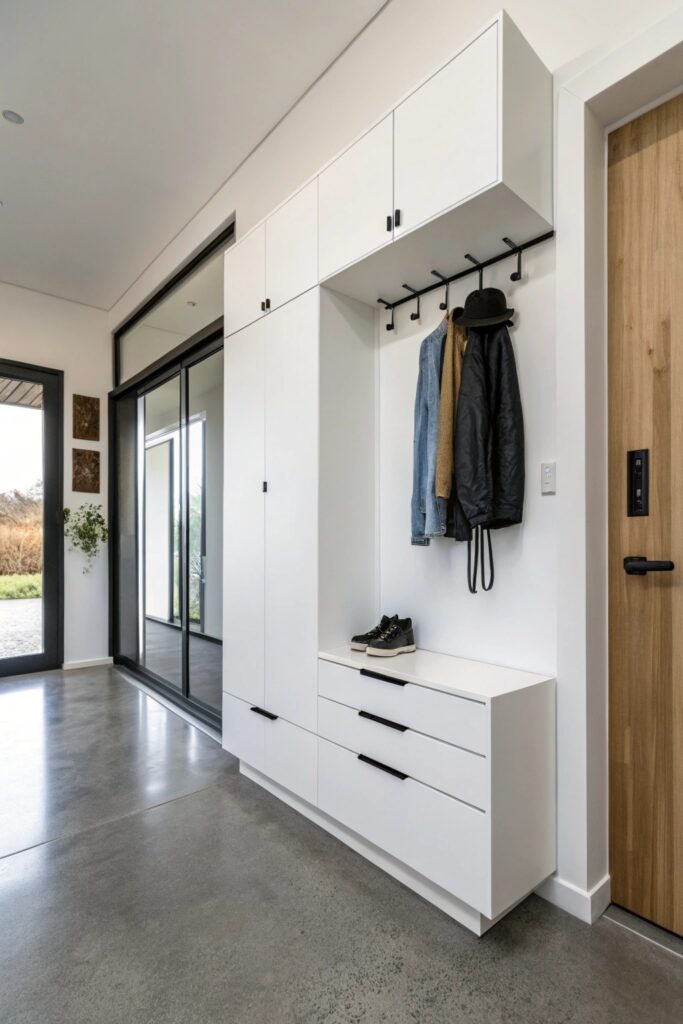
A wall-mounted cabinet makes floor cleaning easier, since there’s nothing blocking a vacuum or mop from reaching underneath.
Choose drawer slides rated for frequent daily use, since this storage gets opened and closed considerably more often than cabinetry elsewhere in the home.
9. Rustic Wood and Metal Mudroom Cabinet
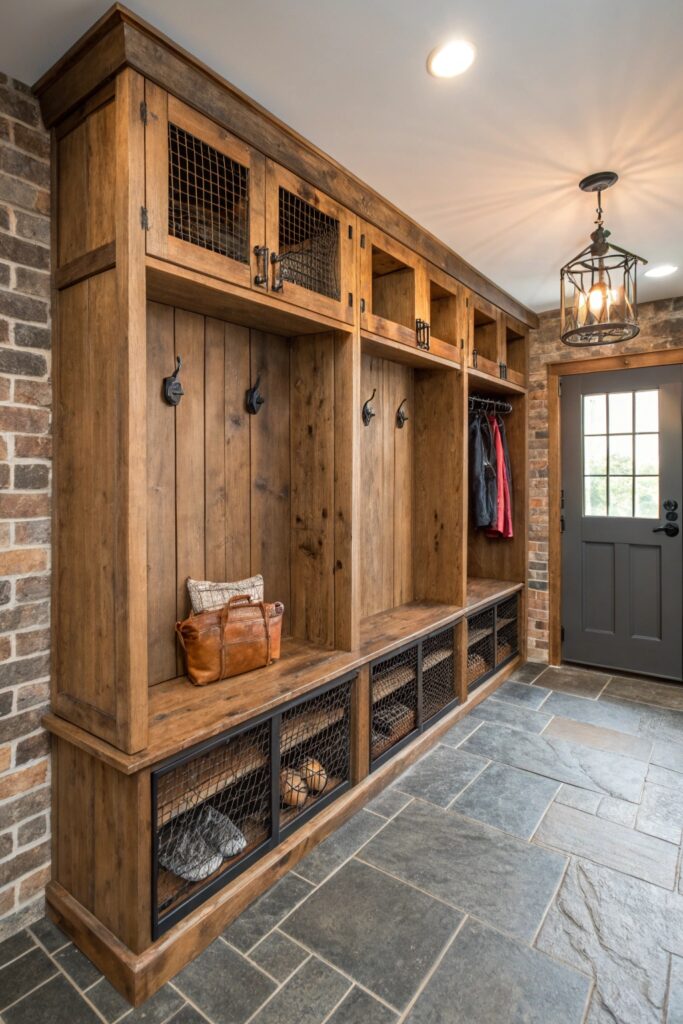
Reclaimed or distressed wood suits a mudroom’s practical, high-traffic function better than a more delicate finish that shows wear quickly.
Seal reclaimed wood specifically before installation, which protects it from the moisture a mudroom regularly sees from wet shoes and umbrellas.
10. Custom Built-In Mudroom Cabinet Wall
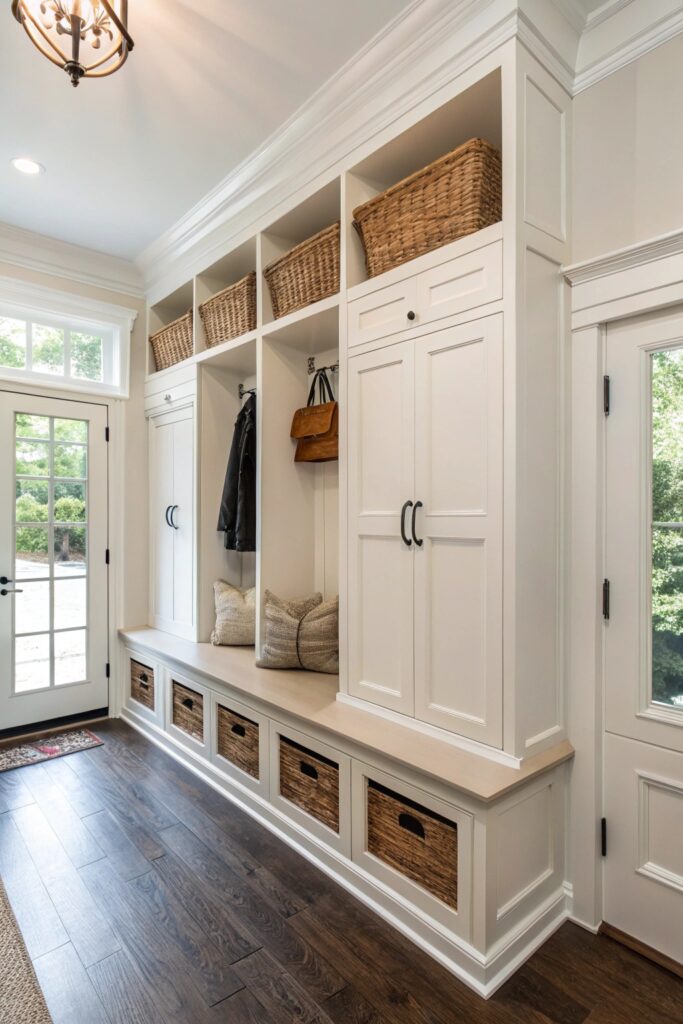
A fully custom build maximizes an oddly shaped or narrow space better than modular furniture, though it comes with a considerably higher cost.
Handling Wet Gear Without Damaging the Cabinets
Coats and shoes coming in from rain or snow can trap moisture inside a closed cabinet if there’s no ventilation, which over time leads to mildew smells and warped wood.
Choosing louvered or slatted cabinet doors for boot and coat storage, or lining the bottom of closed cubbies with a removable tray, lets wet gear dry out properly instead of sitting damp against the cabinet interior.
Sizing for Your Actual Household
Count how many people use the mudroom daily and multiply that by the storage each person actually needs — shoes, a coat, a bag — before choosing a system, rather than estimating based on the space alone.
Building in a bit of extra capacity beyond your current household size is worth considering if you expect guests to use the space regularly or if your family might grow.
What These Systems Cost
A modular cubby or bench system typically runs $200 to $800 depending on size and materials.
A fully custom built-in wall costs considerably more, often $2,000 to $6,000 or higher, since it involves genuine carpentry work tailored to your specific space.
Choosing Between Modular and Custom
Modular furniture pieces work well in a standard-sized, rectangular mudroom, and they’re considerably easier to reconfigure or take with you if you move.
A irregular space — an angled wall, a narrow closet conversion, an oddly shaped nook — usually benefits more from a custom build, since modular pieces can leave awkward gaps that a tailored design avoids.
Get quotes from at least two contractors before committing to a custom build, since labor costs for cabinetry work can vary considerably based on the complexity of your specific space and design.
Secondhand furniture and salvage yards are worth checking specifically for a rustic-style build, since older cabinetry and reclaimed wood often already have the weathered character this look depends on.
Start with a smaller, more affordable piece if you’re unsure which style truly suits your household’s habits, since it’s easier to expand a working system over time than to redo a large investment that turns out not to fit how you actually use the space.
Whatever style you choose, plan for genuine ventilation if wet gear will regularly go into closed storage, since trapped moisture can lead to mildew over time inside an enclosed cabinet.
Live with a temporary setup for a few weeks before committing to a permanent installation if you’re unsure about the layout, since it’s noticeably easier to adjust hooks, baskets, or bench placement before anything is built in.
A well-planned mudroom cabinet system truly pays off in daily convenience, since the time saved not searching for shoes, keys, or bags adds up considerably over months and years of regular use.
Wrapping It Up
Closed storage keeps the space looking tidier day to day, while open storage tends to get used more consistently since there’s no door to open first. Measure your specific space carefully before ordering or building anything, since mudrooms are often narrower or more irregularly shaped than a typical room.