
A mudroom works harder than almost any other room in a farmhouse-style home, serving as the literal transition zone between outside dirt and moisture and the rest of the house — which means material durability deserves as much attention here as the rustic aesthetic itself. The details below cover both the styling direction and these practical specifics for each element.
Below are 12 elements worth focusing on, with the specifics for each.
1. Shiplap Wall with Built-In Bench and Hooks
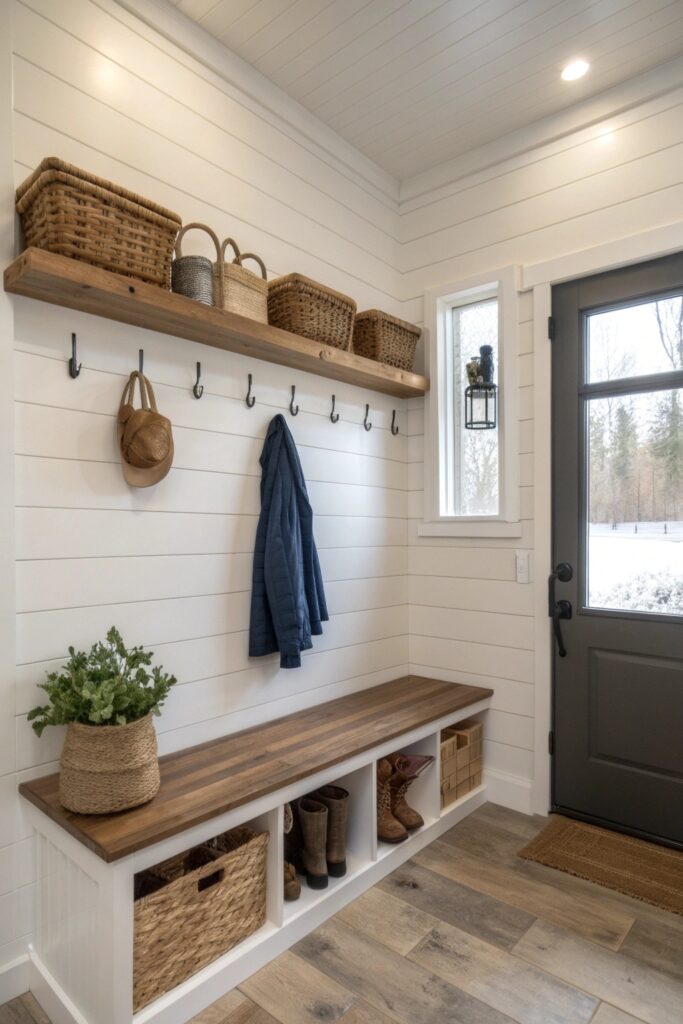
Shiplap here needs a moisture-resistant paint given regular contact with wet boots and coats, and hooks should be rated for the weight of a fully soaked winter coat, which carries considerably more weight than the same coat dry.
2. Reclaimed Wood Bench with Wicker Storage Baskets
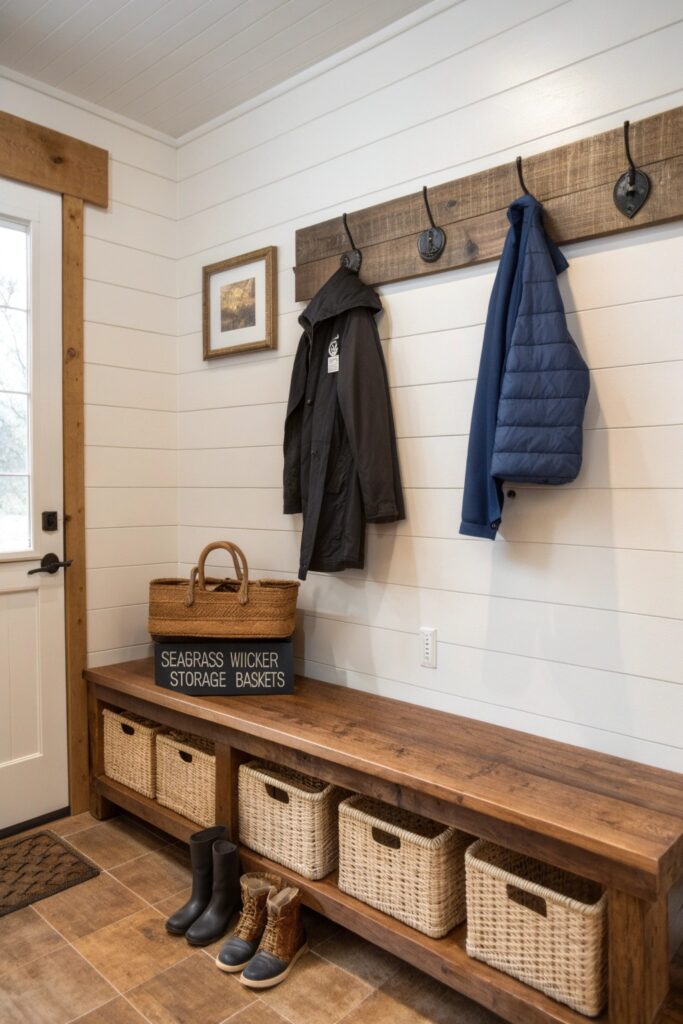
A mudroom entry sees more humidity and dirt than almost anywhere else in the house, so choosing sealed or treated wicker over raw natural fiber baskets helps them resist moisture damage considerably longer.
3. Painted Locker-Style Cubbies
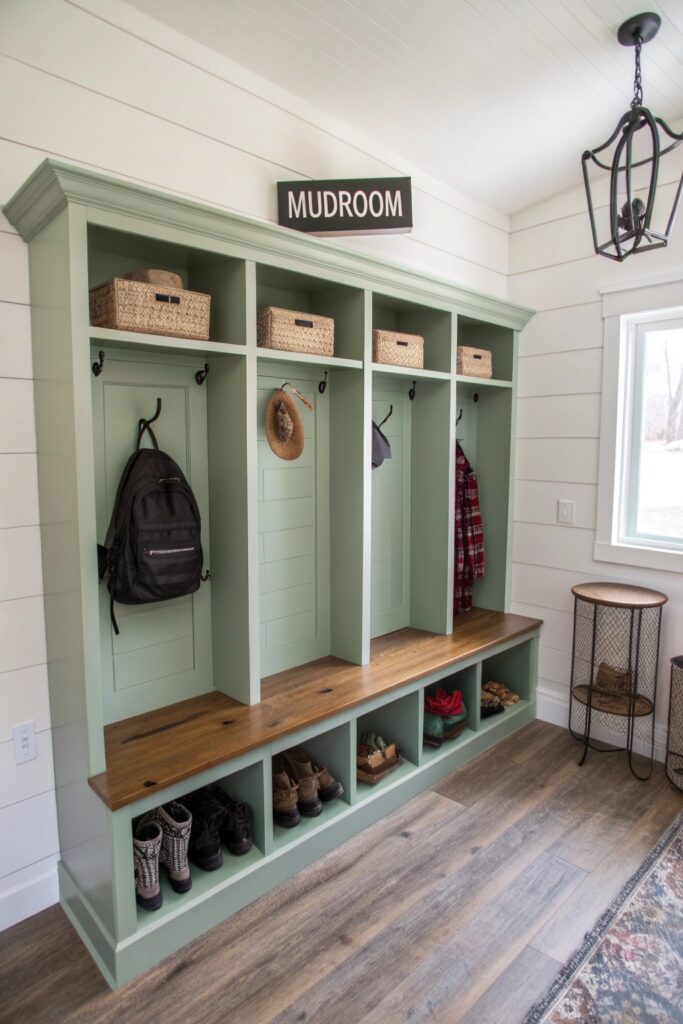
A semi-gloss or higher sheen holds up to the frequent wiping and dirt transfer a mudroom sees more than almost any other room, where a flatter finish would show marks and become harder to keep clean.
4. Barn Door Entry to the Mudroom
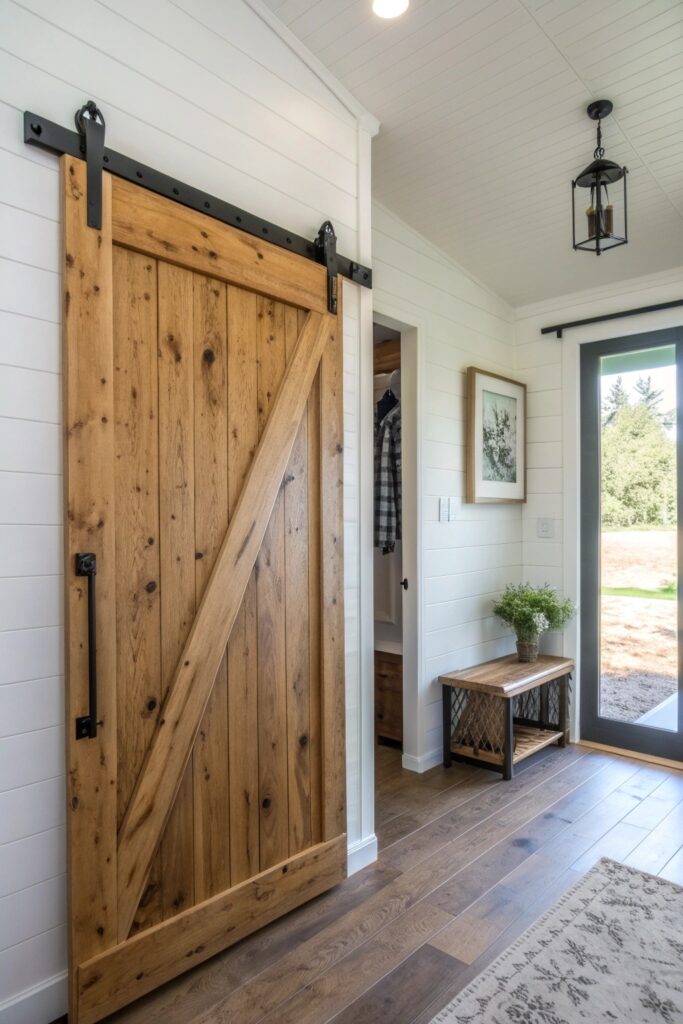
A mudroom door often sees more daily use than any other door in the house, so quality track hardware and bearings matter more here for long-term durability than they would on a less frequently used barn door elsewhere.
5. Chalkboard Wall for Family Organization
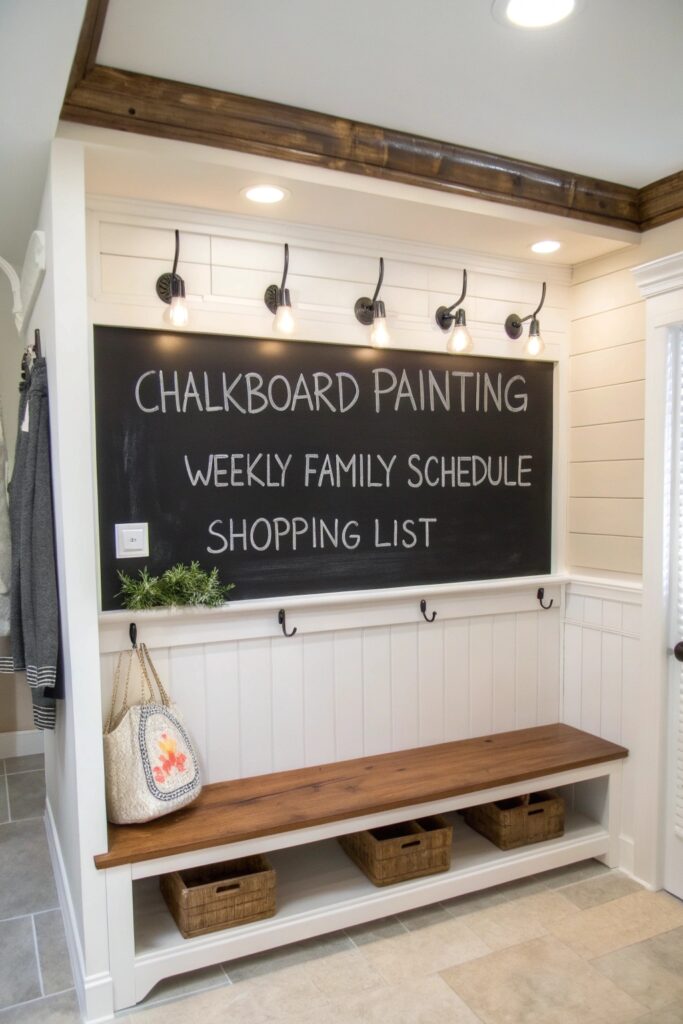
Chalkboard paint needs multiple coats and a proper seasoning step — rubbing chalk over the entire surface and wiping it off before first real use — to avoid permanent ghosting marks from the very first thing written on it.
6. Farmhouse Mudroom with Laundry Station
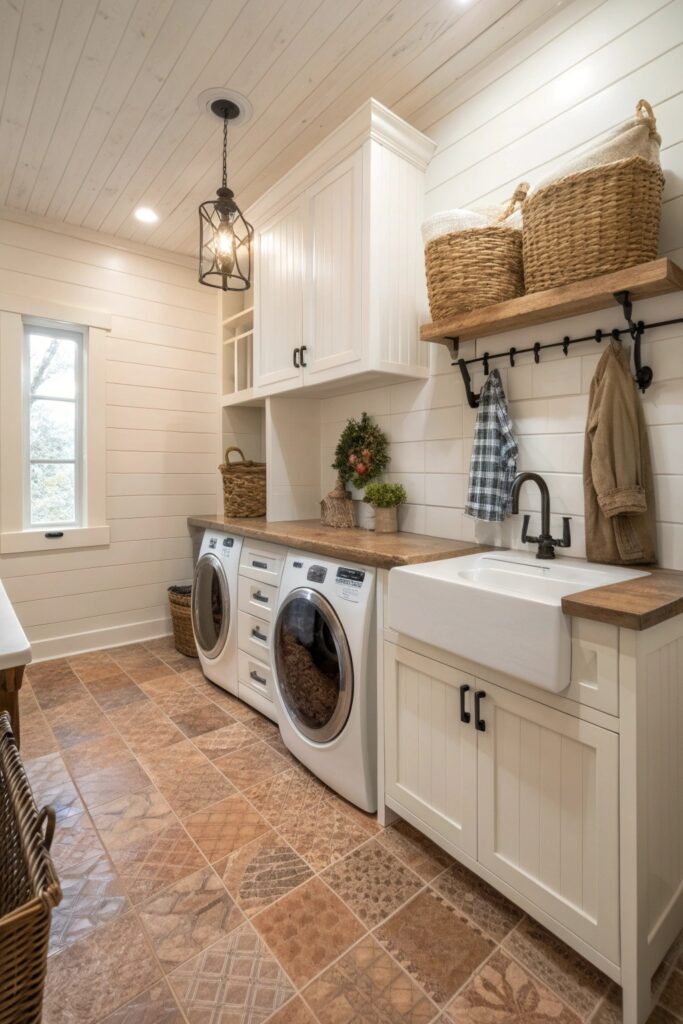
An apron sink and exposed shelving still depend on the same underlying plumbing planning as any combined mudroom-laundry space — see our companion guide to mudroom laundry room combo ideas for the specific plumbing and ventilation considerations.
7. Vintage Coat Rack and Mirror Combination
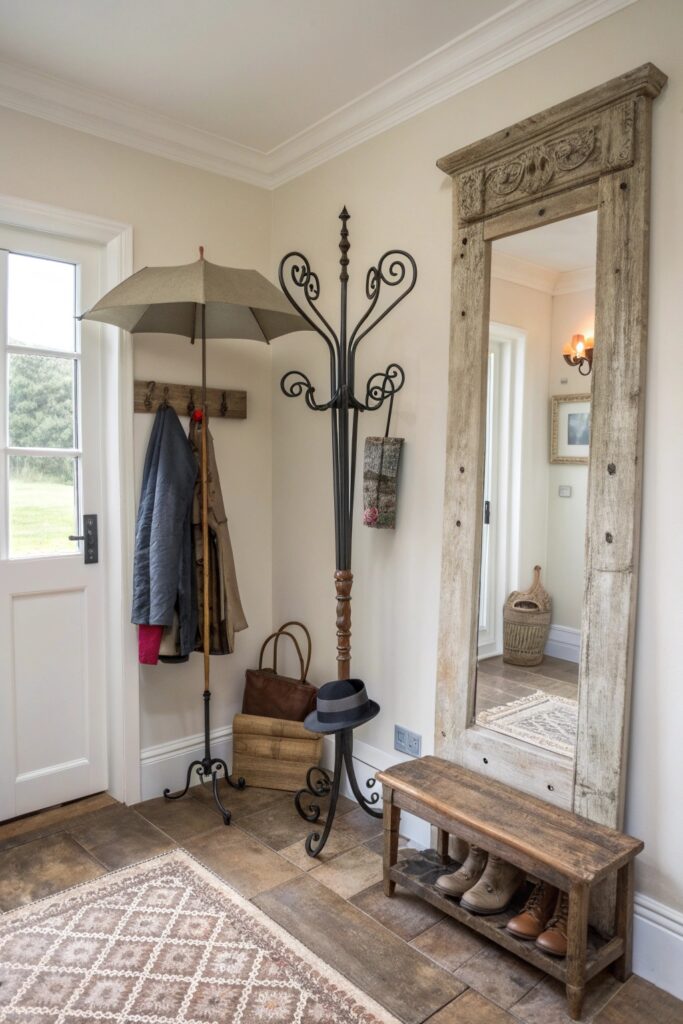
Vintage hardware wasn’t necessarily engineered for today’s heavier winter coats, so checking and often reinforcing the mounting hardware behind a vintage-style rack keeps the charm without risking it pulling out of the wall under real daily use.
8. Shaker Cabinet Mudroom with Painted Paneling
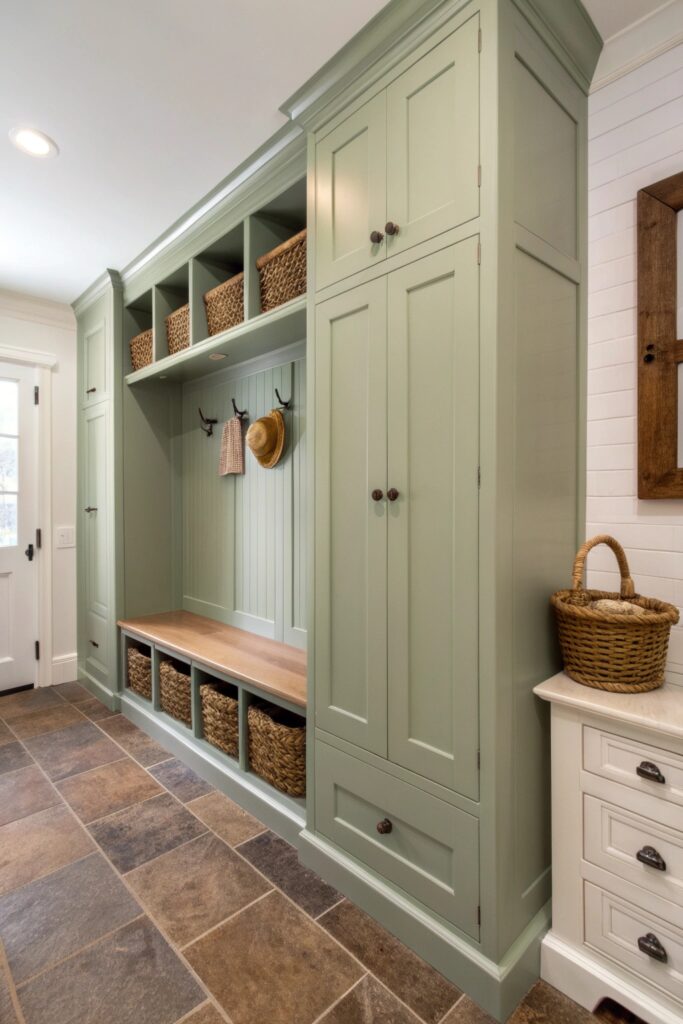
Paneling here benefits from the same moisture-resistant consideration as shiplap — an MDF or composite panel rated for wet areas holds up better than standard interior paneling not designed for this level of moisture exposure.
9. Galvanized Metal and Wood Mudroom Storage
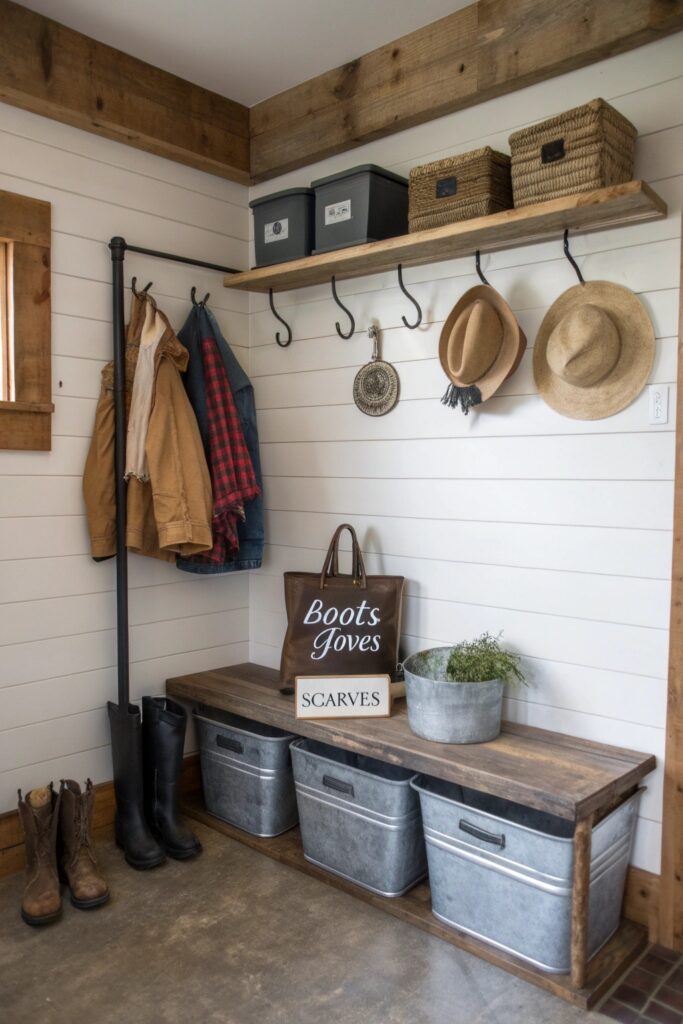
Galvanized bins and baskets see direct contact with wet boots and umbrellas here, so a sealed or powder-coated finish resists the white rust — a zinc oxide corrosion — that untreated galvanized metal can develop under this kind of regular moisture exposure.
10. Mudroom with Dog Wash Station
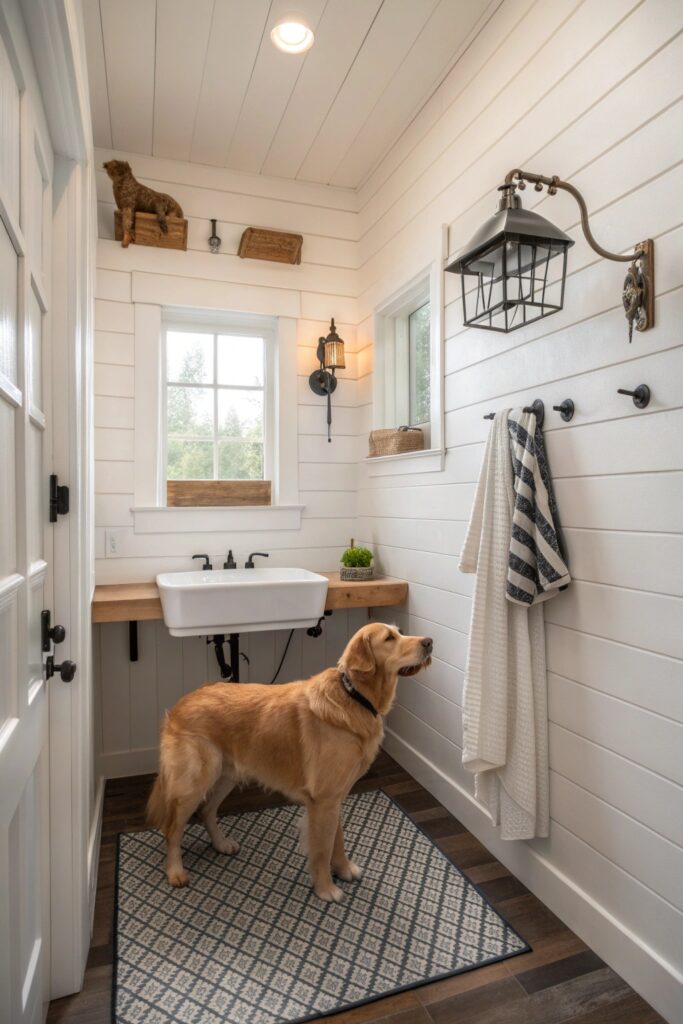
A dog wash station needs its own drain, and a nearby tankless or point-of-use water heater avoids the wait for hot water to travel from a more distant tank. Surrounding walls need full waterproofing rather than just moisture resistance, given the direct water spray this specific feature involves.
11. Wainscoting and Wallpaper Farmhouse Mudroom
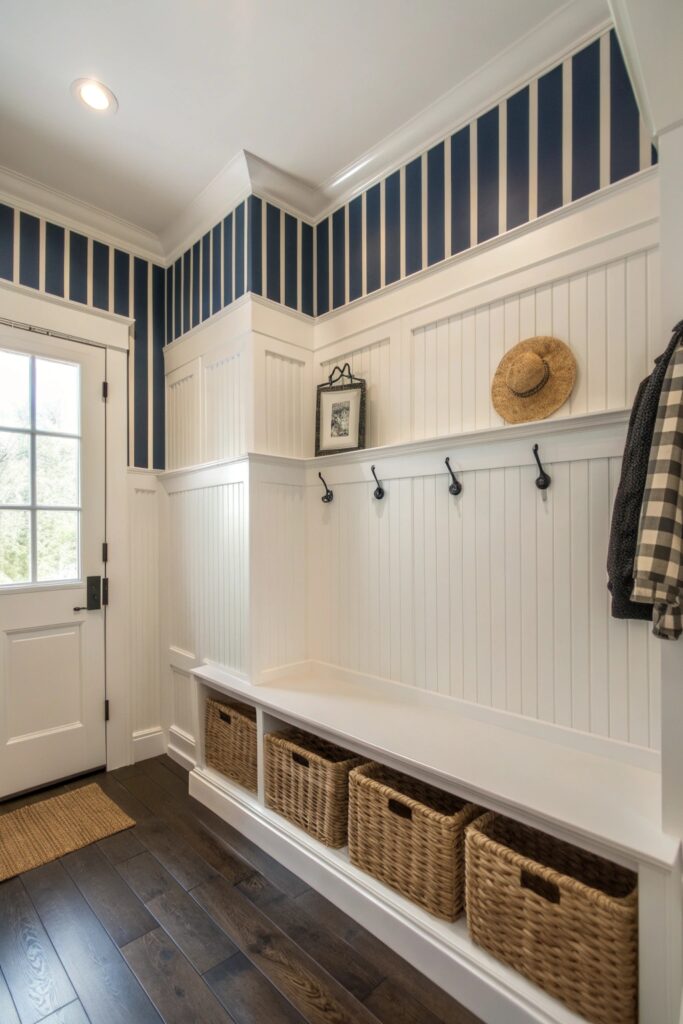
A scrubbable, vinyl-coated wallpaper holds up to mudroom conditions considerably better than a delicate paper-only wallcovering, which can tear or stain from the dirt and moisture this room regularly sees.
12. Farmhouse Mudroom with Patterned Tile Floor
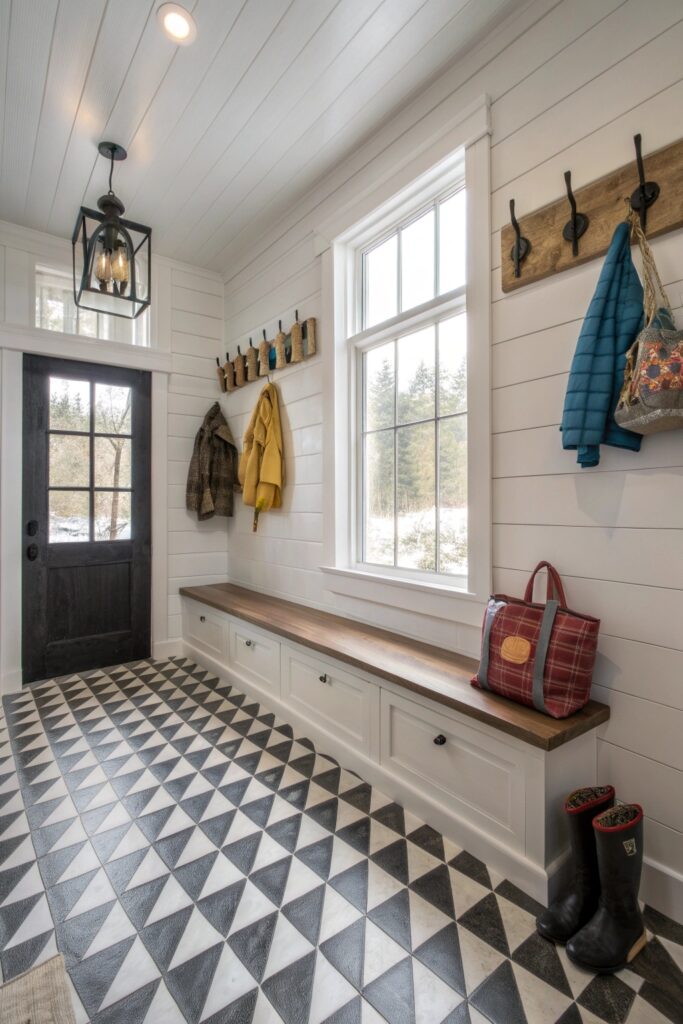
A sealed or epoxy grout resists staining from salt residue and tracked-in dirt considerably better than standard grout, which matters more on a mudroom floor than almost anywhere else in the house given the volume of foot traffic and winter ice-melt exposure it handles.
Flooring That Holds Up to Mudroom Traffic
Beyond the patterned tile option covered above, options like luxury vinyl plank or sealed concrete also handle mudroom conditions well, resisting water and salt damage considerably better than hardwood or carpet would in this specific location.
Whatever flooring you choose, a slightly textured or matte finish provides better traction than a high-gloss surface when the floor gets wet from tracked-in snow or rain, which is a real safety consideration worth weighing alongside the look.
What a Farmhouse Mudroom Costs
A cosmetic update — paint, hooks, a bench, and a few storage baskets — typically costs $300 to $1,000 depending on material quality.
A fuller build-out including custom cabinetry, new flooring, and a laundry station runs considerably higher, often $5,000 to $15,000 or more depending on the scope.
Ventilation Matters Here Too
Wet coats, boots, and umbrellas drying in an enclosed mudroom add real humidity to the space, so a window that opens or a small exhaust fan helps prevent that moisture from settling into the wood and fabric elements this style depends on.
If the mudroom doesn’t have natural ventilation, running a dehumidifier during wetter seasons protects cabinetry, baskets, and any upholstered bench cushions from the kind of moisture damage that develops gradually and is easy to miss until it’s already caused real damage.
Sourcing vintage or reclaimed pieces from architectural salvage yards and estate sales takes more time than buying new farmhouse-style reproductions, but the resulting character and authenticity is often what separates a mudroom that feels truly collected over time from one that reads as a single coordinated purchase.
A farmhouse mudroom done well strikes a real balance between visual warmth and practical durability, and taking the moisture and traffic considerations seriously from the start saves real money on repairs and replacements compared to discovering these issues after materials have already begun to warp or wear out.
Whichever combination of these ideas fits your home and household, a mudroom that actually functions well day to day tends to get more consistent use — and stay more organized — than one styled primarily for how it photographs.
Involving the whole household in maintaining the systems you build in — hooks actually used instead of coats piled on chairs, boots landing in the designated tray — matters as much as the initial design in keeping this room organized long after the first few weeks of a new setup.
Final Thoughts
Nearly every idea here comes back to the same underlying need: farmhouse style’s raw, natural materials require real moisture and wear protection to survive a mudroom’s daily traffic, dirt, and dampness. Choosing sealed finishes, weight-rated hardware, and wet-area-appropriate materials lets you keep the aesthetic without sacrificing how well it holds up.
A functioning entry mat system — a durable outdoor mat at the door plus an absorbent indoor mat just inside — does more to protect every material choice on this list than any single sealant, since it stops much of the dirt and moisture before it ever reaches the rest of the room.