
Blue works especially well in bathrooms given its natural association with water, but achieving a dramatic, elegant result still depends on the same underlying moisture-management planning any bold bathroom color choice requires. The details below cover both the styling direction and these material specifics for each approach.
Below are 10 moody blue bathroom ideas worth considering, with the specifics for each.
1. Navy Blue Walls with Brass Fixtures
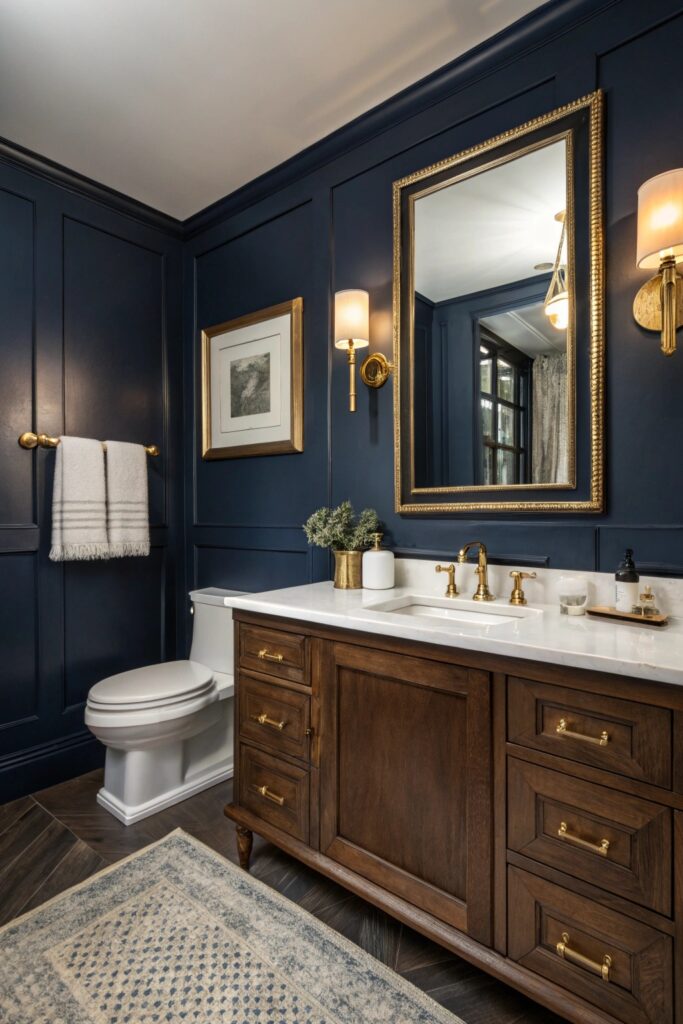
Bathroom paint needs a mold and mildew-resistant formulation specifically, not just general moisture resistance, and a satin or semi-gloss sheen holds up to humidity better than flat. Lacquered brass slows patina development if you want the fixtures to stay consistently bright rather than developing an aged finish over time.
2. Deep Blue Zellige Tile Bathroom
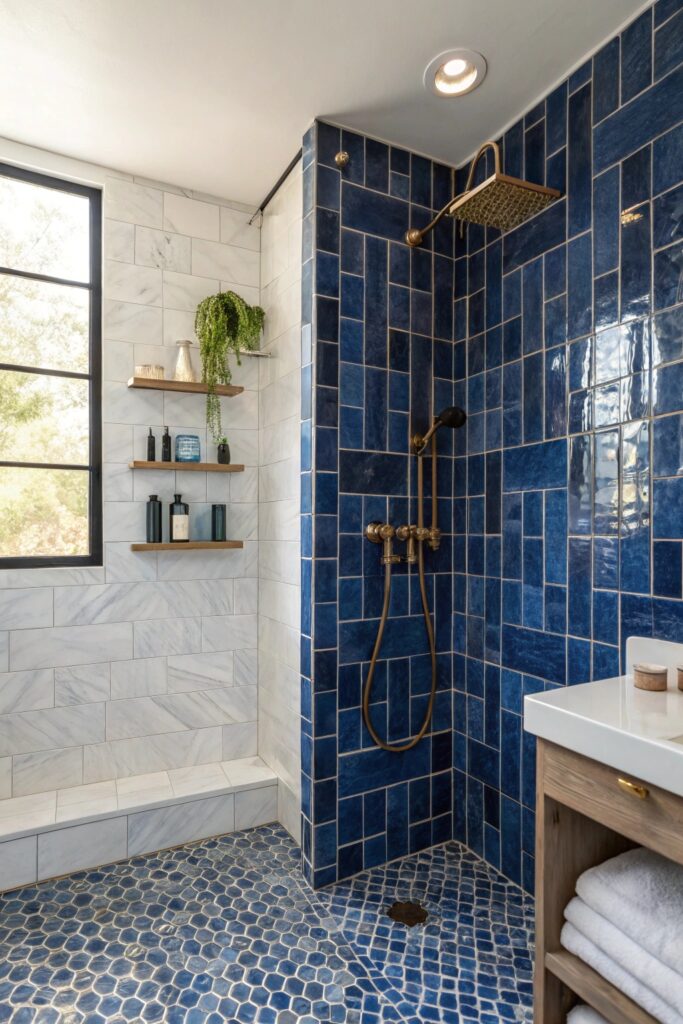
Zellige is more porous than machine-made tile and needs a penetrating sealer applied before grouting to prevent staining, which matters more in a bathroom’s sustained wet conditions than it would in a drier application.
3. Midnight Blue Painted Cabinetry
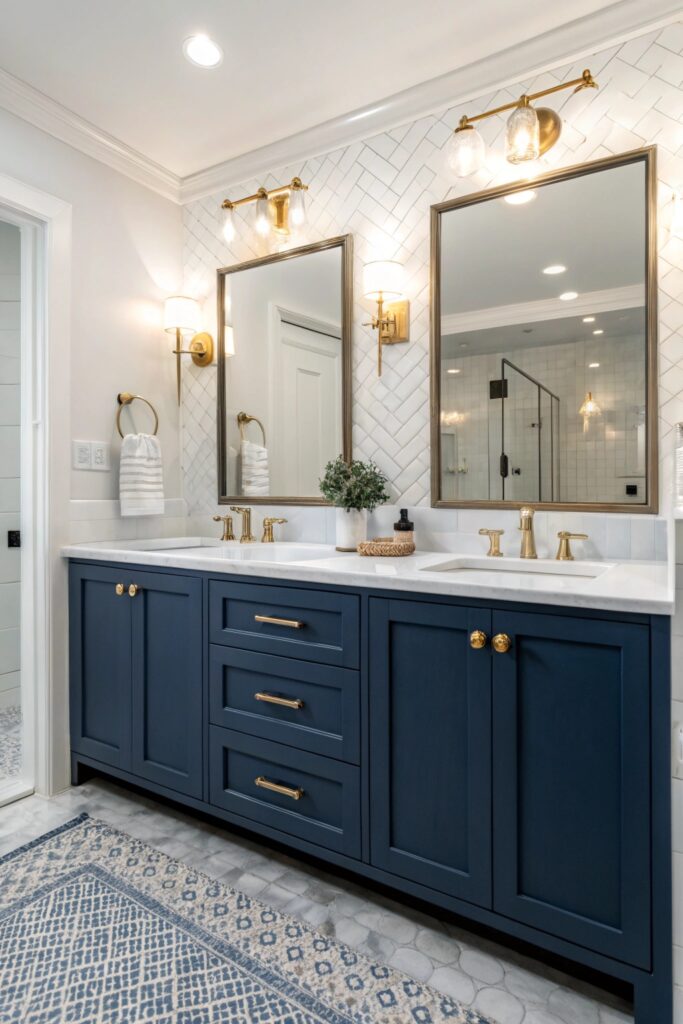
Dark paint shows water spots and hard water mineral deposits more visibly than lighter colors, so a satin finish that diffuses light slightly hides this better than a high-gloss surface, which tends to highlight every spot.
4. Blue and White Maximalist Pattern Bathroom
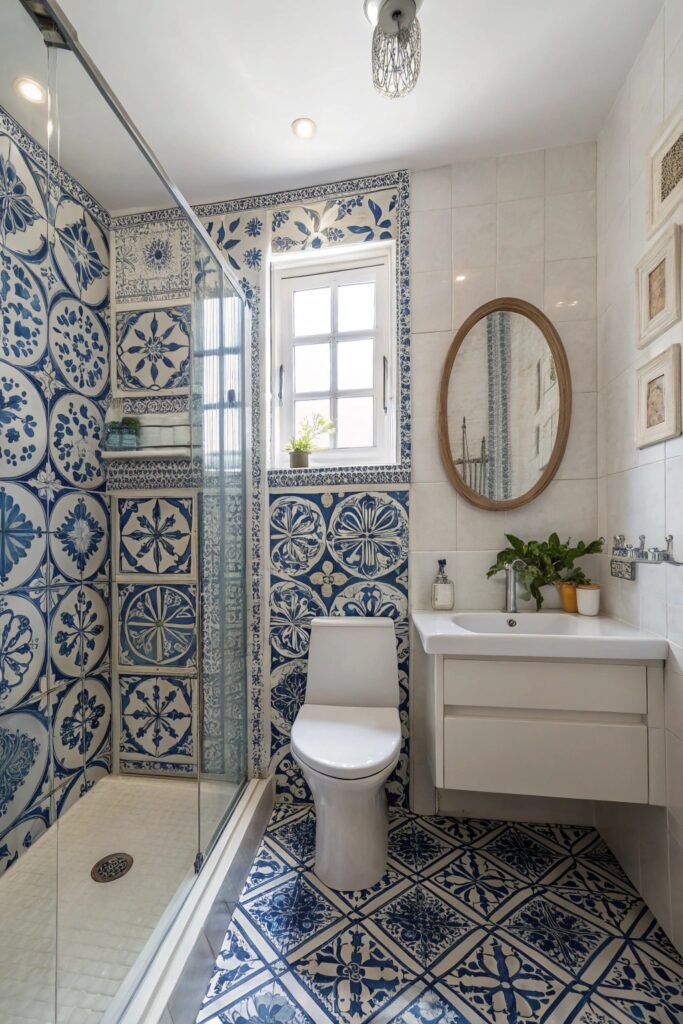
Directional pattern tile needs more planning for layout and waste than a simple grid, since matching the pattern across corners and transitions uses considerably more material than straightforward tile installation.
5. Slate Blue Limewash Plaster Bathroom
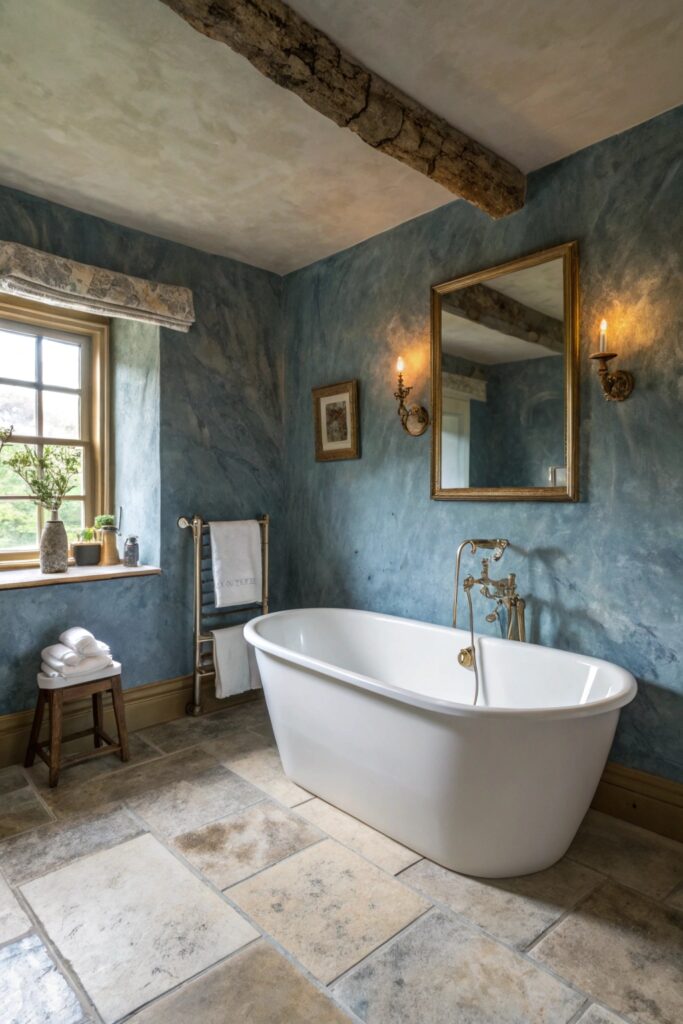
Limewash is a distinctly different material from paint — traditional lime plaster is breathable by nature, letting moisture vapor pass through rather than sealing it in, which can actually help manage bathroom humidity. It still needs a specific sealer for any area with direct water contact, like inside a shower, since raw limewash isn’t inherently waterproof.
6. Navy Blue Subway Tile Bathroom
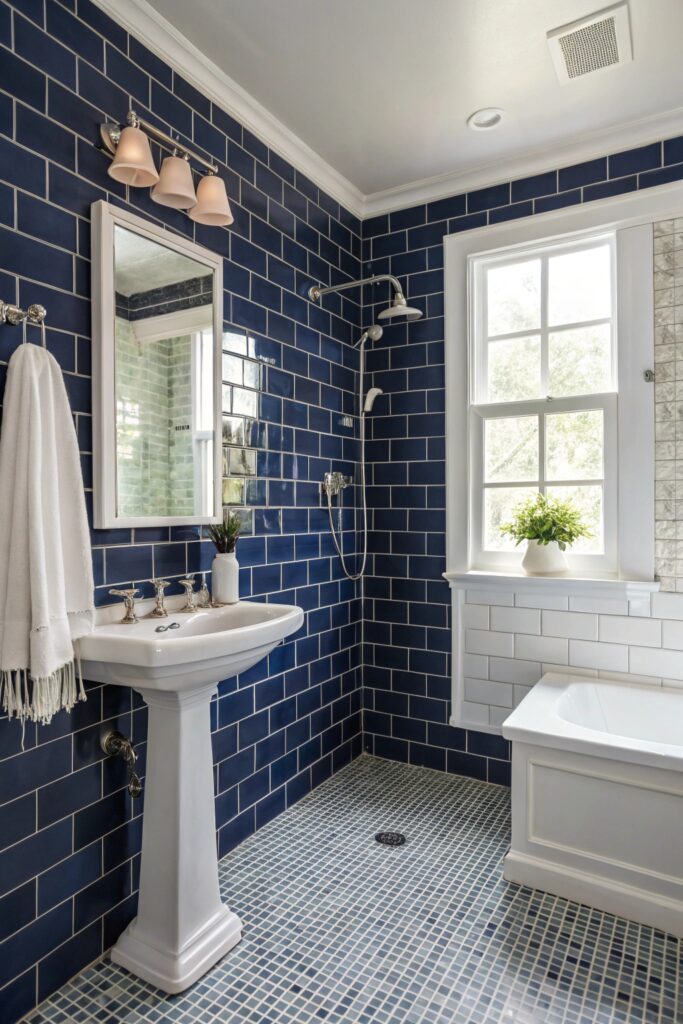
A stain-resistant or epoxy grout matters more here than with lighter tile, since dark tile makes white mineral efflorescence considerably more visible against the contrast than it would be against a lighter background.
7. Cobalt Blue Freestanding Bathtub Statement
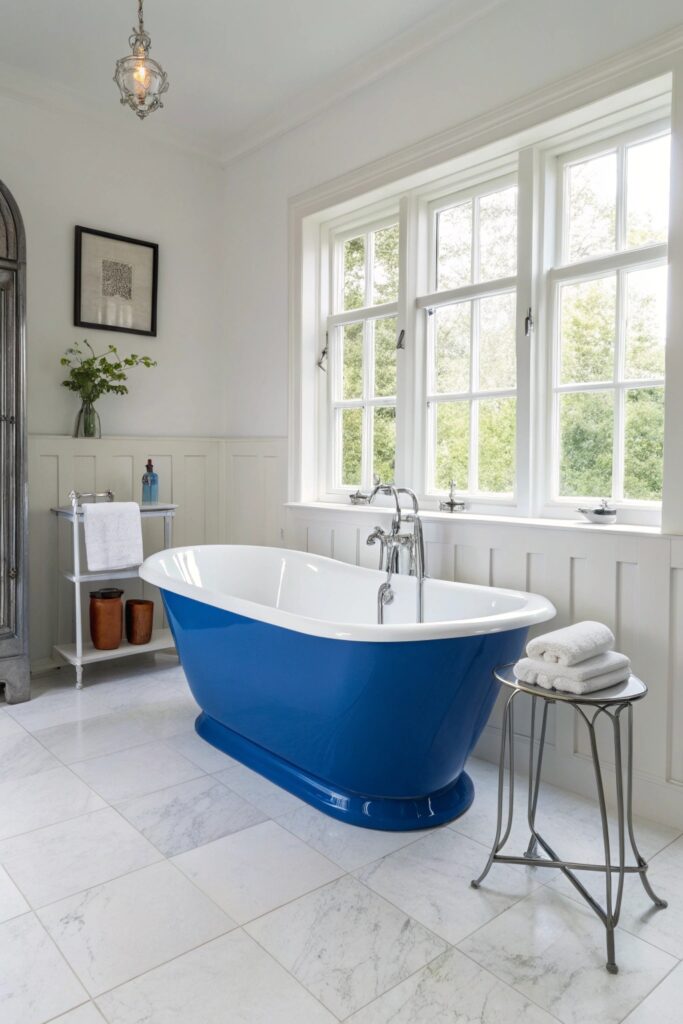
A cobalt tub finish is typically a specially glazed or painted surface rather than the base material’s natural color, so confirming that finish is warrantied for regular bathroom humidity and cleaning chemical exposure matters, since a painted finish can be more delicate than a standard glaze.
8. Blue and Gold Art Deco Bathroom
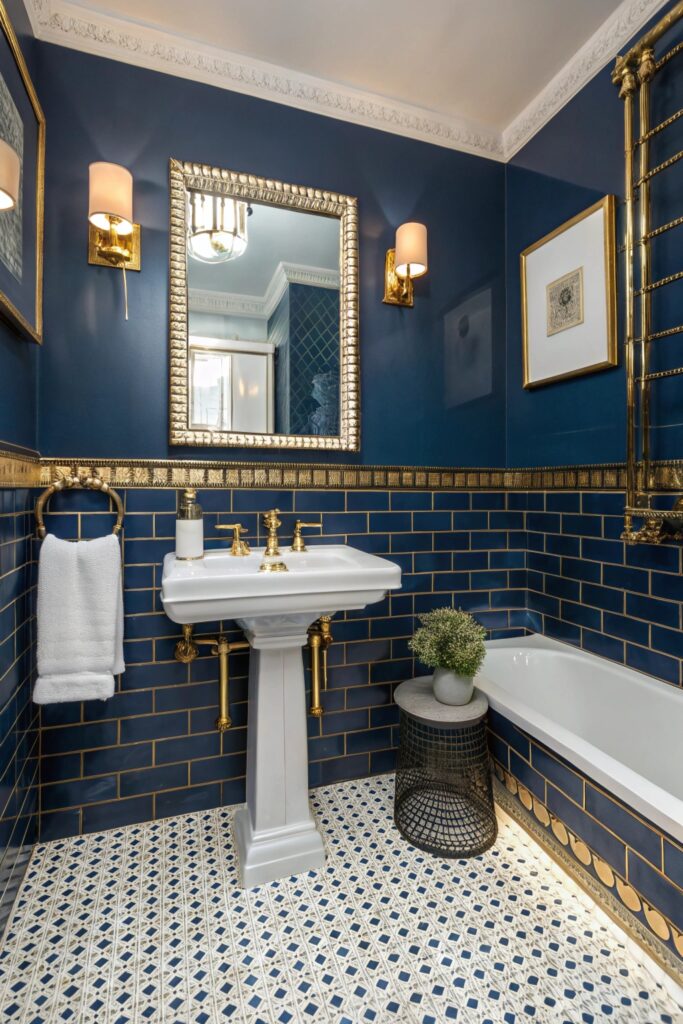
Geometric patterns like hexagons or chevron layouts generate more cut waste than simple square tile, so ordering extra material to account for the specific pattern’s cutting requirements avoids running short mid-installation.
9. Moody Blue Bathroom with Black Fixtures
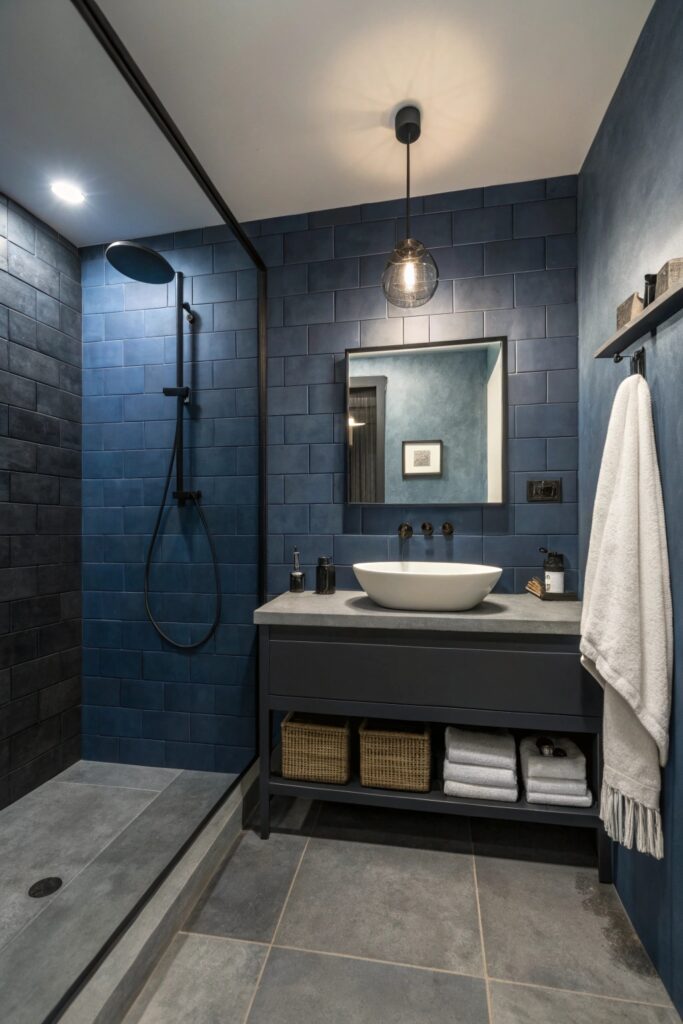
Black fixtures come in different undertones, and a warmer bronze-black can clash with a cool navy blue in a way that’s easy to miss when viewing each finish separately — testing both together before committing to a full fixture package catches this kind of mismatch.
10. Blue Botanical Wallpaper Bathroom
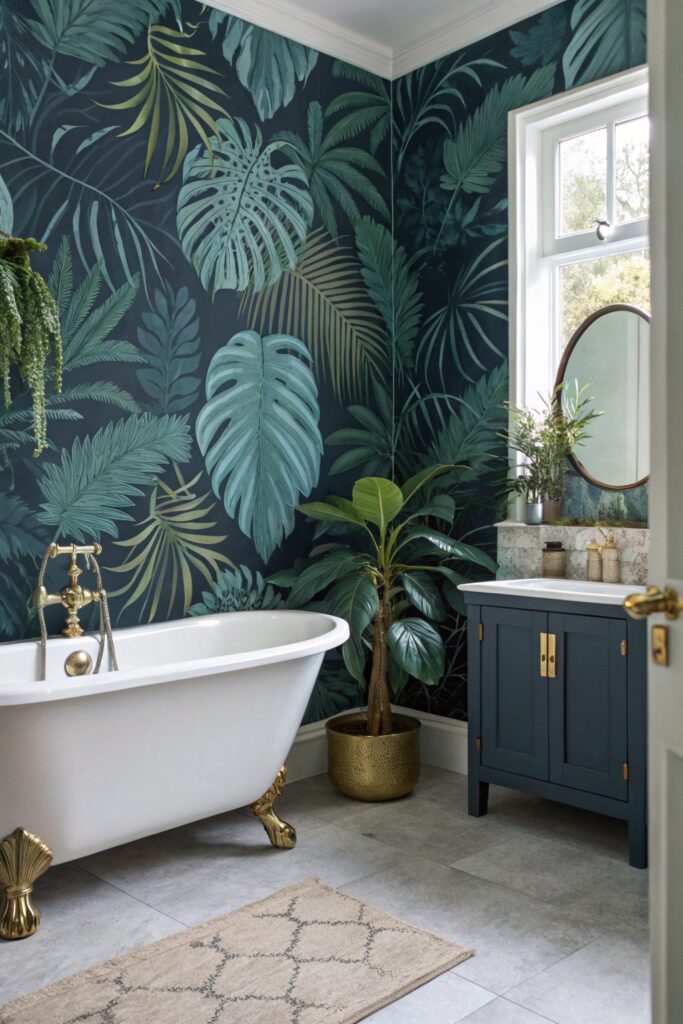
Keep wallpaper out of direct shower spray regardless of its moisture rating, since even wallpaper marketed as waterproof isn’t rated for the sustained direct water contact that tile handles as a matter of course.
Balancing Dark Color With Adequate Lighting
A deep blue bathroom absorbs considerably more light than a lighter palette, so layering in additional task lighting around the vanity mirror and shower area matters more here than in a bathroom with lighter walls and less light-absorbing surface area.
A mix of warm and cool light sources can shift how the blue reads throughout the day, so testing your specific paint or tile sample under the bathroom’s actual lighting — both the vanity fixtures and any natural light — before committing to a full room helps avoid an unexpected color shift once everything is installed.
What a Moody Blue Bathroom Refresh Costs
A cosmetic update — paint, fixtures, and a new mirror — typically costs $500 to $1,500 depending on material quality.
A fuller renovation including tile work, a new tub, and cabinetry runs considerably higher, often $8,000 to $20,000 or more depending on the scope and finishes chosen.
Ventilation Deserves Real Attention in a Dark Bathroom
Dark surfaces show water spots, soap scum, and mineral buildup more readily than lighter ones, which makes a properly sized and consistently used exhaust fan more important here than in a lighter bathroom where these marks are less visible day to day.
Running the fan for a full 20 to 30 minutes after every shower, rather than switching it off as soon as you step out, clears residual humidity before it has a chance to settle into grout lines, painted surfaces, or any limewash plaster in the room.
Pairing Blue With the Right Metals
Warm metals like brass and gold create real contrast against navy or cobalt, while cooler metals like chrome or nickel blend more seamlessly, producing a more monochromatic, tonal look. Neither approach is objectively better — the choice depends on whether you want the metal finish to stand out as its own design element or recede into the overall blue palette.
Mixing metal finishes within the same bathroom, once a common design rule to avoid, has become widely accepted, though sticking to two finishes maximum tends to look more intentional than combining three or more different metal tones in one space.
Getting quotes from at least two or three contractors before committing to a larger renovation helps confirm both pricing and their familiarity with the specific materials you’re planning to use, since specialty finishes like zellige tile or limewash plaster require more specialized installation experience than standard tile or paint.
A moody blue bathroom done well tends to feel both calming and distinctly luxurious, which is part of why this palette has remained a consistently popular choice rather than a fleeting trend — the combination of drama and tranquility is hard to achieve with most other colors in quite the same way.
Whichever combination of these ideas resonates most, taking the time to properly plan the moisture management and lighting before finalizing color and material choices sets up a bathroom that performs as well as it looks for years to come.
Final Thoughts
Whichever shade and material combination you’re drawn to, testing paint, tile, and fixture finishes together under your bathroom’s actual lighting — both natural daylight and whatever artificial fixtures you’re using — catches undertone mismatches and helps confirm the finished result matches what you pictured rather than shifting unexpectedly once everything is installed.
Proper ventilation remains the foundation underneath every choice on this list, since even the most carefully selected moisture-resistant materials benefit from an exhaust fan doing its job to keep humidity from building up in the first place.