
This guide focuses on styled coffee bar themes and the equipment specifications behind them — electrical draw, water lines, and clearance requirements matter as much as the furniture style you choose. For budget-friendly and DIY-focused setups, see our companion guide to DIY home coffee bar ideas. The details below cover both the aesthetic direction and these practical specifics for each theme.
Below are 11 coffee bar ideas worth considering, with the specifics for each.
1. The Floating Shelf Coffee Bar
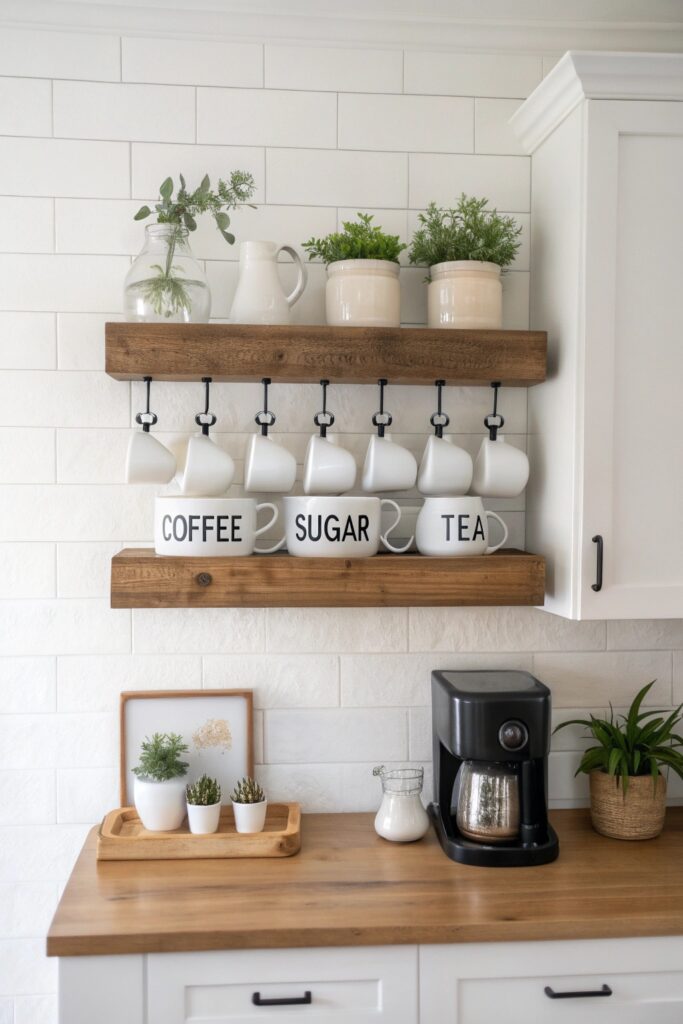
Size the shelf’s weight rating around the heaviest single item it’ll hold — a filled coffee maker with a full water reservoir — rather than an average load, since that one item concentrates most of the actual weight.
2. The Farmhouse Coffee Station Cart
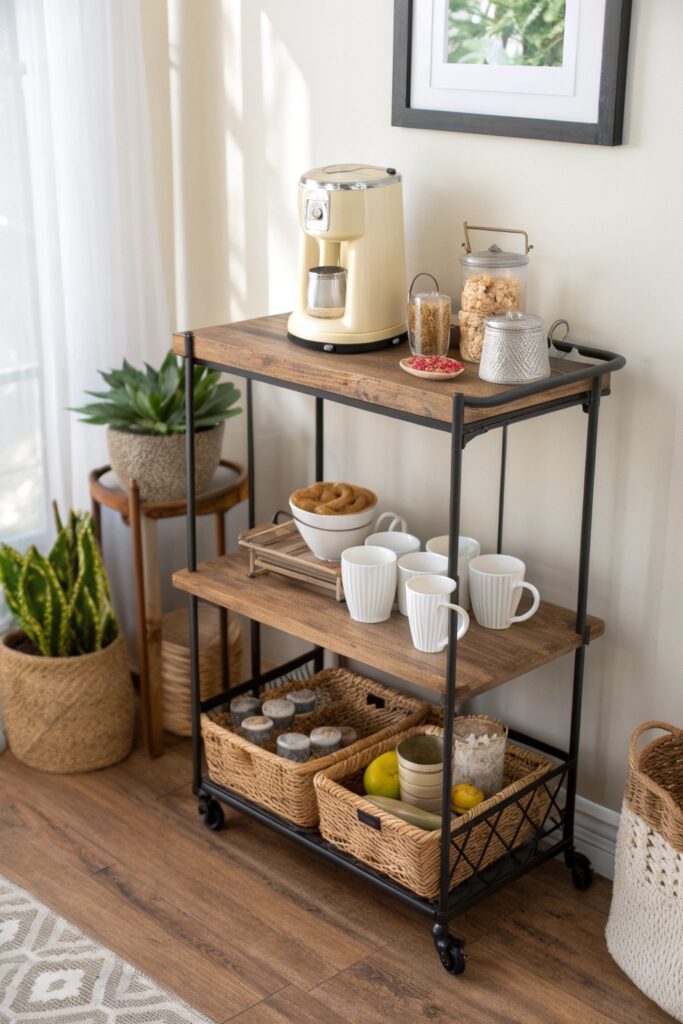
Position the cart near an existing wall outlet rather than running an extension cord across a walkway, since an overloaded or damaged extension cord under a plugged-in coffee maker is a real fire risk worth avoiding entirely.
3. The Built-In Cabinet Coffee Bar
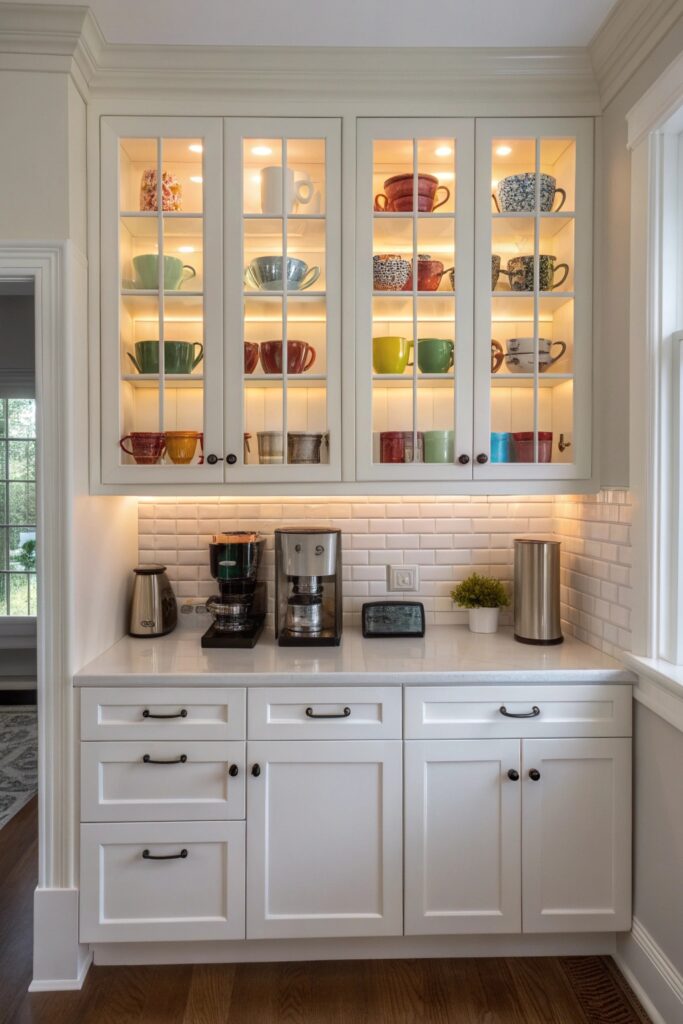
A truly built-in setup with a plumbed water line for a direct-plumb espresso machine requires actual plumbing work to run a water line to that cabinet — a different scope of project than simply placing a countertop appliance inside cabinetry.
4. The Nespresso and Minimalist Coffee Station
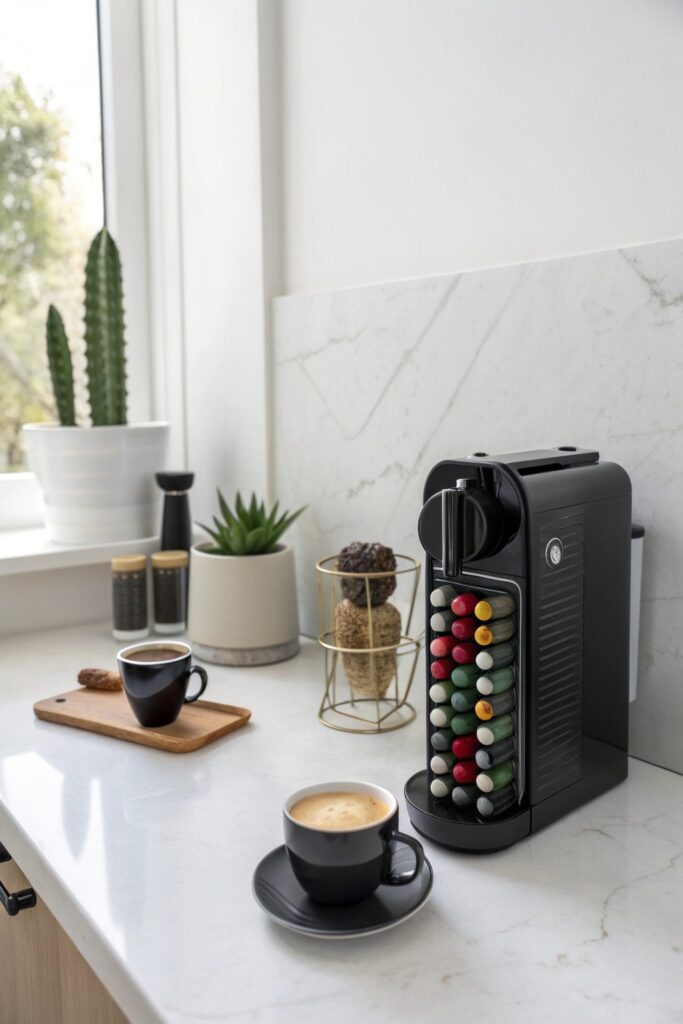
Pod-based machines draw modest power individually, but avoid sharing a circuit with other high-draw kitchen appliances running at the same time, like a toaster, to prevent tripping a breaker during a busy morning.
5. The Vintage Sideboard Coffee Bar
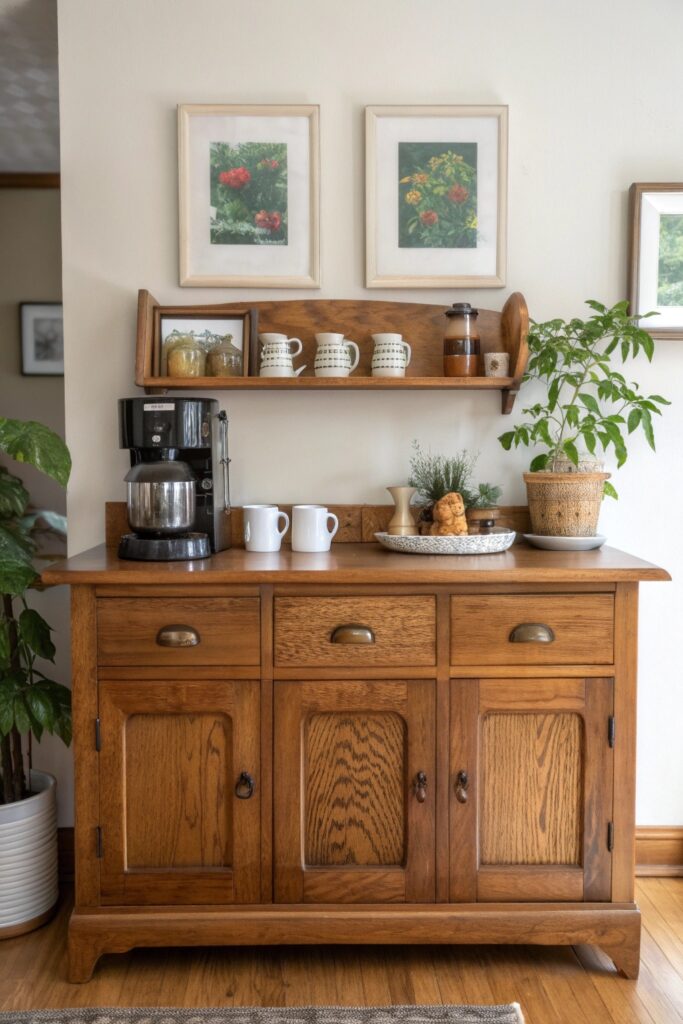
A heat-resistant surface protector under any appliance with a warming plate matters here specifically, since many vintage wood finishes weren’t designed for the sustained heat exposure a coffee maker generates over repeated daily use.
6. The Coffee Bar with Chalkboard Menu Sign
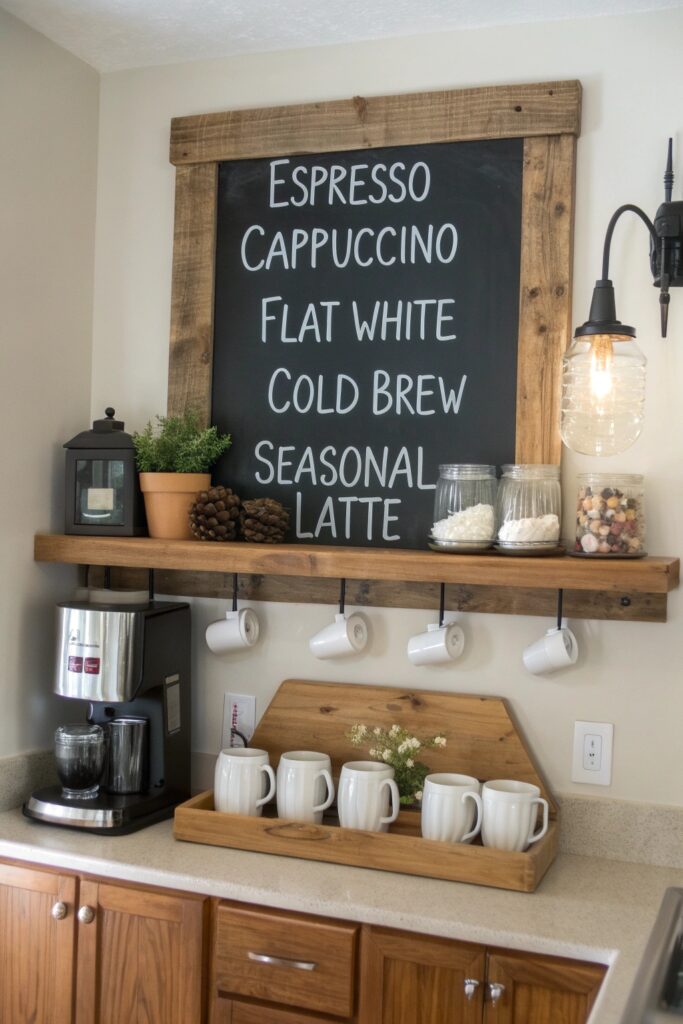
Season new chalkboard paint by rubbing chalk over the entire surface and wiping it away before the first real use, which prevents permanent ghosting marks from whatever gets written first.
7. The Dedicated Coffee Nook Alcove
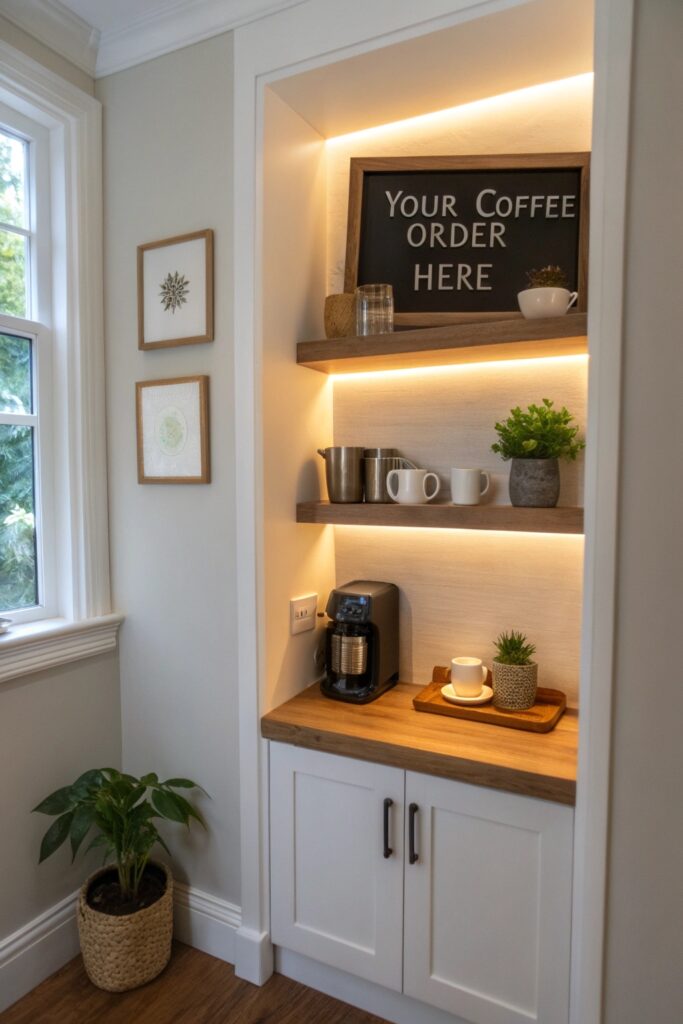
Check the manufacturer’s specified clearance behind and around each appliance for heat dissipation before finalizing an enclosed nook’s dimensions, since a tight built-in space can easily violate these clearances in a way that shortens equipment lifespan.
8. The Boho Coffee Bar with Macramé and Plants
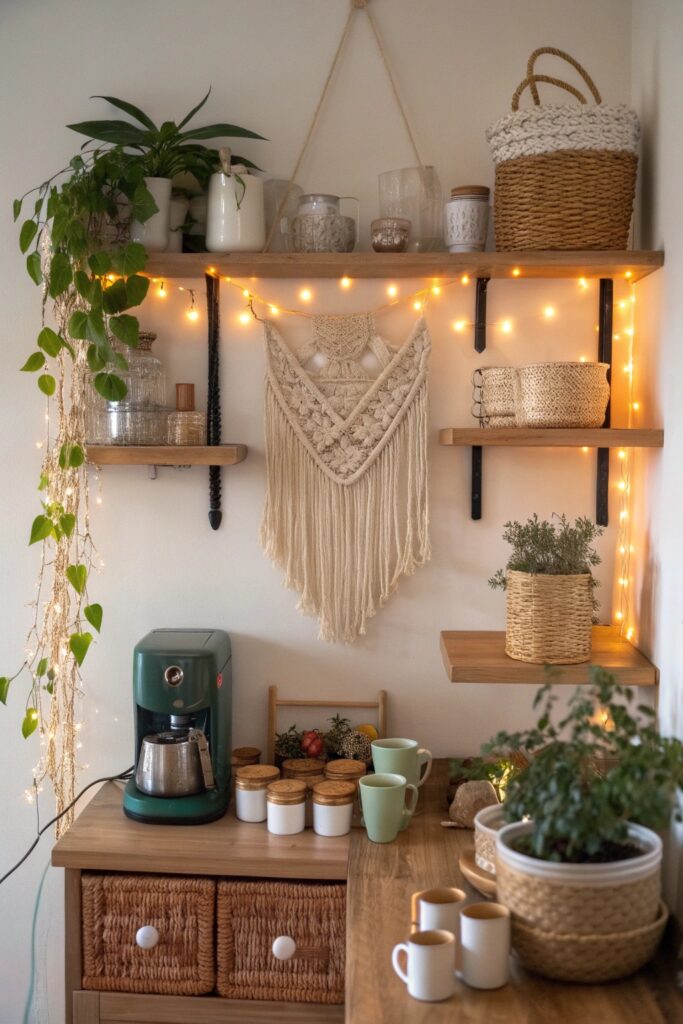
Keep hanging plants and macramé positioned away from directly above hot equipment, since rising heat and steam from daily coffee-making affects both plant health and delicate woven fibers over time.
9. The Luxury Espresso Bar at Home
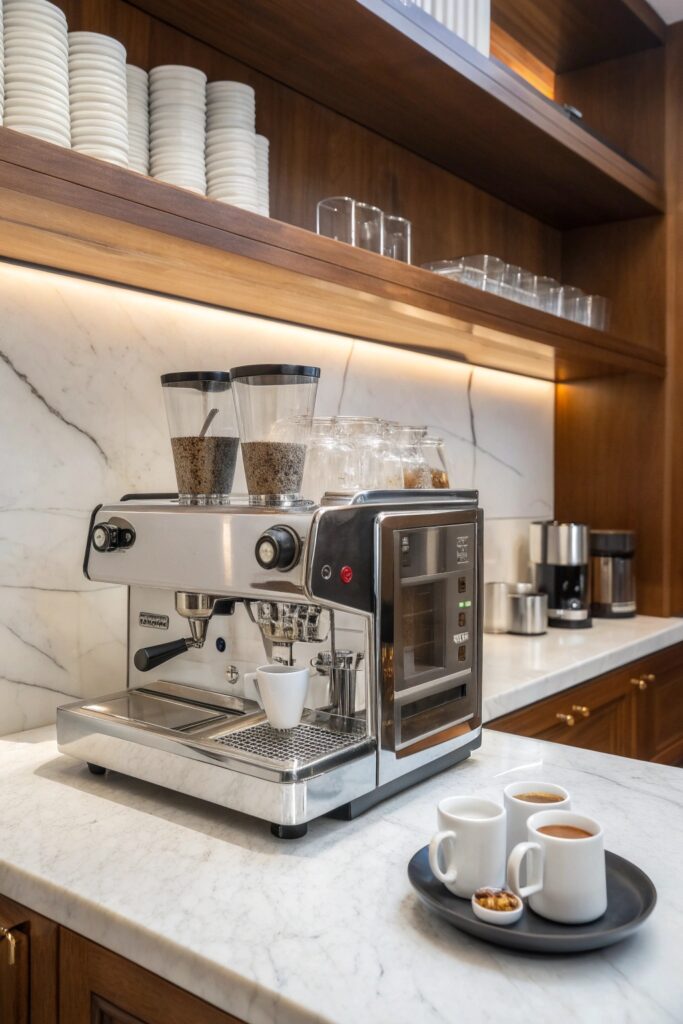
A genuine built-in espresso machine often requires a dedicated circuit given its higher wattage draw, and some models need 220V power specifically — confirming a machine’s actual electrical requirements before purchase avoids an expensive surprise during installation.
10. The Pegboard Coffee Station
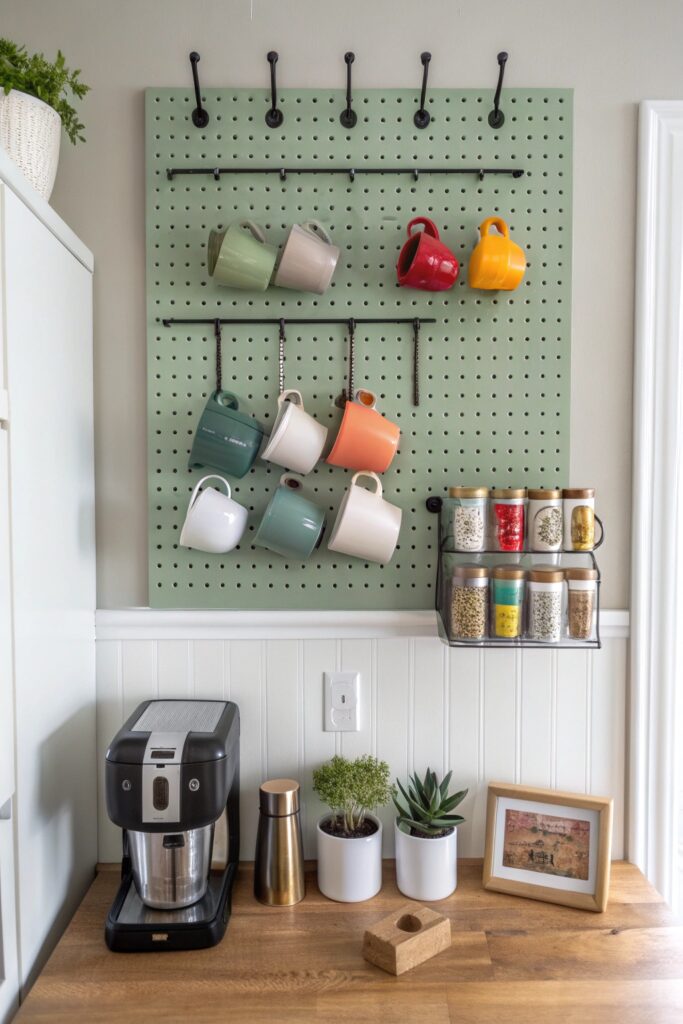
Pegboard needs a quarter to half inch of standoff spacing from the wall for hooks to actually insert and hold properly, the same requirement that applies to pegboard used anywhere else in the house.
11. The Coffee Bar with Mini Fridge for Cold Brew
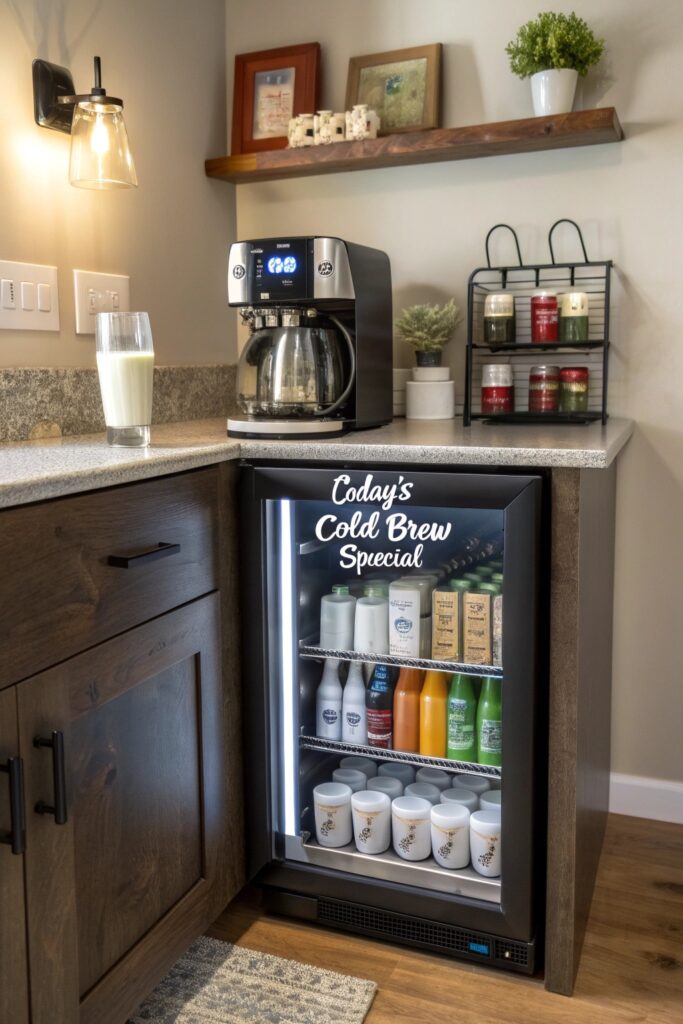
A mini fridge benefits from its own dedicated outlet rather than sharing a circuit with the coffee maker and other equipment, since compressor-based appliances can trip a shared circuit already carrying other loads.
Water Filtration Worth Considering
Hard water can affect both the taste of coffee and the longevity of espresso machines specifically, since mineral buildup inside the machine’s internals leads to more frequent descaling and can shorten the equipment’s lifespan over time.
A simple inline water filter or filtered water pitcher used to fill the machine’s reservoir addresses this without requiring a whole-house filtration system, and it’s a relatively low-cost addition worth including for anyone investing in higher-end espresso equipment.
What a Coffee Bar Setup Costs
A basic setup with shelving, a drip coffee maker, and a few accessories typically costs $150 to $500 depending on material quality.
A fuller build with a built-in espresso machine, custom cabinetry, and a mini fridge runs considerably higher, often $2,000 to $8,000 or more depending on the equipment and finishes chosen.
Keeping the Station Actually Clean and Functional
Coffee grounds and spilled milk are a daily reality for this space, so choosing surfaces that wipe down easily — sealed wood, laminate, tile — makes a real difference in how manageable daily cleanup actually is compared to a porous or textured surface that traps residue.
A small designated bin or container for used grounds and filters keeps this daily waste from accumulating on the counter between trash trips, which is a small detail that meaningfully affects how tidy the space stays day to day.
Placement Within the Kitchen or Adjacent Room
Positioning the coffee bar away from the main food prep zone helps avoid morning traffic jams when multiple people are trying to use the kitchen at once, particularly in a household with a busy weekday routine.
If space allows, a coffee bar situated near the kitchen but in an adjacent nook, hallway, or dining area can actually work better than squeezing it into an already-tight kitchen counter, since it gives the station its own dedicated footprint rather than competing with everyday cooking tasks.
A coffee bar built around your actual daily routine — whether that’s a quick pod-based cup on the way out the door or a slower weekend espresso ritual — tends to get more consistent daily use than one styled purely around a particular aesthetic without regard for how you actually make coffee.
Getting quotes from at least two or three appliance retailers or installers before committing to a higher-end built-in espresso setup helps confirm both pricing and whether the specific model you’re considering actually requires professional installation for plumbing or electrical work.
Whichever style and equipment level fits your household, a well-planned coffee station tends to earn its keep quickly, since it removes the daily friction of gathering scattered supplies from different cabinets before that first cup.
Taking a few weeks to live with a simpler setup before investing in higher-end equipment also helps confirm which features you’ll actually use daily versus which ones sounded appealing but end up going untouched.
Final Thoughts
Equipment specifications tend to matter more to how well a coffee bar actually functions than the furniture style surrounding it — confirming electrical capacity, water line needs, and clearance requirements before finalizing a design saves real frustration compared to discovering a mismatch after everything is installed.
Whichever theme you’re drawn to, checking your specific equipment’s manual for its actual power and space requirements, rather than assuming a general coffee maker fits into any styled setup, is worth the few minutes it takes before committing to a layout.