
Cottagecore’s emphasis on collected-over-time pieces actually makes it one of the more budget-friendly kitchen styles to achieve, if sourced thoughtfully through secondhand and vintage finds rather than an all-new coordinated purchase. The details below cover both the styling direction and the practical specifics for each element.
Below are 10 elements worth focusing on, with the specifics for each.
1. Open Shelving with Mismatched Dishes
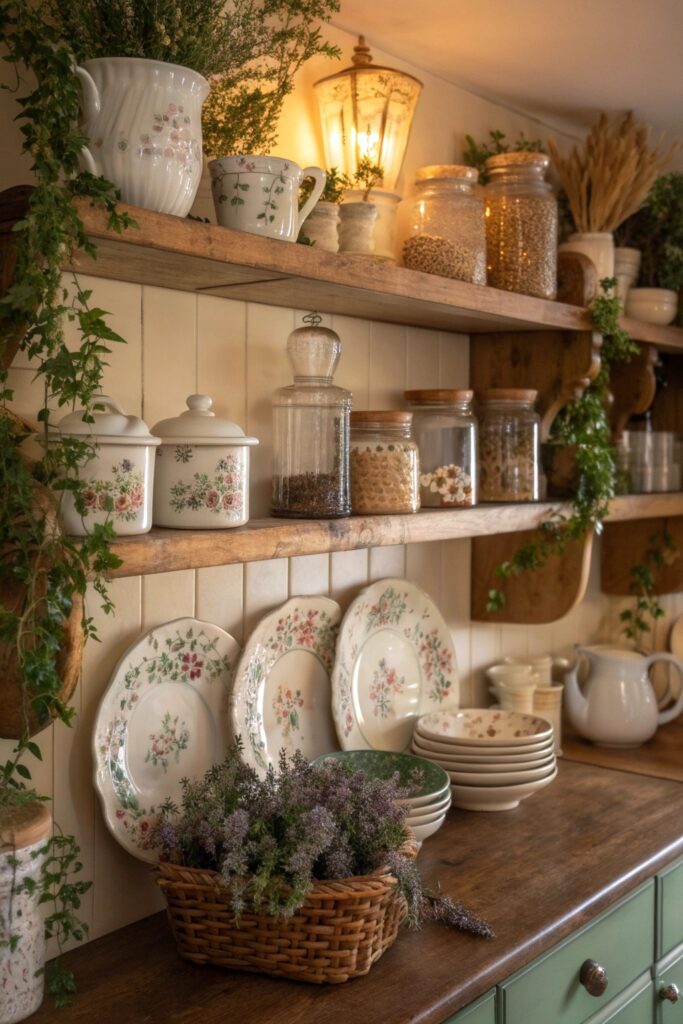
Open shelving in a kitchen accumulates grease and dust faster than shelving anywhere else in the house, simply from proximity to cooking, so plan on wiping it down more frequently than you might expect for a purely decorative display.
2. A Farmhouse Sink (Yes, It’s Worth It)
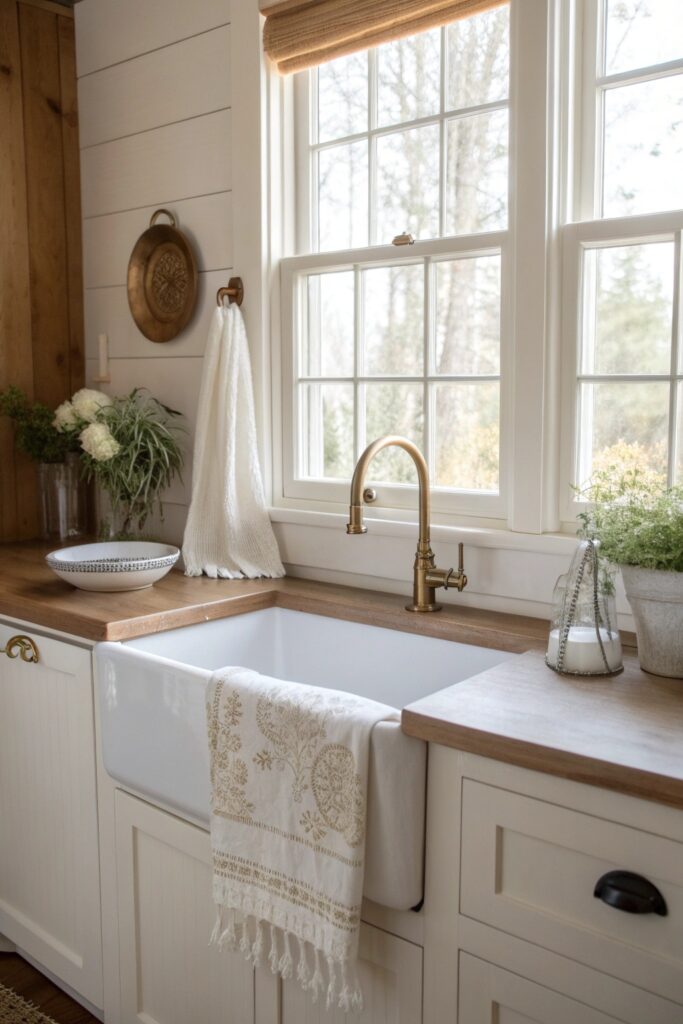
Cast iron and fireclay apron-front sinks are notably heavy, so the supporting cabinetry needs to be rated for that weight rather than standard lightweight vanity construction underneath.
3. Butcher Block Countertops
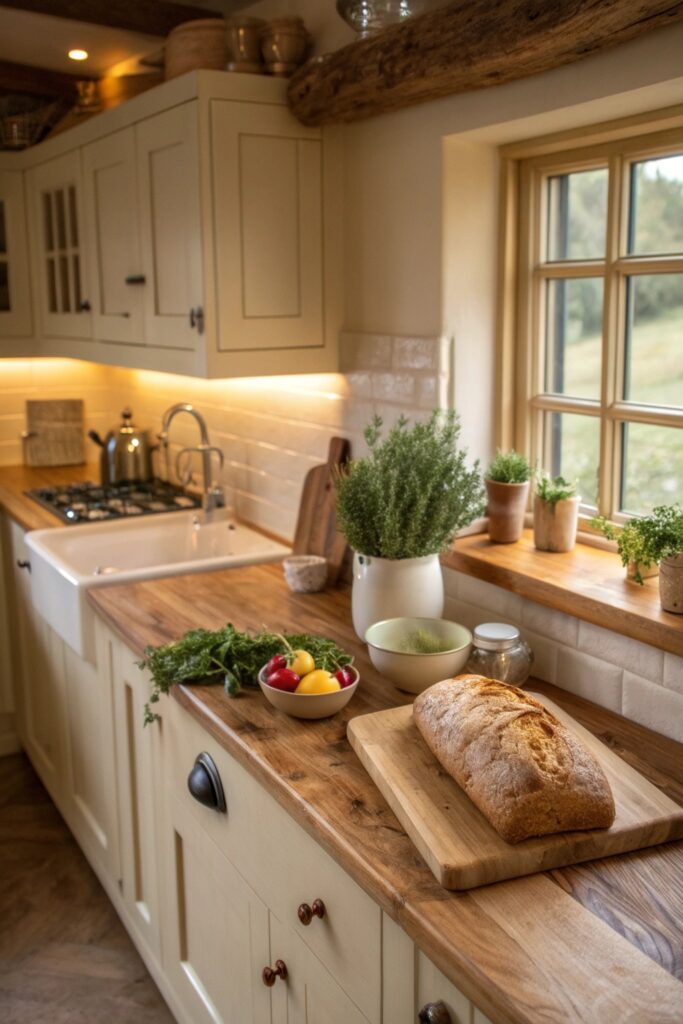
Regular oiling with food-grade mineral oil, not a standard wood finish, keeps butcher block sealed against water, and daily food prep wears down that seal faster than a purely decorative wood surface would, so resealing needs to happen more often than you might assume.
4. Vintage-Inspired Hardware
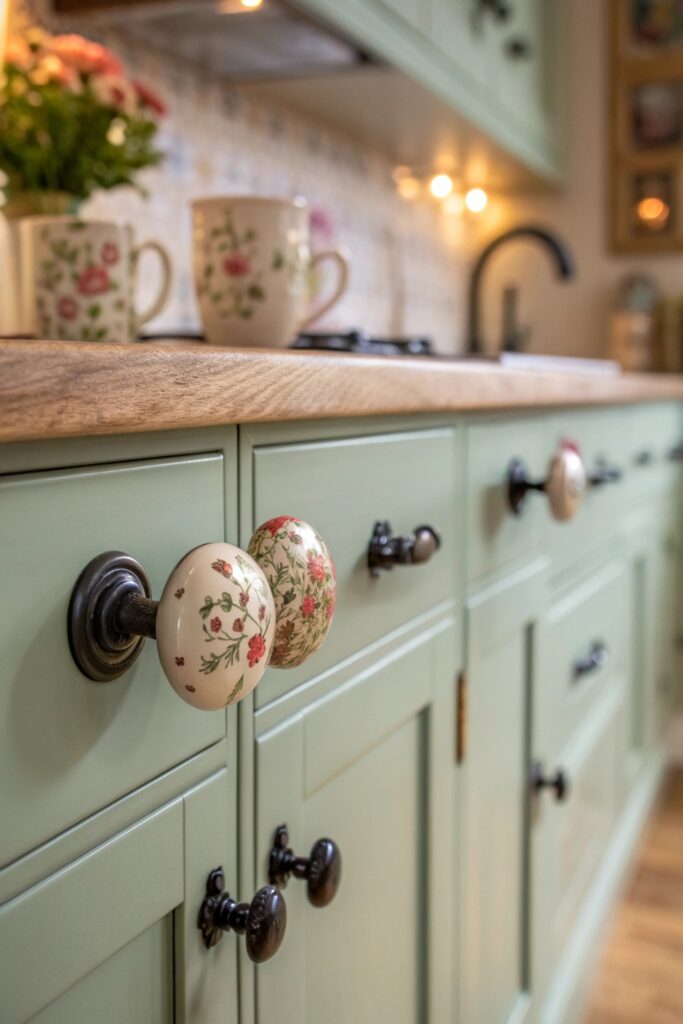
Reproduction hardware with a vintage look is often more reliable than genuine antique pieces, whose mounting points can be weakened by decades of wear that isn’t always visible until the hardware is already installed.
5. Herb Garden on Your Windowsill
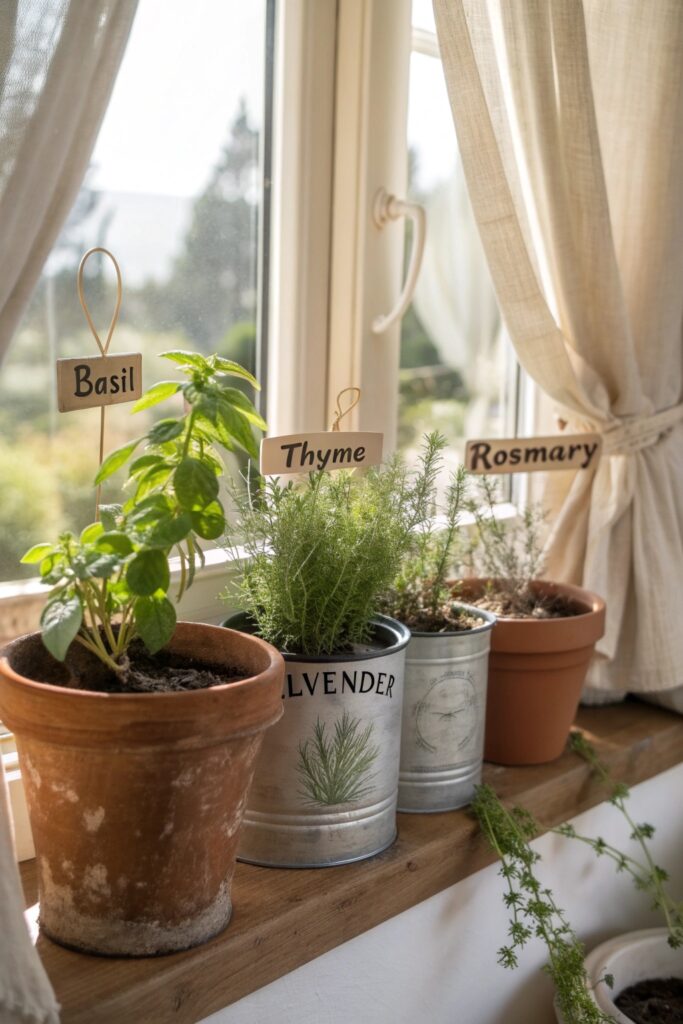
South or west-facing windows provide the most direct light for herbs, and a windowsill positioned directly above a radiator or heating vent can dry plants out faster than expected — worth checking your specific window’s actual light and heat conditions before assuming any sill works equally well.
6. Linen Curtains Over Cabinet Doors
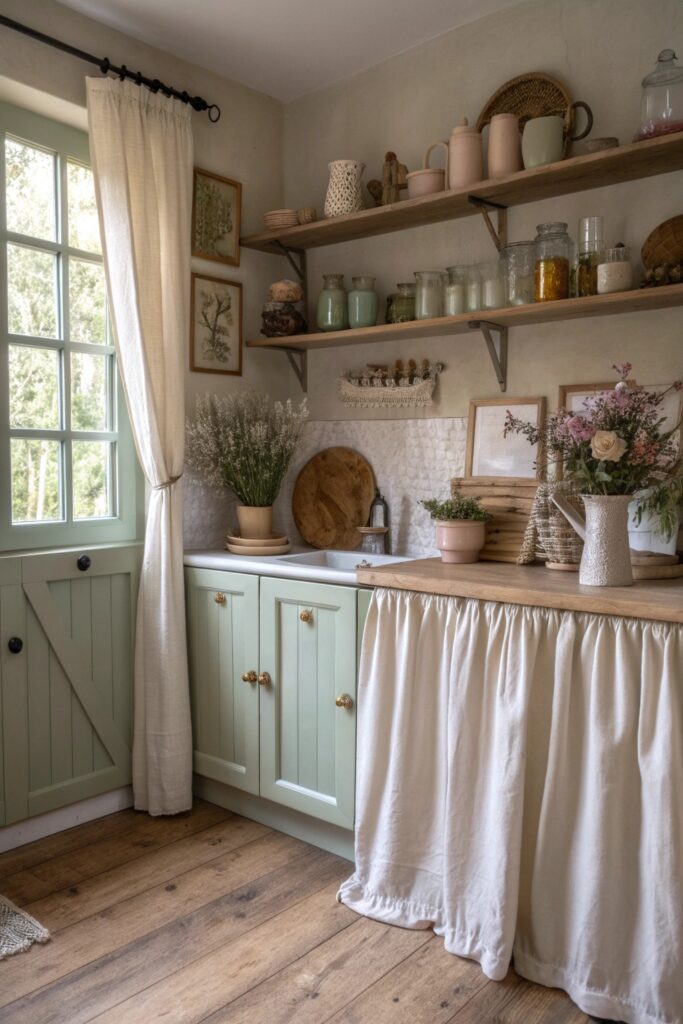
Fabric curtains don’t shield contents from grease and dust the way solid cabinet doors do, so this look works best for everyday items you’re using and washing regularly rather than deep storage that sits untouched for months.
7. A Statement Vintage Rug
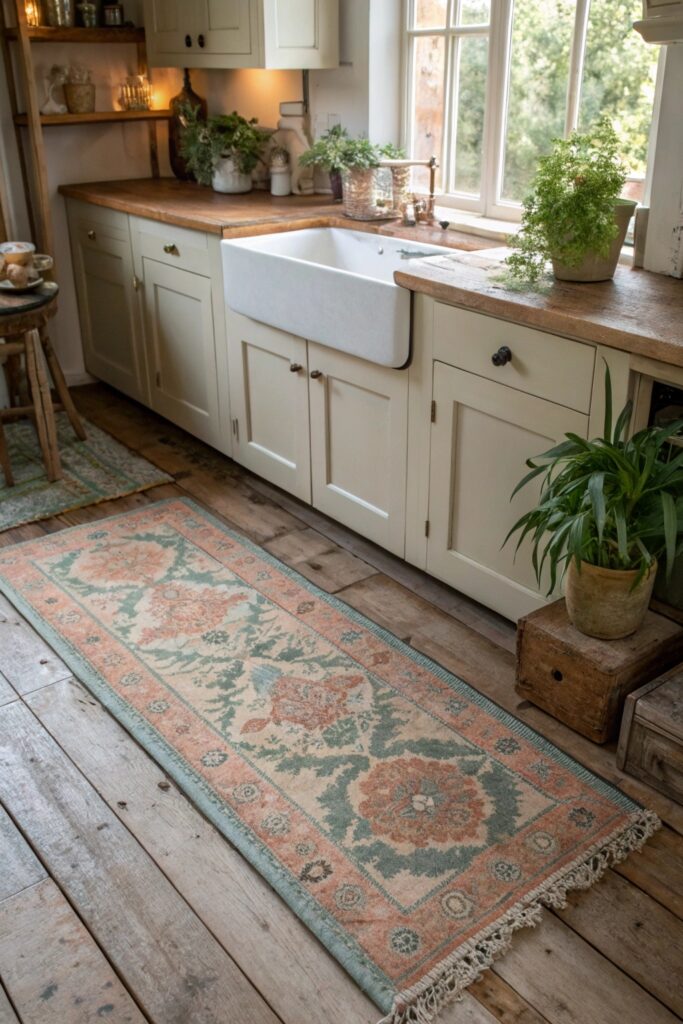
Choose a flatweave or machine-washable rug specifically for the kitchen, since food and liquid spills are a real and regular risk here in a way that doesn’t apply the same way to a rug in a living room or bedroom.
8. Warm, Ambient Lighting
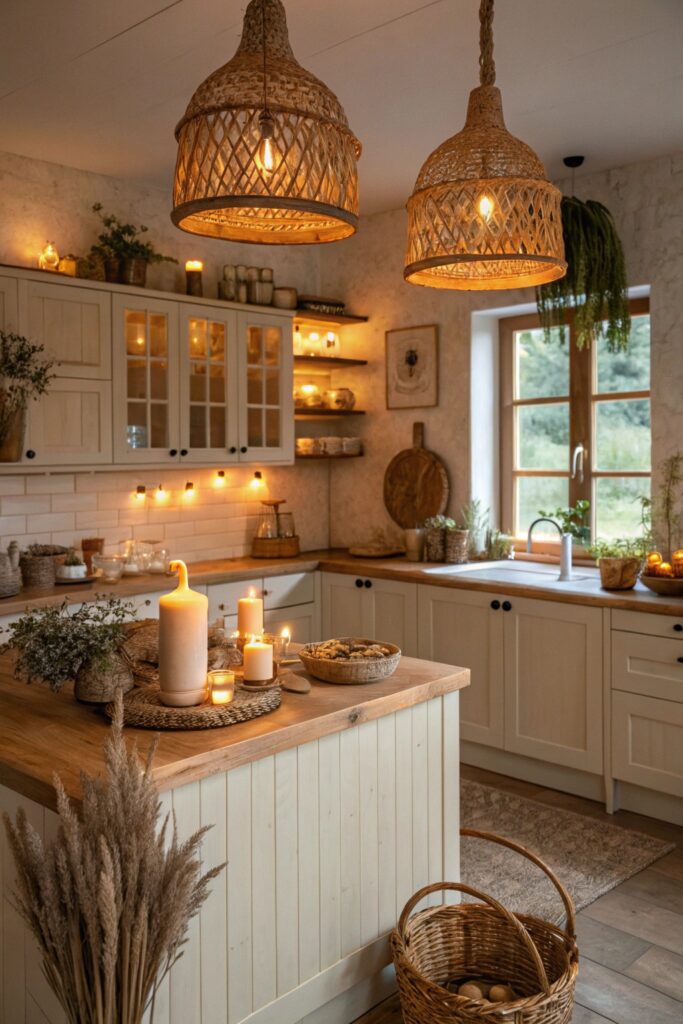
A warmer bulb color temperature supports this style’s cozy feel considerably better than the cooler, more clinical light temperature typically used for pure task lighting in a modern kitchen.
9. A Painted or Wallpapered Ceiling
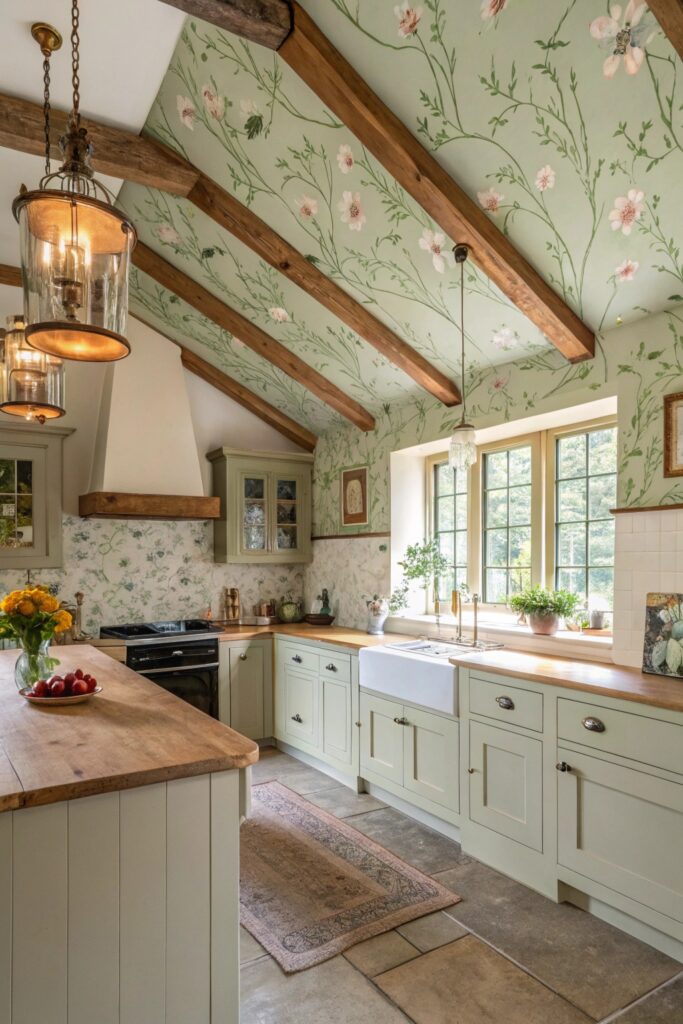
Any ceiling treatment near the stove needs to handle rising grease and heat, so a washable, scrubbable finish matters more for this specific area than it would for a ceiling further from the cooking zone.
10. A Cozy Breakfast Nook
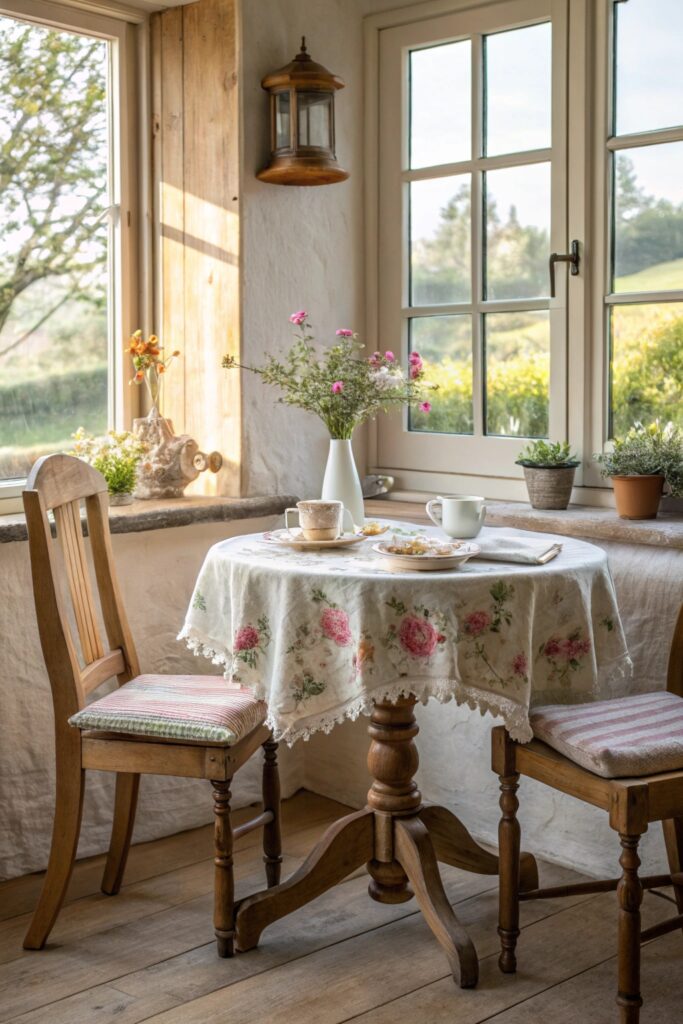
Leave at least 36 inches of clearance around the nook’s table for comfortable seating and movement, the same clearance principle that applies to any dining space regardless of its specific style.
Where to Actually Find These Pieces
Estate sales tend to have the best selection of authentically vintage kitchenware and hardware, while online marketplaces and local buy-nothing groups are worth checking for larger furniture pieces like a breakfast nook bench or an antique table.
Thrift stores are hit or miss for larger items but often have exactly the kind of mismatched dishware this style depends on, and checking back regularly over a few weeks tends to turn up better finds than a single shopping trip.
What a Cottagecore Kitchen Refresh Costs
Sourcing secondhand pieces and doing a cosmetic update — paint, hardware, and decor — typically costs $300 to $1,000 depending on how much you find secondhand versus buy new.
A fuller renovation including a farmhouse sink, butcher block counters, and a breakfast nook runs considerably higher, often $8,000 to $20,000 or more depending on the scope.
Balancing Charm With Actual Function
A kitchen still needs to work as a kitchen, so choosing pieces that are both charming and functional — a vintage-look dish rack that actually drains well, an antique table sturdy enough for daily use — matters more here than in a purely decorative room.
Testing any secondhand appliance or fixture before committing to it in your actual kitchen layout helps avoid discovering a functional problem after it’s already installed, since not every vintage find translates well into daily modern use.
Layering Pattern Without Overwhelming the Space
This style tends to layer florals, gingham, and other patterns together, and keeping one element — usually the wall color or the cabinetry — relatively neutral gives the eye a resting point among the busier textiles and dishware.
Introducing pattern gradually, piece by piece, rather than committing to several patterned elements all at once, makes it easier to judge whether the combination feels cohesive or overwhelming before you’ve invested in a full room’s worth of coordinating textiles.
A cottagecore kitchen done well tends to feel personal in a way that’s hard to achieve with an entirely new, coordinated purchase, since the mix of sourced and inherited pieces naturally carries a sense of history that new items simply can’t replicate.
Whichever elements you’re drawn to, giving the kitchen time to come together gradually — rather than rushing to finish it all in one weekend — tends to result in a more distinctly personal space, since the best finds often take patience to track down.
A properly maintained exhaust fan or range hood matters just as much here as in any other kitchen style, since real wood elements — the butcher block counters, open shelving, and any wood ceiling treatment — hold up better without repeated exposure to cooking grease and moisture.
Checking secondhand appliances and fixtures for actual working condition before purchase, rather than assuming vintage charm outweighs function, helps avoid bringing home a piece that ends up purely decorative rather than actually useful in daily cooking.
A kitchen built this way, piece by piece over time, tends to hold real sentimental value that’s hard to replicate through a single coordinated purchase, which is part of why this style continues to resonate with people looking for something more personal than a showroom-ready look.
Wrapping It Up
Because this style depends on pieces feeling gathered rather than matched, sourcing from estate sales, secondhand shops, and online marketplaces over a few weeks or months often produces a more authentic and more affordable result than buying an entire coordinated set at once.
Focusing your budget on the functional elements that see the most daily use — the sink, countertops, and lighting — while sourcing decorative pieces more gradually tends to produce a kitchen that feels truly lived-in rather than assembled all at one time.