
Kitchen lighting works best as layers — task, ambient, and accent — rather than relying on a single overhead source to handle every function the room needs.
Below are 12 lighting elements worth considering, with practical notes for each.
1. Install Pendant Lights Over the Kitchen Island
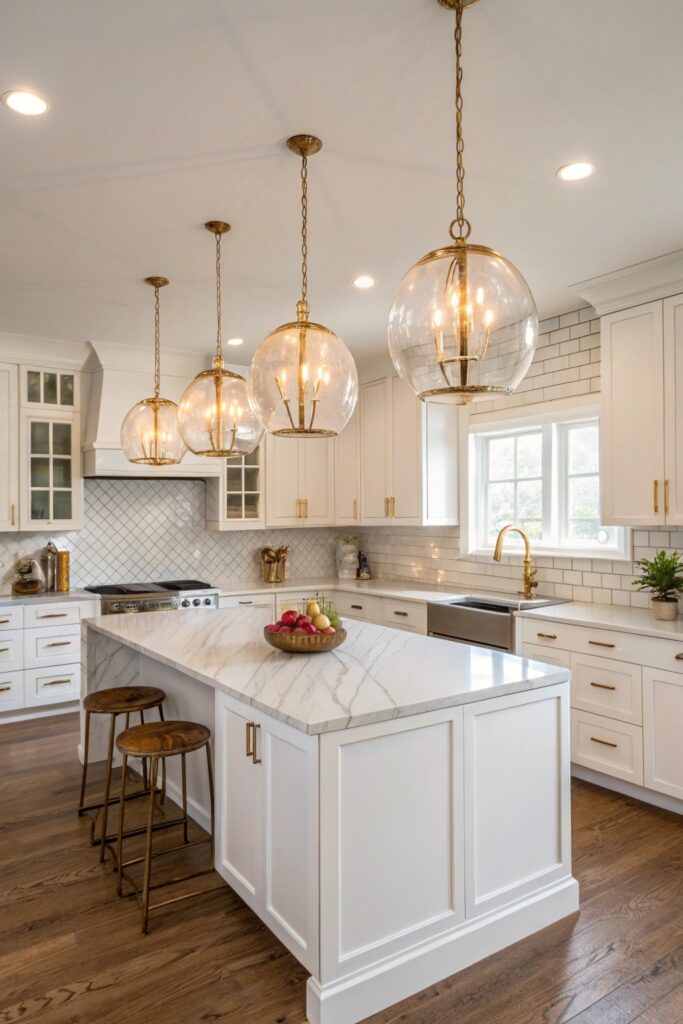
Genuine spacing between fixtures matters here, since pendants hung too close together can look cluttered while too far apart leaves visible gaps in the island’s lighting coverage.
Hang pendants roughly 30 to 36 inches above the island surface as a starting point, adjusting based on your ceiling height and the specific fixture size.
2. Add Under-Cabinet LED Strip Lighting
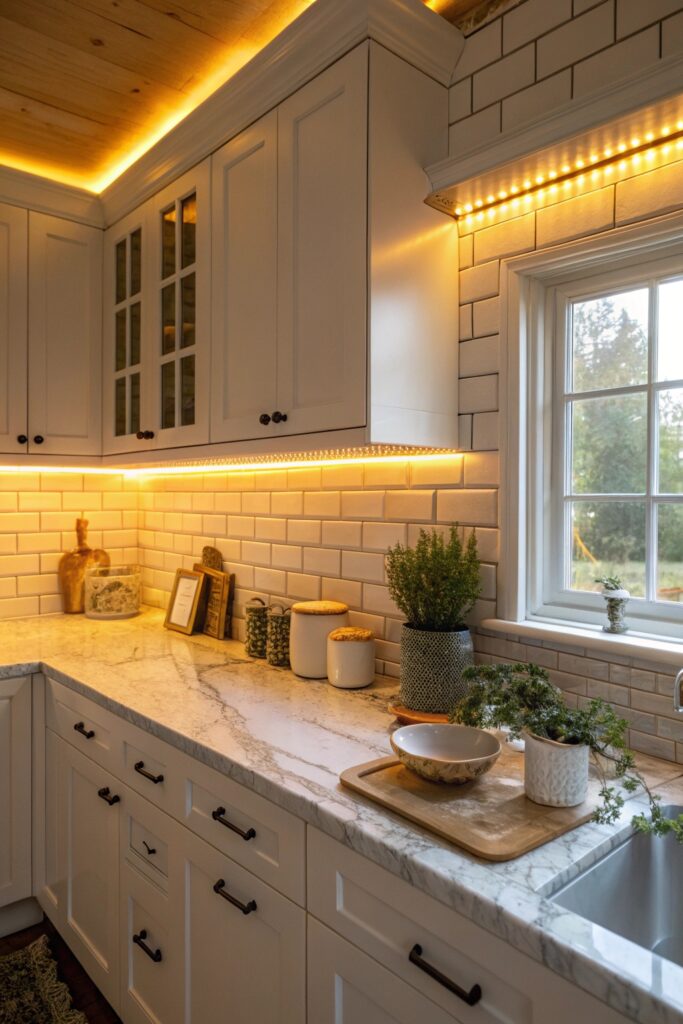
This eliminates the shadows that overhead lighting alone casts across a countertop, which matters directly for tasks like chopping or reading a recipe.
Choose a high color-rendering strip specifically, which shows food and countertop colors more accurately than a cheaper strip with lower color accuracy.
3. Upgrade to a Statement Chandelier Over the Dining Area
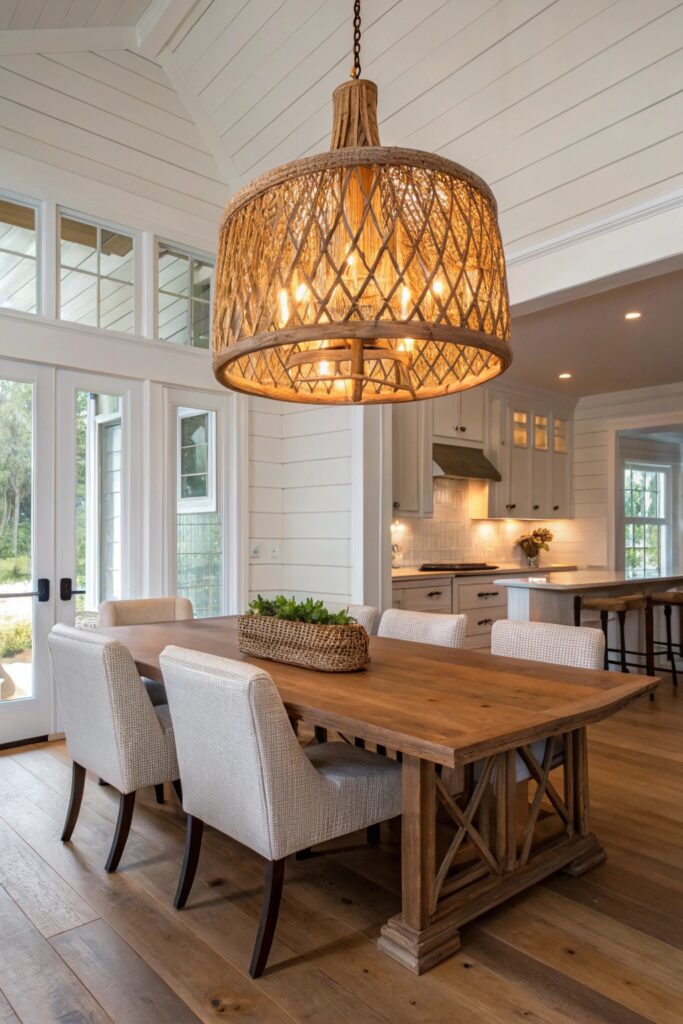
A proportional fixture size matters more than an ornate design, since an oversized or undersized chandelier looks off regardless of how nice the piece itself is.
Confirm the fixture’s genuine weight rating matches your ceiling’s electrical box, since some statement chandeliers are heavier than a standard box is rated to support.
4. Install Recessed Lighting in a Thoughtful Grid
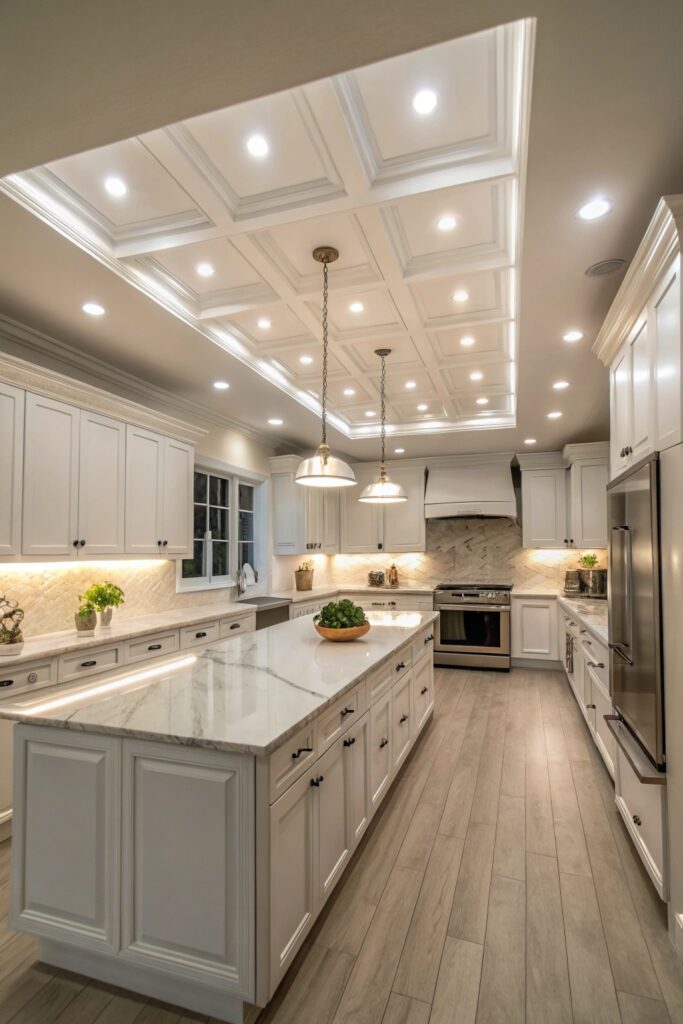
Even spacing across the ceiling, rather than clustering fixtures in one area, creates more consistent light distribution throughout the room.
Space recessed fixtures roughly four to six feet apart as a general guideline, adjusting based on your ceiling height and the specific beam angle of the fixtures chosen.
5. Use a Dramatic Range Hood Light as a Focal Point
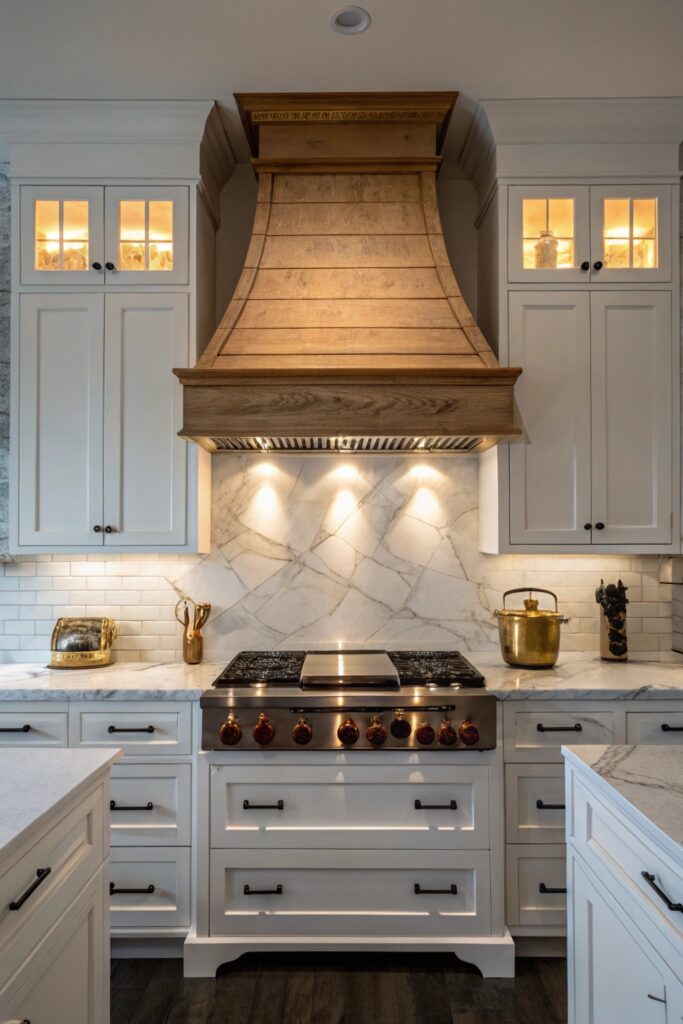
This doubles as functional task lighting for the cooktop while also serving as a visual centerpiece for that section of the kitchen.
Choose a hood light with adjustable brightness, since full cooking-task brightness isn’t always needed for simply glancing at the stovetop.
6. Add Toe Kick Lighting for a Floating Effect
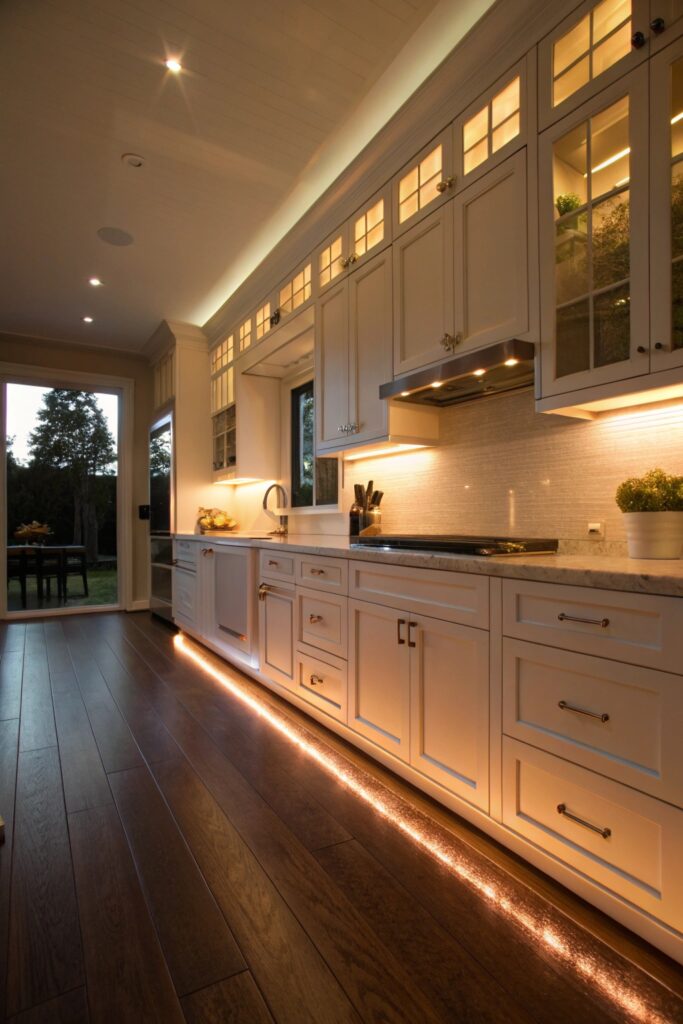
This subtle detail creates a visual effect of cabinets floating above the floor, working best in a kitchen with darker lower cabinetry for contrast.
Choose a low-profile LED strip for this application, since standard fixtures often don’t fit the shallow space at the base of most cabinetry.
7. Install In-Cabinet Lighting for Glass-Front Cabinets
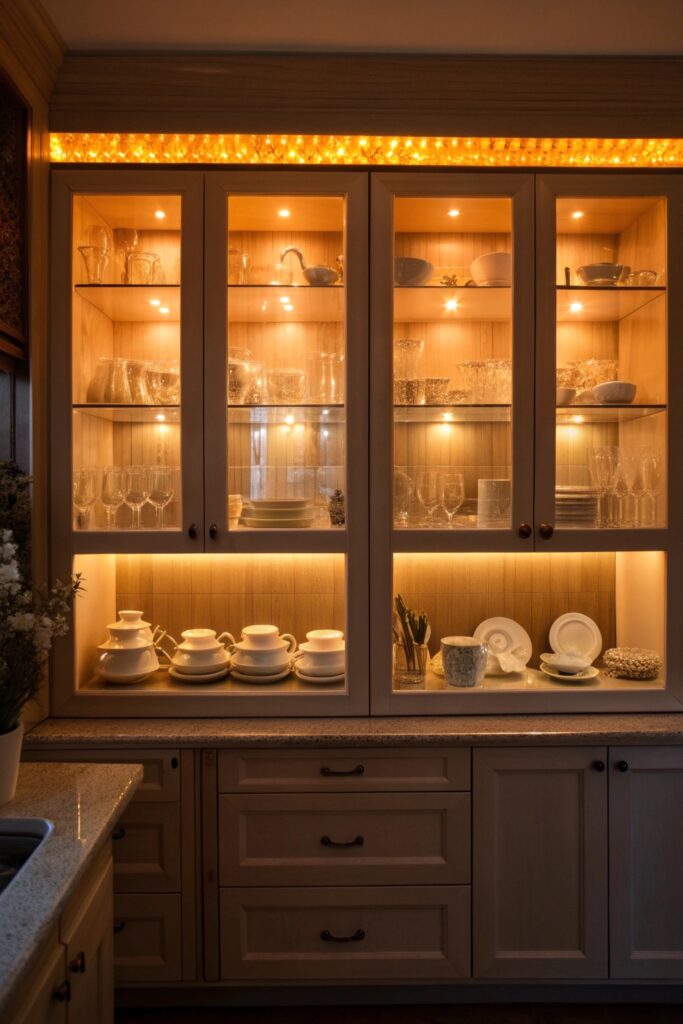
This showcases displayed dishware or glassware, turning storage into a lit display feature rather than a plain, unlit cabinet.
Confirm your cabinet doors have genuine wiring access before committing to this upgrade, since retrofitting glass-front cabinets without existing wiring adds complexity.
8. Choose Warm Bulb Temperature Throughout
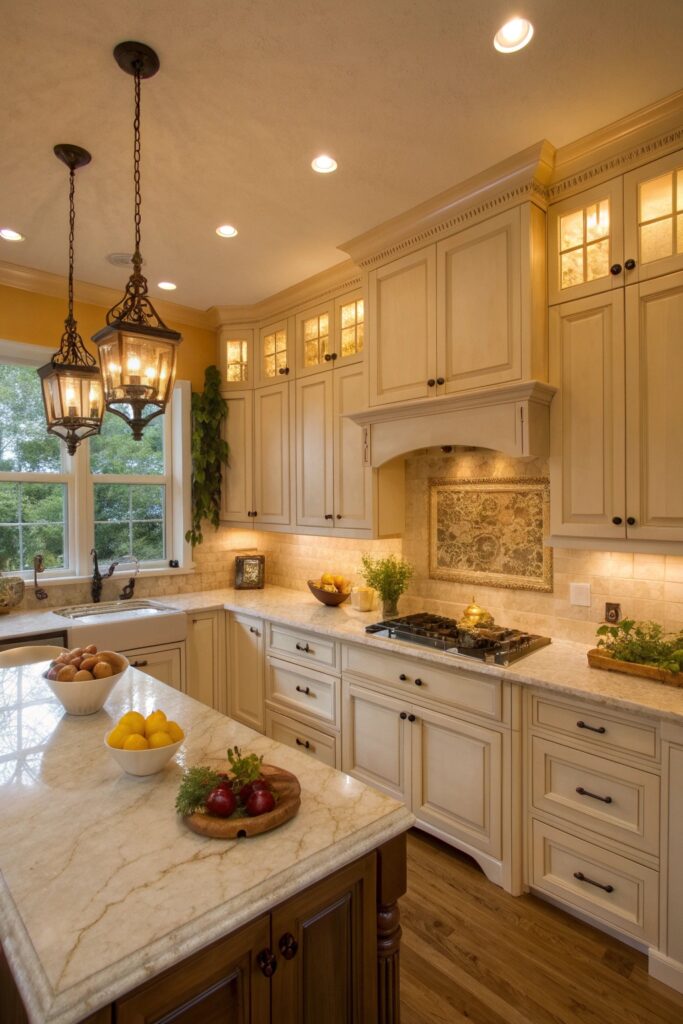
Genuinely consistent color temperature across all fixtures avoids the mismatched look that happens when some lights read warmer or cooler than others in the same room.
Choose bulbs in the 2700K to 3000K range specifically, which reads as warm and inviting without tipping into an overly yellow or amber cast.
9. Add a Decorative Sconce on a Kitchen Feature Wall
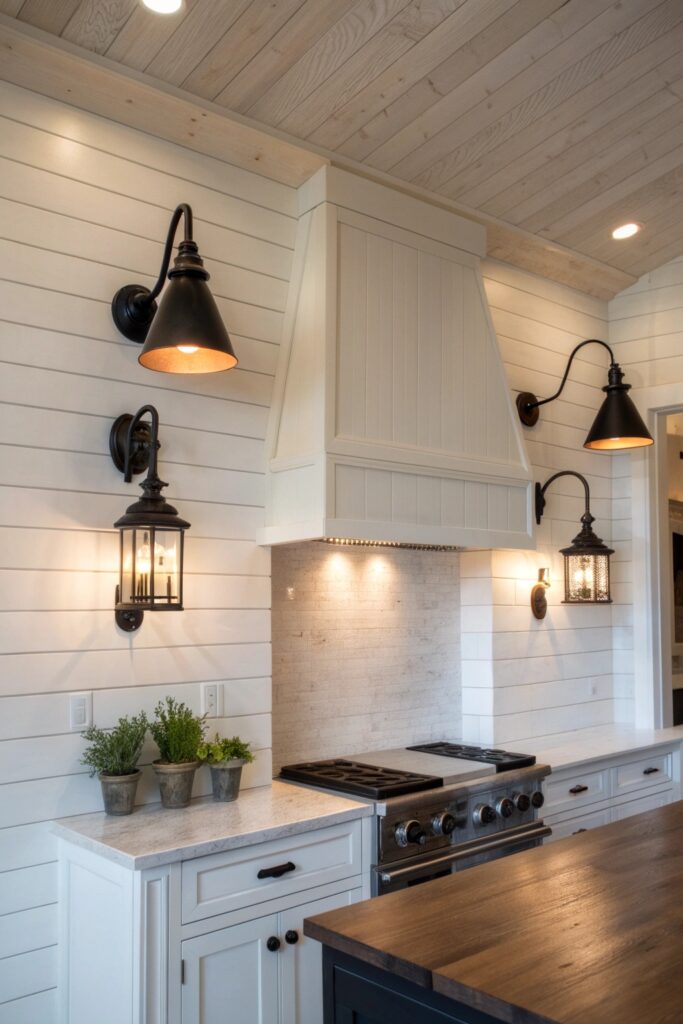
A sconce adds a layer of lighting at a different height than overhead or under-cabinet sources, contributing to a more dimensional overall look.
Choose a sconce style that complements your other fixtures rather than matching them exactly, which adds variety without looking mismatched.
10. Use Cove Lighting for Indirect Ambient Light
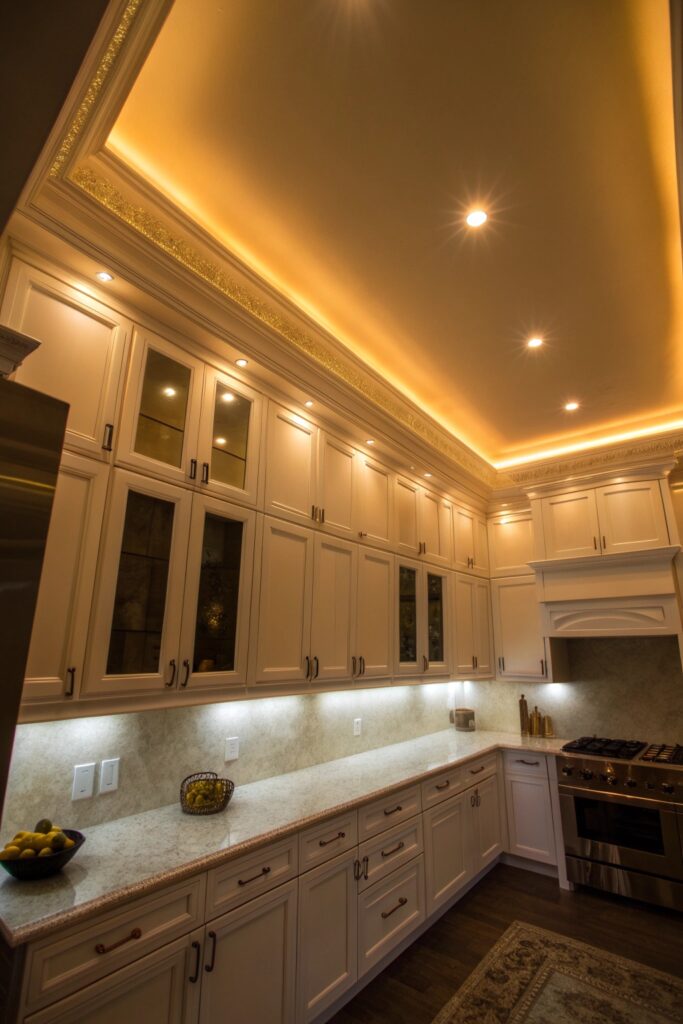
This creates soft, diffused light rather than a direct source, working well as an evening ambiance layer beyond the kitchen’s main task lighting.
Confirm your ceiling has enough depth to conceal the cove lighting channel, since this technique needs genuine structural space to hide the light source itself.
11. Install a Statement Semi-Flush or Flush Mount Fixture
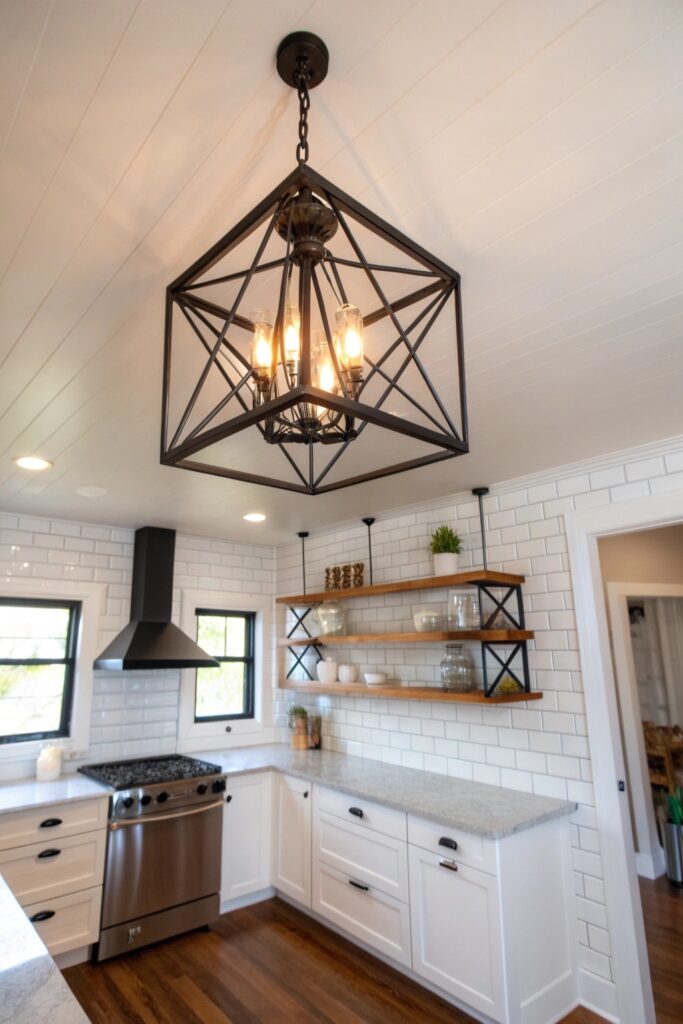
This suits a kitchen with lower ceiling height better than a hanging pendant or chandelier, which needs more vertical clearance to look proportional.
12. Add Dimmer Switches to Every Circuit
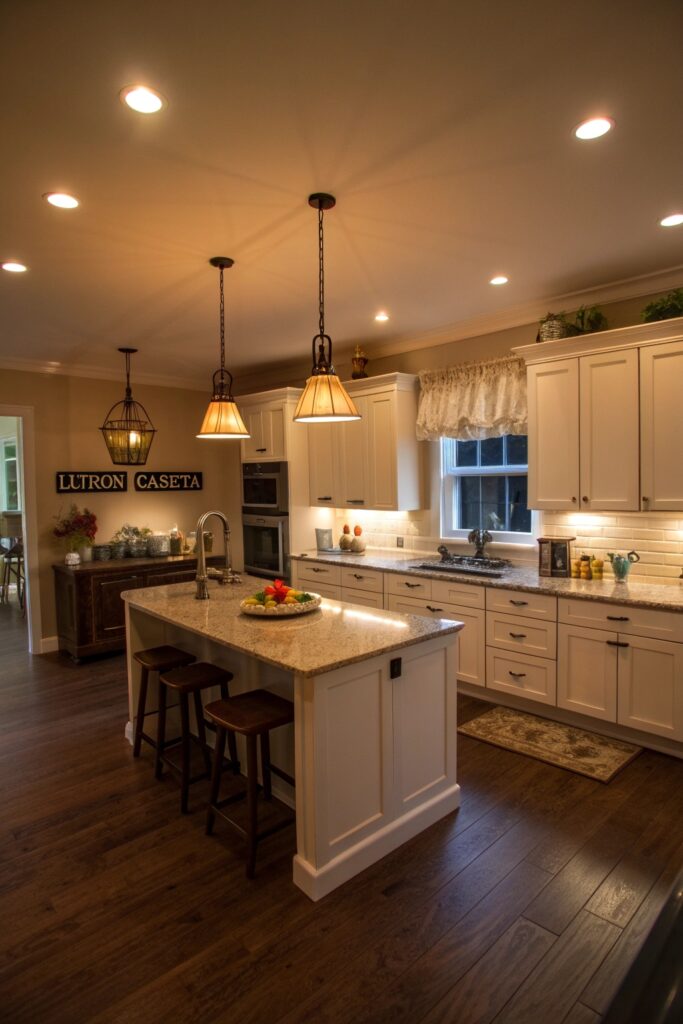
Separate dimmers for each lighting layer — overhead, under-cabinet, accent — give you considerably more control than a single switch for the whole room.
Layering Task, Ambient, and Accent Light
Task lighting covers the functional work zones — countertops, the stove, the island — where you actually need bright, direct light for cooking and prep.
Ambient lighting fills the room’s overall light level, while accent lighting, like a sconce or cove light, adds visual interest without contributing much actual brightness. A kitchen with all three layers feels more finished than one relying on a single overhead source alone.
What This Upgrade Costs
Smaller additions like under-cabinet strips or a single statement fixture typically run $100 to $500.
A fuller lighting overhaul with recessed fixtures, multiple layers, and dimmers throughout the kitchen costs considerably more, often $1,500 to $5,000 depending on the scope of electrical work required.
Get quotes from at least two licensed electricians before committing to any larger project, since labor costs for kitchen lighting work vary considerably based on your home’s existing wiring and how much new circuitry the specific plan requires.
Start with the under-cabinet lighting if you’re tackling this project in phases, since it’s genuinely one of the more affordable upgrades and delivers an immediately noticeable improvement to everyday cooking and prep tasks.
Live with a new fixture or lighting layer for a couple of weeks before adding more, since it’s genuinely easier to judge whether the overall balance works once you’ve spent real time cooking and living in the space under the new light.
A well-lit kitchen genuinely changes how the whole room functions day to day, since good lighting affects everything from how accurately you can judge food doneness to how comfortable the space feels for evening gatherings.
Light Your Kitchen Like It Deserves
Warm-toned bulbs matter more than fixture style in determining whether a kitchen feels inviting or clinical, so prioritize consistent color temperature before worrying about the specific design of each fixture. Dimmers are a genuinely worthwhile addition to almost any kitchen lighting plan, since they let the same fixtures serve both bright task lighting and softer evening ambiance.