
A solarium kitchen involves real glazing and structural engineering decisions that affect comfort as much as the visual style — heat gain, condensation, and thermal performance all depend on choices made well before the design phase most people focus on. The details below cover both the aesthetic direction and these technical specifics for each style.
Below are 11 solarium kitchen approaches worth considering, with the specifics for each.
1. Full Glass Roof Kitchen Extension
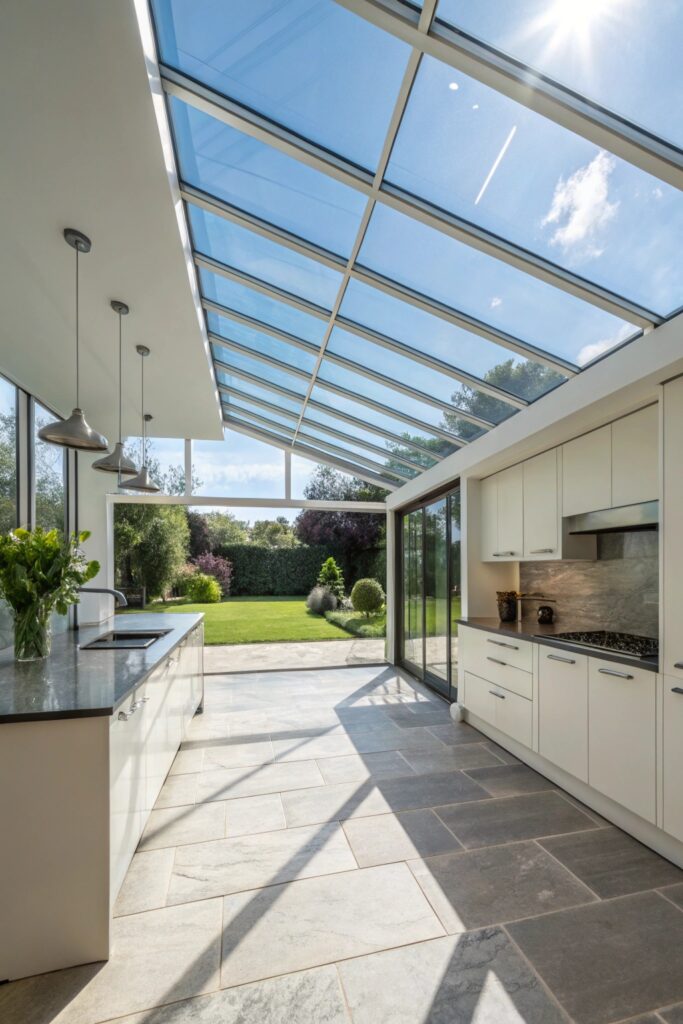
Solar heat gain is a genuine concern with a fully glass roof, especially combined with a kitchen’s own cooking-generated heat — low-E or solar control glass coatings reduce this considerably compared to standard glazing. The support structure also needs engineering rated for both the glass weight and, in applicable climates, snow load.
2. Skylight Kitchen with Multiple Roof Windows
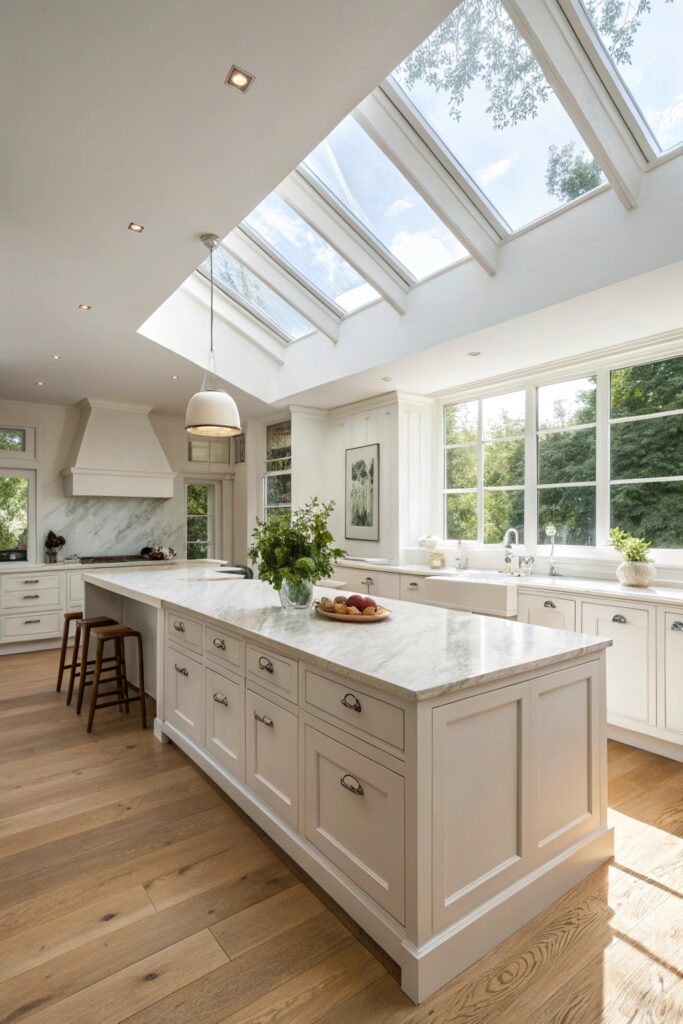
Several smaller openings distribute structural load differently than one continuous glass roof, and it’s easier to mix in operable, venting skylights among fixed ones this way, giving you actual airflow control rather than relying entirely on a sealed glass roof.
3. Garden-Facing Glass Wall Kitchen
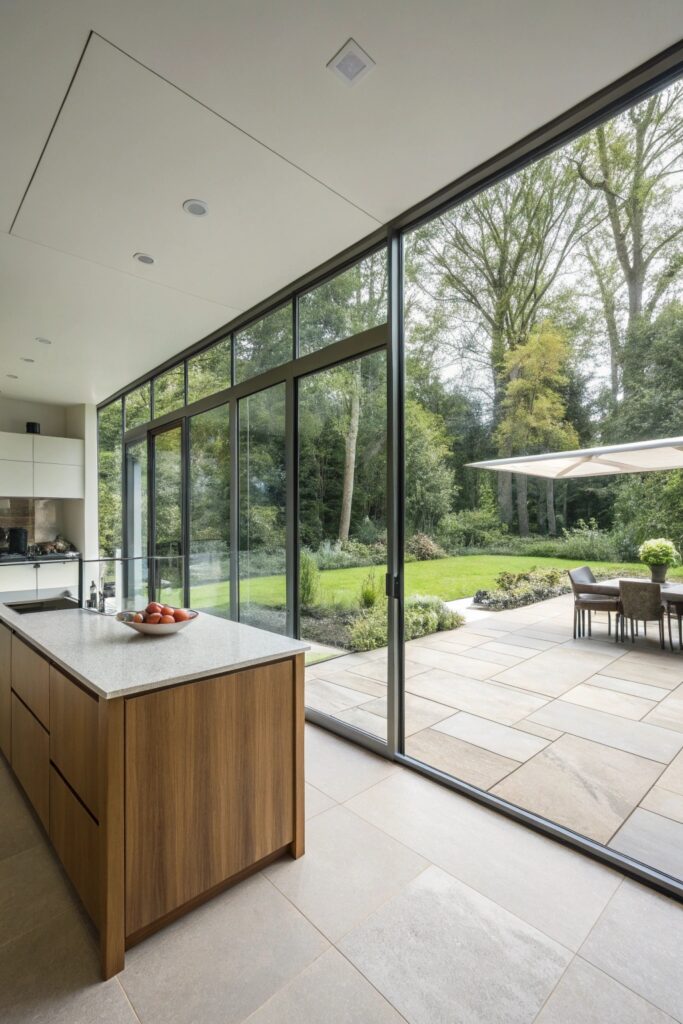
Floor-to-ceiling glass at this scale needs to be tempered safety glass, and double or triple glazing is actually necessary in most climates to avoid significant heat loss, heat gain, and condensation buildup that single-pane glass would create.
4. Victorian-Style Conservatory Kitchen
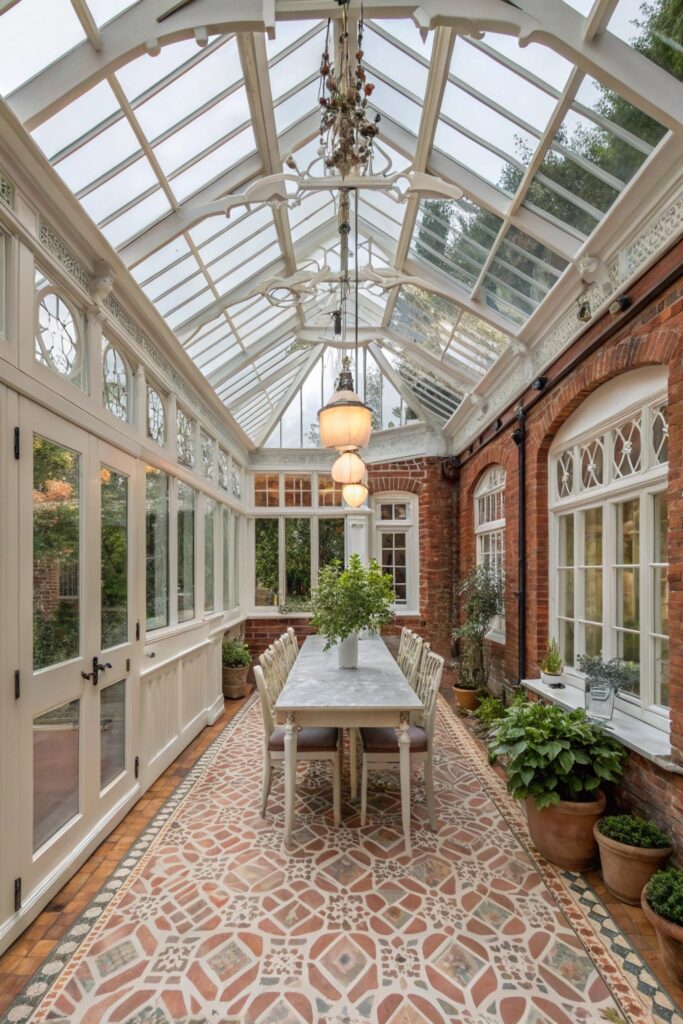
Traditional glazing bars — the framework dividing individual glass panes — were historically wood, while modern reproductions commonly use uPVC or aluminum instead, keeping the classic look with considerably less ongoing maintenance than painted wood would require.
5. Lean-To Solarium Kitchen with Exposed Timber Frame
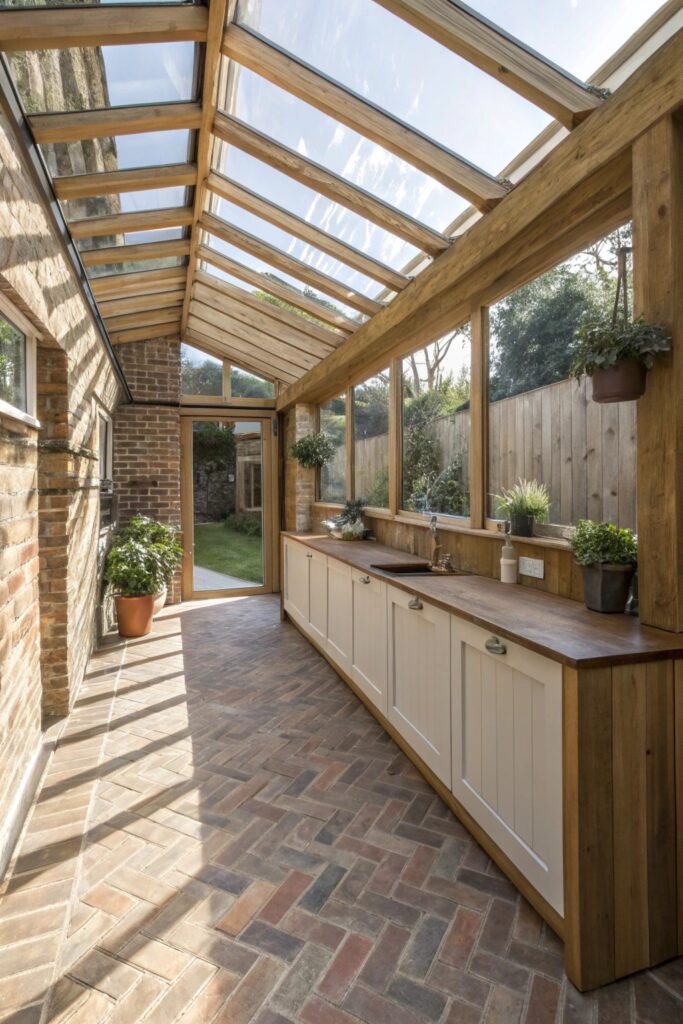
Wood expands and contracts at a different rate than the glass and metal framing it meets, so flexible sealant rather than rigid caulk is necessary at these junctions to prevent water intrusion as the materials shift with temperature changes over the seasons.
6. Orangery Kitchen with Lantern Roof
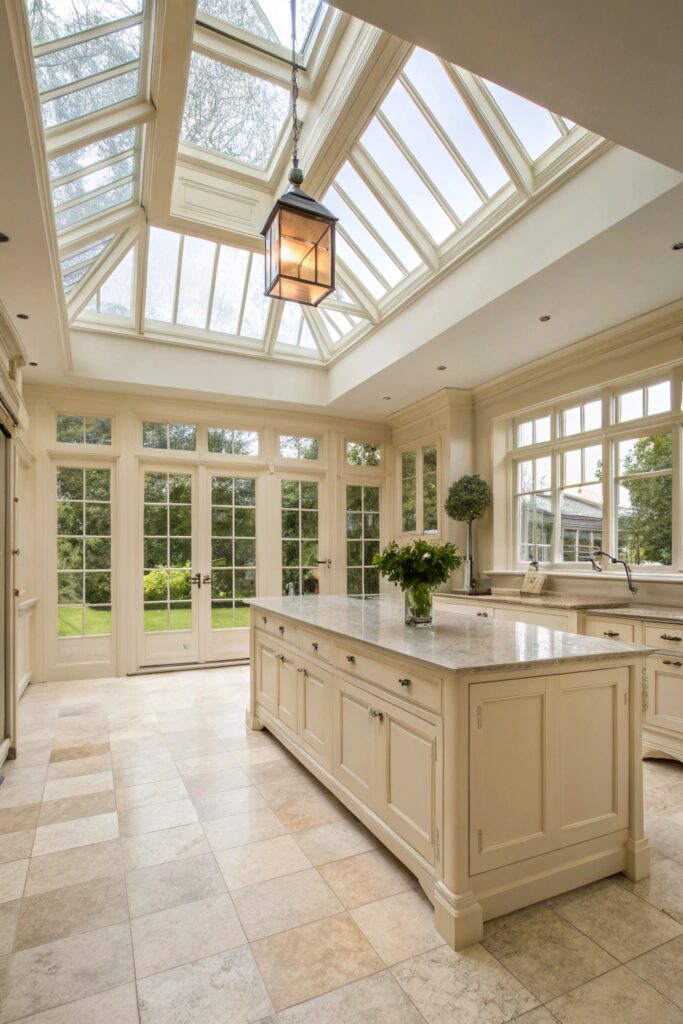
An orangery traditionally uses a more solid roof structure with a raised glass lantern section at the center, rather than a fully glazed roof — this gives noticeably better thermal performance than an all-glass roof while still bringing in substantial natural light.
7. Industrial Steel and Glass Kitchen Extension
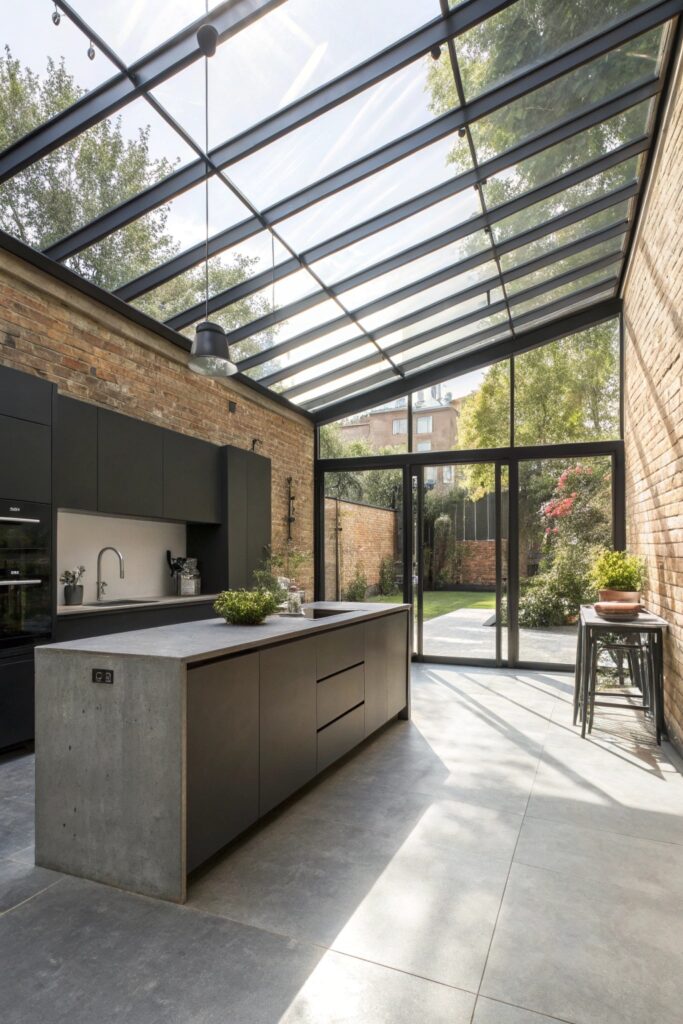
Steel framing conducts heat and cold more readily than wood or vinyl framing, so thermally broken steel — framing with a built-in insulating break — is worth the added cost in colder climates to avoid condensation forming directly on the metal frame itself.
8. Biophilic Solarium Kitchen with Living Plant Walls
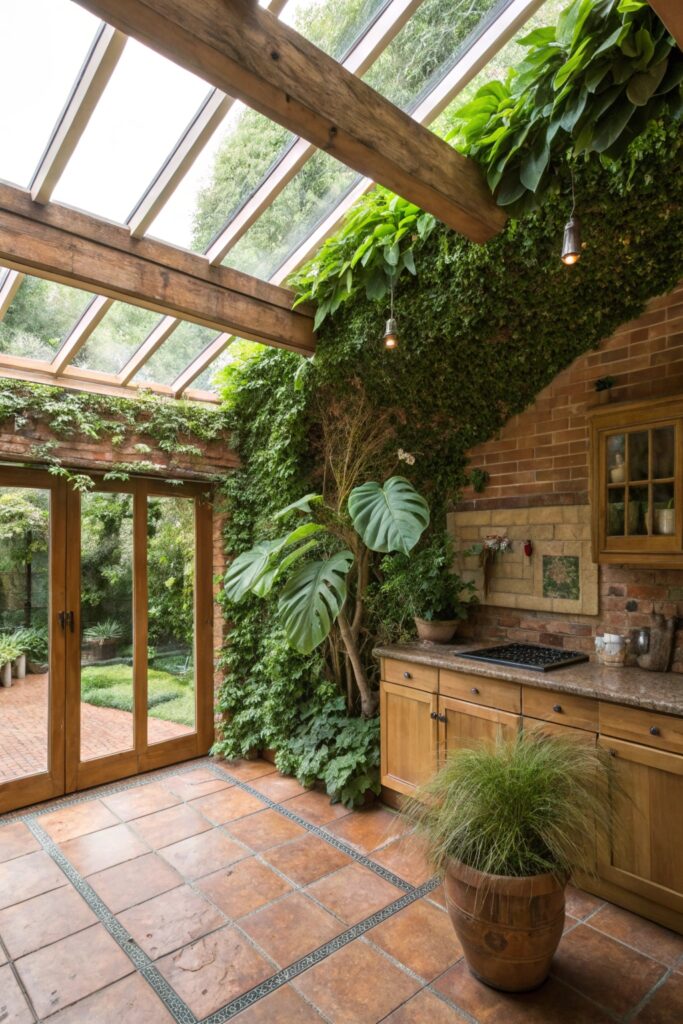
Combined humidity from both cooking and a living plant wall in an already glass-heavy room increases condensation risk on the glass, so proper ventilation becomes more important here than in a solarium kitchen without this added humidity source.
9. Farmhouse Solarium Kitchen with Exposed Brick and Glass
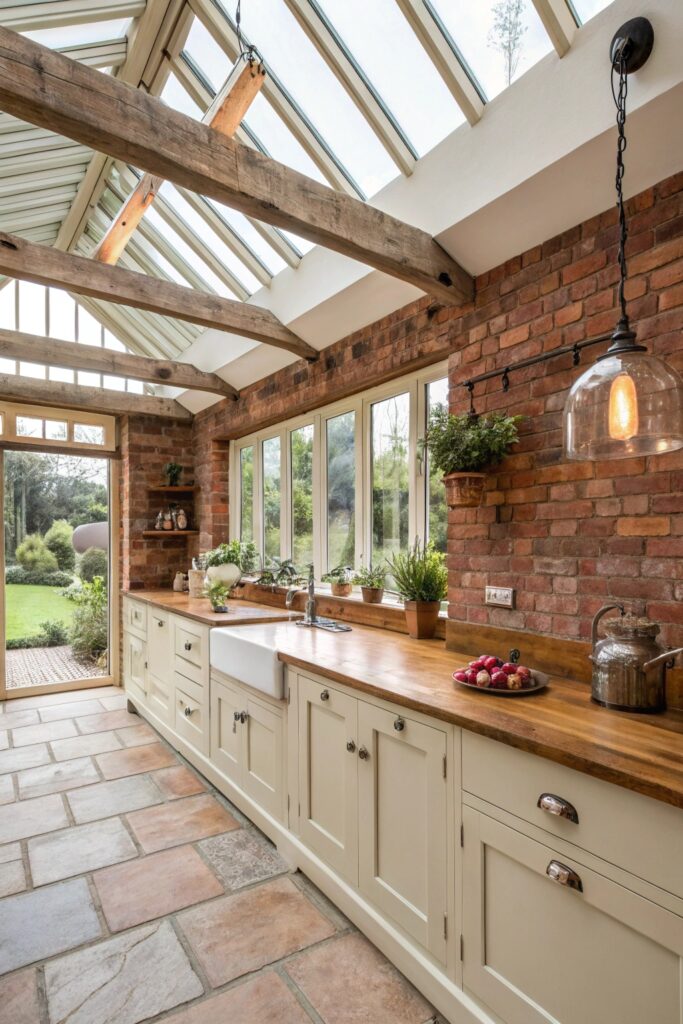
Where brick meets new glazing, proper flashing at that junction matters just as much as it would with any masonry-to-new-construction transition, protecting against water intrusion at a seam between two very different materials.
10. Minimalist White Solarium Kitchen
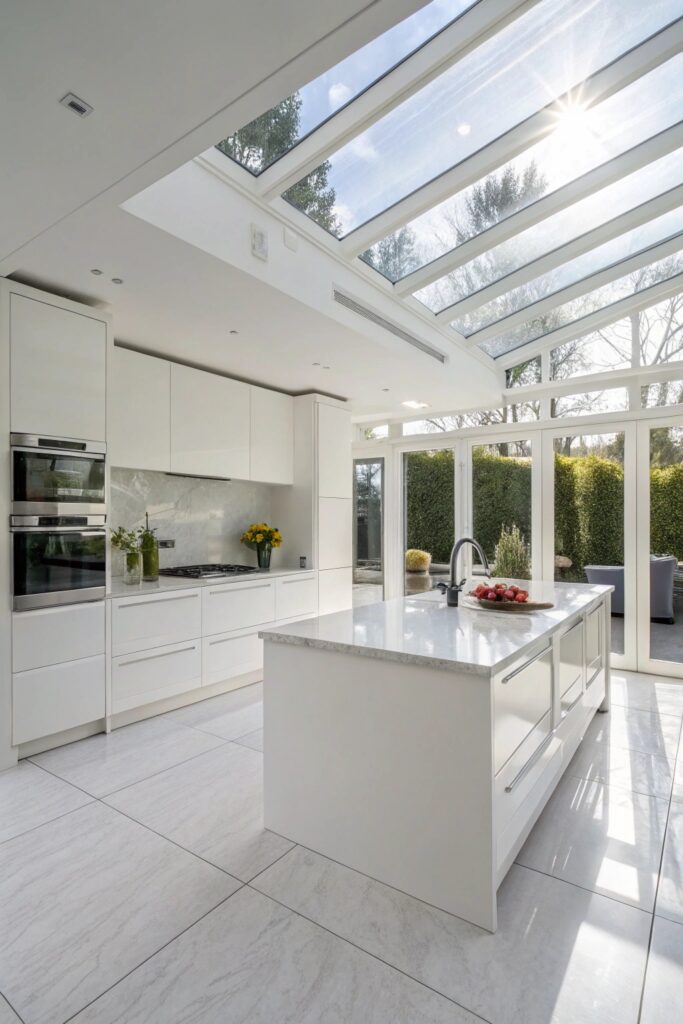
A high-LRV white palette bounces the abundant natural light this style already brings in, reinforcing the airy quality rather than competing with it.
11. Wrap-Around Glass Kitchen with Outdoor Dining Connection
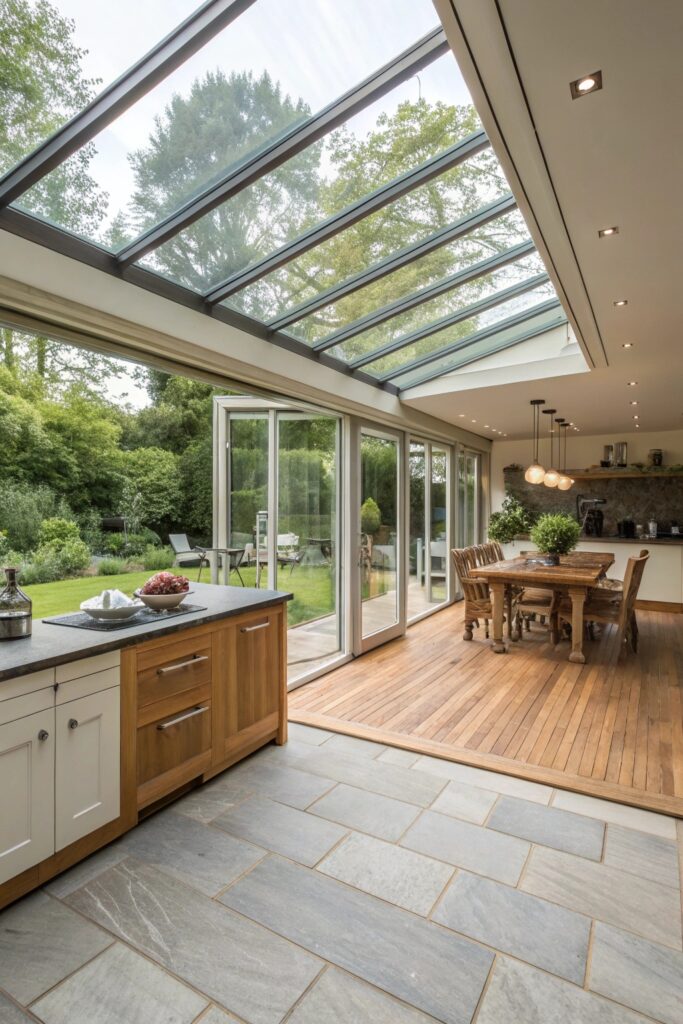
Large sliding or folding glass door systems need a track and threshold that’s both weathertight and low-profile enough to avoid creating a trip hazard where the indoor and outdoor flooring meet.
Window Treatments Worth Planning For
Even with well-specified glazing, most solarium kitchens benefit from some form of shading for the brightest parts of the day — motorized cellular shades or exterior awnings both reduce heat gain and glare without sacrificing the natural light the space is designed around when they’re not deployed.
UV exposure at this scale can fade cabinetry finishes, countertop materials, and flooring faster than in a typical kitchen, so choosing UV-stable materials for surfaces that will see consistent direct sun helps the finished space hold its appearance over years rather than fading unevenly.
What a Solarium Kitchen Costs
A smaller addition with standard glazing and a straightforward roof structure typically starts around $40,000 to $80,000.
A larger, fully custom build with premium glazing, structural steel, and integrated features like a lantern roof runs considerably higher, often $100,000 to $250,000 or more depending on size and specification.
Appliance Placement Needs Extra Thought Here
A range or oven positioned directly under a fully glass roof section works against the space’s own thermal goals, adding heat exactly where the room is already prone to solar gain — positioning cooking appliances along a more shaded or solid wall section, where the layout allows, keeps the kitchen more comfortable to actually use.
Refrigeration also runs less efficiently in a warmer ambient environment, so keeping the fridge away from the sunniest section of the room, rather than treating appliance placement as purely a layout decision, has a real effect on both comfort and energy use over time.
Checking local building codes and, if applicable, HOA guidelines before finalizing a design is worth doing early, since a glass-heavy addition of this scale typically requires permits and sometimes faces more scrutiny than a standard room addition given the structural and glazing specifics involved.
A well-executed solarium kitchen tends to become one of the most used rooms in a home, since the natural light and connection to the outdoors make it a truly pleasant place to spend time well beyond meal preparation, which is worth factoring into the overall value of the investment relative to other renovation options.
Getting quotes from at least two or three specialists before committing helps confirm both the design approach and the pricing are reasonable, since glazing and structural specifications vary considerably between companies, and this level of expertise isn’t as commoditized as standard kitchen renovation work.
A well-planned solarium kitchen brings together good architecture, thoughtful glazing, and genuine daily livability in a way few other renovation projects manage all at once.
Final Thoughts
Across every style here, glazing specification matters more to how well the space actually functions than the architectural style you choose — double or triple glazing, low-E coatings, and solar control films all affect comfort more directly than whether you go Victorian conservatory or minimalist white. Working with a contractor or architect experienced specifically in solarium and conservatory construction, rather than a general contractor unfamiliar with this glazing engineering, helps ensure the finished space performs well through all four seasons rather than just looking good in photos.
Ventilation planning deserves the same attention as the glazing itself, since a beautiful glass kitchen that traps heat and humidity becomes uncomfortable to actually cook in regardless of how well-designed the space looks.