
Garage storage carries real weight and safety considerations that most indoor storage doesn’t, since garages tend to hold disproportionately heavy items — tools, equipment, bins of who-knows-what accumulated over years. The details below cover both the organizational approach and these practical weight and mounting specifics for each system.
Below are 10 garage storage systems worth considering, with the specifics for each.
1. Floor-to-Ceiling Wall Shelving Systems
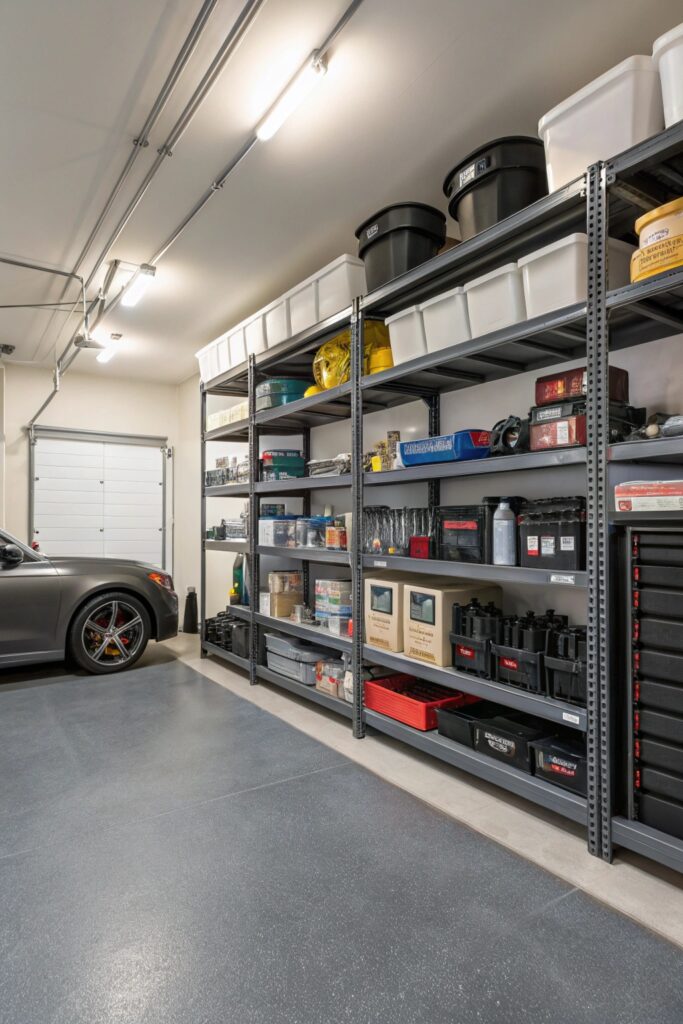
Garage shelving regularly holds heavier items than indoor shelving — power tools, paint cans, bins of holiday decor — so anchoring into studs or, in a masonry garage, using anchors rated specifically for concrete or block matters more here than a standard drywall anchor would handle.
2. Overhead Ceiling Storage Racks
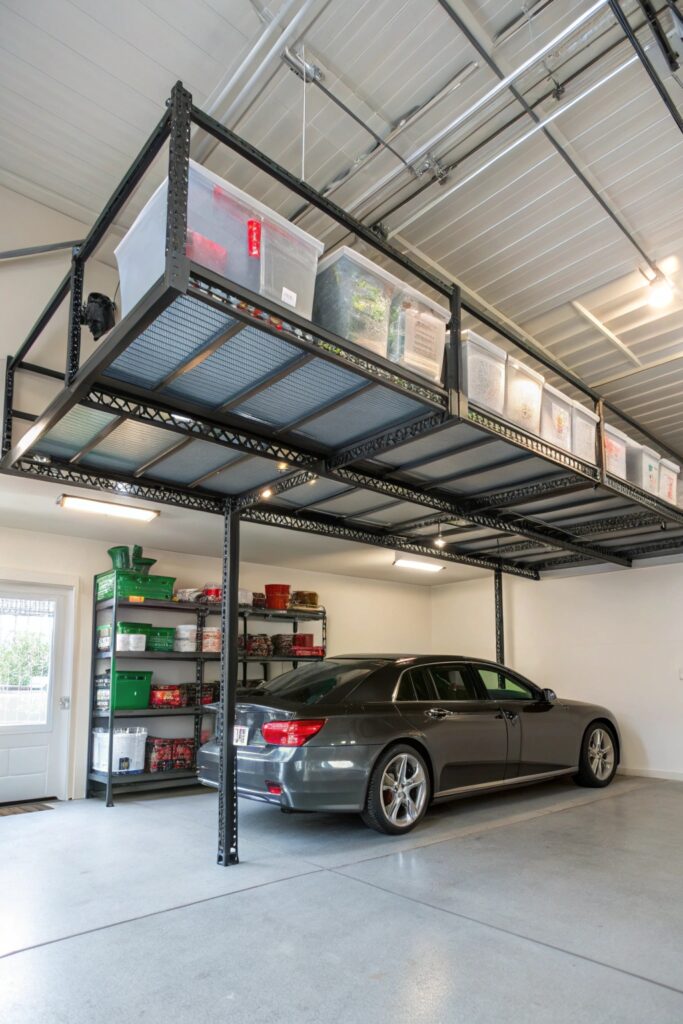
These need to be anchored into actual ceiling joists or trusses rather than drywall alone, and most residential overhead racks carry a real weight rating, commonly 250 to 600 pounds depending on the model — overloading one is a genuine safety risk, not just a durability concern. Leave enough clearance below the rack for the garage door track and opener mechanism, and confirm it won’t interfere with a parked vehicle’s roof height.
3. Pegboard Tool Wall
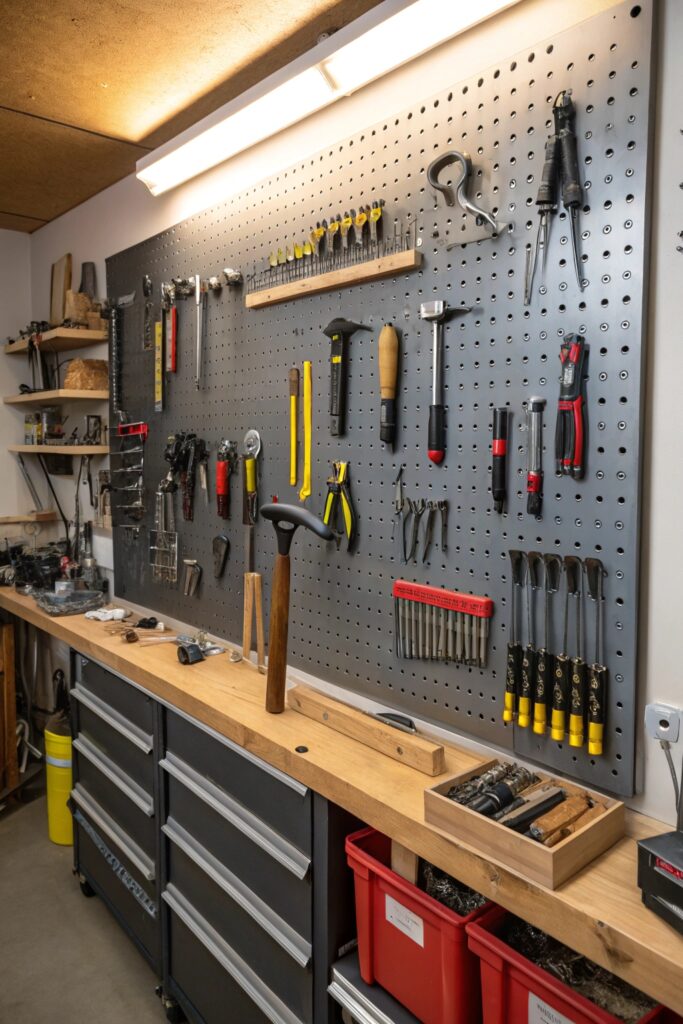
Pegboard needs backing or spacer strips, typically a quarter to half an inch of standoff from the wall, for hooks to actually insert and hold properly — mounting pegboard flush against the wall without this gap defeats the point of the system. Standard hole spacing is 1 inch on-center, which is worth knowing when shopping for compatible hooks and accessories.
4. Modular Cabinet System

Garage-rated cabinets are often built from moisture-resistant material or steel rather than standard particleboard, since an unconditioned garage sees far more temperature and humidity swings than an indoor room, and standard indoor cabinetry doesn’t hold up the same way here.
5. Bike Storage Wall Mounts and Pulley Systems
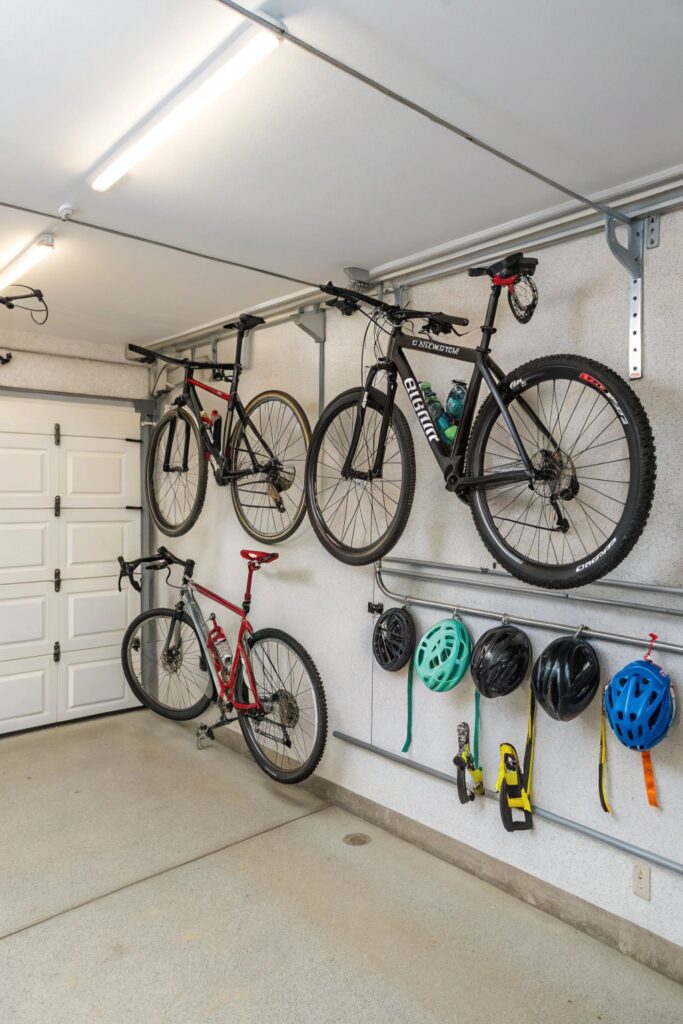
A pulley system needs a ceiling anchor point rated for the bike’s actual weight, and the cleats or knots holding it in place should be inspected periodically, since a bike falling from an overhead pulley is a real hazard worth taking seriously rather than a remote possibility.
6. Slatwall Panel Storage System
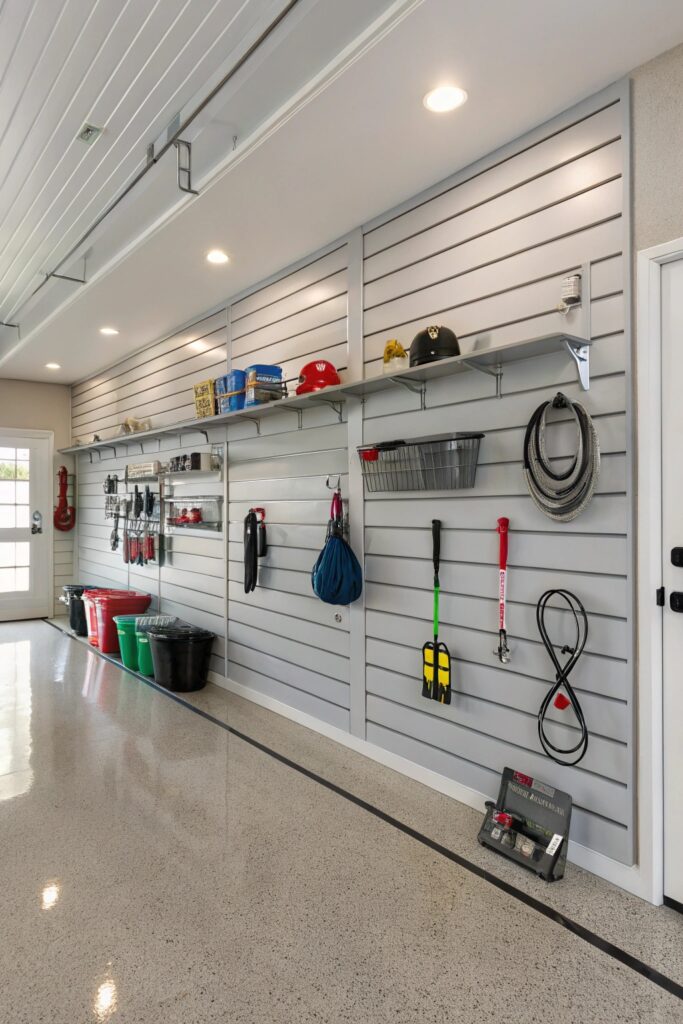
The panel itself is only as strong as its mounting into wall studs — the individual hook weight ratings printed on packaging assume the panel behind them is securely fastened, not just resting against the wall.
7. Workbench with Built-In Storage
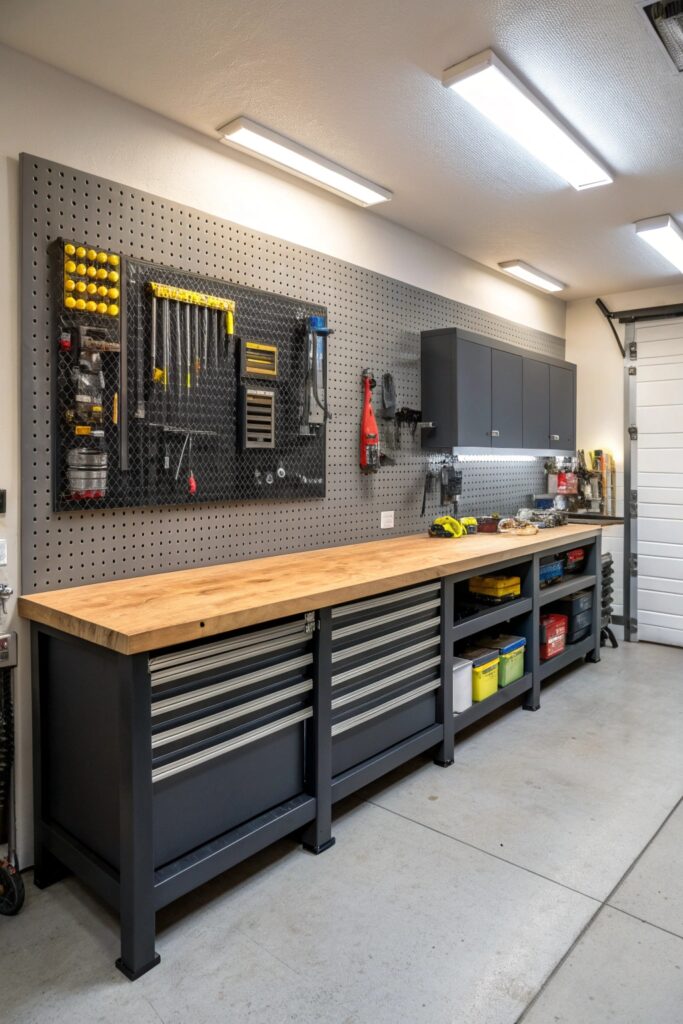
A standard workbench height of 34 to 36 inches suits most standing tasks without causing the back strain a too-low surface creates over repeated use. A butcher block or hardwood top resists dents and holds up to actual tool use considerably better than particleboard.
8. Clear Labeled Storage Bins on Shelving
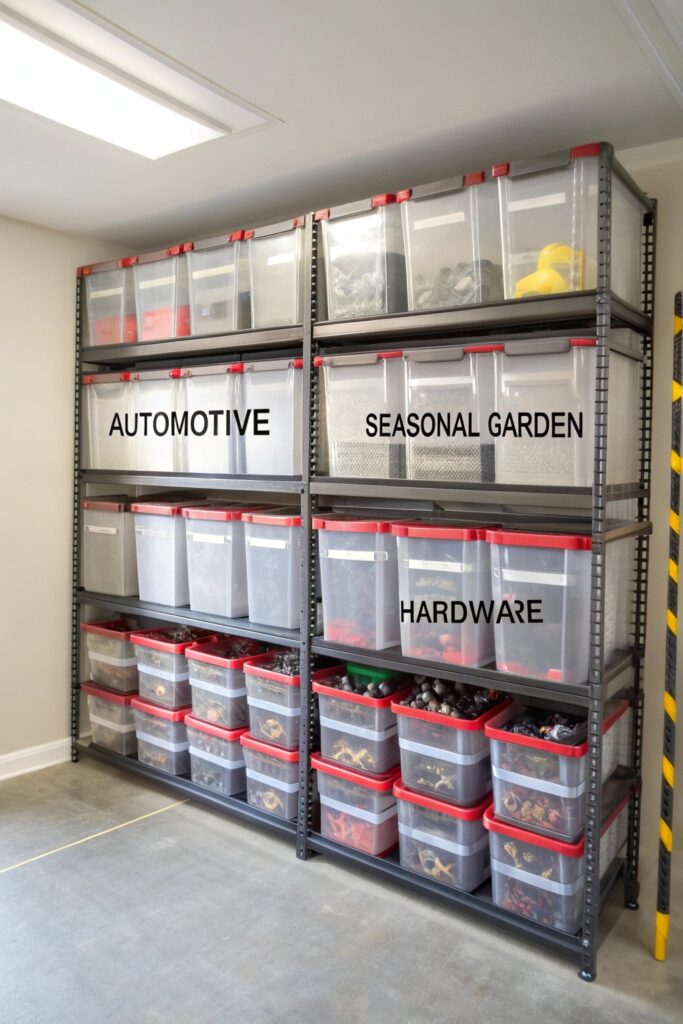
Bins stored in an unconditioned garage should be rated for temperature extremes, since some plastics become brittle in freezing weather or warp in summer heat. Certain items — some paints, electronics, specific foods — are truly temperature-sensitive regardless of bin quality and are better stored somewhere climate-controlled.
9. Corner Storage Tower and Rotating Carousel
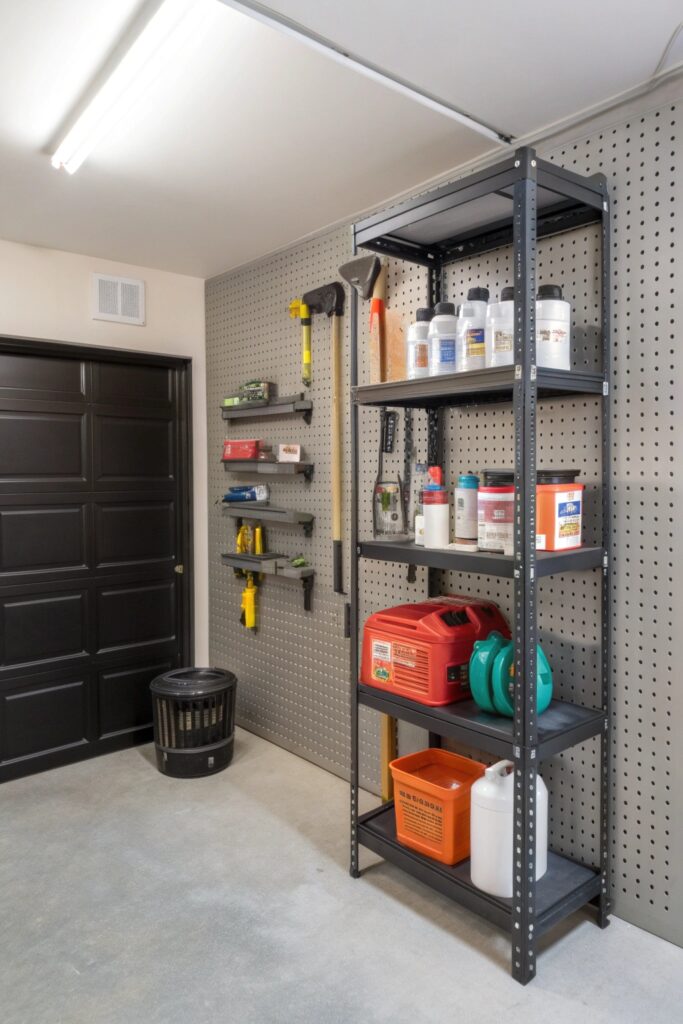
Rotating mechanisms benefit from periodic lubrication to keep turning smoothly, similar to any mechanical storage system — treating this as a maintenance-free installation tends to lead to a stiffer, harder-to-use carousel within a year or two.
10. Sports Equipment Organizer Zone
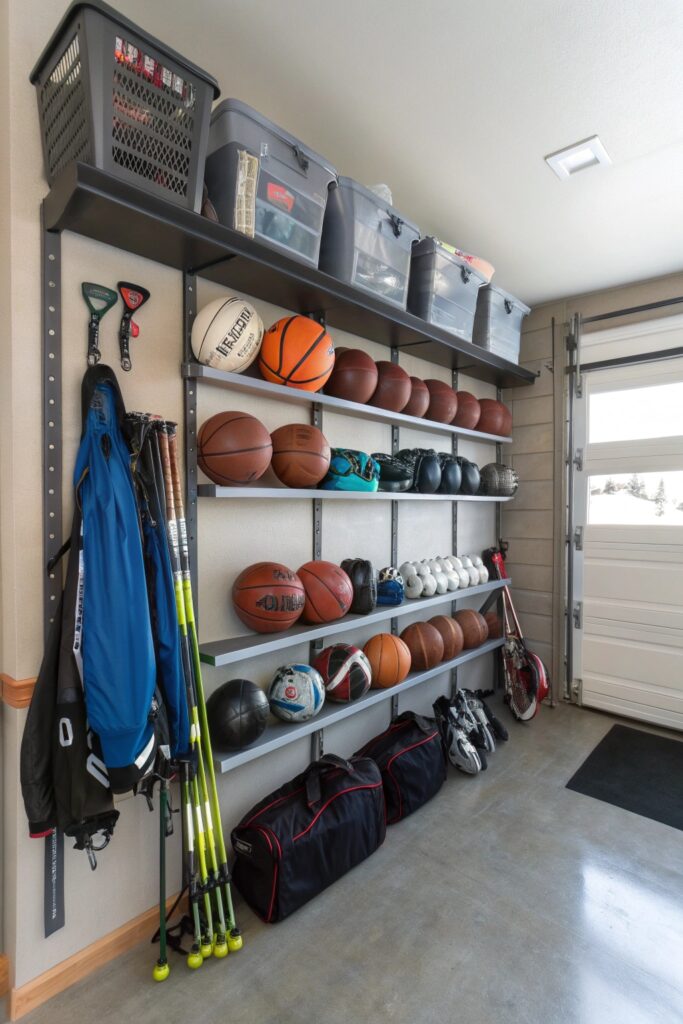
Keep especially heavy items, like weight equipment, at lower storage heights rather than overhead, both because overhead racks have weight limits worth respecting and because heavy items are simpler and safer to access at a reasonable height.
Flooring Considerations for a Functional Garage
Epoxy or polyaspartic floor coatings resist oil stains, tire marks, and general wear considerably better than bare concrete, which makes cleanup easier and protects the floor over years of vehicle and equipment traffic.
If the garage floods occasionally or sees consistent moisture, keeping storage bins and shelving units elevated a few inches off the floor — rather than sitting directly on it — protects the contents from water damage during those events.
What a Garage Storage Overhaul Costs
A basic setup with shelving, a pegboard, and some labeled bins typically costs $200 to $600 depending on materials and how much of the garage you’re outfitting.
A fuller system with overhead racks, modular cabinetry, and slatwall panels runs considerably higher, often $1,500 to $5,000 or more depending on the brand and scope.
Safety Storage Worth Planning For Separately
Flammable materials like gasoline, propane tanks, and certain solvents need dedicated, well-ventilated storage away from any heat source, including a water heater or furnace if either is located in the garage — this is a genuine fire safety consideration, not just an organizational preference.
Keeping a fire extinguisher rated for the types of materials actually stored in the garage, mounted somewhere easily accessible rather than buried behind other storage, is a small addition worth including in any garage organization project.
Zoning the Garage Around Actual Use
Grouping items by how often they’re used, rather than purely by category, tends to make a garage more functional day to day — seasonal items and rarely used equipment can go higher or further back, while tools and gear used weekly should stay within easy reach near the entrance or workbench.
Leaving an actually clear path to the garage door opener’s manual release and the main electrical panel, if either is located in the garage, matters for both convenience and safety — these shouldn’t end up blocked behind storage additions made over time.
A well-organized garage tends to get maintained more easily than one that was never properly set up in the first place, since clear zones and labeled storage make it obvious where something belongs, which reduces the gradual clutter creep that unstructured garage storage is especially prone to over time.
Whichever combination of these systems fits your garage and budget, prioritizing the weight and safety considerations first, before finalizing the aesthetic layout, sets up a space that actually holds up to years of real use rather than looking organized only in the first few months.
Final Thoughts
Weight capacity is the thread running through nearly every idea here — whatever system you choose, confirming the actual rated capacity of shelving, overhead racks, and wall-mounted hooks against what you actually plan to store prevents both a failed installation and a real safety hazard. This matters more in a garage than almost any other storage space in the house, given how much heavier the typical contents are.
Starting with an honest inventory of what actually needs to live in the garage — separating out anything temperature-sensitive that belongs elsewhere — helps you size the right combination of these systems rather than over- or under-building for the space’s real storage needs.