
A garage door is one of the largest moving mechanical components on a home’s exterior, so weight and opener compatibility deserve as much attention as the visual style — a beautiful design that overloads your existing opener creates a real functional problem. The details below cover both the design direction and these practical specifics for each style.
Below are 10 garage door styles worth considering, with the specifics for each.
1. Carriage-Style Barn Door Design
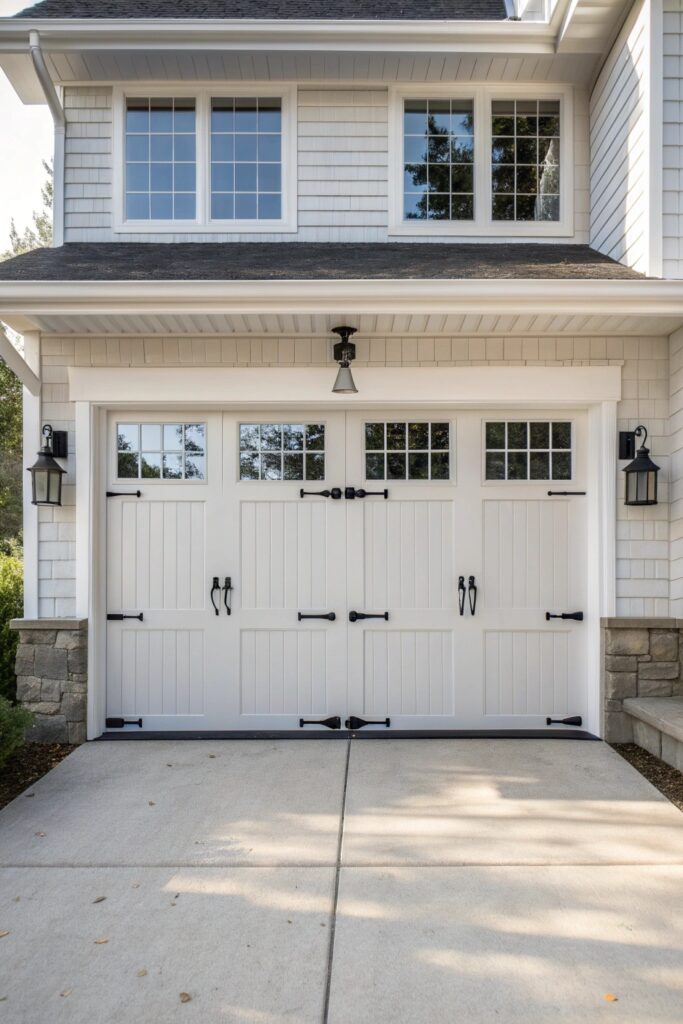
Decorative strap hinges and handles add real weight to a standard sectional door, so confirming the garage door opener is rated for that additional weight — not just the base door panel — matters before installation rather than after.
2. Modern Aluminum and Glass Garage Door
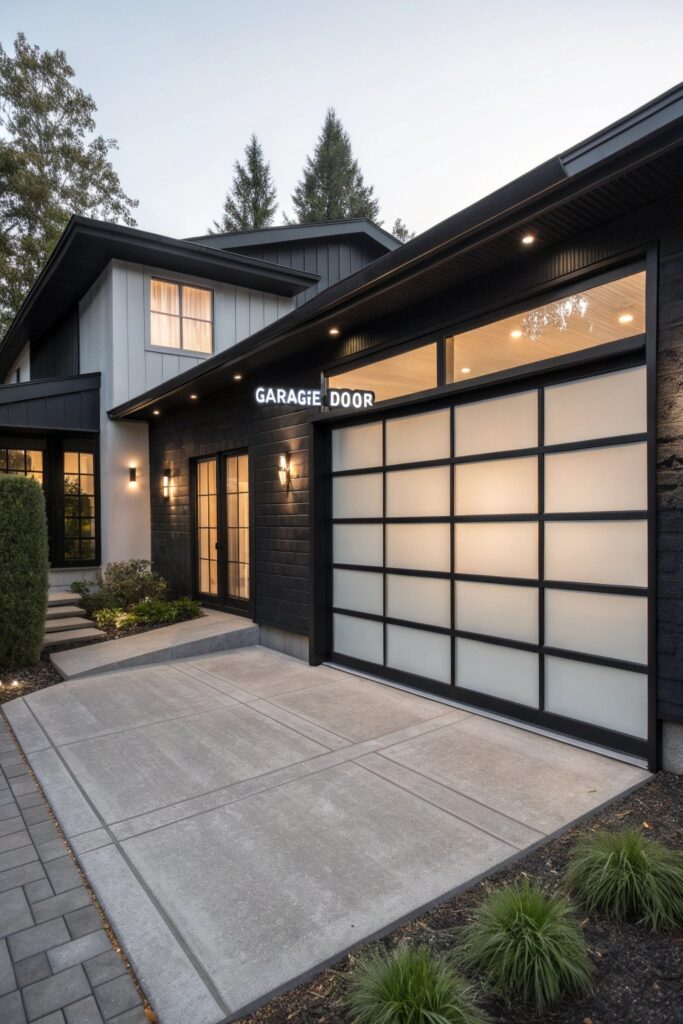
Glass panels need safety-rated glazing, either tempered or laminated, given their exposure to potential impact. Aluminum frames are lighter than steel but dent more easily, a real trade-off worth weighing against steel’s added durability.
3. Wood Grain Textured Garage Door
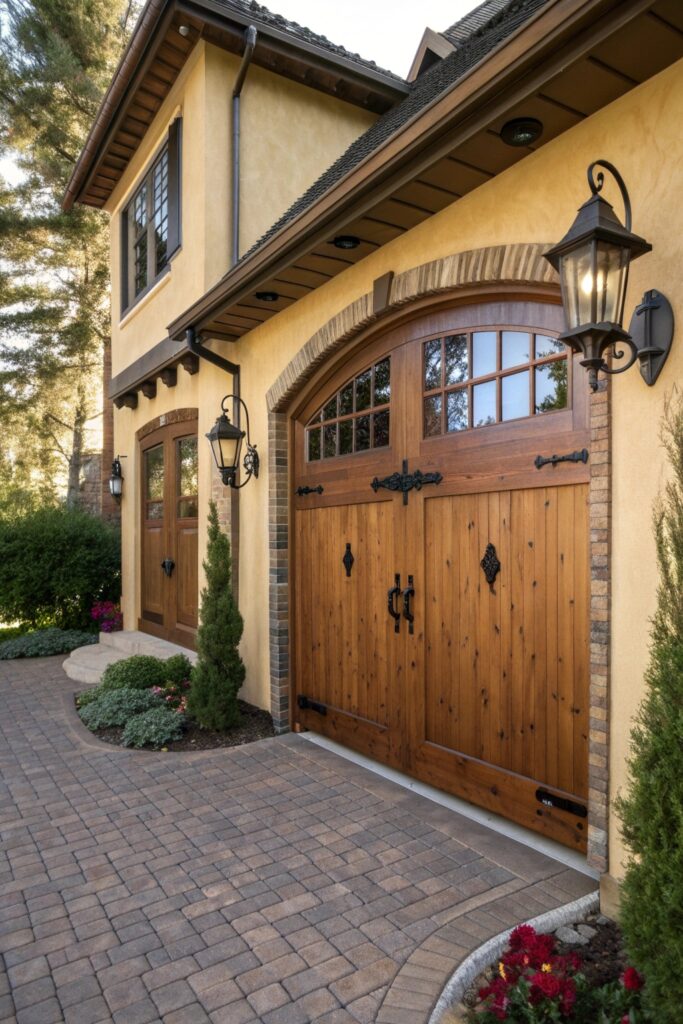
These are typically steel or composite doors with a printed or embossed wood-look finish rather than real wood, which means no warping or rot risk, though the finish itself has a different maintenance profile than staining actual wood grain.
4. Matte Black Steel Garage Door
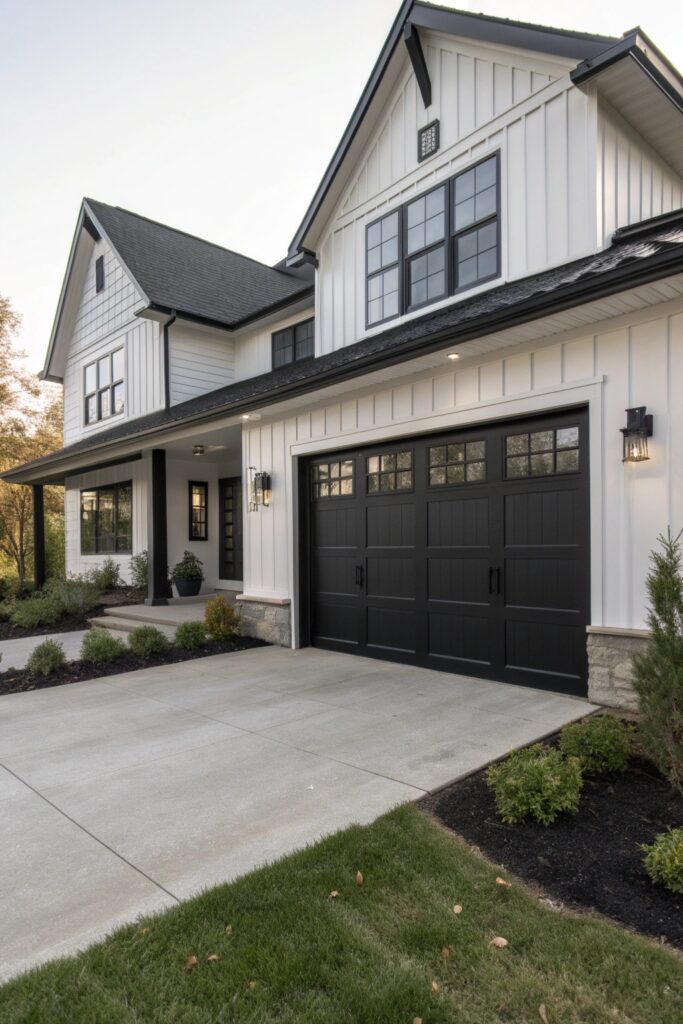
Matte black absorbs more heat than lighter colors, so confirming the specific door material is rated for that added heat absorption matters in consistently sunny climates, where some composite materials can warp under intense, prolonged heat exposure.
5. Reclaimed Wood Garage Door
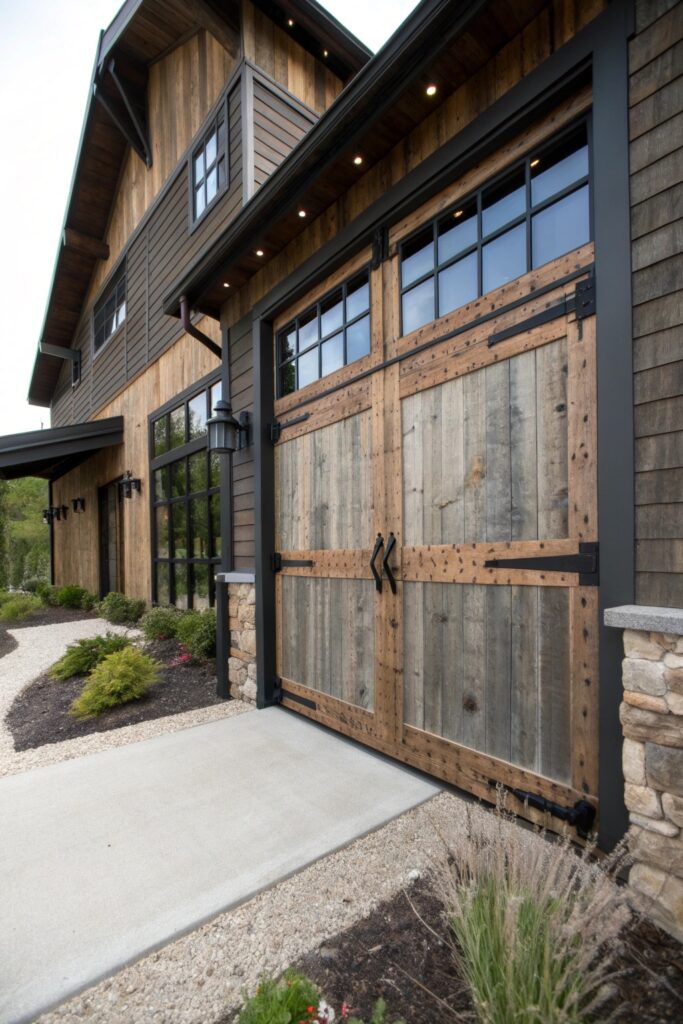
A genuine wood door is considerably heavier than steel, which requires an opener and spring system specifically rated for that added weight — this isn’t a detail to overlook when switching from a lighter material to real wood.
6. White Raised Panel Traditional Garage Door
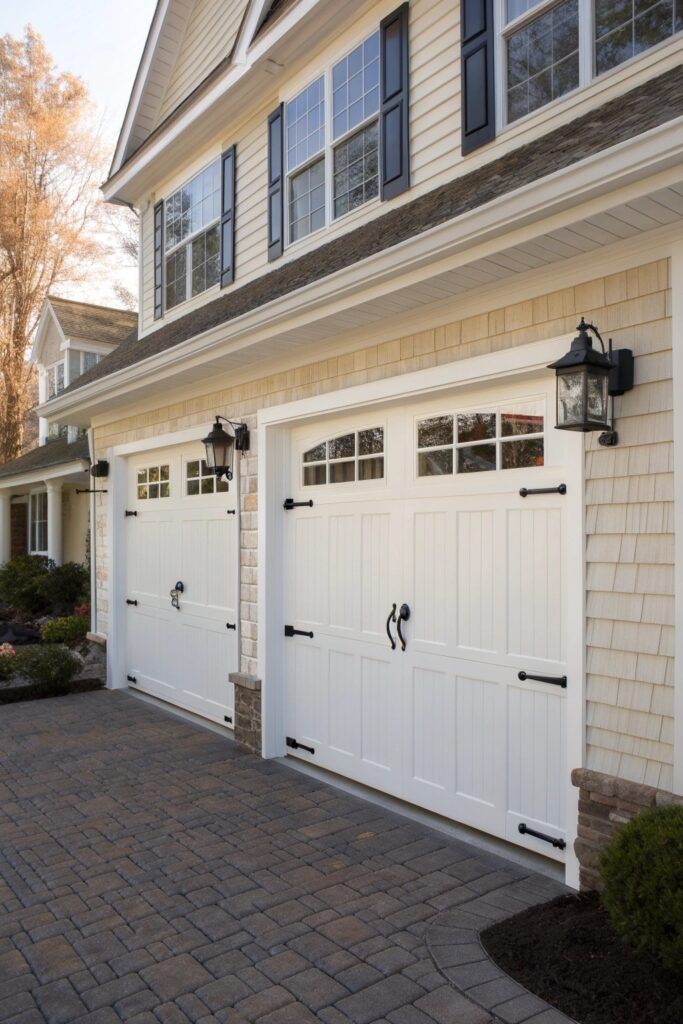
Touch-up paint shows more visibly at the panel edges and recesses on a raised panel door than on a flat one, so keeping the same paint batch on hand for future touch-ups helps avoid a noticeable color mismatch down the line.
7. Dark Green Garage Door
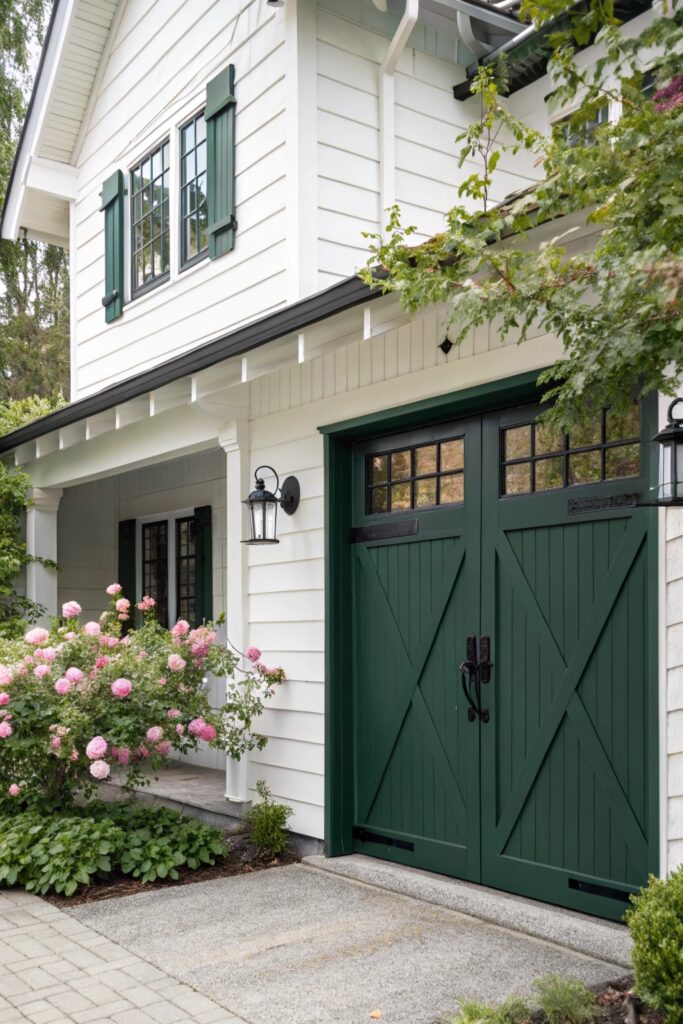
A deep, low-reflectance color absorbs more heat than a lighter one, which is worth factoring into material choice the same way it matters for any dark exterior color choice in a sunny climate.
8. Side-Hinged Garage Door
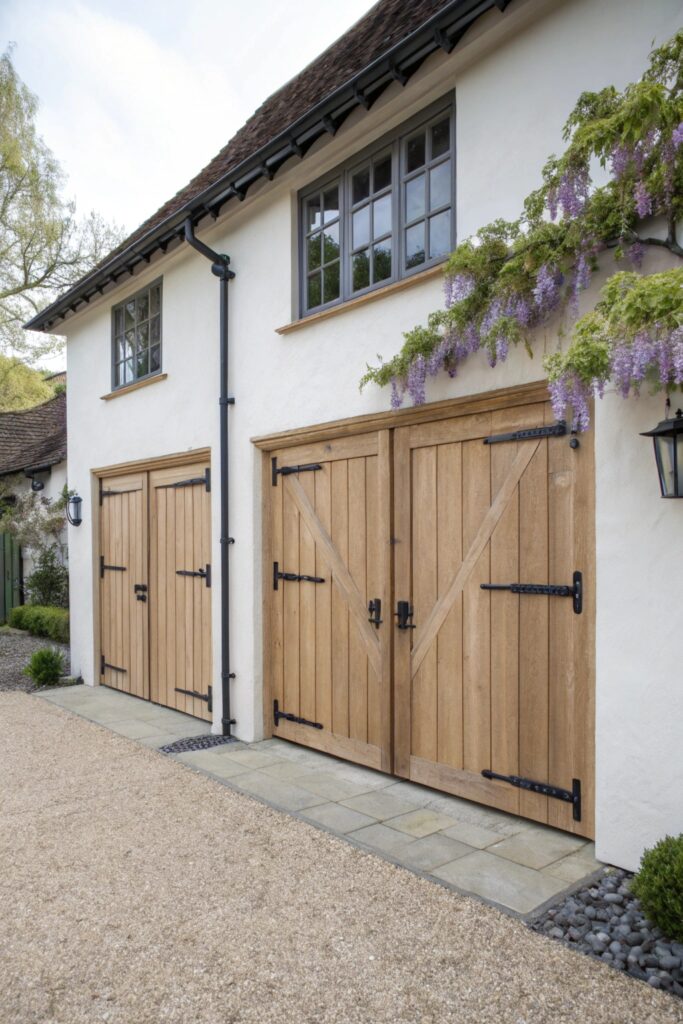
This style doesn’t need the overhead track and spring system a standard sectional door relies on, but it does require adequate side clearance for the door’s swing, and automated opener options are more limited and typically costlier than for a standard overhead door.
9. Navy Blue Garage Door with Brass Hardware
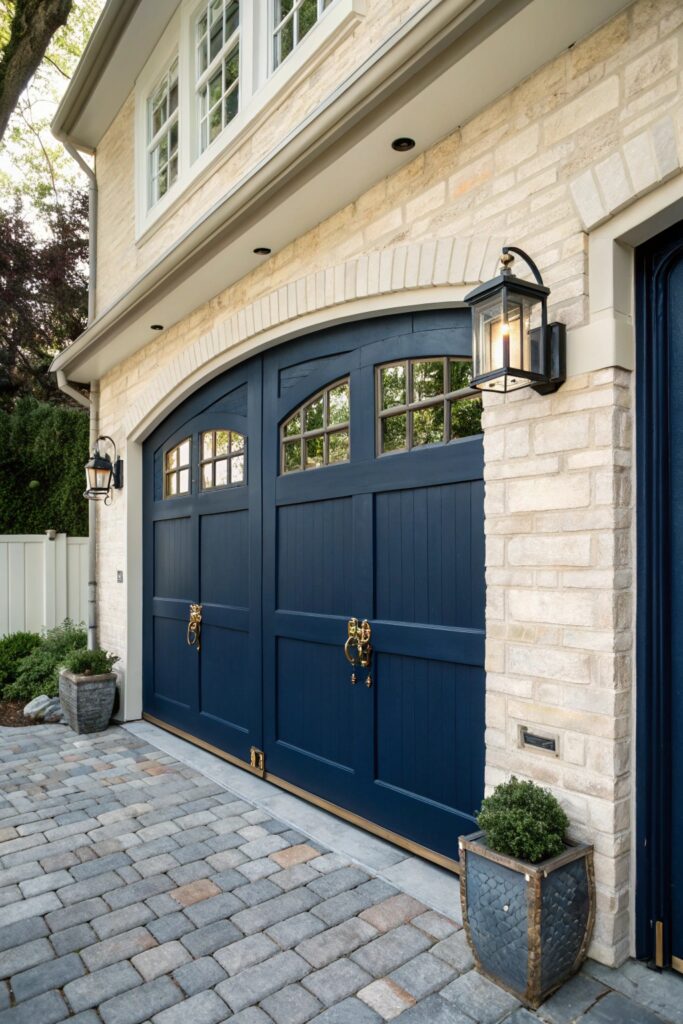
A navy with a warm undertone pairs more naturally with brass than a cool-leaning navy does, the same undertone-matching principle that applies to any color and metal pairing elsewhere on a home’s exterior.
10. Contemporary Flush Panel Garage Door
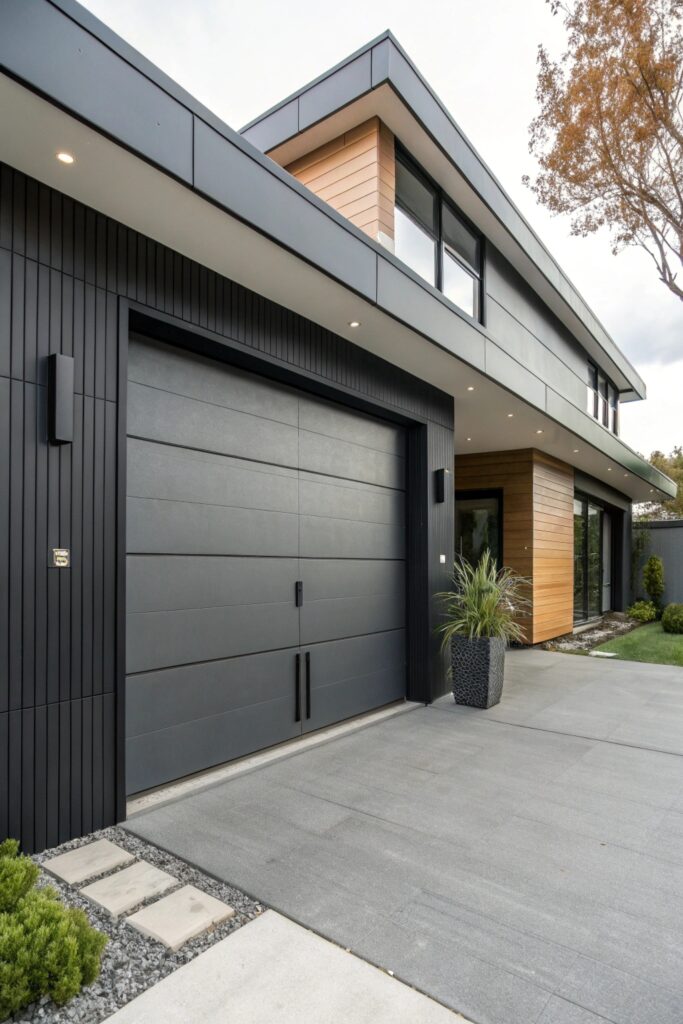
A smooth, unpaneled surface shows dents and scratches more visibly than a textured or paneled door, since there’s no surface break to help hide minor damage — choosing a higher-gauge steel adds real dent resistance if you’re set on this minimalist look.
Insulation Ratings Worth Understanding
An insulated garage door’s R-value indicates how well it resists heat transfer, which matters more if the garage is attached to living space or used as a workshop than it does for a fully detached, unheated garage.
Higher R-value doors typically cost more upfront but can meaningfully reduce temperature swings in an attached garage, which indirectly affects the comfort of any rooms sharing a wall with that space.
What a Garage Door Replacement Costs
A basic steel sectional door typically costs $800 to $2,000 installed, depending on size and insulation level.
A custom wood, carriage-style, or glass-and-aluminum door runs considerably higher, often $3,000 to $8,000 or more depending on materials and any structural modifications needed.
Checking HOA Guidelines Before Ordering
Many homeowners associations have specific rules about garage door colors, materials, and even window placement, so reviewing any governing documents before finalizing a design saves the cost and hassle of ordering a door that doesn’t meet approval.
Even without an HOA, some municipalities have exterior modification requirements worth confirming, particularly for a more unconventional choice like a side-hinged door or an unusually bold color.
Coordinating With the Rest of the Exterior
A garage door often accounts for a significant portion of a home’s front-facing visual space, so matching its color and material language to the front door, trim, and siding creates a more cohesive look than treating it as an isolated design decision.
Pulling a paint sample or material swatch of your existing exterior finishes when shopping for a new garage door helps confirm the pairing works together before committing to a full installation, since undertone mismatches between a new door and existing siding are easy to miss without a direct comparison.
A garage door replacement consistently ranks among the higher-return exterior projects for resale value, which is worth factoring in alongside personal preference if you’re weighing this project against other home improvement priorities competing for the same budget.
Testing a physical sample or full-size mockup against your actual garage opening, rather than relying only on a small swatch or an online rendering, gives a more accurate sense of how a color or material will read at true scale before committing to the full installation.
Whichever style ultimately fits your home best, this is one exterior update that both improves daily curb appeal and holds up well as a long-term investment, provided the underlying mechanical components — opener, springs, and track — are properly matched to whatever door you choose.
Scheduling an annual inspection of the door’s hardware, springs, and opener, similar to any other mechanical system in the home, catches wear before it results in a stuck or malfunctioning door, which is a far more disruptive problem than routine maintenance would have been.
Weatherstripping around the door’s perimeter also deserves periodic attention, since worn seals let in drafts, moisture, and pests regardless of how well-maintained the door panel and mechanical components otherwise are, and replacement seals are a relatively inexpensive fix compared to most other garage door repairs.
Final Thoughts
Whichever style you choose, confirming your existing opener and spring system can handle the new door’s actual weight — or budgeting for an upgraded opener if switching to a heavier material like real wood — prevents a functional problem down the line that no amount of styling can fix after the fact.
Getting quotes from at least two or three installers before committing helps confirm both pricing and whether your specific home’s opening size and structural details work with the style you’re considering, since not every design option fits every garage opening without modification.