
Several of these techniques work by directing the eye upward or lengthwise rather than side to side, which is the core principle behind making a narrow hallway feel less confined without any actual construction. The details below cover both the visual technique and the practical specifics for each idea.
Below are 10 approaches worth considering, with the specifics for each.
1. Use Vertical Stripes to Draw the Eye Upward
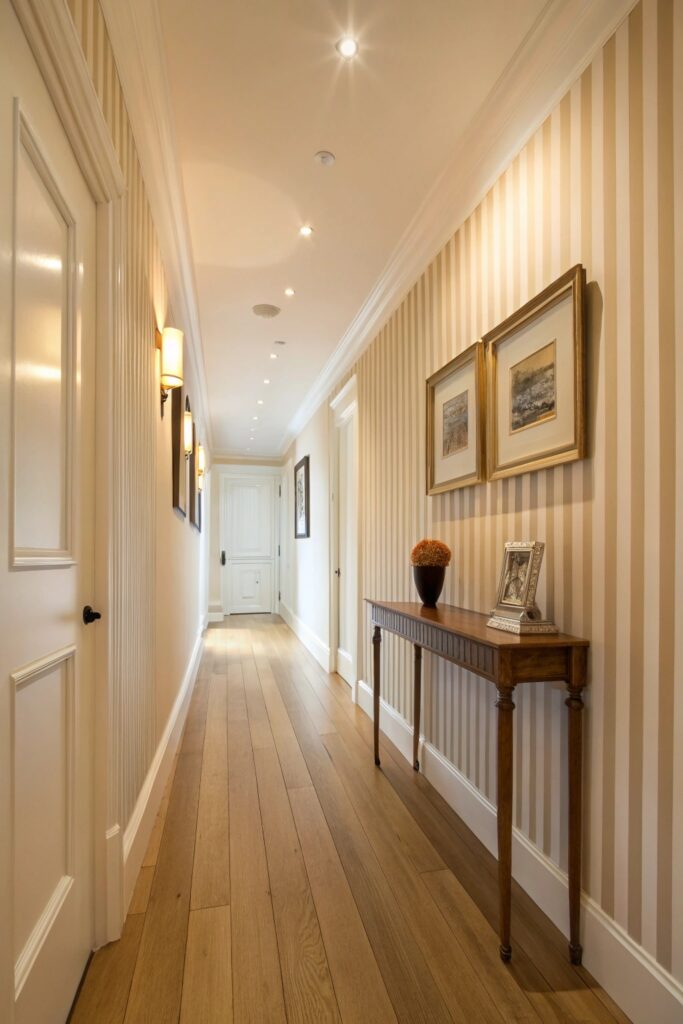
Vertical lines pull attention up and down rather than side to side, which reduces how much the eye registers the hallway’s actual width. Narrower stripe spacing tends to read as more subtle and sophisticated in a tight space than very wide stripes, which can start to feel bold or busy once they’re surrounding you on both sides.
2. Install a Full-Length Mirror
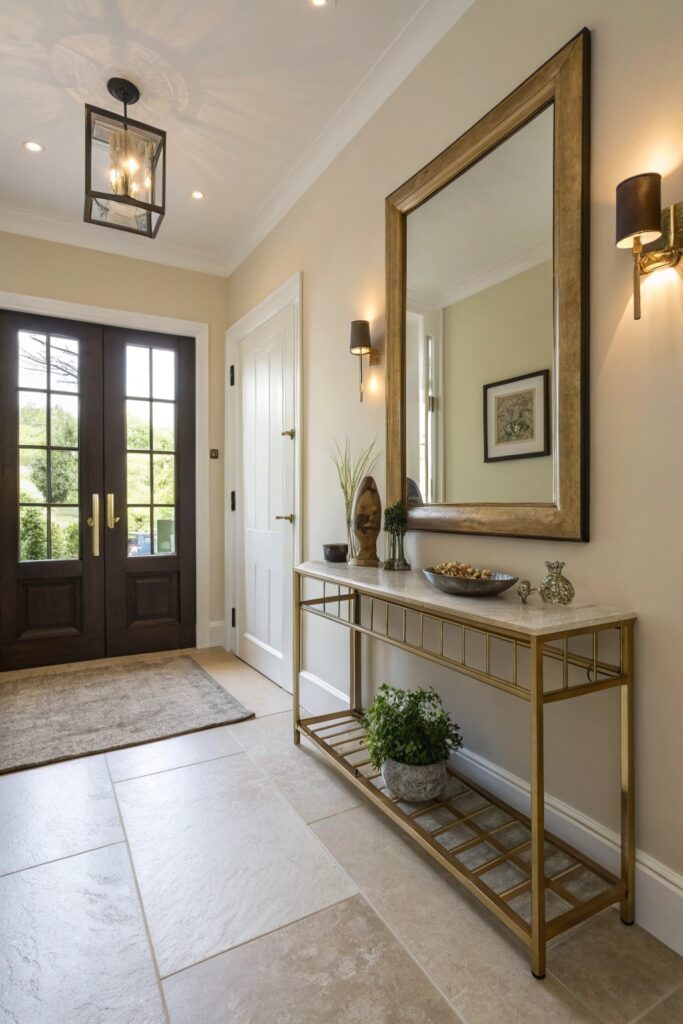
Position the mirror to reflect a light source or the view down the hallway itself, rather than facing a blank wall, since this is what actually creates the illusion of added depth. Choosing a mirror narrower than the hallway avoids visually chopping the space in an already tight area.
3. Choose Light, Reflective Paint Colors
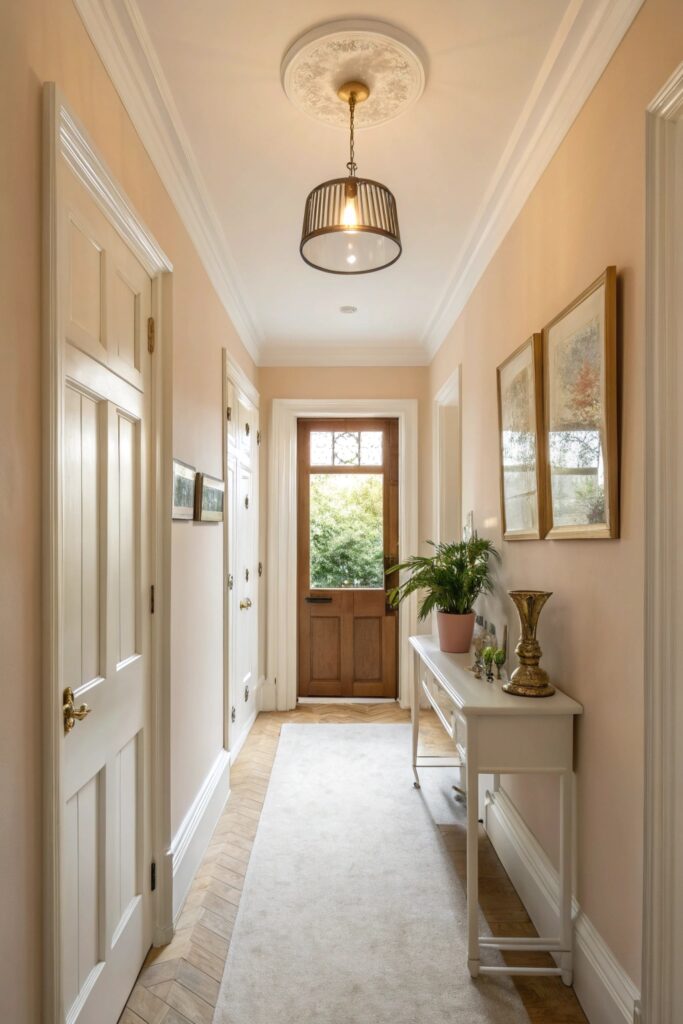
A satin or eggshell sheen reflects more of whatever light is available than a flat finish, which matters more in a hallway than most rooms, since hallways often lack their own natural light source and depend on light bouncing in from adjacent rooms.
4. Add Recessed Wall Niches for Storage
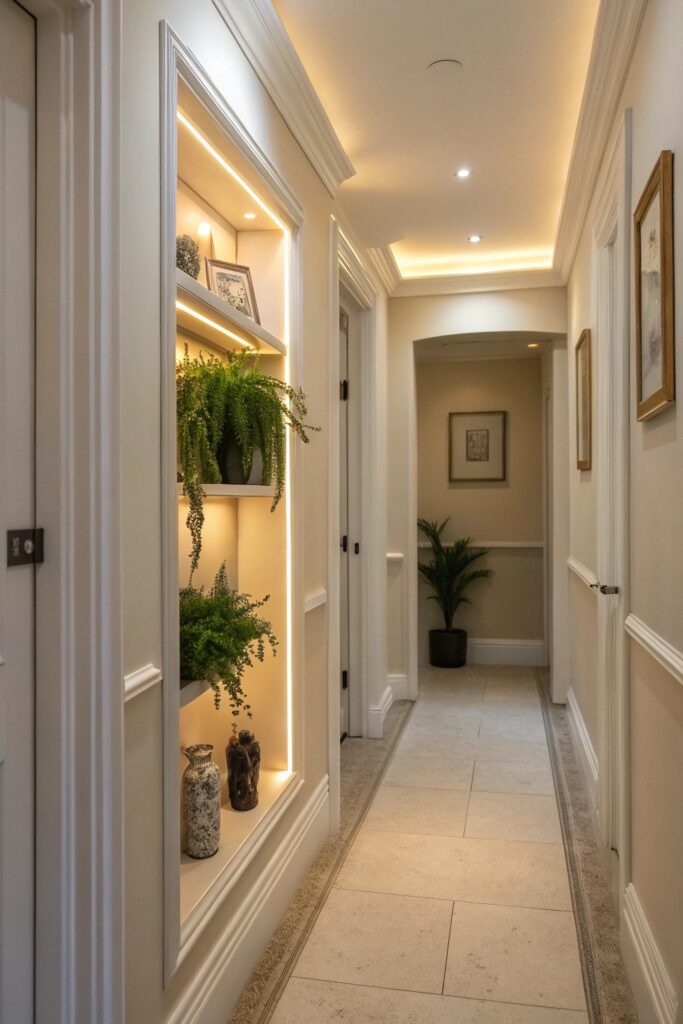
A niche needs to be cut into the wall cavity itself rather than protruding outward, since there’s no spare width to give up — this requires confirming the wall has enough depth, typically at least 3.5 inches for a standard stud wall, and checking for plumbing or electrical lines before cutting in.
5. Use Slim Console Tables and Wall-Mounted Storage
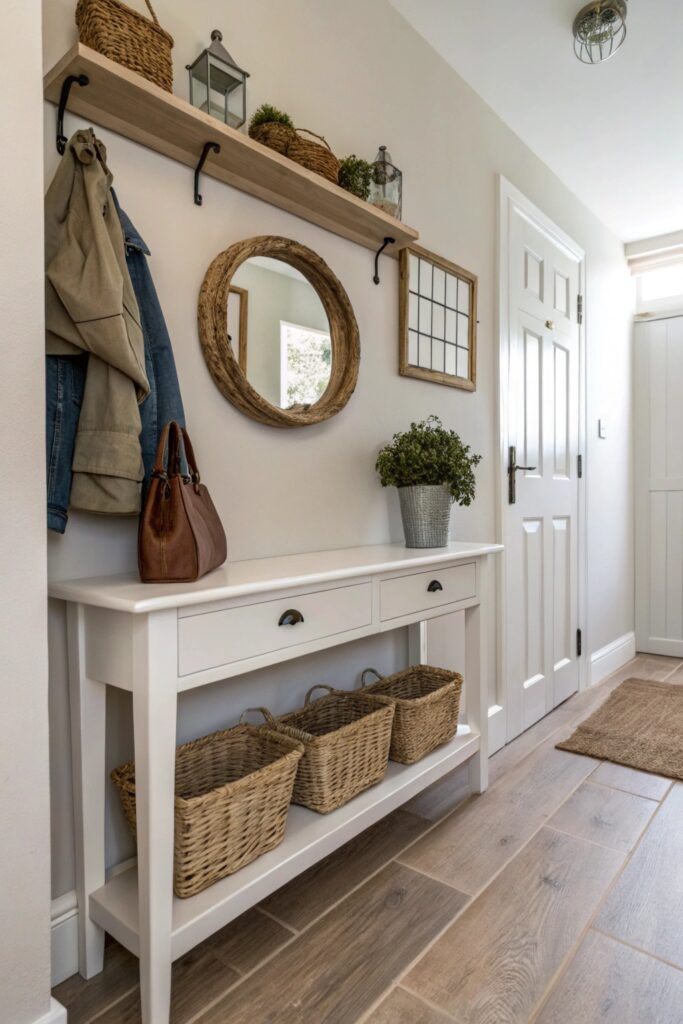
A console in a truly narrow hallway should run no more than 10 to 12 inches deep, and leaving at least 30 to 36 inches of clear walking path past it keeps the hallway functional rather than an obstacle course.
6. Install Continuous Flooring From Hallway to Adjacent Room
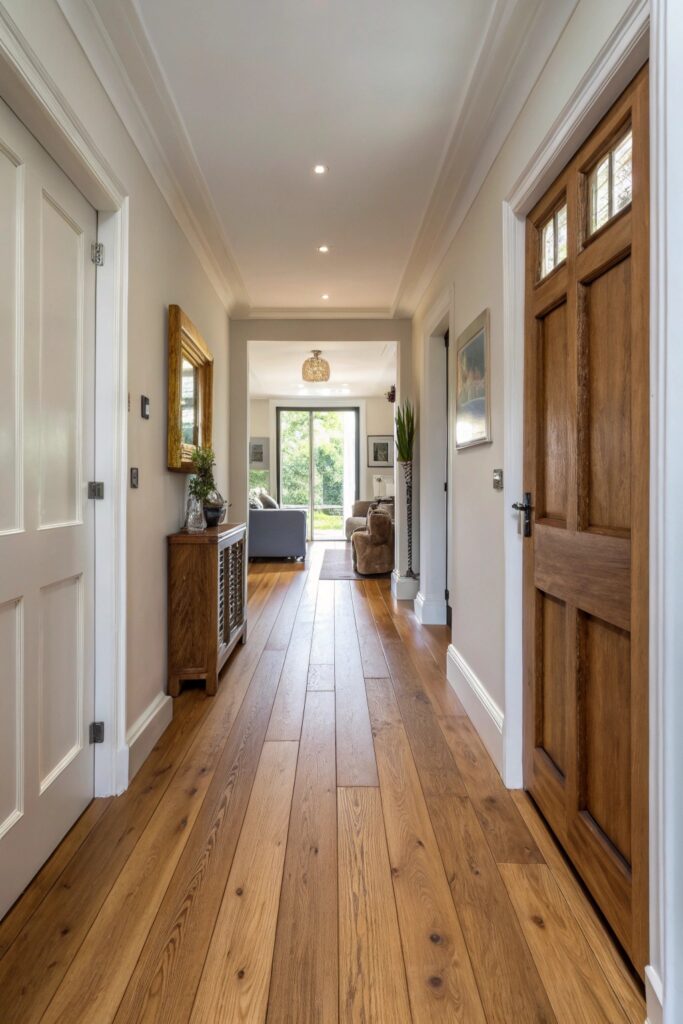
A visual break at the threshold — a different material or a transition strip — makes the hallway read as its own separate, boxed-in space, while continuous flooring removes that stopping point and lets the eye perceive the hallway and the room beyond as one larger continuous area.
7. Add Lighting at Multiple Heights
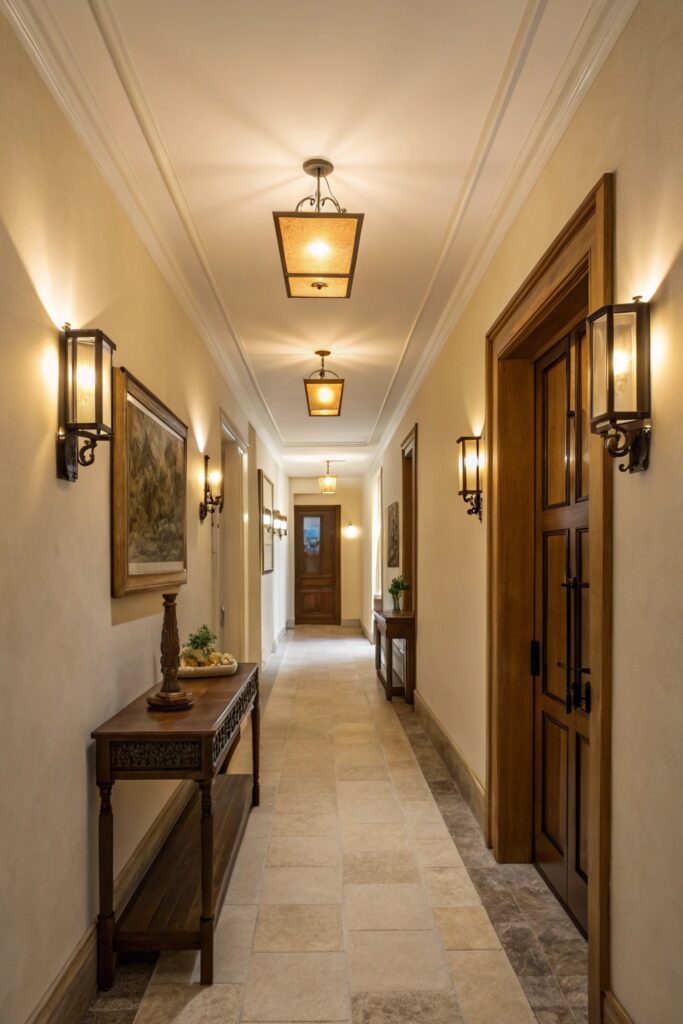
Layering wall sconces with overhead lighting avoids the harsh, flat shadows a single overhead source tends to create in a narrow space. Mount sconces high enough to clear head height for anyone walking past, typically 60 inches or more from the floor.
8. Use a Runner Rug to Create Depth
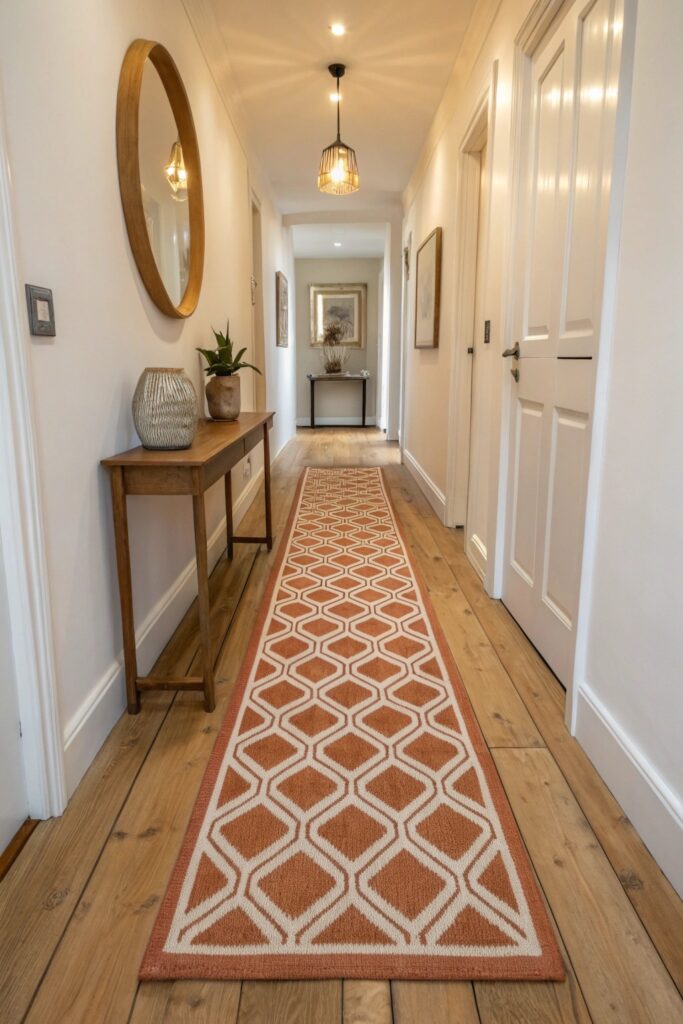
Leave 3 to 6 inches of bare floor visible on each side of the runner relative to the hallway’s width, since a runner that spans nearly wall to wall reads more like fitted carpet than an intentional rug. Stopping the runner a foot or so short of the hallway’s end, rather than running it the full length, also helps it read as a placed rug rather than wall-to-wall coverage.
9. Mount Artwork Vertically Rather Than Horizontally
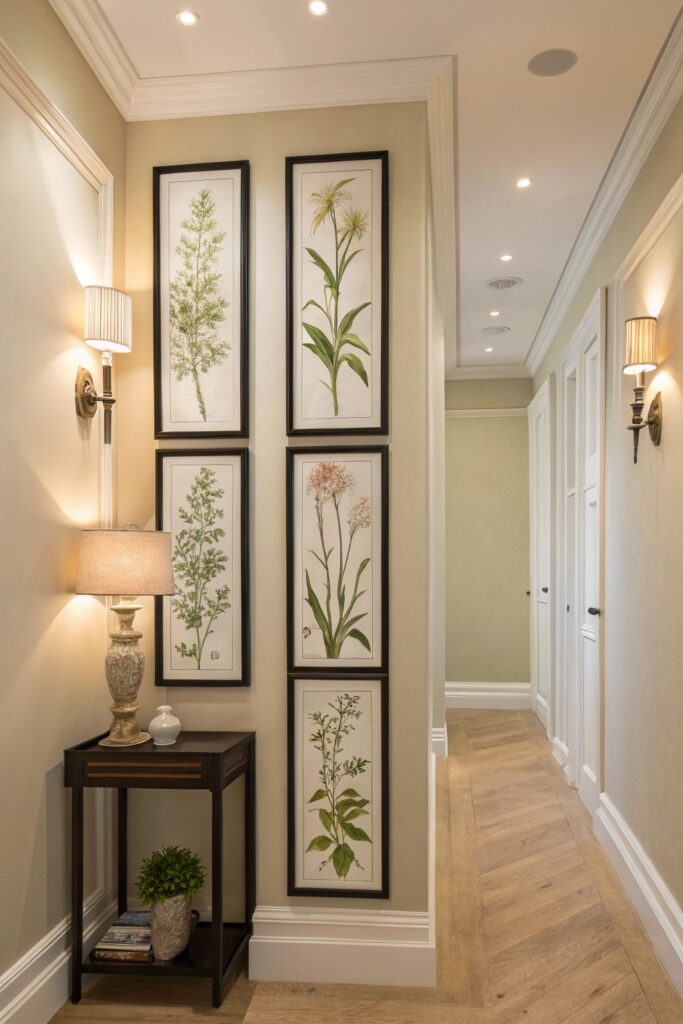
Vertically oriented frames or a vertically stacked gallery arrangement reinforce the same upward visual pull as striped walls, while wide horizontal pieces tend to emphasize exactly the width constraint you’re trying to minimize.
10. Add a Statement Pendant Light or Chandelier
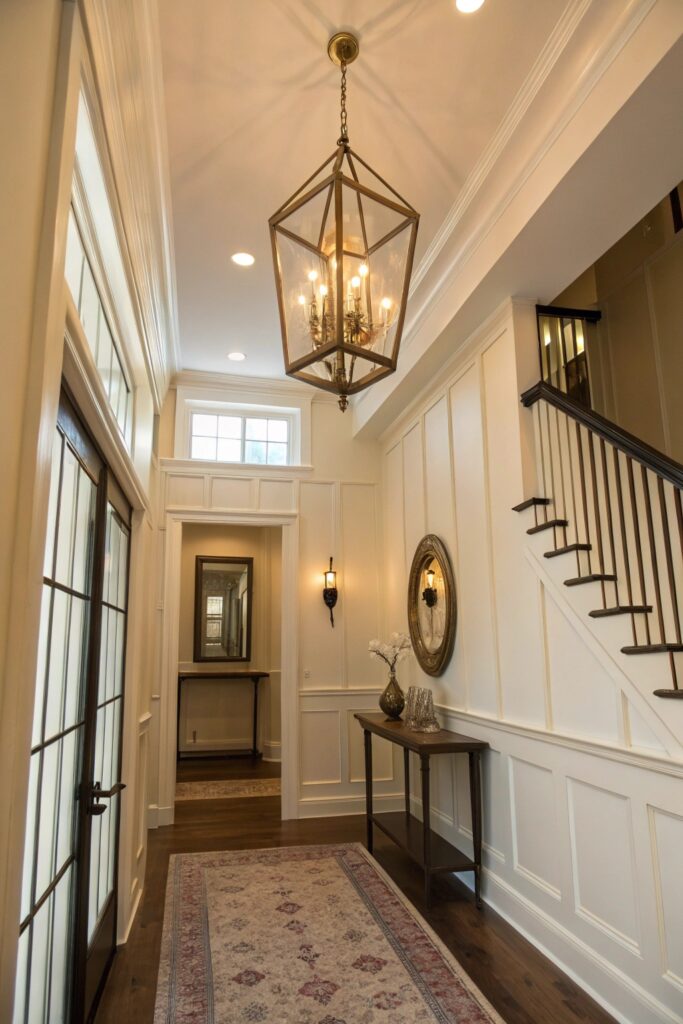
Choose a fixture narrower than the hallway itself so it doesn’t become something people brush against while walking through, and keep the bottom edge at least 80 inches from the floor in a walkway specifically, since this needs more headroom clearance than a similar fixture hung over a table where no one walks directly underneath.
Material Choices That Work Best in Tight Spaces
Glossy or satin-finish materials, from paint to tile, reflect more light than matte options, which compounds the brightening effect of a light color choice in a hallway that likely doesn’t have much natural light of its own.
Avoiding heavily textured wallpaper or deeply patterned materials in a narrow hallway specifically helps, since busy texture at close range — which is how anyone walking through will experience it — can feel more overwhelming here than the same material would in a larger, more open room.
What This Refresh Costs
A basic update — paint, a mirror, and a runner rug — typically costs $150 to $500 depending on material quality.
Adding built-in niches or wall-mounted storage runs higher, often $500 to $2,000 depending on the scope and whether the work is done professionally.
Keeping the Space Functional, Not Just Visually Wider
A hallway that’s been visually optimized to feel spacious still needs to actually function as a walkway, so avoid letting any of these changes reduce the physical clear path below a comfortable width — roughly 36 inches is a reasonable minimum for one person to walk through comfortably, and more if the hallway sees regular two-way traffic.
Door swing clearance is worth checking specifically if the hallway has any doors opening into it, since a beautifully styled console table positioned without accounting for a door’s full swing radius creates a real daily annoyance rather than the improvement it was meant to be.
Take a few photos of the hallway from the entrance looking in before making changes, and repeat this after each update — comparing photos side by side often reveals whether a change actually made the space feel bigger or just added visual interest, which isn’t always the same thing when you’re standing in the room itself.
A narrow hallway that’s been thoughtfully addressed often ends up being one of the more distinctive parts of a home, since the constraint itself pushes toward more intentional choices than a larger, more forgiving room might require.
Whichever combination of these ideas you use, the goal is a hallway that feels welcoming and easy to move through, not just one that photographs as spacious from a single flattering angle.
Final Thoughts
A narrow hallway is more sensitive to over-cluttering than a larger room, since there’s less square footage to absorb extra furniture or decor before the space starts to feel cramped rather than intentional. Introducing one or two of these changes at a time, rather than all ten at once, makes it easier to judge whether each addition is actually helping the space feel larger or just adding more to an already tight area.
Testing paint colors and lighting changes before committing to furniture or built-in storage also makes sense here, since these lower-cost, more reversible changes affect how the space reads just as much as the physical furniture decisions that are harder to undo.