
A styled bathroom shelf works through the same principles as any other display surface — height variation, a cohesive palette, genuine negative space — while also needing to account for the room’s higher humidity than most other display locations in a home.
Below are 10 ways to style a bathroom shelf well, with real costs and practical notes for each.
1. Group Items in Odd Numbers
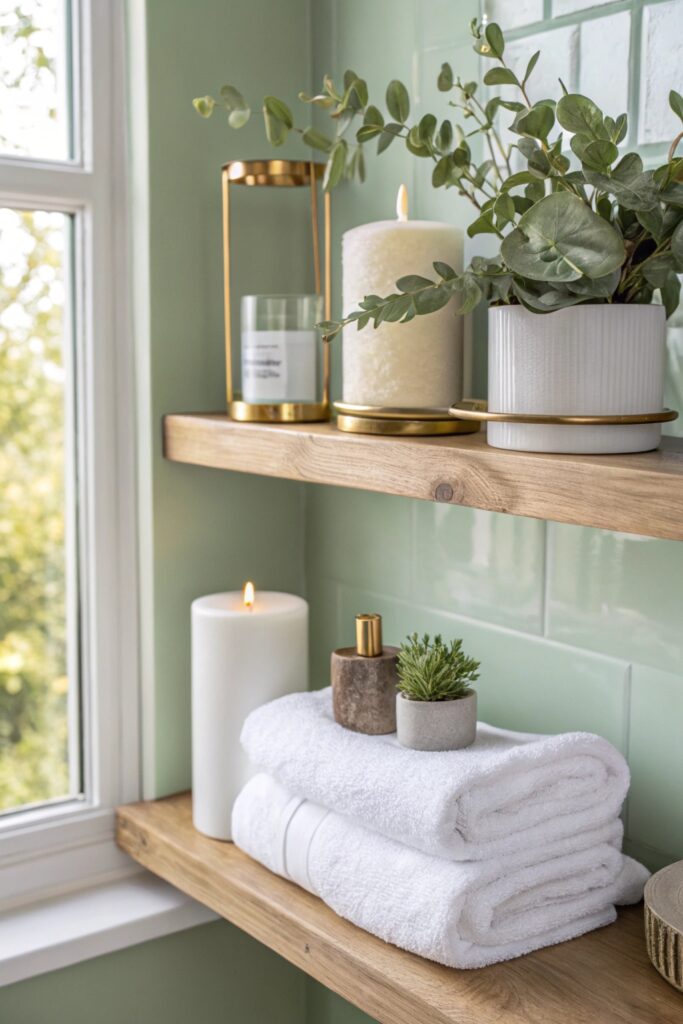
Clusters of three or five objects read as more intentionally arranged than paired, even-numbered groupings, a principle that applies to bathroom shelf styling as consistently as any other display surface.
Odd-numbered groupings also make it easier to incorporate the height-variation principle naturally, since three items of different sizes arrange more intuitively than a matched pair.
This works whether you’re grouping candles, small bottles, or decorative objects — the odd-number principle holds regardless of what specific items are being displayed.
A basket with a handle adds the option to actually carry it elsewhere temporarily, which is a small but genuinely useful flexibility beyond pure display.
2. Add a Woven Basket for Texture
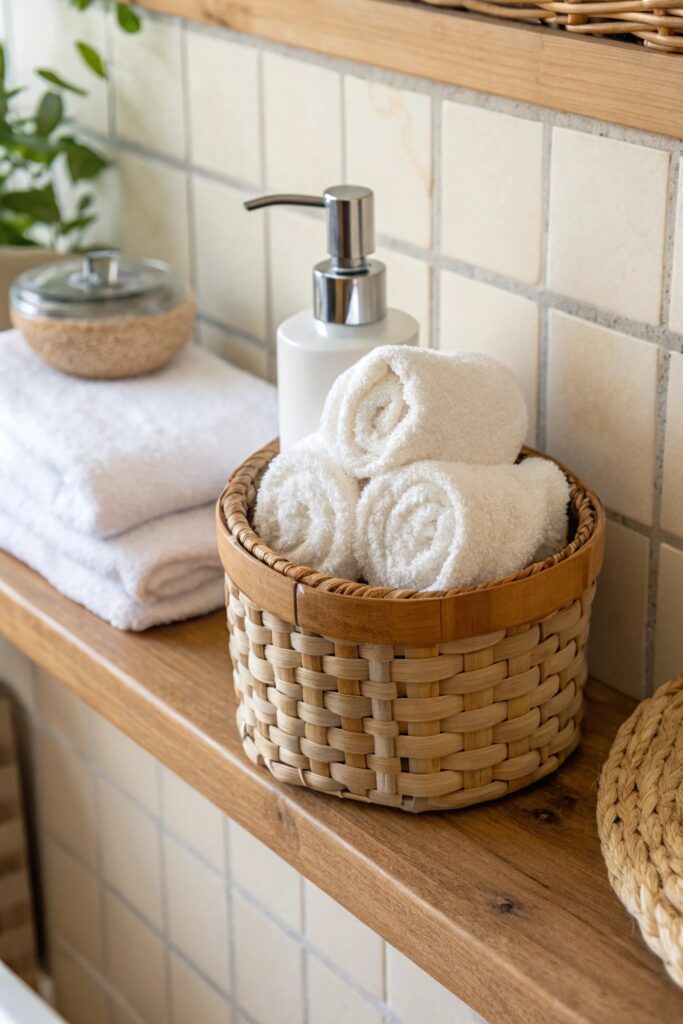
A small basket ($15-30) adds tactile variety that smooth ceramic and glass surfaces don’t provide, while also concealing less visually appealing everyday items like extra toilet paper or cleaning supplies.
Wipe plant leaves occasionally to remove dust and any soap or product residue that can settle on foliage near a sink or shower area.
Choose a basket material that tolerates bathroom humidity well (seagrass or synthetic weaves specifically) rather than one prone to mold in consistently damp conditions.
Choose a tray material (metal, wood, ceramic) that complements the shelf’s other finishes, which keeps the grouping feeling cohesive rather than randomly assembled.
3. Bring in a Live Plant (Yes, Even in a Humid Bathroom)
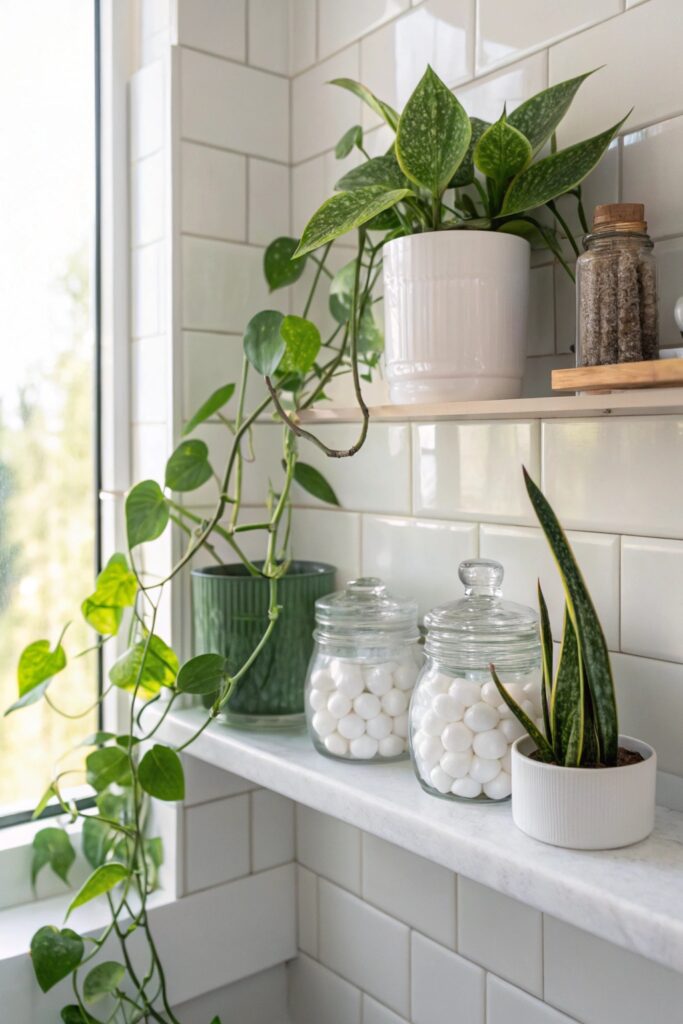
Many houseplants (pothos, snake plants, ferns specifically) genuinely thrive in a bathroom’s higher humidity, making this a more viable option than people often assume.
A cotton-blend towel with a slightly looser weave rolls more easily and holds its rolled shape better than a very dense, thick towel.
Confirm the shelf’s specific light exposure before choosing a plant, since even humidity-loving varieties still need adequate light, which not every bathroom shelf location provides.
Avoid making every item on the shelf the same height even when working with a limited number of pieces, since even two items at different heights reads as more considered than a flat, uniform pair.
4. Use a Tray to Corral Small Items
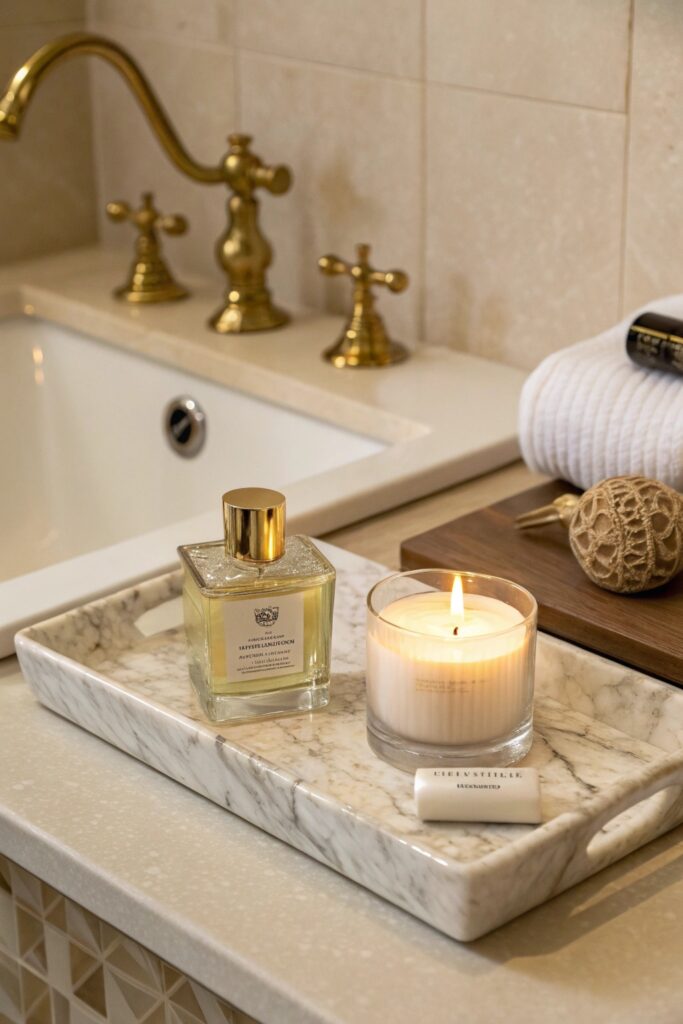
A small tray ($15-25) groups smaller objects — perfume bottles, jewelry, skincare — into a cohesive vignette, which reads as considerably more styled than the same items scattered loosely across the shelf.
A leaning mirror also adds the practical function of a quick-check reflection near the shower or sink, beyond its purely decorative contribution.
This also serves a genuine practical function, containing smaller items that would otherwise tip over or get knocked off an open shelf edge.
Test any color choice against the bathroom’s existing tile, paint, and fixture finishes before committing, since bathroom palettes are often more fixed than a living room’s more easily changed colors.
5. Stack Towels Like a Hotel Would
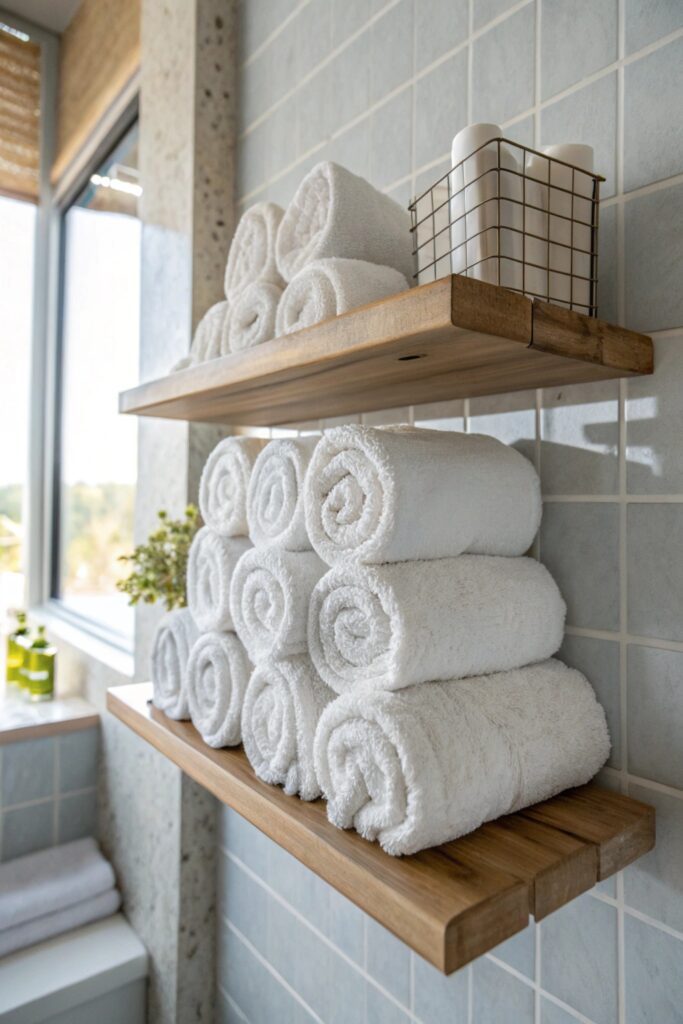
Rolling towels (rather than folding flat) and stacking them in a cluster mimics the hotel-spa look that reads as considerably more polished than towels folded flat in a uniform pile.
Rotate which books are displayed every few months if you want the shelf to feel current, similar to how any other styled surface benefits from periodic refreshing.
Choose towels in a cohesive color for this display specifically, since color-matched stacked towels reinforce the spa-like effect more than a mismatched collection would.
Set a specific reminder (monthly, alongside a regular bathroom cleaning) to reassess the shelf specifically, since it’s easy to let everyday product clutter slowly creep back onto a once-styled display.
6. Incorporate Varying Heights
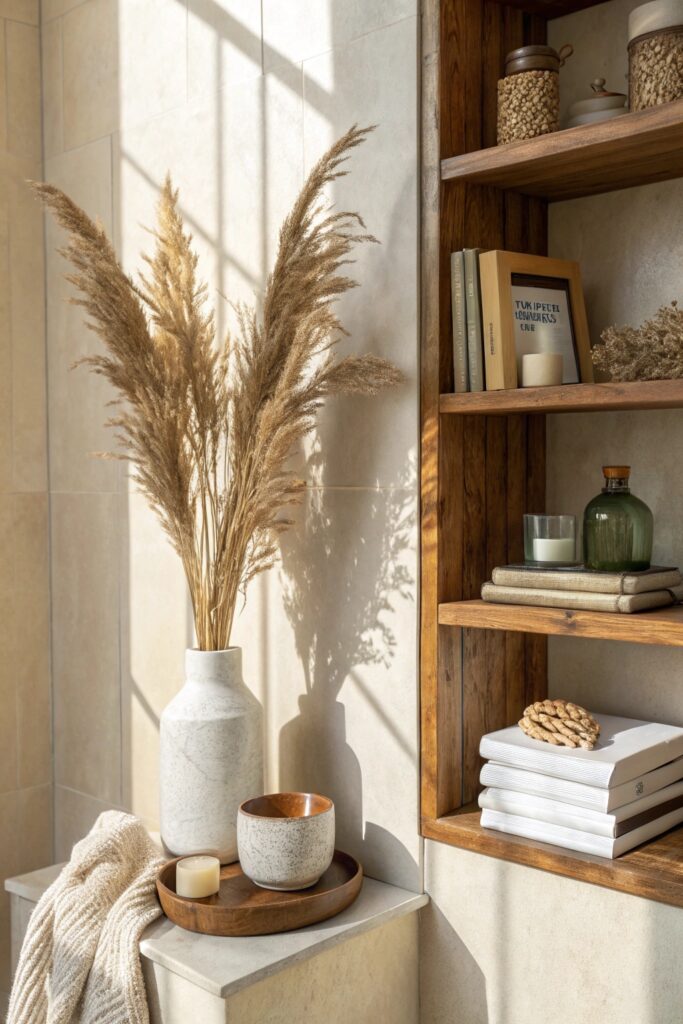
Mixing tall and short objects on the same shelf creates a more dynamic visual rhythm than a row of same-height items, which is a foundational principle across nearly any styled display.
A taller item (a vase, a plant) anchoring one end of the shelf with shorter objects graduating toward the other end is a reliable, easy-to-execute arrangement.
7. Add a Small Piece of Art or a Mirror
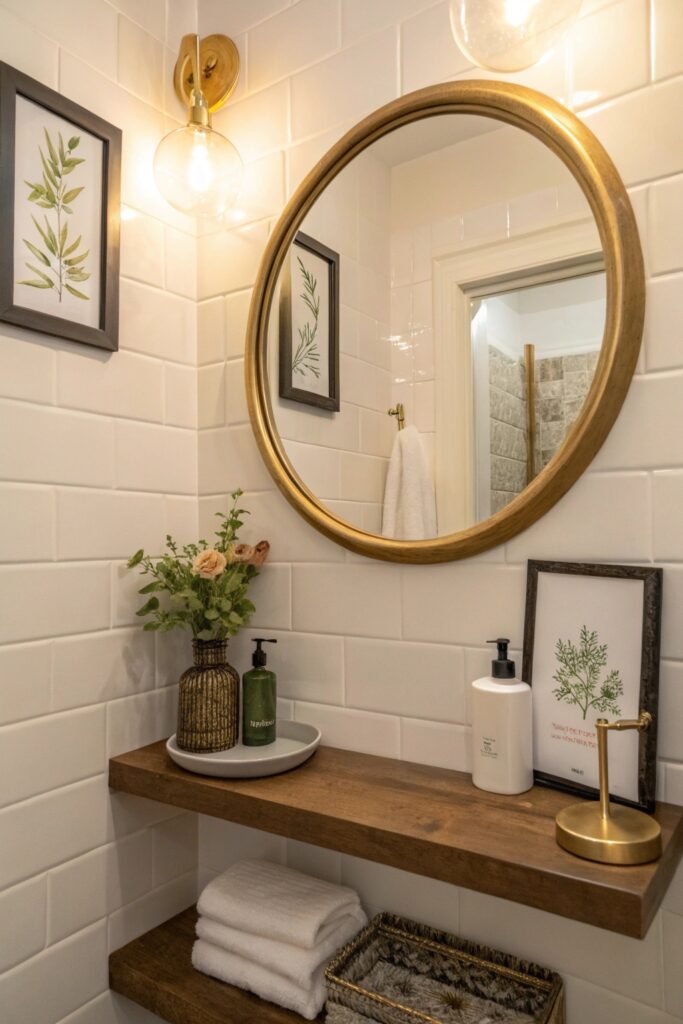
A small framed print or mirror leaned against the wall behind shelf items (rather than laid flat) adds height and visual interest beyond the objects sitting directly on the shelf surface.
Choose a piece rated for or sealed against bathroom humidity if it’s a genuine art print, since standard paper prints can warp or develop mold in consistently humid conditions.
8. Choose a Cohesive Color Palette
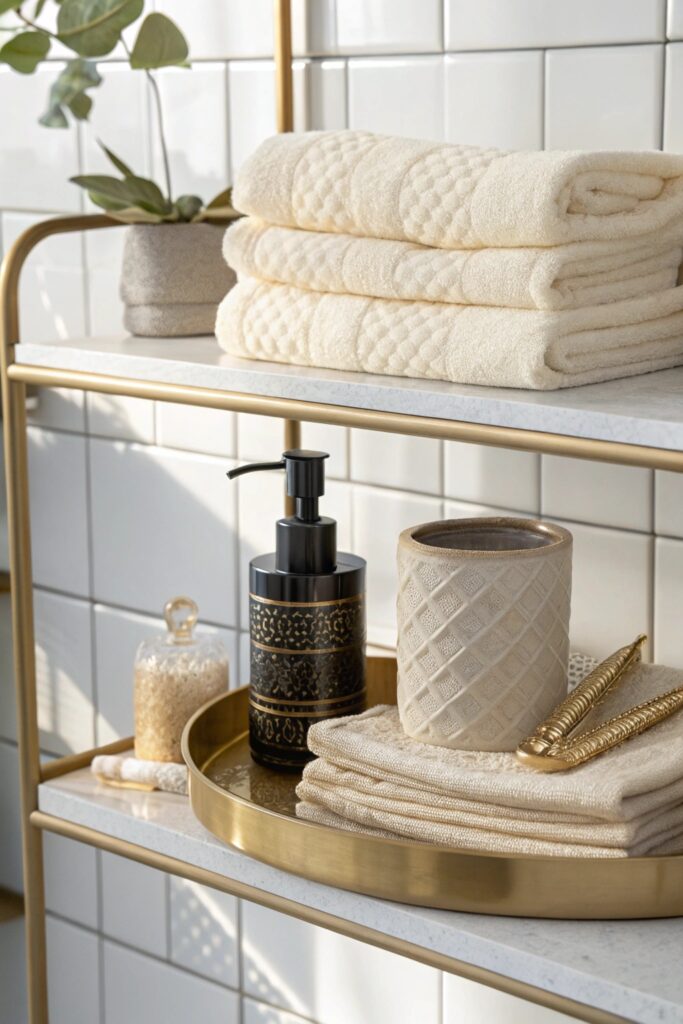
Limiting displayed items to 2-3 coordinated colors keeps a small bathroom shelf from reading as visually busy, which matters more here than on a larger surface since bathroom shelves are typically compact.
This doesn’t require replacing everyday products — grouping the more visually coordinated items toward the front while keeping mismatched daily-use items toward the back achieves a similar effect.
9. Display a Few Books or Magazines
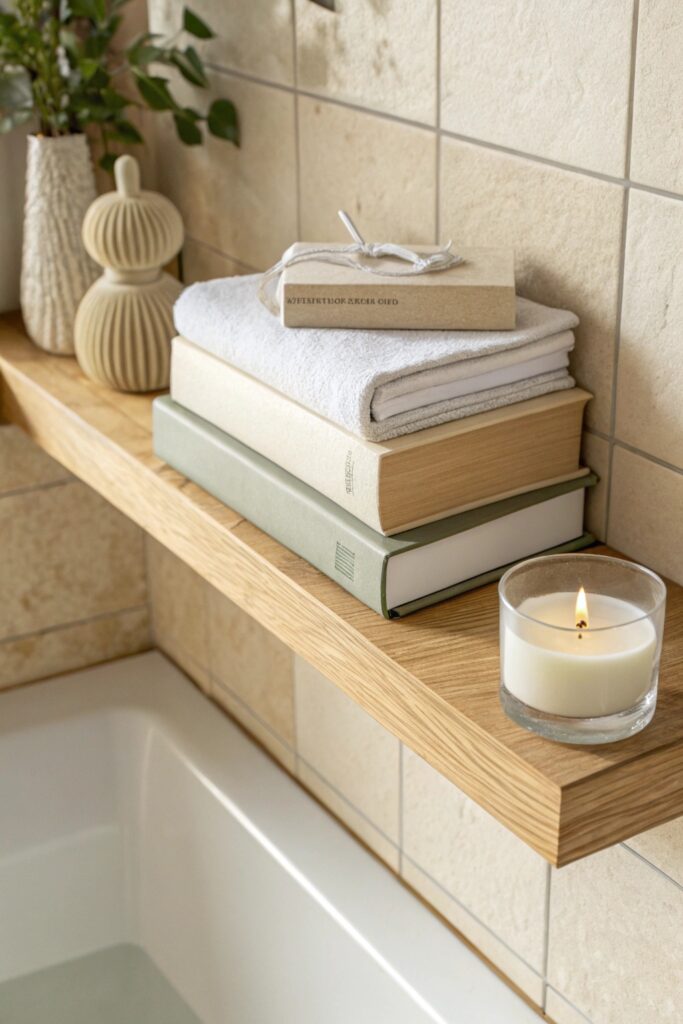
A small stack of books adds genuine personality and a collected feel that purely functional bathroom items don’t provide on their own.
Choose books you don’t mind exposing to bathroom humidity over time, since this environment isn’t ideal for genuinely valuable or sentimental volumes.
10. Don’t Overfill the Shelf
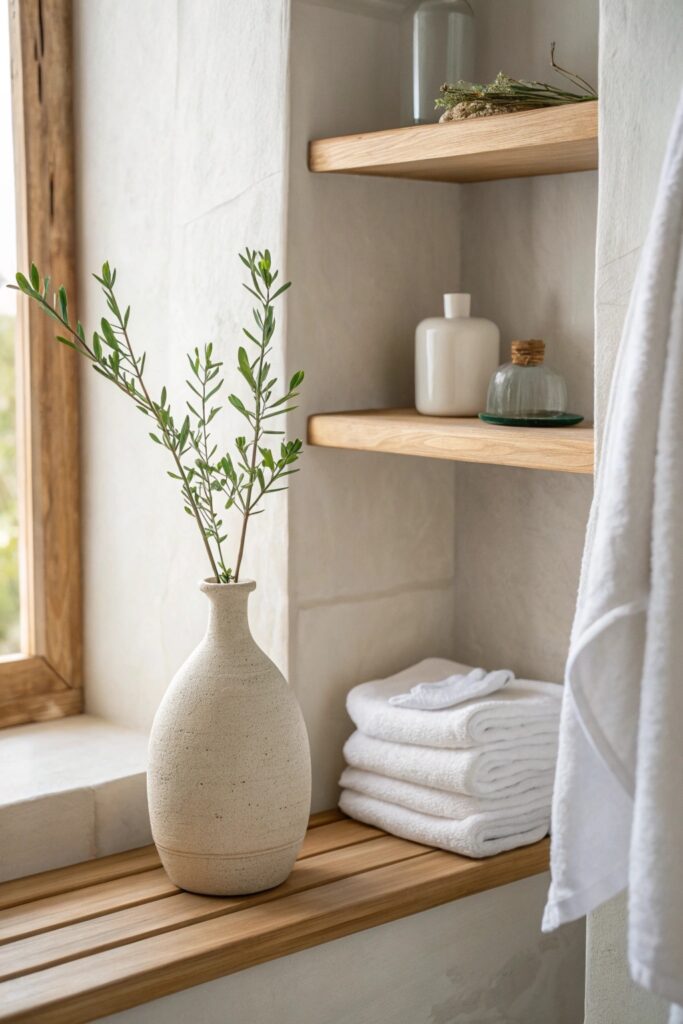
Leaving genuine negative space between grouped items is what separates a styled shelf from one that simply accumulated products over time, and this restraint matters more than any specific object choice.
A regular editing habit — removing items that have drifted onto the shelf without being part of the original intentional arrangement — keeps this restraint from eroding over weeks of daily use.
Wrapping It Up
A cohesive color palette and genuine negative space matter more than any specific object choice, since both separate a curated display from one that simply accumulated products over time. Choose materials that tolerate bathroom humidity specifically for anything staying on the shelf long-term, since this room’s environment is genuinely harder on certain materials than a typical living space.