
Drawer organization works the same way across nearly every room in a home — categorize first, assign consistent homes, and use dividers to prevent items from sliding into a jumbled pile — which is why the same core principles apply whether you’re tackling a kitchen junk drawer or a bedroom dresser.
Below are 15 ways to build a system that actually lasts, with practical notes for each.
1. Use Drawer Dividers for Everything
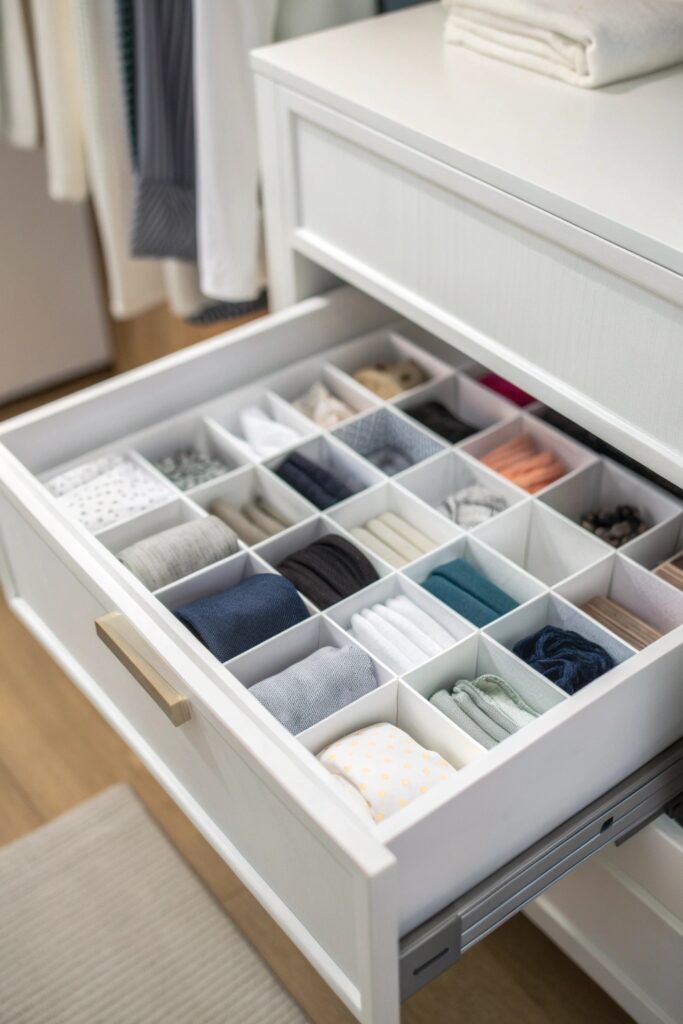
Adjustable dividers ($10-25 for a set) prevent the common problem of items sliding into a jumbled pile every time a drawer opens, working in kitchen, bedroom, and bathroom drawers alike.
Measure the drawer’s interior dimensions before buying, since ill-fitting dividers can shift or fail to actually contain items the way properly sized ones do.
2. Roll Your Clothes Instead of Folding
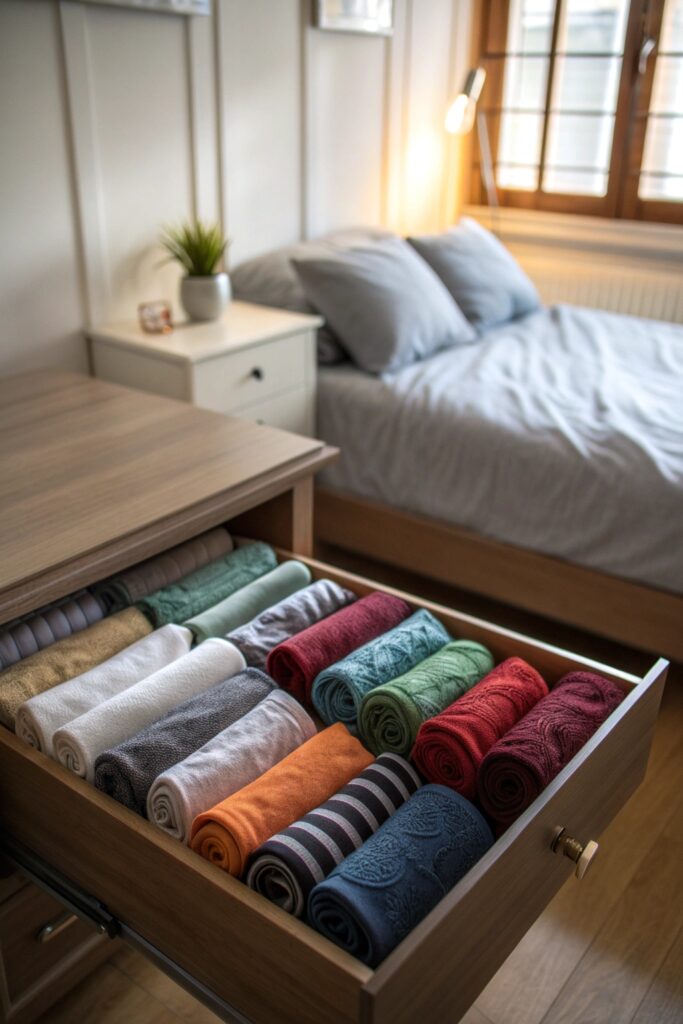
Rolling shirts and pants rather than folding them flat lets you see every item at a glance in a dresser drawer, and it genuinely fits more clothing into the same drawer space than flat folding does.
This technique works especially well for t-shirts and casual wear, though structured items like dress shirts still generally hold their shape better folded.
3. Sort by Category, Not by Guesswork
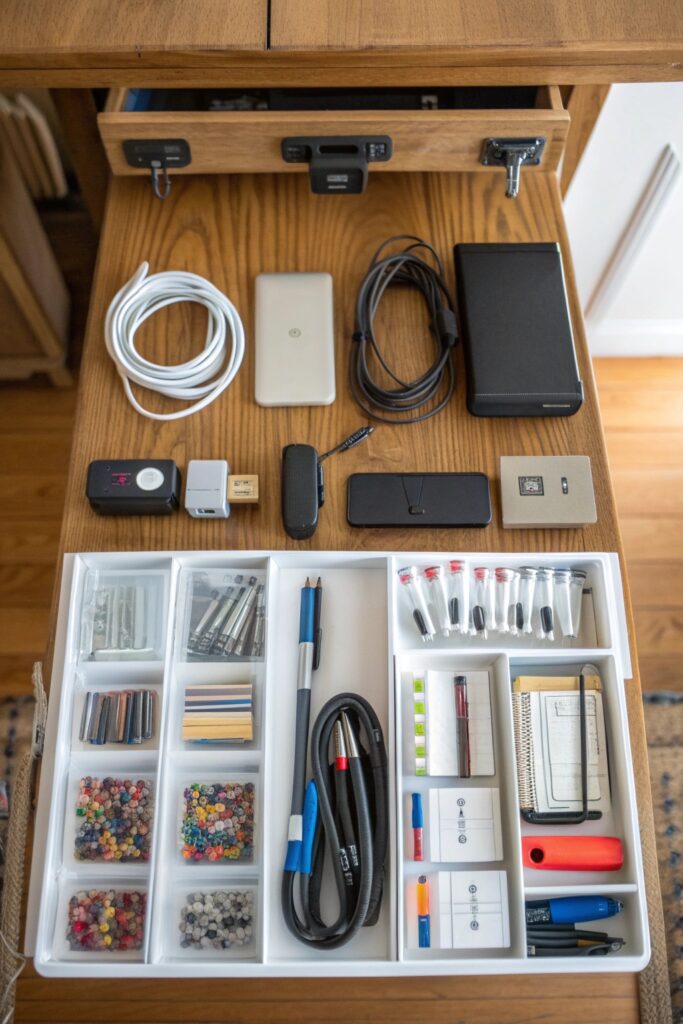
Grouping items by function (all writing tools together, all cables together) before deciding on storage creates a system that’s genuinely easier to maintain than organizing containers first and sorting items into them after.
Categorizing first also makes it easier to spot genuine duplicates or items you forgot you owned, which is a natural byproduct of the sorting process.
4. Try Adjustable Bamboo Organizers
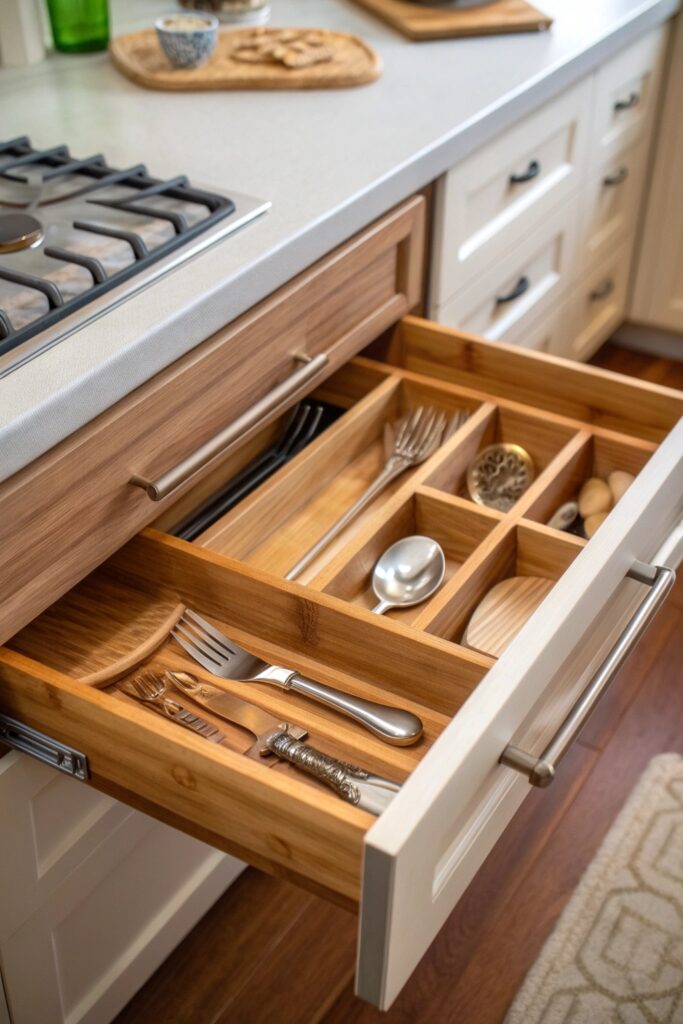
Expandable bamboo dividers ($15-35) fit a range of drawer widths and add a warmer material than plastic alternatives, while still providing the same structural organization benefit.
Bamboo specifically resists warping better than some budget plastic organizers over years of use, making it a reasonable investment for drawers that see frequent daily use.
5. Label Everything (Yes, Everything)
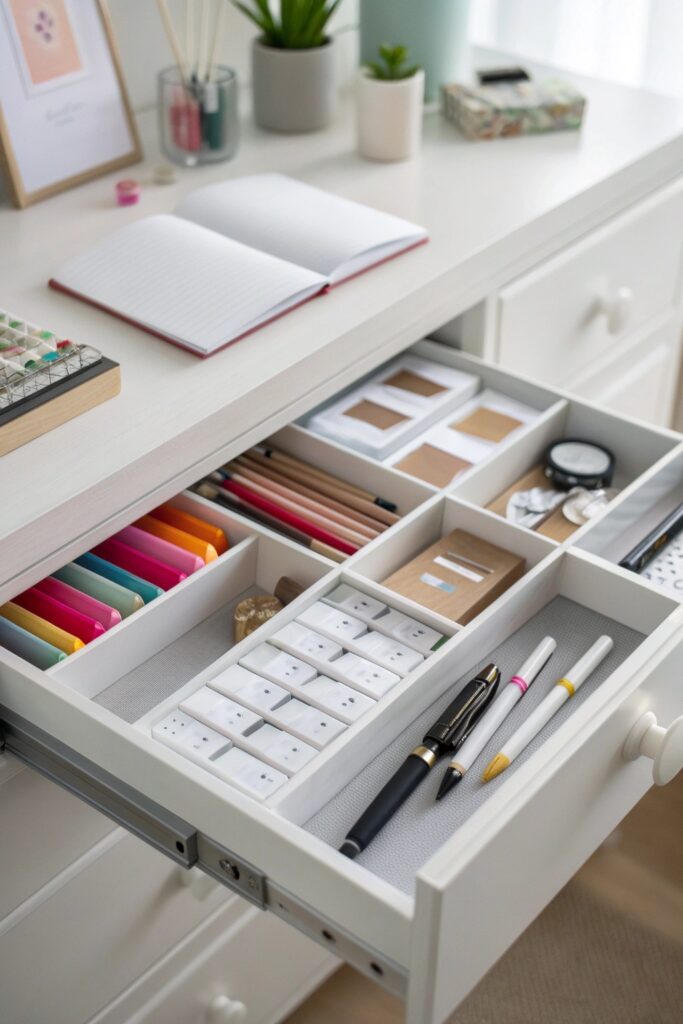
Clear labels on drawer sections help every household member maintain the system correctly, rather than relying on memory alone for where specific items belong.
A label maker produces more durable, legible labels than handwritten ones, worth the investment if you’re organizing multiple drawers across several rooms.
6. Repurpose Old Boxes as Mini Bins
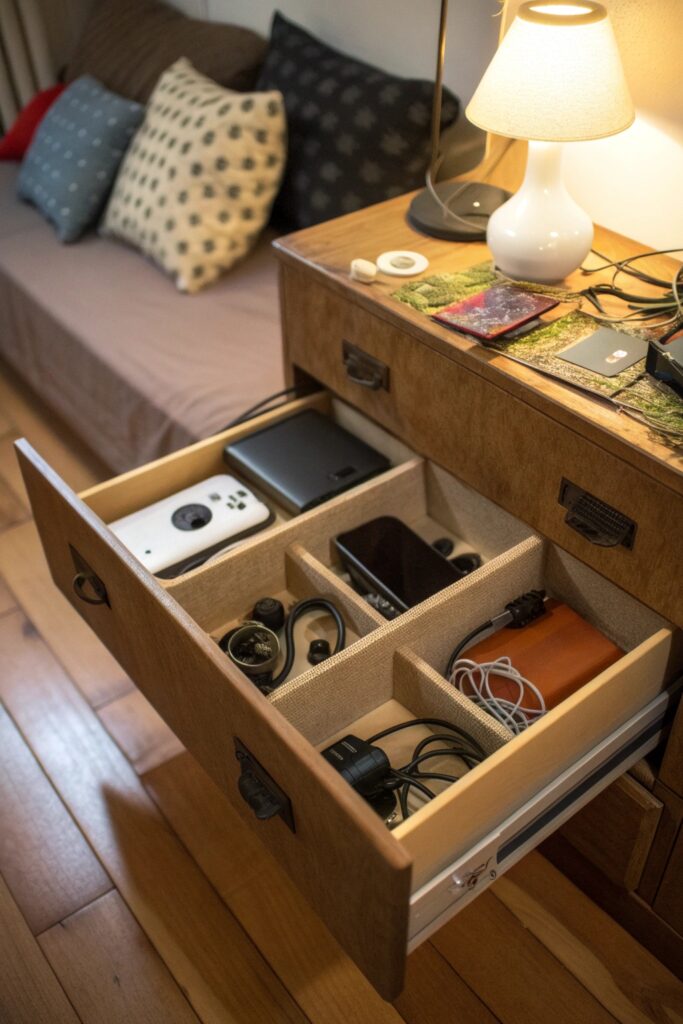
Small boxes from shipped packages or shoe boxes, cut down to fit, provide genuinely free drawer subdivision for anyone not ready to invest in purchased dividers.
This works particularly well for smaller items like cables, chargers, or craft supplies that don’t need a more substantial purchased container.
7. Tackle the Kitchen Junk Drawer First
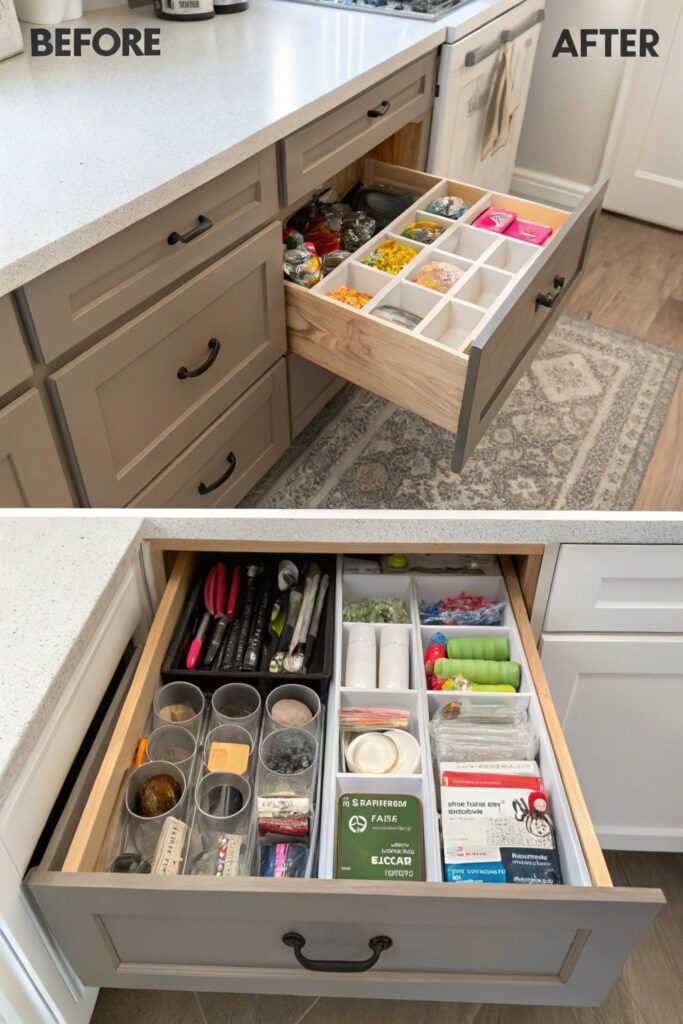
The kitchen junk drawer is typically the most disorganized drawer in a home, making it a genuinely high-impact starting point that demonstrates the organizing system’s value immediately.
Even 15-20 minutes spent purely on this one drawer often has more visible impact than tackling several less-visible drawers first.
8. Use Vertical File Organizers for Documents
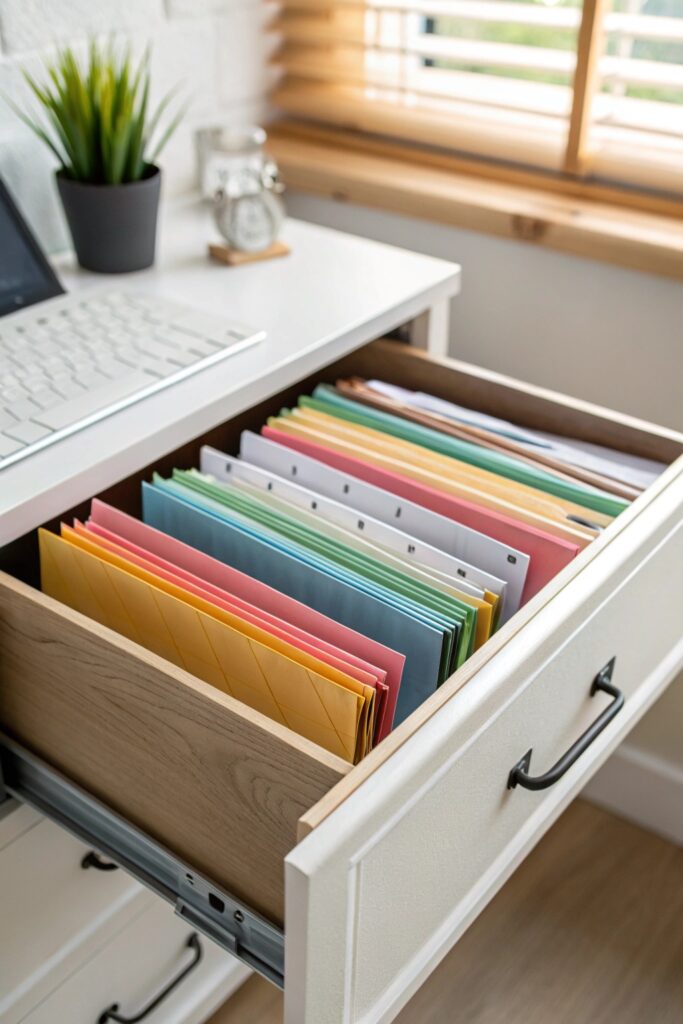
Upright file dividers ($15-30) in a drawer keep important papers accessible and visible rather than stacked flat, where the document you need is often buried at the bottom.
This is particularly useful for important documents like warranties, insurance papers, or tax records that need to stay both organized and genuinely findable.
9. Add Non-Slip Liners
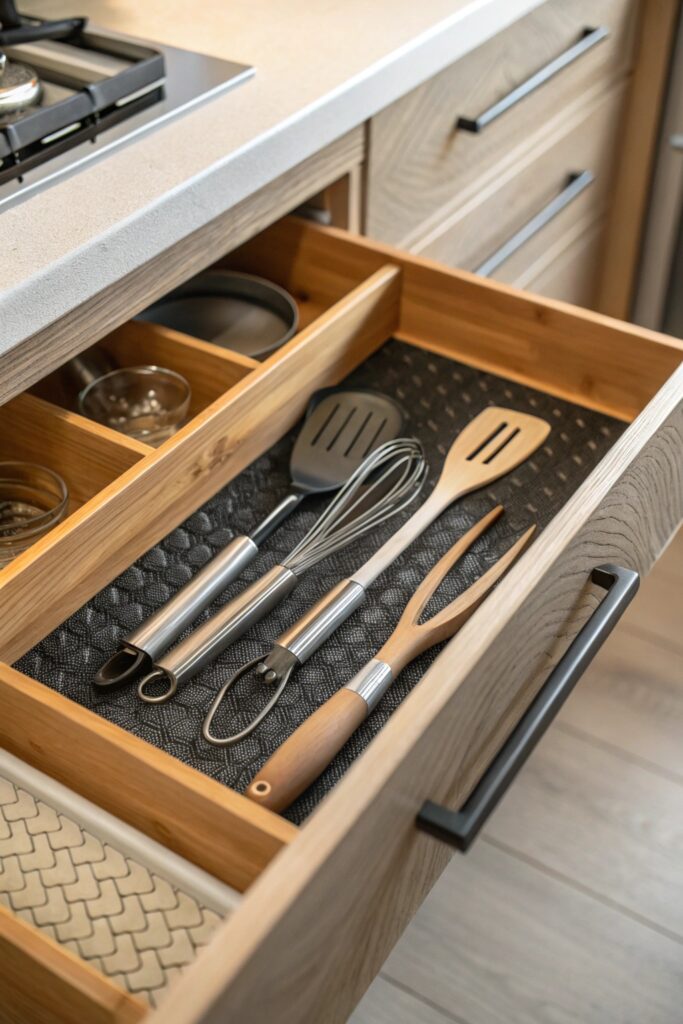
A textured liner ($8-15 per roll) keeps dividers and items from sliding every time a drawer opens, which is a small detail that genuinely affects how well an organizing system holds up over time.
Silicone or rubber shelf liner works as well as purpose-made drawer liner and is often more affordable for covering multiple drawers at once.
10. Create a Dedicated “Everything Else” Drawer—With Rules
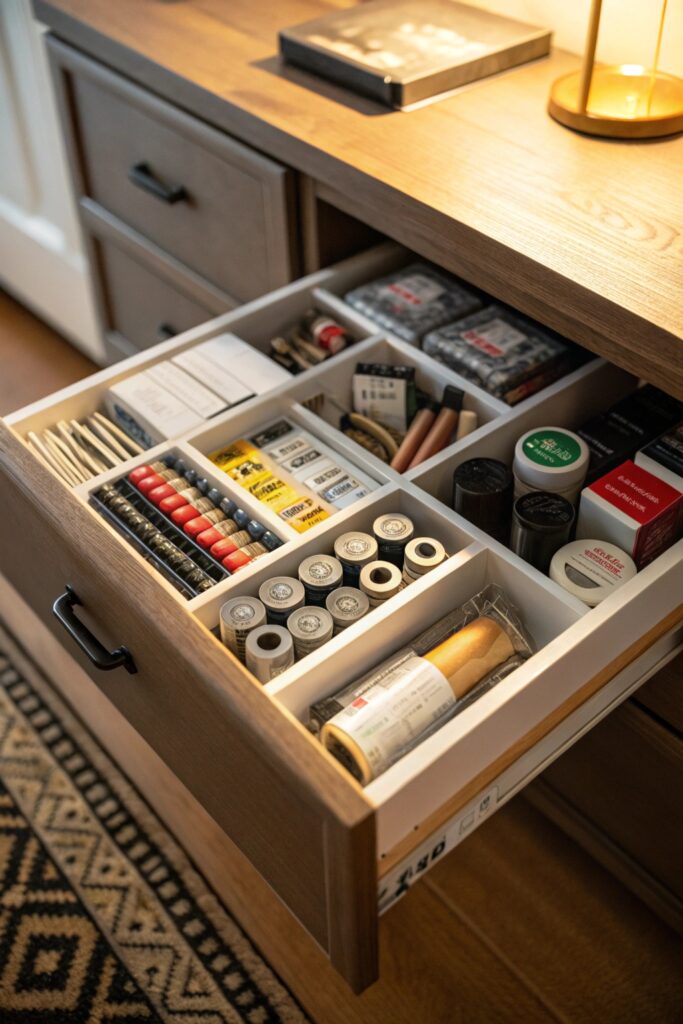
A single catch-all drawer for genuinely miscellaneous items works fine as long as it has actual boundaries — a maximum fill level or a regular review — rather than becoming an unlimited dumping ground.
Revisit this drawer’s contents every few months specifically, since catch-all drawers without any oversight tend to grow well beyond their original intended purpose.
11. Use Stackable Trays in Bathroom Drawers
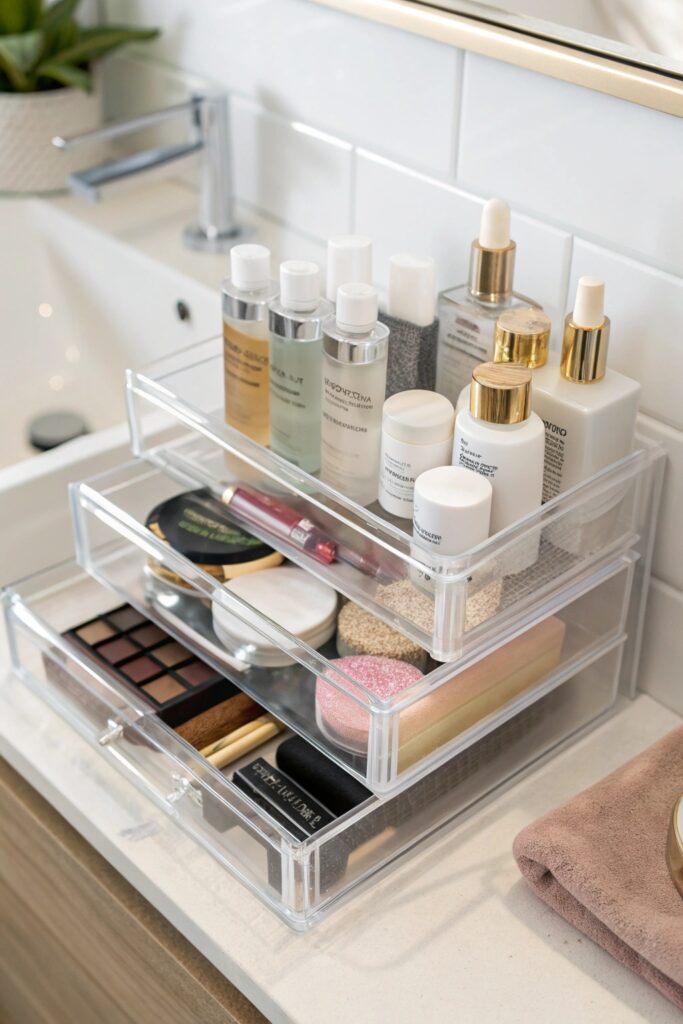
Tiered trays in a bathroom drawer make efficient use of vertical drawer depth, letting smaller items like makeup or skincare tools stack rather than spreading flat across the drawer’s full footprint.
Clear trays let you see contents at a glance without opening each one individually, which matters in a bathroom drawer holding many small, similar-looking items.
12. Organize by Frequency of Use
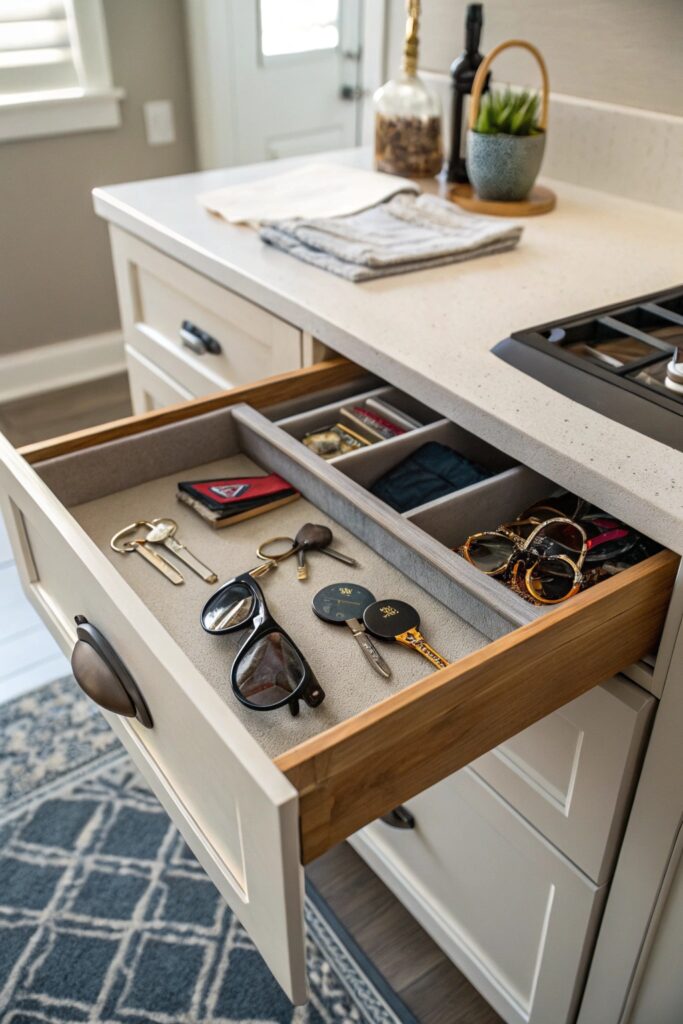
Placing daily-use items in the most accessible drawer positions and occasional-use items further back or in less convenient drawers matches storage convenience to actual usage patterns.
This principle extends beyond drawers to any storage decision in the home, and it’s worth applying consistently rather than only to drawers specifically.
13. Use Drawer Inserts for Utensils and Tools
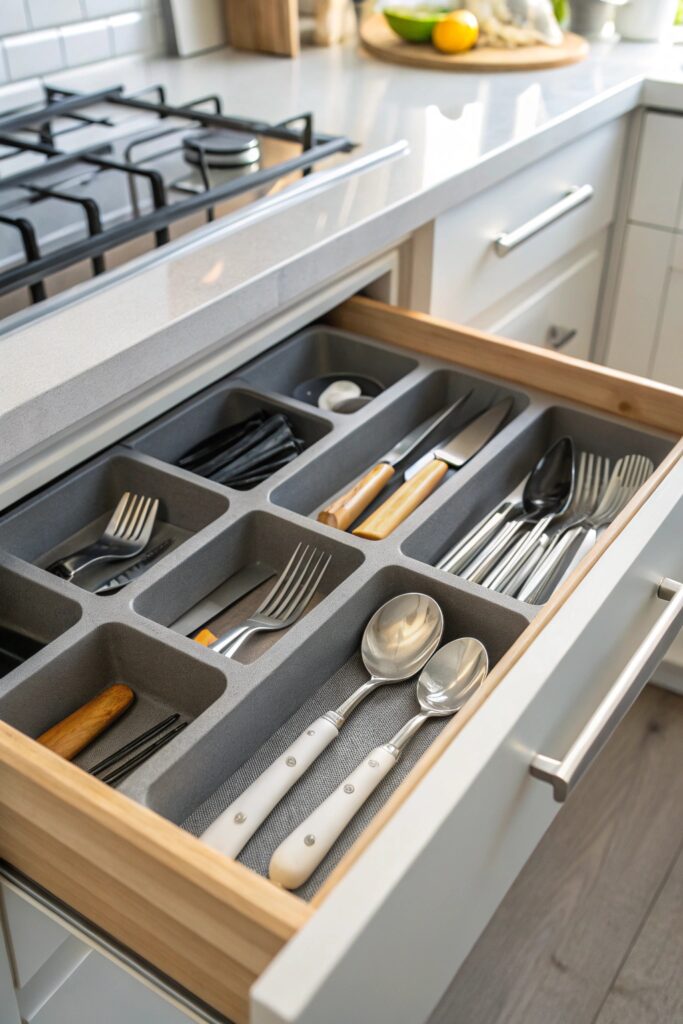
A molded or adjustable insert specifically for kitchen utensils or tools ($10-25) keeps each item in a defined slot, which is considerably more organized than a tray with open compartments alone.
Choose an insert with individual slots for each utensil type rather than a few large open compartments, which keeps items from shifting and tangling together.
14. Purge Before You Organize

Removing genuinely unnecessary items before adding any organizational products prevents the common mistake of buying dividers and bins sized for clutter that didn’t need to be kept in the first place.
Set aside genuine time for this step rather than rushing through it, since purging thoroughly the first time prevents needing to repeat the process again soon after.
15. Maintain a Weekly Reset Habit
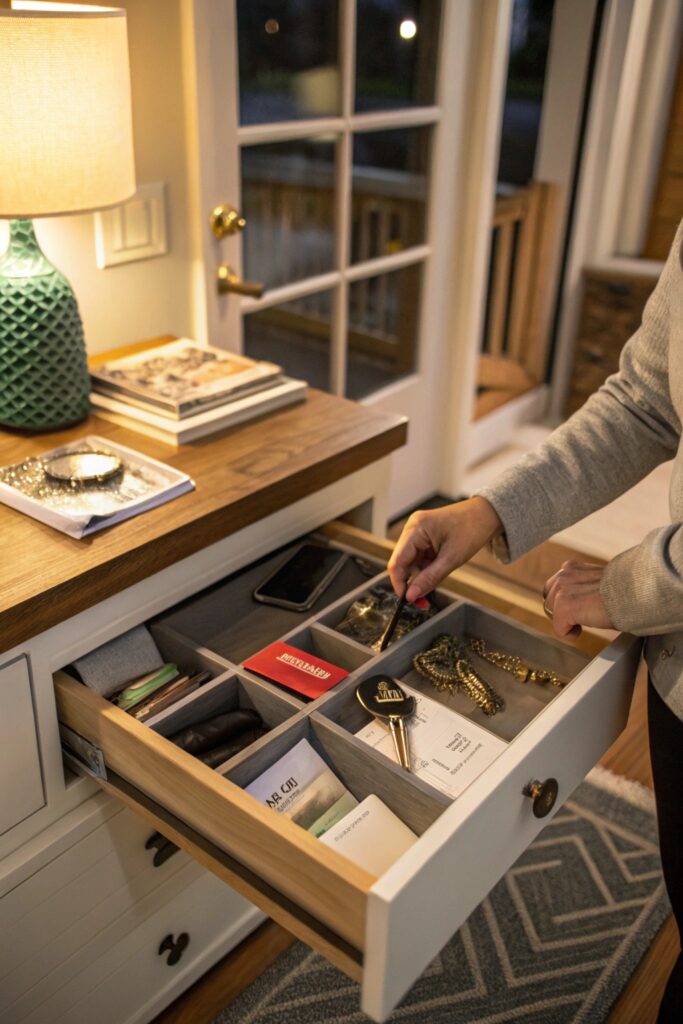
A brief weekly tidy-up, returning items to their assigned drawer homes, keeps an organized system from gradually reverting to disorder between larger organizing efforts.
Pick a consistent day (Sunday evening, for instance) for this reset, which makes the habit easier to maintain than an unscheduled, easily-forgotten intention.
Final Thoughts
Purging before organizing and using genuine dividers matter more than any specific product choice, since both address why drawers become disorganized in the first place rather than just containing the symptoms. A weekly reset habit is worth establishing early, since even a well-organized drawer gradually reverts to clutter without some ongoing maintenance.