
Your porch is basically the handshake of your home. It’s the first thing people see, and honestly, bare hooks and empty railings are a missed opportunity. Hanging baskets change everything — they add color, texture, and life without demanding a full garden renovation.
I’ve spent way too many weekends obsessing over the perfect hanging display, and trust me, once you start, you can’t stop. The good news? You don’t need a green thumb or a huge budget to make it work.
1. Classic Petunias — The Crowd Pleaser
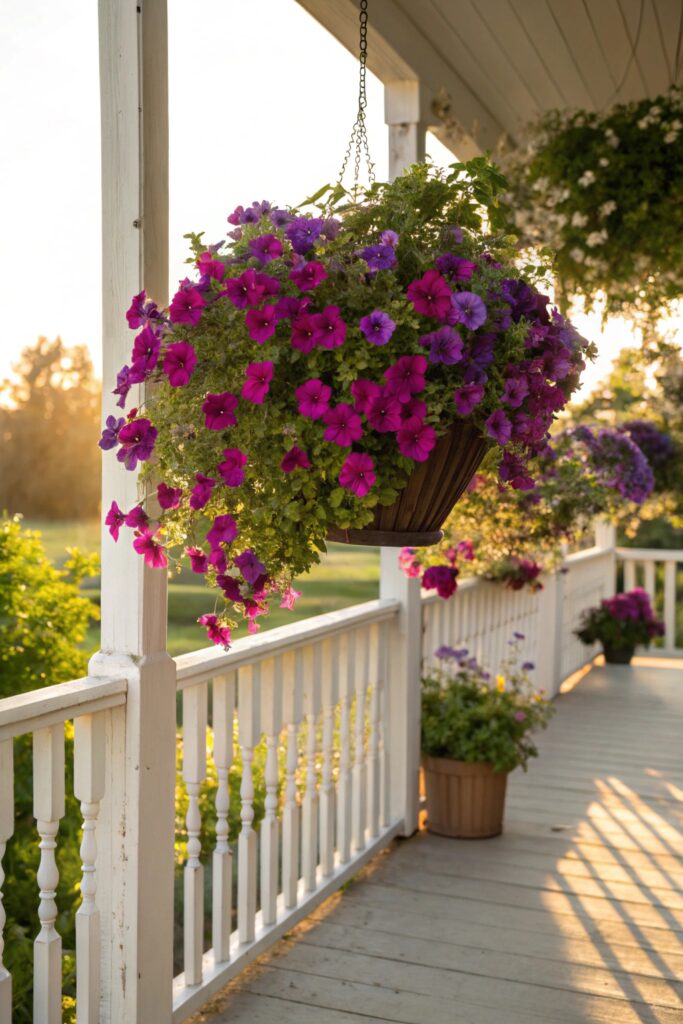
Let’s start with the OG of hanging baskets — petunias. There’s a reason every garden center stocks them by the truckload. They bloom aggressively, trail beautifully, and come in basically every color imaginable.
Ever walked past a porch dripping in magenta petunias and thought, “Meh”? Exactly. Nobody has.
Why petunias work so well:
- They tolerate heat better than most flowering plants
- They fill out fast, giving you a full, lush look quickly
- Deadheading encourages even more blooms
IMO, wave petunias are the best variety for baskets — they spill over the edges like a waterfall of color. Water them consistently and feed them weekly, and they’ll reward you all season long.
2. Fuchsia — For the Shady Spots
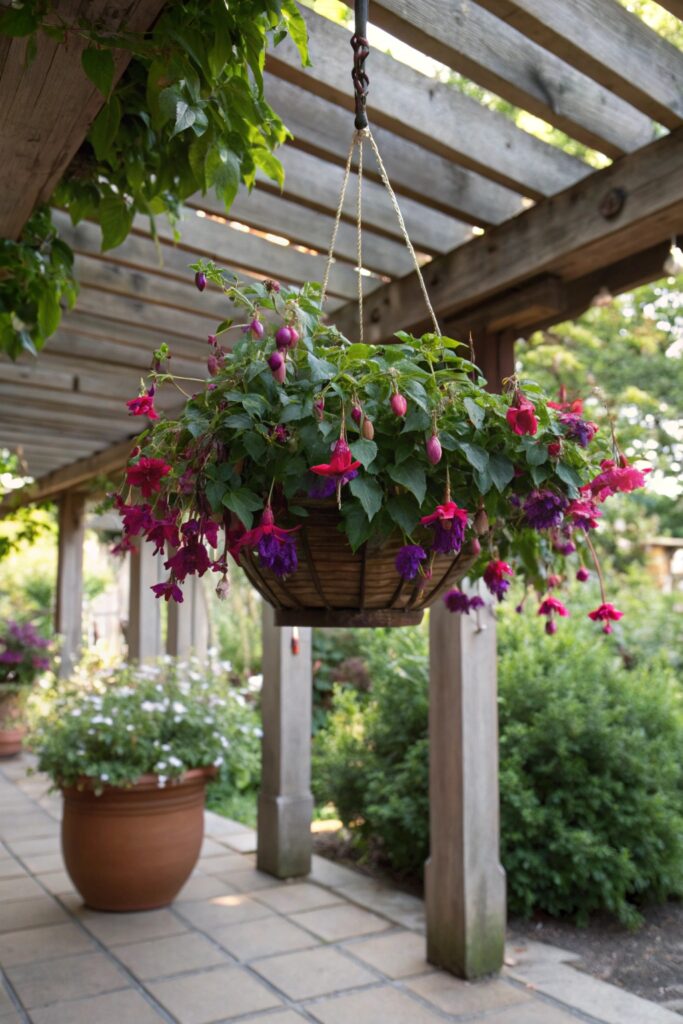
Got a covered porch that barely sees sunlight? Fuchsia is your best friend. Most hanging basket plants beg for full sun, but fuchsia actually prefers shade — which feels like cheating in the best possible way.
The blooms are dramatic, almost theatrical, with their two-toned pendulous flowers in pinks, purples, and reds. Hummingbirds absolutely lose their minds over them.
Tips for fuchsia success:
- Keep soil consistently moist — they hate drying out
- Hang them away from harsh afternoon sun
- Fertilize every two weeks during the growing season
If your porch faces north or sits under a deep overhang, fuchsia will actually thrive where other plants sulk.
3. Trailing Lobelia — The Delicate Show-Off
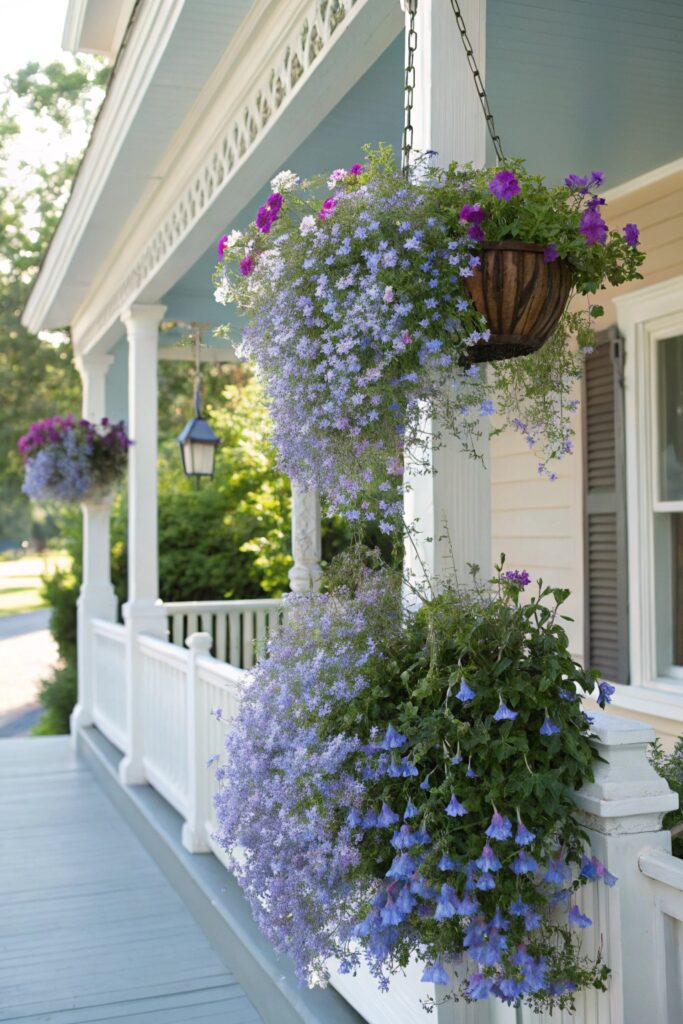
Don’t let its dainty appearance fool you. Trailing lobelia puts on a serious show when it’s happy. The tiny flowers cascade down in rivers of blue, purple, or white, creating a soft, wispy look that pairs beautifully with bolder plants.
It’s one of those plants that looks effortlessly elegant — like it knows exactly what it’s doing 🙂
Best ways to use lobelia:
- Mix it with bright impatiens for contrast
- Use it to soften the edges of a mixed basket
- Plant it densely for maximum impact
Lobelia loves cooler temperatures, so it really shines in spring and early summer. Once the heat cranks up, it may slow down — but a light trim and some extra water usually revives it nicely.
4. Million Bells (Calibrachoa) — Tiny Flowers, Huge Impact
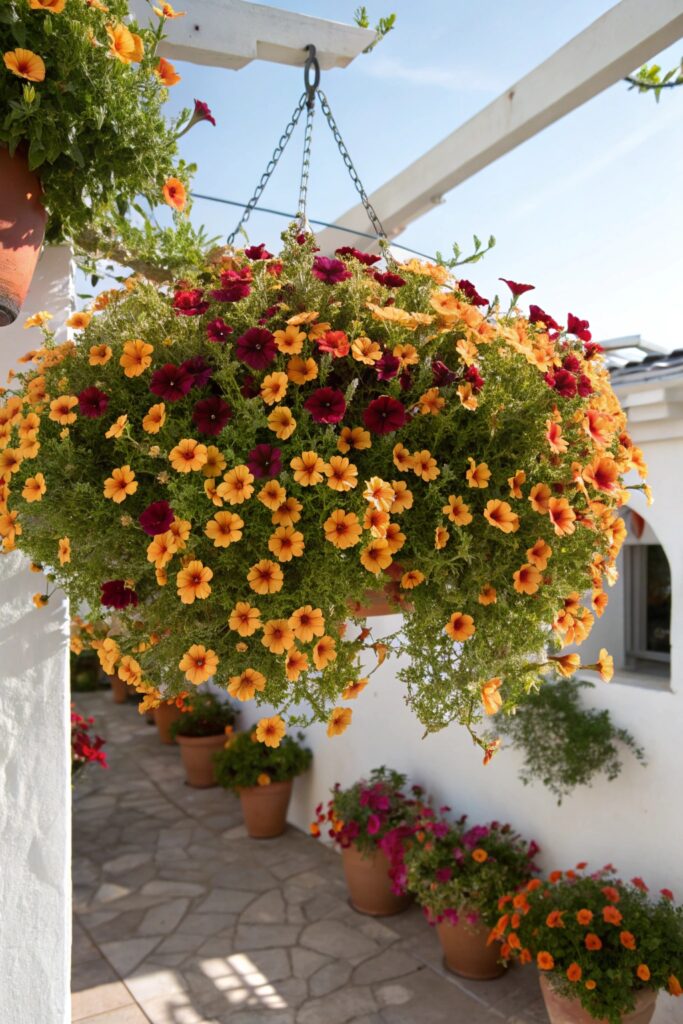
Think petunias, but miniaturized and multiplied by about a thousand. Calibrachoa produces hundreds of small, bell-shaped flowers that literally cover the entire plant. It’s one of the lowest-maintenance basket plants you’ll ever grow.
No deadheading required. Repeat: no deadheading required. That alone makes it a winner.
Why calibrachoa earns its spot:
- Self-cleaning — spent blooms fall off on their own
- Available in a rainbow of colors including burnt orange and deep burgundy
- Handles both heat and brief cool spells well
Pair it with sweet potato vine for a gorgeous trailing combination that looks intentional and polished. It’s truly hard to mess this one up.
5. Sweet Potato Vine — All Foliage, No Apologies
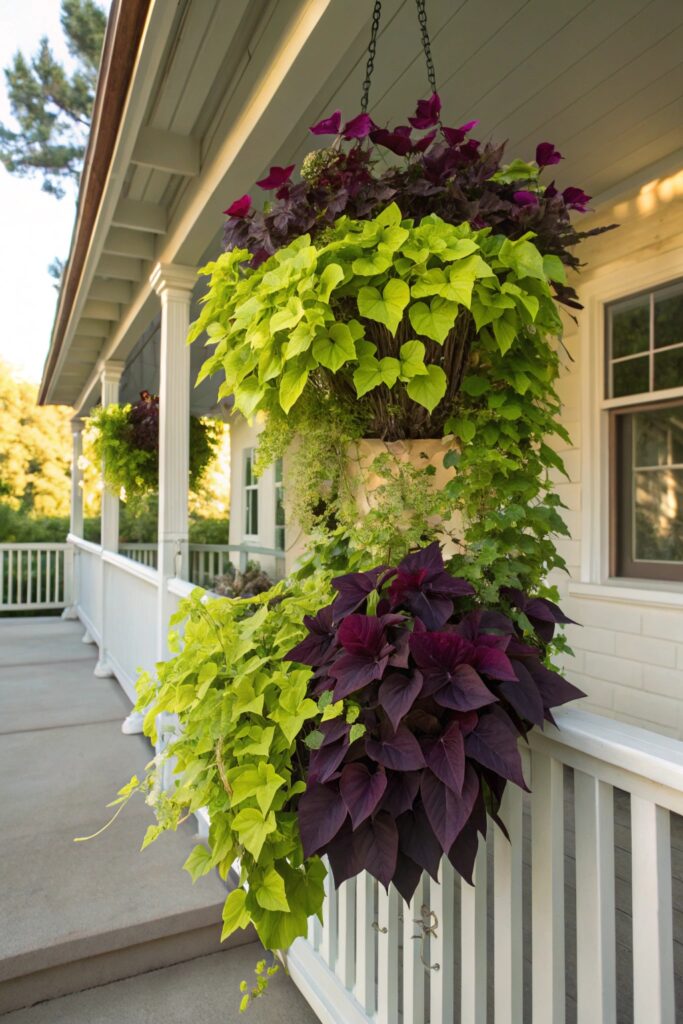
Not every basket needs flowers. Sweet potato vine makes a bold statement with foliage alone — its heart-shaped leaves come in chartreuse, deep purple, and bronze, trailing dramatically over basket edges.
It grows fast, fills out beautifully, and adds contrast that makes your flowering plants look even better by comparison. Think of it as the supporting actor that steals every scene.
How to use sweet potato vine effectively:
- Combine chartreuse with deep red flowers for a striking look
- Use purple-leafed varieties with pink or white blooms
- Let it trail freely for a lush, overflowing effect
FYI — this plant is a vigorous grower, so it can sometimes crowd out more delicate companions. Trim it back occasionally to keep things balanced.
6. Bacopa — The Understated Charmer
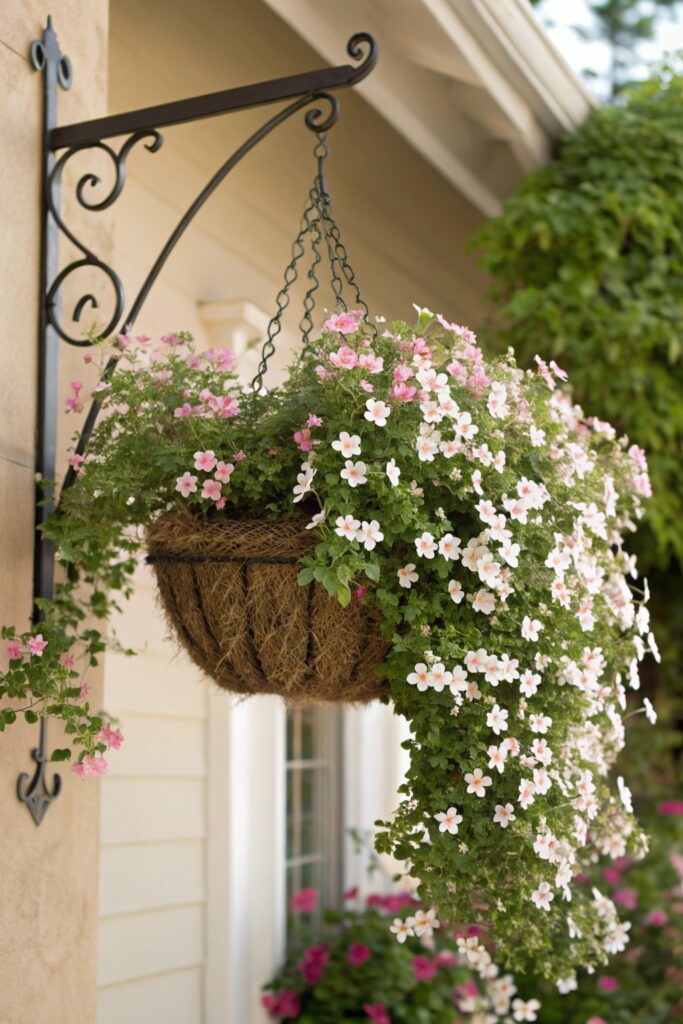
Bacopa doesn’t get nearly enough credit. It produces tiny white or pink flowers in dense, trailing mounds that create a soft, romantic look. It’s the kind of plant that makes your whole display look more refined without demanding attention.
It also tolerates heat and drought better than it looks like it should — which is always a pleasant surprise.
Bacopa basics:
- Thrives in full sun to partial shade
- Works beautifully as a filler in mixed arrangements
- Bloom continuously without deadheading
If you want your hanging baskets to look like they came from a boutique nursery rather than a big box store, bacopa is the secret ingredient. It adds that soft, cascading texture that elevates everything around it.
7. Nasturtiums — The Edible Option
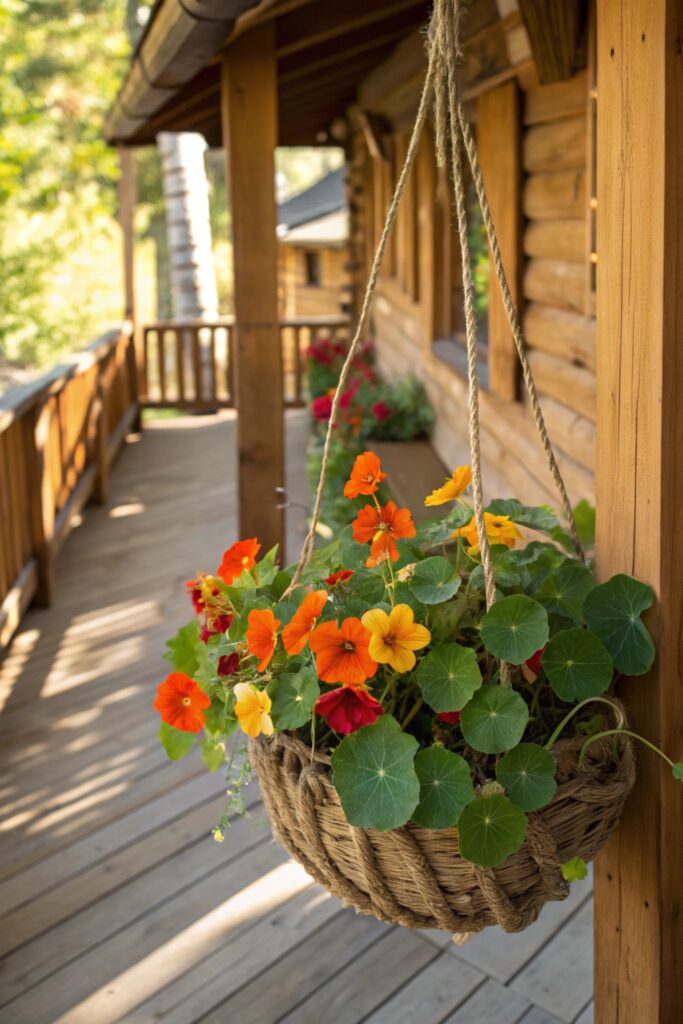
Here’s a fun twist — nasturtiums are both gorgeous and completely edible. The round, lily-pad leaves and vivid orange, yellow, and red blooms make a stunning display, and you can toss the flowers straight into a salad. How wild is that?
They’re also incredibly easy to grow from seed, which means budget-friendly baskets with a gourmet bonus.
Nasturtium highlights:
- Thrive in poor soil — too much fertilizer actually reduces blooming
- Prefer cooler temperatures but handle moderate heat
- Both leaves and flowers are edible with a peppery flavor
They do prefer to be kept on the drier side, so don’t overwater. Neglect them slightly and they tend to bloom more — which is honestly the kind of relationship everyone wants :/
8. Ivy Geraniums — The Classic European Look
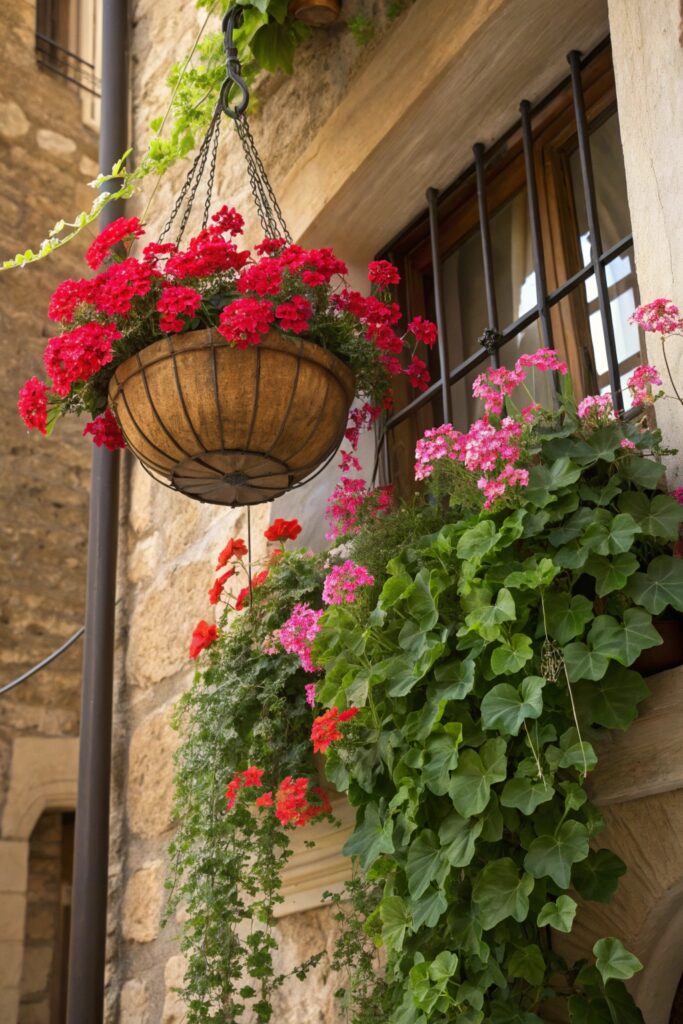
If you’ve ever admired window boxes on Swiss chalets or French balconies, those trailing plants were almost certainly ivy geraniums. They produce clusters of bright blooms above glossy, ivy-shaped leaves and trail elegantly over basket edges.
They’re tougher than standard geraniums and handle heat and humidity much better than their reputation suggests.
Why ivy geraniums stand out:
- Bloom prolifically from spring through fall
- More disease-resistant than upright geraniums
- Available in reds, pinks, whites, and bicolors
Deadhead regularly to keep the blooms coming, and give them a spot with morning sun and afternoon shade in hot climates. They’ll repay you with a display that looks straight out of a European postcard.
9. Spider Plant — The Porch-Friendly Houseplant
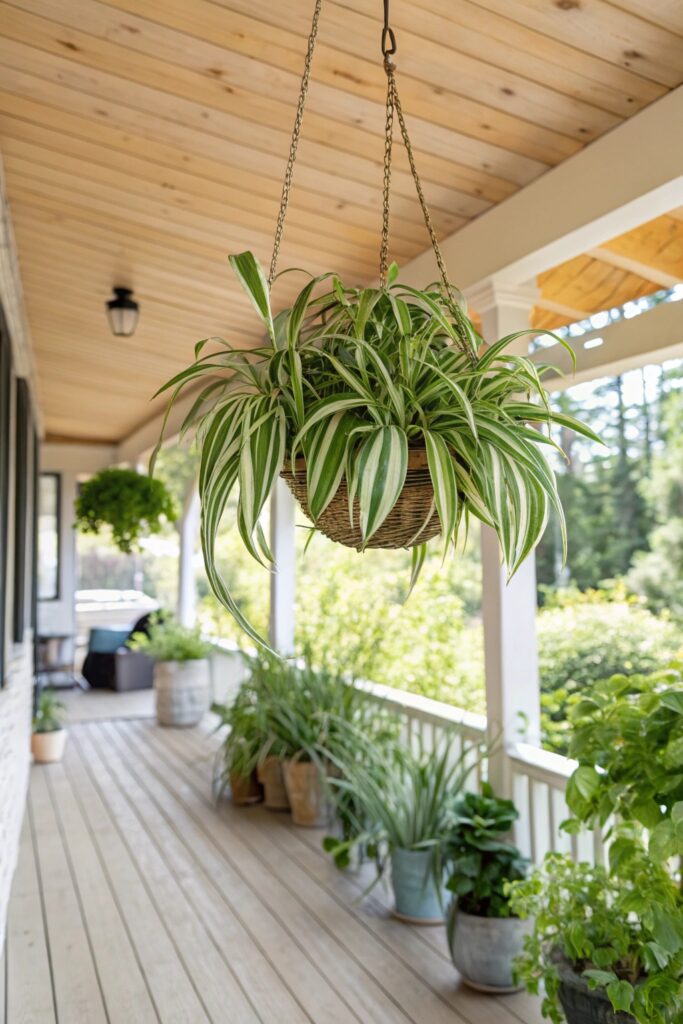
Who says hanging baskets have to stick to traditional garden plants? Spider plants make fantastic outdoor basket displays in warmer months. Their arching green-and-white striped leaves and dangling “spiderettes” create a playful, textural look that’s totally different from flowering options.
They’re also basically unkillable — which some of us truly need.
Spider plant advantages for baskets:
- Tolerates low light, making it perfect for covered porches
- Drought-tolerant and forgiving of irregular watering
- Produces cascading offshoots that add natural movement
Bring them inside before the first frost and they’ll happily overwinter as houseplants. It’s a two-for-one deal that makes complete sense once you try it.
10. Mixed “Thriller, Filler, Spiller” Baskets — The Formula That Always Works
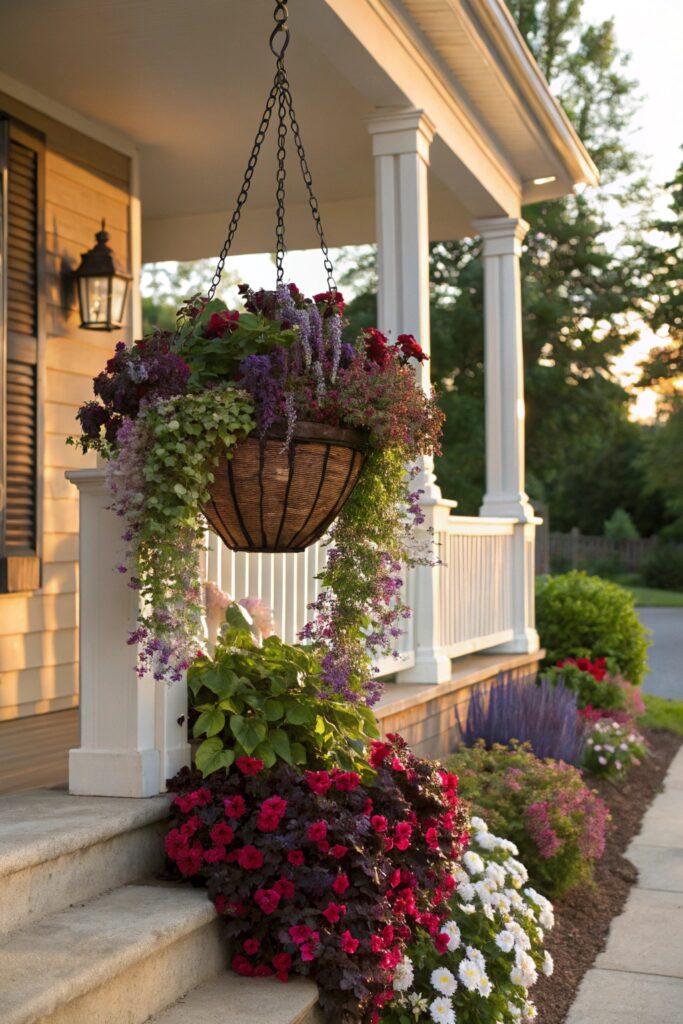
This isn’t one specific plant — it’s the gold standard approach to designing any hanging basket. The concept is simple: include one tall, dramatic “thriller” plant in the center, a few “filler” plants to create fullness, and trailing “spiller” plants to cascade over the edges.
When you follow this formula, your baskets look professionally designed every single time.
Classic thriller/filler/spiller combinations:
- Thriller: Upright salvia or ornamental grass
- Filler: Impatiens, wax begonias, or calibrachoa
- Spiller: Bacopa, trailing lobelia, or sweet potato vine
The key is balancing colors and textures — contrast works better than matching. Pick one bold color and build around it with complementary shades. Once you start thinking in this framework, you’ll never look at a basket the same way again.
Make Your Porch the One People Remember
Hanging baskets are one of the simplest ways to transform a plain porch or patio into something truly inviting. Whether you go all-in on dramatic fuchsias, keep it simple with trailing petunias, or get creative with edible nasturtiums — the main thing is just to start.
Pick two or three ideas from this list and try them this season. Mix colors, experiment with combinations, and don’t stress too much about perfection.
Your porch deserves to pop — and now you’ve got ten solid ways to make it happen. Go grab some baskets and get planting.