
The space around your house does a lot of heavy lifting — it handles foot traffic, manages water drainage, frames your garden beds, and sets the tone for your entire property’s curb appeal. And yet most people treat it like an afterthought until the mud and weeds get completely out of hand.
I’ve seen front yards go from forgettable to truly impressive with nothing more than a well-planned paver layout. The right pavers around your house pull everything together — they define spaces, reduce maintenance, and add a polished, intentional quality that landscaping alone can’t deliver.
Whether you’re working with a modest budget or planning a full exterior overhaul, these 10 paver ideas will give you plenty to work with.
1. Flagstone Path Around the House Perimeter
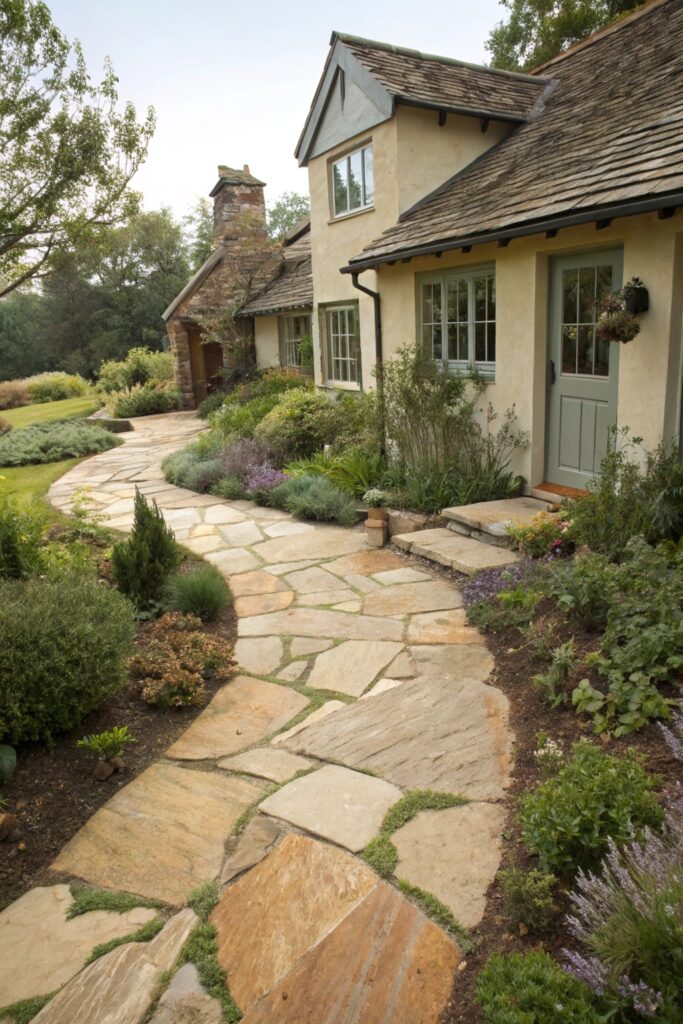
A flagstone perimeter path is one of the most practical and visually satisfying paver ideas you can install around your home. It creates a defined maintenance walkway around the foundation, keeps mulch and soil from migrating onto the structure, and looks truly beautiful with almost any architectural style. Irregular flagstone particularly suits cottage, farmhouse, and naturalistic landscapes.
- Best stone types: Natural slate, bluestone, limestone, or sandstone
- Gap treatment: Fill joints with creeping thyme, moss, or decomposed granite
- Width recommendation: Aim for at least 18–24 inches for comfortable walking
The slightly irregular edges of flagstone soften the hard lines of a house foundation beautifully. Plant low-growing ground covers between the stones for a lush, established look that makes the path feel like it’s always been there. IMO, flagstone paths age better than almost any other paver style — they just keep getting better looking over time.
2. Concrete Paver Border Along Garden Beds
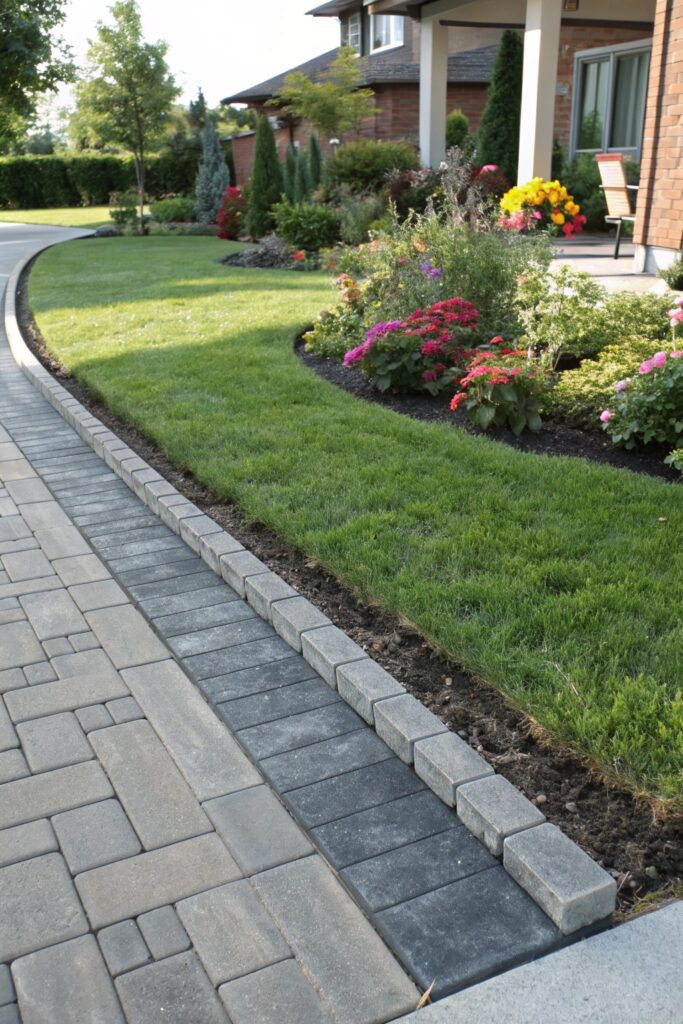
A clean concrete paver border between your lawn and garden beds instantly makes your landscaping look more intentional and professionally designed. It creates a physical barrier that keeps grass from invading your beds, reduces edging maintenance dramatically, and gives the whole yard a crisp, defined structure. Even a single row of pavers makes a noticeable difference.
- Best paver styles: Straight-edge rectangular, tumbled square, or bullnose edging pavers
- Installation tip: Set them slightly below lawn level so your mower passes cleanly over
- Color choices: Charcoal grey, warm buff, or terracotta complement most garden palettes
This is one of those weekend projects that delivers results completely disproportionate to the effort involved. Spend a Saturday laying a clean paver border around your front garden beds and your whole yard looks tidier by Monday morning. The before-and-after difference consistently surprises most people. 🙂
3. Gravel and Paver Combination Side Yard
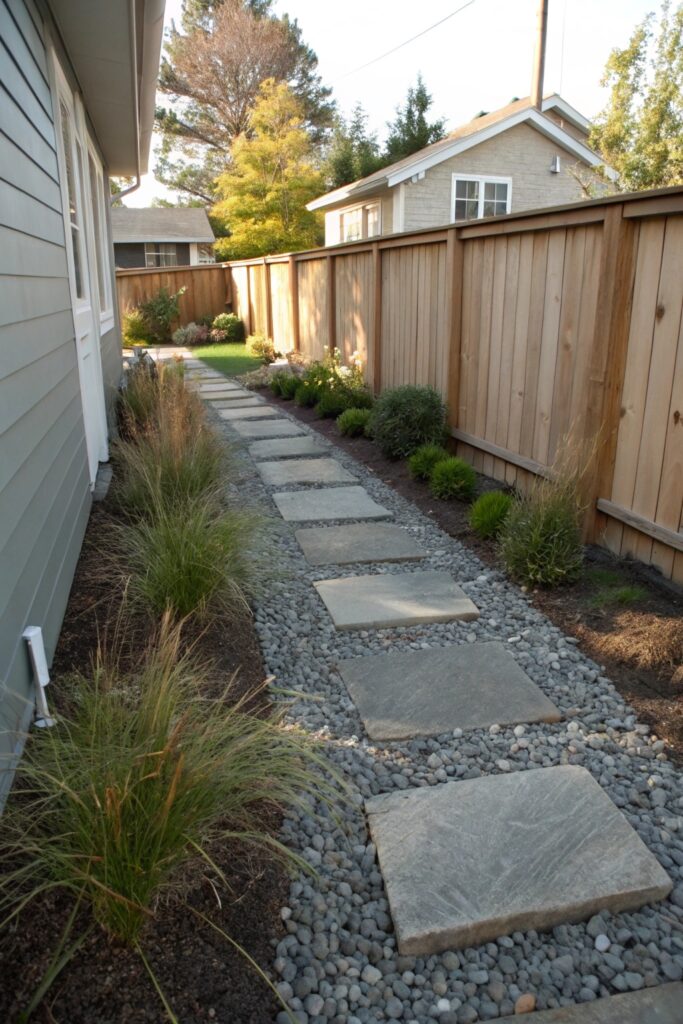
Side yards are often the most neglected part of a property — narrow, awkward, and perpetually muddy. A combination of stepping stone pavers set into a gravel base transforms that dead zone into a clean, functional passageway that handles foot traffic and drainage simultaneously. It’s also one of the most cost-effective paver solutions available.
- Paver spacing: Set stepping stones 18–24 inches apart (center to center) for comfortable stride
- Gravel type: Pea gravel, crushed granite, or river rock all work well
- Edging: Install steel or aluminum landscape edging to keep gravel contained
The gravel fills the gaps between stepping stones, provides excellent drainage away from the foundation, and looks clean and maintained with minimal upkeep. Add a border of low ornamental grasses or boxwood hedging along the fence line and your side yard goes from problem area to polished passageway.
4. Brick Paver Walkway to Front Door
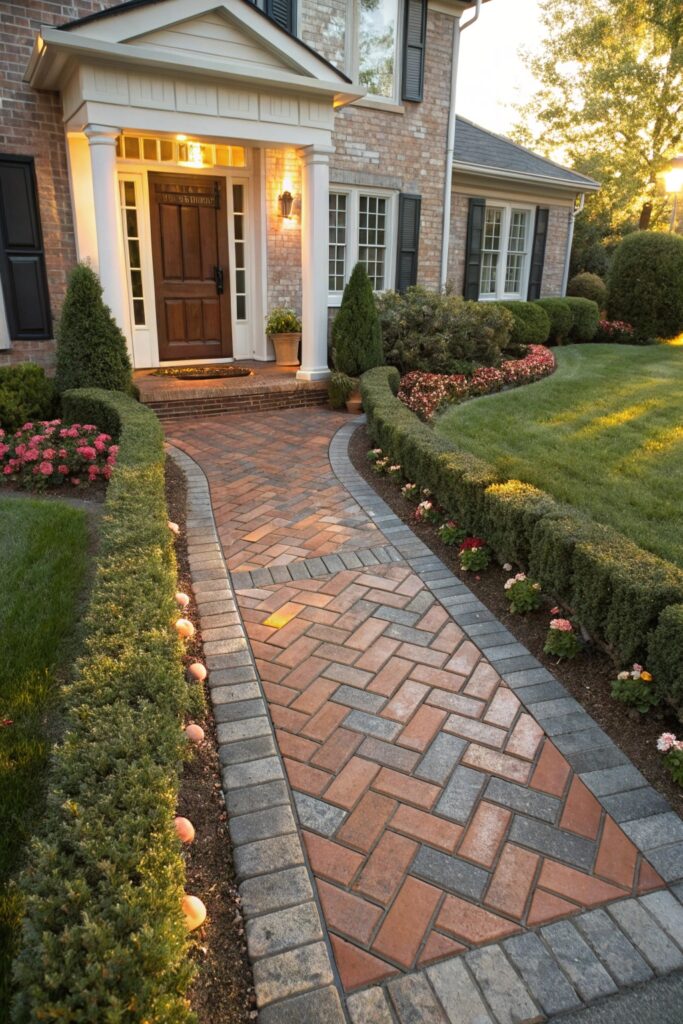
Nothing improves curb appeal faster or more dramatically than a proper brick paver walkway leading from the street or driveway to your front door. Brick brings warmth, character, and a sense of permanence that poured concrete simply can’t replicate. The classic herringbone or running bond patterns work for virtually every home style from traditional to contemporary.
- Popular laying patterns: Herringbone, running bond, basketweave, stacked bond
- Brick color options: Classic red, weathered charcoal, warm buff, mixed antique tones
- Width guideline: Minimum 36 inches wide; 48 inches feels generous and welcoming
Border the walkway with low flowering plants, ornamental grasses, or neatly clipped boxwood for a complete, polished entrance. A well-laid brick path also signals that the rest of the property receives the same level of care and attention — which matters enormously for first impressions and property value.
5. Large Format Paver Foundation Border
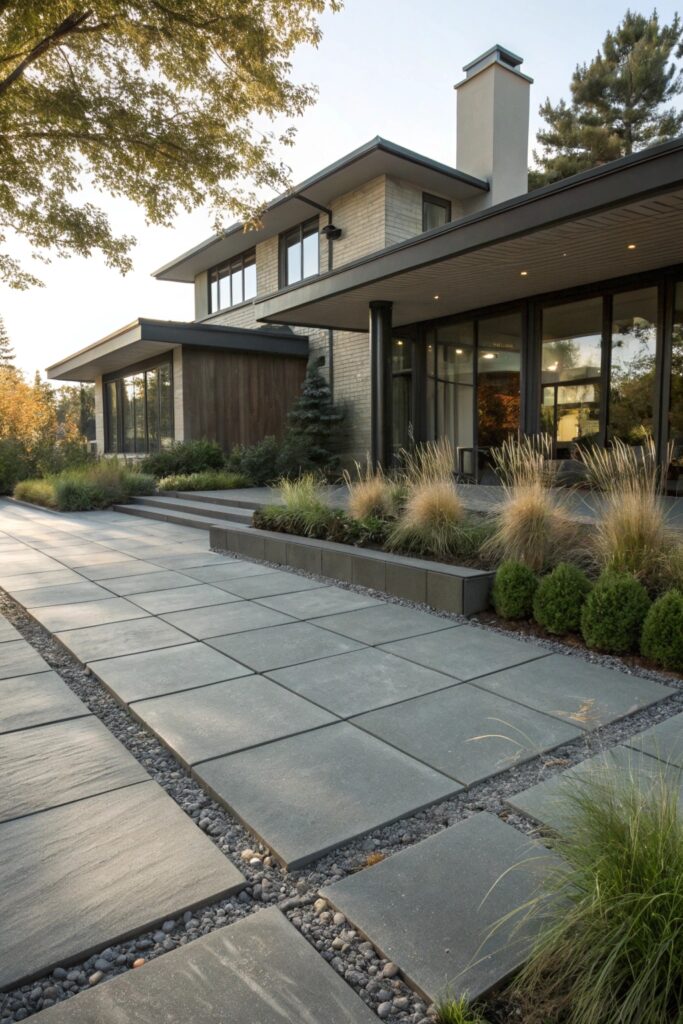
Large format pavers — think 24×24 inch or bigger — installed as a clean border directly against your house foundation create a sophisticated, architectural look that dramatically improves the transition between structure and landscape. They suppress weeds, direct water away from the foundation, and give the base of your house a finished, intentional appearance.
- Best materials: Concrete, natural bluestone, porcelain, or large slate pavers
- Slope requirement: Maintain a slight slope away from the foundation for drainage
- Width: A 24–36 inch band around the perimeter looks proportional on most homes
This approach works particularly well on modern and contemporary homes where clean lines and minimal ornamentation define the aesthetic. Pair large format grey or charcoal pavers with architectural plants like ornamental grasses, agave, or clipped hedges for a sharp, landscaped finish that looks expensive without necessarily being so.
6. Stepping Stone Path Through Side Garden
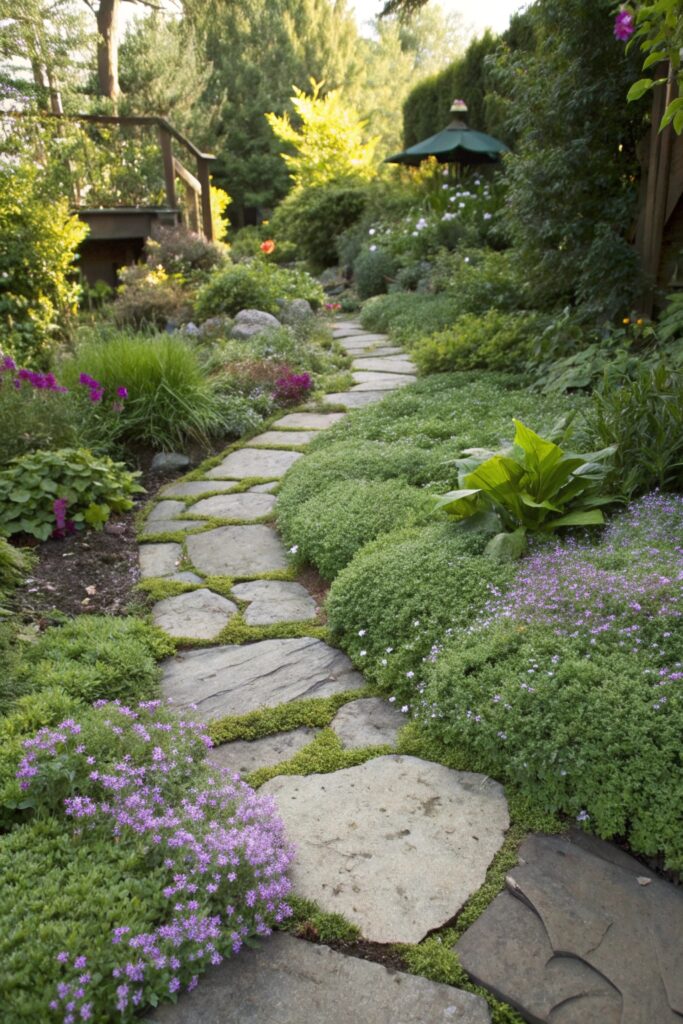
A stepping stone path winding through a side garden bed creates movement, accessibility, and visual interest in a space that often goes completely unused. It invites people to actually walk through the planting rather than around it, which makes gardens feel more immersive and intentional. Irregular stepping stones with ground cover planted between them look particularly natural and charming.
- Stone options: Irregular flagstone, round concrete stepping stones, reclaimed slate
- Ground cover between stones: Creeping thyme, Irish moss, woolly thyme, or dichondra
- Spacing: Place stones at a comfortable walking pace — roughly 18 inches center to center
FYI — the ground cover between stepping stones does double duty: it suppresses weeds and softens the hard edges of the stones for a more organic, established appearance. Allow it to spread slightly over stone edges for that perfectly imperfect cottage garden aesthetic.
7. Paver Apron Around House Foundation Plantings
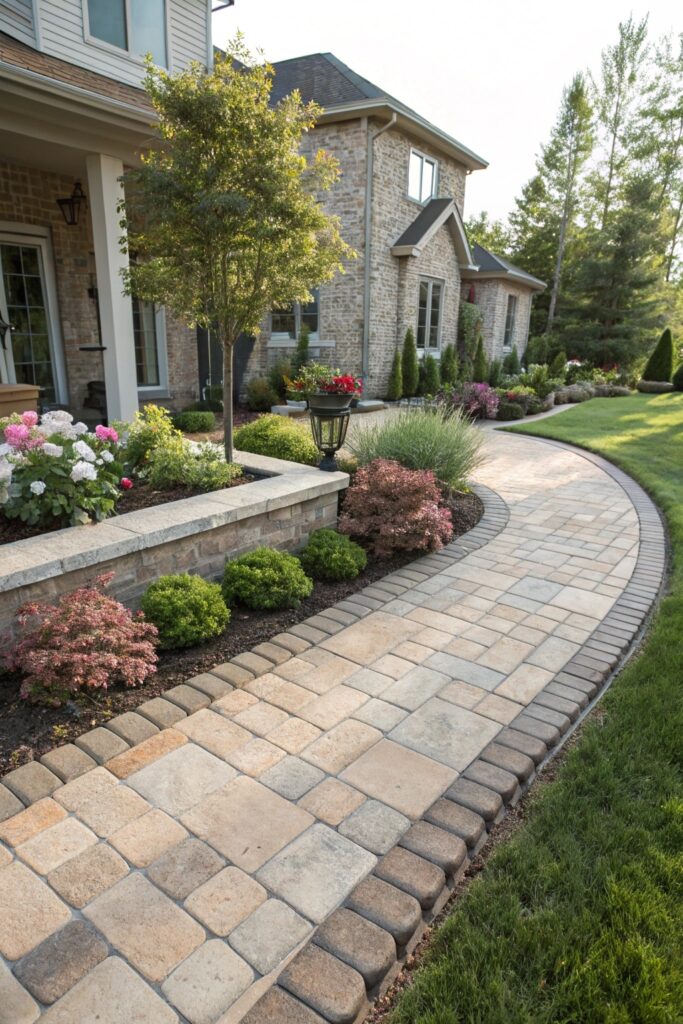
A paver apron — a wider band of pavers surrounding foundation plantings — creates a clean, mulch-free border that frames your plants and protects your foundation simultaneously. It eliminates that perpetual battle with mulch washing onto walkways and gives landscape maintenance crews a clean edge to work from. The result looks significantly more considered than a simple mulched bed.
- Apron width: 12–18 inches works well as a buffer between plants and lawn or walkway
- Paver style: Tumbled concrete, natural stone, or brick all complement foundation plantings
- Plant spacing: Leave adequate room between plants and the house for air circulation
Use the paver apron to define planting zones and create a visual rhythm around the entire perimeter of the house. Consistent paver material throughout ties the whole landscape together and gives even modest plantings a polished, professional presentation.
8. Permeable Pavers for Drainage Around House
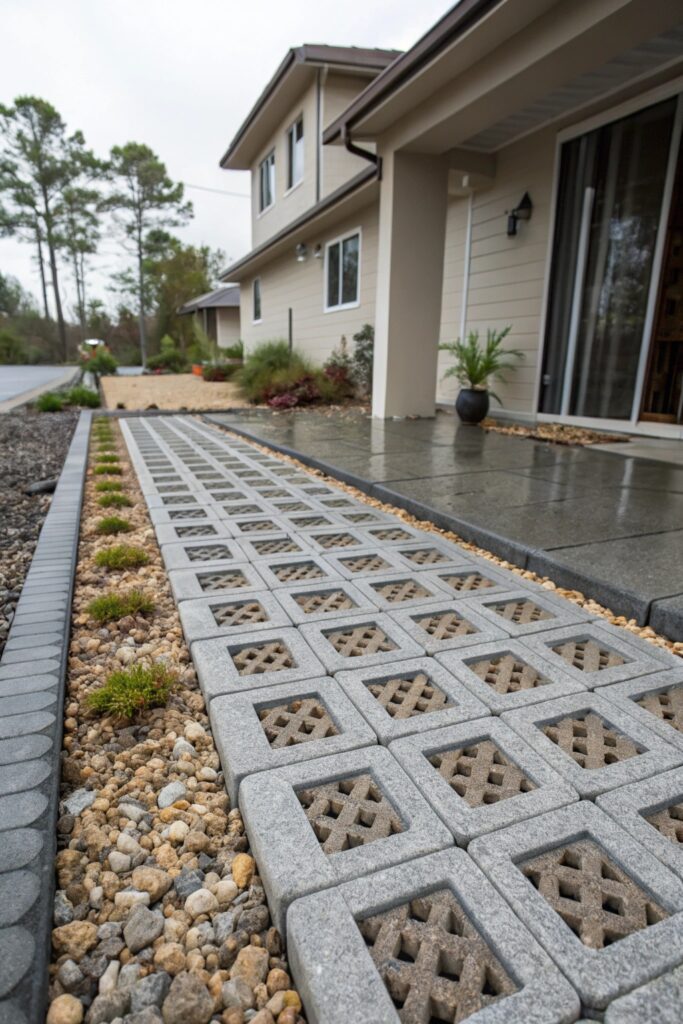
If water pooling around your foundation keeps you up at night, permeable pavers are easily one of the smartest landscaping investments you can make. They allow rainwater to pass through the surface and absorb into the ground rather than running toward your foundation or creating puddles. They solve a functional problem while looking completely intentional and attractive.
- Types available: Permeable concrete pavers, open-cell grass pavers, gravel-filled grid systems
- Best use areas: Side yards, narrow passages, areas prone to pooling
- Maintenance: Occasional sand top-dressing keeps joints clear and permeable
Permeable pavers work particularly well in climates with heavy rainfall or in yards with clay-heavy soil that drains poorly. They’re not the most glamorous paver option, but they solve real drainage problems that more decorative solutions simply ignore. :/
9. Natural Stone Dry-Stack Paver Edging
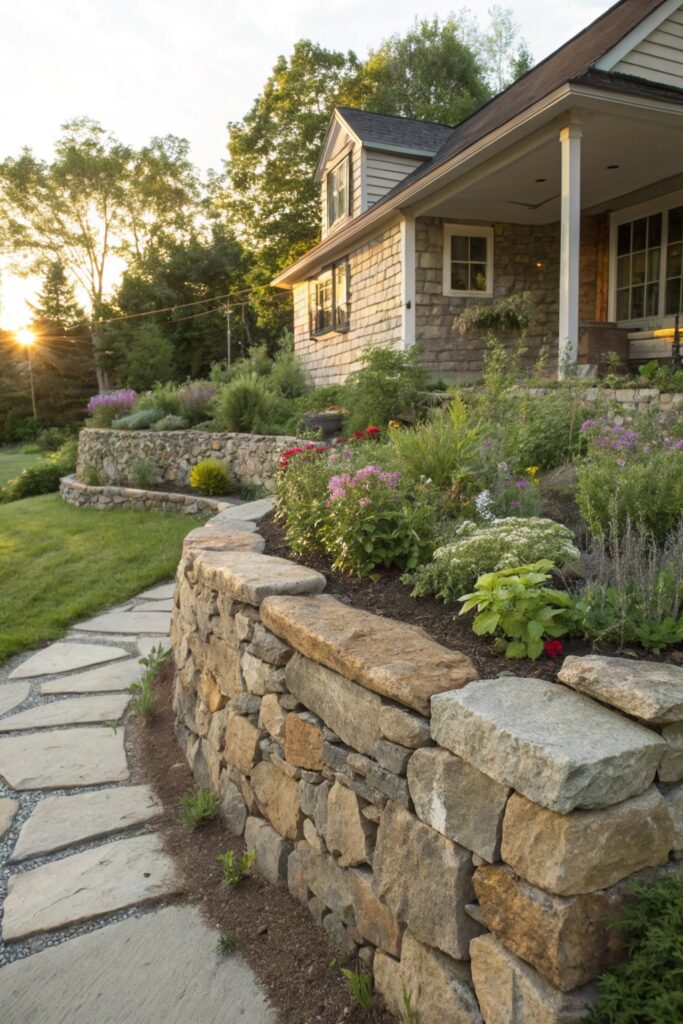
Dry-stack natural stone edging — flat stones stacked two or three layers high without mortar — creates a beautiful raised border that adds height, structure, and a timeless quality to landscaping around the house. It works as a retaining element on sloped ground and as a purely decorative border on flat sites. The natural variation in stone color and texture makes every installation completely unique.
- Best stone types: Fieldstone, quartzite, limestone, or local natural stone
- Height: Two to three courses (6–9 inches) works well as a landscape border
- Style pairing: Cottage, rustic, farmhouse, naturalistic, or English garden landscapes
Fill the raised bed created by dry-stack edging with improved soil and plant it with herbs, perennials, or seasonal color for a complete, layered landscape feature. The combination of natural stone edging and lush planting creates the kind of established garden character that makes a property look truly well-loved.
10. Mixed Material Paver and Mulch Border System
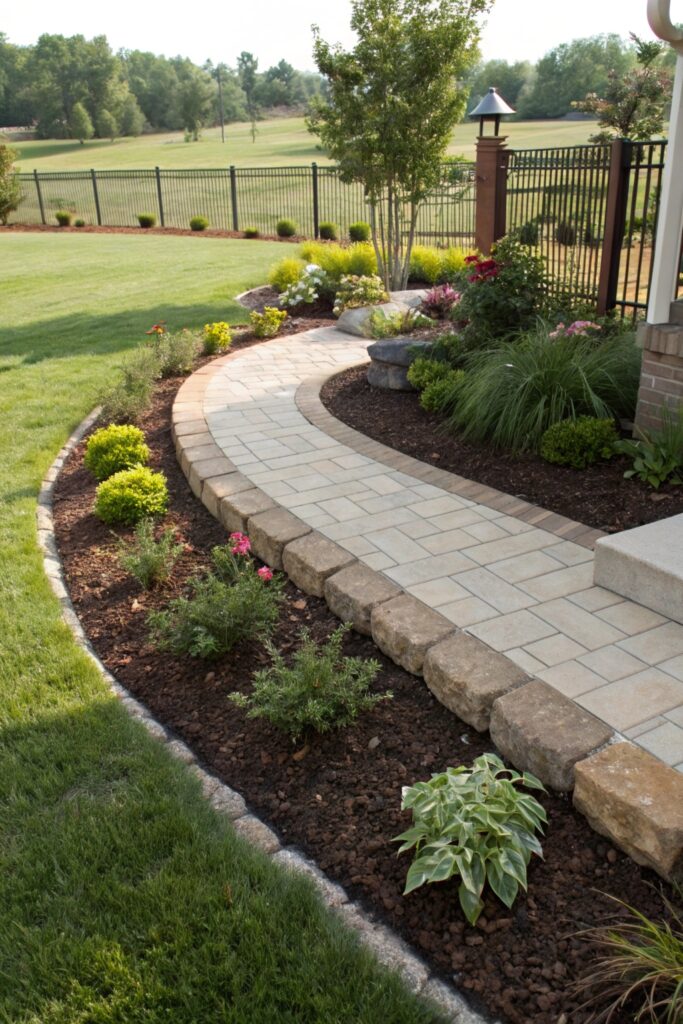
Combining pavers with mulched planting beds creates a layered, textured landscape system that looks professionally designed and dramatically reduces ongoing maintenance. The pavers define clean edges and provide maintenance access, while the mulch retains moisture, suppresses weeds, and gives planting beds a finished appearance. Together they work better than either material alone.
- Best paver role: Edging, stepping access paths, and corner anchor points within beds
- Mulch depth: 2–3 inches of organic mulch between plants and paver edges
- Color coordination: Match paver tones to mulch color for a cohesive palette
This combination approach works particularly well in larger landscape areas around the house where a solid paver surface would feel too hard and heavy. The interplay of hard paver edges and soft planted mulch beds creates visual rhythm and depth that makes even a modest garden look truly thoughtful and well-composed.
Final Thoughts
The space around your house deserves the same design attention as your interiors. Pavers give you structure, define your landscape, solve drainage problems, and add curb appeal — all at the same time. That’s a lot of value from what is ultimately just well-placed stone.
Start with the area that causes you the most frustration — the muddy side yard, the eroding garden bed edge, the sad front walkway — and tackle that first. One well-executed paver project builds momentum and makes the next one feel obvious.
Your landscaping sets the tone for everything people think about your home before they even reach the front door. Make it count. 🙂