
A blanket ladder sits empty in most living rooms for eleven months of the year, which is honestly a waste of a good decor piece once the holidays roll around. It’s one of the few furniture items that can hold actual weight — blankets, garland, string lights — without looking like it’s trying too hard. The problem is most people either overload it into a cluttered mess or leave it so bare it barely registers as decor at all.
A well-styled blanket ladder works because it adds height, texture, and warmth to a corner that usually gets ignored. Below are 12 ways to style one, with the specific materials, costs, and techniques that separate a finished-looking ladder from a pile of blankets leaning against the wall.
1. Build a Simple Wood Ladder From Scratch
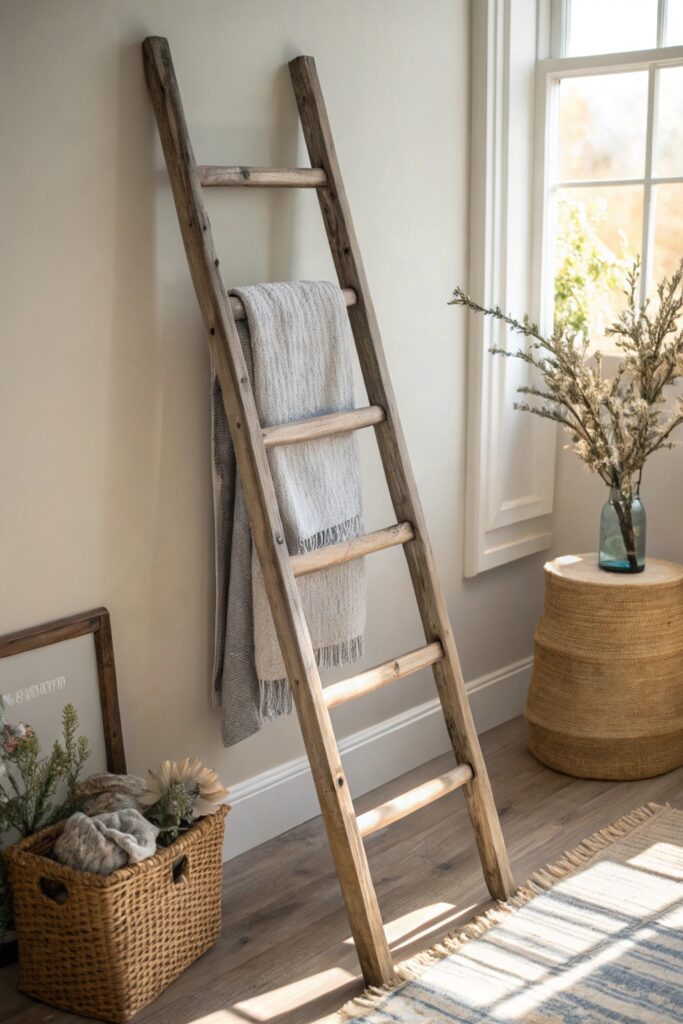
Skip the $80-120 pre-made blanket ladders at HomeGoods and build one for under $25. You need five 1×2 furring strips (roughly $3 each at Home Depot or Lowe’s) — two 6-foot pieces for the side rails and three 20-inch pieces for the rungs. Cut the rails at a 15-degree angle at the base so it leans flush against the wall instead of kicking out at the bottom, which is the detail that separates a wobbly DIY from one that actually looks intentional. Pre-drill before screwing the rungs in place; furring strip splits easily without it. A coat of walnut gel stain (Minwax, about $8) gives it a built-furniture look in under an hour, with no sanding required between coats.
2. Layer Blankets by Texture, Not Just Color
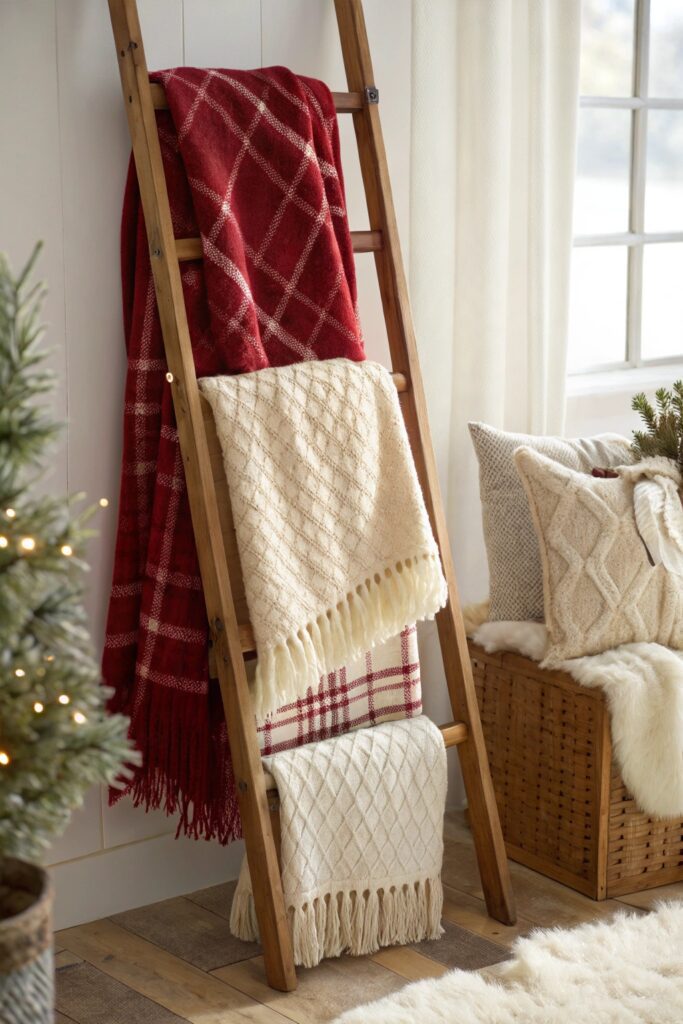
Matching-color blankets read as a display, not a real collection — the fix is contrasting texture instead. Start with your heaviest, most textured piece on the bottom rung (a cable-knit chunky throw or a sherpa-lined blanket), then layer a flat-weave cotton or linen blanket over it folded in thirds lengthwise rather than in a square. The uneven drape is what makes it look lived-in. Reserve your top rung for the thinnest blanket — a waffle-knit or gauze throw — folded in half and draped asymmetrically so one side hangs 4-6 inches lower than the other.
3. Wrap String Lights Around the Frame
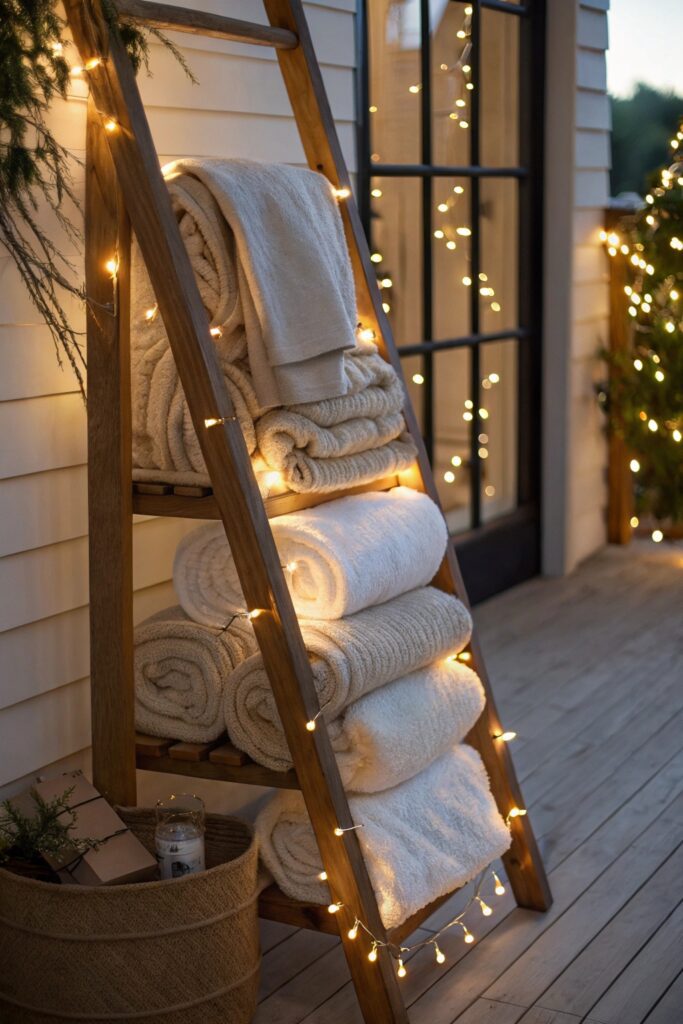
Use battery-operated warm white micro LED lights (not the larger C7/C9 bulbs, which overwhelm a ladder’s scale) — a 20-foot strand with 100 lights gives enough length to wrap each rail three to four times without looking sparse. Wrap loosely on the diagonal rather than tight and straight; a tight wrap reads as string lights, a loose diagonal wrap reads as garland. Tuck the battery pack behind the bottom rung or inside a folded blanket so it’s invisible from the front of the room.
4. Add a Fresh or Faux Garland Along the Top Rung
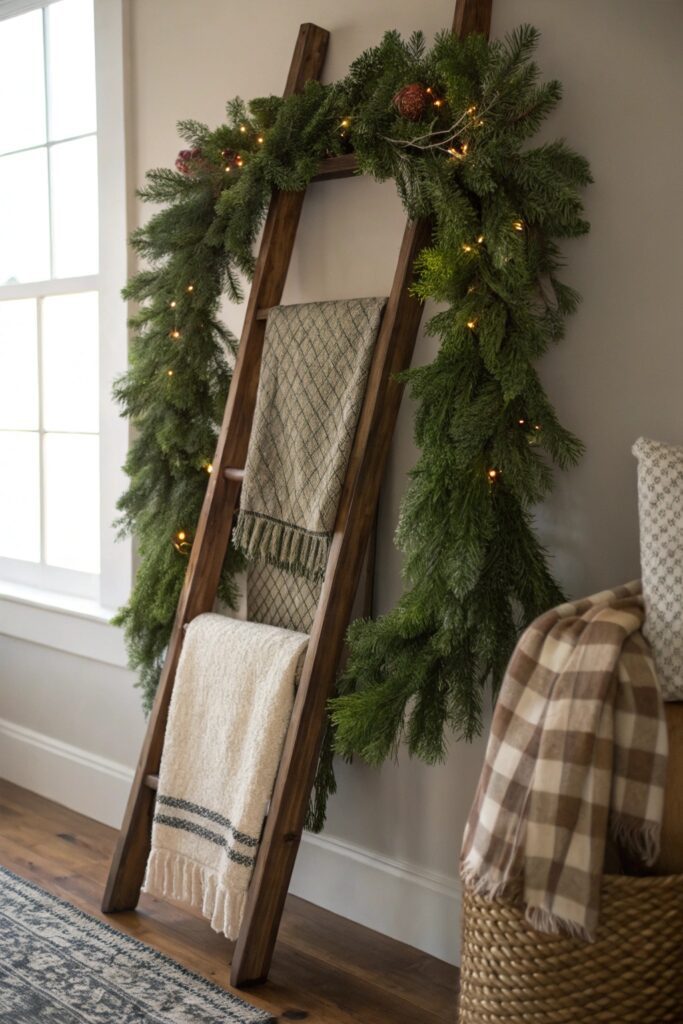
A 6-foot faux pine or eucalyptus garland (Target and Amazon both carry realistic options in the $20-30 range) drapes naturally along the top rung if you wire-tie it at three points rather than letting it rest loose, which prevents it from sliding to one side within a day. If you’re using fresh greenery, cedar and noble fir hold their needles longest indoors — expect 2-3 weeks before it starts dropping, versus about a week for fresh pine.
5. Hang Stockings From the Side Rails Instead of a Mantel
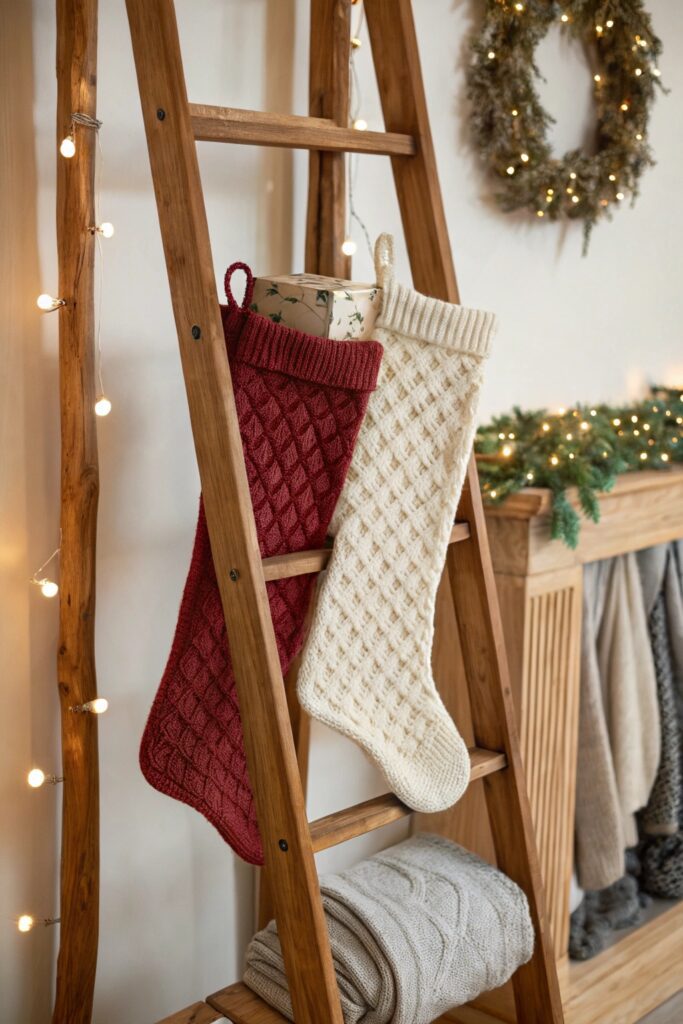
If you don’t have a mantel, a blanket ladder’s side rails work as a stand-in — use S-hooks (the small 2-inch swivel kind sold for hanging plants, not the large fireplace stocking holders, which are too heavy for a furring-strip rail) to hang stockings from alternating rungs going up one side. This keeps the ladder’s silhouette visible instead of burying it, and it means you’re not relying on ladder weight alone to keep stockings from sliding off the top like you would balancing them on a rung.
6. Style the Base With Wrapped Gift Boxes
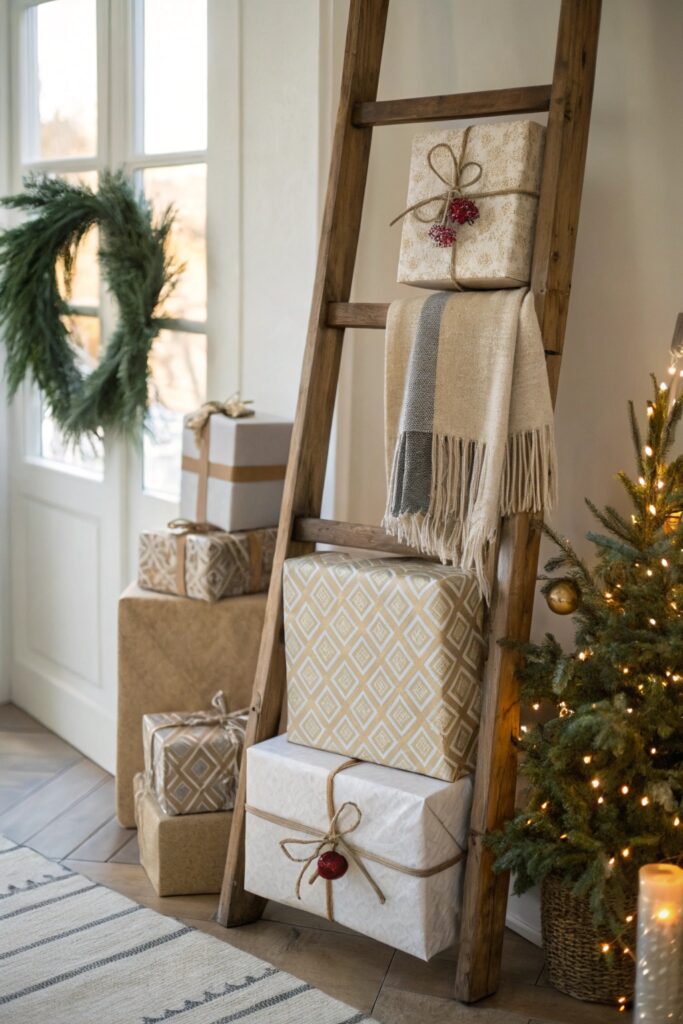
Empty wrapped boxes (not real gifts, which get damaged from months of styling) in two or three graduated sizes anchor the base visually and hide the plain floor space a ladder otherwise leaves empty. Stick to two wrapping paper patterns maximum plus one solid color — three or more patterns together reads cluttered rather than styled. Stack the largest box flat, lean the mid-size box against the ladder’s base at a slight angle, and set the smallest box on top of the flat one, off-center.
7. Tuck in a Few Faux Botanical Stems
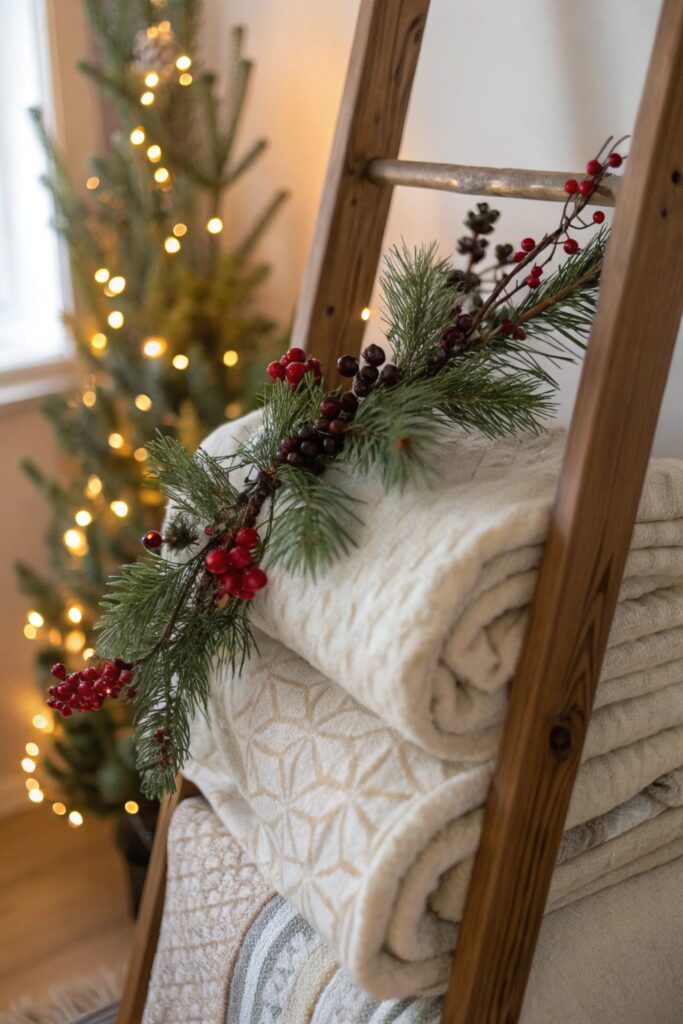
Three to five faux pine or berry stems (about $4-6 each) tucked between the rungs — not standing upright, but angled diagonally through the gaps — add dimension without looking like a separate arrangement. Vary the stem heights so they don’t all end at the same point; stagger them by 3-4 inches. Red winterberry stems against a neutral blanket palette is the highest-contrast, lowest-effort combination if you’re short on time.
8. Add a Bow or Ribbon Accent at the Top
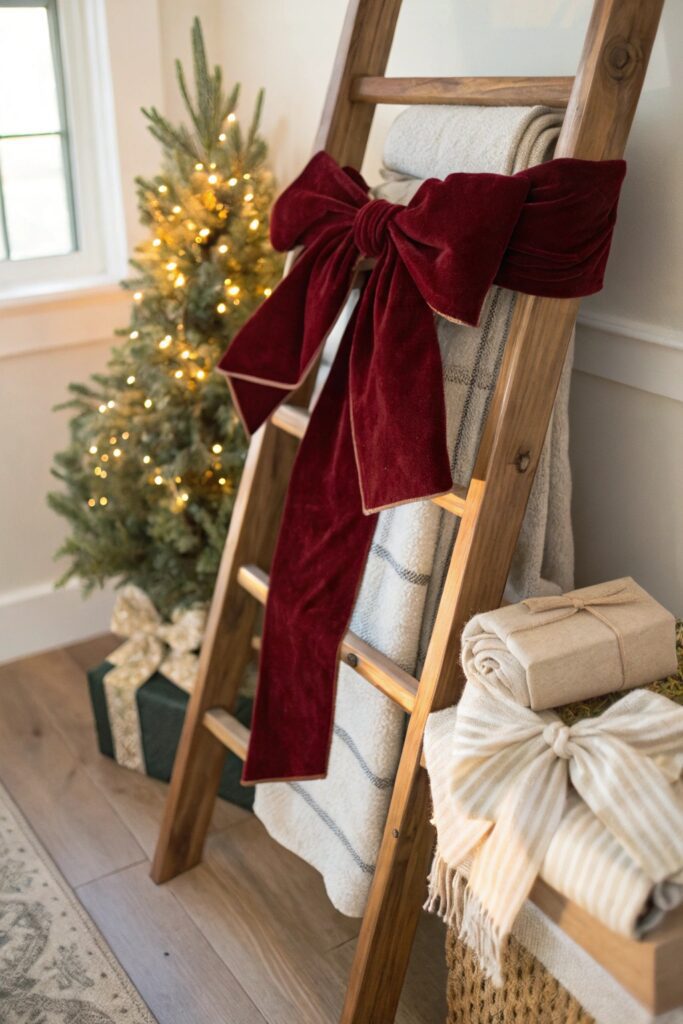
A single oversized wired ribbon bow (2.5-inch width minimum — anything narrower looks flimsy at ladder scale) tied at the top rung where the two rails meet finishes the piece the way a bow finishes a wreath. Velvet ribbon in burgundy or forest green holds its shape better than satin, which tends to droop within a few days. Leave the tails long — 12-14 inches each — and let them hang rather than trimming them short.
9. Use a Ladder as a Christmas Card Display
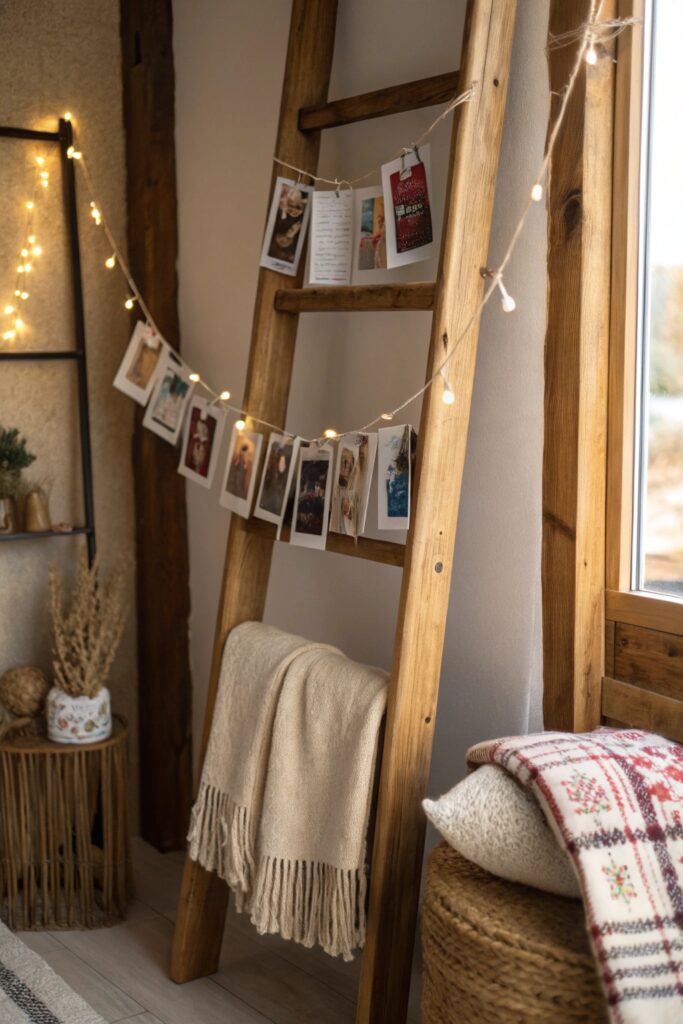
Clip received cards to the rungs with small wooden clothespins (mini 1-inch pins, sold in craft store multi-packs) spaced evenly along each rung rather than clustered — about 4-5 cards per rung keeps it readable instead of overwhelming. This solves the actual problem of where holiday cards go once they arrive, and it changes the ladder’s look gradually through December as more cards come in, rather than being static from day one.
10. Incorporate a Seasonal Throw Pillow at the Base
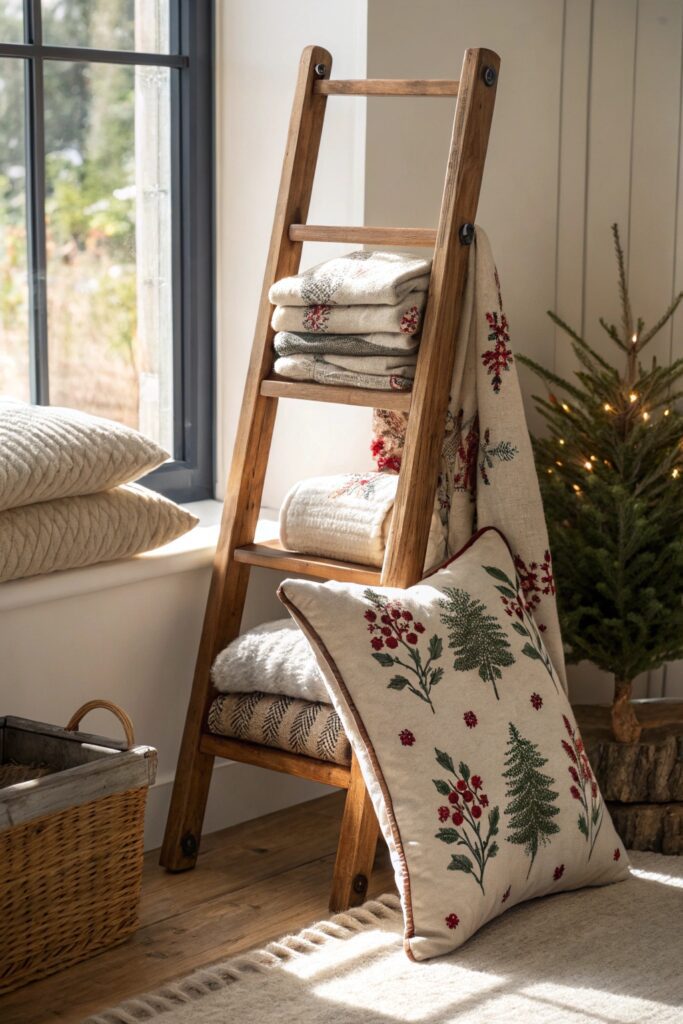
Lean one pillow (18×18 inch is the standard size that reads proportional against a 6-foot ladder — anything larger overwhelms the base) against the bottom rung rather than laying it flat on the floor, which anchors the eye and bridges the ladder into the rest of the room’s seating area. A textured or velvet cover in a single accent color reads more intentional than a busy holiday print, especially if your blankets are already patterned.
11. Add Height With a Taller Ladder for Open-Concept Spaces
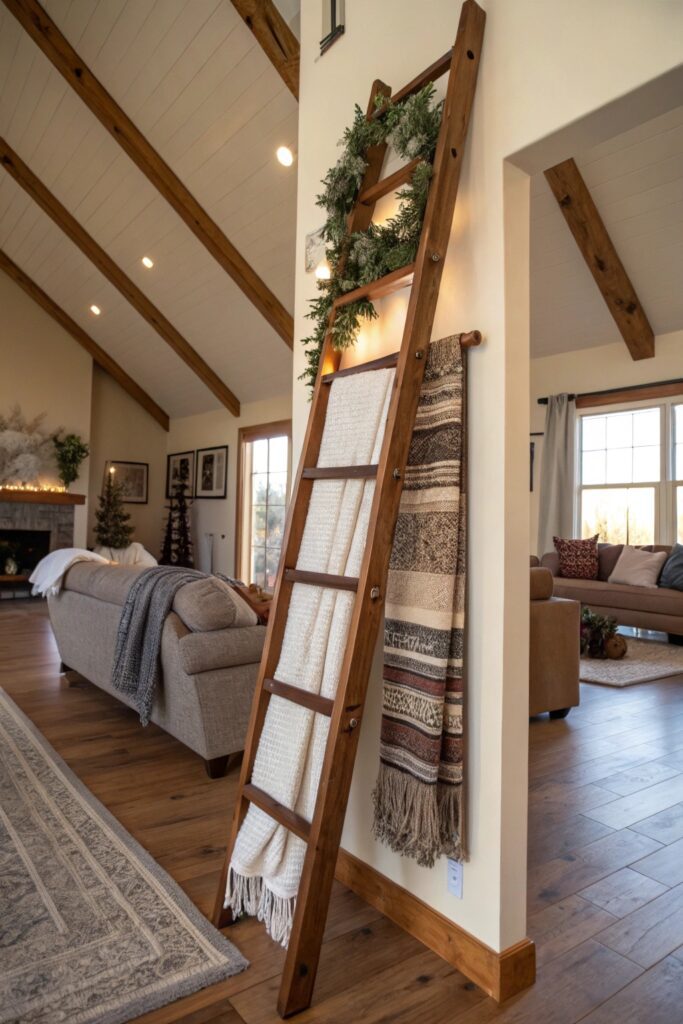
Standard blanket ladders run 5-6 feet tall, which gets visually lost against 9-10 foot ceilings common in open-concept builds. A 7-foot ladder (or building your own from step one above, extending the rail length) keeps the piece proportional to the room instead of looking like an afterthought. As a rule of thumb, the ladder should reach at least halfway up the wall space it’s styled against — measure your wall height before buying.
12. Rotate the Color Palette Between Traditional and Neutral
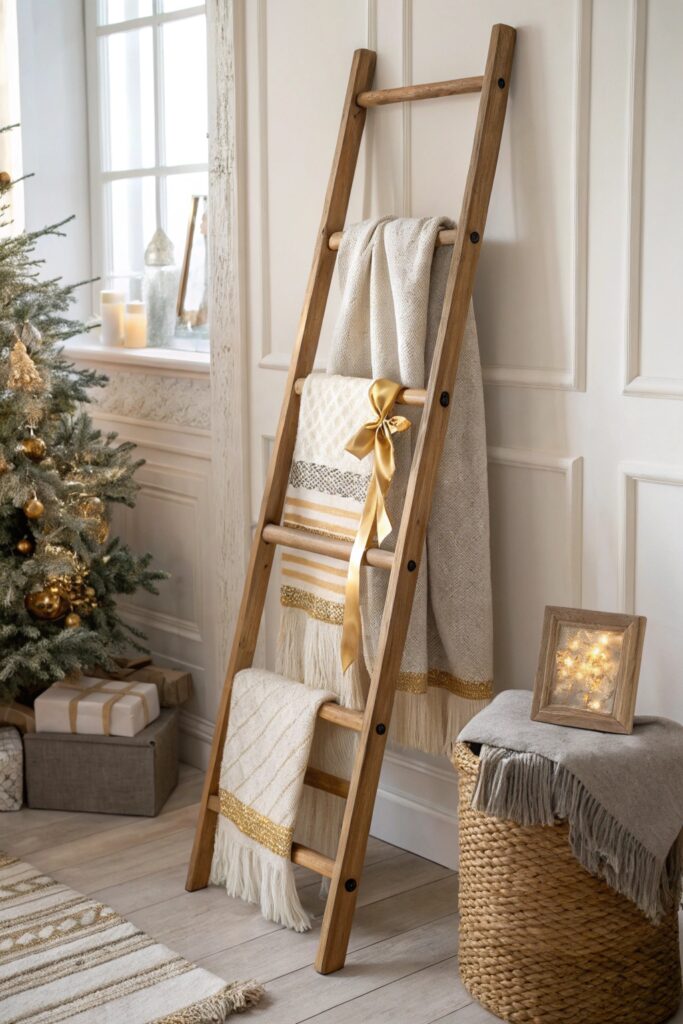
If you keep holiday decor up for extended periods, build the ladder around a neutral base (cream, oatmeal, taupe blankets) and swap only small accent pieces — the garland, ribbon, and one blanket — between a traditional red-and-green palette for the first half of December and a neutral gold-and-white palette for New Year’s through early January. It means buying accent pieces twice a year instead of buying an entirely new set, and it prevents the ladder from feeling dated the moment Christmas ends but winter styling season continues.
Bringing It All Together
The common thread across all of these: restraint on quantity, intention on placement. A blanket ladder styled with three well-chosen elements — one texture layer, one light source, one seasonal accent — will look more finished than one loaded with everything from this list at once. Pick two or three ideas that match how much time you actually want to spend restyling it through the season, and build from there.