
A fireplace mantel is one of the highest-impact surfaces in a living room, but it’s also one of the easiest to overdo — too many pumpkins, too much garland, and it starts looking like a seasonal display shelf rather than part of the room. The goal for fall styling specifically is warmth and texture without clutter.
Below are 12 ways to style a mantel for fall, with the specific materials, spacing, and layering techniques that make the difference between a styled mantel and a pile of seasonal decor.
1. Layer Frames and Mirrors at Varying Heights
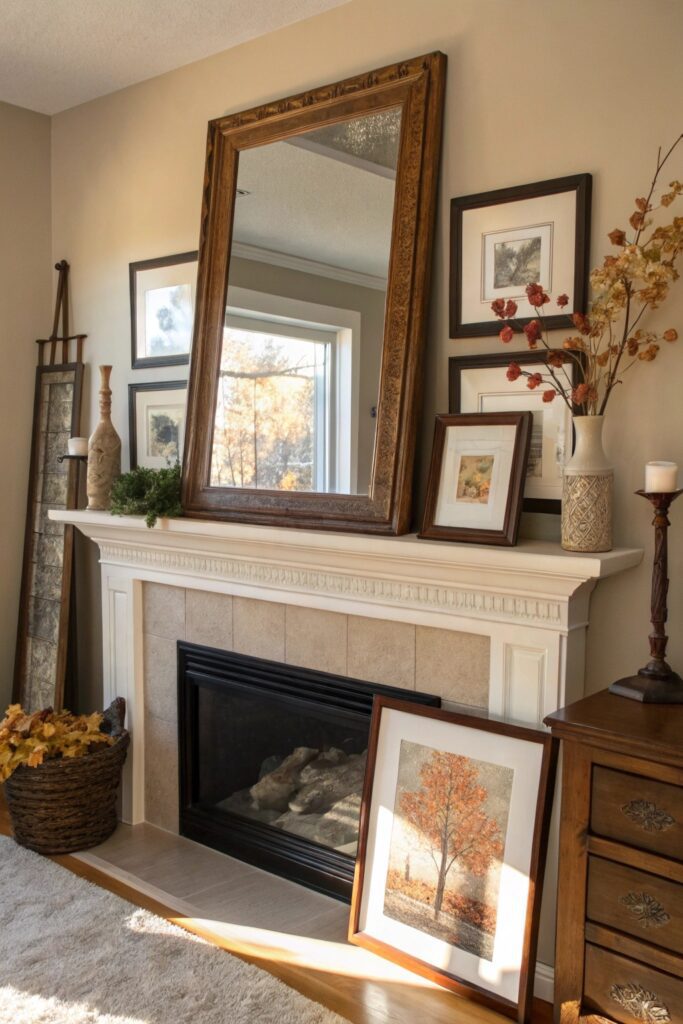
A single large mirror centered on the mantel is the default most people reach for, but layering two or three frames of different heights against the wall — propped, not hung — reads more collected. Use a large frame (24-30 inches) as the back layer, leaning it flush against the wall, then overlap a smaller 12-16 inch frame in front and slightly off-center. Vary the frame finishes too: one black metal, one aged brass, one wood, rather than matching sets, which is what makes it look gathered over time instead of bought as a kit.
2. Add Pillar Candles in Varying Heights
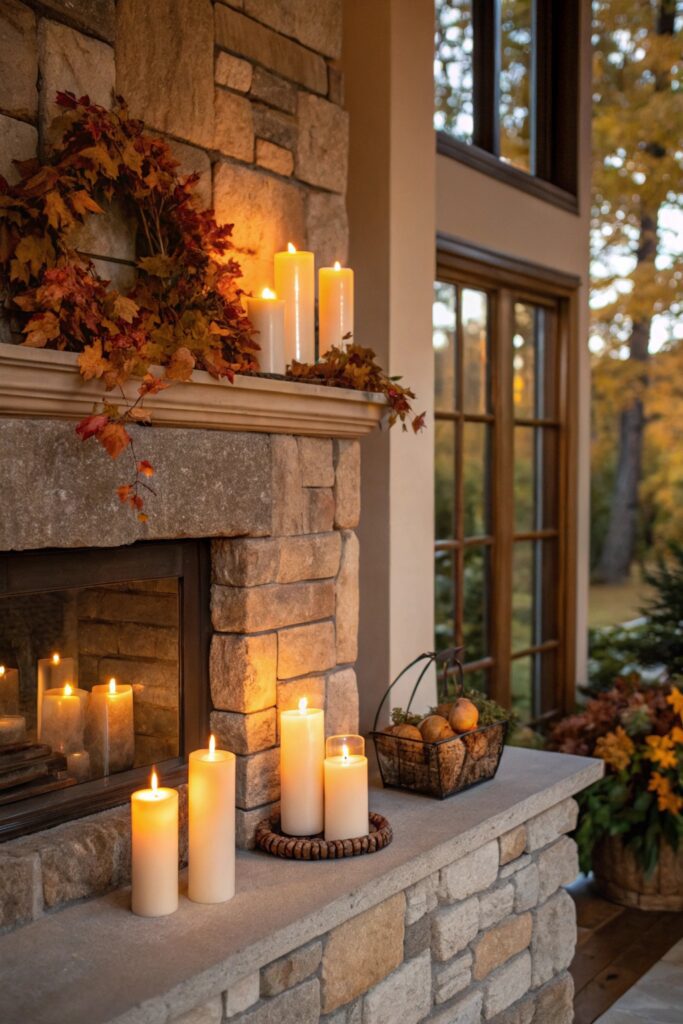
Group three to five pillar candles in odd numbers, varying the heights by at least 2 inches between each — a 9-inch, 6-inch, and 4-inch candle grouped together reads intentional, while three same-height candles reads like a matched set from a store display. Flameless LED pillars (the wax-textured kind, not shiny plastic) are worth the extra $5-8 per candle over traditional wax if the mantel sits below eye level near seating, since they eliminate the safety concern of an open flame close to blankets or garland.
3. Drape a Garland Along the Mantel Edge
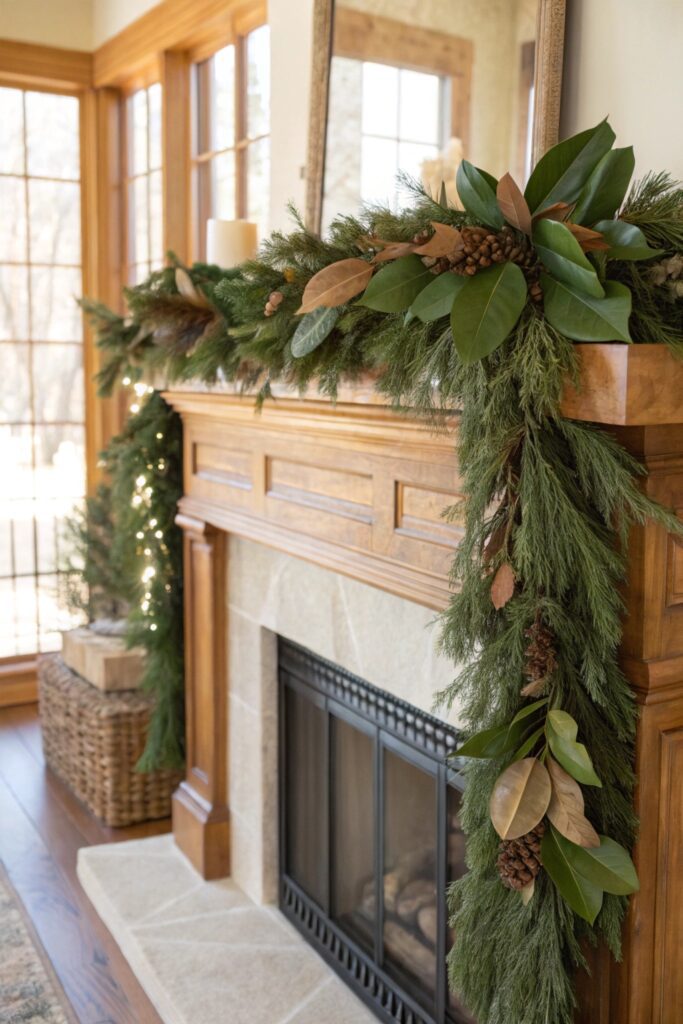
A 6-9 foot faux magnolia leaf or eucalyptus garland drapes best when it’s allowed to dip in the middle rather than pulled taut — pin it at both ends and the center with small garland clips (sold specifically for mantels, about $6 for a pack of 6) so it holds a soft U-curve instead of a straight line. For fall specifically, mixed dried and preserved stems (real preserved eucalyptus mixed with faux fall leaves) look less uniform than an all-faux garland and cost about the same.
4. Style With a Mix of Pumpkins in Different Textures
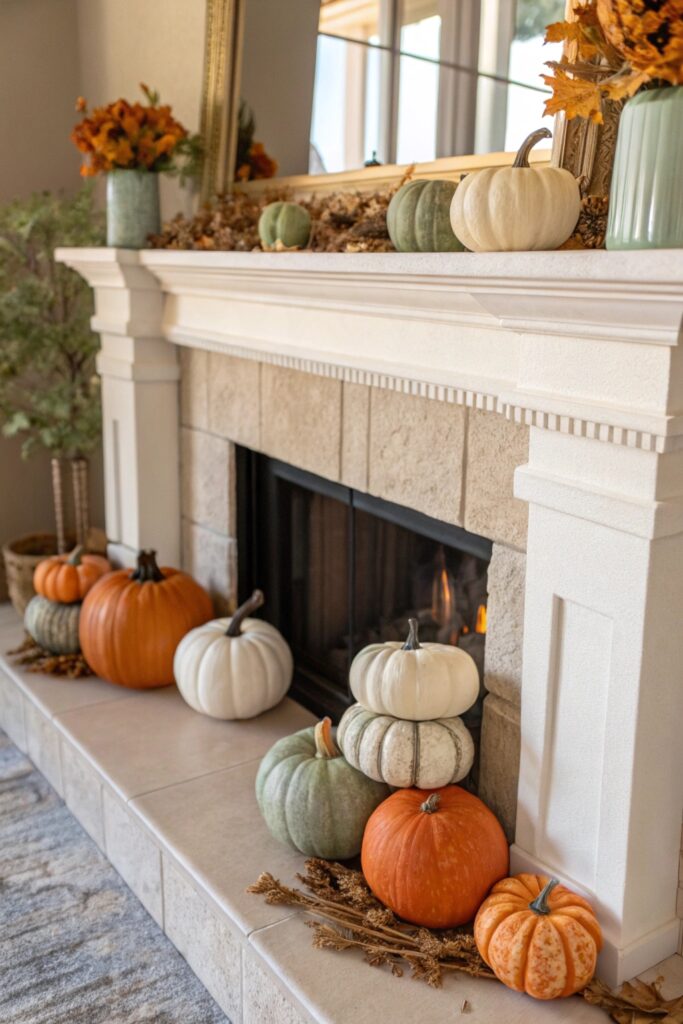
Combine at least three pumpkin textures — a smooth painted ceramic pumpkin, a natural ribbed heirloom variety (real or high-quality faux), and a velvet or fabric-covered pumpkin — rather than all-matching pumpkins in one material. Stick to a tight color range (white, cream, and one deep color like rust or burgundy) even while varying texture; mixing both texture and a wide color range at once tends to look chaotic rather than styled.
5. Add Texture With a Wood Slice or Stump Riser
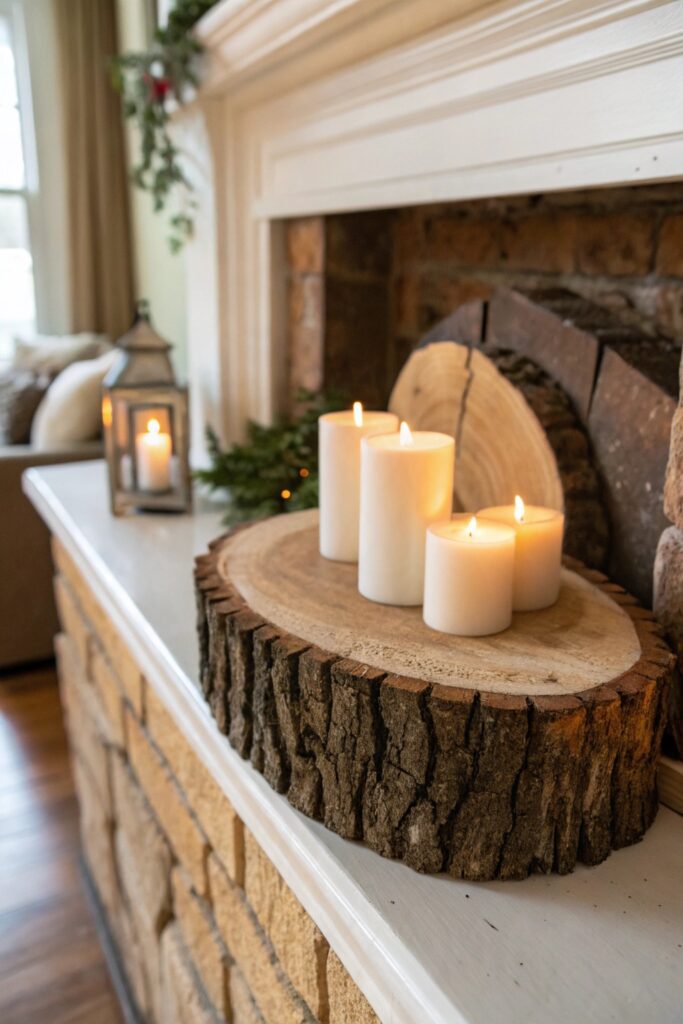
A cross-cut wood slice riser (8-10 inches in diameter, sold at craft stores or easily cut from a fallen branch) elevates a single decor piece — a candle or small pumpkin — and adds an organic textural break among smoother ceramic and glass pieces. Sand the cut edges lightly if using a real branch slice; raw bark edges shed debris onto the mantel over time. Two risers of slightly different heights (2-inch and 4-inch) used together read more natural than one alone.
6. Fill the Hearth With Firewood as Decor
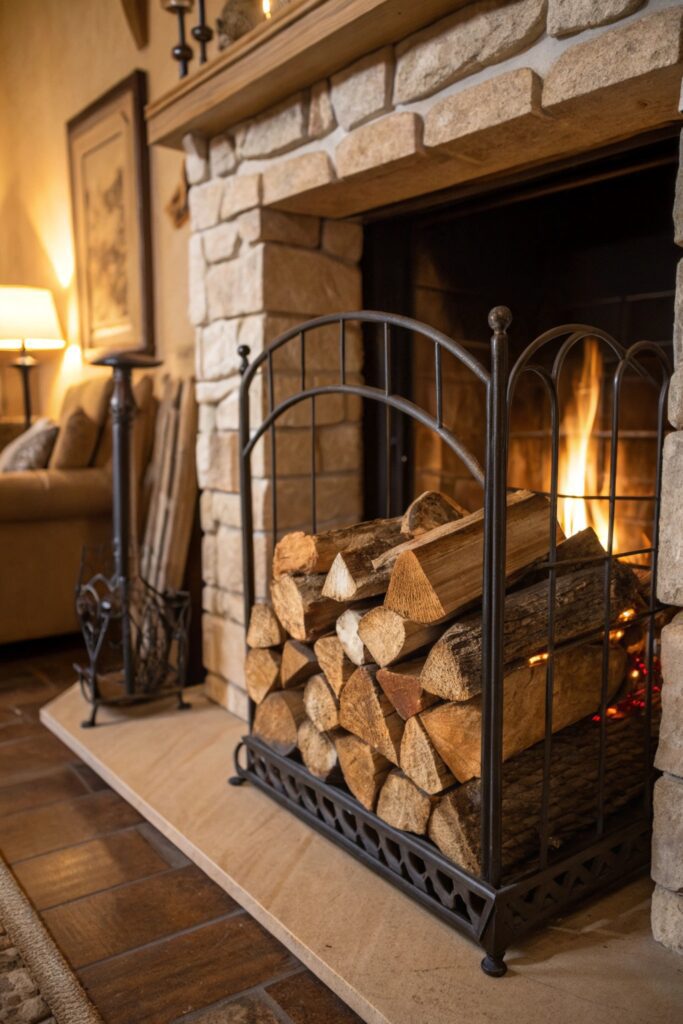
An empty hearth below a styled mantel looks unfinished by comparison — filling it with 6-8 neatly stacked birch or oak logs (even if the fireplace isn’t functional) grounds the whole display. Birch logs specifically are popular for this because the white bark reads bright and decorative rather than utilitarian; if using real firewood for an active fireplace, keep the decorative stack separate from your burn pile since decorative logs sit for months and attract dust.
7. Layer a Textured Throw Over the Mantel Edge
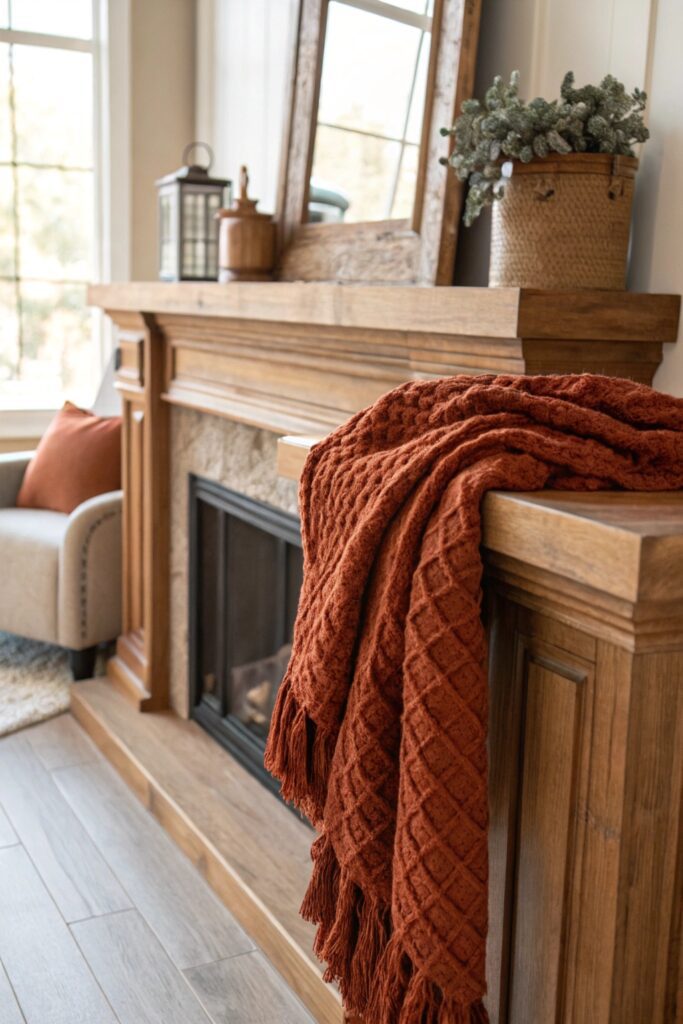
Rather than folding a blanket flat on a shelf or chair, letting one drape over the front edge of the mantel itself — corner pinned or simply weighted by a heavier decor piece on top — adds a soft textural layer against the hard lines of stone or wood. A chunky knit or faux-fur throw works better for this than a flat-weave blanket, since it holds its draped shape instead of sliding off a flat mantel surface.
8. Add Dried Florals in a Ceramic or Stoneware Vase
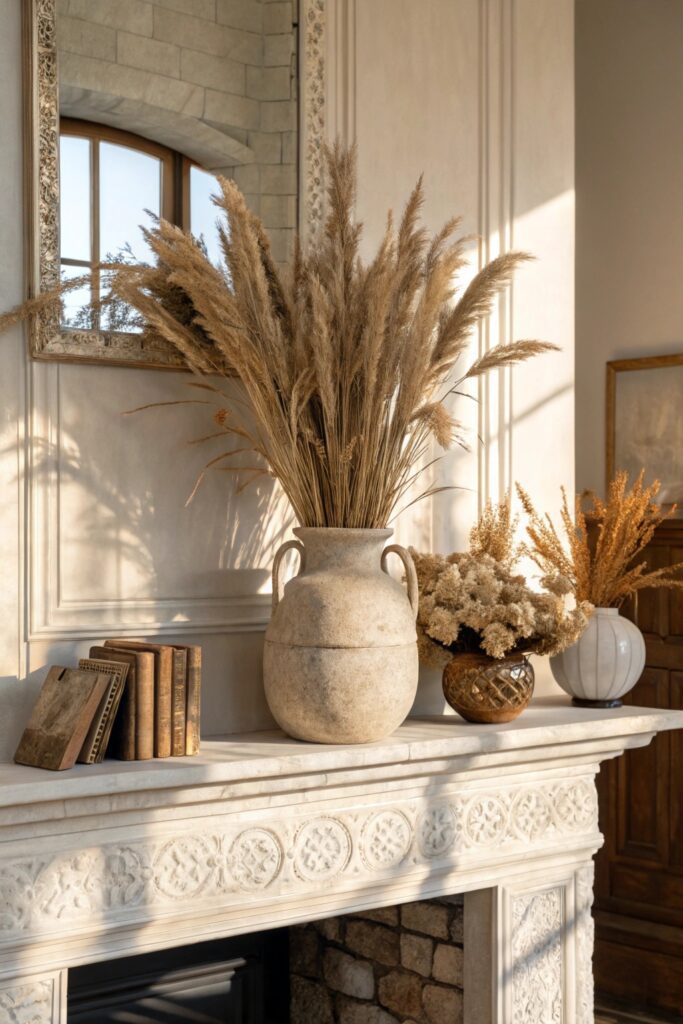
Dried pampas grass, wheat stems, or bunny tail grass in a stoneware or matte ceramic vase (avoid glossy glazed vases for a fall palette — matte finishes read warmer) adds height without the maintenance of fresh flowers. Trim stems at an angle before arranging, and let them fan out asymmetrically rather than standing perfectly upright in a tight bundle — the loose, slightly wild shape is what reads as intentional dried-floral styling rather than a leftover bouquet.
9. Use Books as Risers for Smaller Decor Pieces
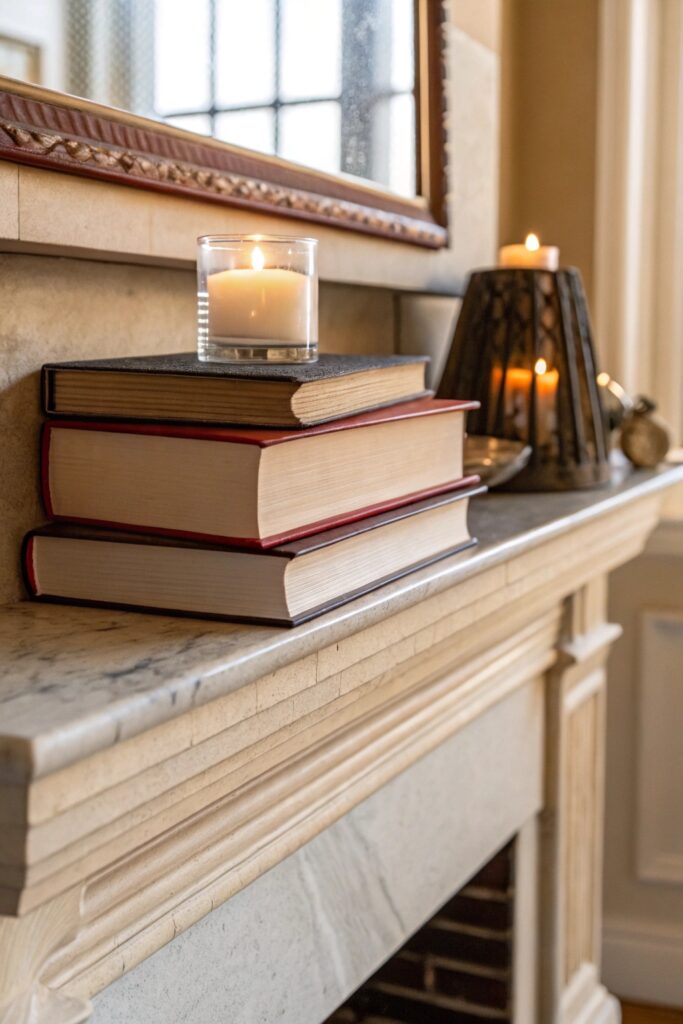
A stack of 3-4 hardcover books (spines in, or wrapped in plain kraft paper if the covers clash with your palette) creates a riser for a small pumpkin, candle, or frame, adding the same height variation a wood slice does but with a different texture. Stack by descending size with the largest book on the bottom, and offset the top book slightly rather than stacking them perfectly flush, which reads more like a deliberate stack and less like leftover storage.
10. Hang a Statement Piece Above the Mantel Instead of a TV
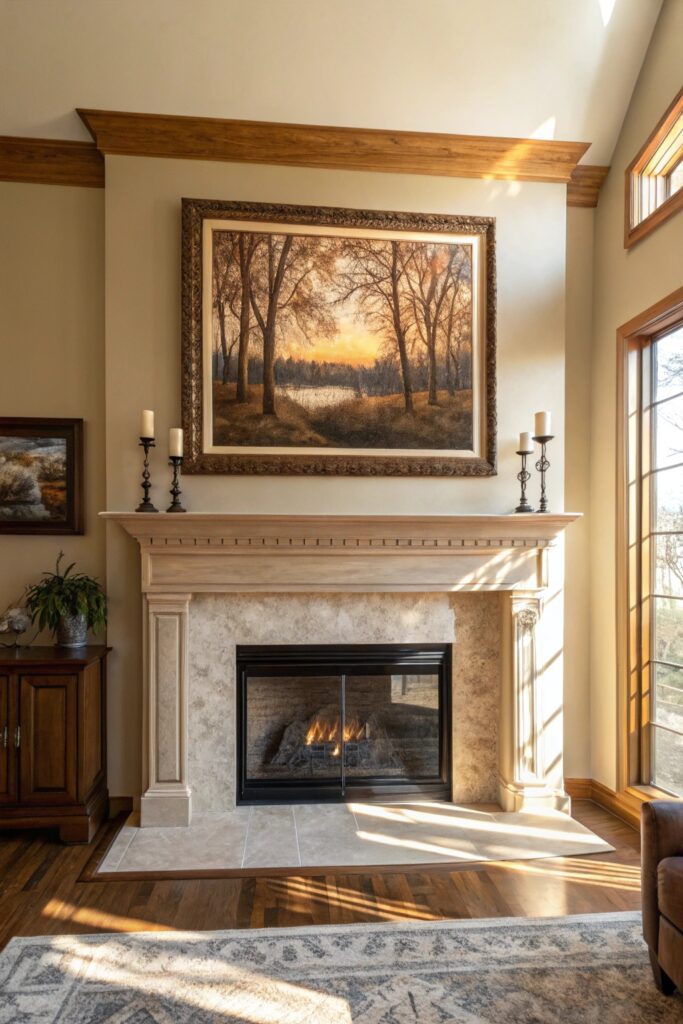
If your mantel doesn’t have a mounted TV, a single oversized piece of art or an arched mirror (36+ inches) centered above it anchors the whole wall and gives the styling below something to visually connect to. Leave 4-6 inches of breathing room between the top of your tallest mantel decor and the bottom of the wall piece — crowding the two together makes both look smaller than they are.
11. Add Warmth With Brass or Bronze Candle Holders
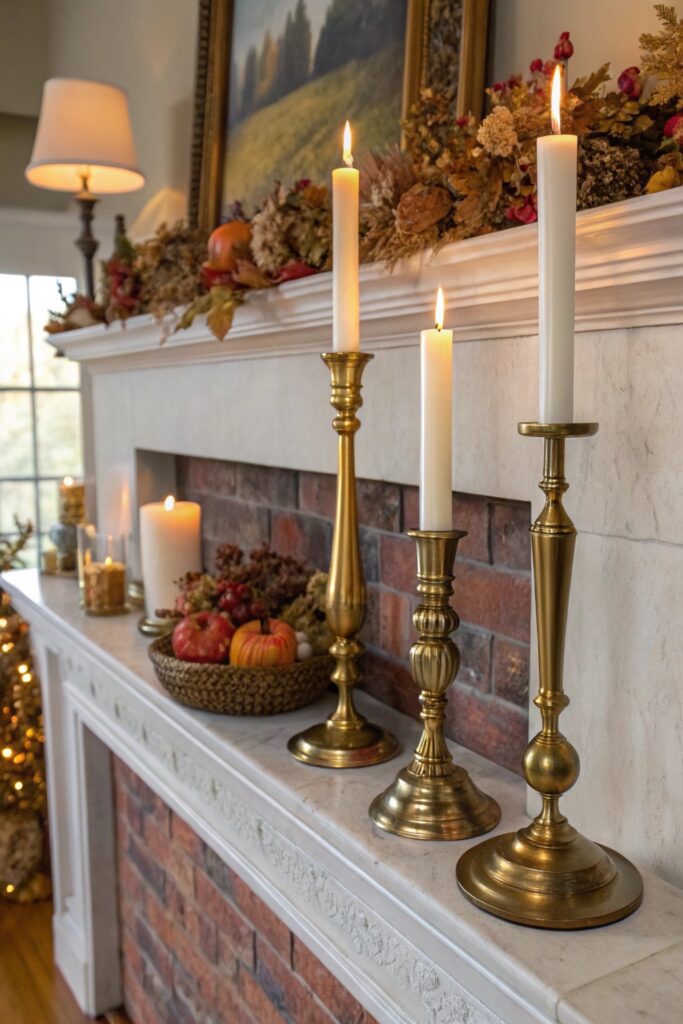
Warm metal finishes — brass, bronze, or aged gold — read more fall-appropriate than chrome or silver, which lean cooler and more suited to winter/holiday styling. A pair of taper candle holders in brushed brass (not polished, which can look dated) at varying heights on either side of a central grouping bookends the arrangement and adds a metallic note without competing with pumpkins or florals.
12. Balance the Arrangement With Odd Numbers and Varying Widths
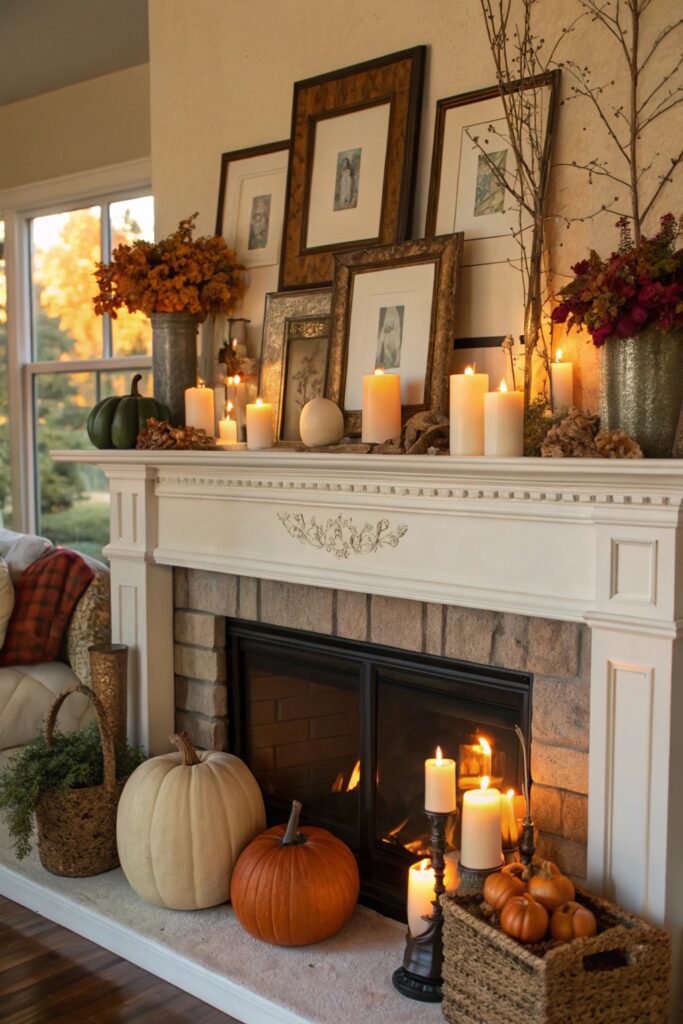
The single biggest thing separating a styled mantel from a cluttered one is grouping in odd numbers (three or five items per cluster, not two or four) and varying the width of each grouping rather than spacing everything evenly. Cluster three items close together on one side, leave a visible gap, then place a taller single piece or a pair on the other side — asymmetry across the full mantel length is what makes it read as styled rather than lined up.
Bringing It All Together
The pattern across all of these is variation — in height, texture, and grouping size — combined with restraint on quantity. A mantel styled with one wall piece, one candle grouping, one textural layer (throw or garland), and one seasonal accent (pumpkins or florals) will look more finished than one loaded with everything from this list simultaneously. Start with the wall piece and hearth first, since those set the scale for everything above.