
Pet-friendly furniture shopping comes down to two separate questions: how easily does the material clean, and how well does it hold up structurally to claws, jumping, and sustained weight. A sofa that solves one problem but not the other still won’t hold up long-term in an active pet household.
Below are 10 factors that matter most, with specific materials, brands, and price differences to help you shop with the right priorities.
1. Look for Performance Fabric Upholstery
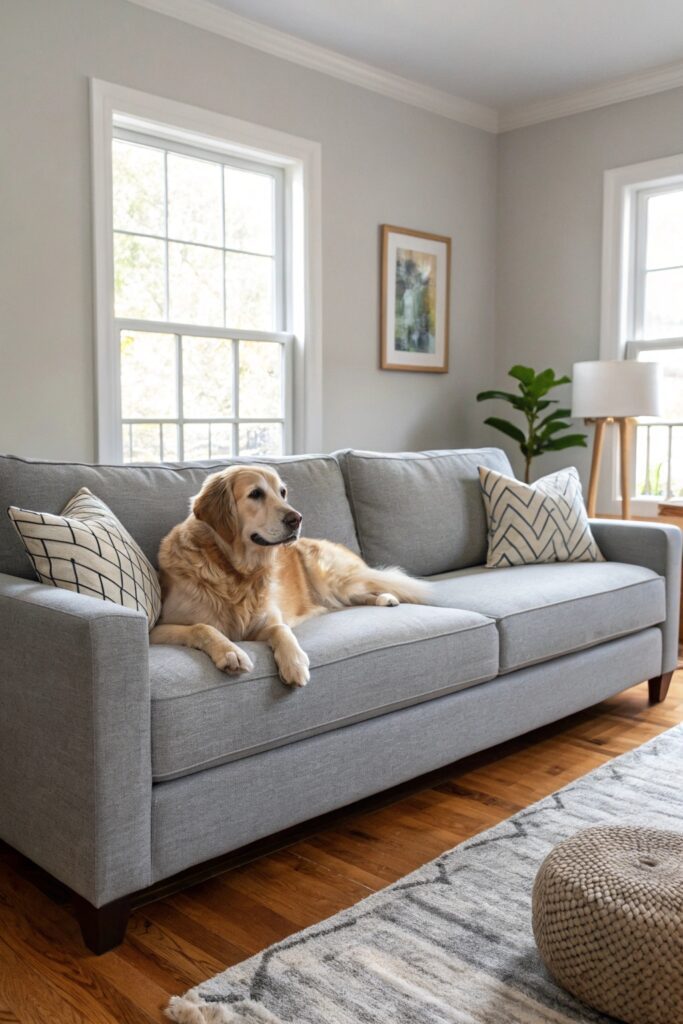
Performance fabrics (brands like Crypton, Sunbrella, and Revolution specifically engineer these for stain and moisture resistance) are woven with a protective finish that prevents liquid and oil from soaking into the fibers, so pet accidents and drool wipe off the surface rather than staining. Sofas upholstered in these fabrics typically run $150-400 more than a comparable sofa in standard fabric, but the difference shows up in how the piece looks after 2-3 years with pets versus without this treatment.
Ask specifically whether the fabric is ‘performance’ or just ‘stain-resistant’ when shopping — some retailers use the terms loosely, and a true performance weave (verify by asking for the fabric’s actual brand name) resists far more than a fabric with a basic Scotchgard-style spray treatment.
2. Choose Leather or Faux Leather for Easy Wipe-Downs
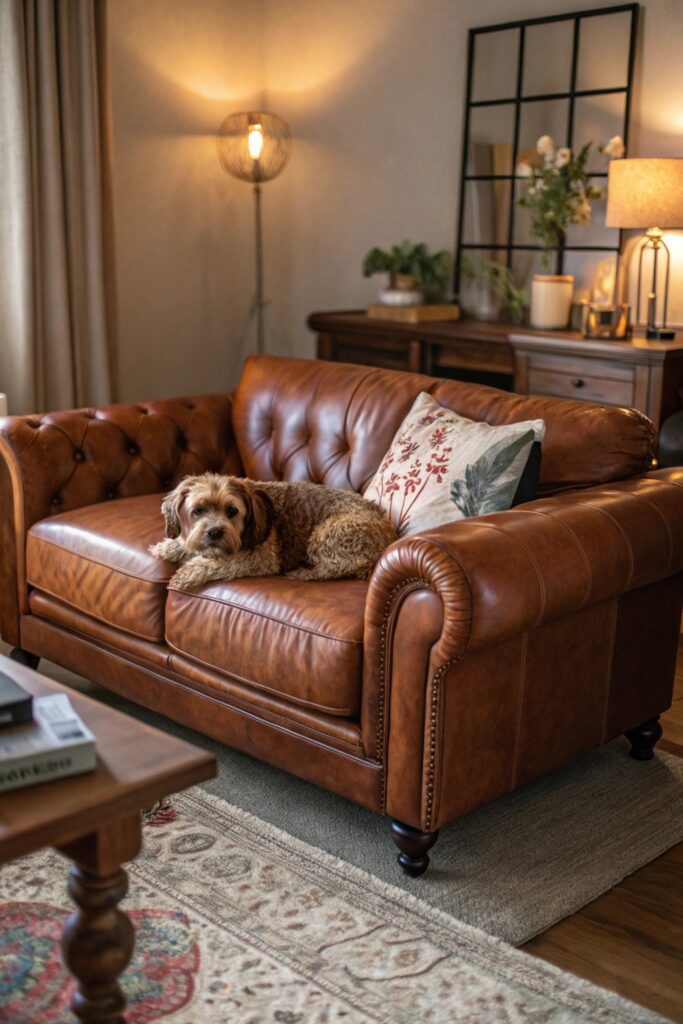
Both genuine and faux leather wipe clean with a damp cloth in a way no fabric can fully match, since liquids and fur sit on the surface rather than absorbing into a woven texture. Faux leather (polyurethane) costs considerably less ($600-1,200 for a quality sofa versus $1,500+ for genuine leather) and resists scratches from claws slightly better than real leather, which can show claw marks more visibly over time.
Genuine leather develops a patina that some owners prefer aesthetically, but it requires occasional conditioning (every 6-12 months, $15-20 per bottle of leather conditioner) to prevent cracking, which faux leather doesn’t need.
3. Pick Tightly Woven Fabrics Over Loose Weaves
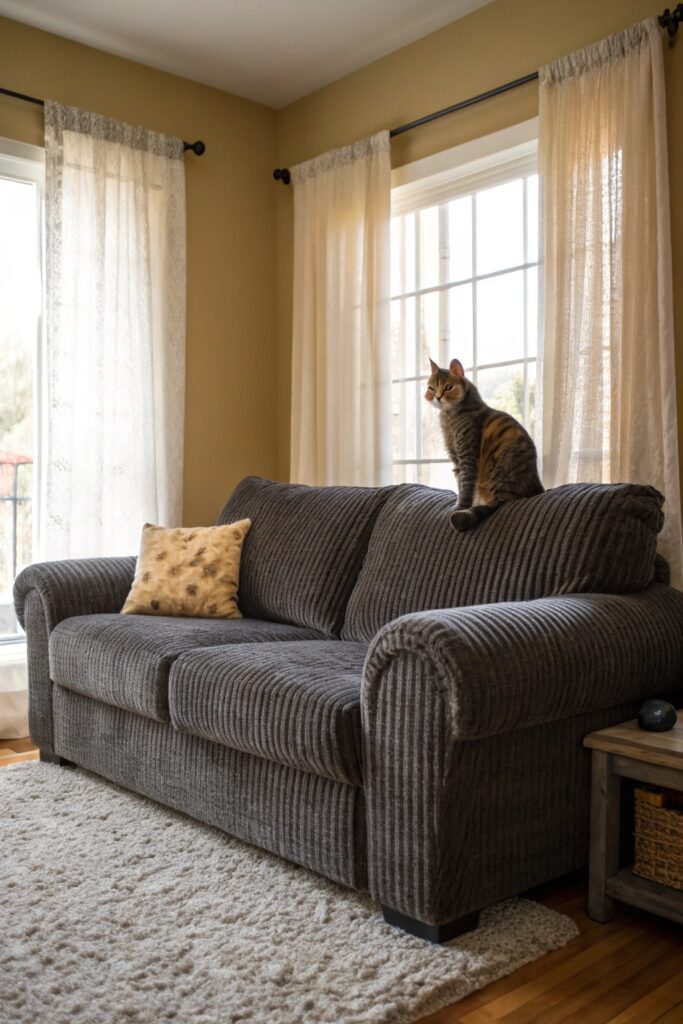
A tight, flat weave (think canvas or twill-style fabrics) gives pet claws less to catch and snag than a looser, textured weave like boucle or chunky tweed, where individual threads can pull and unravel with repeated scratching. Run your hand across a fabric sample before buying — if you can easily catch a fingernail on individual threads, a cat’s claws will do considerably more damage over time.
This matters most for households with cats specifically, since cats scratch furniture more directly than most dogs; a tightly woven fabric paired with a nearby scratching post redirect strategy addresses the behavior at its source rather than just the fabric choice alone.
4. Go With a Removable, Washable Slipcover
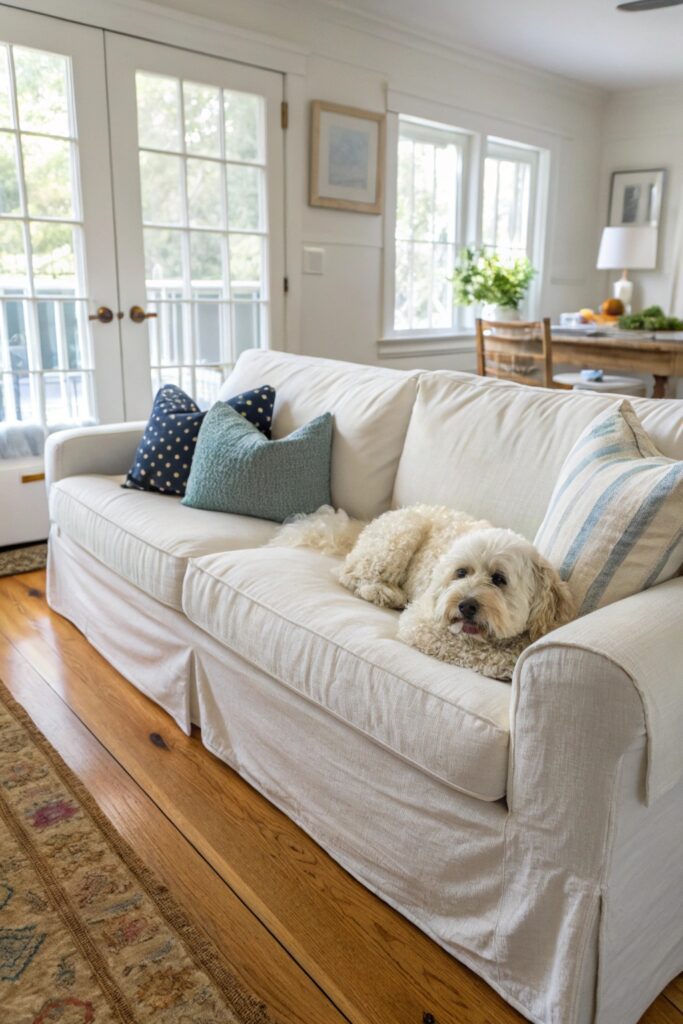
A slipcovered sofa (Comfort Works, IKEA’s Uppland, or similar) lets you machine-wash the entire cover when pet hair, drool, or accidents build up beyond what wiping or vacuuming addresses — genuinely useful for households with shedding breeds or a pet still being house-trained. Budget for a spare cover ($150-250 depending on brand and size) if the sofa sees heavy pet use, since a single cover in the wash means bare cushions until it’s clean and dry.
Cotton or cotton-blend slipcovers hold up better to repeated washing than linen, which can shrink or lose shape after several wash cycles.
5. Avoid Velvet and Delicate Natural Fibers
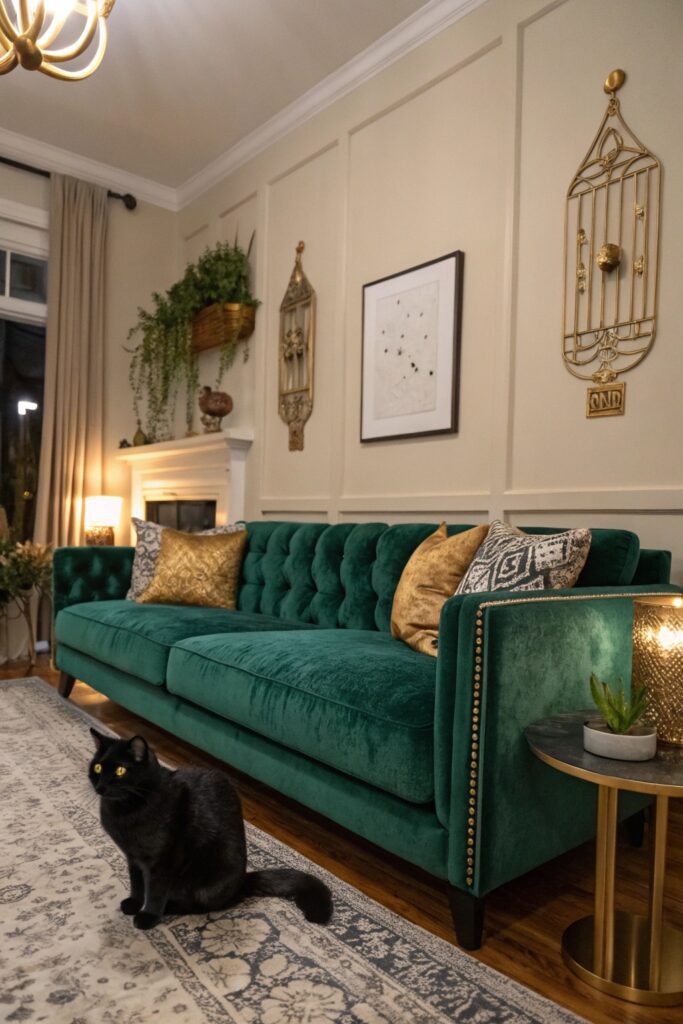
Velvet, silk-blend, and loosely woven natural fibers like raw linen show claw snags, watermarks from drool, and permanent crushing from repeated pet weight in a way more durable fabrics don’t — these materials are worth avoiding entirely in a pet-heavy household rather than trying to protect them after the fact. If you’re drawn to velvet’s look specifically, a performance-treated velvet (some brands now make pet-resistant velvet weaves) is a middle-ground option, though it still won’t match true performance fabric’s durability.
This is one case where ‘stylish and pet-friendly’ genuinely requires trading off some fabric options rather than finding a workaround for every material.
6. Choose Darker or Patterned Upholstery to Hide Hair
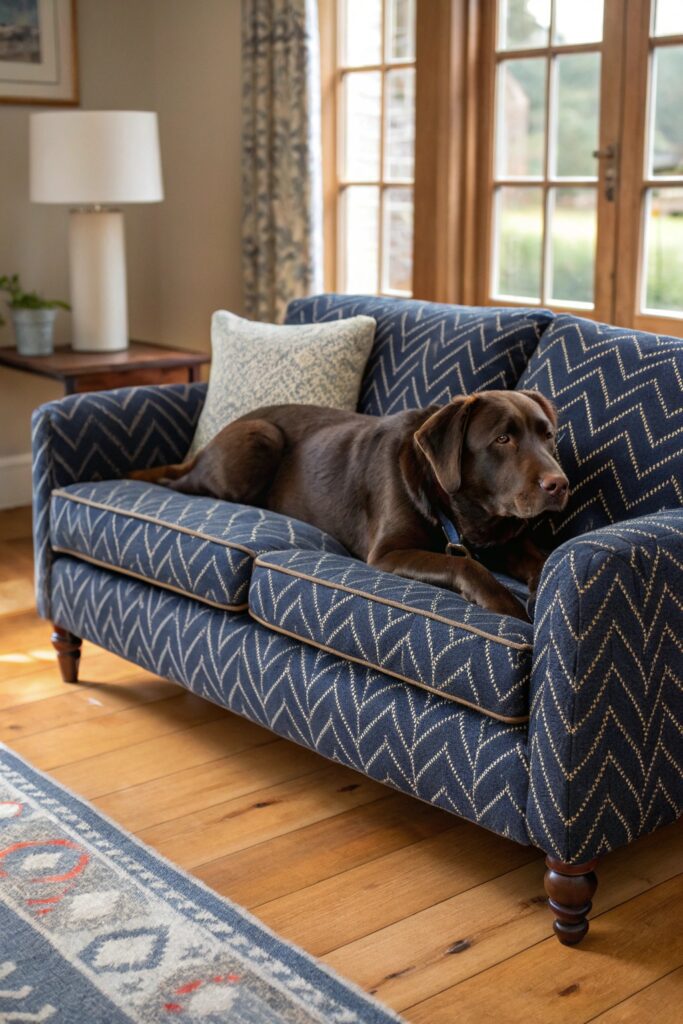
A solid light-colored sofa shows every strand of pet hair, while a mid-tone solid or a subtle pattern (small-scale prints, textured weaves with visual noise) camouflages hair between vacuuming sessions considerably better. This isn’t a substitute for actual cleaning, but it does mean the sofa looks presentable for longer stretches between deep-cleans, which matters for how ‘maintained’ a room reads day to day.
Match upholstery tone loosely to your specific pet’s fur color if you’re choosing based on this factor alone — a charcoal sofa hides black fur better than it hides golden retriever fur, for instance.
7. Look for Sofas With Removable, Zippered Cushion Covers
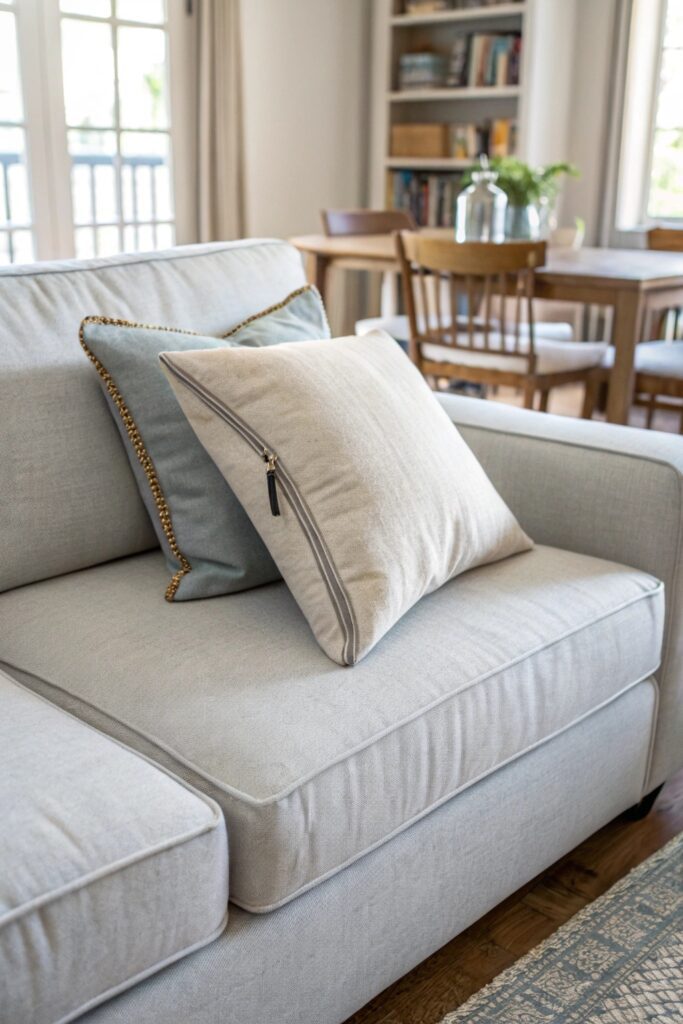
Even sofas without a full slipcover often have individually zippered cushion covers, which lets you wash just the seat and back cushions (where most pet contact happens) without dealing with the whole sofa frame’s upholstery. Check for this specifically when shopping — some manufacturers sew cushion covers shut permanently to prevent the cushion insert from shifting, which eliminates this washability option entirely.
If cushion covers are removable, wash on a gentle cycle and air dry rather than machine drying, which can shrink the cover enough that it no longer fits the cushion insert properly.
8. Consider a Leather-Look or Vinyl Sectional for High-Traffic Homes
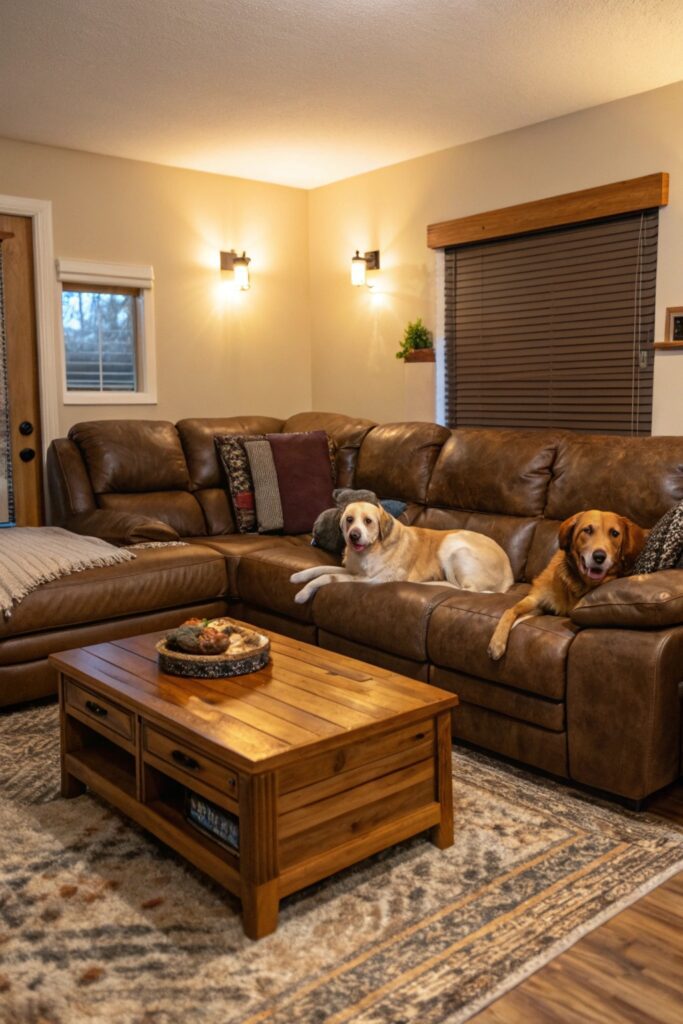
For households with multiple pets or particularly high-energy breeds, a full sectional in vinyl or faux leather offers the most surface area of easy-clean material relative to cost, since sectionals provide more seating per square foot than a traditional sofa-plus-chair setup. Vinyl specifically resists odor absorption better than any fabric option, which matters for households managing pet-related smells.
Check the specific vinyl or faux leather’s crack-resistance rating if available — cheaper vinyl can crack and peel within 2-3 years under regular use, while quality options (often labeled ‘commercial grade’) hold up considerably longer.
9. Add a Washable Throw or Furniture Protector
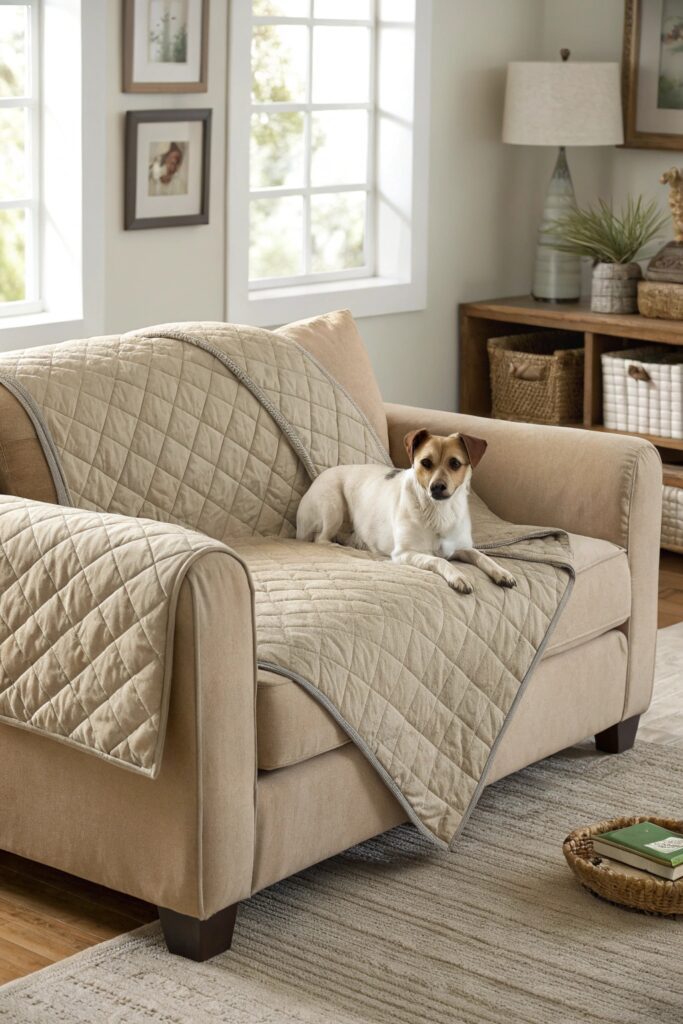
A machine-washable throw or a fitted furniture protector (Sure Fit and similar brands make pet-specific versions with a waterproof backing layer, $30-60) adds a removable barrier over any sofa, extending the life of upholstery underneath regardless of the fabric choice itself. This is the most budget-friendly option on this list if you already own a sofa and aren’t ready to replace it.
Choose a throw sized to fully cover the seating area your pet actually uses rather than a small decorative throw — partial coverage means the exposed edges still take direct wear.
10. Choose Solid Wood or Metal Frames Over Particleboard
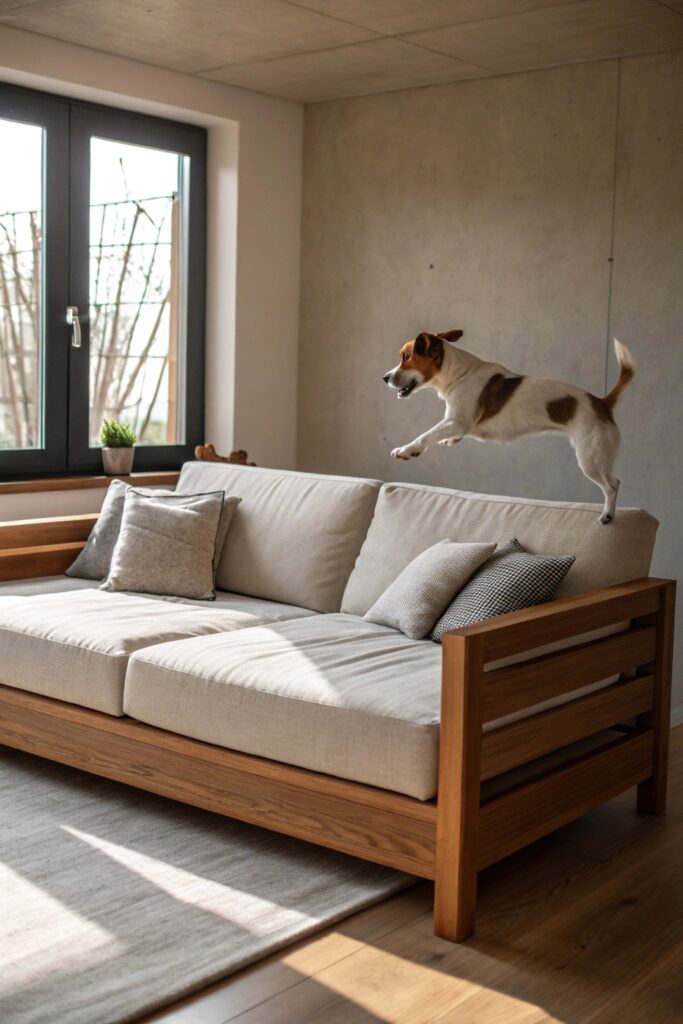
A sofa’s frame matters as much as its upholstery for pets that jump, dig, or put sustained weight in one spot — solid wood or metal frames hold up to this stress considerably longer than particleboard or engineered wood frames, which can crack or sag under repeated pet activity. Ask specifically about frame material when shopping; ‘solid wood’ should mean kiln-dried hardwood, not just a wood-look laminate over composite board.
A quality frame is worth prioritizing even at a higher upfront cost, since a sofa with failing internal structure can’t be economically repaired the way a worn or stained upholstery cover can be replaced or cleaned.
Bringing It All Together
Performance fabric and a solid frame matter more than any other two factors on this list combined — a beautiful sofa in delicate fabric on a particleboard frame won’t survive an active pet household regardless of how you protect it afterward. If budget only allows addressing one of these upfront, prioritize the frame, since fabric can be recovered or slipcovered later, but a failing frame usually means replacing the whole piece.