
Organic modern living rooms work because every material choice — wood, stone, fiber, and metal — pulls from the same warm, earthy palette, letting texture rather than color or sharp contrast do the visual work. It’s a more materials-driven style than most, which means sourcing the right raw materials matters more here than in almost any other decorating approach.
Below are 12 elements that define this look, with specific materials, finishes, and reasoning for why each choice matters.
1. Swap Sharp-Edged Furniture for Curved Silhouettes
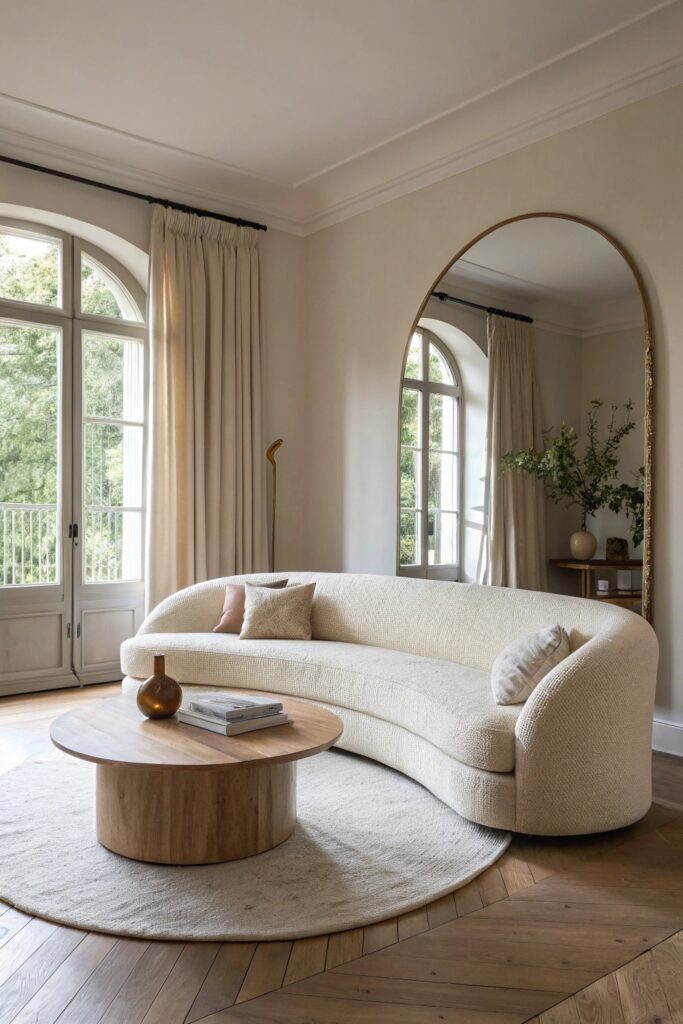
Rounded arm sofas, curved-back accent chairs, and organic-shaped coffee tables replace hard right angles with softer forms, which is the single most defining visual trait of this style versus standard modern design. A curved sofa costs more than an equivalent straight sectional (often 15-25% more from the same retailer) but doesn’t need to be the only curved piece — one rounded seating piece paired with straighter secondary furniture achieves the effect without a full-room investment.
Look for furniture described as ‘organic modern’ or ‘curved silhouette’ specifically when shopping — the aesthetic has become common enough that major retailers (CB2, West Elm, Article) now carry dedicated lines rather than requiring custom or vintage sourcing.
2. Layer in Raw, Unfinished Wood Tones
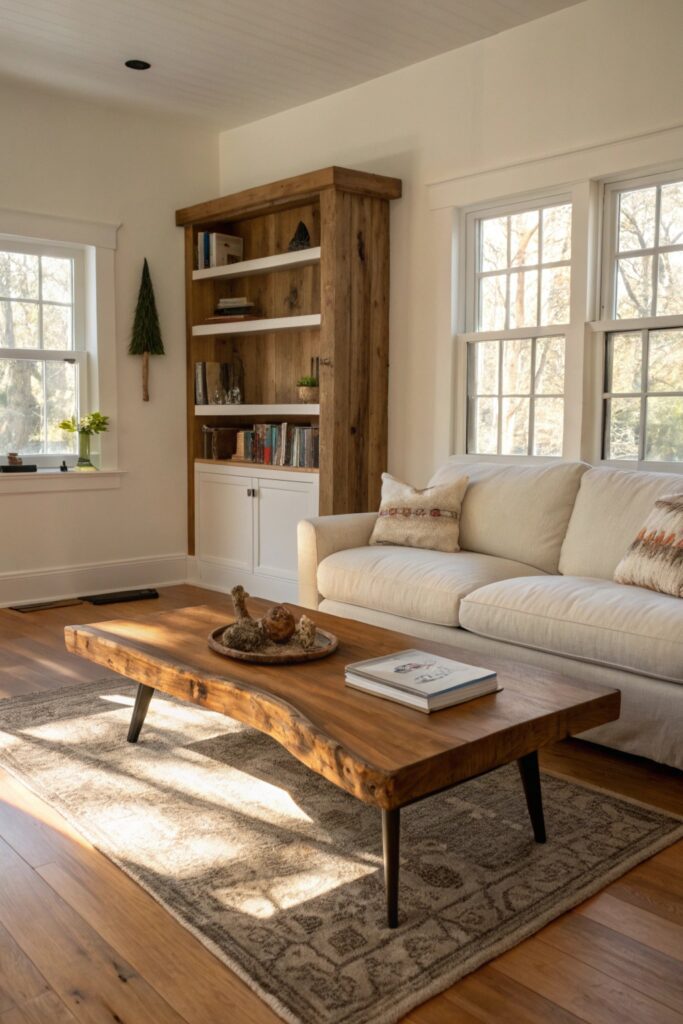
Live-edge, raw-finish, or minimally treated wood (rather than glossy lacquered or painted furniture) carries visible grain and natural imperfection that’s central to this style’s warmth. A coffee table or console with a matte oil finish (rather than polyurethane, which creates a plastic-like sheen) shows the wood’s actual texture rather than a glossy surface sitting on top of it.
Mixing 2-3 different wood tones within a room (say, a lighter oak floor with a darker walnut table) is fine as long as all lean warm — the mismatch that actually breaks this style is combining warm, raw-finish wood with a cooler grey-washed or ebonized piece, which reads as two different aesthetics colliding.
3. Choose a Warm, Earthy Wall Color
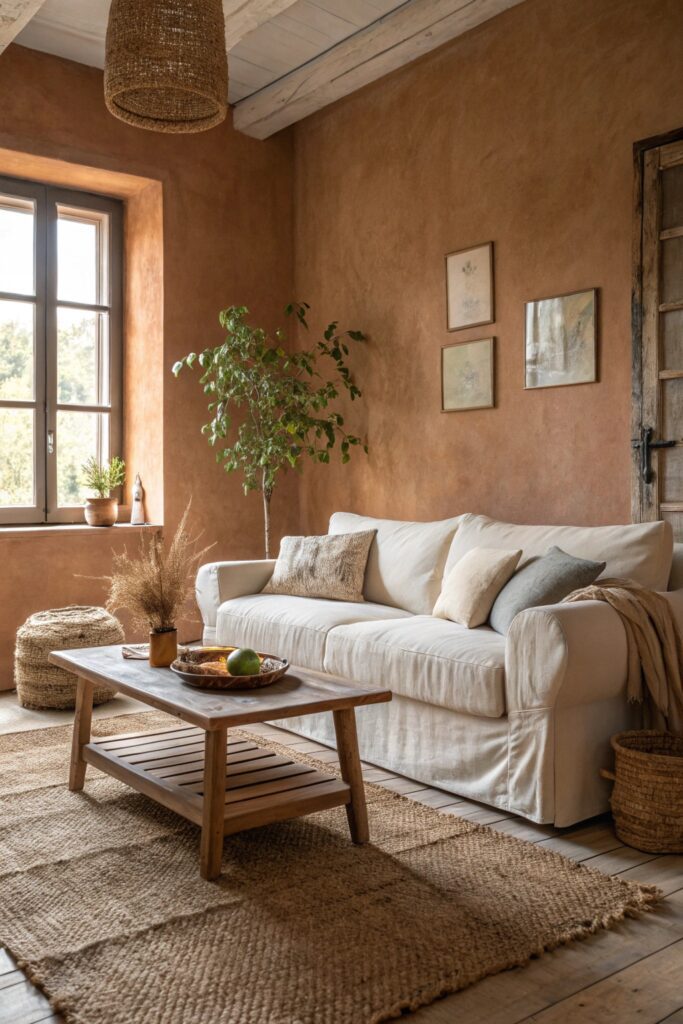
Warm off-whites, greige (grey-beige), terracotta, or sage green wall colors provide the neutral, nature-adjacent backdrop this style depends on — avoid stark white or cool blue-grays, which read as standard modern rather than organic modern. Benjamin Moore’s ‘Swiss Coffee’ or ‘Pale Oak’ and Farrow & Ball’s earthier greens are common reference points specifically for this aesthetic.
Test paint swatches in the room’s actual lighting across a full day before committing — warm neutrals shift more dramatically between morning and evening light than bold colors do, and a swatch that reads perfectly warm at noon can look flat or muddy under evening lamp light.
4. Add Linen or Bouclé Upholstery for Softness
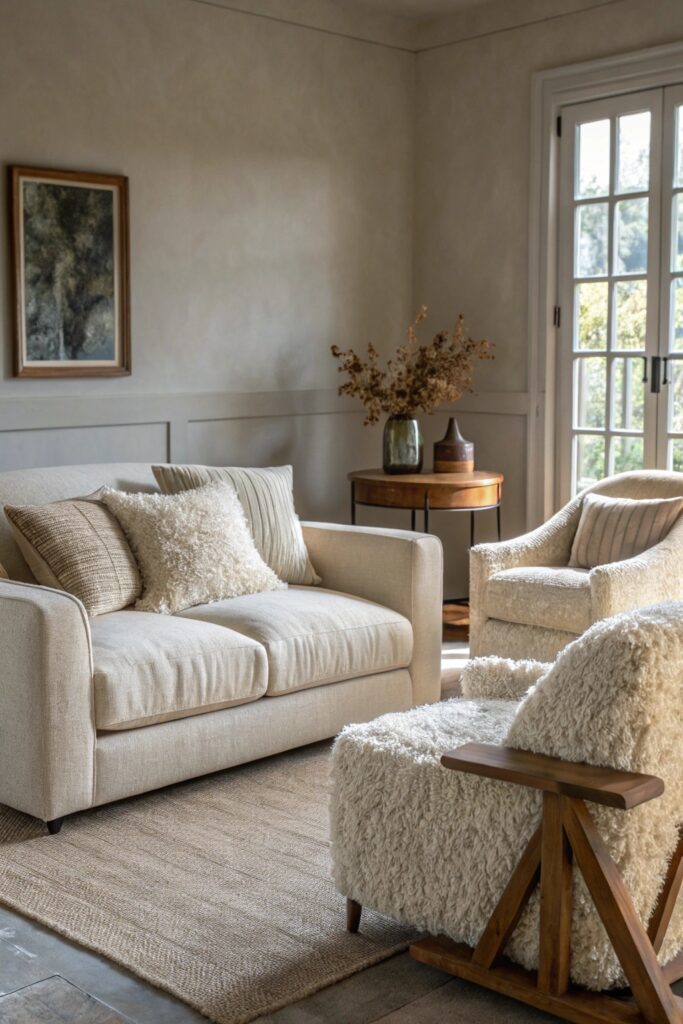
Nubby, textured fabrics like bouclé and linen add tactile warmth that smooth, tightly-woven fabrics (like standard cotton twill or polyester blends) don’t provide — the visible texture itself does visual work in a room that’s otherwise fairly restrained in color and pattern. Bouclé specifically has become closely associated with this style because its looped texture photographs and reads as inherently soft.
Both fabrics wrinkle and show wear differently than performance fabrics — linen especially develops a lived-in, slightly rumpled look that some owners consider part of the aesthetic and others find frustrating; know your own tolerance before committing a large piece like a sofa to either fabric.
5. Bring in Natural Stone Accents
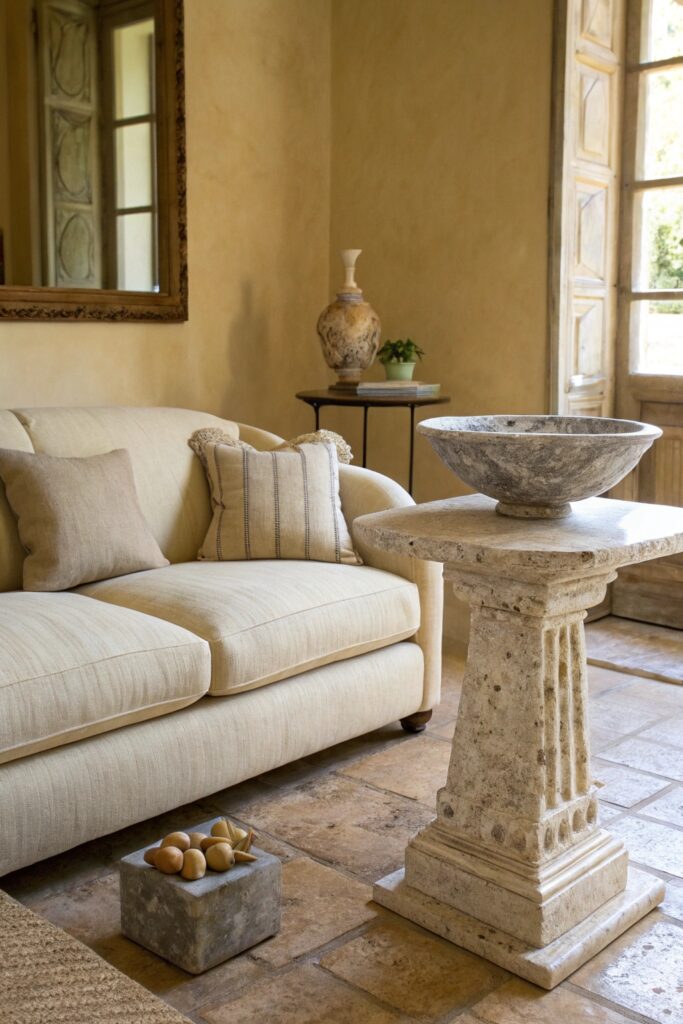
A stone side table, a travertine lamp base, or a marble tray introduces the same raw-material honesty as unfinished wood, but with a cooler, harder texture that provides contrast against softer textiles. Travertine specifically (with its visible pitted texture and warm beige-to-cream tones) has become a signature material for this style over polished marble, which reads more formal and less organic.
Genuine stone pieces cost significantly more than resin or composite reproductions — a small genuine travertine side table might run $200-400, while a convincing composite reproduction runs $60-120, so match your material choice to how much the piece will see daily wear versus purely decorative placement.
6. Use Woven and Rattan Textures
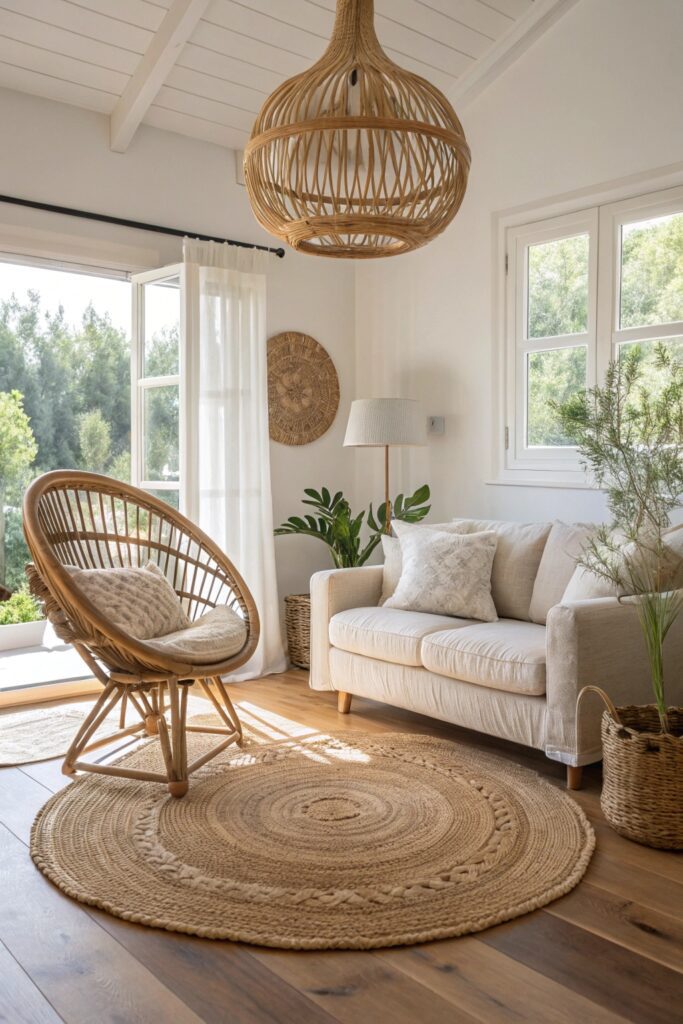
Rattan or cane furniture, woven pendant lighting, and rattan-front cabinetry bring in the natural-fiber texture central to this look while keeping pieces visually light rather than heavy, since woven materials read as more open than solid wood or upholstery. A rattan accent chair or a single woven pendant light is often enough to establish this texture without committing an entire room to it.
Vintage rattan (thrifted or from estate sales) typically has a richer, more varied patina than new mass-produced pieces, which tend toward a more uniform, slightly plasticky finish — worth the extra sourcing effort if the aesthetic matters to you specifically.
7. Install a Statement Wood or Stone Fireplace Surround
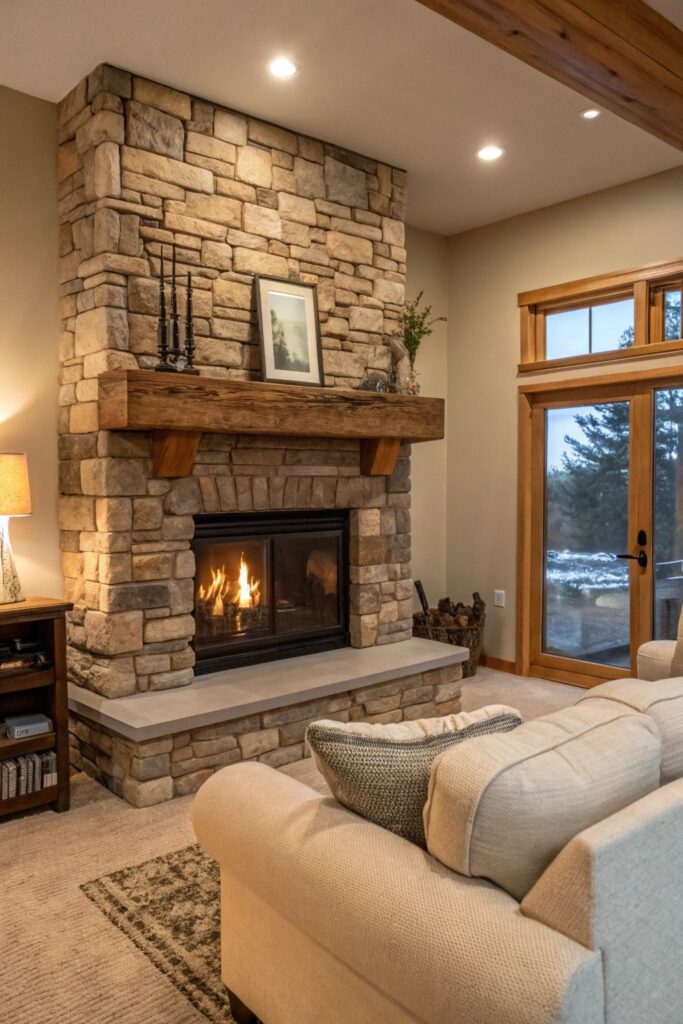
A fireplace surround in raw stone, limewash plaster, or a bold wood mantel becomes a natural focal point that reinforces the whole room’s material palette, rather than a standard painted or tiled surround that doesn’t connect to the rest of the room’s materials. This is a larger renovation-level investment (expect $1,500-5,000+ depending on material and scope) rather than a furniture swap, so it’s worth prioritizing only if a fireplace is already a room’s visual anchor.
Limewash plaster specifically has become popular for this style because of its matte, slightly textured, hand-applied look — distinct from the flat uniformity of standard painted drywall.
8. Choose Warm Metal Finishes Over Cool Ones
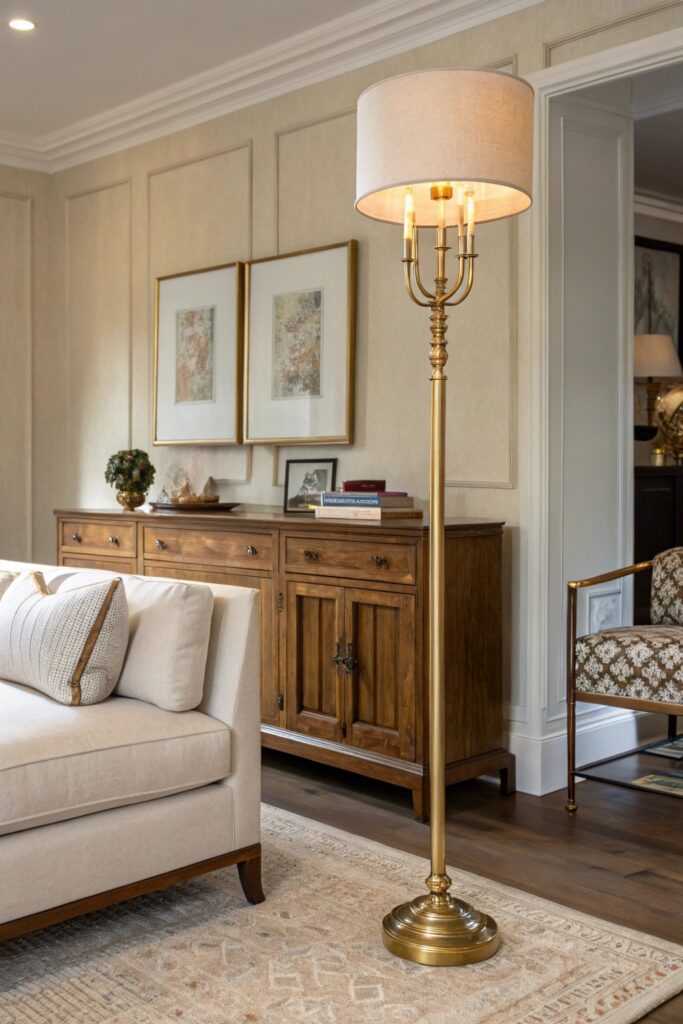
Brass, aged bronze, and matte black (leaning warm rather than cool-toned) complement this style’s earthy palette in a way polished chrome or brushed nickel doesn’t — cool metals read as more clinical and modern, which works against the warmth this aesthetic is built around. Apply this consistently across lighting, hardware, and any exposed fixtures for a cohesive look.
Mixed metals (a matte black light fixture alongside brass hardware, for instance) can work within organic modern specifically because both are warm-leaning tones, unlike mixing warm and cool metals, which tends to look unplanned regardless of style.
9. Add Oversized, Sculptural Lighting
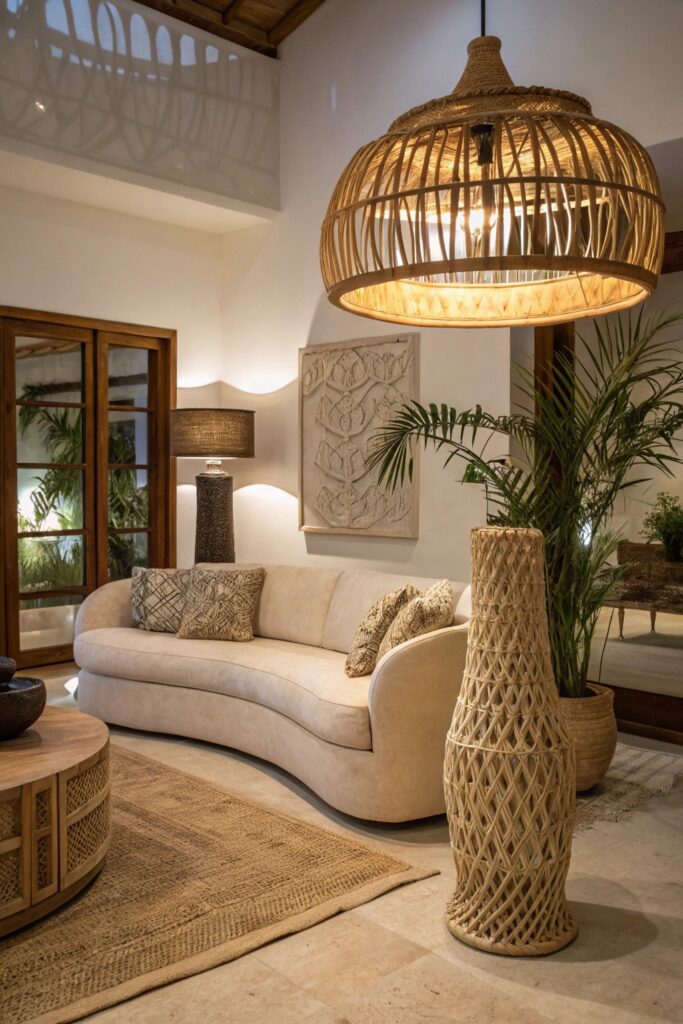
A large, sculptural pendant or floor lamp — often in a curved, organic shape mirroring the furniture silhouettes elsewhere in the room — functions as functional art rather than just a light source. This is a category worth spending more on relative to the rest of a room’s budget, since one striking fixture does more to establish the aesthetic than several smaller, more generic ones.
Paper, woven rattan, or textured ceramic shades diffuse light more softly than glass or metal shades, which matters for this style’s overall warm, soft-light preference over bright, direct lighting.
10. Layer Natural-Fiber Rugs and Throws
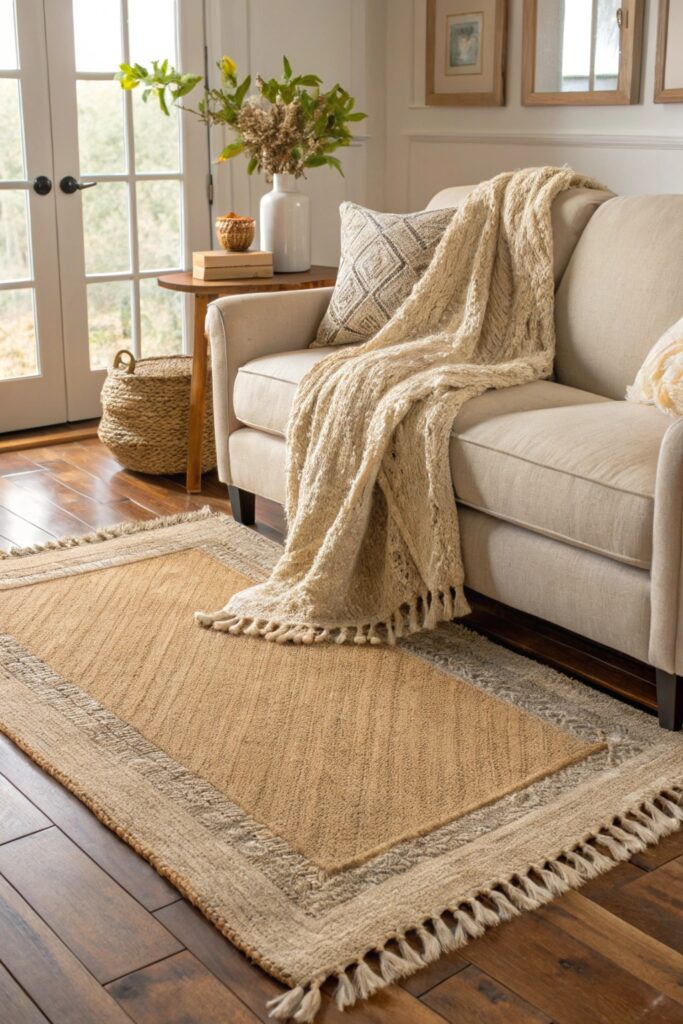
Jute, sisal, or wool rugs (rather than synthetic fibers) ground a room in the same raw-material language as the furniture, and layering a smaller textured rug over a larger natural-fiber base rug adds depth the way it does in other styles. A chunky, undyed wool throw draped over a curved sofa arm reinforces the texture-over-pattern approach this whole aesthetic depends on.
Jute and sisal are more durable underfoot than wool but coarser in texture — better suited to lower-traffic areas or paired with a softer rug layered on top in spaces where bare feet matter, like in front of a sofa.
11. Bring in Live or Realistic Greenery
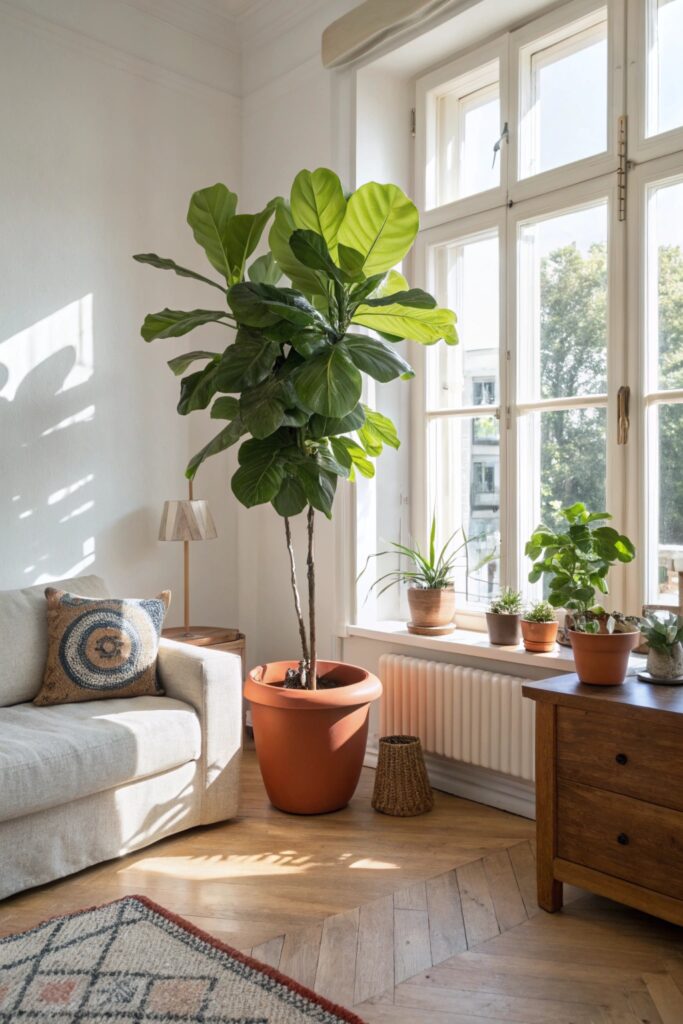
A large floor plant (a fiddle leaf fig, olive tree, or similar architectural silhouette) reinforces the connection to nature this style is built around, and its irregular, organic shape echoes the curved furniture rather than competing with it. High-quality faux versions have become convincing enough that they’re a reasonable substitute in low-light rooms, provided you invest in a realistic option rather than obviously plastic-looking foliage.
Terracotta or stoneware planters (rather than glossy ceramic or plastic pots) continue the material honesty theme down to the smallest details in a room.
12. Keep the Color Palette Restrained and Tonal
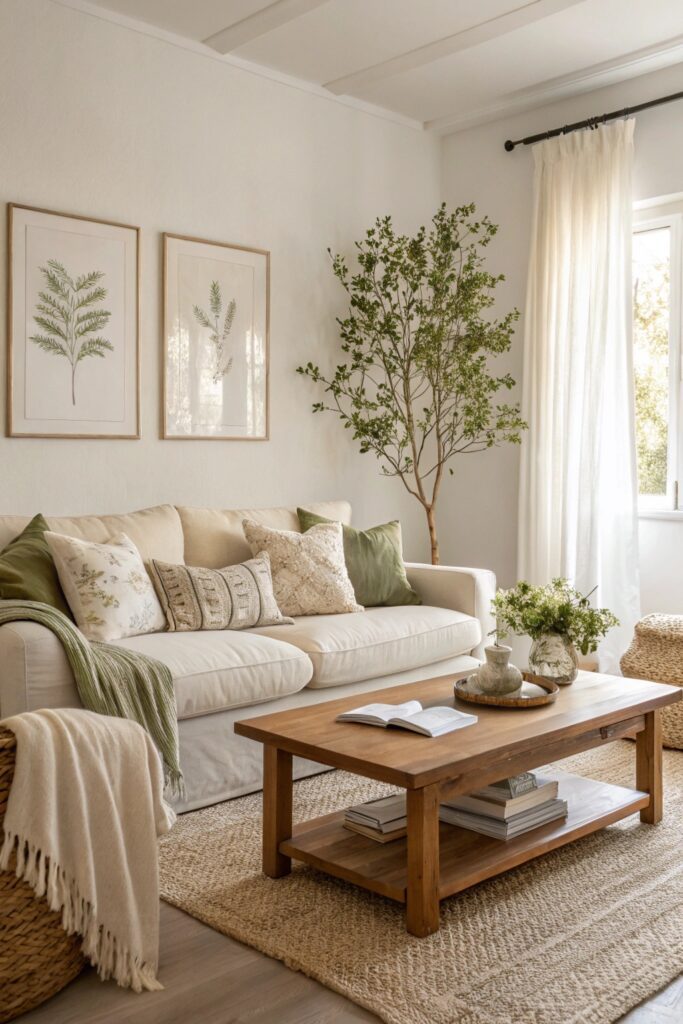
This style depends on a narrow, tonal palette — warm neutrals, greens, and browns in the same family — rather than high contrast or saturated accent colors, which is what allows texture (wood grain, bouclé, rattan weave) to do the visual work instead of color. Introducing a bold accent color (a bright blue or red, for instance) breaks the cohesion this whole aesthetic depends on.
If you want visual variety without breaking the palette, vary texture and material within the same tonal family — a cream bouclé chair next to a jute rug next to a raw oak table all sit in the same warm-neutral range while still reading as distinct from each other.
Bringing It All Together
Curved furniture and a restrained tonal palette are the two elements that do the most to establish this style — get those right and the rest (wood tones, natural fiber rugs, warm metals) layer in naturally. If you’re working with an existing straight-lined, cool-toned room, start with wall color and one curved seating piece before addressing smaller details like lighting and accessories.