
15 Rock Landscaping Ideas for Front Yard Curb Appeal
Introduction
Your front yard is the first thing people see — and let’s be honest, a patchy lawn with zero personality isn’t exactly making a great first impression. Rock landscaping fixes that problem while cutting your maintenance time dramatically. I switched half my front yard to rocks a couple of years ago, and my neighbors still ask me about it.
The best part? Rock landscaping works in virtually every climate. Whether you’re dealing with drought, frost, or just a complete lack of gardening patience, rocks deliver curb appeal without demanding much in return.
Here are 15 genuinely great rock landscaping ideas that will make your front yard look intentional, polished, and seriously inviting.
1. Create a Dry River Bed Across the Front Yard
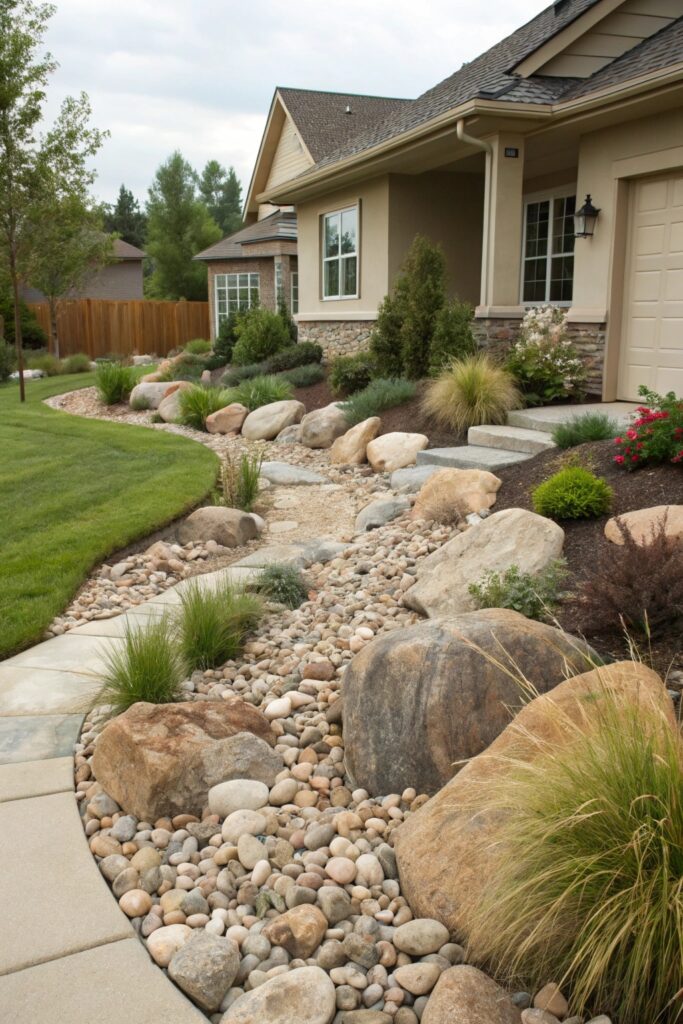
A dry river bed is one of those landscaping ideas that looks like you hired a professional — even if you did it yourself over a weekend. It mimics the natural flow of a stream using smooth river rocks, rounded pebbles, and strategically placed boulders.
The visual effect is surprisingly dynamic. The curved, winding path of rocks creates movement and draws the eye across your yard in a way that a flat lawn simply never does.
Here’s what makes it work so well:
- Use varying rock sizes — large anchor boulders, medium filler stones, and fine gravel for the “water” effect
- Follow a natural curve rather than a straight line
- Plant ornamental grasses or low shrubs along the edges to soften the border
- Add a few flat stepping stones if you want it to serve as a functional path as well
This idea works especially well for yards with a slight slope, where water drainage is already a consideration. The dry river bed directs eye movement and actual rainwater runoff at the same time — that’s what I call a two-for-one win.
2. Build a Rock Mulch Garden Bed Around the Mailbox
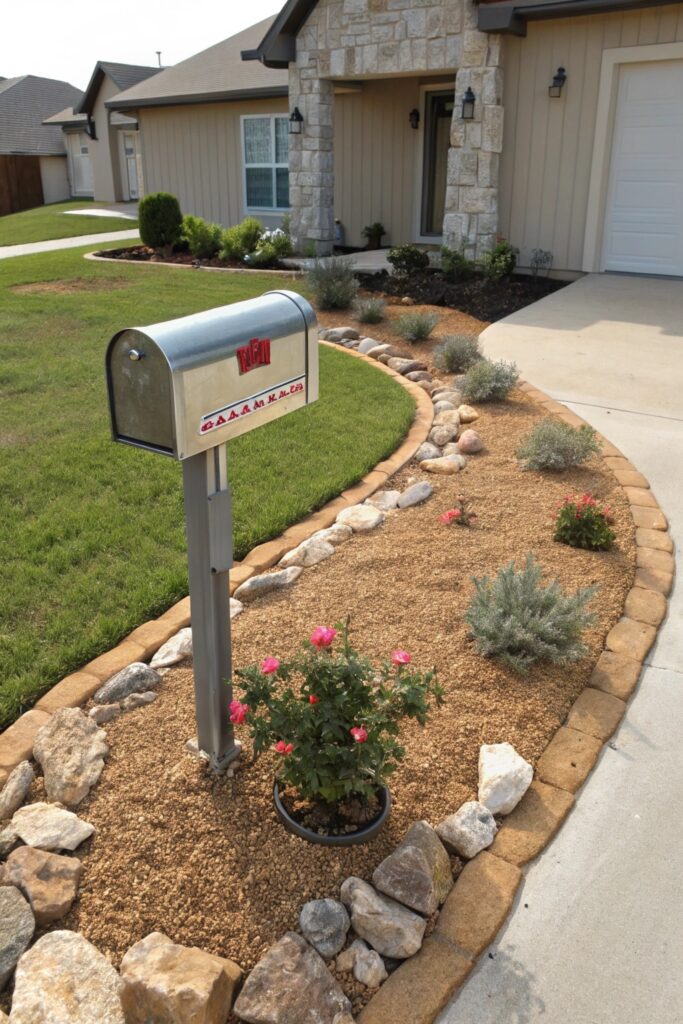
Most front yard mailboxes sit in a patch of dirt or struggling grass that nobody ever tends to properly. Sound familiar? Surrounding your mailbox with a decorative rock mulch garden bed instantly upgrades that neglected corner into a polished focal point.
Choose a rock color that complements your home’s exterior. Light gray gravel works beautifully against brick homes, while warm tan or rust-colored decomposed granite pairs perfectly with stucco or beige siding.
- Lay landscape fabric first to prevent weed growth underneath
- Use 4–6 inches of rock depth for full ground coverage
- Add a small flowering shrub or ornamental grass at the base of the mailbox post
- Edge the bed with steel or stone borders for a crisp, clean finish
FYI — this is genuinely one of the easiest and most affordable front yard upgrades you can do in a single afternoon. Big visual payoff, minimal effort.
3. Line Your Walkway with Decorative Border Rocks
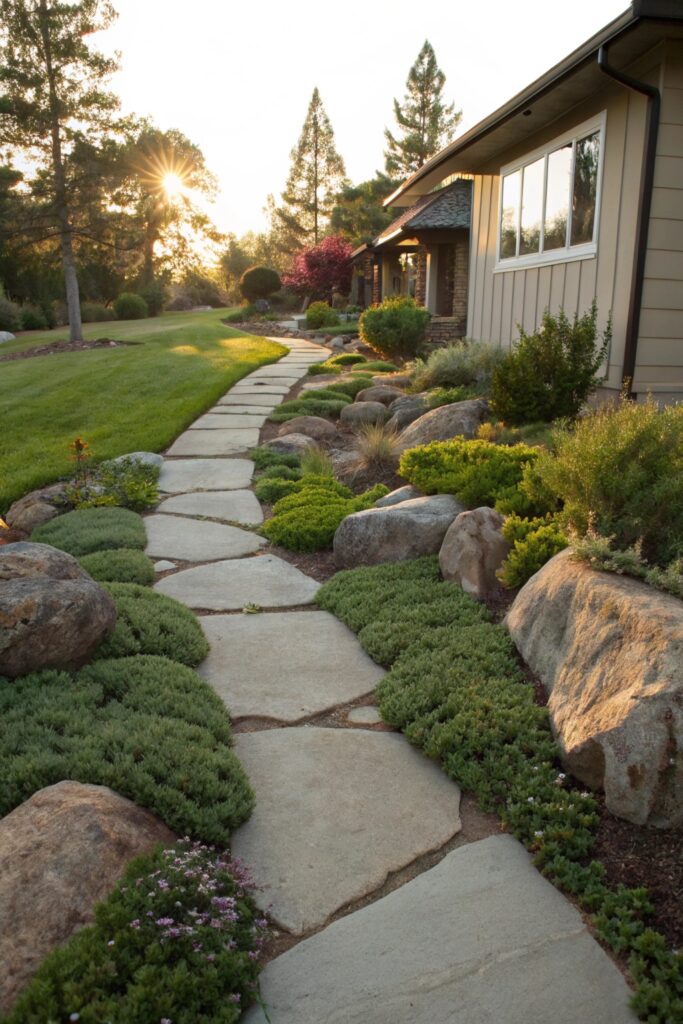
A plain concrete walkway leading to your front door works fine functionally, but it doesn’t do much for curb appeal. Lining both sides with decorative border rocks transforms a purely practical path into an intentional design feature that guides guests toward your entrance with style.
Larger, flat-faced stones work best for this. You can set them upright slightly to create a defined edge, or lay them flat for a more casual, natural feel. Either way, the contrast between the stone border and the surrounding landscape creates a visual frame that makes your whole front yard look more organized.
Pair the border rocks with low-ground-cover plants like creeping thyme or sedum between the stones for a layered, lush look. The combination of rock and soft greenery balances hardscape with nature in a way that always looks intentional and professionally done.
4. Install a Flagstone Pathway Through the Lawn
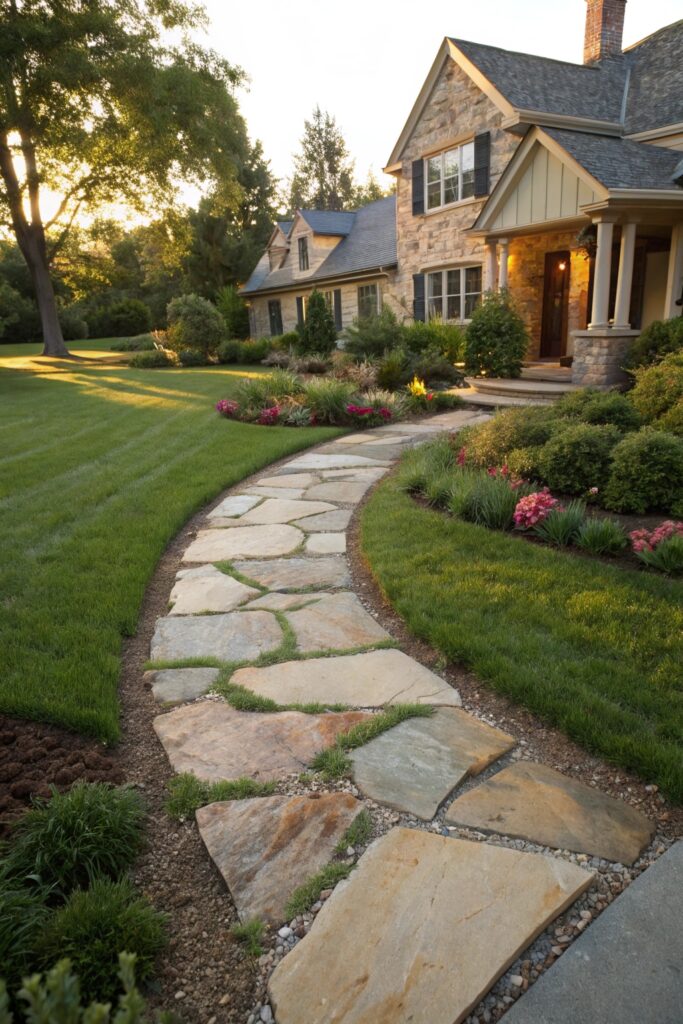
Flagstone pathways bring a timeless, natural elegance to any front yard. These large, flat stones come in sandstone, slate, limestone, and bluestone varieties — each one offering a slightly different color and texture that you can match to your home’s style.
The irregular shapes of flagstones are actually part of the charm. Unlike uniform pavers, flagstone creates an organic, handcrafted feel that looks like it’s always belonged there.
Here’s how to get the best result:
- Space stones 12–18 inches apart for a comfortable stepping distance
- Set them slightly below grade so they don’t become tripping hazards
- Fill gaps with creeping ground cover or fine gravel for a finished look
- Choose a stone color that complements your home’s facade and existing landscaping
IMO, flagstone is the single most elegant rock landscaping option available for front yards. It’s classic, it’s durable, and it ages beautifully over time.
5. Use Boulders as Natural Focal Points
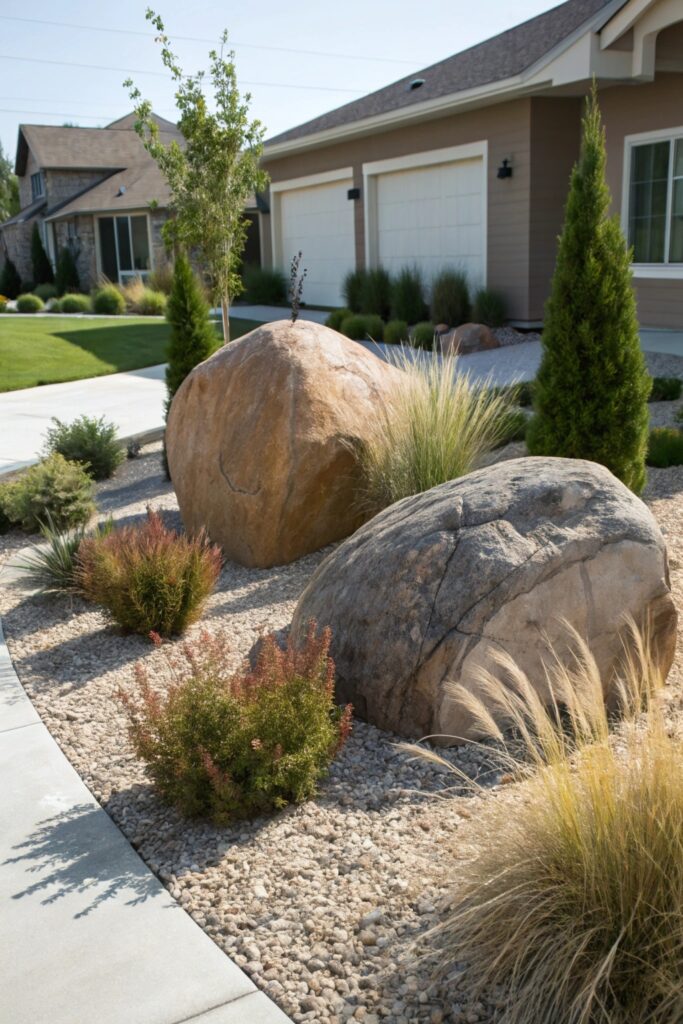
A well-placed boulder does for a front yard what a statement piece of furniture does for a living room — it anchors the whole space and gives the eye somewhere to land. Large decorative boulders in granite, sandstone, or basalt add an immediate sense of permanence and natural drama.
You don’t need a huge yard to pull this off. Even a single large boulder surrounded by ornamental grasses and fine gravel creates a striking, low-maintenance focal point that looks completely intentional.
The key to making boulders work is placement and partial burial. A boulder sitting flat on top of the ground looks dropped rather than placed. Burying it one-third of the way into the soil makes it look like it genuinely belongs there — like it’s been part of the landscape for decades. That small detail makes an enormous difference in the final result.
6. Create a Rock Garden with Alpine Plants
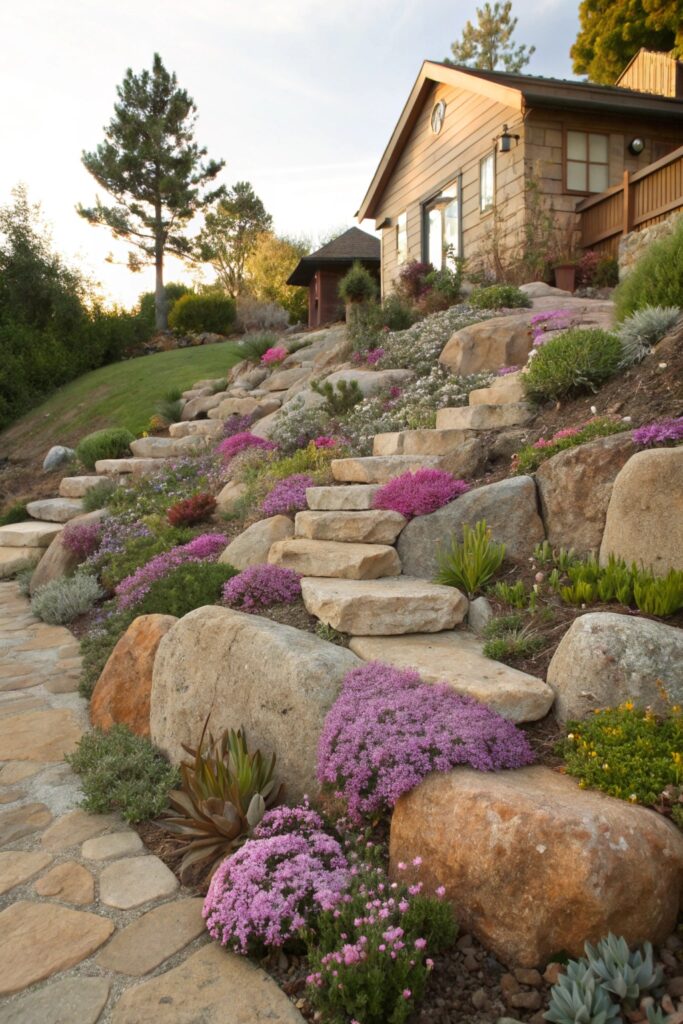
Rock gardens originated in alpine landscapes, and they bring that same rugged, dramatic beauty to residential front yards. The idea is to arrange rocks of varying sizes to mimic a natural hillside, then plant low-growing alpine or drought-tolerant plants between and around the stones.
Plants that thrive in rock gardens include:
- Sedum — succulent, colorful, and virtually indestructible
- Creeping phlox — spreads beautifully and blooms in spring
- Hens and chicks — sculptural, low-growing, and drought-resistant
- Lavender — fragrant, tall, and gorgeous against stone
- Thyme — ground-hugging and surprisingly pretty when it blooms
The beauty of a rock garden is that it genuinely improves with age. Plants fill in, rocks develop a patina, and the whole arrangement starts to look like something nature designed herself. It’s one of those landscapes that rewards patience in a very satisfying way.
7. Lay Decomposed Granite for a Sleek Ground Cover
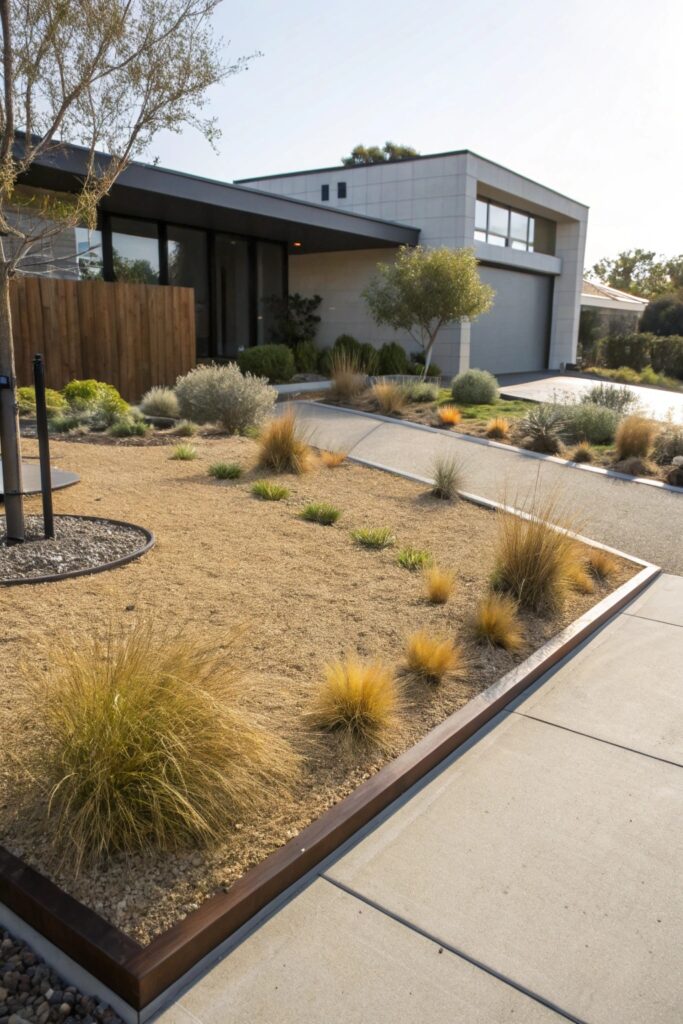
Decomposed granite (DG) is one of the most versatile and underrated rock landscaping materials available. It packs down into a firm, stable surface that works as a ground cover, a pathway material, or a base layer for planting areas.
It comes in several natural tones — gold, tan, russet, and gray — making it easy to match your home’s color palette. DG gives front yards a clean, cohesive look that feels both modern and natural at the same time.
- Stabilized DG holds its shape better and resists scattering
- Apply 3–4 inches deep for best coverage and weed suppression
- Pair with edging material to keep it contained and looking sharp
- Works beautifully in modern, desert, and Mediterranean-style landscapes
For anyone dealing with a high-traffic front yard or a waterwise garden, decomposed granite is genuinely one of the best solutions going. It handles foot traffic, sheds water well, and requires almost zero upkeep.
8. Build a Tiered Rock Retaining Wall
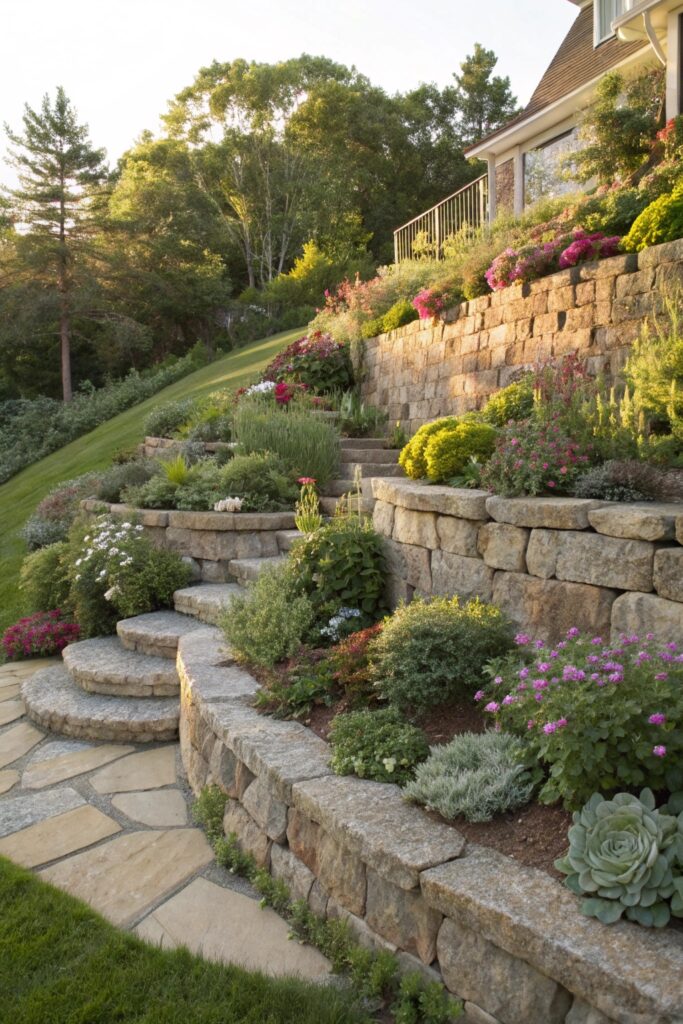
Got a sloped front yard? A tiered rock retaining wall solves your erosion problem while simultaneously creating one of the most visually impressive landscaping features you can add to a property.
Stacked stone retaining walls use natural or manufactured stone to create level planting terraces on an otherwise unusable slope. Each tier becomes its own planting bed, giving you more usable garden space and dramatically more visual interest than a plain slope ever could.
Natural fieldstone and stacked slate are popular choices for this application. They both bring an organic, artisan quality to the structure that poured concrete walls simply can’t replicate.
Plant cascading flowers, ornamental grasses, or trailing succulents in each tier to soften the hard edges of the stonework. The combination of structured stone and flowing plants creates a layered landscape that looks genuinely magnificent from the street.
9. Add a Pea Gravel Seating Area Near the Entrance
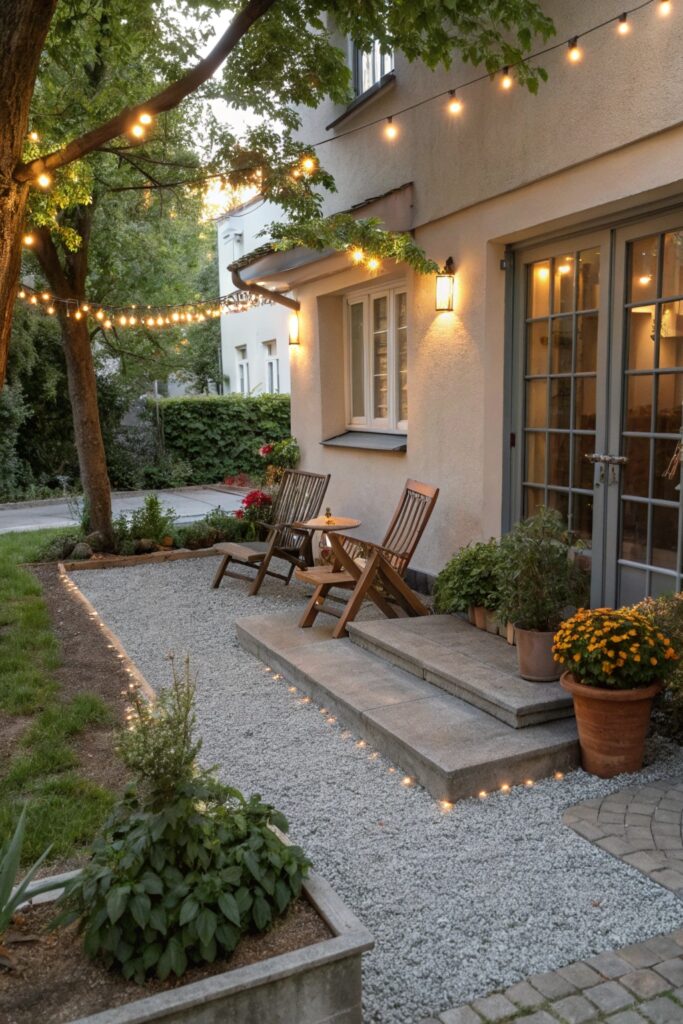
A small pea gravel seating area near your front entrance adds a welcoming, European-café vibe to your curb appeal. Pea gravel is smooth, rounded, comfortable underfoot, and it drains exceptionally well — making it a practical and beautiful choice for outdoor seating spaces.
Define the area with low stone or metal edging to keep the gravel contained. Add a couple of chairs, a small side table, and a potted plant or two, and you’ve created a front yard moment that invites people to pause and enjoy the space.
Pea gravel comes in natural gray, tan, and mixed earth tones. It pairs especially well with wooden furniture, black metal accents, and simple container plantings. The overall effect is relaxed and refined at the same time — which is honestly the sweet spot for front yard design.
10. Edge Garden Beds with Natural Stone Borders
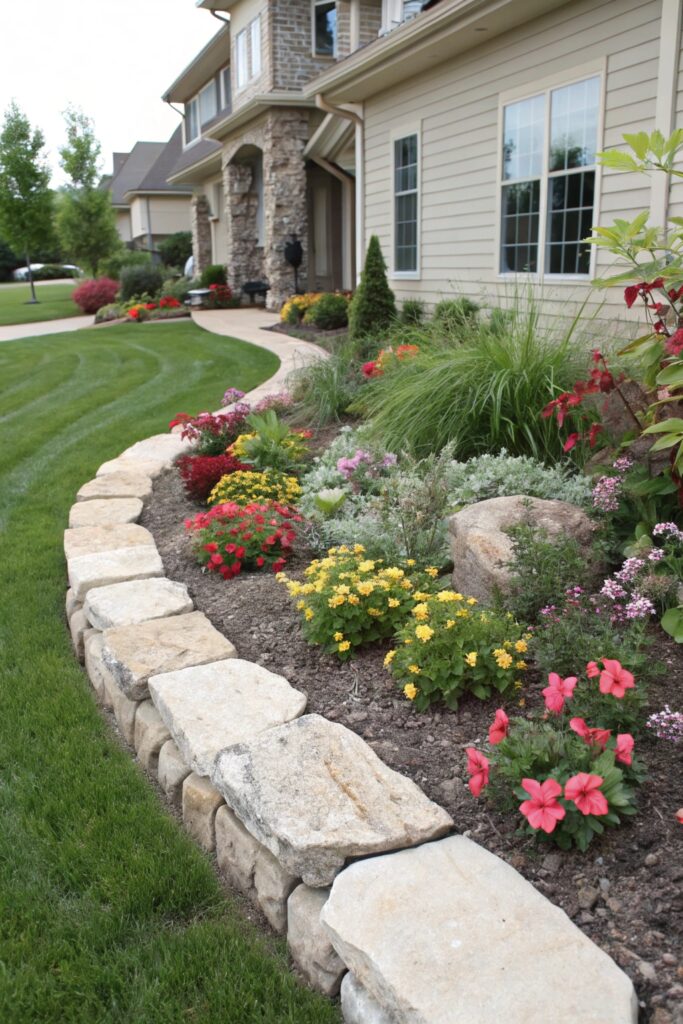
Clean edges are what separate a polished landscape from a messy one. Natural stone edging around your garden beds gives every planting area a crisp, defined border that holds its shape season after season without cracking, fading, or requiring replacement.
Flat fieldstone, limestone pieces, and river rock all work beautifully as bed edging. The natural variation in size and color actually works in your favor here — it creates a handcrafted, intentional look that manufactured plastic or rubber edging never achieves.
Set stones partially into the ground for stability and a clean finish. Overlap them slightly to create a continuous border without gaps. The goal is a defined line that’s strong enough to hold mulch or gravel in place while looking completely natural — and honestly, once you install natural stone edging, you’ll wonder why you ever tolerated plastic.
11. Design a Zen-Inspired Gravel Garden
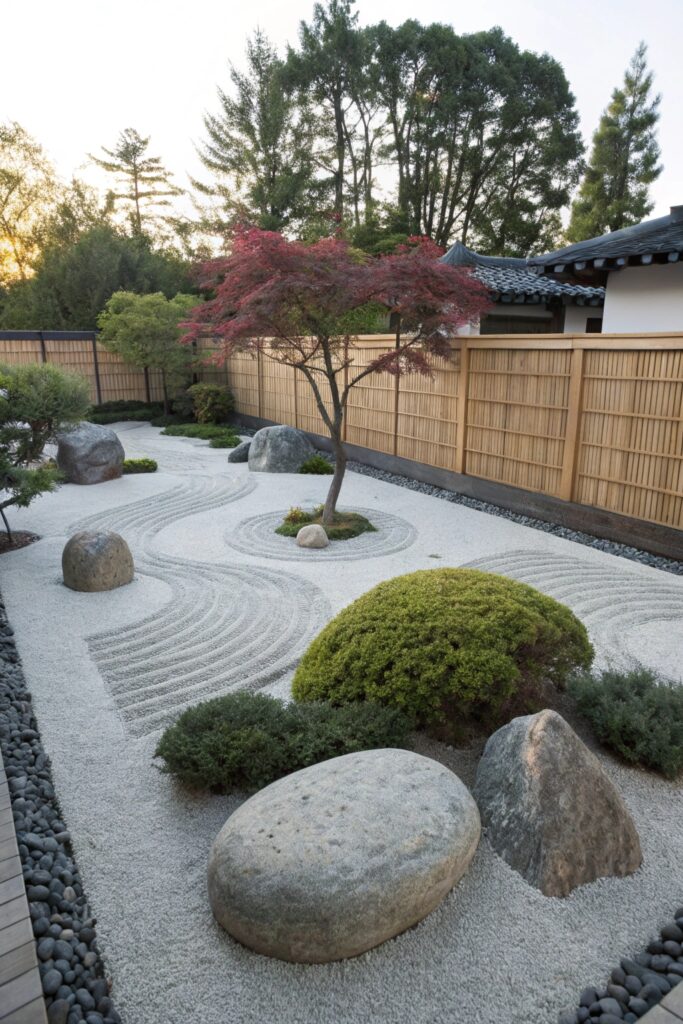
Zen gravel gardens bring a sense of calm, order, and minimalist beauty to any front yard. Inspired by Japanese dry gardens, this style uses fine raked gravel, carefully placed accent stones, and minimal plantings to create a landscape that feels intentional and meditative.
You don’t need to go full Japanese garden to borrow this aesthetic effectively. Even a small section of your front yard styled with smooth white or gray gravel, a few large accent rocks, and a single ornamental tree or bamboo planting achieves that same sense of peaceful geometry.
- Use fine white or grey gravel for the classic raked pattern effect
- Choose 3–5 large accent stones with interesting shapes and textures
- Keep plantings minimal — one or two specimens, not a full garden
- Add a simple wooden or bamboo fence for boundary definition if needed
This style suits modern, contemporary, and minimalist homes perfectly. It’s also remarkably low-maintenance once established, which is never a bad thing 🙂
12. Use River Rock to Surround Trees and Shrubs
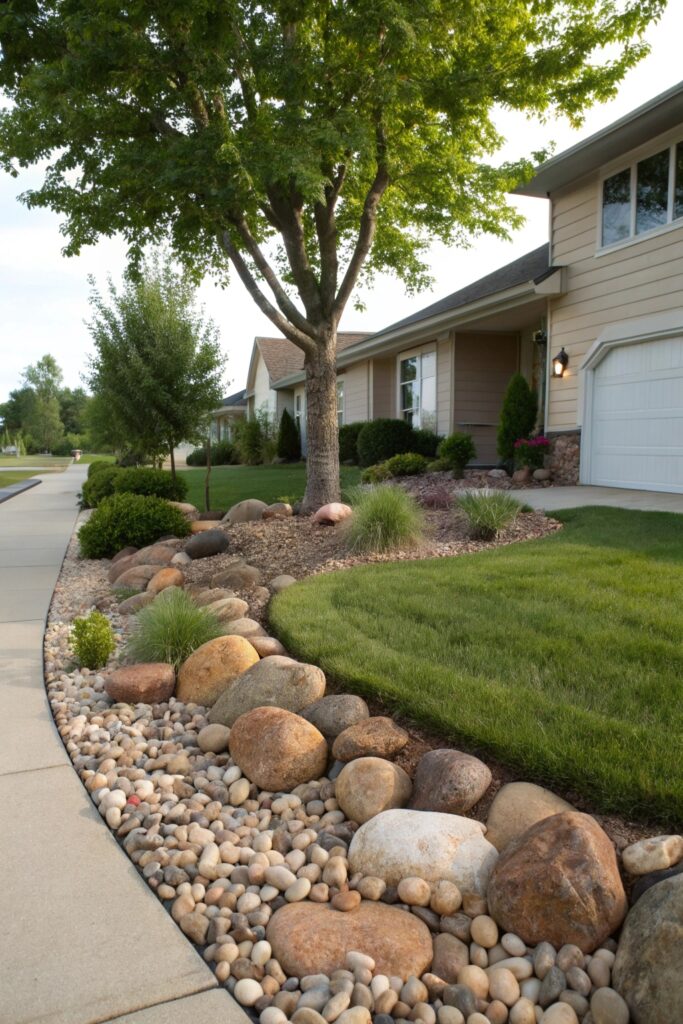
Replacing bark mulch around your trees and foundation shrubs with river rock is one of the simplest front yard upgrades you can make — and the results look dramatically better than you might expect.
River rocks don’t decompose, don’t blow away in the wind, and don’t attract insects the way organic mulch sometimes does. They also retain moisture beautifully, which benefits your plants while cutting your watering needs.
Choose a rock size that fits the scale of your plantings. Large river rocks around a mature shade tree look proportional and grounded. Smaller smooth pebbles around foundation shrubs feel tidy and refined.
The natural rounded shapes and warm tones of river rock complement virtually every plant variety and home exterior color. Once you lay it down and step back to look, the difference is immediately obvious — it’s one of those upgrades that pays dividends every single day.
13. Create a Rock Spiral Garden Feature
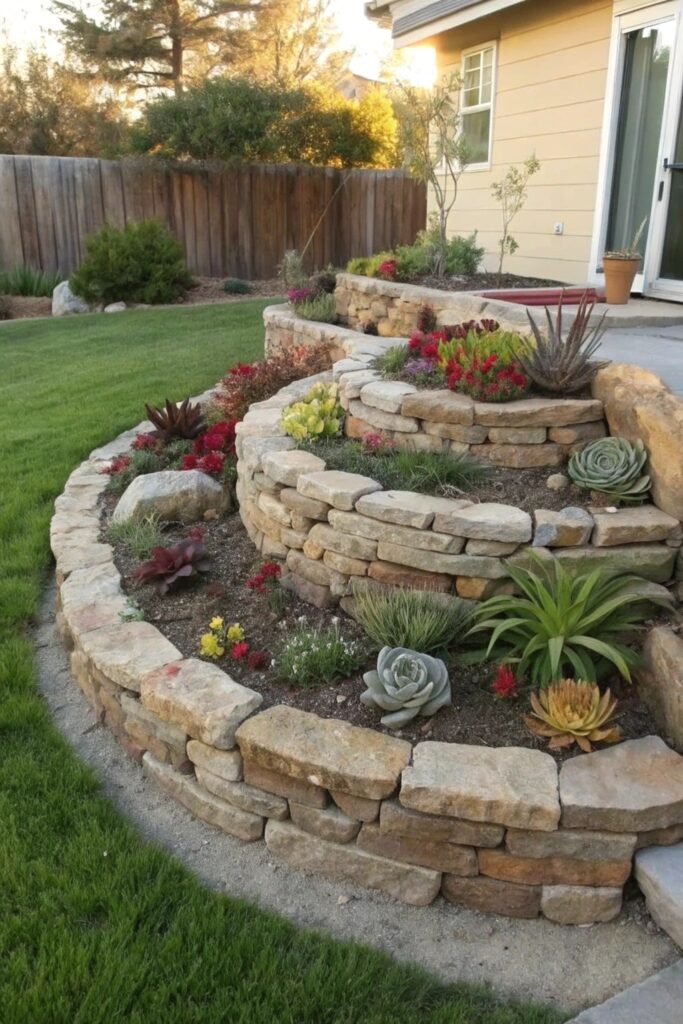
A spiral rock garden is a creative and functional front yard feature that works as both a visual centerpiece and a practical planting structure. The spiral formation creates microclimates — the top of the spiral gets more sun and drainage, while the base stays cooler and retains more moisture — allowing you to grow a variety of plants in a compact space.
Build the spiral using stacked flat stones or rounded fieldstone in a rising circular pattern, starting from a wide base and narrowing toward the top. Plant herbs, succulents, or alpine plants at different heights within the structure.
As a standalone front yard feature, a rock spiral draws immediate attention and sparks conversation. It’s the kind of detail that makes a landscape look genuinely creative rather than simply maintained. And because it’s built from stone, it requires virtually no ongoing work to keep looking great year after year.
14. Install a Crushed Stone Driveway Border
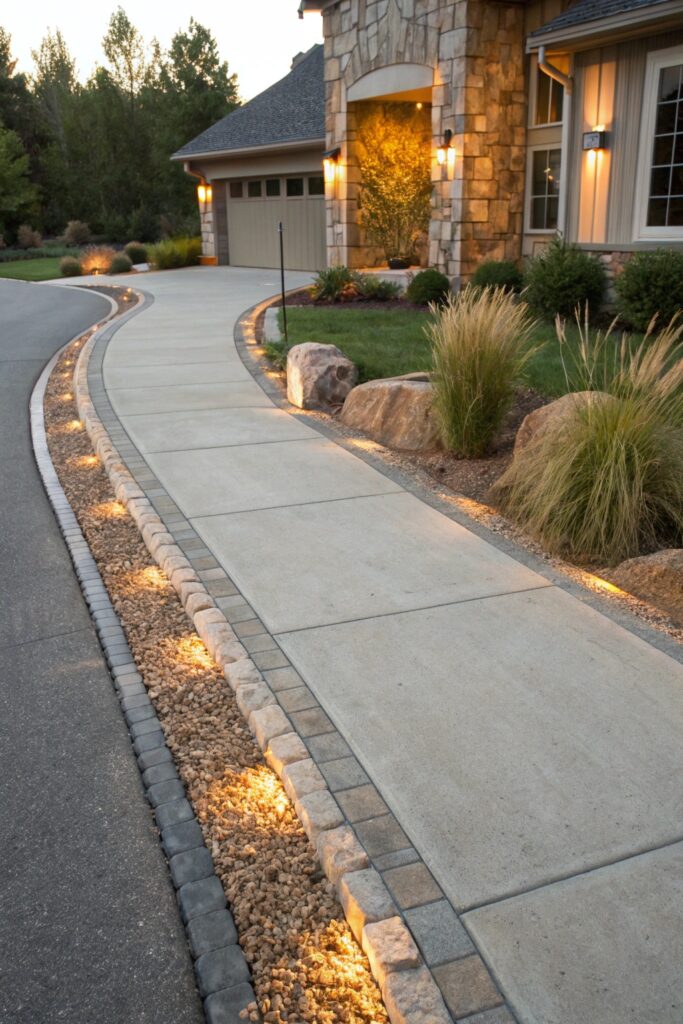
Your driveway is one of the largest surfaces in your front yard, and it often gets completely ignored from a landscaping perspective. Crushed stone borders along both sides of the driveway add definition, texture, and a finished quality that makes the entire property look more polished.
Use a contrasting stone color to the driveway surface for maximum visual effect. If you have a gray concrete driveway, warm tan or rust-colored crushed stone creates a beautiful border. A black asphalt driveway looks striking bordered with clean white or light gray crushed granite.
- Install steel or aluminum edging to keep the stone contained and defined
- Use 3–4 inches of depth for adequate coverage
- Add solar pathway lights within the stone border for evening curb appeal
- Plant ornamental grasses or low shrubs behind the stone for a layered look
This upgrade costs surprisingly little relative to the visual impact it delivers. A clean, well-defined driveway border communicates care and intentionality — two things that make a strong first impression every single time someone pulls up to your home.
15. Mix Rock Types for a Layered, Textural Landscape
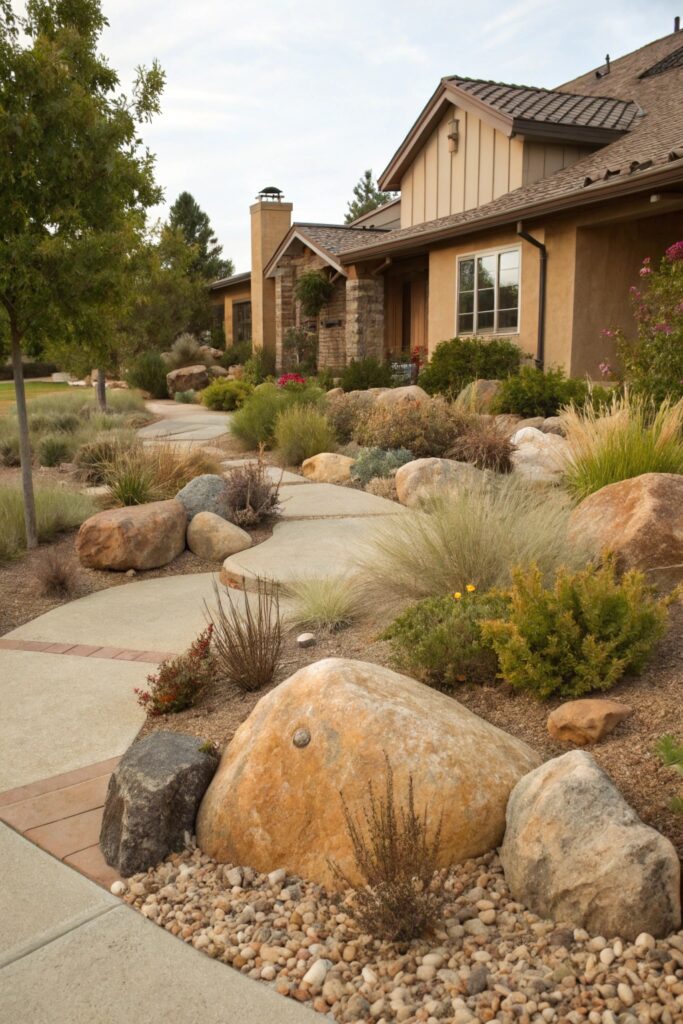
The most visually interesting front yard rock landscapes combine multiple rock types rather than relying on a single material throughout. Mixing textures, sizes, and colors creates depth and visual complexity that make a landscape feel genuinely designed rather than simply filled in.
Try combining:
- Large granite boulders as structural anchors
- Smooth river rocks as ground cover around plants
- Crushed decomposed granite as the main open-ground surface
- Flat flagstone for pathways and stepping areas
- Natural stone edging to define and separate different zones
The trick is maintaining a cohesive color palette across all your chosen materials. Stick within a complementary range — warm earth tones or cool grays — and the variety of textures will read as intentional design rather than randomness.
When you layer rock types thoughtfully, your front yard starts to look less like a landscaped garden and more like a naturally occurring landscape. That’s the ultimate compliment in rock landscaping — and it’s absolutely achievable with a little planning and a willingness to mix things up.
Conclusion
Rock landscaping transforms front yards in ways that grass and mulch simply can’t match. From dry river beds and boulder focal points to zen gravel gardens and flagstone pathways, these 15 ideas cover every style, budget, and yard size. The common thread? All of them boost curb appeal while dramatically cutting your maintenance workload.
Start with one idea that fits your yard’s existing style and build from there. You don’t need to overhaul everything at once — even a single well-executed rock feature can change the entire feel of your front yard.
Pick your favorite idea from this list, grab some stones, and get to work. Your front yard — and your neighbors — will thank you for it.