
This guide leans into comfort and personalization upgraded bedding, warm lighting, meaningful decor — rather than a strictly minimal approach. For ideas focused on a more pared-down, modern aesthetic, see our companion guide to small camper interior ideas for a modern and minimal look.
Below are 12 ways to build out this look, with practical notes for each.
1. Choose a Light and Neutral Color Palette
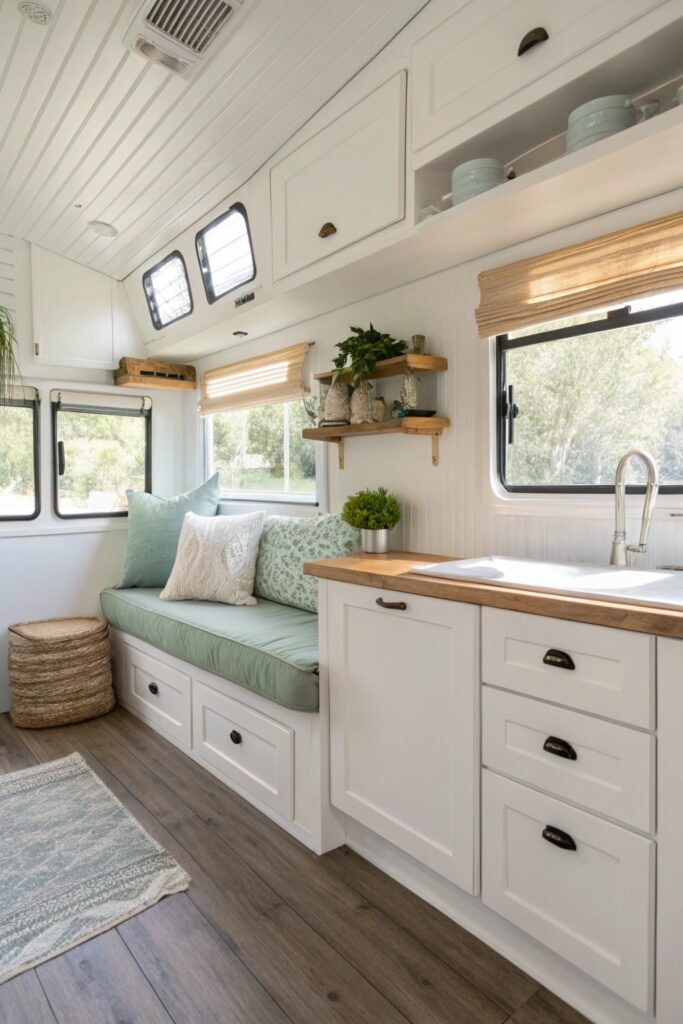
Light tones reflect available light more effectively, which matters directly in a camper’s typically smaller windows and more limited natural light.
Choose a warm off-white or cream over a stark white, which suits a camper’s warmer factory finishes and wood trim better than a cooler tone.
2. Install Peel-and-Stick Removable Wallpaper
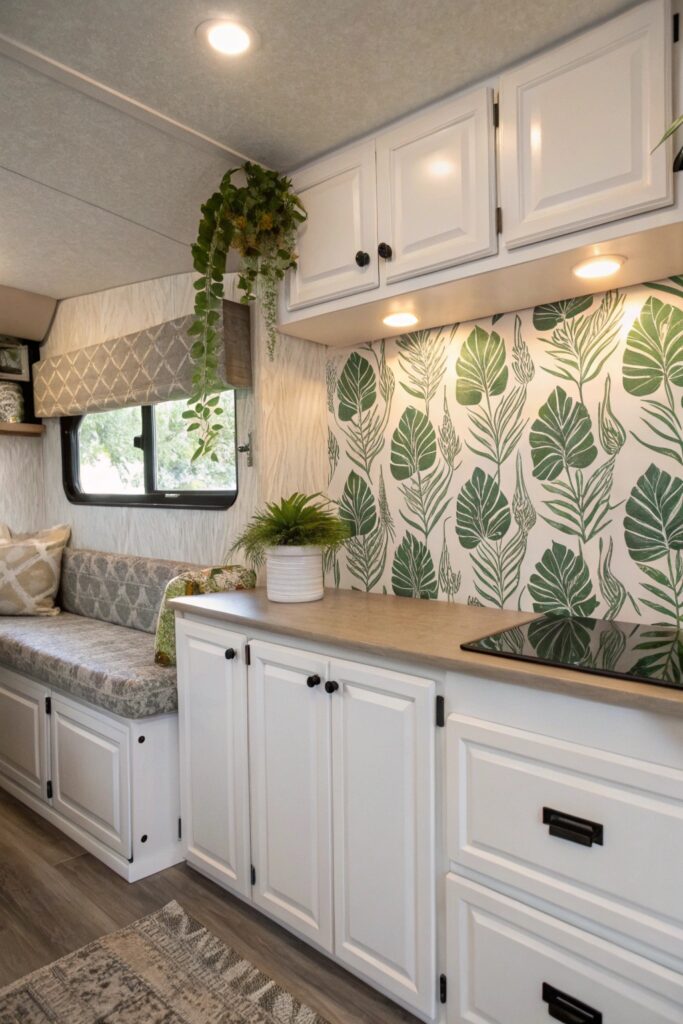
This commits to a pattern or color without permanent changes, which matters for a camper you might resell or want to update again later.
Choose a washable, wipeable wallpaper specifically for a camper, since this space sees more moisture and temperature swings than a typical home wall.
3. Upgrade Your Bedding to Hotel-Level Comfort
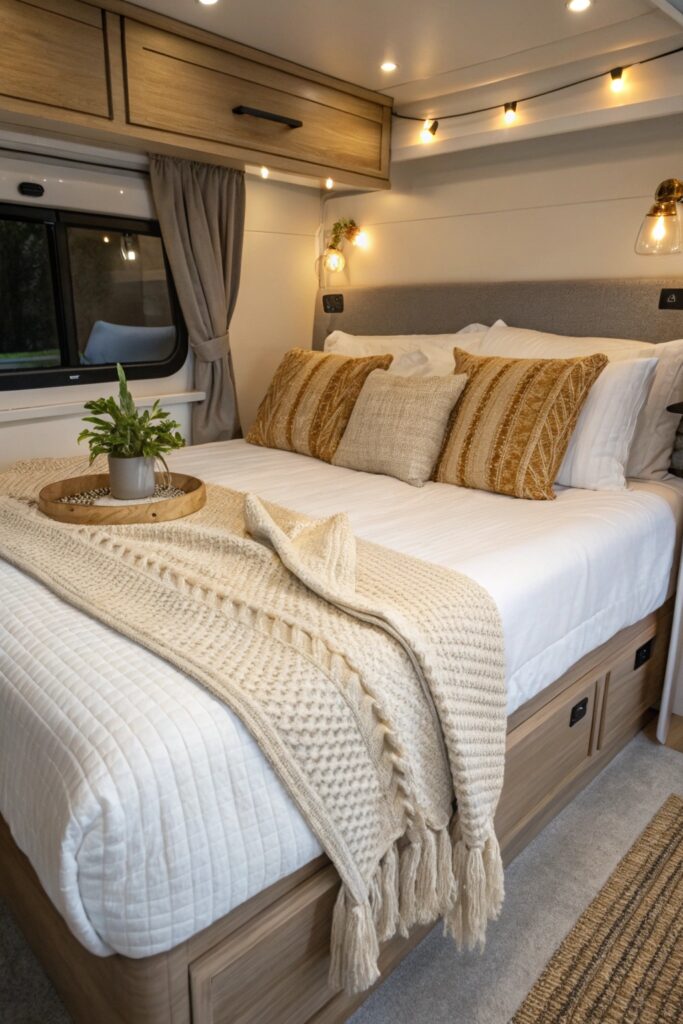
Higher-quality sheets and a good pillow make an outsized difference in a camper specifically, since the bed often does double duty as seating during the day.
Choose sheets in a breathable fabric like cotton, which handles a camper’s variable temperatures better than synthetic blends.
4. Add Warm Lighting Throughout
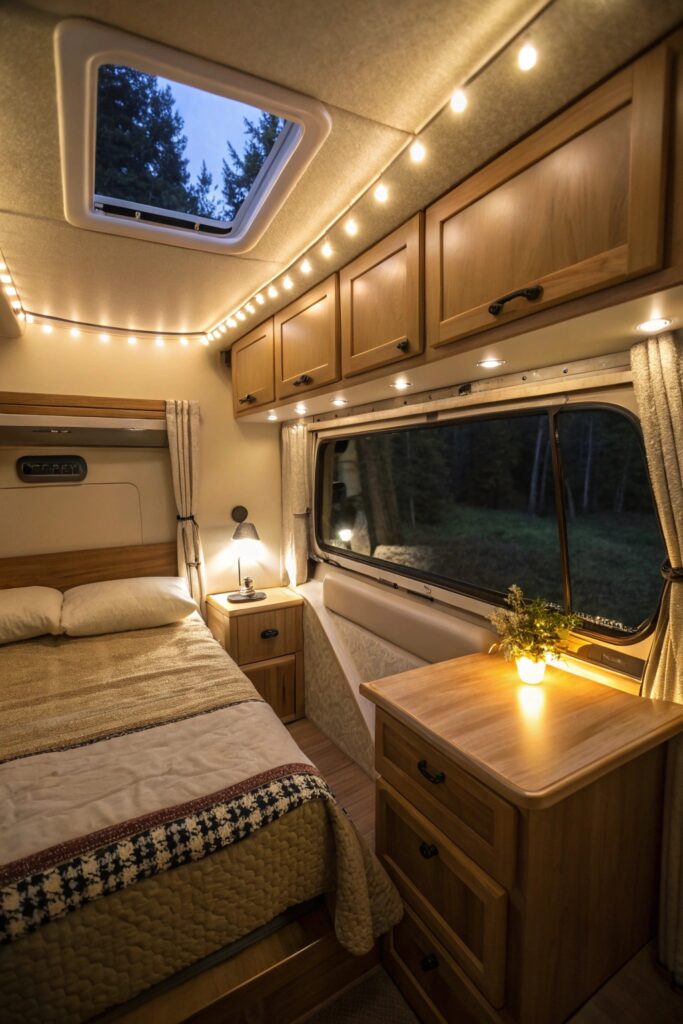
Warm-toned bulbs specifically suit a camper’s smaller enclosed space better than the cooler factory lighting many models come with standard.
Choose battery-powered or low-voltage fixtures specifically if you’re supplementing existing lighting, which keeps power draw manageable when running off a camper’s limited electrical system.
5. Maximize Storage With Multi-Function Furniture
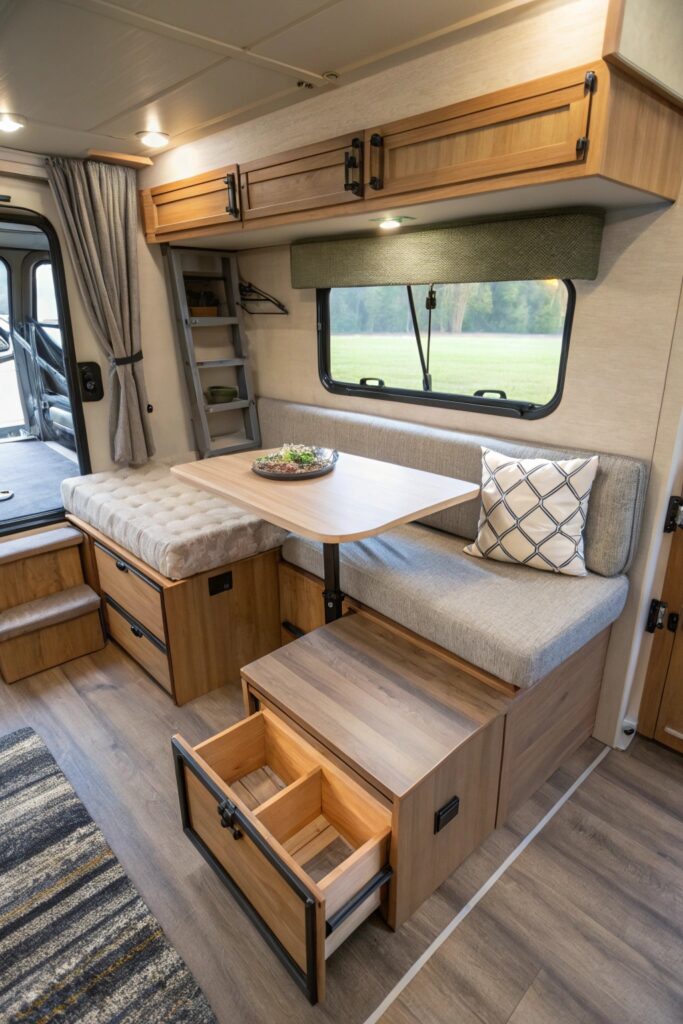
Furniture with genuine built-in storage — a bench with a lift-up seat, a bed with drawers underneath — matters more here than in a full-size home given the limited square footage.
Measure your specific available space carefully before purchasing any multi-function piece, since camper dimensions vary more than typical home furniture sizing accounts for.
6. Hang Curtains Higher and Wider Than the Windows
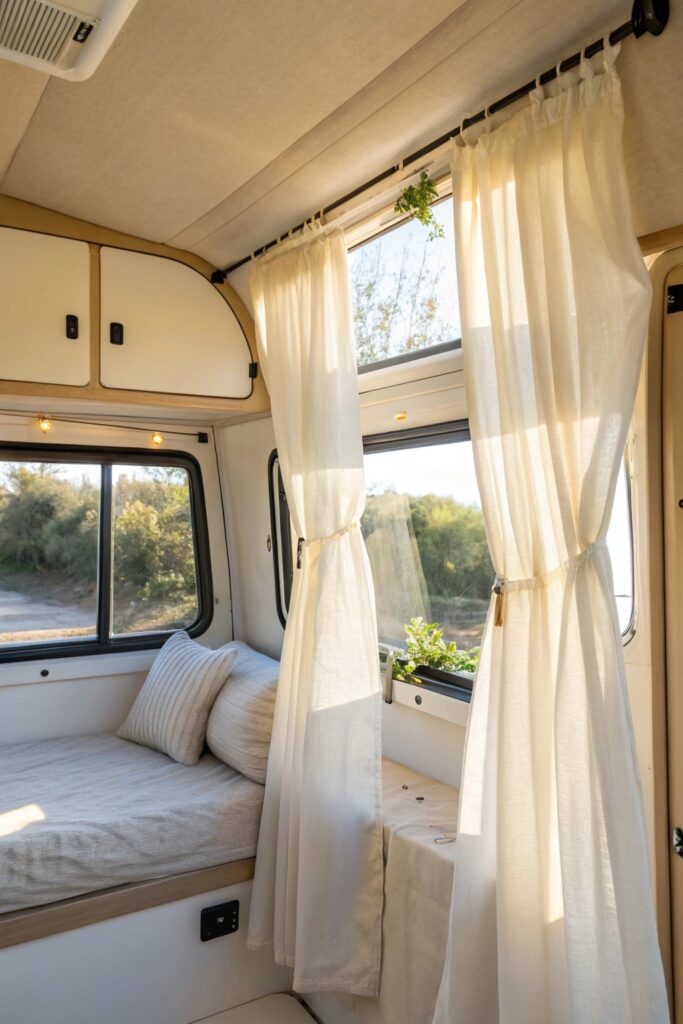
This makes windows look larger than they are, a trick that has an outsized visual impact in a camper’s smaller proportions.
Choose a lightweight curtain rod and rings, since a heavier rod can pull away from thinner camper wall material over time.
7. Bring in Natural Elements and Plants
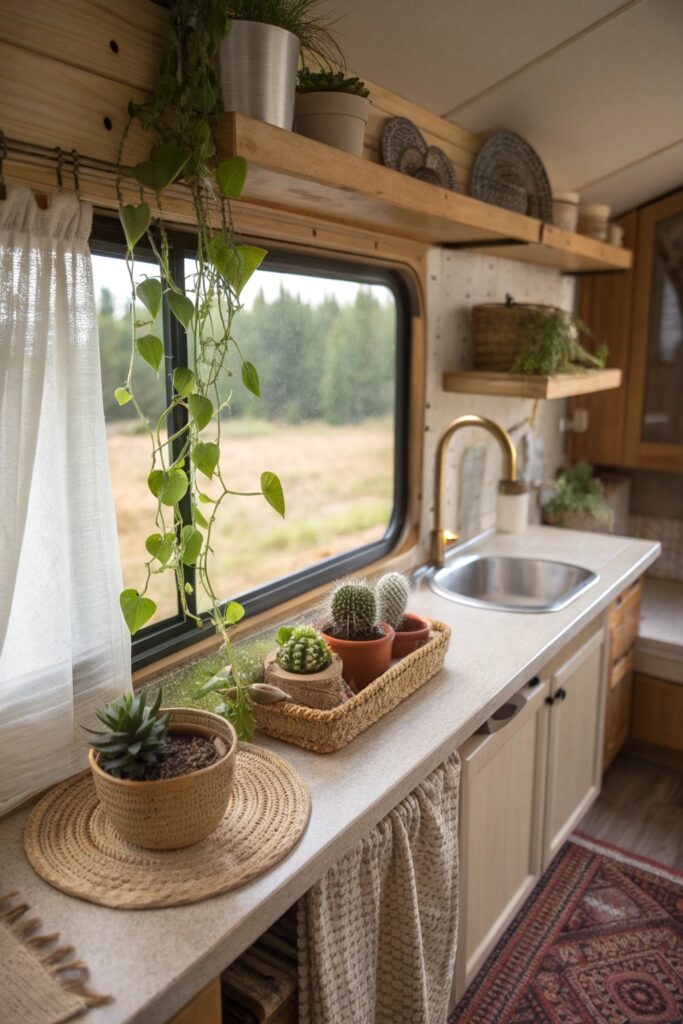
Low-maintenance, secure plants add real life to the space, though it’s worth choosing varieties and containers that won’t tip over while driving.
Choose pots with secure, non-slip bases, and consider a small strap or bracket for anything you don’t want shifting while driving.
8. Install Open Floating Shelves
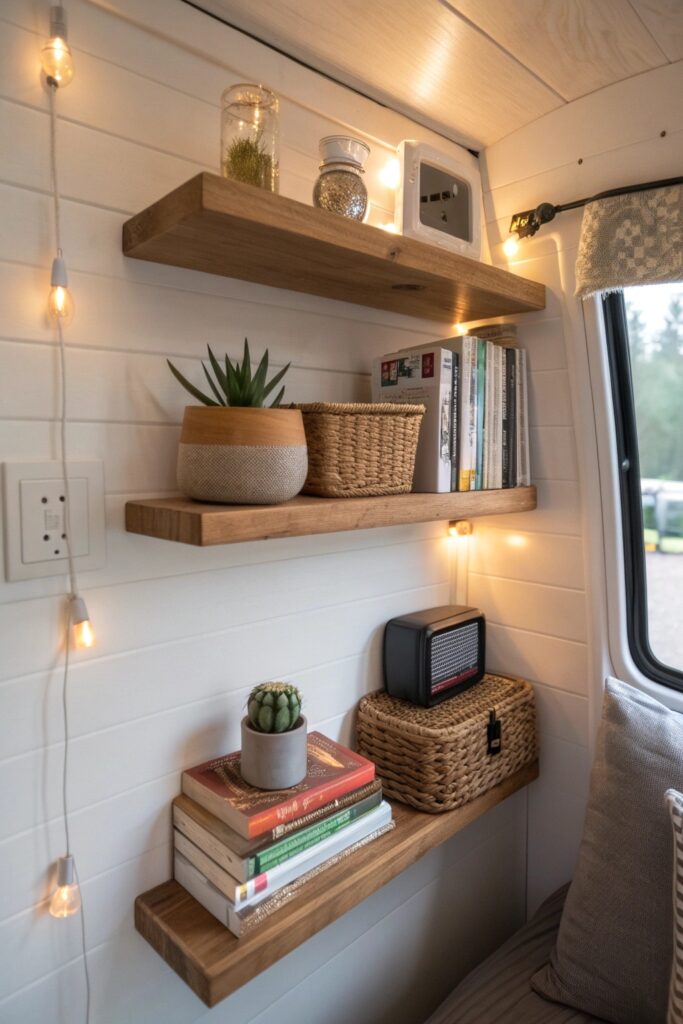
These add storage without the visual bulk of closed cabinetry, which matters in a small space where every surface affects how open the room feels.
Confirm the shelving is rated for the weight of what you plan to store, and consider a small lip or rail to keep items from sliding during travel.
9. Create a Defined Kitchen Zone
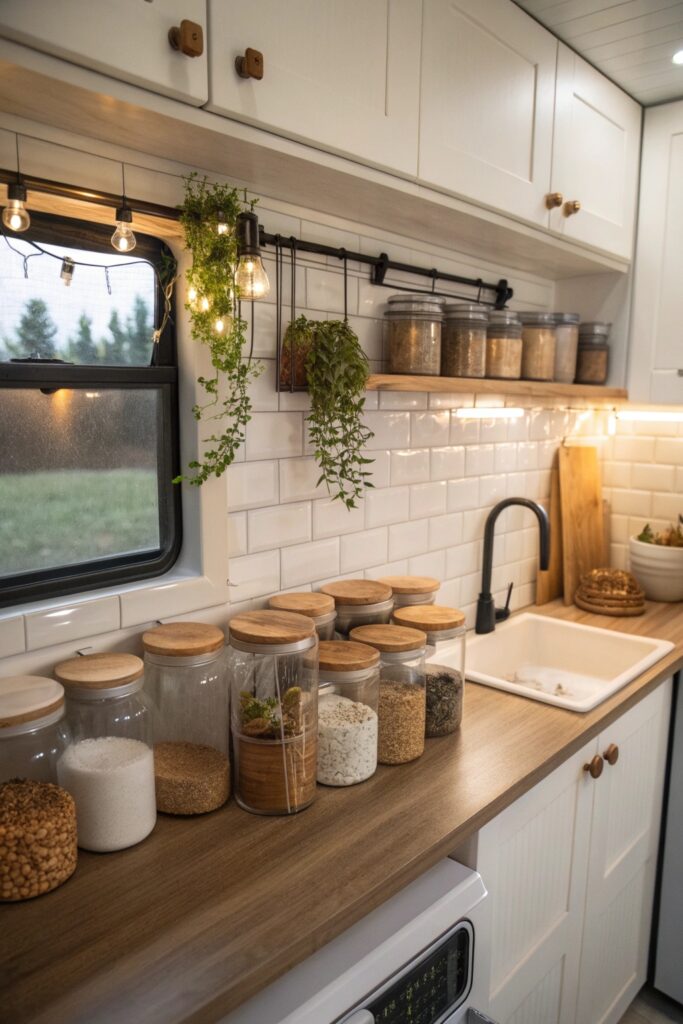
A small rug or a distinct backsplash treatment helps this area read as its own space rather than blending into the rest of the camper.
Choose a durable, easy-to-clean rug specifically for the kitchen zone, since this area sees more spills and daily wear than other parts of the camper.
10. Use Mirrors Strategically to Expand the Space
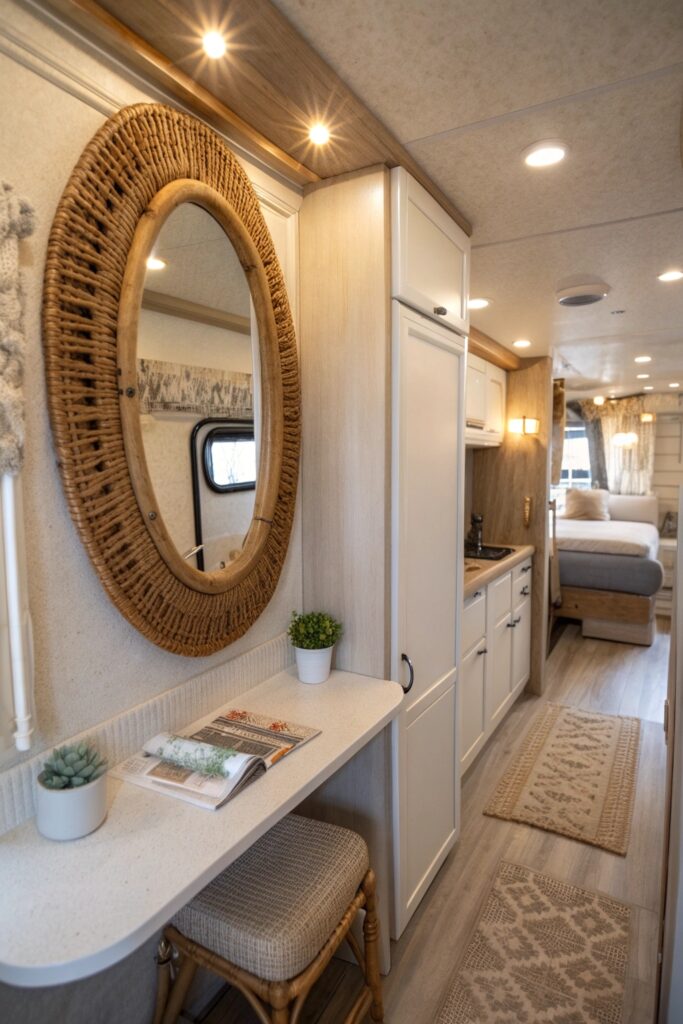
A well-placed mirror reflecting a window or light source makes a small camper feel noticeably more open than the actual square footage suggests.
Choose a mirror in a lightweight material and secure mounting hardware, since a heavier mirror adds risk if it comes loose during travel.
11. Add a Cozy Rug to Define Zones
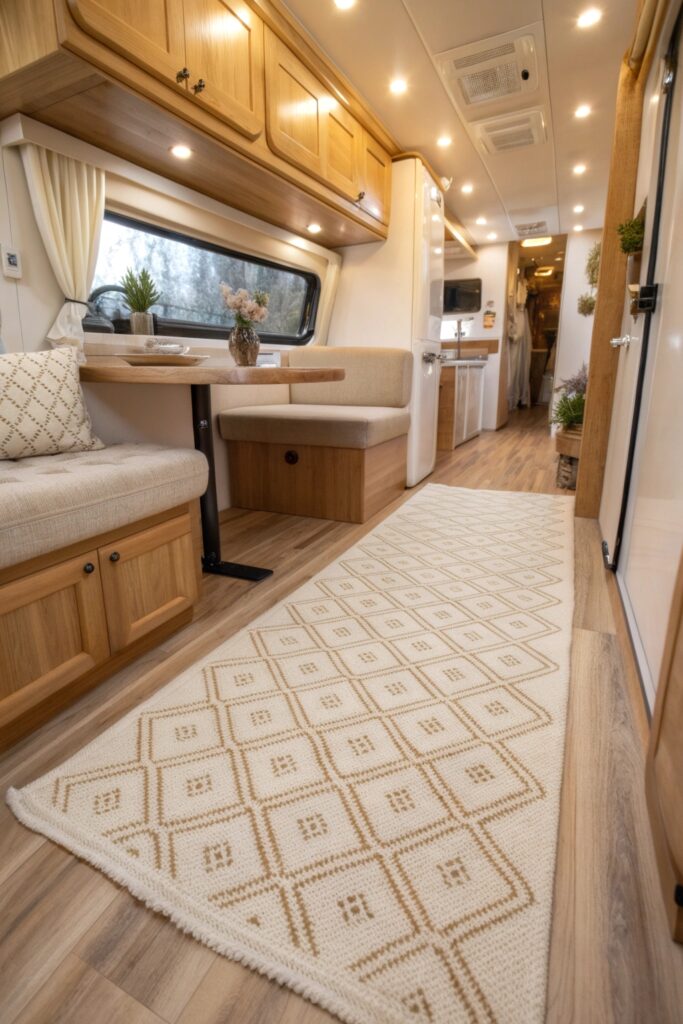
A rug helps separate a sleeping or lounging area from the rest of an open camper layout, adding both visual definition and softness underfoot.
Choose a low-pile rug for a camper specifically, since a plush or high-pile option can trap moisture and dirt more easily in this smaller space.
12. Personalize With Art and Meaningful Decor
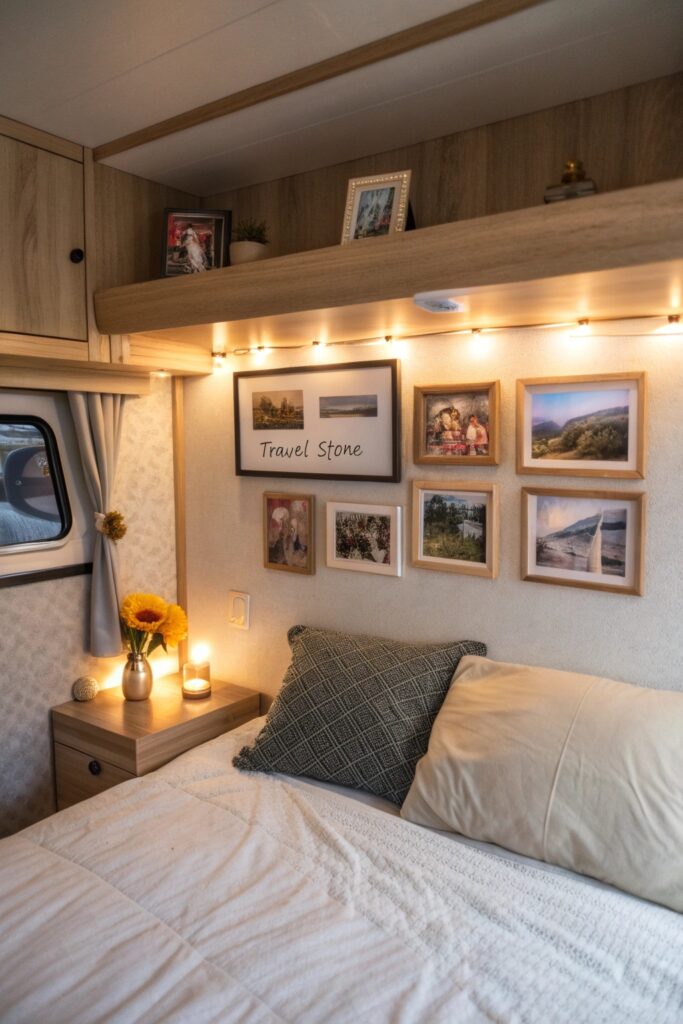
Personal touches — photos, a favorite print, meaningful objects — make a camper feel like an actual home rather than a purely functional vehicle.
Balancing Comfort With Travel Practicality
Every added item affects a camper’s total weight and available storage, so it’s worth being intentional about which comfort upgrades matter most to you rather than adding everything on this list at once.
Prioritizing bedding and lighting first, since these noticeably affect daily comfort the most, is a reasonable approach if you’re working through this list gradually rather than all in one trip.
What These Upgrades Cost
Smaller changes — bedding, lighting, a rug — typically cost $100 to $350 total.
A fuller interior refresh including wallpaper, shelving, and multi-function furniture runs higher, often $400 to $1,200 depending on the specific pieces and whether installation is DIY.
Secondhand and thrift sources are worth checking specifically for smaller decor pieces like art, mirrors, and textiles, since these items are often available for a fraction of retail cost and add genuine character beyond mass-produced options.
Take measurements of your specific camper’s interior before shopping for anything, since even small variances between models can make the difference between a piece fitting comfortably and one that ends up crowding an already tight space.
Take a photo of the finished interior once everything’s in place, since it’s actually useful to have a reference for what worked well, whether you’re touching it up later or eventually selling the camper.
A well-planned camper interior makes an outsized difference on longer trips specifically, since the small comforts you build in now are what you’ll actually notice and appreciate after a full day of travel.
Weight Considerations for Any Added Materials
Every material added to a camper’s interior, from peel-and-stick wallpaper to a heavier rug, adds weight that affects towing capacity and fuel efficiency, which matters more here than in a stationary home.
Checking the camper’s gross vehicle weight rating before making significant upgrades, especially anything involving new furniture or flooring, avoids exceeding a safe towing limit.
Small changes compound quickly in a compact space, so even tackling just two or three of these ideas can noticeably shift how the whole camper feels to live in.
Wrapping It Up
For more minimal, modern styling approaches, see our companion guide to small camper interior ideas.
Comfort-focused upgrades like bedding and lighting matter more in a camper than in a full-size home, since these smaller spaces get used more intensively for both rest and daily living. Secure anything decorative before driving, since items that look fine sitting still can become hazards or damage once the camper is in motion.