12 Best Bedroom Colors That Make Any Space Feel Designer-Made
Your bedroom color is doing a lot more work than you probably give it credit for. It sets the mood the second you walk in, affects how well you sleep, and tells everyone who sees it exactly how much design sense you have — or don’t. No pressure, though.
I’ve repainted my own bedroom three times in four years, chasing that perfect, designer-made feeling. One color was a disaster I’d rather forget. The others? Genuinely life-changing in the best possible way. So I’ve learned a thing or two about what actually works versus what looks great on a paint chip and horrifying on four walls.
Here are 12 bedroom colors that deliver that elevated, intentional, “did an interior designer live here?” energy — no hiring required.
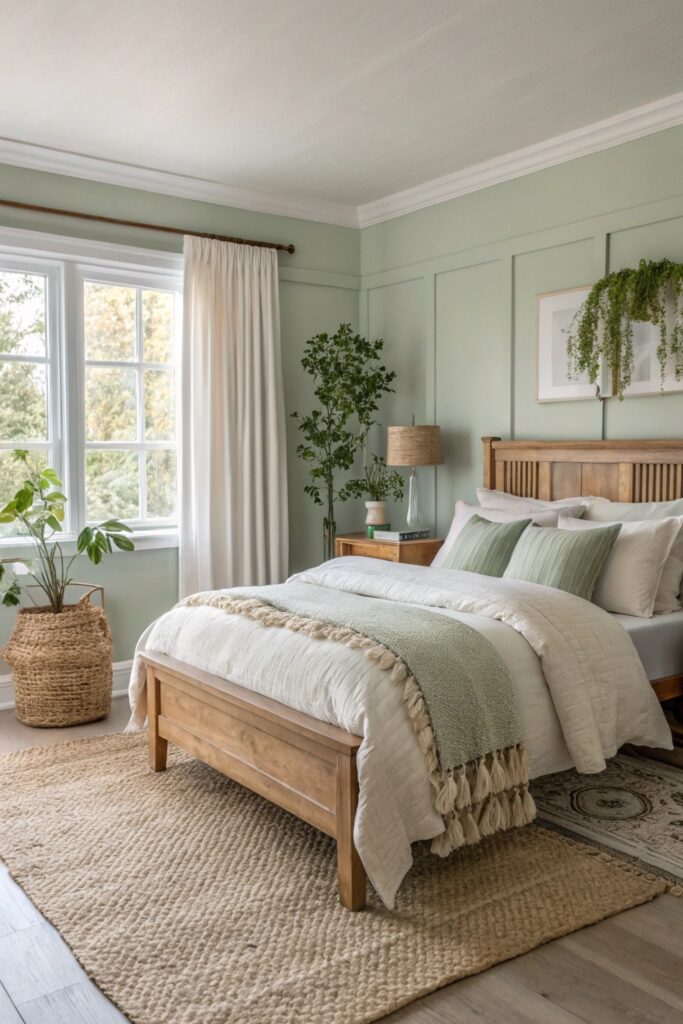
1. Soft Sage Green

Sage green is having a serious moment in interior design right now, and honestly, it deserves every bit of the hype. This muted, grey-toned green sits in that perfect sweet spot between cool and warm — it reads as calm, earthy, and quietly sophisticated all at once.
What makes sage green so universally flattering is its incredible versatility. It works with warm wood tones, cool whites, natural linen, and even bolder accent colors like terracotta or dusty rose. It doesn’t compete — it complements everything around it.
Why sage green works so well in bedrooms:
- It creates a natural, biophilic connection that promotes relaxation and sleep
- It pairs beautifully with both warm and cool-toned wood furniture
- It photographs exceptionally well — your bedroom will look stunning on camera
- It feels current without being trend-chasing or overdone
Best paint shades to try: Benjamin Moore’s Salisbury Green, Farrow & Ball’s Mizzle, or Sherwin-Williams’ Retreat. Start with the trim in a crisp warm white and watch the whole room come together effortlessly.
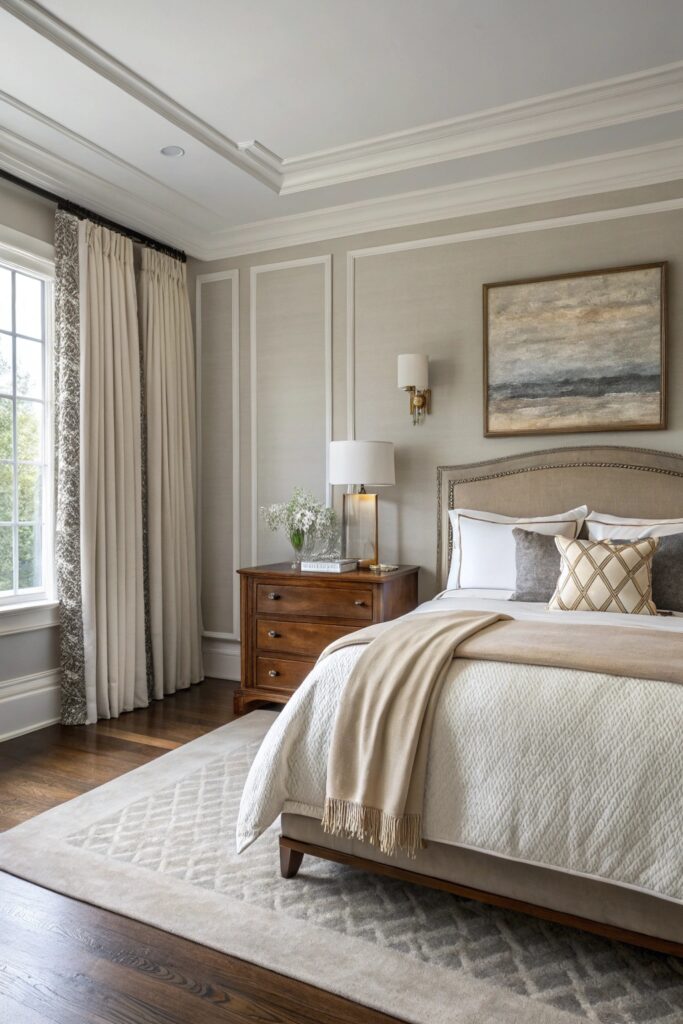
2. Warm Greige (Grey-Beige)

If you’ve ever stared at a paint deck completely paralyzed by indecision, greige was probably invented for you. Warm greige — that perfect blend of grey and beige — is the most forgiving, universally flattering neutral you can put in a bedroom. It’s also deeply underrated as a designer color choice.
Unlike cool grey, which can feel cold and clinical, warm greige reads as cozy, layered, and intentional. It makes furniture pop, it plays beautifully with natural light, and it never looks like you couldn’t make a decision. IMO, it’s the smartest safe choice in any paint collection.
What makes greige so designer-friendly:
- It shifts slightly warm or cool, depending on your lighting — always flattering
- It pairs perfectly with white trim, dark wood, brass hardware, and linen textiles
- It provides a sophisticated neutral backdrop that lets your furniture do the talking
- It works in small and large bedrooms equally well
Top greige picks: Sherwin-Williams’ Accessible Beige, Benjamin Moore’s Pale Oak, or Behr’s Sculptor Clay. These shades are popular for a reason — they simply never fail.
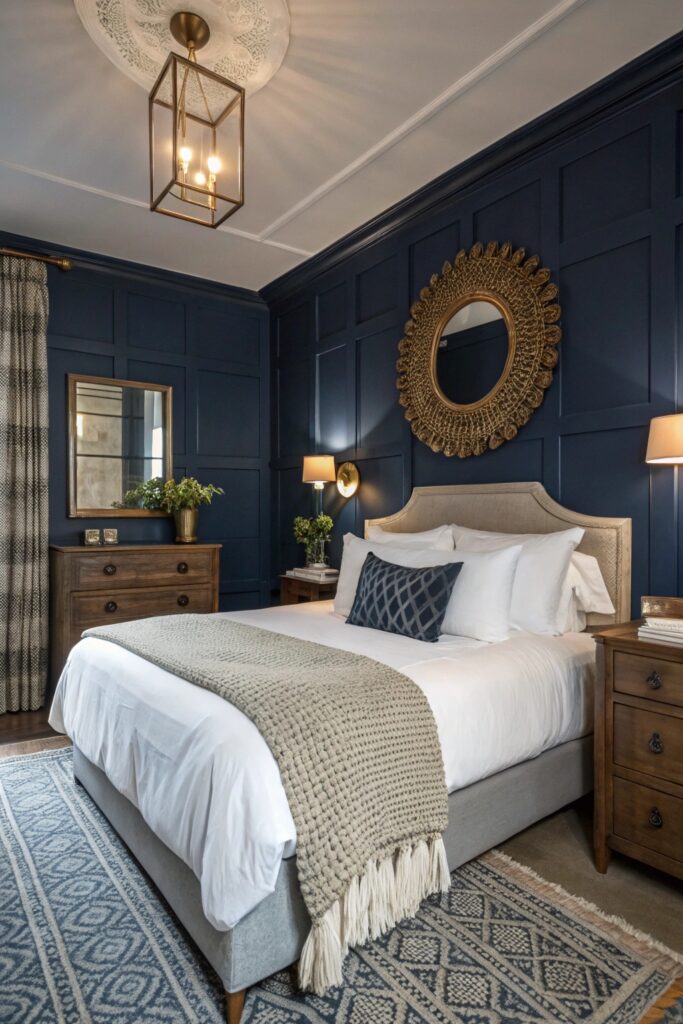
3. Deep Navy Blue

Want your bedroom to feel like a luxurious boutique hotel suite? Paint it deep navy blue and watch the transformation happen in real time. Navy is bold enough to make a statement but grounded enough to feel sophisticated rather than overwhelming — when you get the shade right.
The trick with navy is committing fully. Half-measures look timid. Paint all four walls, add crisp white trim, layer in warm brass or gold accents, and watch the room take on a richness that genuinely stops people in their tracks.
Navy bedroom styling guide:
- Pair with bright white bedding to create maximum contrast and freshness
- Add warm brass or antique gold hardware and lighting to prevent the room from feeling cold
- Use natural textures — linen, rattan, jute — to warm the space up
- Keep the ceiling light — white or a very pale blue — to maintain an open feel
Shades worth trying: Farrow & Ball’s Hague Blue, Benjamin Moore’s Newburyport Blue, or Sherwin-Williams’ Naval. These are the navy shades that actually look intentional rather than accidental.
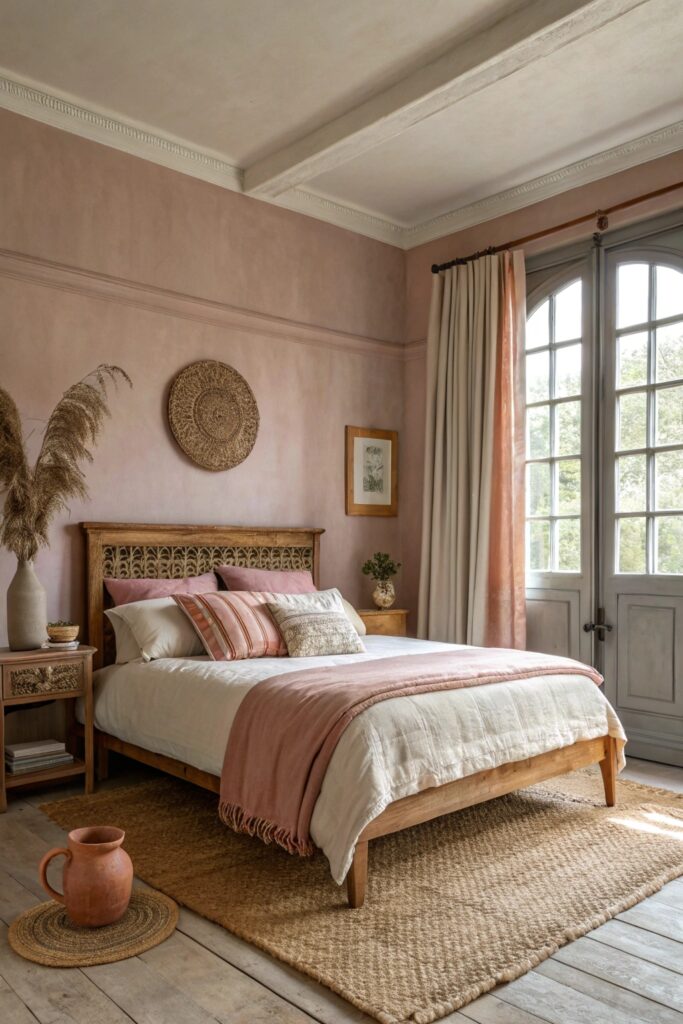
4. Dusty Rose

Before you dismiss this one — hear me out. Dusty rose is not the bubblegum pink nightmare of decades past. The modern dusty rose that designers reach for is a muted, sophisticated, almost-blush tone that reads as warm, elegant, and surprisingly gender-neutral when styled correctly.
It creates the most beautiful, flattering light in a bedroom — everything and everyone looks better in a dusty rose room. That’s not an accident. Warm pinks reflect the most flattering light of any color family.
How to make dusty rose look designer rather than dated:
- Keep the tone muted and greyish — avoid anything too bright or saturated
- Pair with warm ivory or cream trim rather than stark white
- Add terracotta, rust, or camel accents for a sophisticated, earthy palette
- Use natural materials — linen bedding, wood furniture, woven baskets
Great shades: Benjamin Moore’s Pale Rose, Sherwin-Williams’ Glamour, or Farrow & Ball’s Setting Plaster. Setting Plaster in particular is one of the most requested paint colors in design-forward bedrooms right now. 🙂
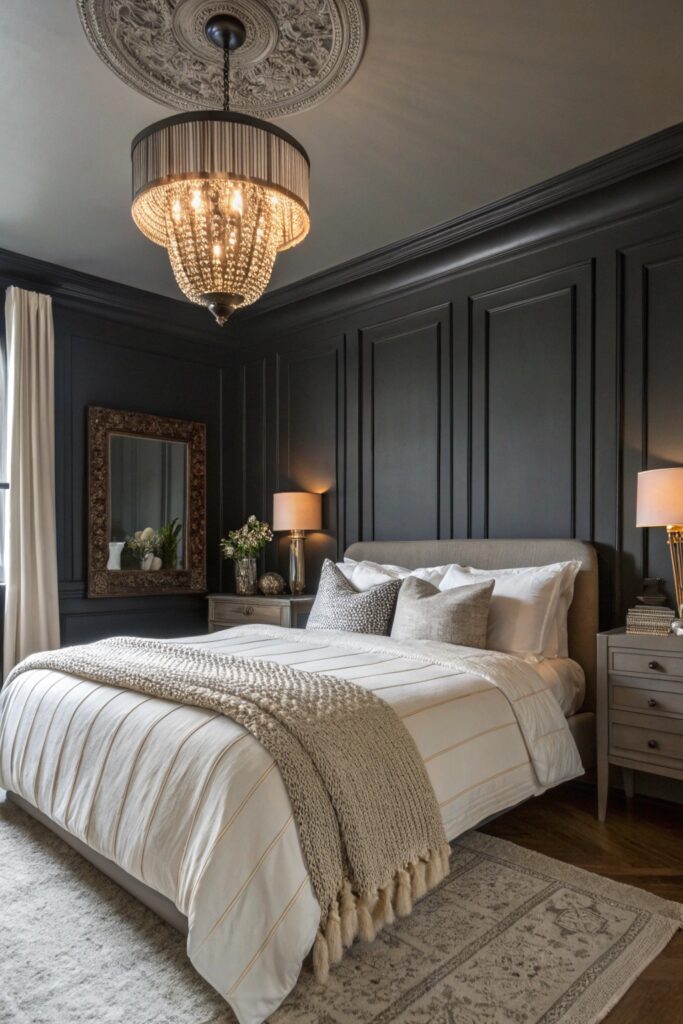
5. Charcoal Grey

Charcoal grey is the color equivalent of a perfectly tailored black suit. It’s dramatic without being aggressive, bold without being loud, and it creates a bedroom atmosphere that feels genuinely cocoon-like and luxurious. Done well, a charcoal bedroom looks like it belongs on the cover of Architectural Digest.
The key is getting the undertones right. Some charcoals pull blue, some pull green, some pull warm brown. Test multiple samples in your specific lighting before committing — this is not a color where you want any surprises.
Charcoal bedroom styling essentials:
- Layer multiple shades of white and cream in bedding and textiles to prevent flatness
- Add metallic accents — brushed nickel, chrome, or silver — to keep the palette from feeling heavy
- Use statement lighting — a sculptural pendant or oversized lamp creates necessary focal points
- Introduce soft textures — velvet, faux fur, chunky knit — to keep the room feeling warm
This color works best in bedrooms with decent natural light. In a very dark room, charcoal can feel oppressive rather than sophisticated. Know your space.
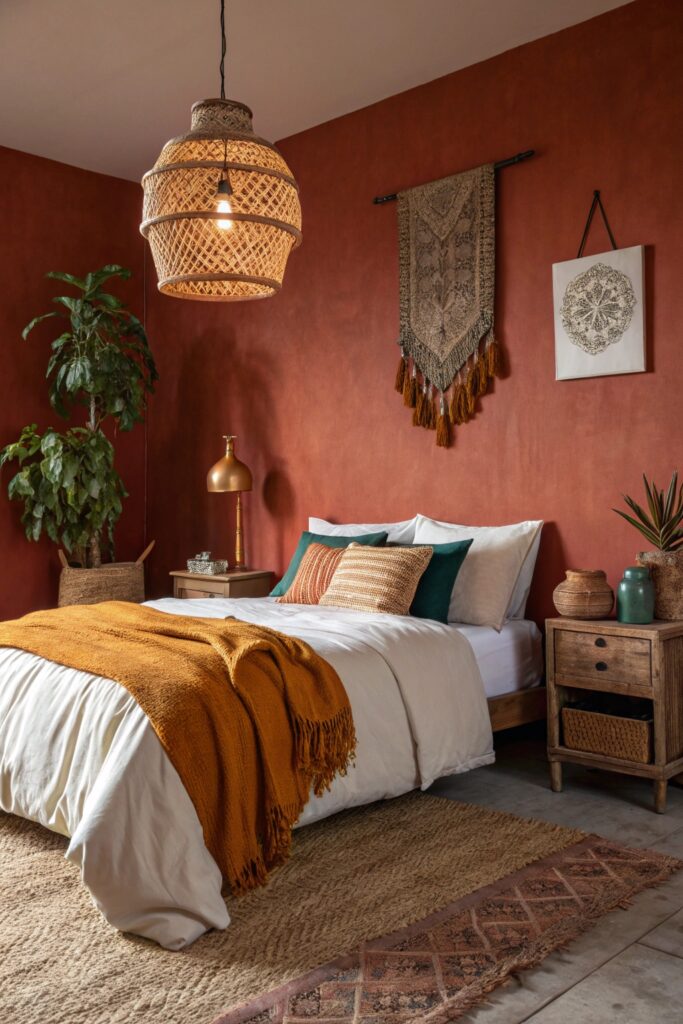
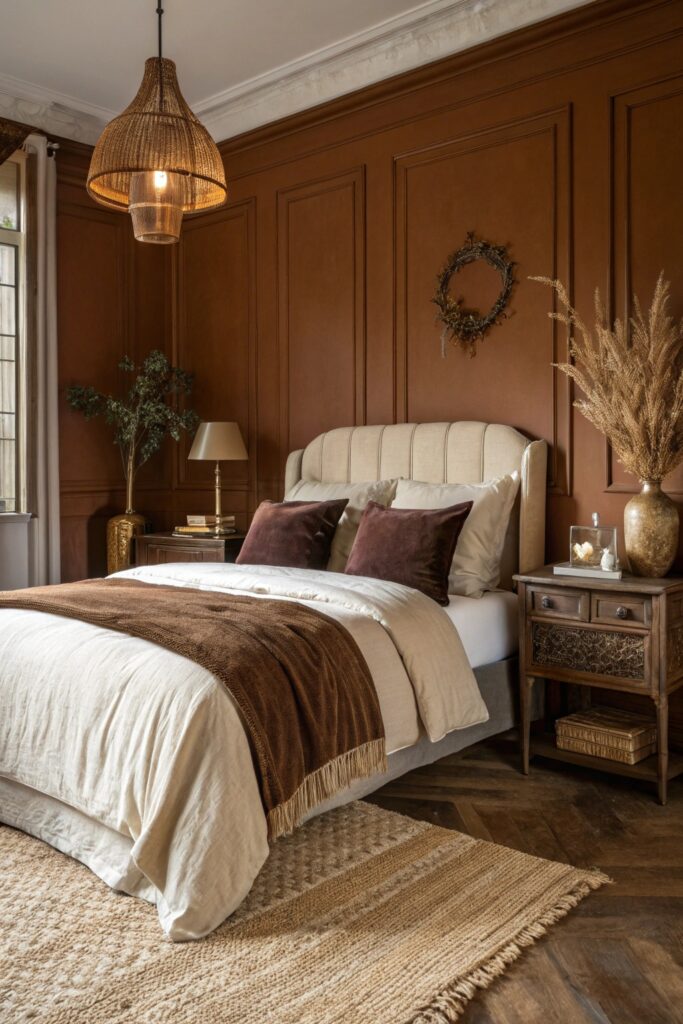
6. Warm Terracotta

Terracotta brings the energy of a Moroccan riad or a Tuscan villa right into your bedroom — and honestly, who wouldn’t want that? This warm, earthy, red-orange tone creates an incredibly cozy, enveloping atmosphere that makes bedrooms feel intimate and intentional.
It’s also one of those colors that looks genuinely stunning at every time of day. Morning light makes it feel fresh and energetic. Evening lamplight makes it feel warm and romantic. It works overtime, and it never looks boring.
Terracotta bedroom pairing guide:
- Pair with cream, ivory, and warm white for a light and airy feel
- Add deep teal or forest green accents for a bold complementary contrast
- Use natural textures — rattan, jute, linen, raw wood — to reinforce the earthy warmth
- Layer warm-toned rugs and textiles in rust, amber, and burnt orange
Shades to consider: Sherwin-Williams’ Cavern Clay, Benjamin Moore’s Rust, or Farrow & Ball’s Red Earth. Cavern Clay in particular has become one of the most iconic designer bedroom colors of the last five years.
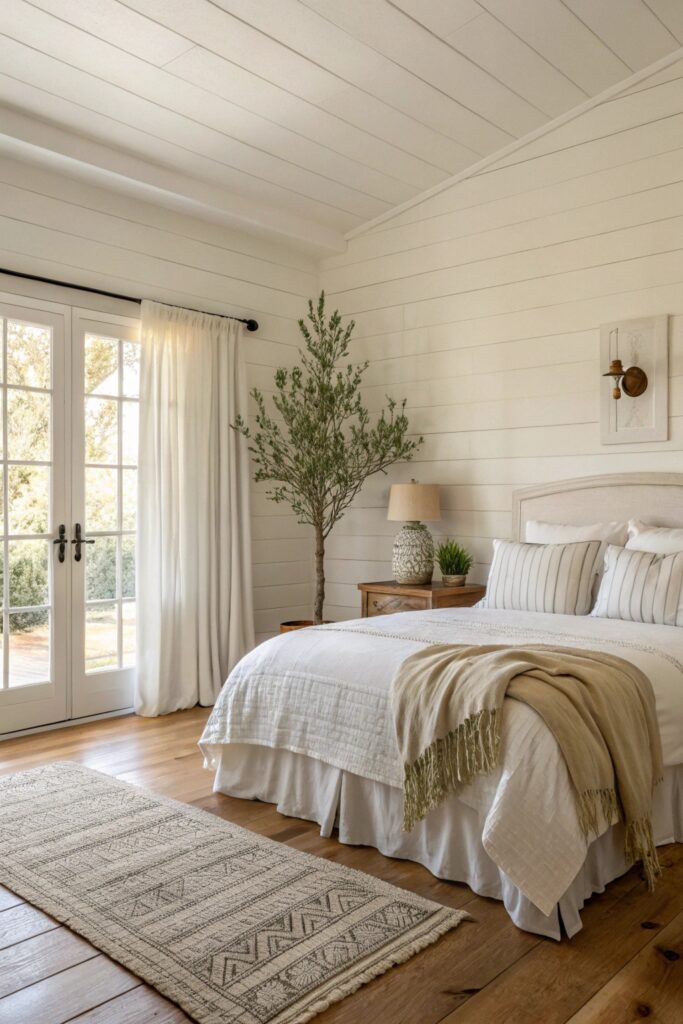
7. Soft White With Warm Undertones

Here’s the thing about white — most people do it wrong. They reach for a bright, cool, stark white and then wonder why their bedroom feels like a hospital room rather than a serene retreat. Warm-toned whites and off-whites are an entirely different experience.
Colors like linen white, oyster, and warm ivory wrap a bedroom in quiet, soft light that feels calm and luxurious. They also make every piece of furniture and every textile in the room look more intentional by comparison.
Choosing the right white:
- Look for whites with yellow, pink, or beige undertones rather than blue or green
- Test samples in both natural daylight and artificial evening light — whites shift dramatically
- Warm white walls plus warm white trim in slightly different sheens create beautiful tonal depth
- Pair with natural wood tones and linen for a Scandinavian-inspired designer look
Top warm whites: Benjamin Moore’s White Dove, Sherwin-Williams’ Alabaster, or Farrow & Ball’s All White. These three are the most-requested designer whites for a very good reason.
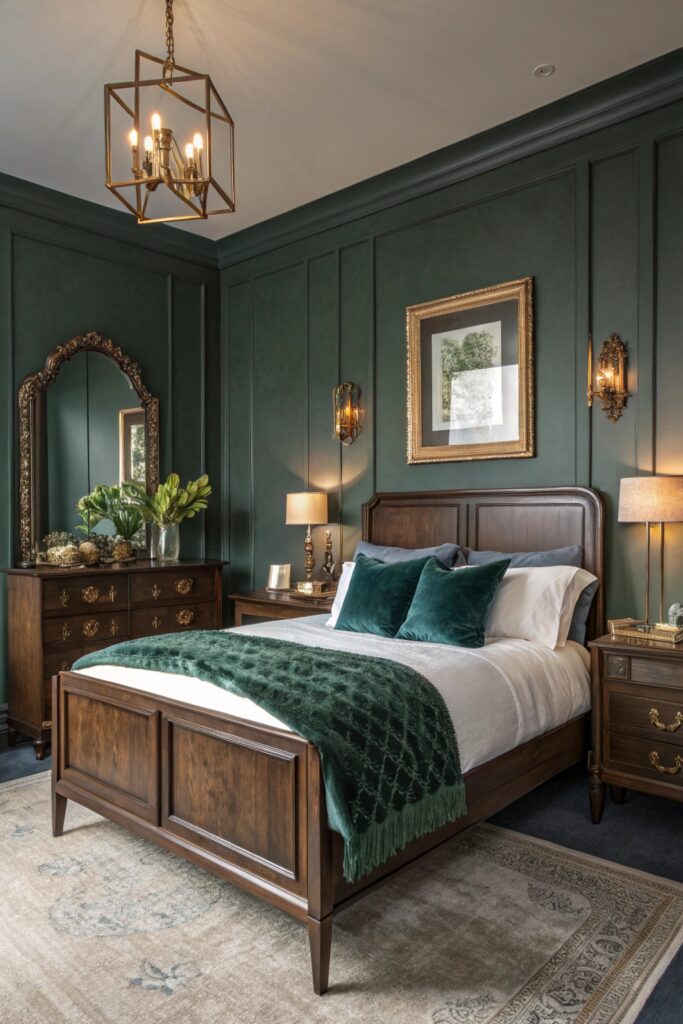
8. Moody Forest Green

Deep forest green creates a bedroom that feels like a private sanctuary — rich, enveloping, and completely removed from the outside world. It’s one of those colors that immediately signals “a person with taste lives here,” which is always the goal, right?
Unlike bright greens that feel energetic, forest green operates in a lower gear — it calms, grounds, and adds a sense of depth that lighter colors simply can’t replicate. Pair it with dark wood and warm brass, and you’ve got a bedroom that looks like it cost three times what it actually did.
Forest green bedroom essentials:
- Choose a shade with blue or grey undertones rather than yellow-green for maximum sophistication
- Pair with dark walnut or mahogany furniture for a rich, layered look
- Add warm brass or antique gold accents — lamps, hardware, mirror frames
- Use white or cream bedding to keep the room feeling fresh and breathable
Shades to consider: Farrow & Ball’s Studio Green, Benjamin Moore’s Hunter Green, or Sherwin-Williams’ Jasper. These deliver that lush, designer-quality depth without crossing into overwhelming territory.
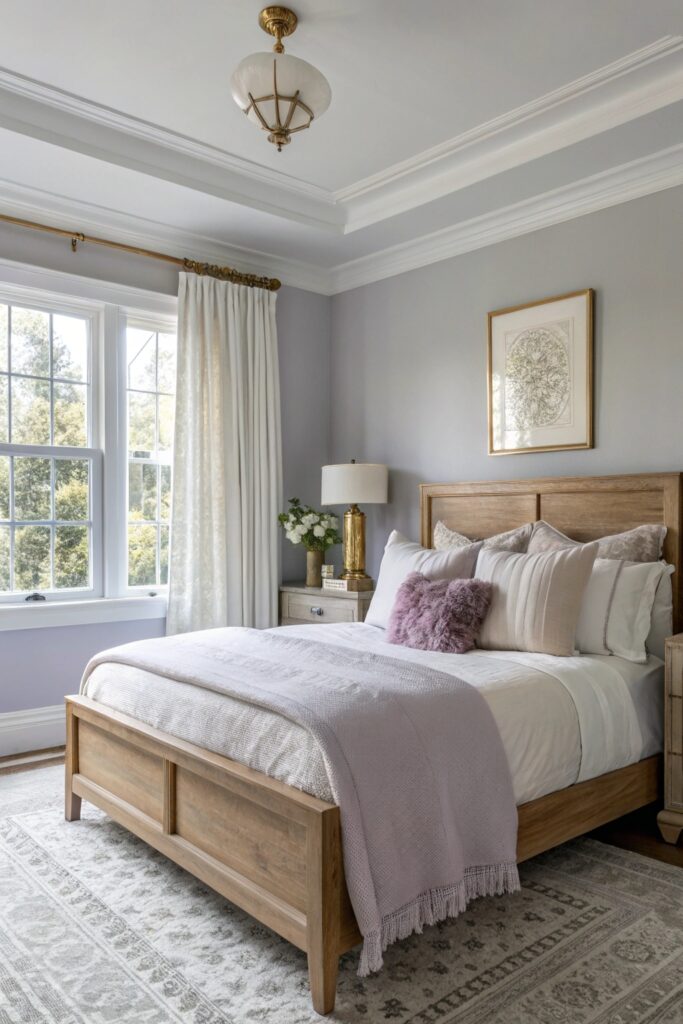
9. Lavender and Soft Purple

Soft lavender is criminally underused in adult bedrooms, and I genuinely can’t understand why. This muted, grey-toned purple creates an atmosphere that’s simultaneously calming and elevated — it reads as sophisticated rather than sweet when you choose the right shade.
Research consistently shows that purple tones promote deeper, more restful sleep. So not only does a lavender bedroom look designer-made, it actually helps you sleep better. That’s a win on every level.
Getting lavender right in a bedroom:
- Choose a grey-lavender rather than a pure purple — the grey undertone is what makes it feel adult and elegant
- Pair with warm whites, soft gold, and natural wood for a balanced, warm palette
- Add velvet or silk textures to reinforce the luxurious quality of the color
- Keep patterns minimal — lavender walls deserve a relatively calm, curated supporting cast
Best shades: Benjamin Moore’s Violet Mist, Sherwin-Williams’ Dreamy, or Farrow & Ball’s Brassica for a deeper, more dramatic take.
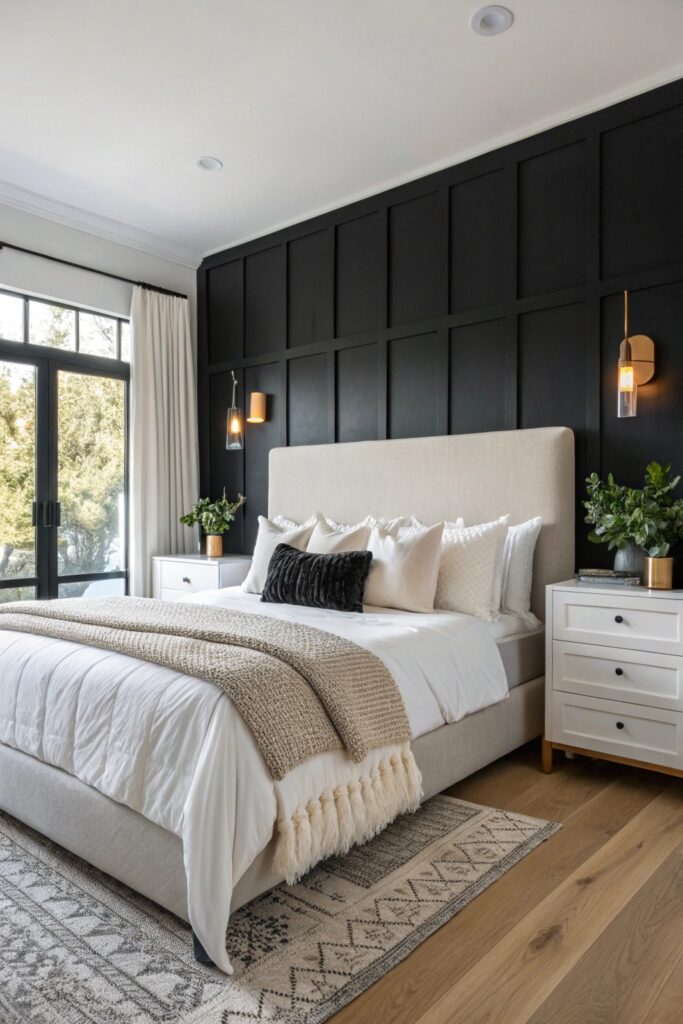
10. Classic Black Accent Wall

Okay, full black bedroom? Bold choice. But a single black accent wall behind the bed? That’s a designer move that consistently delivers dramatic, high-impact results with a fraction of the commitment.
Black creates an instant focal point that makes the headboard and bed styling the undisputed star of the room. Everything displayed against a black wall looks more intentional, more curated, and frankly more expensive. FYI, this is one of the fastest ways to make a budget bedroom look like a luxury space.
Making a black accent wall work:
- Use a matte or flat finish — it absorbs light and feels more sophisticated than sheen
- Keep the remaining three walls crisp white or a very light warm neutral to prevent the room from feeling dark
- Layer warm textures in bedding — white linen, knit throws, velvet pillows
- Add warm-toned lighting specifically on the black wall to create a glow and depth
Try: Farrow & Ball’s Railings, Benjamin Moore’s Black Beauty, or Sherwin-Williams’ Caviar for a black that reads rich rather than flat.
11. Warm Caramel and Honey Tones

Warm caramel and honey-toned walls create a bedroom that feels like being wrapped in a cashmere blanket — rich, warm, and deeply comfortable. These amber-adjacent tones bring incredible warmth and energy to a room without the commitment of a bold color.
They also work beautifully in spaces with limited natural light, where cooler neutrals tend to look flat and lifeless. Warm caramel tones glow under artificial light in a way that feels genuinely inviting rather than dingy.
Caramel bedroom palette ideas:
- Pair with cream and ivory textiles for a tone-on-tone, layered look
- Add dark chocolate brown accents in throw pillows, picture frames, or a headboard
- Use warm-toned metals — antique brass, aged gold — throughout the space
- Introduce natural materials — rattan, cane, woven baskets — to reinforce the organic warmth
Shades to explore: Benjamin Moore’s Golden Straw, Sherwin-Williams’ Antique White, or Farrow & Ball’s Sudbury Yellow for a richer, more saturated take on this palette.
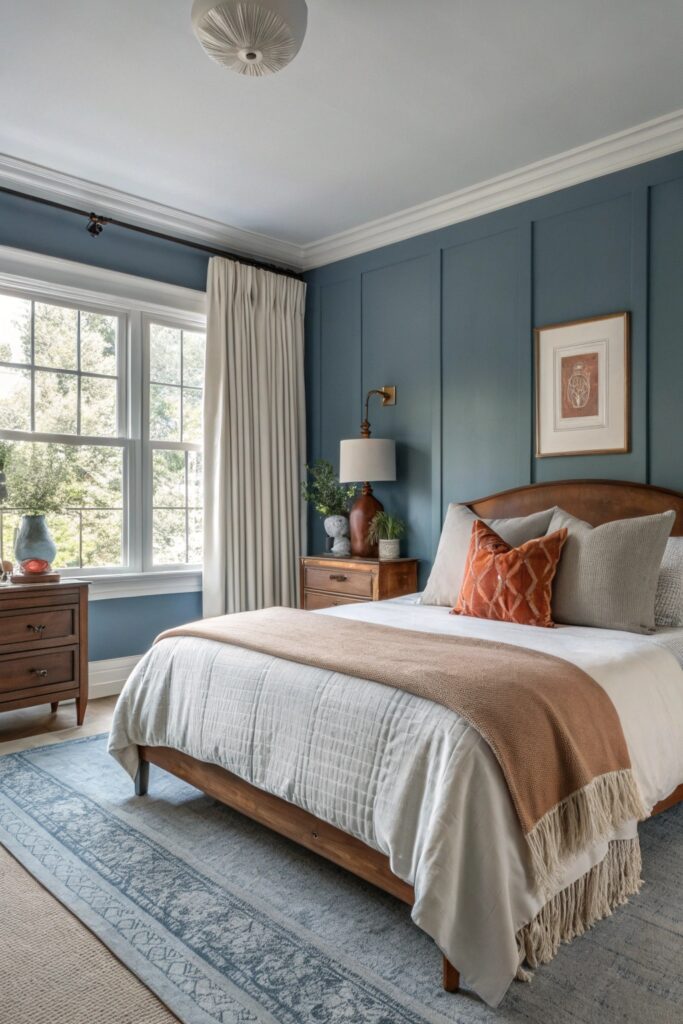
12. Slate Blue

Slate blue occupies that perfect middle ground between cool and warm, energetic and calm. It’s more interesting than plain grey, less bold than navy, and more sophisticated than a standard light blue. In a bedroom, it creates an atmosphere that feels both serene and considered — as someone thought carefully about every decision in the room.
It also works in virtually every bedroom size and light condition, which makes it one of the most reliably successful bedroom colors on this entire list.
Slate blue styling tips:
- Pair with warm white trim to prevent the palette from feeling too cold
- Add warm wood tones — walnut, oak, or pine — to balance the cool wall color
- Use soft terracotta or rust accents for a beautiful complementary contrast
- Layer textured textiles in cream, ivory, and soft grey for depth
Best shades: Benjamin Moore’s Quiet Moments, Sherwin-Williams’ Uncertain Grey, or Farrow & Ball’s Lulworth Blue. These deliver that calm, effortlessly designed quality that makes a bedroom feel like a genuine retreat.
Wrapping It All Up
The right bedroom color does more than just look pretty — it sets the entire tone of how that room feels to live in, sleep in, and wake up in every single day. From the quiet sophistication of warm greige to the dramatic luxury of deep navy or forest green, every color on this list has the power to transform an ordinary bedroom into something that genuinely feels designer-made.
Don’t let the decision paralyze you. Pick the color that speaks to your personal style, grab a few sample pots, and test them on your actual walls in your actual light before committing. That one step saves so much regret.
Your bedroom should feel like the best room in your house — because you spend more time there than anywhere else. Pick your color, grab a roller, and make it happen this weekend. You’ve got this. 🙂