This guide covers different flower bed shapes and formats to choose from. Once you’ve picked a layout, see our companion guide to flower bed design techniques for planting and styling tips that work within any of these formats.
Below are 15 flower bed formats worth considering, with practical notes for each.
1. Classic Layered Flower Bed With Tall Backs and Low Borders
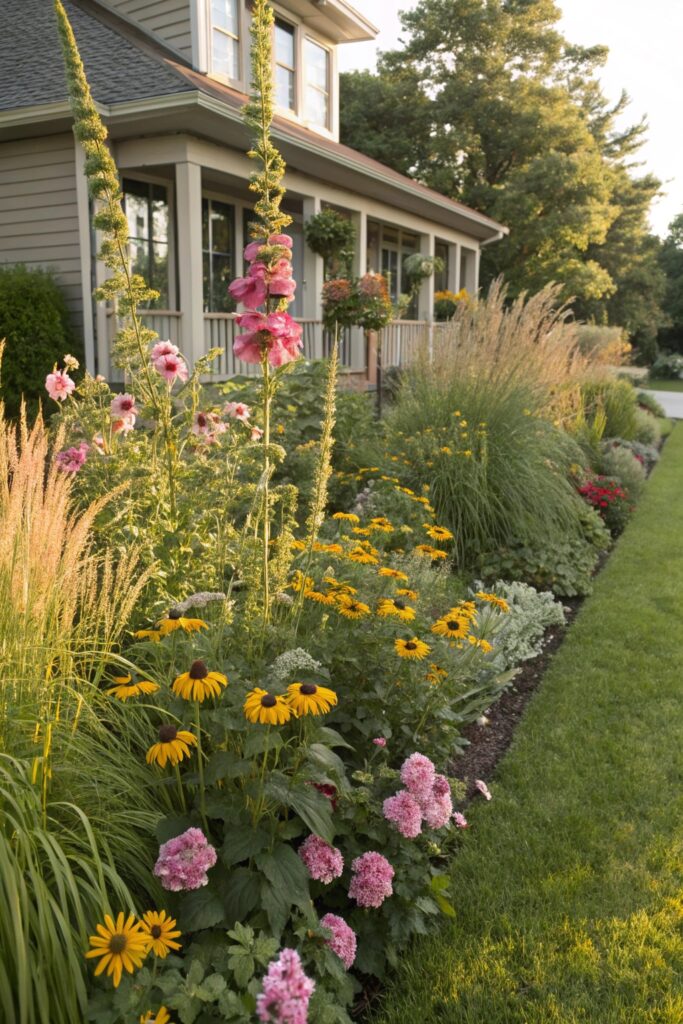
This format works especially well against a foundation or fence, where the tallest plants have a genuine backdrop rather than standing alone in an open area.
Choose plants with a genuinely staggered height progression rather than just two tiers, which creates a smoother visual transition from the tallest backdrop plants down to the border.
2. Curved Flower Bed Along the Walkway
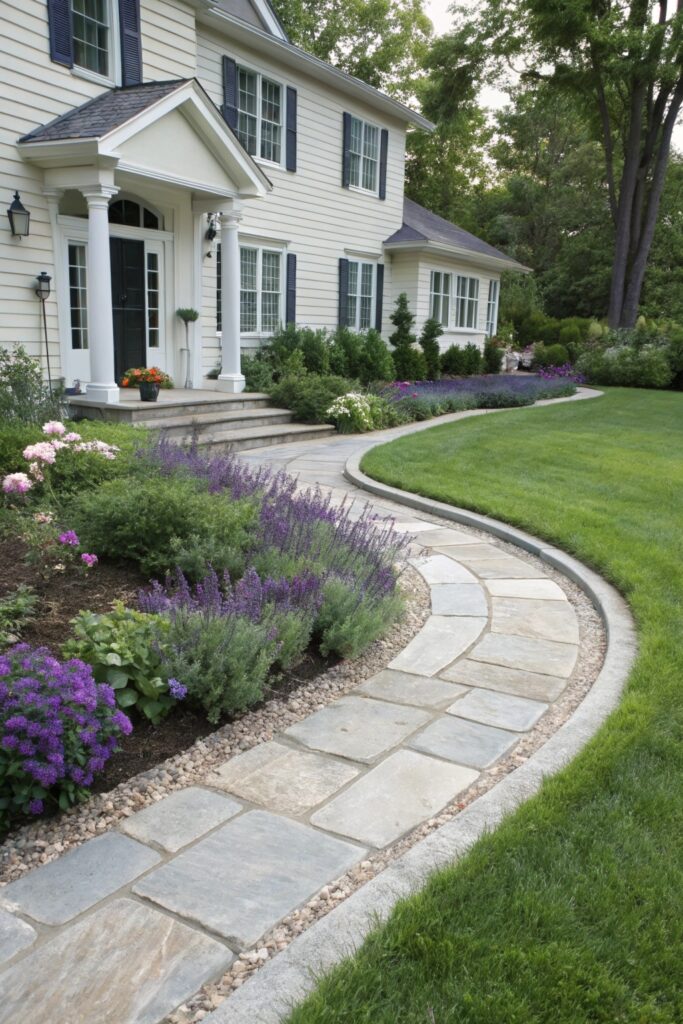
A gentle curve genuinely softens a straight concrete path, and it’s easier to mow around than a bed with sharp, angular corners.
Mark the curve with a hose or rope before digging, which lets you walk the line and adjust it before committing to the actual shape.
3. Foundation Flower Bed That Hugs the House
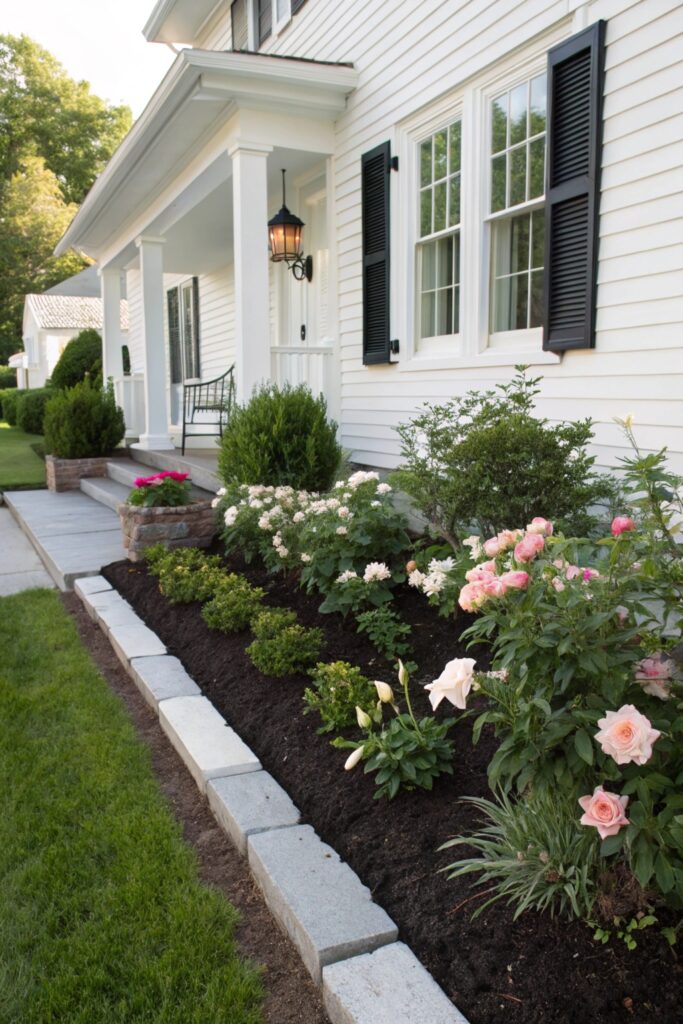
Keep plants far enough from the foundation to allow genuine airflow and access for maintenance like gutter cleaning or siding repairs.
Leave at least a foot of clearance between mature plants and the house siding, which genuinely helps prevent moisture issues over time.
4. Island Flower Bed in the Center of the Front Yard
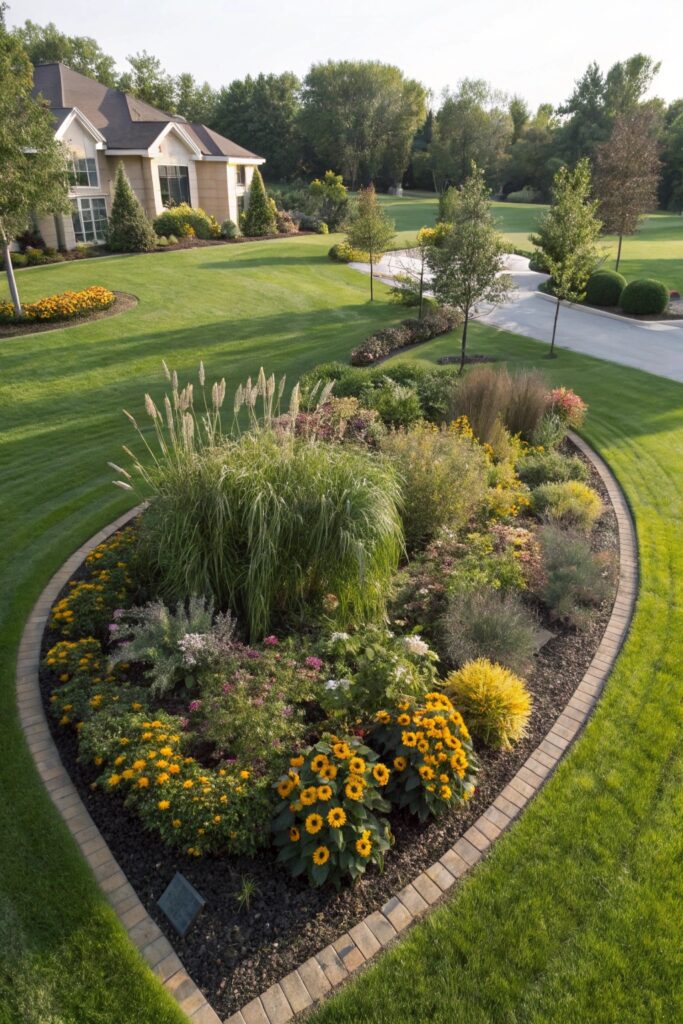
An island bed needs genuinely appealing views from all sides, unlike a foundation bed that’s typically only viewed from the front.
Position the island bed where it won’t interfere with mowing patterns, since an awkwardly placed bed can make routine yard maintenance considerably more tedious.
5. Cottage-Style Flower Bed With Wild, Abundant Planting
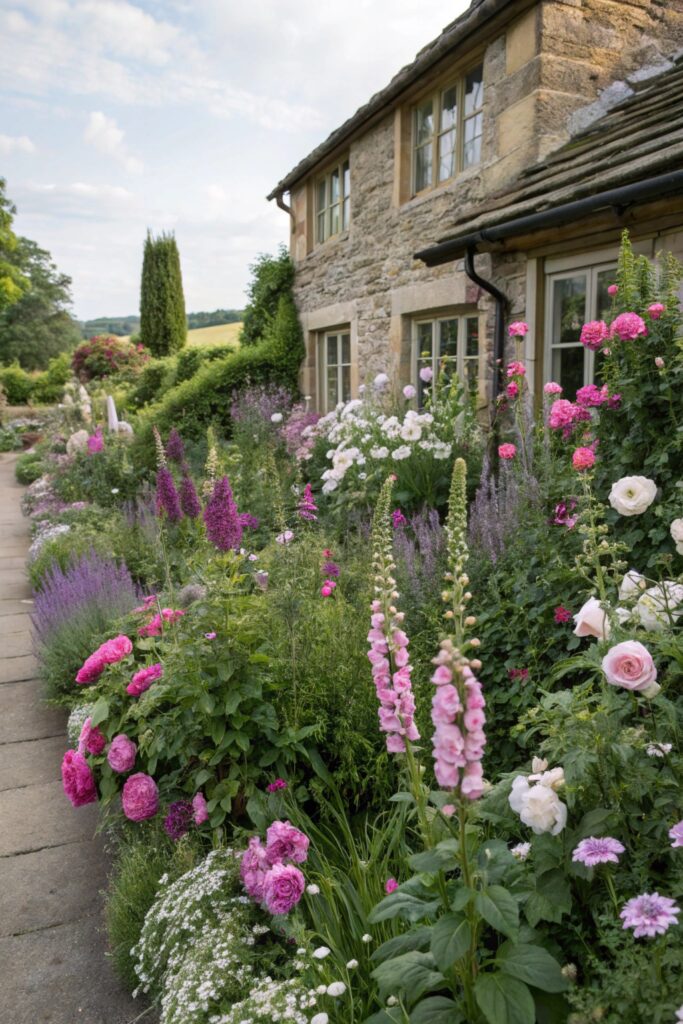
This format genuinely benefits from some editing each season, since an intentionally wild look can drift into looking neglected without occasional maintenance.
Choose a genuinely informal plant mix — varying heights, textures, and self-seeding varieties — which is what gives this style its characteristic abundant, layered look.
6. Raised Flower Bed With Stone or Brick Edging
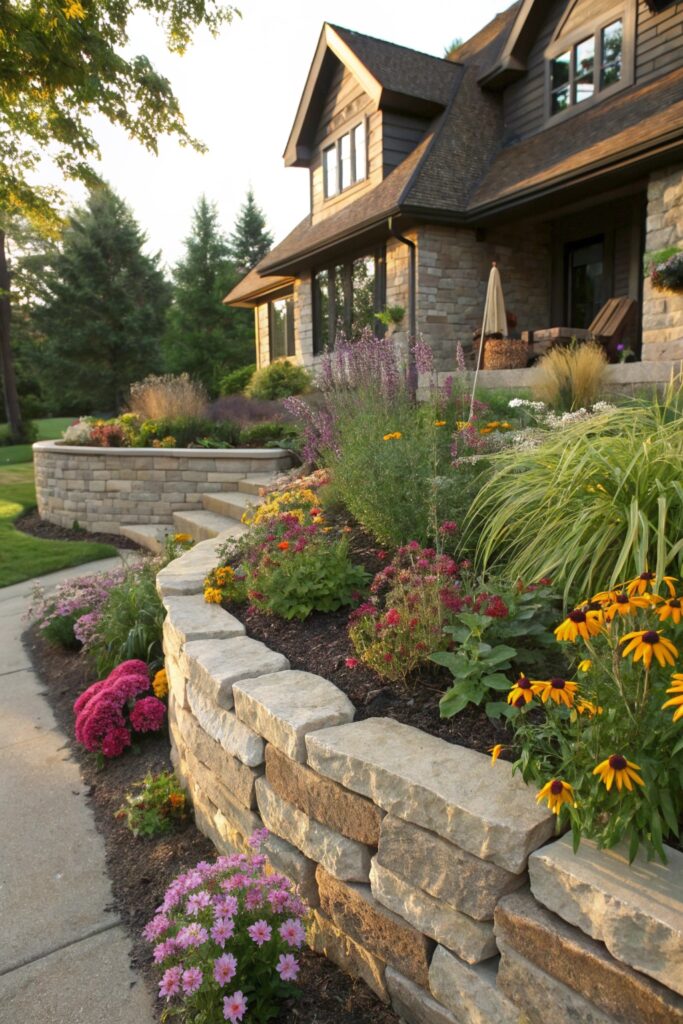
Raised beds genuinely improve drainage, which matters if your yard’s soil tends to stay waterlogged after rain.
Confirm the edging material can handle your climate’s freeze-thaw cycles if applicable, since some stone and brick can crack or shift over time in colder regions.
7. Symmetrical Flower Beds Flanking the Front Door
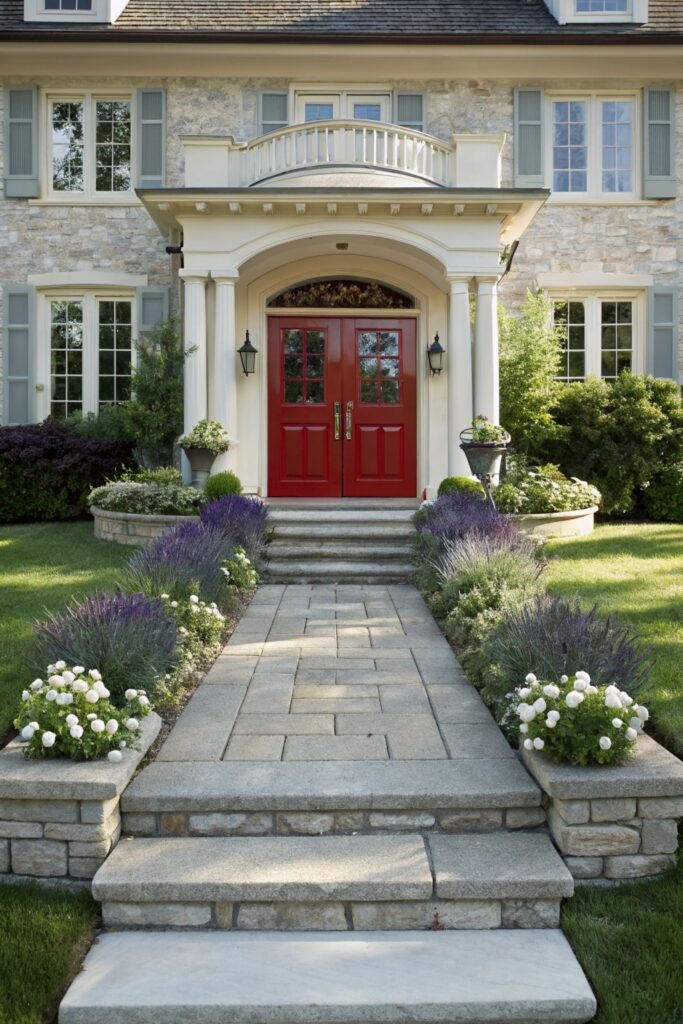
This format reads as genuinely formal and intentional, working best with a home’s architecture that already has a symmetrical facade.
Match the bed size on both sides precisely, even if the plants within each aren’t identical, since true symmetry is what makes this format read as intentional.
8. Low-Maintenance Perennial Flower Bed
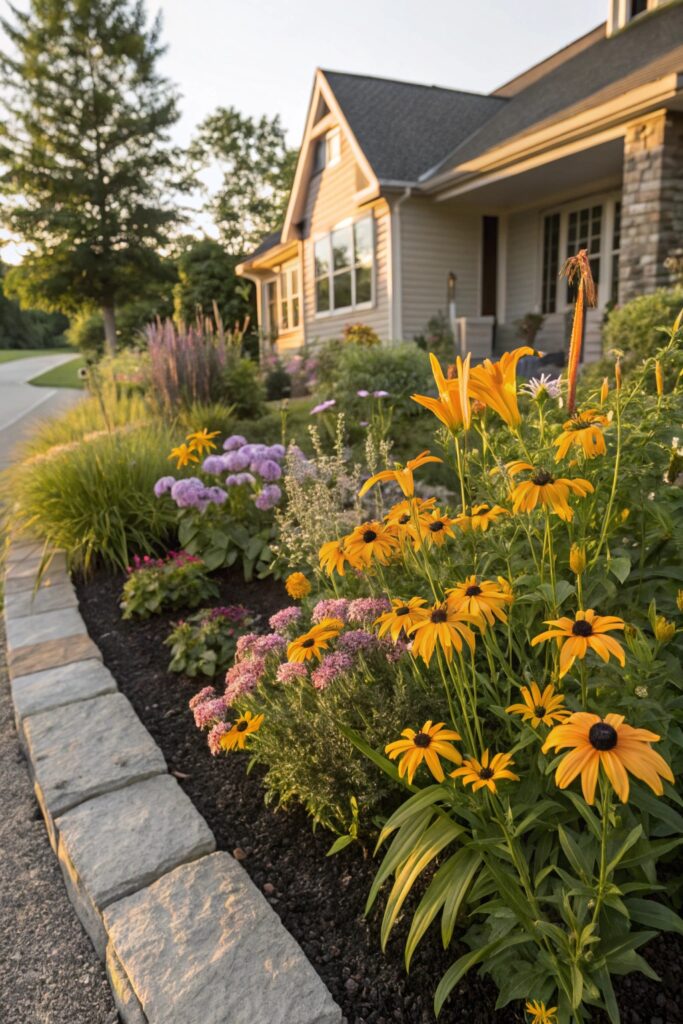
Perennials return each year without replanting, which is a genuine time and cost savings compared to a bed relying entirely on annuals.
Research your specific hardiness zone before choosing perennials, since a plant that returns reliably in one region may not survive winter in a colder climate.
9. Colorful Annual Flower Bed for Maximum Seasonal Impact
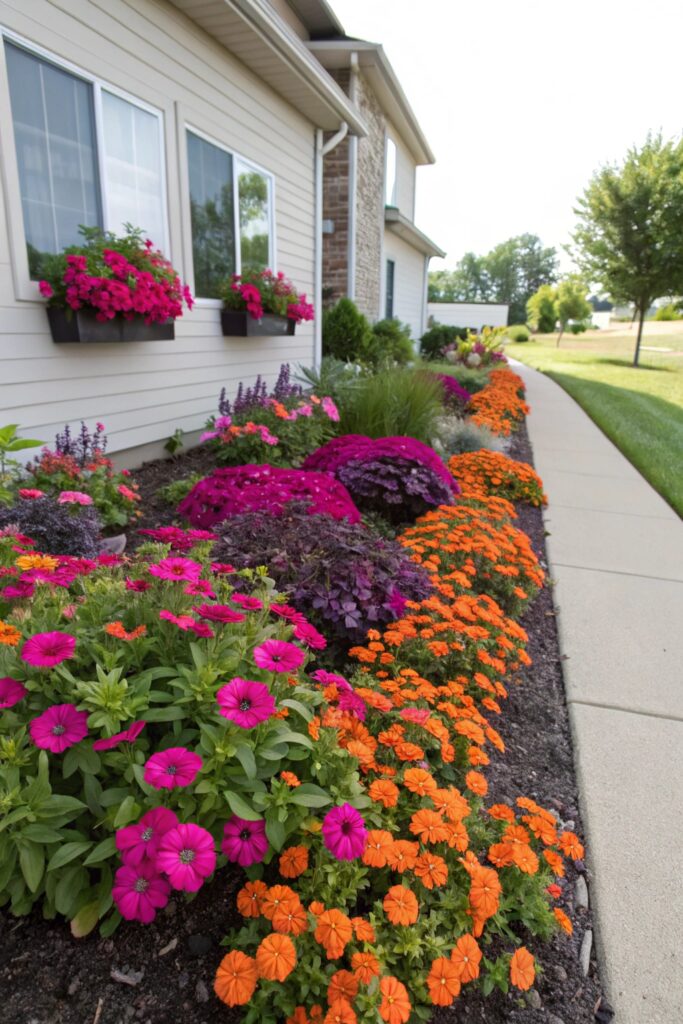
Annuals cost more over time since they need genuine replanting each season, but they offer considerably more color flexibility than a fixed perennial bed.
Budget for genuinely replacing annuals each planting season, which is an ongoing cost worth factoring in beyond the bed’s initial setup.
10. White and Green Flower Bed for Elegant Simplicity
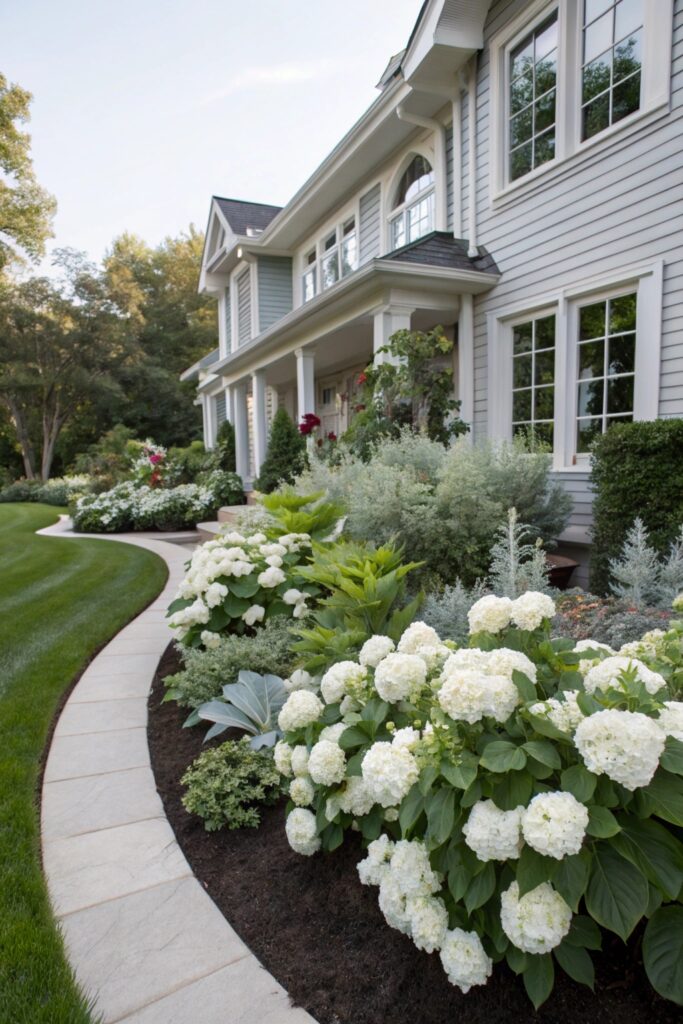
A restrained palette genuinely reads as more sophisticated than a busier, multi-colored bed, especially against a home with simple, clean architectural lines.
Choose green foliage with varying textures specifically, since an all-white-and-green palette relies more heavily on texture contrast than a more colorful bed would need to.
11. Drought-Tolerant Xeriscape Flower Bed
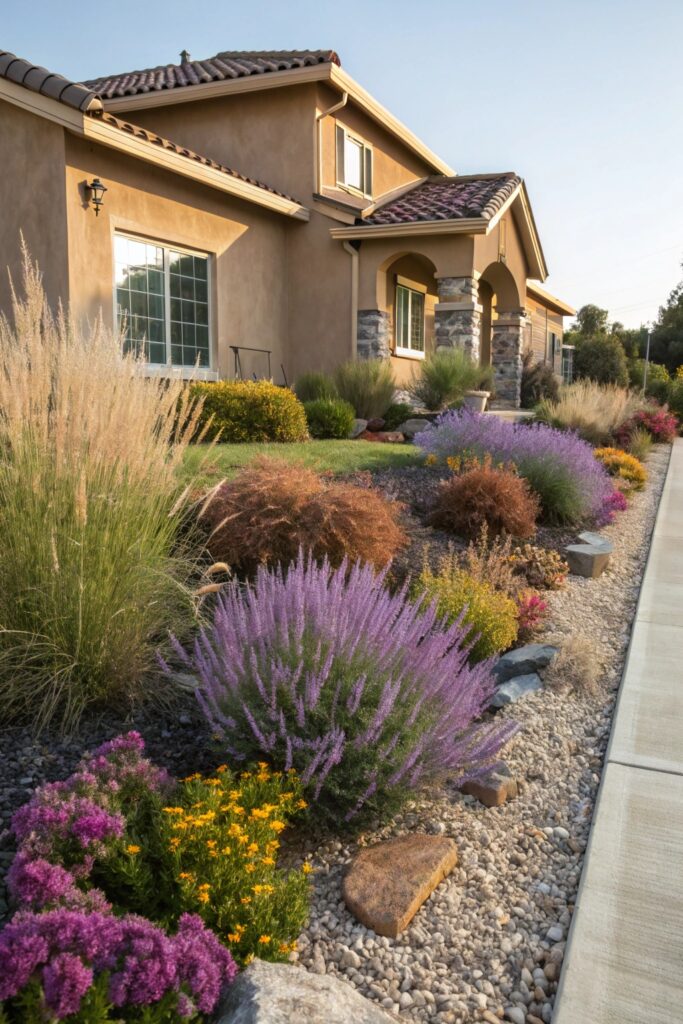
This format genuinely reduces water usage and maintenance, making it a practical choice in regions with water restrictions or a naturally dry climate.
Group plants by their genuine water needs specifically, since xeriscaping works best when every plant in the bed shares similarly low water requirements.
12. Shade Garden Flower Bed Under Trees
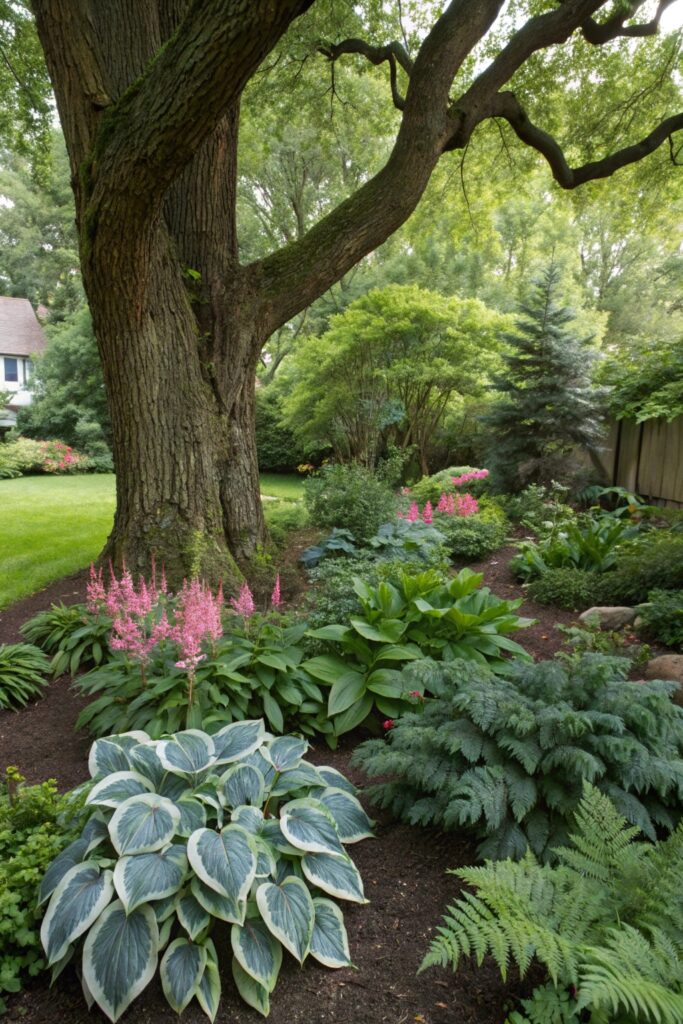
Choose plants genuinely suited to low light specifically, since many typical flower bed plants need considerably more sun than a shaded area under mature trees provides.
Test your soil’s actual light exposure at different times of day before choosing plants, since shade patterns shift considerably as trees grow and seasons change.
13. Flower Bed With Decorative Mulch and Rock Accents
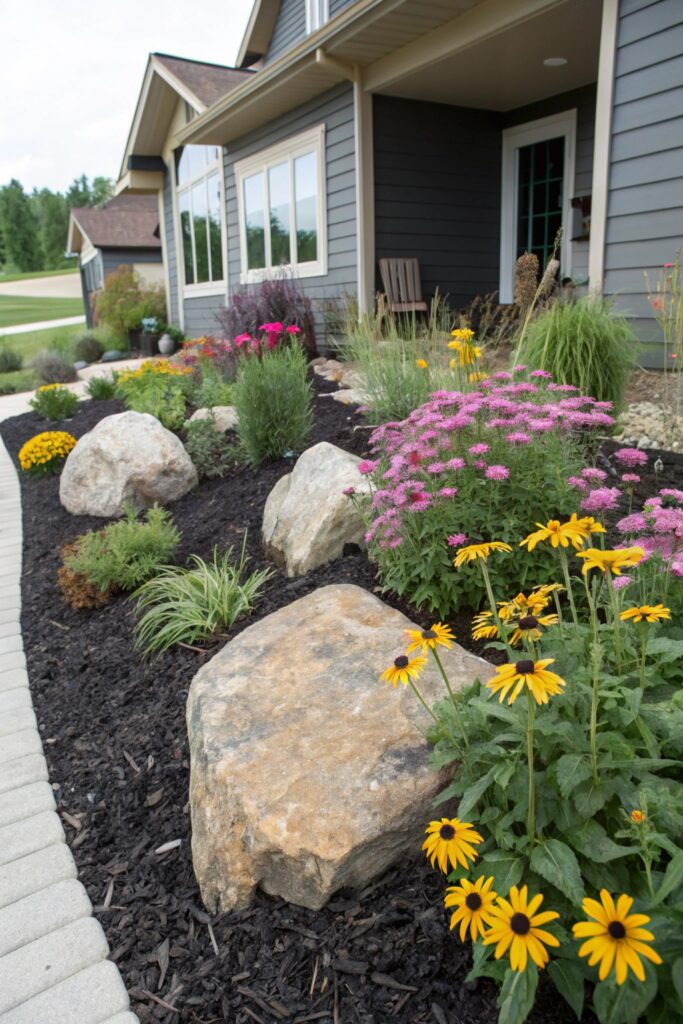
Rock accents genuinely reduce the total planted area needed to fill a bed, which can lower both the initial cost and ongoing maintenance.
Choose rock in a size and color that complements rather than competes with your home’s exterior materials.
14. Flower Bed Along the Fence or Property Line
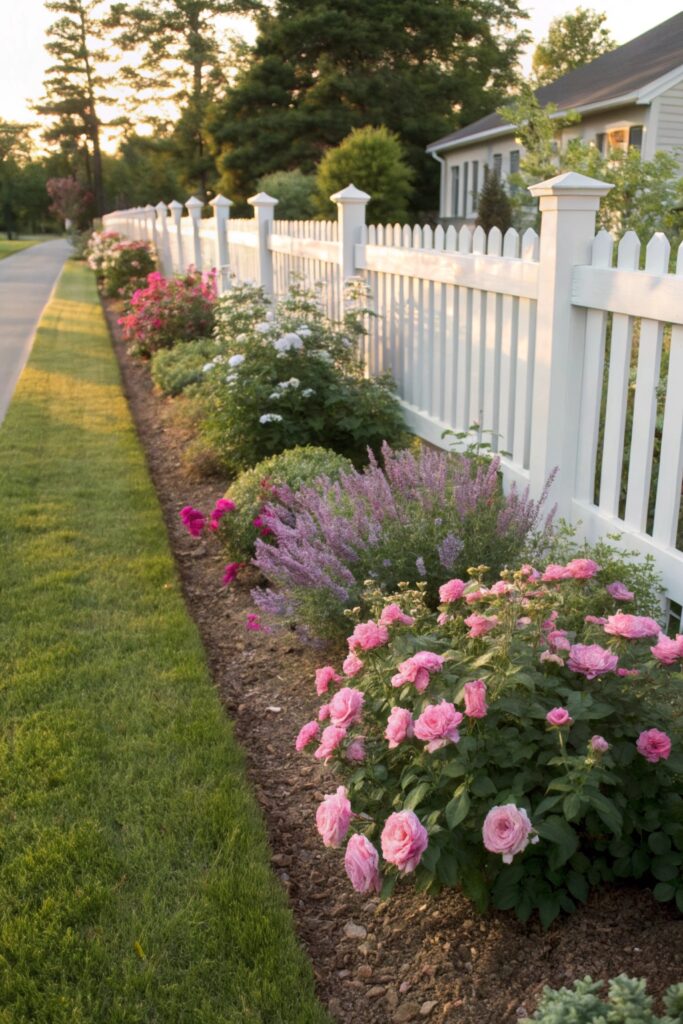
This format works well for a genuinely long, narrow space that doesn’t suit a rounder island or foundation bed shape.
Keep this bed’s width proportional to the fence or property line’s total length, since an overly narrow bed can look like an afterthought along a longer boundary.
15. Seasonal Flower Bed That Changes With Every Season
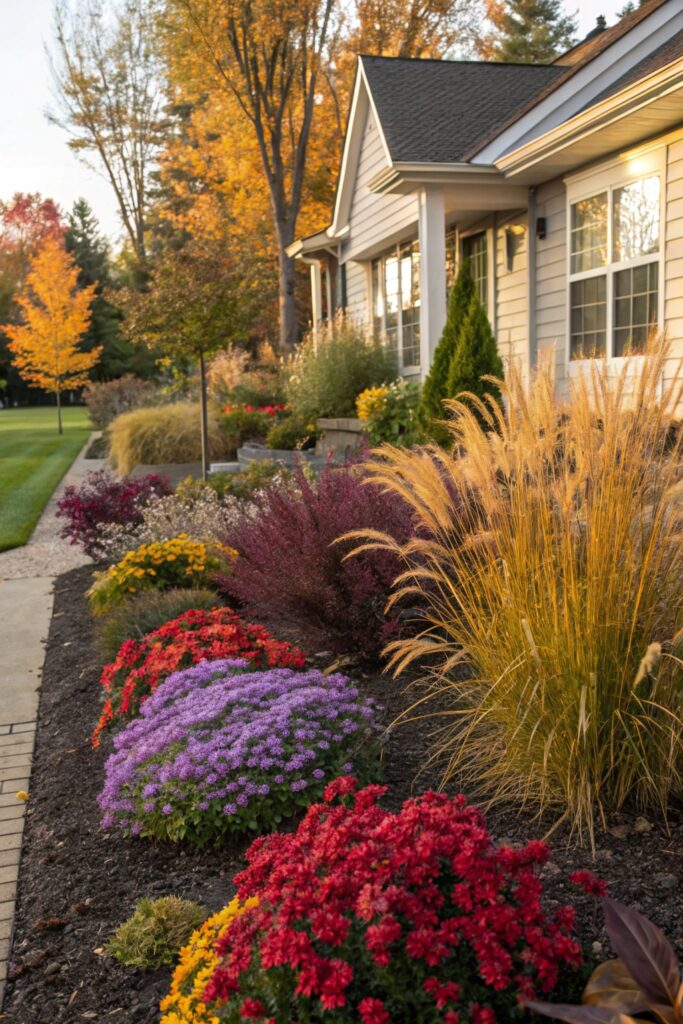
This approach requires genuinely more ongoing effort than a set-it-and-forget-it perennial bed, but it keeps the front yard looking fresh throughout the year.
Most of these formats can be built for $300 to $1,500 depending on size and materials, with raised or symmetrical beds landing at the higher end due to edging and structural costs.
Take a photo of the front of your house from the street before starting, and sketch a rough bed shape directly onto a printed copy. This makes it considerably easier to visualize the final result than trying to picture it from the yard alone.
Wrapping It All Up
The right format depends on your home’s architecture and the specific space available more than any single trend, since a bed shape that fights against the house’s existing lines rarely looks as intentional as one that works with them. Consider your genuine willingness to maintain the bed over time, since some formats — cottage-style, seasonal rotation — demand considerably more ongoing effort than others.