Raised garden bed materials trade off cost, durability, and effort differently enough that the ‘best’ choice really depends on your specific budget, timeline, and how permanent you want the setup to be.
Below are 10 approaches, with real costs and the specific tradeoffs of each material.
1. Classic Cedar Board Bed
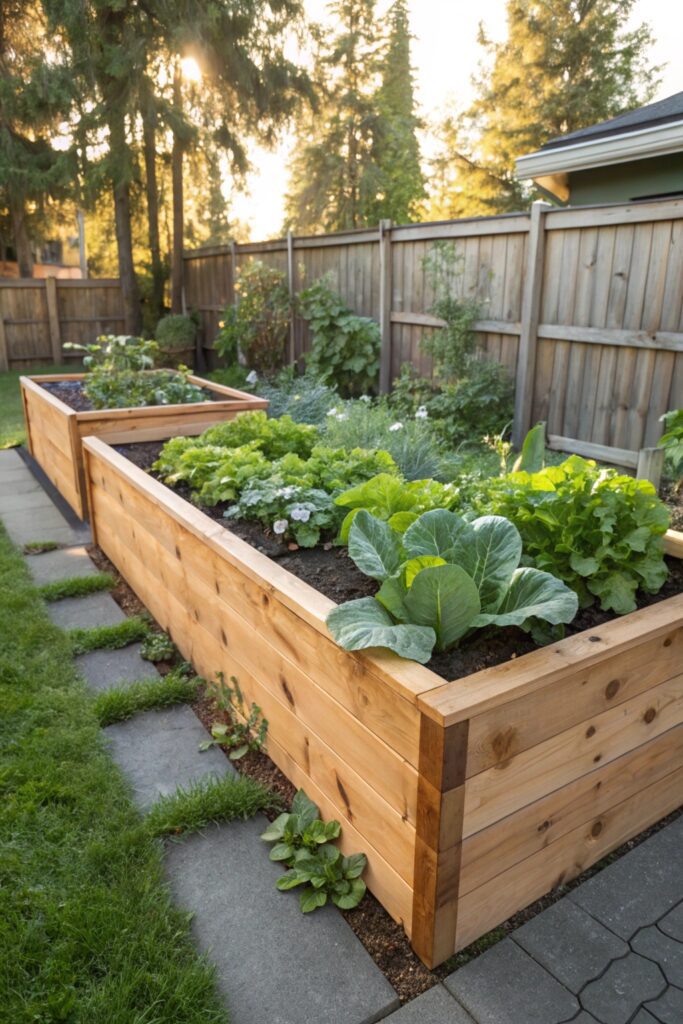
Cedar naturally resists rot and insects without chemical treatment, making it the most common material choice for raised beds despite costing more than pine — expect $80-150 in lumber for a standard 4×8 foot bed at typical board thickness (2 inches). Untreated cedar lasts 10-15 years outdoors versus 3-5 for untreated pine, which usually justifies the price difference over the bed’s lifespan.
2. Cinder Block Bed With No Lumber Required
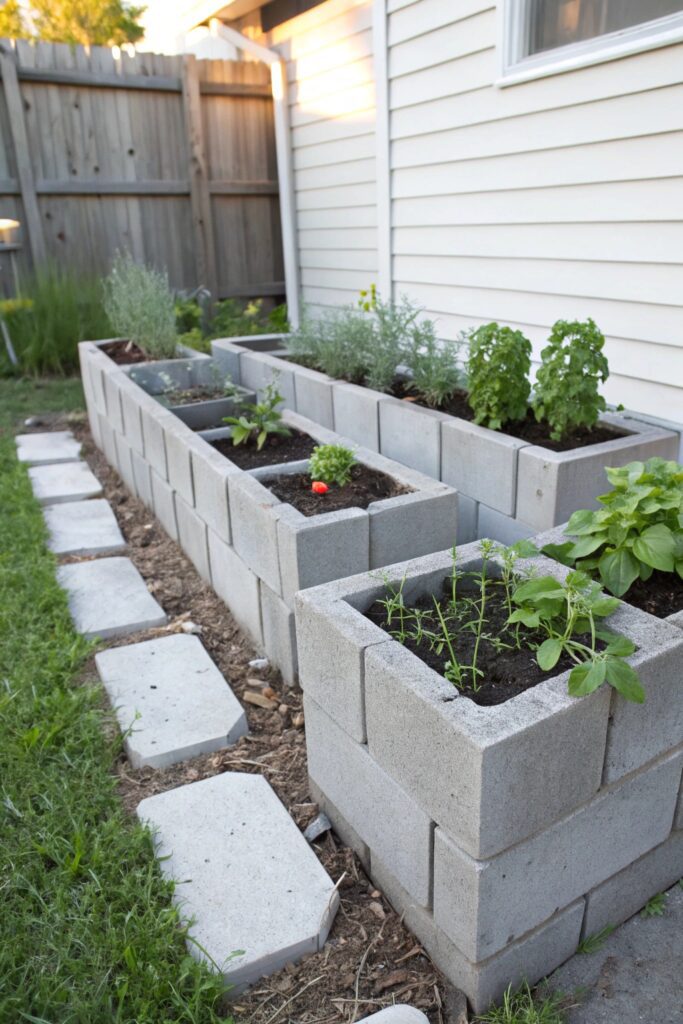
Stacking standard 8x8x16 inch cinder blocks (roughly $2-3 each) in a simple rectangle requires no cutting or fastening at all — just dry-stacking, which also means the bed can be disassembled and reconfigured later. The hollow block cavities can double as planting spots for herbs or small flowers, adding functional growing space beyond the bed’s main interior.
3. Galvanized Steel Stock Tank
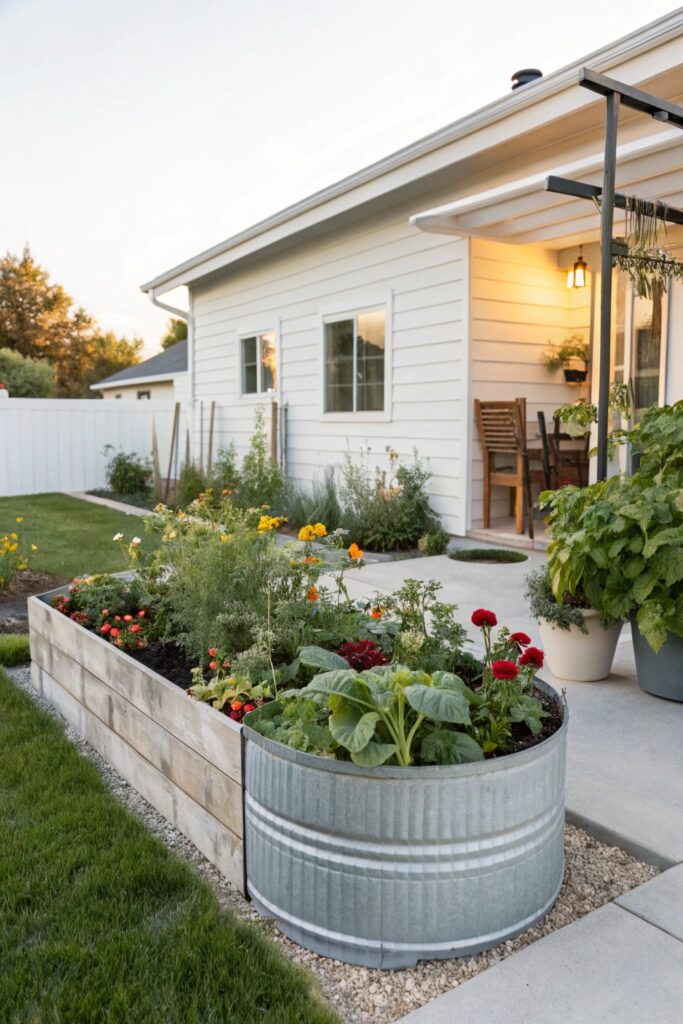
A stock tank (originally designed for livestock watering, $150-400 depending on size) makes a genuinely durable raised bed with zero construction required — just drill drainage holes in the bottom before filling with soil. These tanks heat up more than wood beds in direct sun, which can stress plant roots in hot climates; consider partial shade placement or a lighter tank color in warmer regions.
4. Simple Untreated Pine Frame
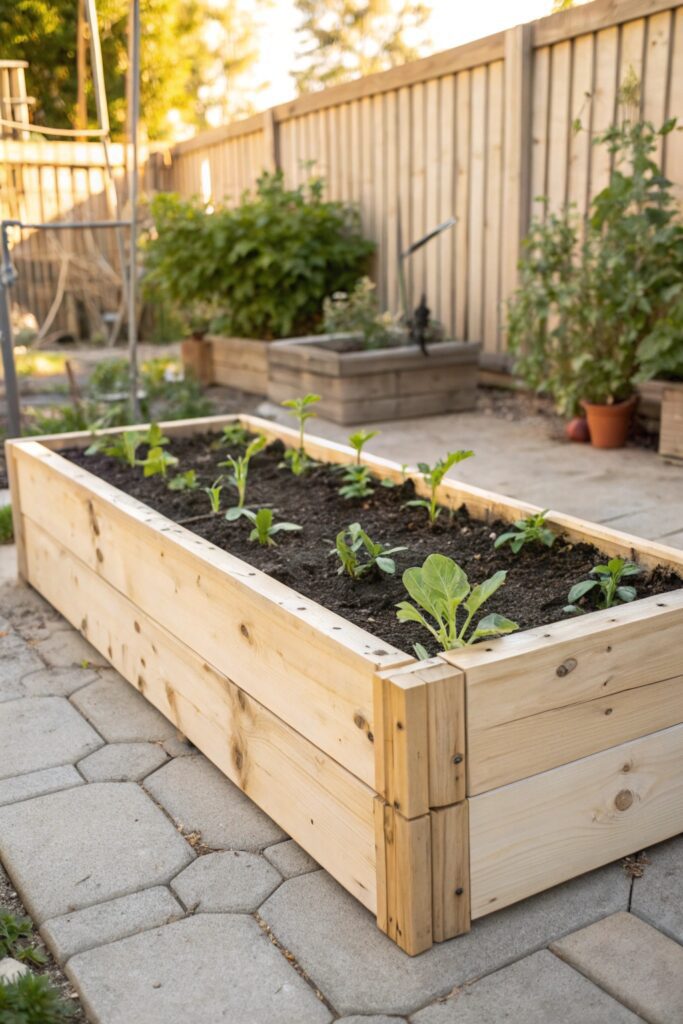
Pine is the most budget-friendly lumber option ($30-60 for a standard 4×8 bed) but breaks down considerably faster than cedar — expect to rebuild every 3-5 years. This makes sense specifically as a lower-commitment option for testing whether a raised bed garden works for your space before investing in longer-lasting materials.
5. Corrugated Metal Panel Bed
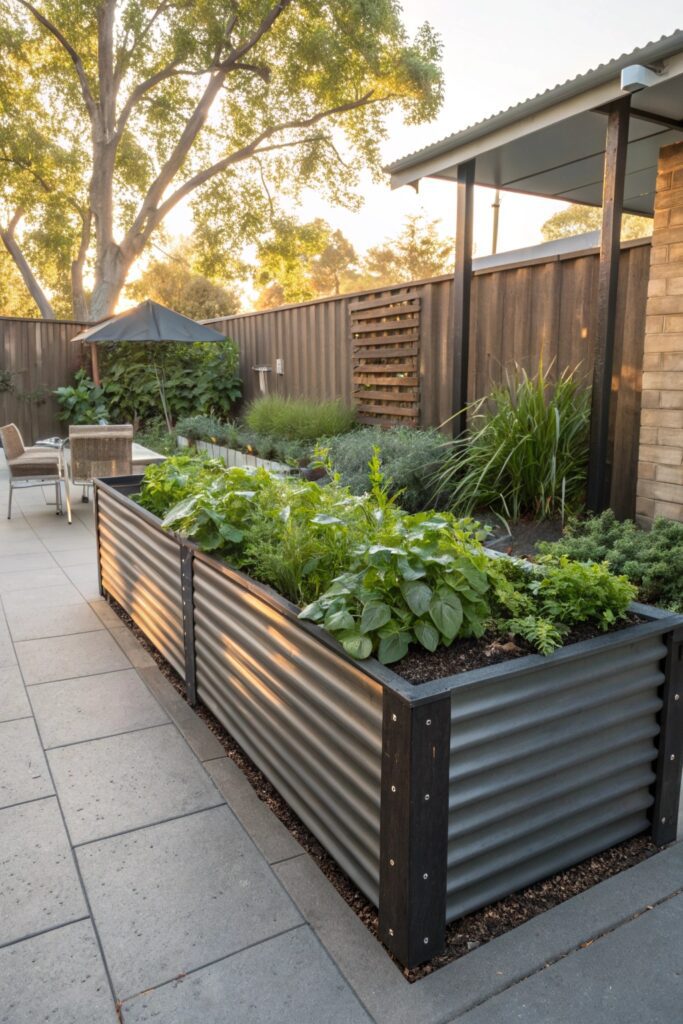
Corrugated metal panels ($40-80 per panel depending on size) framed with a simple wood or metal corner support create a modern-looking bed that resists rot entirely, unlike any wood option. Like stock tanks, metal beds run hotter in direct sun — line the interior with landscape fabric to help moderate soil temperature against the metal walls.
6. Hugelkultur Mound Bed
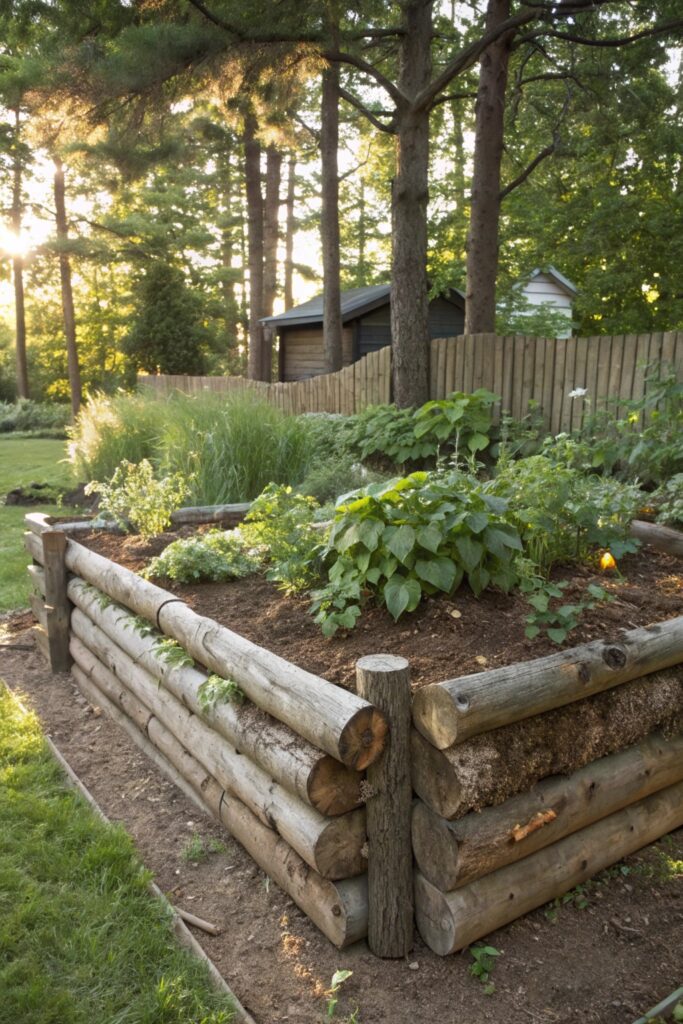
A hugelkultur bed layers buried logs and branches beneath soil, which slowly decompose and both fertilize the bed and retain moisture — this genuinely eliminates most lumber costs, using yard waste instead, though it requires more setup labor (digging and layering) than a simple frame. This method works best for beds you don’t plan to move or reconfigure, since the buried wood layer is a long-term structural investment.
7. Repurposed Wine Crate Bed
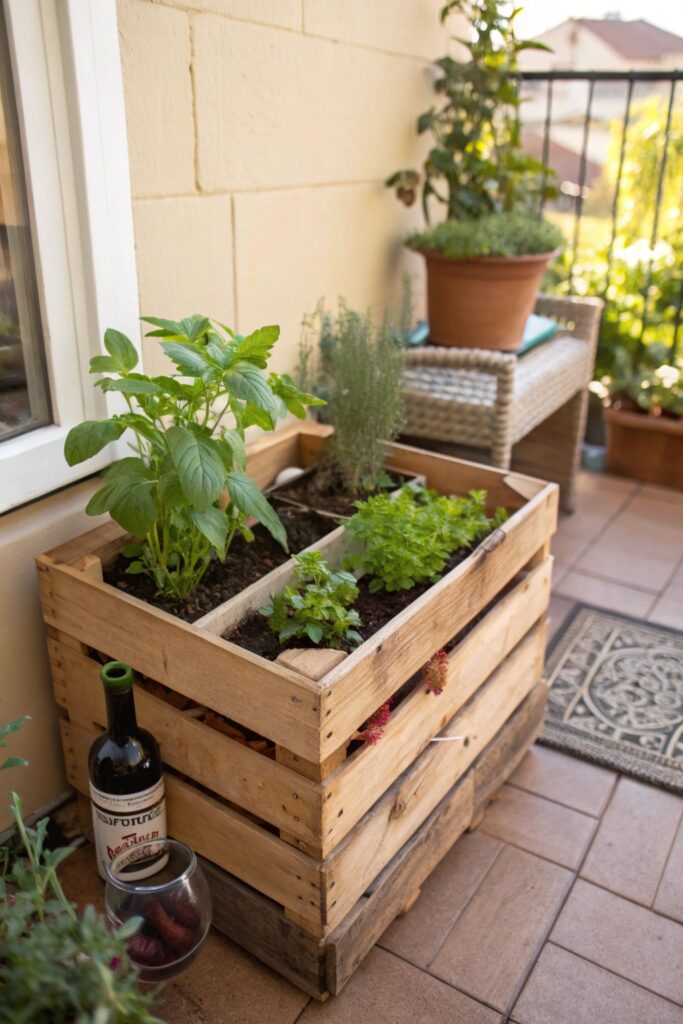
Wooden wine crates (often free or a few dollars each from local wineries or liquor stores) stacked or arranged in a row create small, modular raised beds well-suited to herbs or smaller vegetables rather than larger root crops needing more depth. Line crates with landscape fabric before adding soil, since wine crates typically aren’t built with drainage or rot-resistance in mind.
8. Concrete Block Raised Bed With Capstones
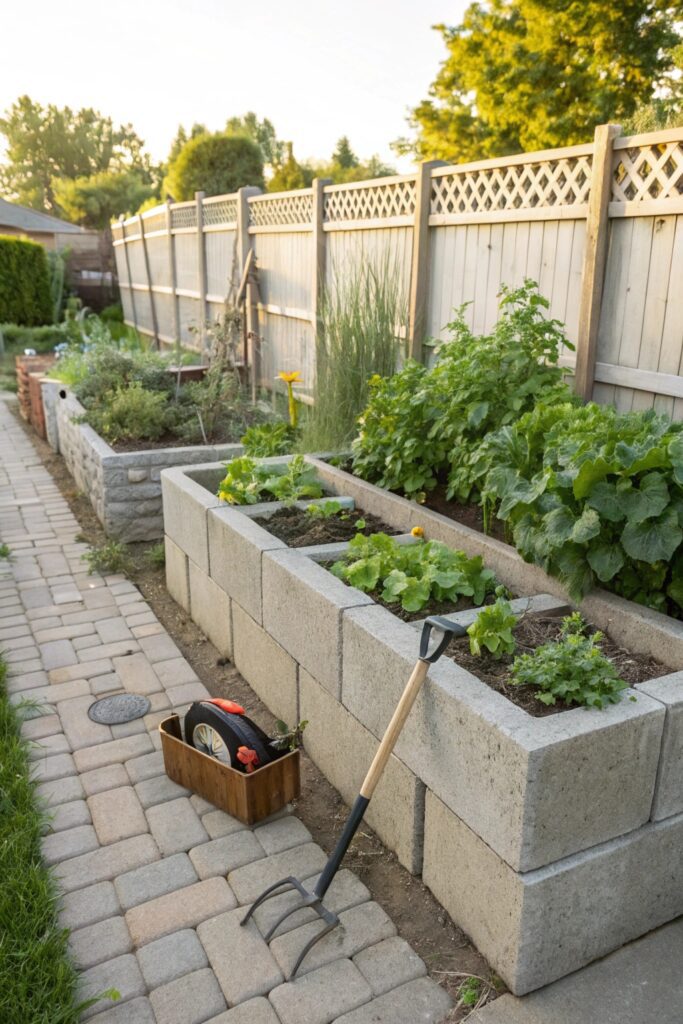
Similar to the cinder block method but finished with flat capstones on top ($3-5 each), this version creates a usable sitting or resting edge around the bed’s perimeter, useful for anyone who spends extended time working in the garden and wants a place to set tools or take a break.
9. Freestanding Fabric Grow Bags
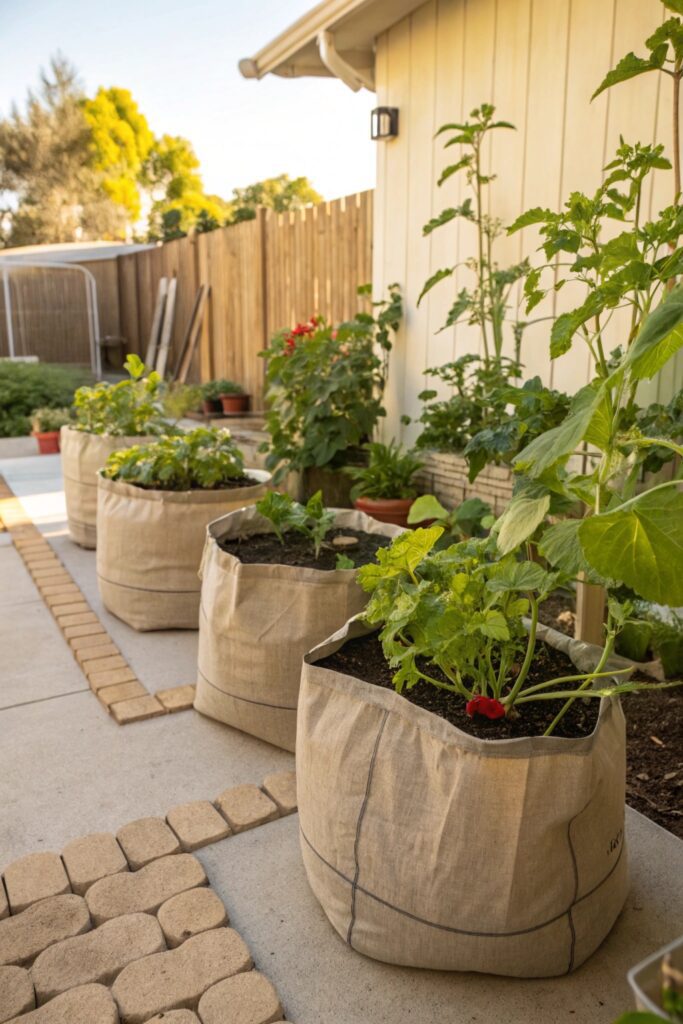
Large fabric grow bags ($10-25 depending on size) are the lowest-commitment option on this list — no construction, fully portable, and they can be moved to chase sunlight or brought in before winter in colder climates. Fabric’s breathability actually promotes healthier root systems than solid-walled beds in some cases, since it prevents roots from circling as they would against a rigid wall.
10. Pallet Wood Bed
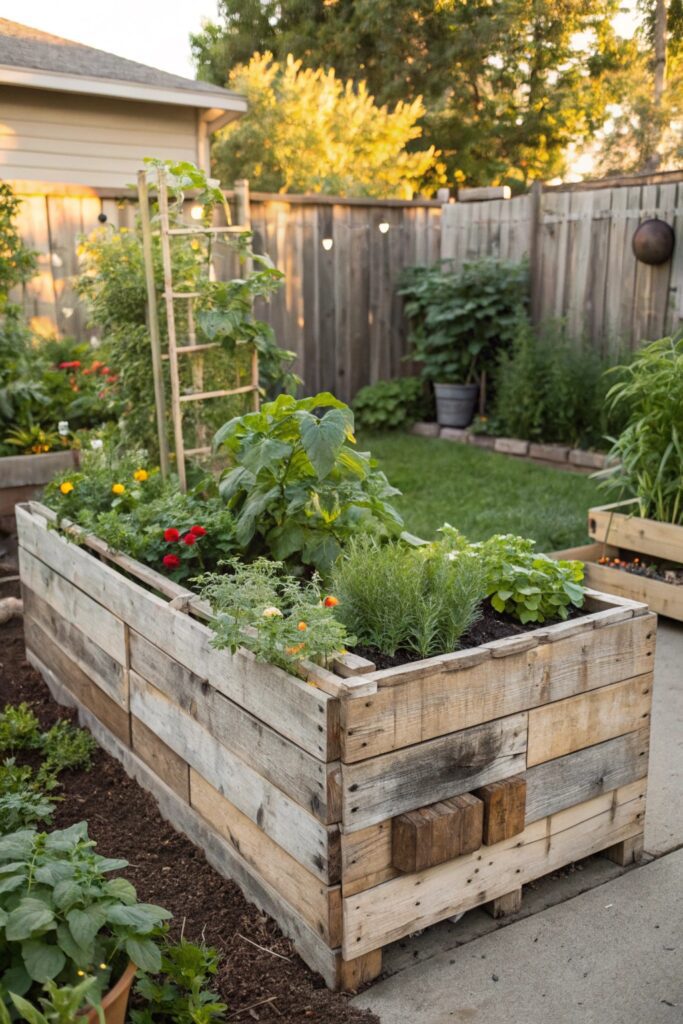
Free or low-cost shipping pallets, disassembled and reassembled into a bed frame, are the cheapest lumber option available if you’re willing to put in disassembly labor — just confirm the pallet is heat-treated (marked ‘HT’) rather than chemically fumigated (marked ‘MB’), since chemically treated pallets aren’t safe for growing food.
Choosing the Right Size and Location
Keep the bed’s width to around four feet or less if you’ll access it from both sides, which lets you reach the center without stepping into the soil and compacting it.
Position the bed somewhere that gets at least six hours of direct sun for most vegetables, and confirm the location has reasonable access to a water source before building anything permanent.
Real Costs to Expect
A basic cedar or pine frame for a 4×8 bed typically costs $60 to $150 depending on lumber prices and thickness.
Cinder block and concrete options often cost less per bed but require more material handling, while a galvanized stock tank is the priciest single-purchase option, usually running $150 to $400 depending on size.
Fill the bottom third of a deeper bed with coarse material like branches or straw before adding soil on top, which genuinely reduces how much purchased soil you need without compromising root depth for most vegetables.
Final Thoughts
If you’re unsure how committed you are to raised bed gardening, start with the lowest-investment options (fabric grow bags, cinder blocks) before building a more permanent cedar frame — this lets you test the format without a large upfront cost if it turns out not to suit your space or gardening habits.