
Outdoor summer tables benefit from a slightly more relaxed, layered approach than a formal indoor setting — natural materials, mixed textures, and a few genuinely functional elements (the herb garnish, the citrus) tend to read more intentional than an overly matched, formal setup.
Below are 12 ways to build that feeling, with real costs and reasoning for each element.
1. Start With a Linen Table Runner
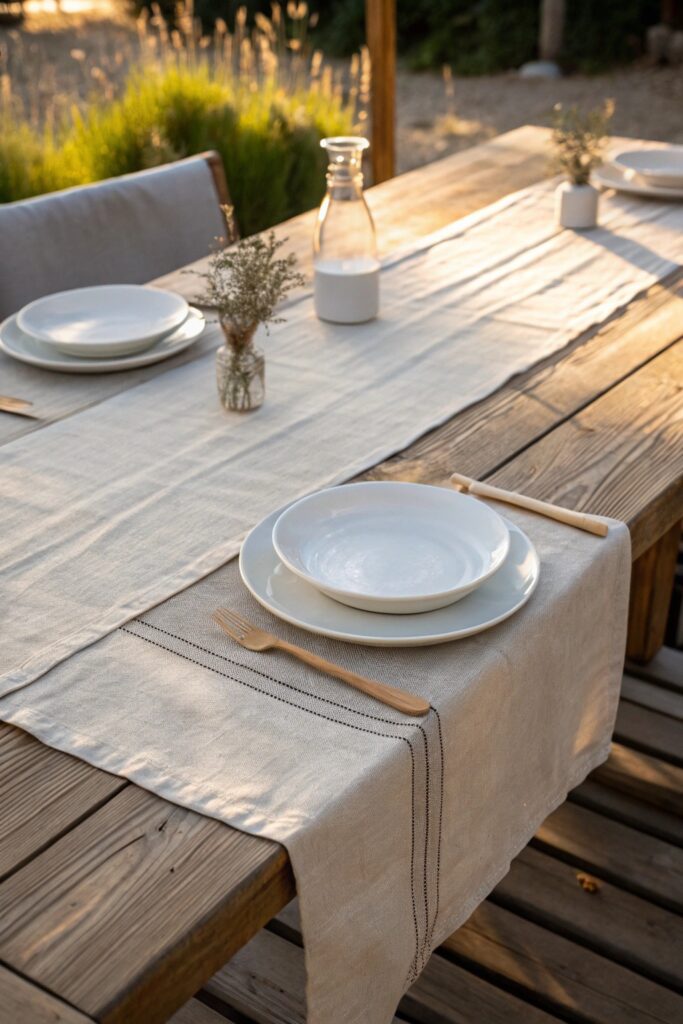
A natural or lightly textured linen runner ($20-35) down the center of the table gives the rest of the tablescape a consistent base to build on, and linen’s slightly rumpled texture reads more relaxed and summer-appropriate than a stiff, pressed tablecloth.
2. Cluster Low, Unscented Candles
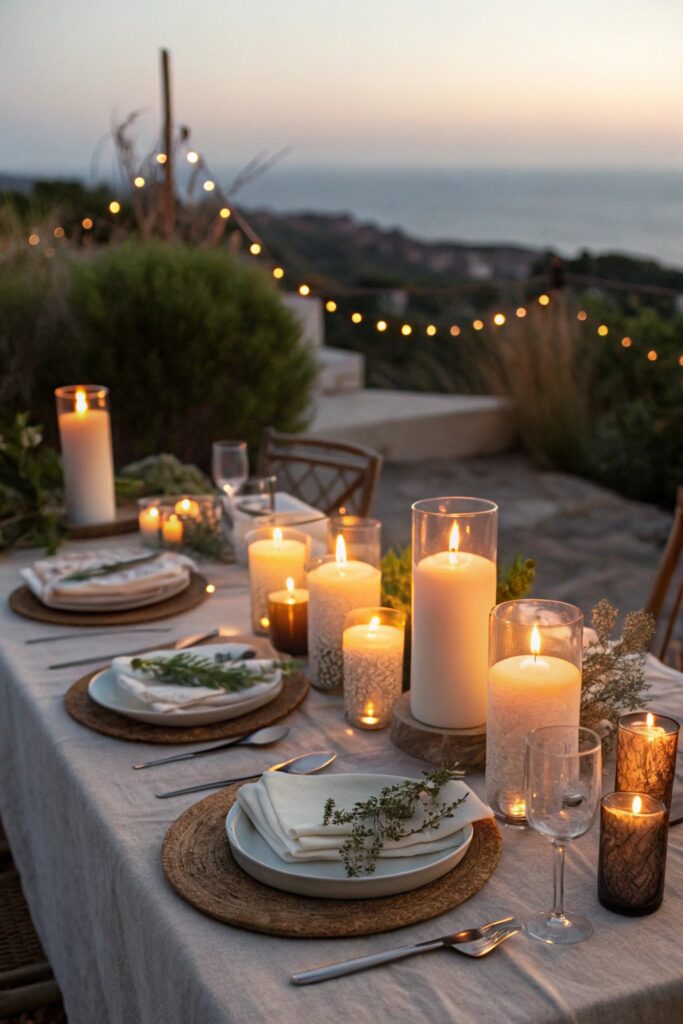
Grouping 3-5 low pillar or votive candles (rather than tall tapers) keeps sightlines clear across an outdoor table, and unscented candles specifically avoid competing with the meal’s aromas outdoors, where scent carries differently than indoors. Use citronella candles only at the table’s edges rather than mixed into the main display, since the scent is strong enough to affect food.
3. Mix Metals for Depth
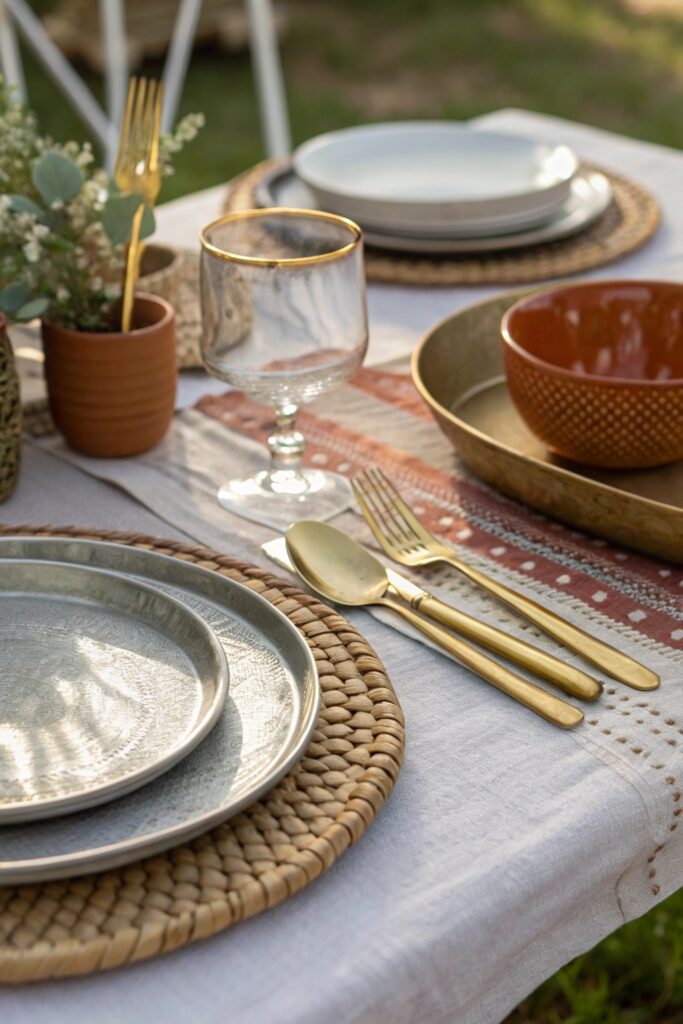
Combining brass flatware with silver-rimmed glassware, or gold candle holders with a natural wood centerpiece base, adds visual depth that an all-matching metal palette doesn’t achieve — this is the same mixed-metal principle that works in interior styling generally, applied to a table setting specifically.
4. Add a Fresh Herb Garnish Down the Center
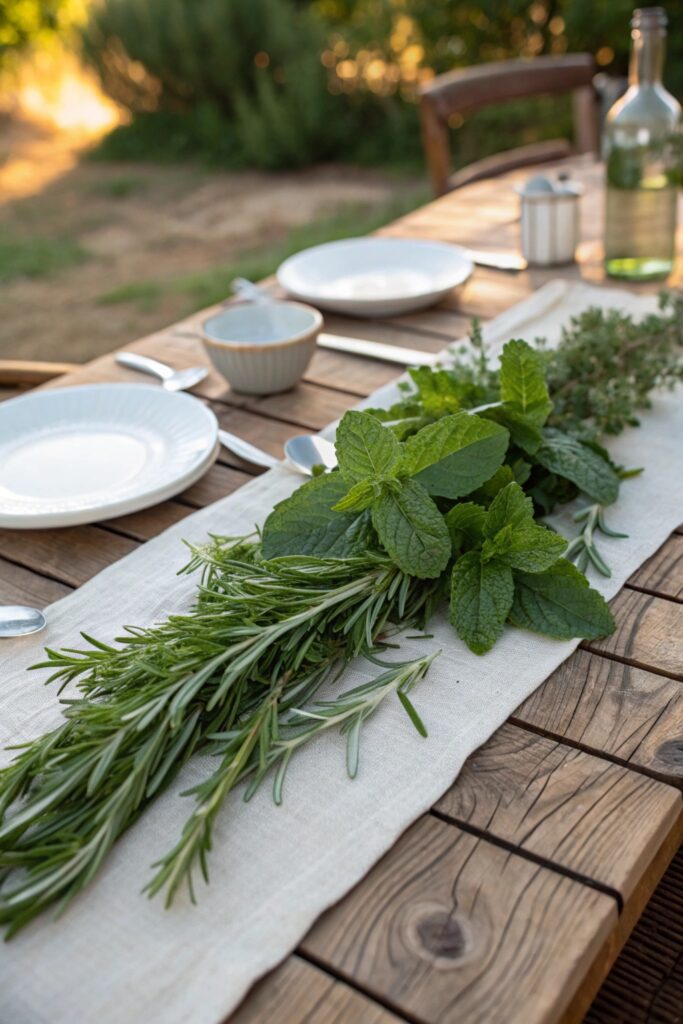
A loose row of fresh rosemary, mint, or basil sprigs laid directly down the table’s center (rather than in a formal arrangement) doubles as both decor and a usable garnish for the meal itself, and it costs only a few dollars from a grocery store herb section.
5. Layer Different Textures on the Table
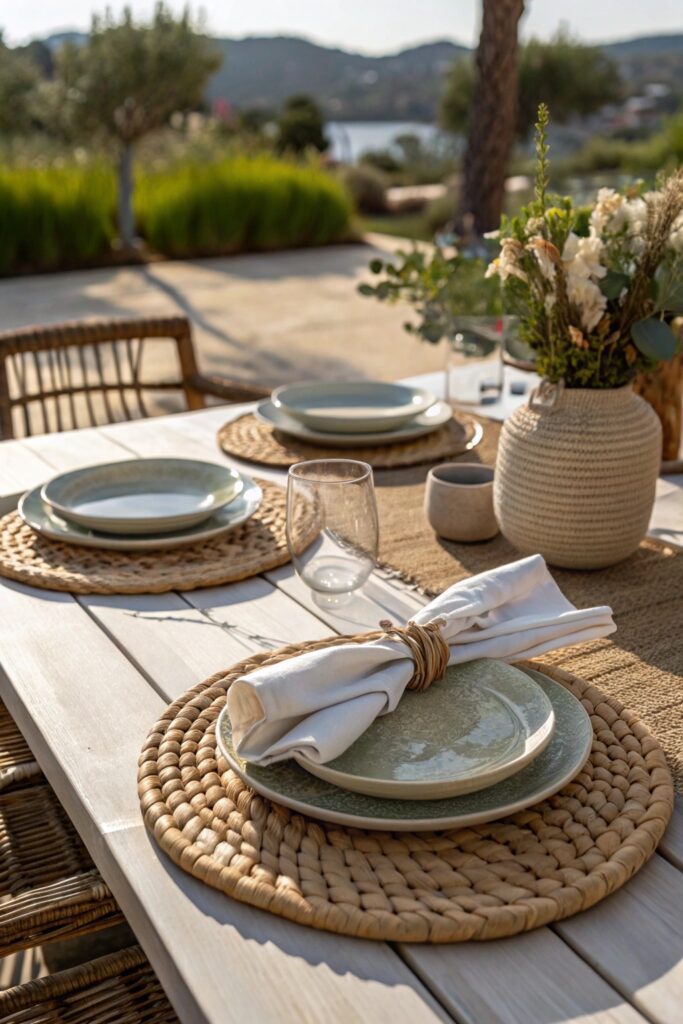
Pairing a woven placemat, a smooth ceramic plate, and a linen napkin at each setting creates textural variety that a uniform table setting lacks — this layering principle is what separates a styled table from one that’s simply set.
6. Go Bold With a Patterned Tablecloth
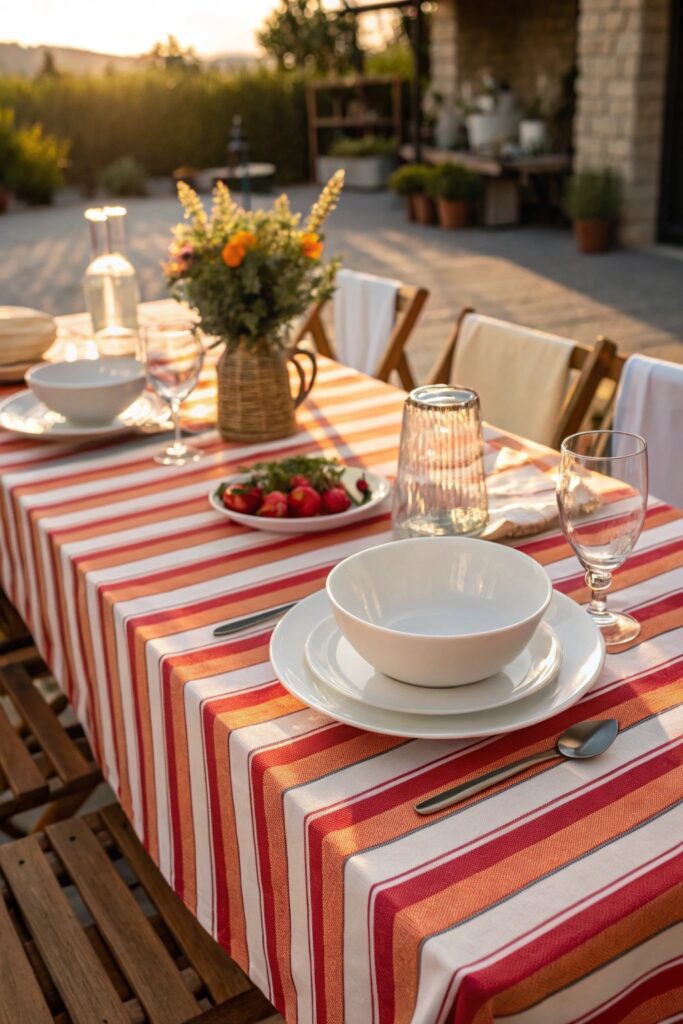
A tablecloth in a striking print (stripes, a bold botanical, a checked gingham) works as the table’s main visual statement, letting everything else — dishware, glassware — stay simpler by comparison rather than competing with the pattern.
7. Use Mismatched Vintage Glassware
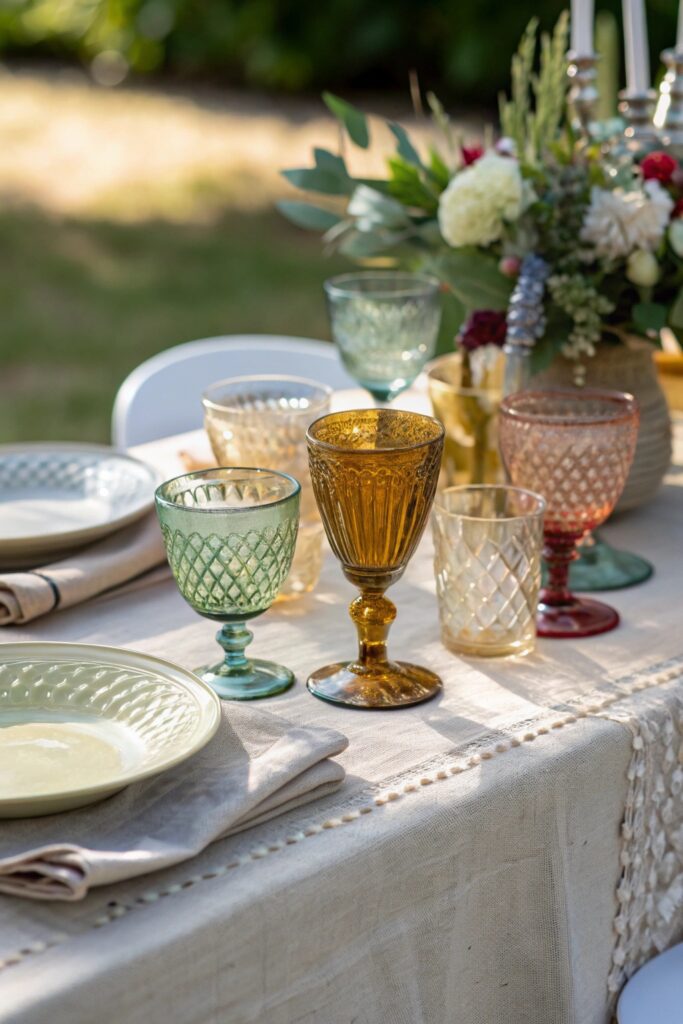
Thrifted or collected glassware in varying shapes and slight color tints ($3-8 per piece secondhand) creates a collected-over-time look that a matched glassware set can’t replicate, and it means you don’t need a full uniform set to start setting a table this way.
8. Incorporate Citrus as Natural Decor
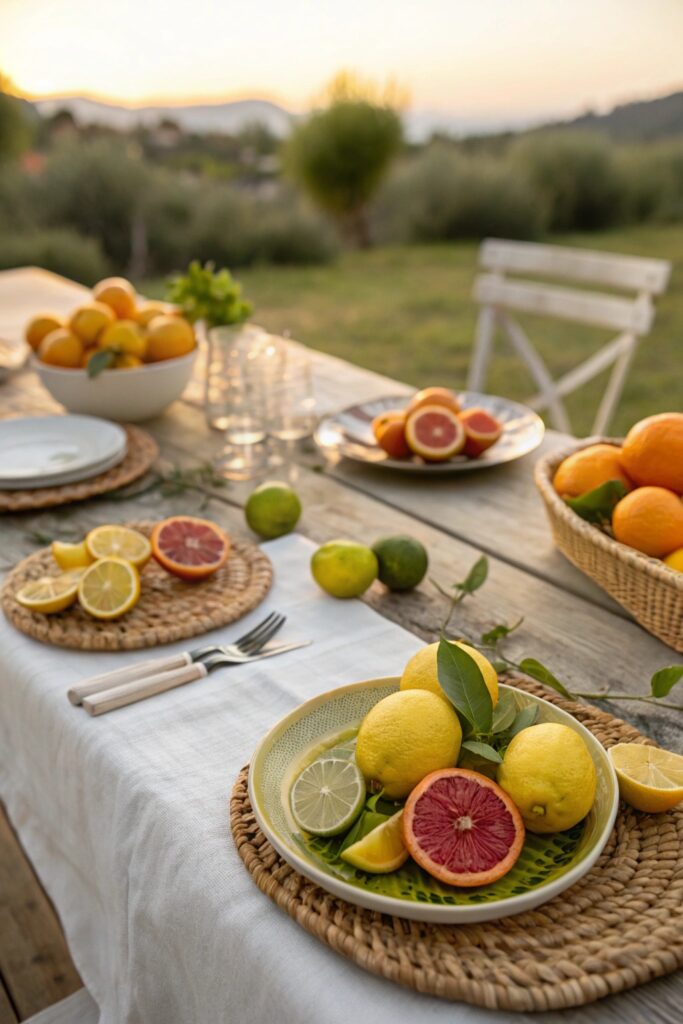
Whole or sliced lemons and limes scattered along the table or piled in a low bowl add color and a summer-specific visual cue for a few dollars, and they can be used in drinks afterward rather than being purely decorative and discarded.
9. Add String Lights Overhead
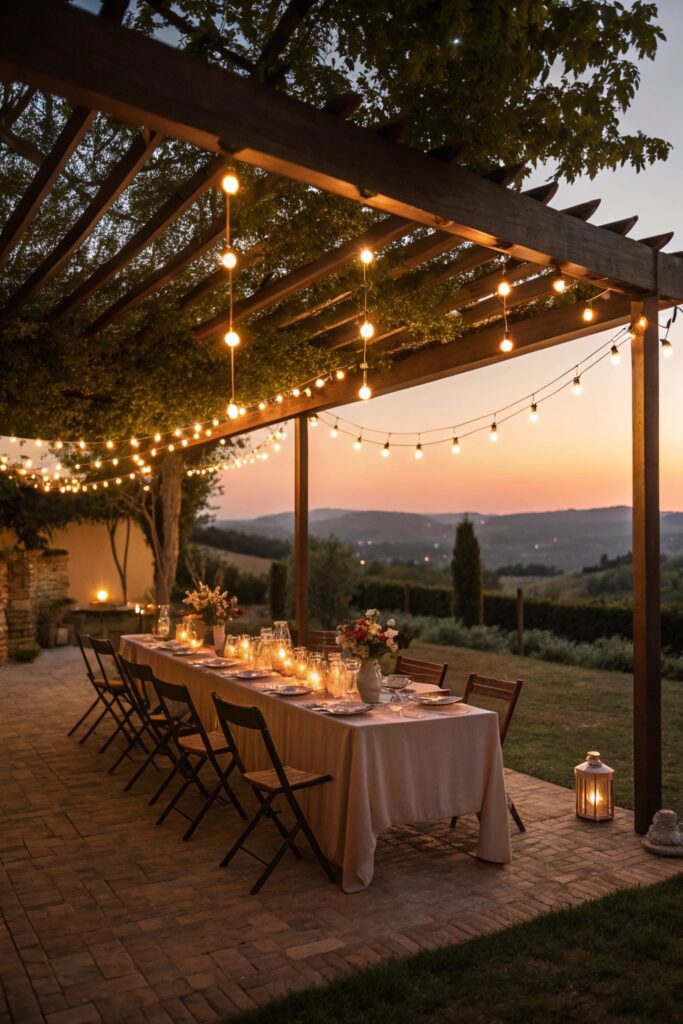
Warm white string lights strung above an outdoor table ($15-25) extend a summer meal comfortably into evening hours, and they add ambient light that’s softer and more flattering than a single overhead fixture or harsh porch light.
10. Set the Mood With a Signature Drink Station
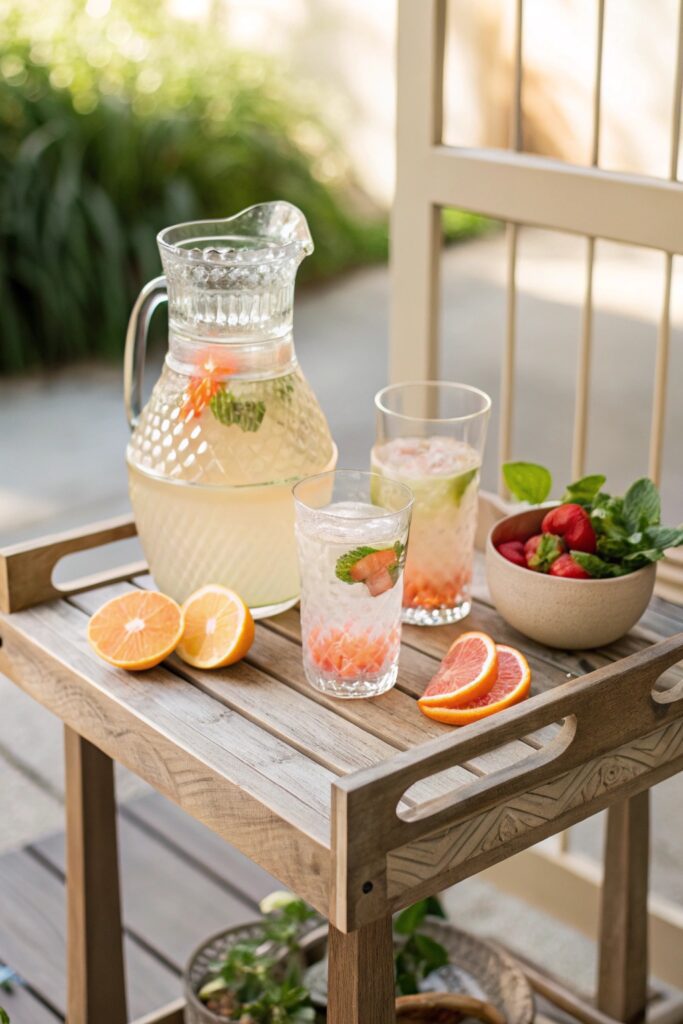
A small dedicated station with one pitcher-based cocktail or mocktail ($15-25 in ingredients for a pitcher serving 6-8) simplifies hosting compared to a full bar setup, and it gives guests a clear, low-effort option rather than requiring individually mixed drinks throughout the evening.
11. Play With Height Using a Tiered Centerpiece
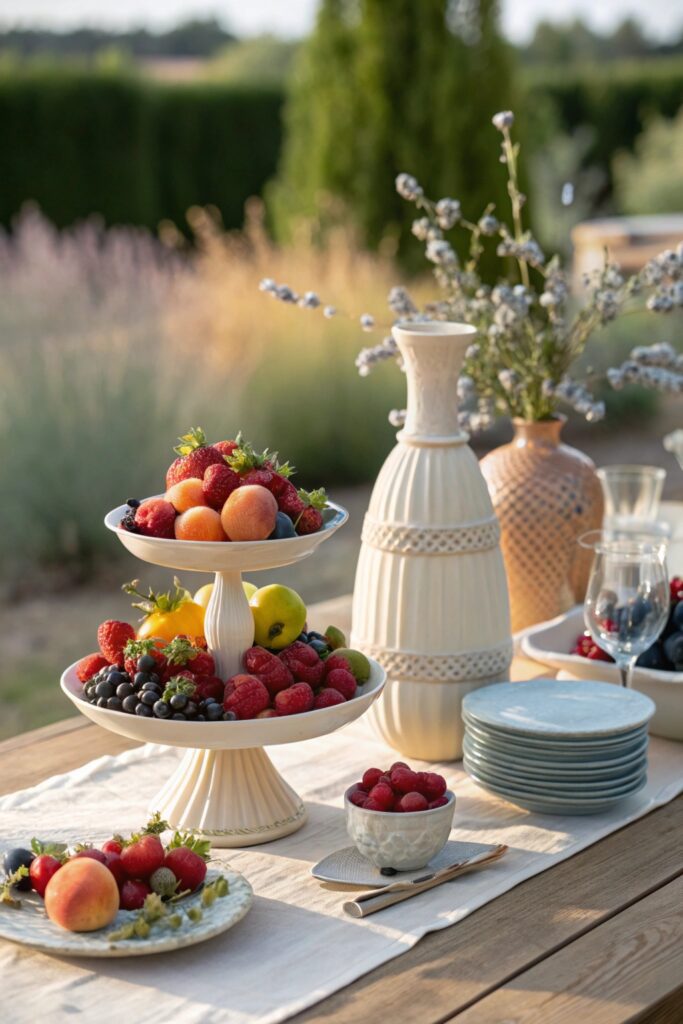
Combining a low flower arrangement with one or two taller elements (a candle holder, a tall vase) at a different point on the table creates the height variation that keeps a tablescape from reading flat, without blocking sightlines across the table the way one uniformly tall centerpiece would.
12. Finish With Handwritten Place Cards
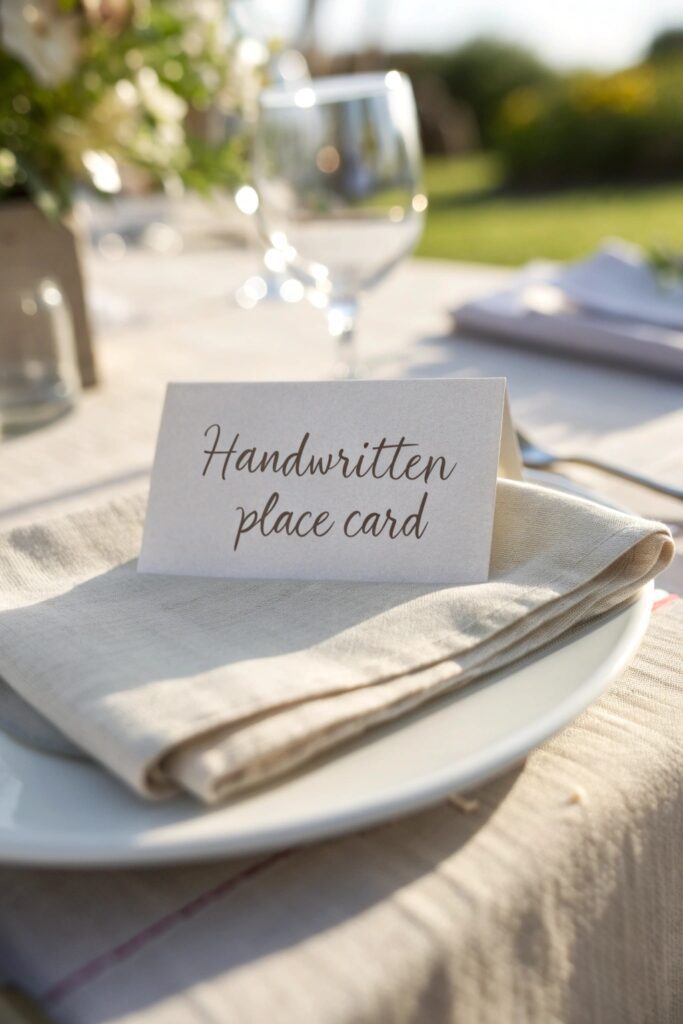
A simple card with each guest’s name, written by hand rather than printed, adds a personal touch that costs next to nothing and doubles as a practical seating guide for a larger summer gathering.
Planning for Outdoor Conditions
Wind is a genuine factor outdoors that an indoor tablescape doesn’t need to consider, so weigh down linens and paper elements, and lean toward enclosed candle holders over open flames.
Choose materials that can handle a bit of dew or humidity without warping, since even a covered outdoor table is exposed to more moisture than an indoor dining room.
Real Costs to Expect
Most of these elements cost under $30 individually, and a full tablescape combining several ideas typically runs $100 to $250 depending on how much you’re buying new versus reusing.
Reusable pieces like glassware, candle holders, and linens are worth the slightly higher upfront cost, since they’ll come out again for future gatherings rather than being single-use purchases.
Set the table an hour or two before guests arrive rather than the last minute, giving you genuine time to adjust anything that looks off once everything is actually in place together.
Most of these elements can be sourced from a mix of thrift stores, a local farmers market, and items already in your kitchen, which keeps the actual cost genuinely lower than the finished look might suggest.
Final Thoughts
The linen runner and low candle cluster do the most foundational work — both set a relaxed, cohesive base that the rest of the table builds on. If you’re short on time, those two elements alone, plus fresh citrus or herbs, cover most of what makes a summer tablescape feel considered.