
A sloped yard isn’t a problem — it’s actually an opportunity most people completely waste. Instead of fighting the hill, you can work with it and create something that looks truly intentional and impressive.
I’ve seen too many hillside yards turn into muddy, eroded messes because the owners just ignored the slope. The good news? A few smart landscaping decisions can flip the whole situation around.
Here are 10 hillside landscaping ideas that’ll make your sloped yard the best-looking one on the street.
1. Build Terraced Retaining Walls
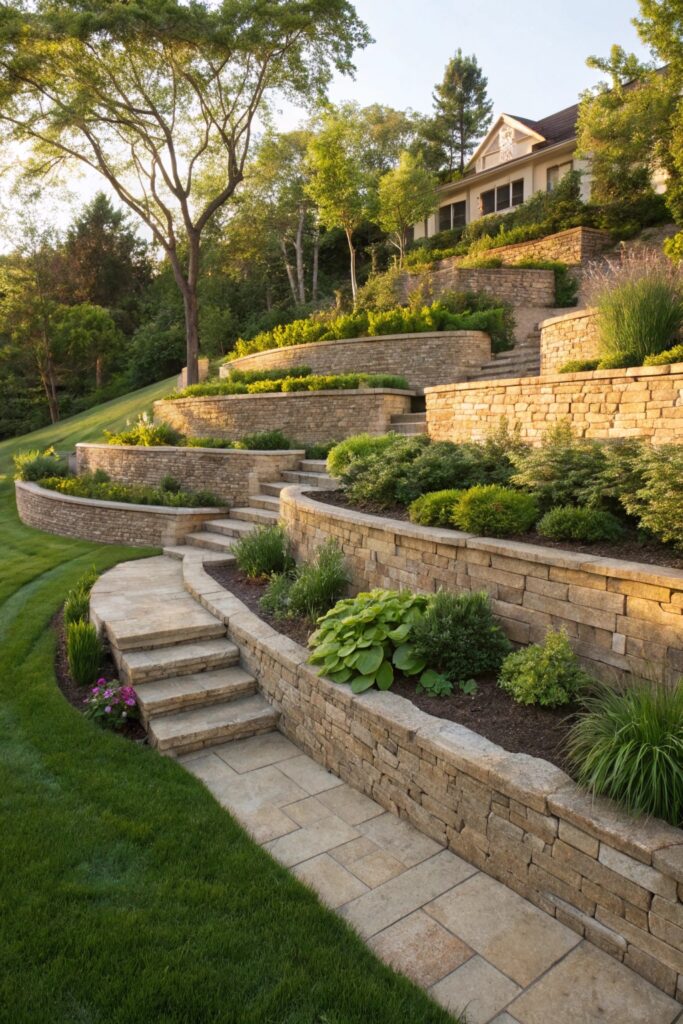
Terracing is the single most effective thing you can do with a steep slope. Retaining walls cut the hillside into flat, usable levels — essentially turning one unusable hill into multiple functional spaces.
You can use natural stone, concrete blocks, or timber depending on your style. Natural stone looks incredible and ages beautifully. Concrete blocks offer more precision and durability for taller walls.
Each terrace level can serve a different purpose — garden beds, seating areas, or lawn sections. It’s functional landscaping at its best.
2. Plant Ground Cover to Stop Erosion
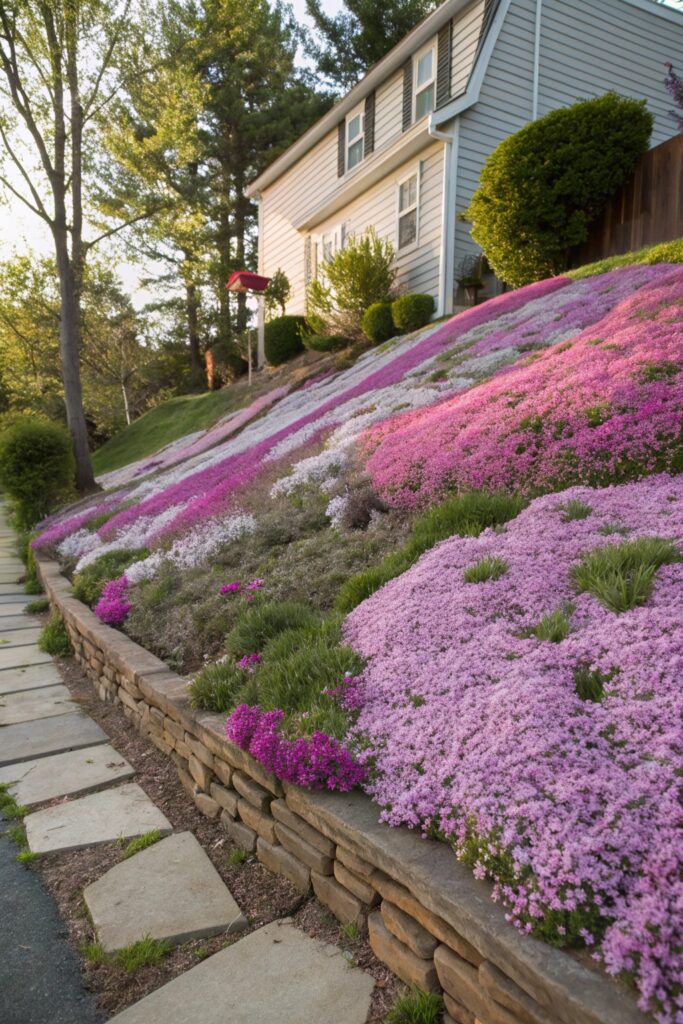
Bare slopes erode. It’s that simple. Ground cover plants spread low and fast, binding the soil together with their root systems and protecting the hillside from rain runoff.
Some solid ground cover options for slopes:
- Creeping juniper — tough, drought-tolerant, spreads wide
- Ice plant — colorful blooms, excellent for dry climates
- English ivy — fast-spreading and low maintenance
- Creeping phlox — gorgeous spring flowers, great coverage
IMO, creeping phlox is the winner here — it looks stunning in spring and handles slopes like a champ. Plant it once and watch it take care of the rest.
3. Install a Winding Garden Path
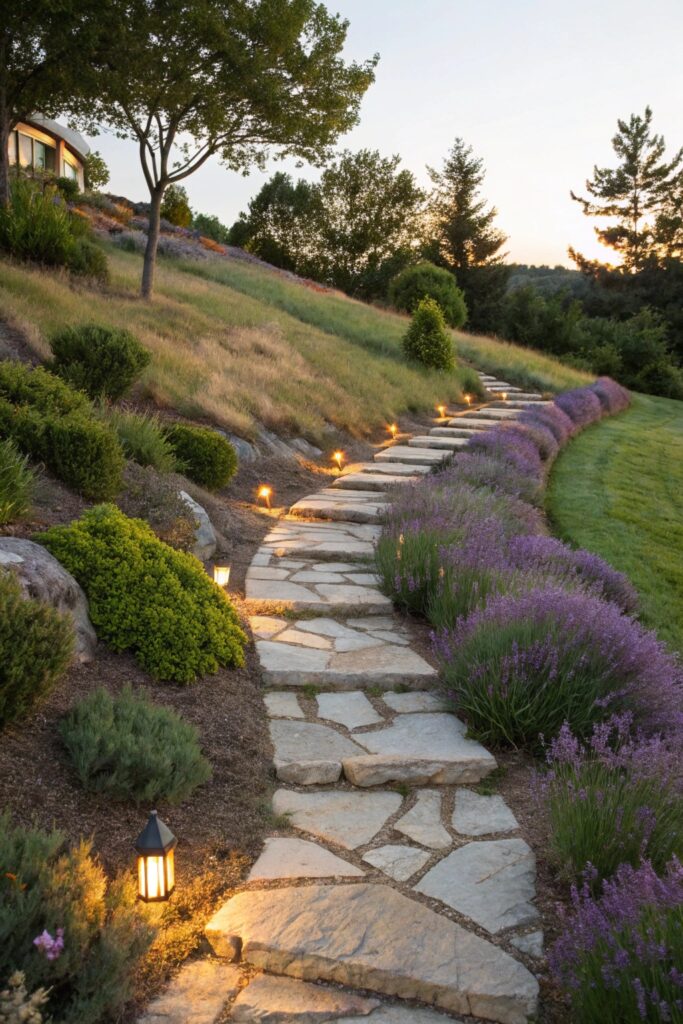
A straight path up a steep hill is basically a cardio workout nobody asked for. A winding or zigzag path up the slope reduces the grade, makes the climb easier, and adds serious visual interest to your yard.
Use natural flagstone, gravel, or pavers to define the path. Line it with low-growing plants or solar lights for a polished look. A well-designed path turns a functional necessity into a design feature.
Ever notice how the most beautiful gardens always seem to have a path you want to follow? That’s not an accident.
4. Create a Cascading Water Feature
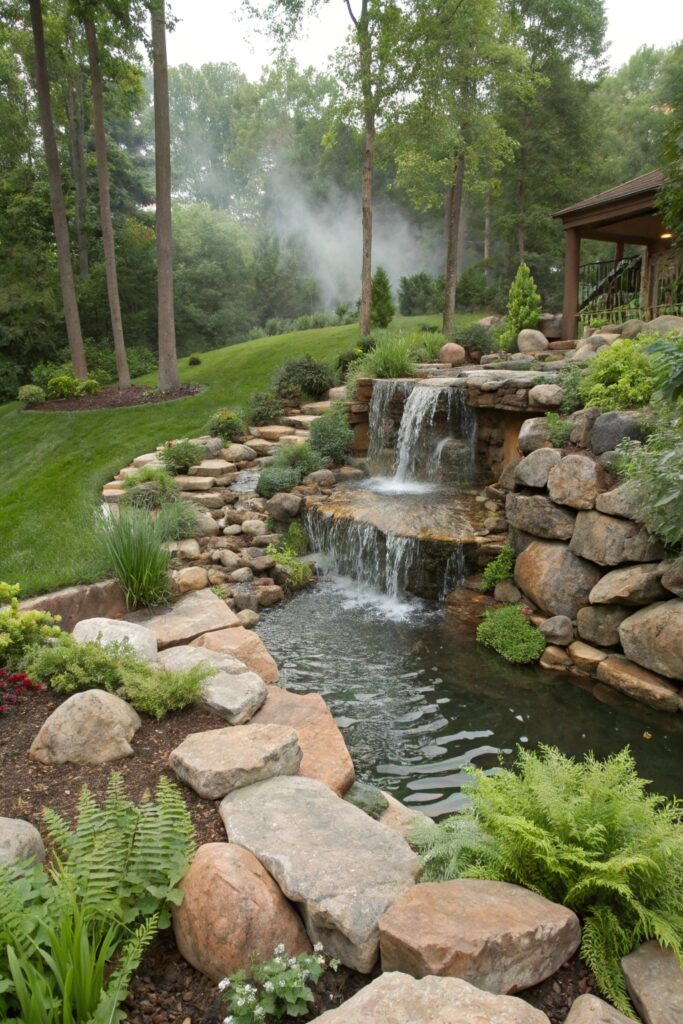
A hillside is practically begging for a water feature. A cascading stream or waterfall that flows down the natural slope uses your yard’s elevation change as a design asset rather than a headache.
You can go simple with a small pondless waterfall, or go bold with a full multi-tier stream. Either way, the sound of running water adds an entirely new dimension to your outdoor space.
Pair it with smooth river rocks and moisture-loving plants along the edges for a natural, cohesive look.
5. Add Raised Garden Beds on the Slope
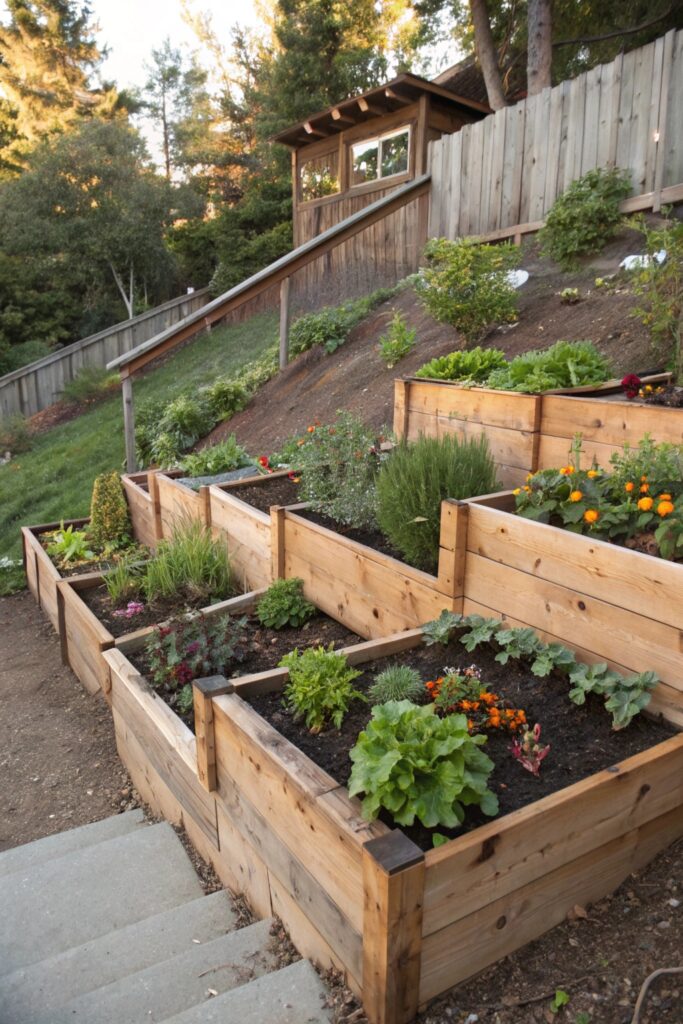
Sloped ground makes traditional gardening frustrating — but raised garden beds built into the hillside solve that problem completely. They create level planting surfaces, improve drainage, and look incredibly organized.
Build them from cedar, stone, or steel depending on your aesthetic. Stagger the heights as they go up the slope for a layered, structured look.
Grow vegetables, herbs, or flowering perennials in each bed. You basically get a productive garden AND stunning landscaping in the same move. That’s a hard combo to beat.
6. Use Native Plants for Low-Maintenance Coverage
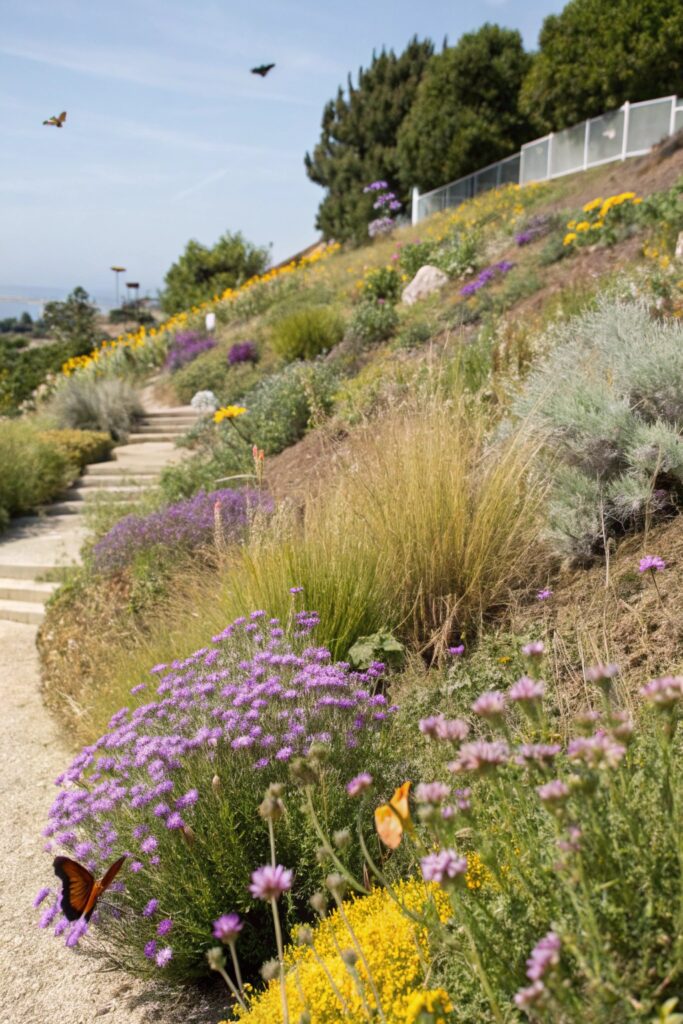
Here’s a tip that saves you time, money, and frustration — native plants are naturally adapted to your local soil and rainfall conditions, which means they thrive on slopes without much intervention.
Benefits of going native on your hillside:
- Deep root systems that anchor soil and prevent erosion
- Drought resistance — less watering, lower bills
- Wildlife-friendly — attracts pollinators and birds
- Lower maintenance overall once established
Research what’s native to your specific region. Native ornamental grasses, wildflowers, and shrubs can turn a bare hillside into a gorgeous, low-effort landscape :).
7. Build a Hillside Seating Area or Patio
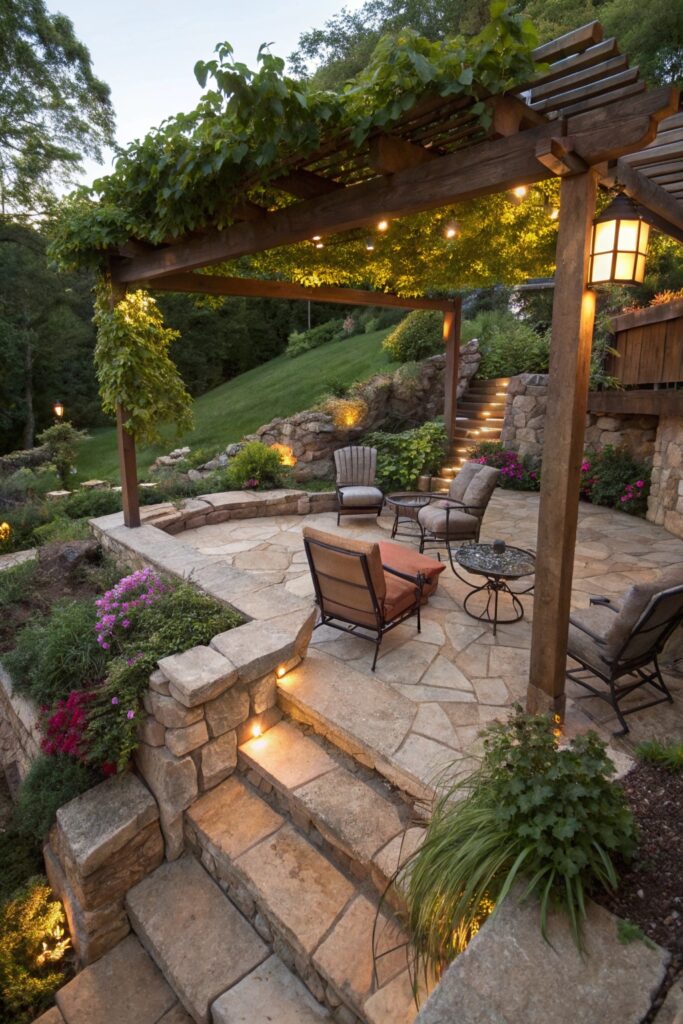
Why not actually use your slope instead of just staring at it? Carving out a flat seating area mid-slope creates a destination space with an elevated view of your property.
You can build a simple gravel patio, a wooden deck cantilevered into the hillside, or a stone terrace with built-in bench seating. Add a pergola or shade sail above it and you’ve got a genuine outdoor room.
Position it to face the best view — whether that’s a garden, a water feature, or just a great sunset angle. It’s your yard, make it work for you.
8. Plant Ornamental Grasses for Texture
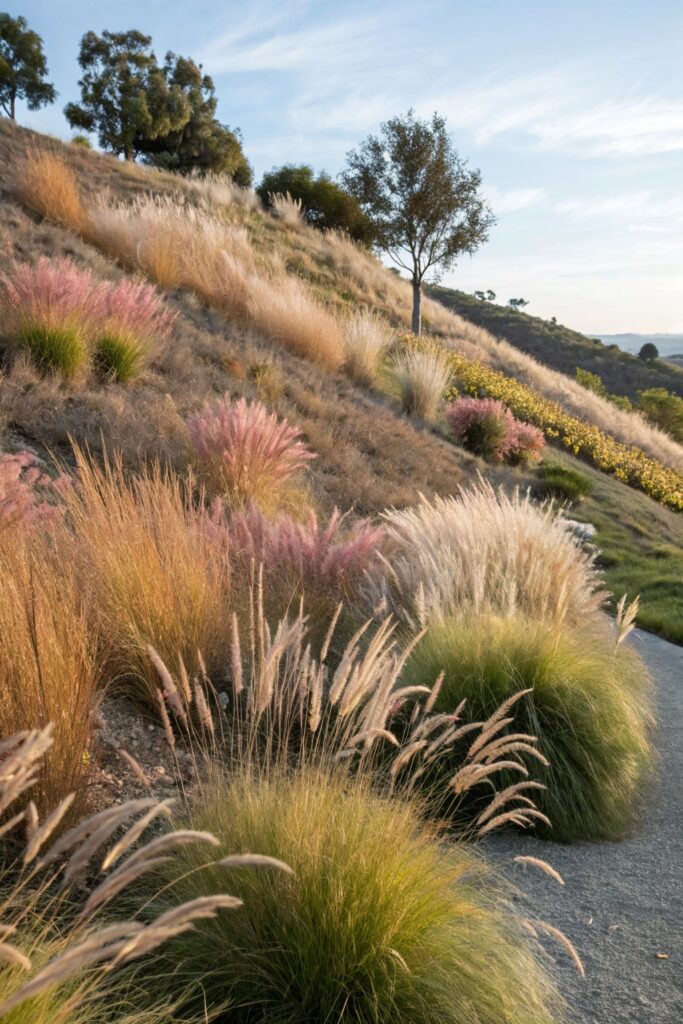
Ornamental grasses are wildly underrated for hillside landscaping. They grow in clumps, stabilize soil with deep roots, and move beautifully in the breeze — adding texture and movement that most plants simply can’t deliver.
Great ornamental grass options for slopes:
- Blue oat grass — stunning steel-blue color, compact size
- Feather reed grass — tall, dramatic, upright form
- Muhly grass — produces gorgeous pink-purple plumes in fall
- Fountain grass — arching form, excellent erosion control
Mix a few varieties at different heights across the slope for a layered, naturalistic effect. Low maintenance, high visual impact — what more do you want?
9. Add Landscape Lighting Along the Slope
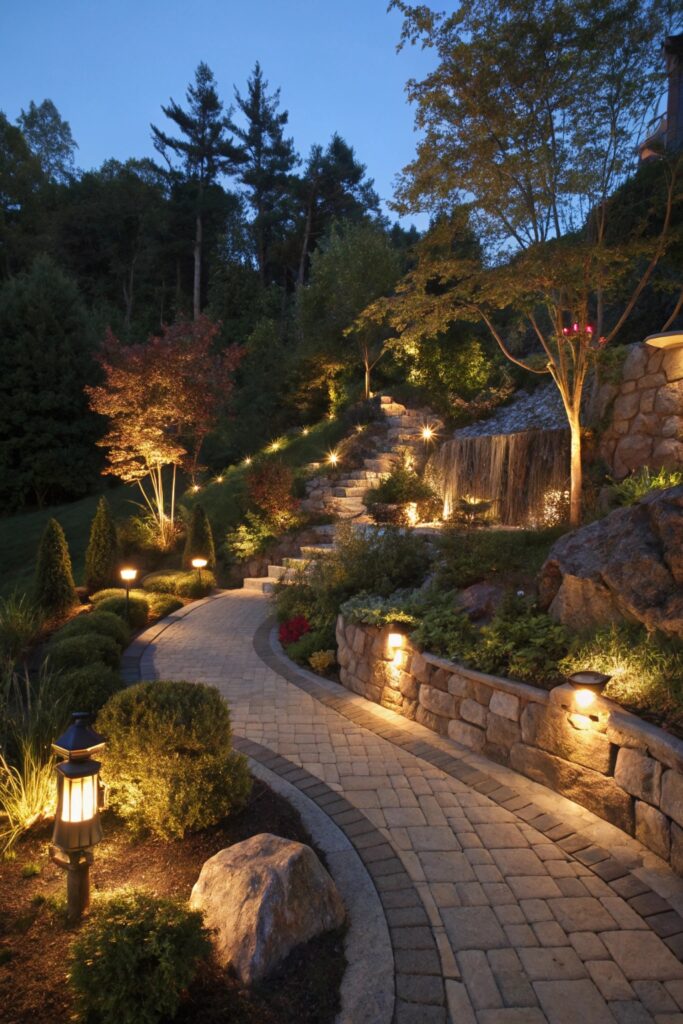
A hillside that looks great during the day should look great at night too. Strategic landscape lighting transforms your sloped yard after dark, highlighting the elevation changes, plants, and hardscape features you’ve worked hard to create.
Use a mix of:
- Uplights aimed at trees or tall plantings
- Path lights along winding garden walkways
- Downlights mounted in retaining walls
- Spotlights on water features or focal points
Solar-powered options have gotten seriously good in recent years. FYI — even a modest lighting setup adds incredible curb appeal and makes evening time in the yard actually enjoyable.
10. Plant a Slope Orchard or Berry Garden
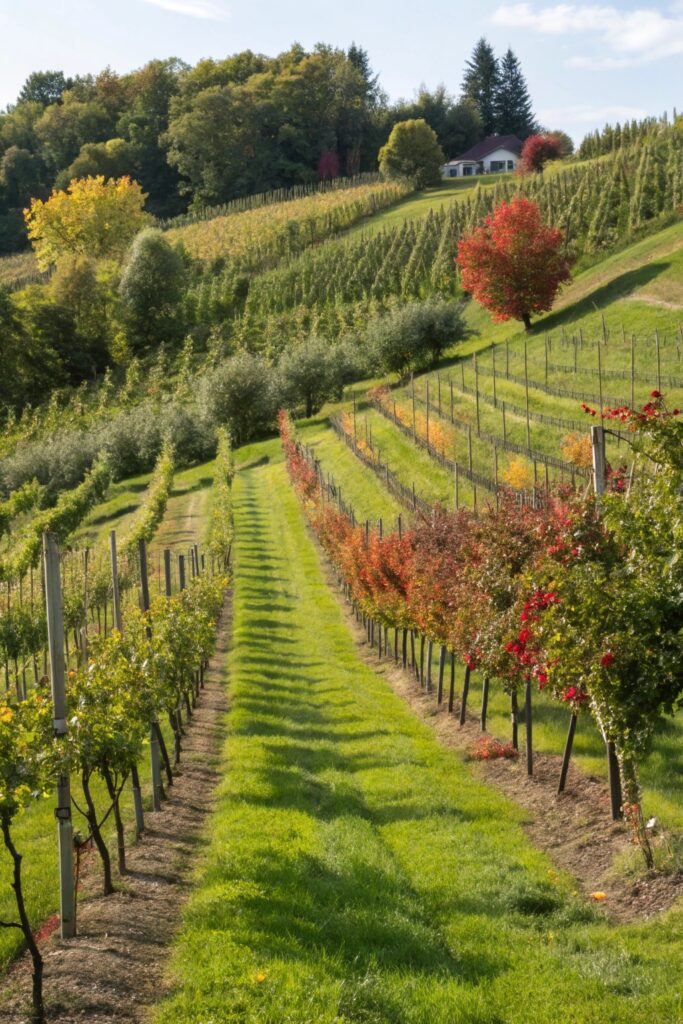
Here’s one most people never consider — a productive fruit or berry garden planted down a sunny slope combines practical food growing with beautiful landscape design.
South-facing slopes get excellent sun exposure all day, making them ideal for:
- Blueberry bushes — stunning fall color plus fruit
- Dwarf apple or pear trees — staggered down the slope
- Raspberry or blackberry canes — great erosion control too
- Grapevines on a simple trellis system
The structure of an orchard or berry patch on a hillside looks incredibly intentional and lush. Plus, you get to eat the results. That’s hillside landscaping pulling double duty.
Checking Drainage Before You Plant Anything
Water moves downhill fast on a slope, and a landscaping plan that doesn’t account for that can end up funneling runoff straight toward your foundation or a neighbor’s yard.
Watching how water flows across the hillside during a heavy rain, before committing to any permanent structure, reveals natural drainage paths that terraces, beds, or paths should work with rather than against.
Wrapping It Up
A sloped yard doesn’t have to feel like a landscaping nightmare. With the right ideas — terraced walls, ground cover, winding paths, water features, and smart planting — your hillside can become the most striking part of your whole property.
Start with the structural fixes first: erosion control and retaining walls. Then layer in the personality with plantings, lighting, and seating. You don’t need to tackle everything at once — even one or two of these ideas will make a noticeable difference.
Your hill is waiting. Stop ignoring it and start working with it — you might be surprised by what’s possible.