
Your yard gets waterlogged every time it rains and you’re tired of staring at puddles that take three days to disappear. Sound familiar? A rain garden solves that problem while simultaneously creating one of the most naturally beautiful garden styles you can plant. It’s basically a garden that does useful work — and looks great doing it.
I got truly obsessed with rain gardens after dealing with a persistently soggy corner of my own garden. The solution wasn’t drainage pipes or gravel — it was plants. The right plants in the right place, designed to absorb and filter stormwater runoff naturally.
Here are 11 rain garden ideas that prove eco-friendly gardening and stunning design go hand in hand.
1. Native Wildflower Rain Garden
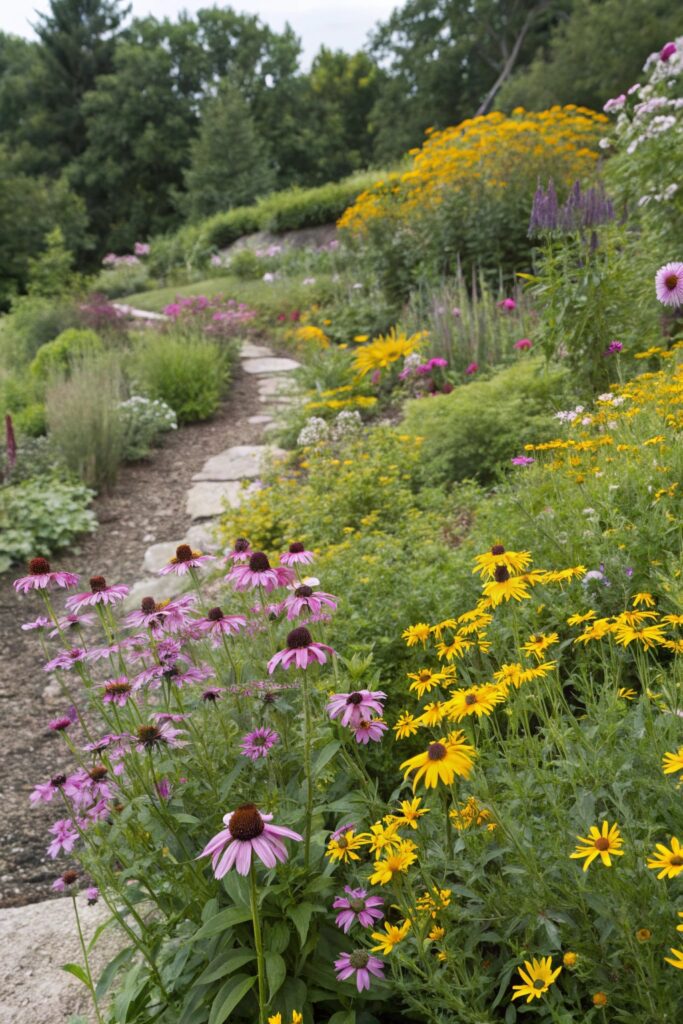
The most natural rain garden you can create starts with native wildflowers — plants that evolved in your region and actually thrive in the cycle of wet and dry conditions a rain garden experiences.
Native plants develop deep root systems that absorb water far more effectively than ornamental species. They also support local pollinators, require zero fertilizer, and ask very little of you once established. That’s a pretty good deal for a garden that also manages your stormwater.
Best native wildflowers for rain gardens:
- Purple coneflower — tall, drought-tolerant between rains
- Black-eyed Susan — cheerful yellow blooms, incredibly hardy
- Wild bergamot — fragrant, bee-magnet, reliable spreader
- Blue wild indigo — deep roots, stunning spring blooms
Plant in drifts rather than rows for a natural, meadow-like effect that looks intentional rather than accidental. 🙂
2. Rain Garden with Ornamental Grasses
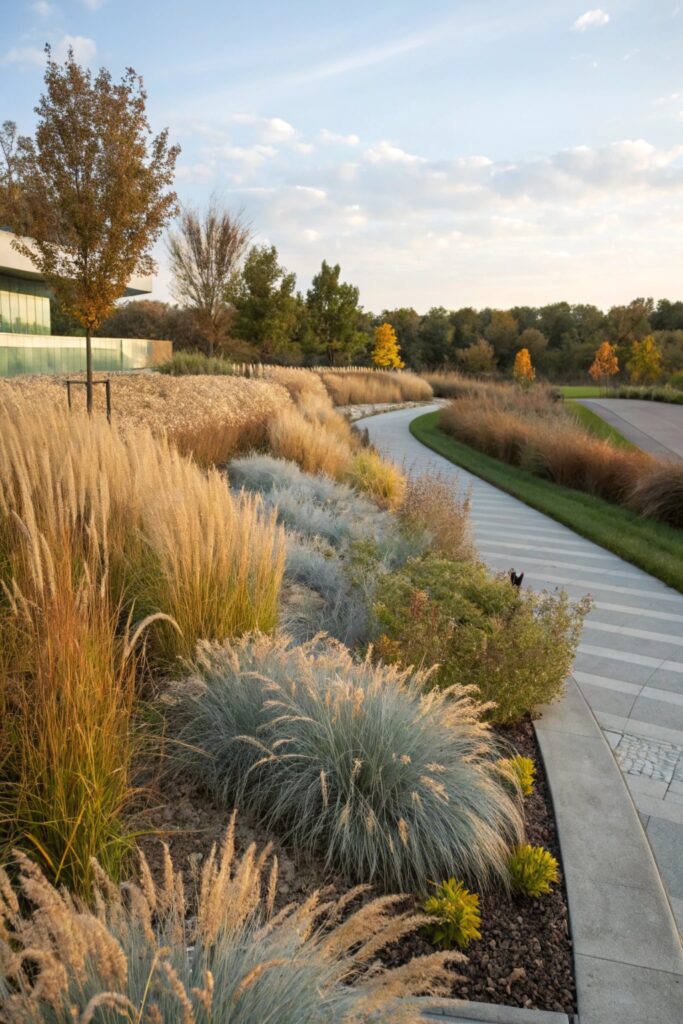
Ornamental grasses are arguably the perfect rain garden plant. Their fibrous root systems absorb enormous amounts of water, they sway beautifully in the breeze, and they provide year-round structure even when nothing else is flowering.
Mix tall grasses like switchgrass and big bluestem with shorter varieties like blue fescue and prairie dropseed to create a layered, textural planting that looks stunning in every season. In autumn, the seed heads catch the light in a way that makes the whole garden glow.
Top ornamental grasses for rain gardens:
- Switchgrass — tall, airy, brilliant autumn color
- Big bluestem — native prairie grass, exceptional water absorption
- Blue fescue — compact, silvery-blue, front-of-border gem
- Prairie dropseed — fine texture, fragrant autumn seed heads
Grasses make a rain garden look designed rather than functional. That distinction matters.
3. Layered Shrub and Perennial Rain Garden
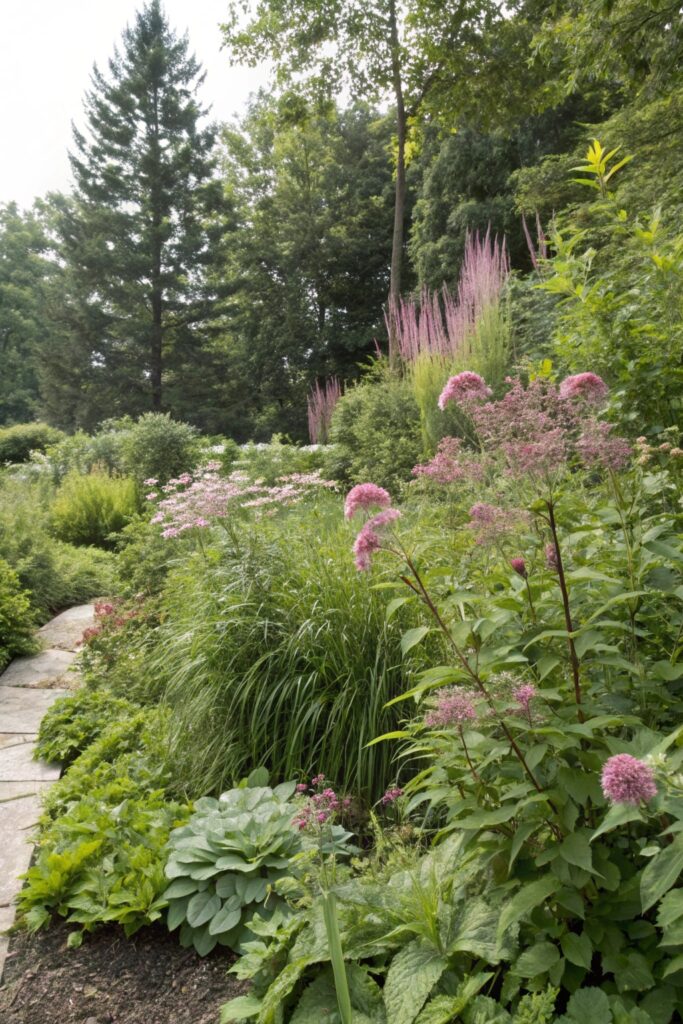
A layered rain garden uses shrubs at the back, medium-height perennials in the middle, and low groundcover plants at the front edge to create a design with genuine depth and year-round interest.
This approach mimics how plants naturally grow in woodland edges and riverbanks — which is exactly the kind of environment a rain garden replicates. The layering also means different plants handle different water levels within the garden, making the whole system more efficient.
Layered planting structure:
- Back layer: shrubs like buttonbush, inkberry, or native viburnum
- Middle layer: joe-pye weed, swamp milkweed, cardinal flower
- Front layer: creeping jenny, blue star creeper, marsh marigold
IMO this is the most visually impressive rain garden style — it looks like a proper designed border, not a drainage solution.
4. Rain Garden with a Dry Creek Bed Entry
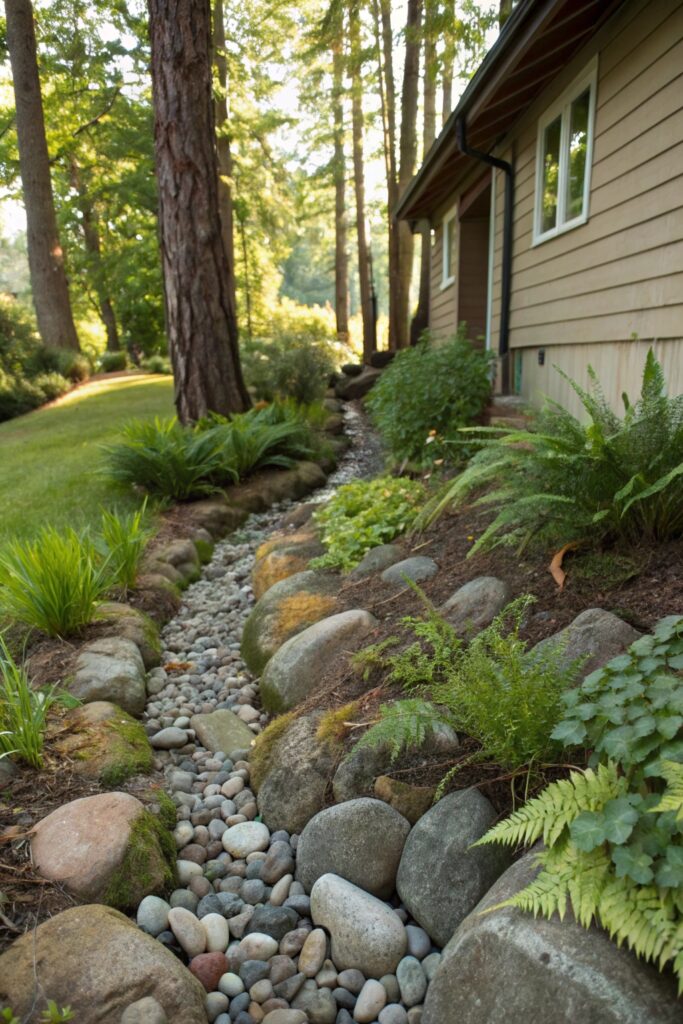
How does water actually get into your rain garden? The answer to that question is also a design opportunity. A dry creek bed channels stormwater runoff from a downspout or paved surface into the rain garden in a way that looks completely intentional and natural.
Line a shallow channel with smooth river stones and pebbles in graduating sizes — larger stones at the edges, smaller gravel toward the center. Plant the banks with moisture-loving ferns, sedges, and creeping groundcovers. When it rains, water flows along the creek bed and into the garden. When it’s dry, it looks like a beautiful stone feature.
This is one of those rare garden features that actually improves under rain rather than suffering from it.
5. Butterfly and Pollinator Rain Garden
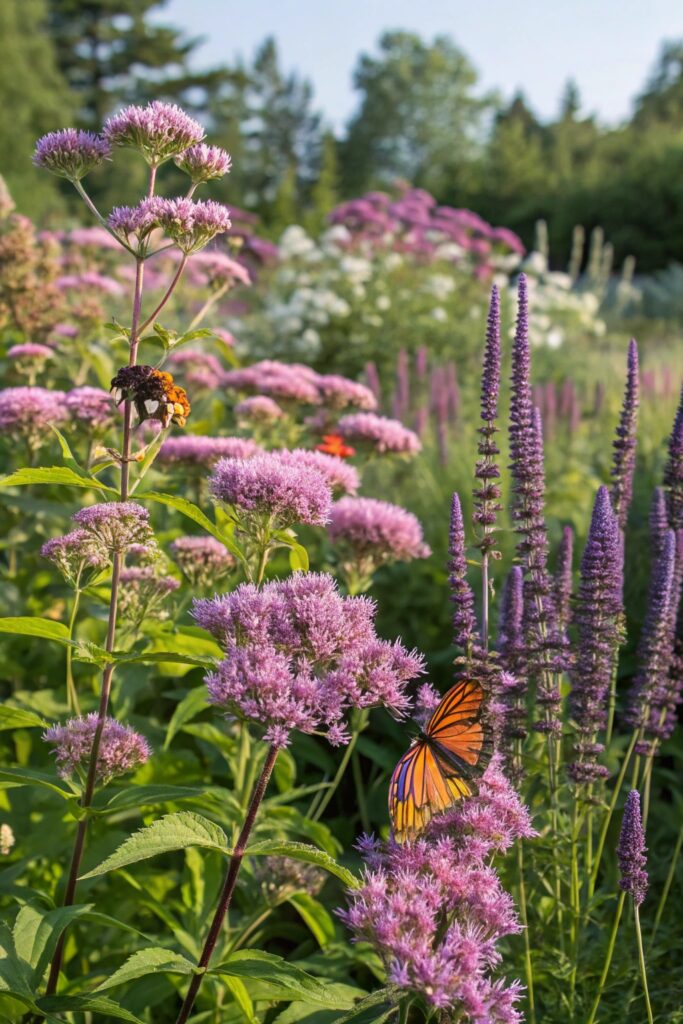
Want a rain garden that buzzes and flutters with life? A pollinator-focused rain garden plants specifically for butterflies, bees, and beneficial insects while still performing all the stormwater management functions of a standard design.
The key is choosing nectar-rich flowering plants that also tolerate the wet-dry cycle of a rain garden. Milkweed is essential for monarch butterflies. Anise hyssop attracts bees in extraordinary numbers. Joe-pye weed draws swallowtails reliably from late summer onward.
Best pollinator plants for rain gardens:
- Common milkweed — monarch butterfly host plant, essential
- Anise hyssop — lavender spikes, absolute bee magnet
- Joe-pye weed — tall, pink, swallowtail favorite
- Ironweed — deep purple, late-season nectar source
- Swamp milkweed — compact, pink, wetter conditions
A rain garden that doubles as a wildlife habitat is honestly one of the most satisfying garden projects you can take on.
6. Formal Rain Garden with Geometric Shape
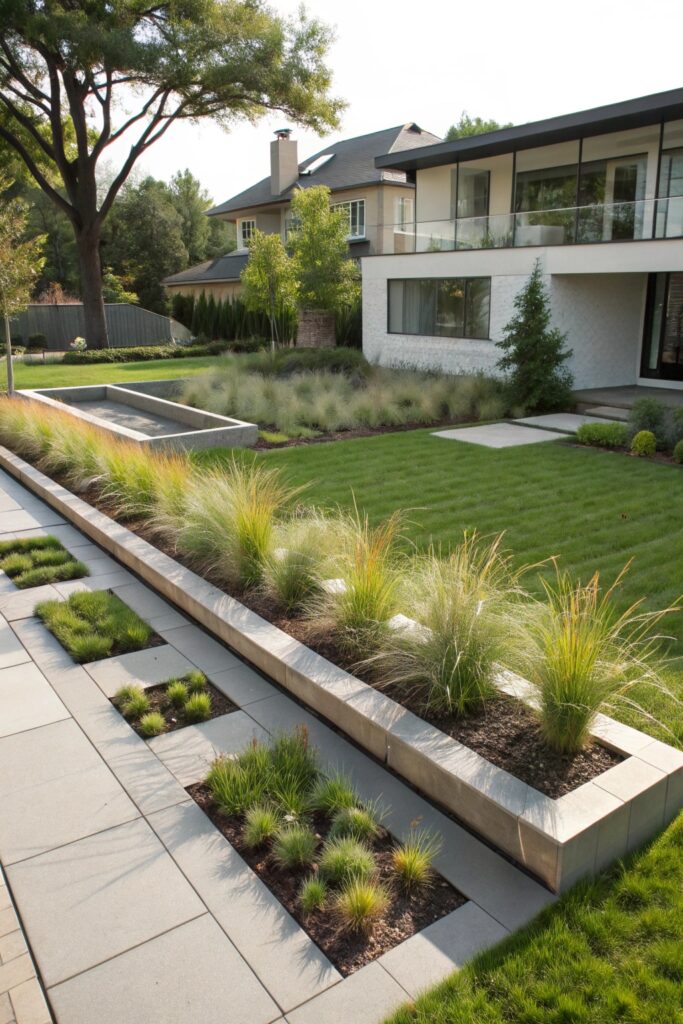
Rain gardens don’t have to look wild or naturalistic. A formal geometric rain garden fits perfectly into structured garden designs, front yards, or contemporary landscapes where a loose naturalistic planting would look out of place.
Shape the rain garden as a clean rectangle, circle, or oval and line the edges with a neat border of stone, brick, or steel edging. Plant the interior in organized blocks of single species rather than naturalistic drifts — rows of ornamental grass, blocks of sedge, or repeated clumps of a single flowering perennial.
Formal rain garden design tips:
- Use hard edging materials to define the shape clearly
- Repeat the same plant species in organized blocks
- Choose plants with upright, architectural forms
- Keep the surrounding lawn or paving lines sharp and clean
This style proves that rain gardens belong in every garden type — not just the wild and rustic ones. :/
7. Woodland Rain Garden with Ferns and Shade Plants
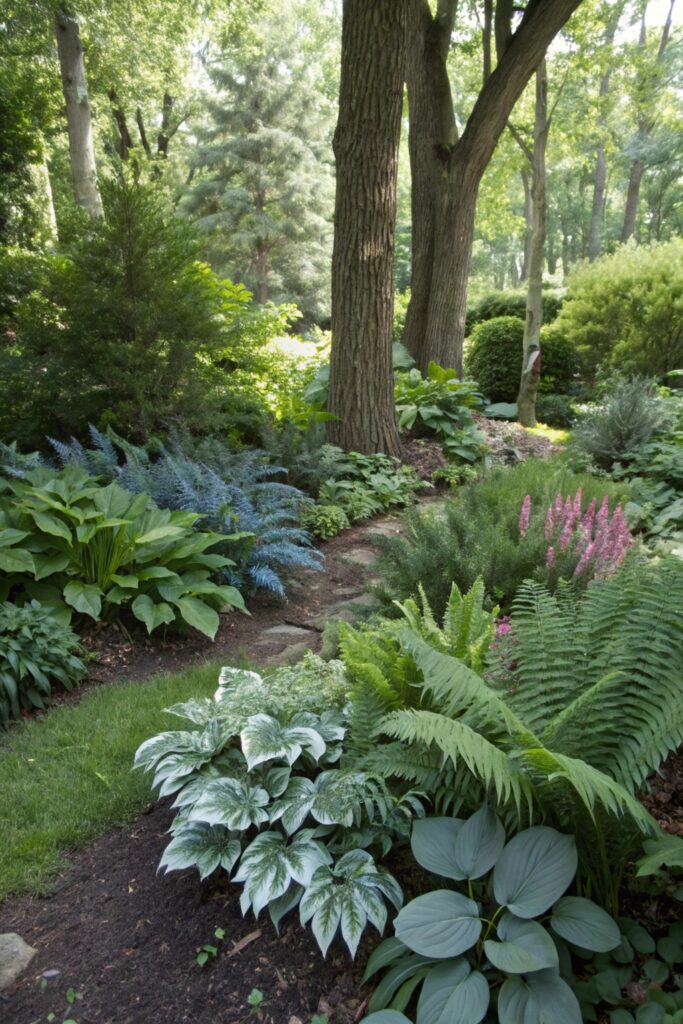
Got a shaded low spot in your garden that collects water? That’s not a problem — that’s a woodland rain garden waiting to happen. Shade-tolerant moisture-loving plants thrive in exactly these conditions.
Ferns, hostas, astilbe, and toad lily all handle periodic flooding and drying far better than most shade plants. Combine them with woodland shrubs like native azaleas or Virginia sweetspire and you’ve created a lush, layered shade garden that manages water brilliantly.
Best woodland rain garden plants:
- Ostrich fern — dramatic arching fronds, rapid spreader
- Hosta — bold foliage, tolerates wet roots
- Astilbe — feathery plumes in pink, red, and white
- Virginia sweetspire — fragrant white flowers, stunning autumn color
- Toad lily — orchid-like late-season blooms
Shaded rain gardens often end up being the most lush and atmospheric spots in the whole yard.
8. Rain Garden with Decorative Boulders and Stone Work
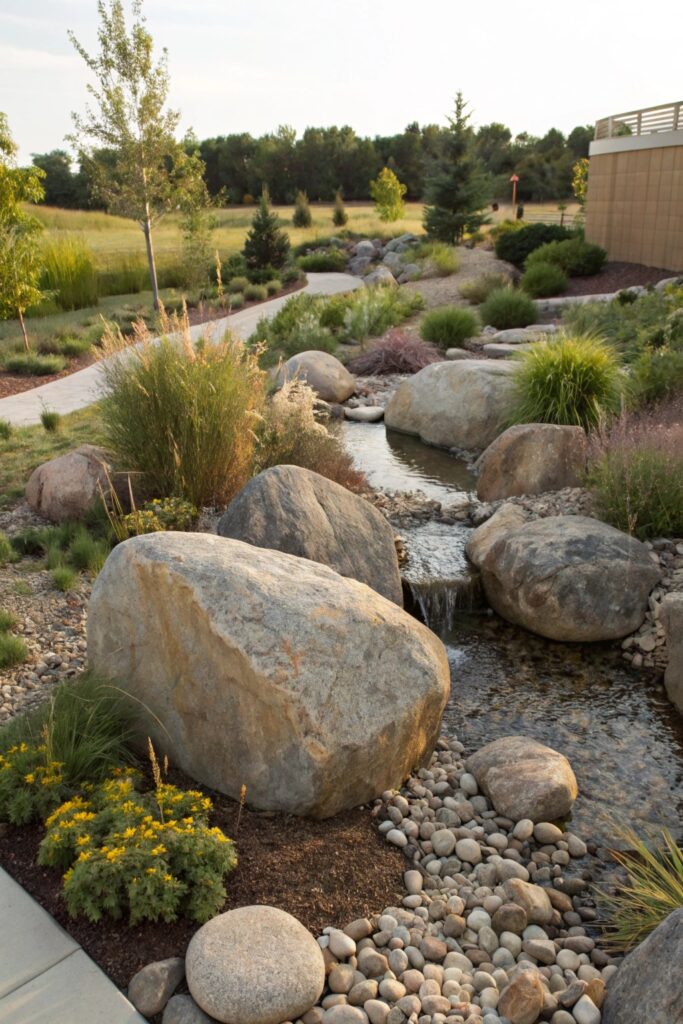
Adding decorative boulders and stonework to a rain garden elevates it from a functional planting to a genuine landscape feature. Boulders slow the flow of incoming water, prevent soil erosion, and add permanent structural interest that looks good year-round.
Position large boulders at the inlet point where water enters the garden and scatter smaller stones throughout the planting. The stones create pockets of slower drainage and give plants stable footing in areas that experience regular water flow.
How to use stone effectively:
- Place the largest boulders at the water entry point
- Use gravel mulch between plants rather than bark mulch
- Create a stone border around the garden perimeter
- Stack flat stones to form a low retaining edge on the downslope side
Stone and plants together create a rain garden that looks like it belongs to the landscape rather than sitting on top of it.
9. Rain Garden Along a Fence Line
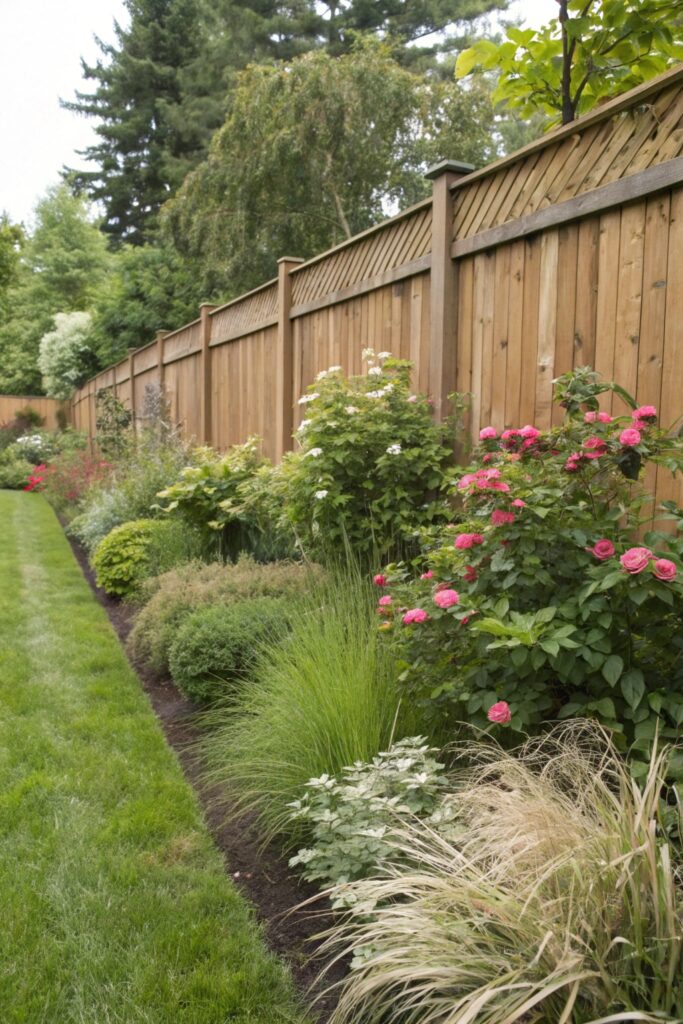
A fence line rain garden uses the length of a fence or property boundary to create a long, linear planting that absorbs runoff from an adjacent lawn or driveway while creating a beautiful green border.
This shape works particularly well because fence lines often collect runoff naturally — the ground slopes slightly toward them or paving directs water that way. Work with that existing flow rather than against it.
Plant in repeating groups along the length for a rhythm that looks cohesive and intentional. Tall grasses and shrubs at the back against the fence, medium perennials in front, and low groundcover at the lawn edge.
Great fence line rain garden plants:
- Inkberry — evergreen native shrub, dense growth
- Swamp rose — fragrant pink blooms, wildlife value
- Soft rush — vertical texture, handles very wet conditions
- Creeping Jenny — golden groundcover, fast spreading
A fence line rain garden also adds genuine privacy screening as plants mature.
10. Rain Garden with Edible Plants
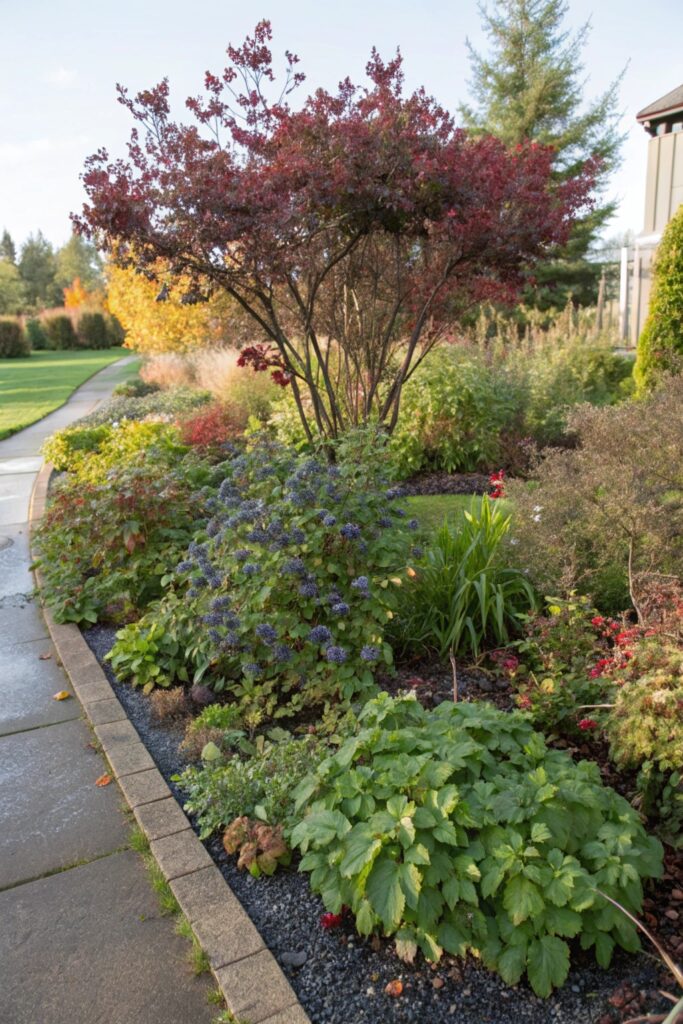
Who says a rain garden can’t feed you? A rain garden with edible plants combines stormwater management with productive growing — and the results surprise most people who haven’t tried it.
Elderberry shrubs thrive in moist conditions and produce berries for jams, syrups, and cordials. Wild ginger spreads as a groundcover and adds a gentle spicy note to cooking. Watercress grows beautifully at the wet margins of a rain garden. Even blueberries prefer the acidic, moisture-retentive conditions a well-designed rain garden provides.
Edible plants suited to rain gardens:
- Elderberry — large productive shrub, incredible wildlife value
- Blueberry — prefers moist, acidic soil, beautiful autumn color
- Watercress — thrives at wet margins, peppery salad green
- Wild ginger — shade-tolerant groundcover, culinary use
FYI, an edible rain garden is easily one of the most productive garden features you can install per square foot.
11. Rain Garden with a Recirculating Rain Chain
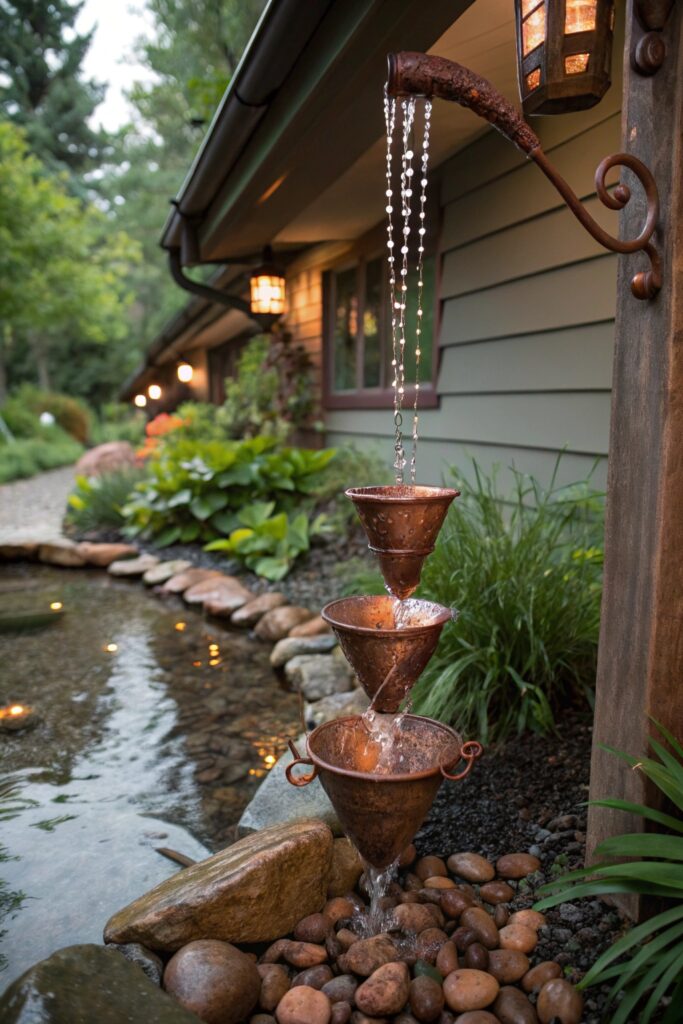
Take the visual element of your rain garden one step further with a decorative rain chain connecting your downspout to the garden below. Rain chains replace standard downspout pipes with a hanging series of cups, links, or decorative elements that guide water visibly downward in a flowing curtain.
The effect during rainfall is truly beautiful — water cascades down the chain and flows along a stone-lined channel into the rain garden, turning a functional drainage moment into something worth watching from inside the house.
Rain chain styles to consider:
- Cup-style chains — classic look, excellent water control
- Link chains — more open, elegant and minimal
- Flower or leaf-shaped cups — decorative and charming
- Hammered copper — develops a beautiful patina over time
Pair the rain chain with a splash basin of smooth stones at the base and you’ve created a water feature that only activates when it rains. That’s a truly clever design move.
Wrapping It Up
Want to draw even more wildlife once the rain garden is planted? See our guide to pollinator garden ideas.
Rain gardens solve a real problem — stormwater runoff, waterlogged corners, soggy lawns — while creating some of the most naturally beautiful and ecologically valuable garden spaces you can design. From native wildflower meadows and pollinator havens to formal geometric plantings and edible gardens, every idea here gives you a practical and stunning way to work with water rather than fighting it.
The best part about a rain garden is that it actually improves over time. The plants establish deeper roots, the soil structure improves, and the garden handles water more efficiently every year.
Pick the style that fits your space and your aesthetic, start with a small test area if you’re nervous, and let the rain do the rest. Your garden has been dealing with that water problem long enough — it’s time to turn it into something beautiful.