
These strategies focus specifically on visual and perceptual tricks — light, color, sightlines — that make a studio feel genuinely more spacious, distinct from the furniture and storage solutions covered in our guide to studio apartment ideas that maximize every square foot.
Below are 11 ways to make a studio read as considerably larger than its actual square footage, with practical notes for each.
1. Use a Light, Neutral Color Palette
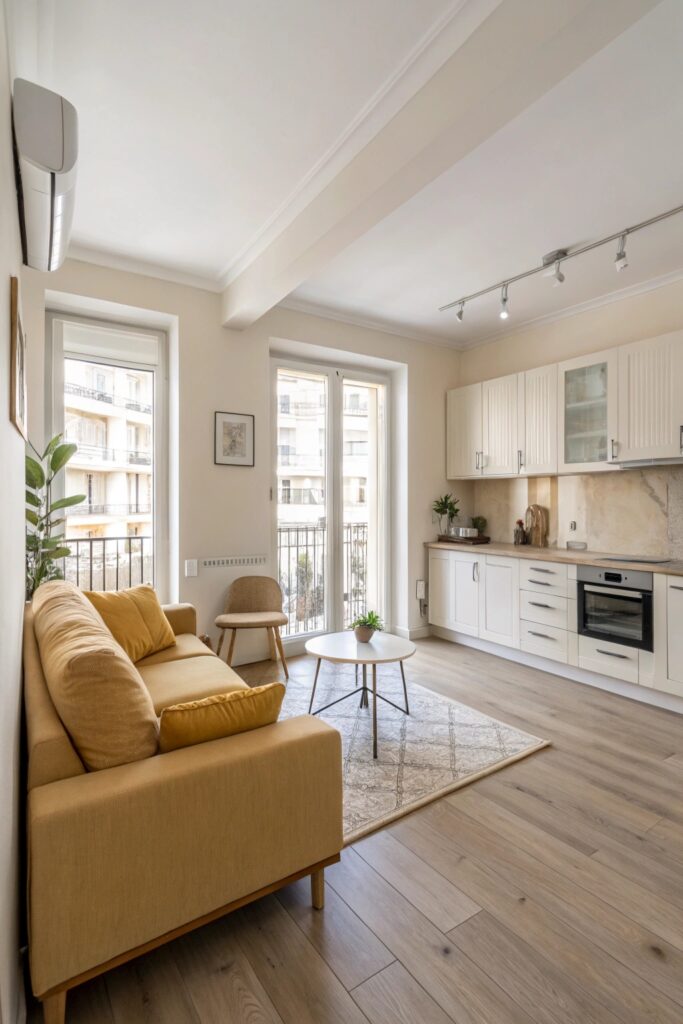
Lighter wall and furniture colors reflect more available light than darker tones, which genuinely affects how spacious a studio reads regardless of its actual square footage.
This doesn’t mean avoiding all color entirely — a lighter base still accommodates darker accents, as long as the room’s dominant tones lean light rather than dark.
2. Hang Curtains High and Wide
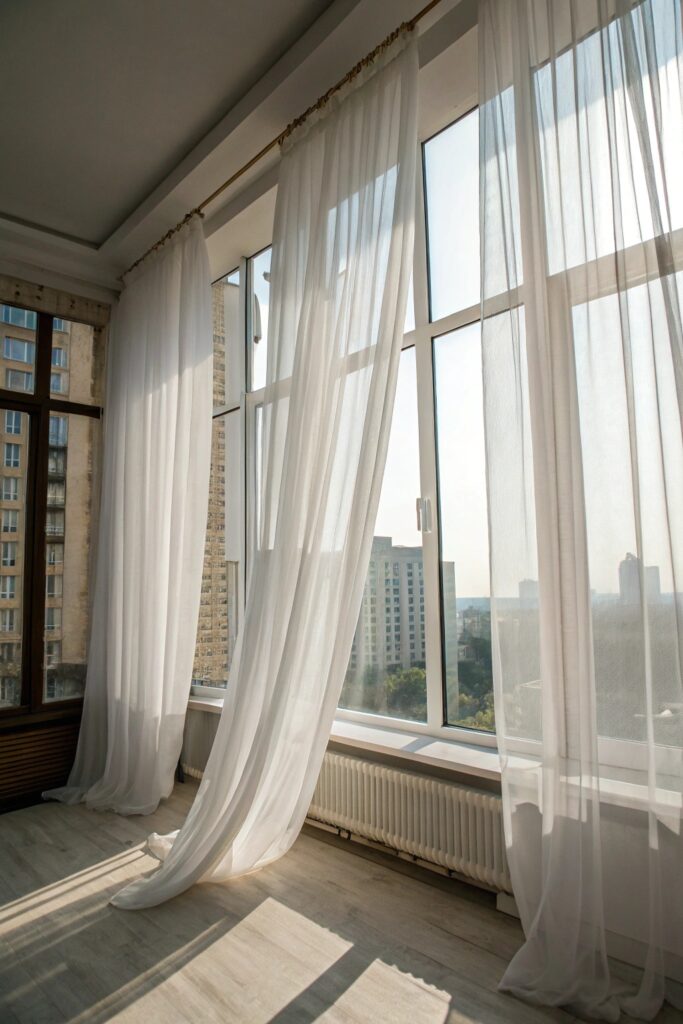
Mounting curtain rods a few inches above the window frame and extending beyond each side makes windows appear larger, which is a simple visual trick that reads as more spacious without any actual construction.
Floor-length panels specifically read as more finished and add height to the room, which matters more in a studio than a room with additional square footage to spare.
3. Use Mirrors to Bounce Light Around
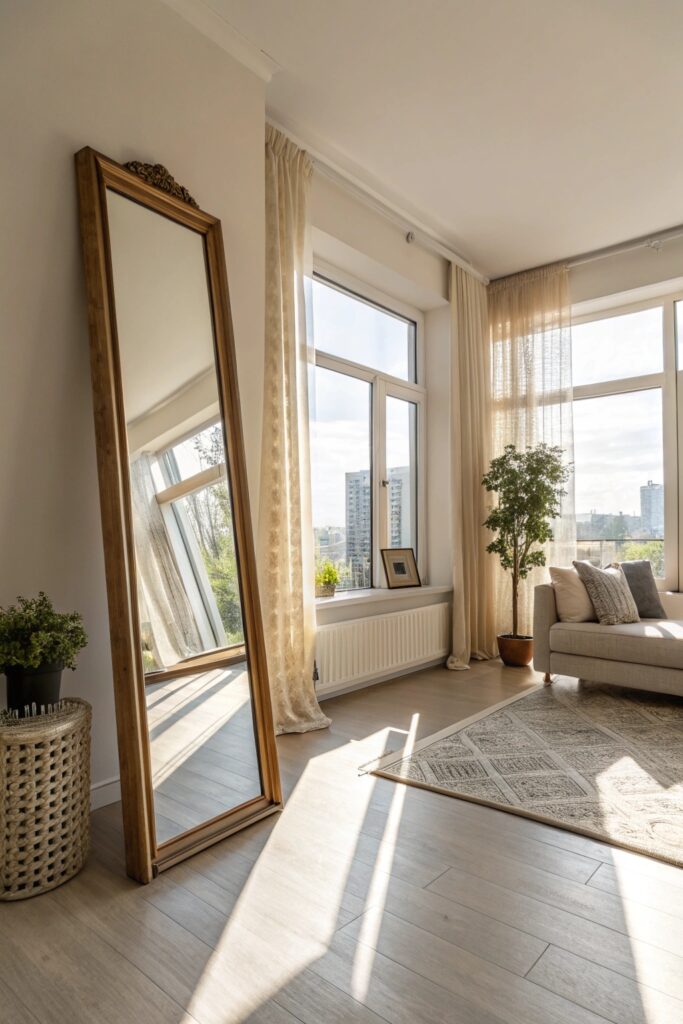
A large mirror positioned to reflect a window or light source genuinely doubles the perceived light and depth in a studio’s single open room.
Position the mirror to reflect a genuine light source specifically, since a mirror reflecting a wall or dark corner doesn’t provide the same benefit.
4. Define Zones With Rugs
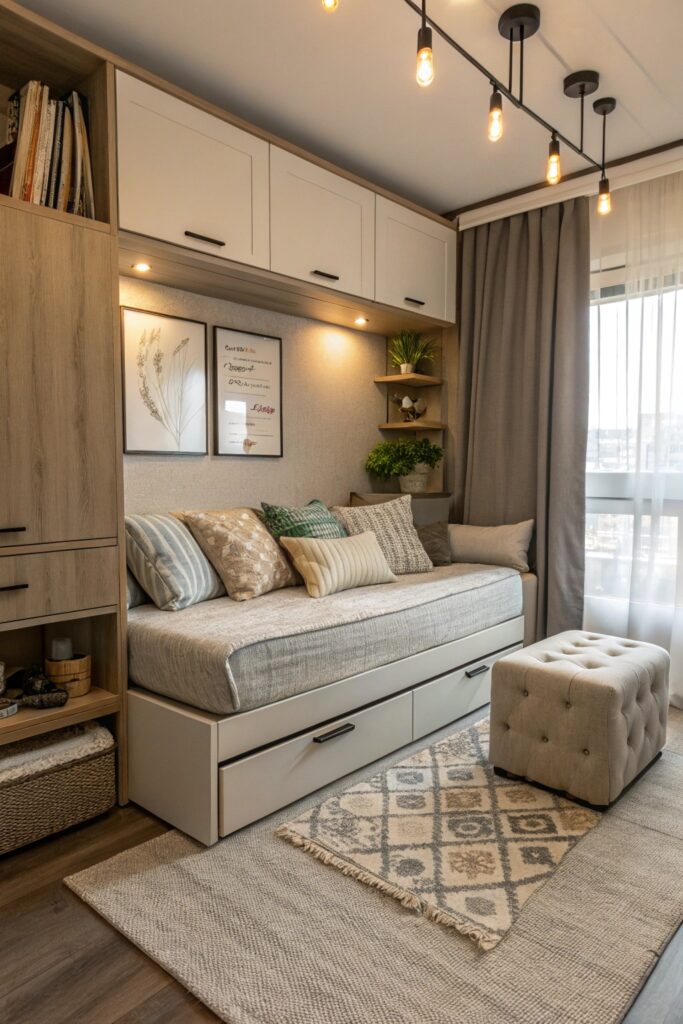
Different rugs for the sleeping and living areas create a genuine visual separation that helps a studio’s single room read as multiple distinct spaces rather than one undifferentiated area.
Choosing rugs in coordinated tones (rather than clashing patterns) keeps the zoning effect from adding visual clutter on top of the separation it’s meant to provide.
5. Keep Furniture Legs Visible
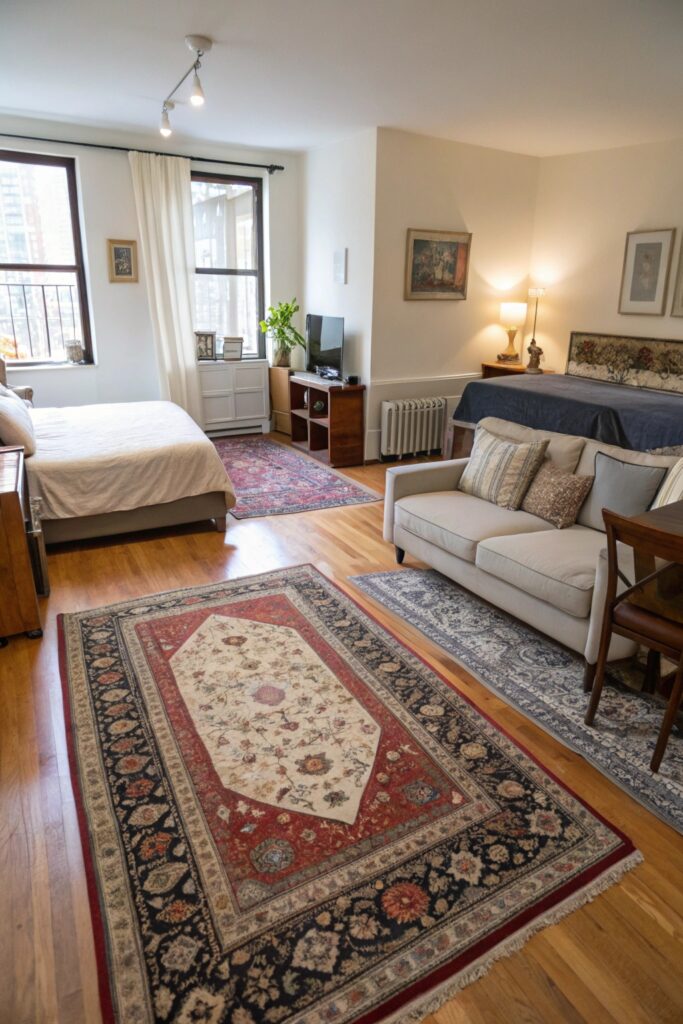
Furniture raised on visible legs, rather than a solid base touching the floor, lets light and sightlines pass underneath, which contributes meaningfully to how open a studio feels.
This effect compounds across a studio’s furniture more than in a segmented apartment, since every piece is visible from nearly every vantage point in the single continuous room.
6. Use a Room Divider Instead of Walls
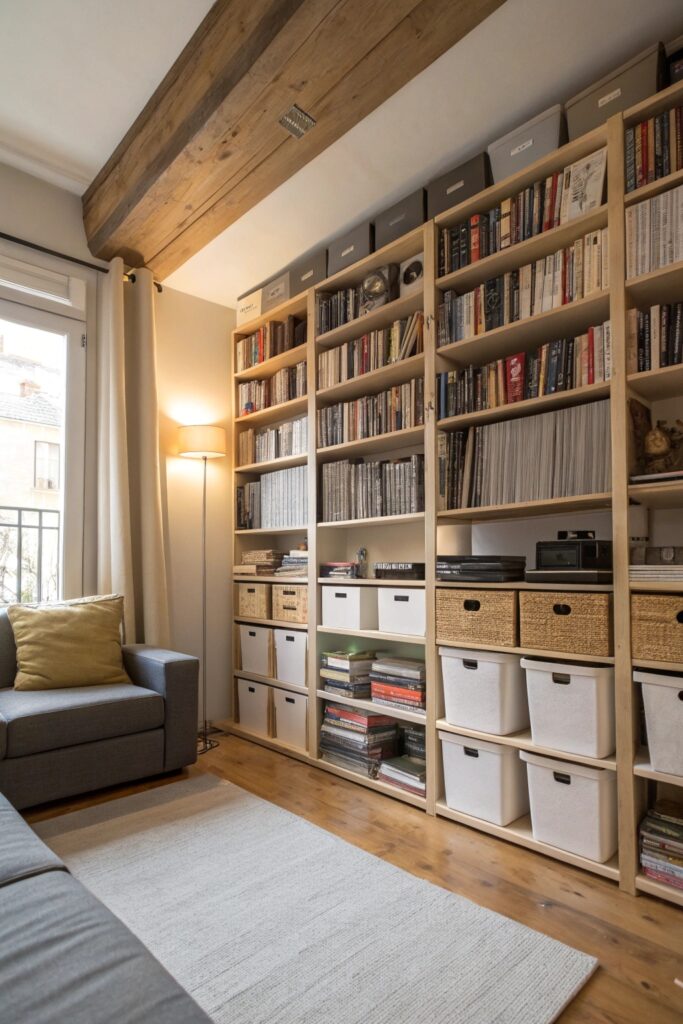
A folding screen or slatted divider creates partial visual separation without the permanence or light-blocking effect an actual wall would have, which matters for keeping the space feeling genuinely open.
This works especially well for studios where a full curtain track isn’t installable, since a freestanding divider requires no ceiling mounting or wall attachment.
7. Maximize Natural Light
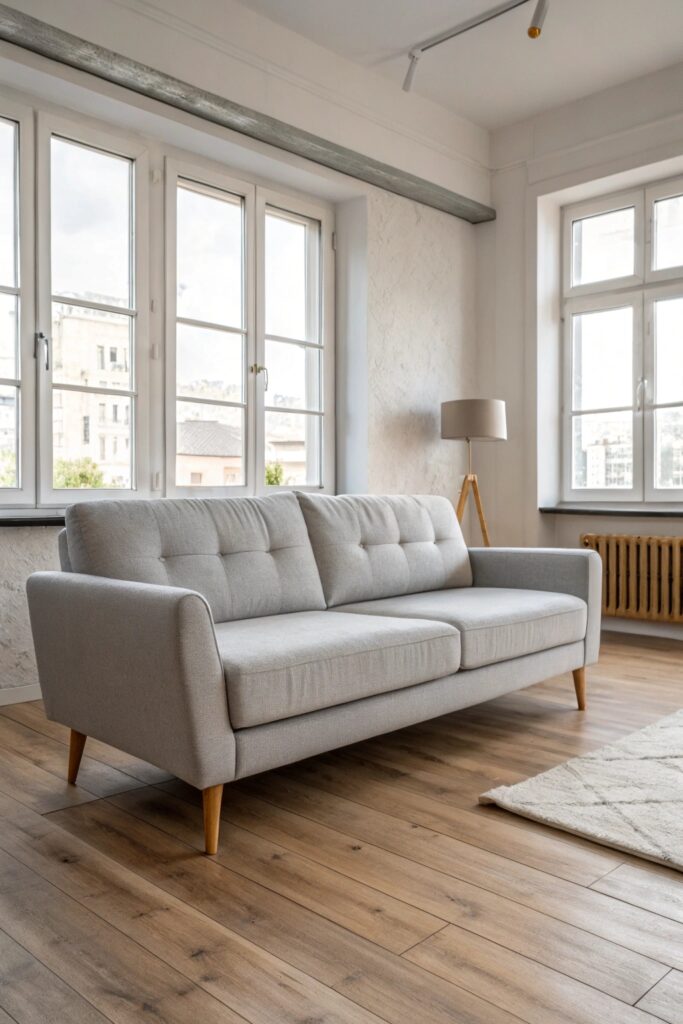
Avoiding heavy window treatments and keeping the area directly around windows clear lets in the maximum available natural light, which does more for a studio’s spaciousness than almost any other single choice.
Avoid heavy drapes or blackout curtains except where genuinely needed for sleep, since these block considerably more light than sheer or lighter-weight alternatives.
8. Stick to a Cohesive Color Scheme
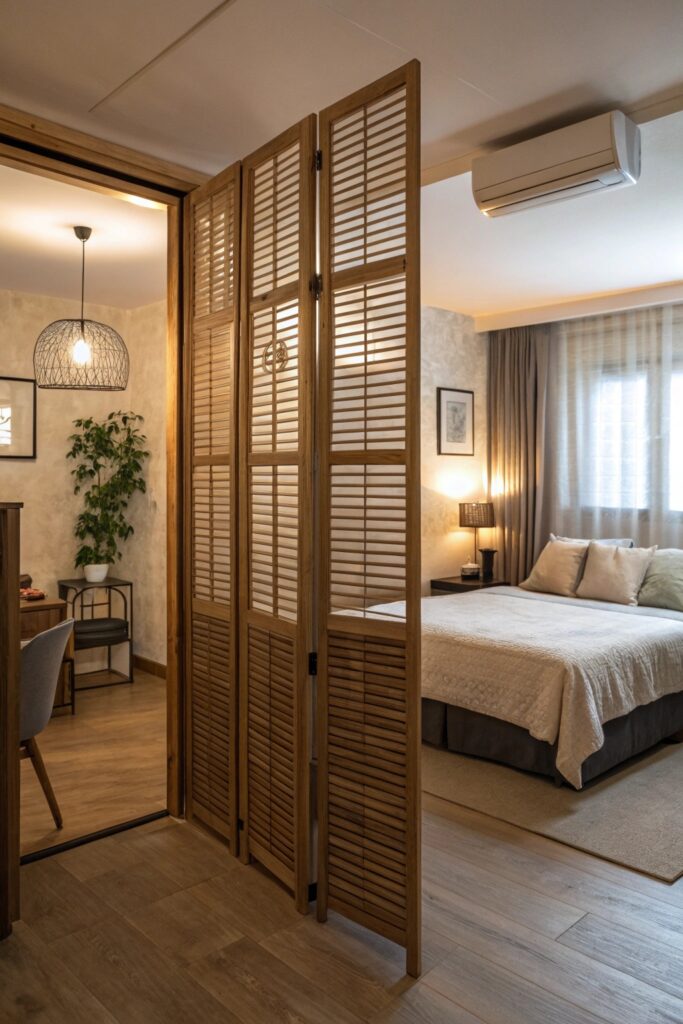
Limiting the entire studio to 2-3 coordinated colors throughout (rather than different palettes per zone) prevents visual breaks that can make the open space feel more segmented and smaller.
This cohesion matters more in a studio than in a segmented apartment, since every color choice is visible simultaneously from nearly any point in the room.
9. Declutter Ruthlessly
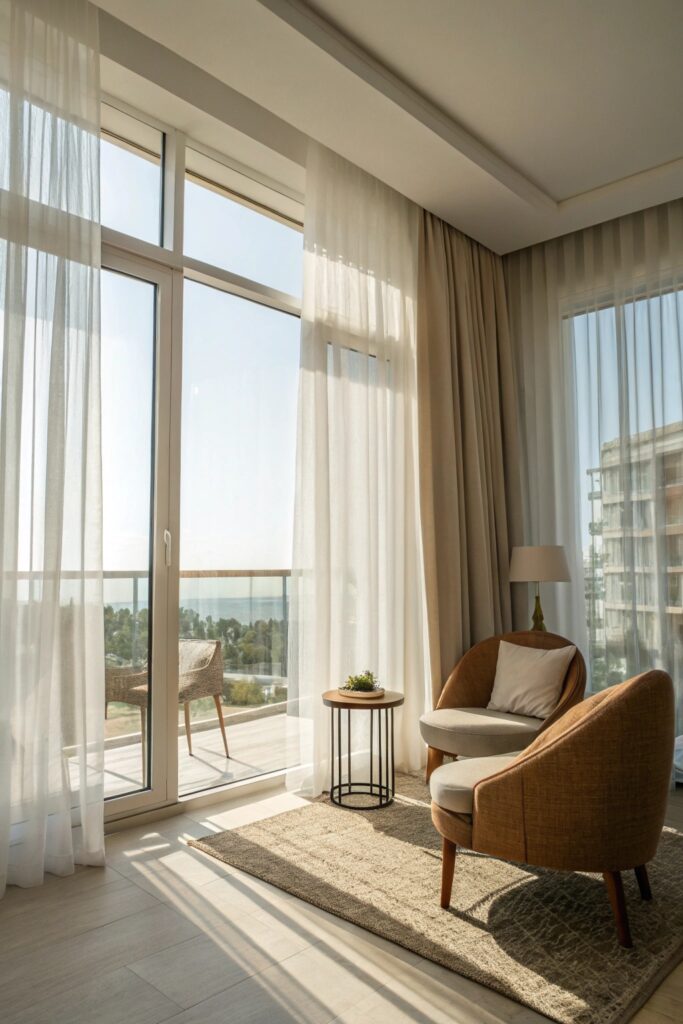
A studio genuinely cannot absorb the same volume of visible possessions a larger apartment can, making regular decluttering a more direct factor in how spacious the room feels than in almost any other living situation.
A consistent one-in-one-out habit, rather than periodic major purges, keeps a studio’s tighter storage capacity from becoming overwhelmed again shortly after each cleanup.
10. Choose Furniture Scaled to the Room
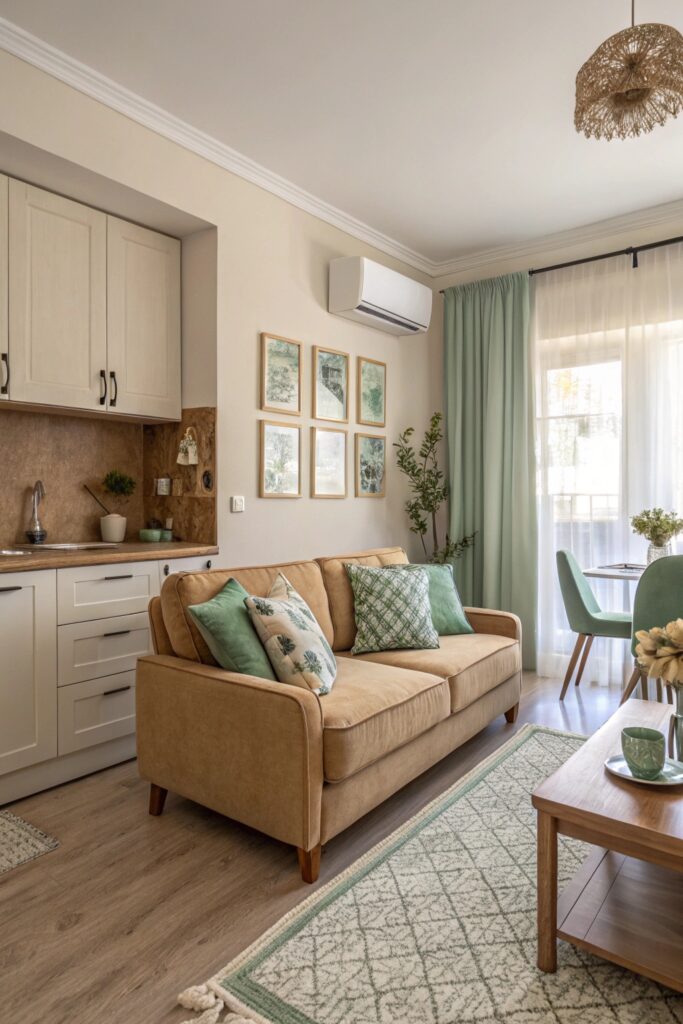
Oversized furniture dominates a studio’s single room in a way it wouldn’t in a larger apartment with more square footage to absorb it, making genuinely appropriate scale a real factor in how the space reads.
Measure your specific studio’s dimensions carefully before any furniture purchase, since a piece that looks reasonably sized in a store can read as oversized once placed in a genuinely compact room.
11. Add Vertical Visual Interest
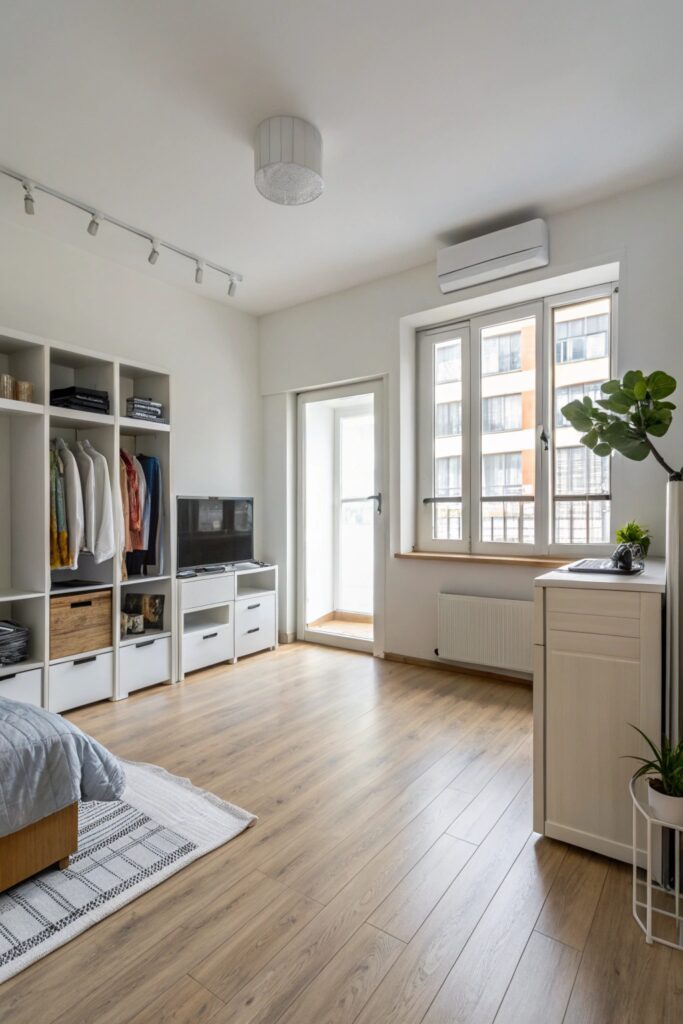
Tall shelving, floor-to-ceiling curtains, and vertically arranged art draw the eye upward, which makes a room feel taller and more spacious than horizontal-focused styling would.
Combining These Tricks for the Biggest Impact
These strategies genuinely compound when used together rather than individually — a light color palette paired with a well-placed mirror and visible furniture legs does considerably more for a studio’s perceived size than any single change on its own.
If you’re only able to tackle a few of these at once, prioritize light (natural and reflected) and a cohesive color palette first, since both affect how the entire room reads immediately upon walking in, before any furniture or storage rearranging even comes into play.
Most of these changes require little to no financial investment beyond a mirror or curtain rod, which makes this a genuinely accessible starting point for anyone in a rental studio before considering larger furniture purchases or storage solutions.
Wrapping This Up
Light and mirrors matter more than any other single change, since both directly affect how open and bright the entire room feels regardless of its actual dimensions. A cohesive color palette and genuine decluttering discipline are worth prioritizing next, since both prevent the visual breaks and clutter that make a small space read as considerably more cramped than it actually is.