
A genuinely organized bathroom depends more on the underlying system — categorization, consistent homes for items, regular maintenance — than on any specific storage product, which is why buying organizational bins before decluttering rarely solves the actual problem.
Below are 14 principles for building a system that actually lasts, with practical notes for each.
1. Start With a Full Declutter Before Buying Anything
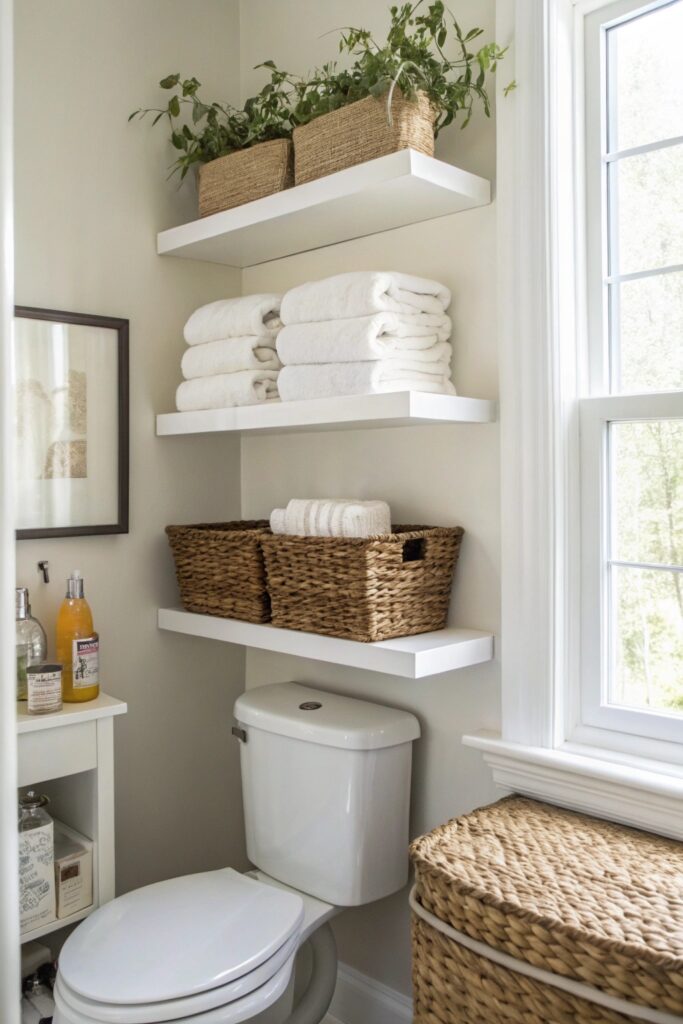
Emptying every drawer, cabinet, and shelf and sorting contents before purchasing a single organizational product prevents the common mistake of buying storage sized for clutter you didn’t actually need to keep.
This step alone often reveals that a bathroom has enough storage capacity already — the problem is frequently what’s stored rather than genuinely insufficient space.
2. Toss Expired Products Immediately
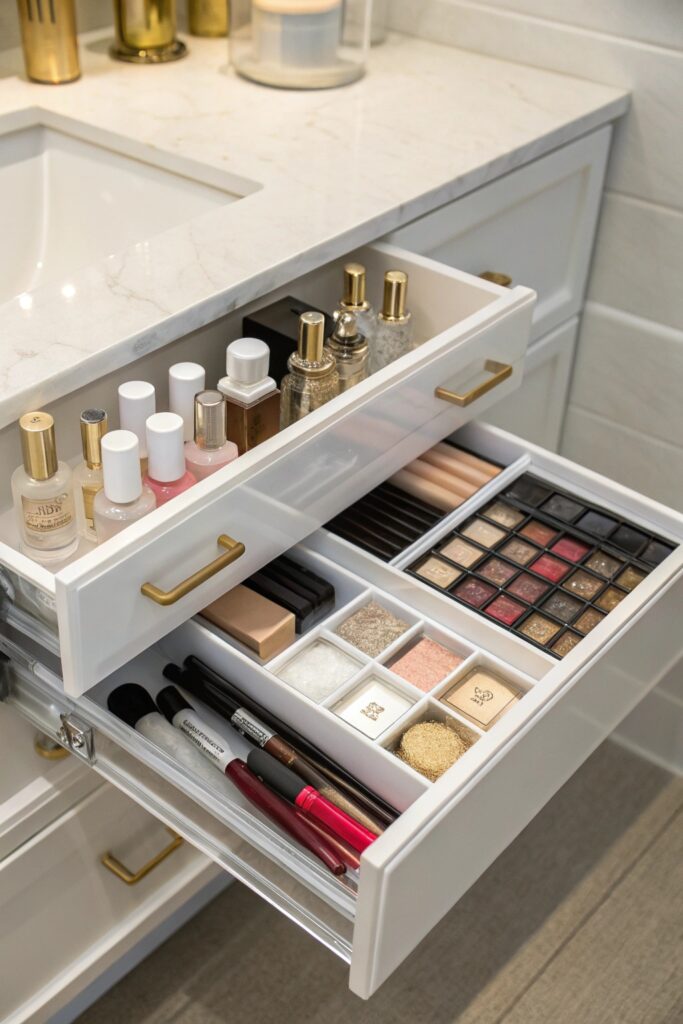
Checking expiration dates on medications, sunscreen, and skincare products during the initial declutter removes items that shouldn’t be kept regardless of how the rest of the system gets organized.
Many people are surprised by how much genuine volume this step alone removes, since expired products accumulate gradually and easily go unnoticed during normal daily use.
3. Group Items by Category, Not Just by Type of Container
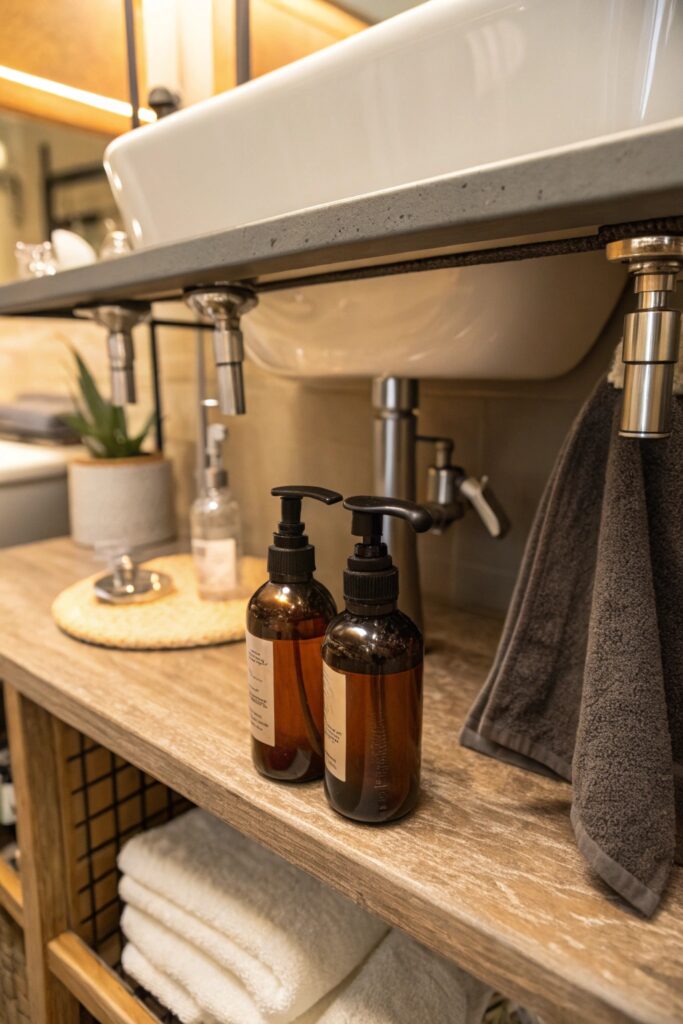
Organizing by function (skincare, haircare, first aid, cleaning) rather than simply by what container items happen to be in creates a system that’s genuinely easier to navigate and maintain.
This categorization should happen before assigning storage locations, since the right container choice depends on understanding what each category actually needs to hold.
4. Assign Every Category a Specific Home
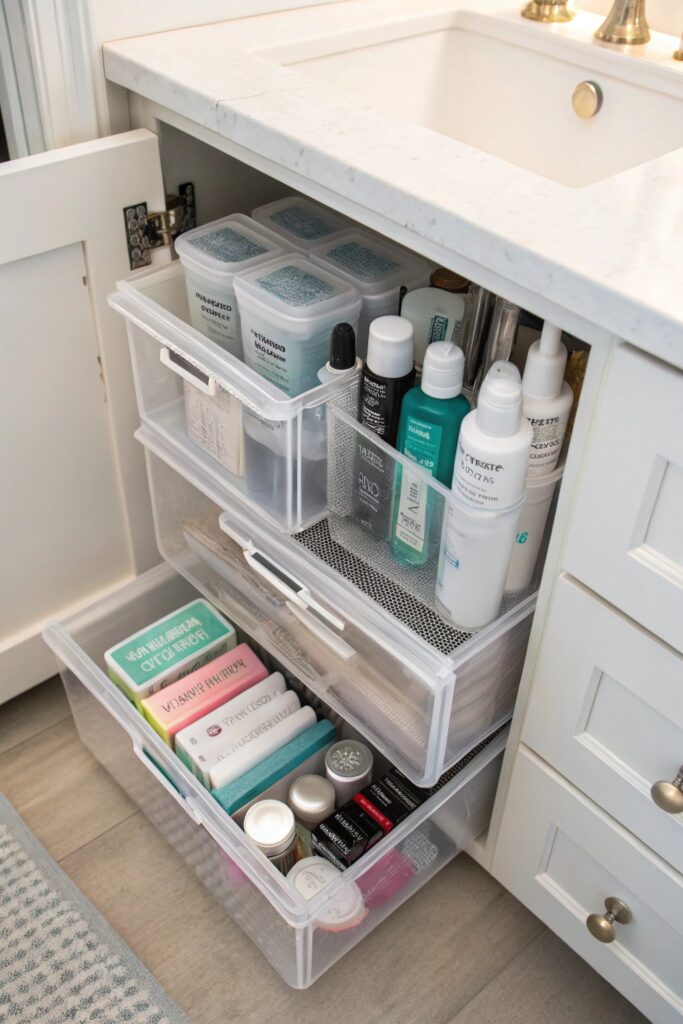
Once categories are established, giving each one a consistent, specific storage location prevents items from drifting back into disorganized piles after the initial organizing effort.
This consistency is what separates a genuinely lasting system from a one-time cleanup that gradually reverts to clutter within a few weeks.
5. Use Vertical Space Throughout the Room
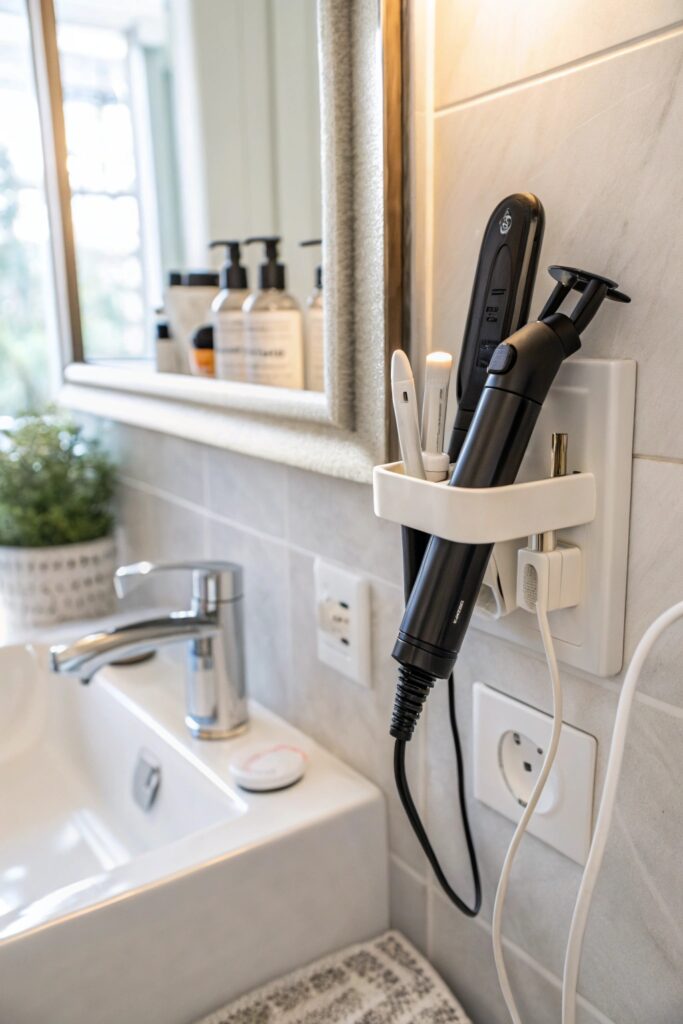
Bathrooms typically have more unused vertical space than floor space, making wall-mounted shelving, over-the-door racks, and stacked storage genuinely more valuable here than in most other rooms.
This is worth prioritizing specifically because bathroom floor space is usually the most constrained resource in the room, while wall space above fixtures often sits completely empty.
6. Corral Loose Items in Bins Rather Than Leaving Them Loose
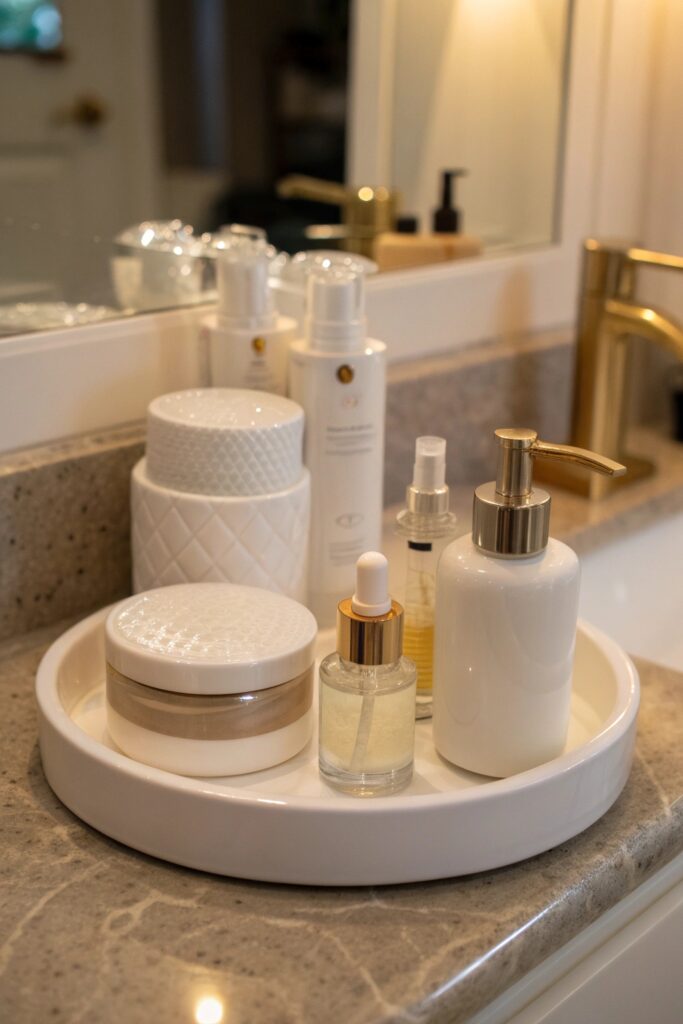
Small bins or trays within larger cabinet or drawer spaces keep smaller items from sliding into a disorganized pile every time a drawer opens or closes.
This matters more in a bathroom than many other rooms, since bathroom items tend to be smaller and more numerous than in spaces like a living room or bedroom.
7. Address the Shower and Tub Separately From the Rest of the Room

The shower and tub area has genuinely different organizational needs (moisture resistance, easy access while wet) than dry storage elsewhere, making it worth planning as its own distinct zone.
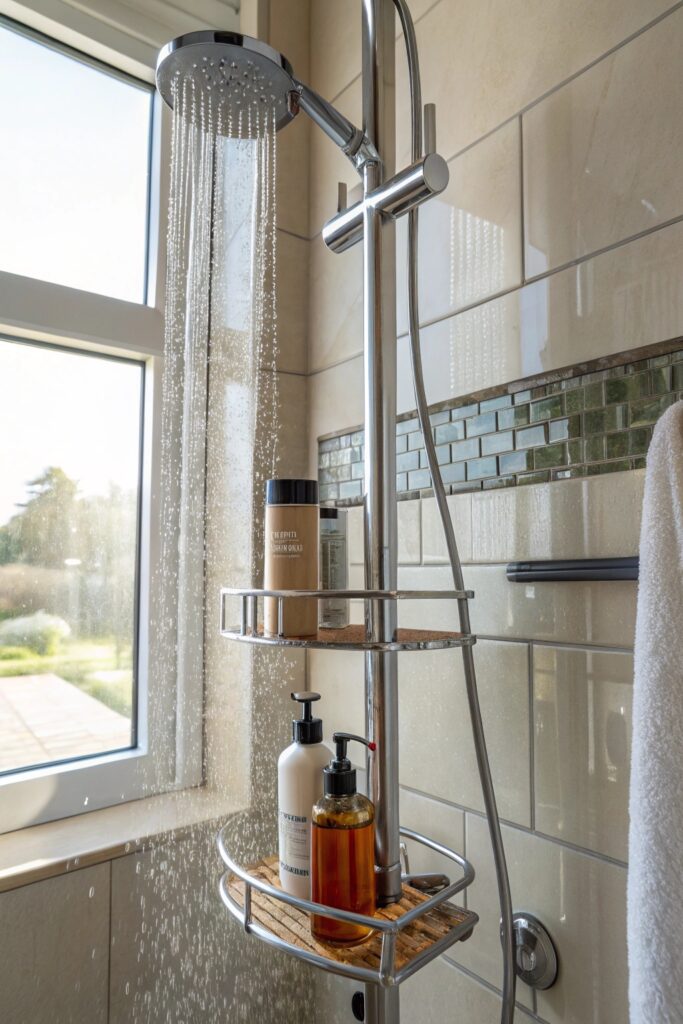
A dedicated caddy or built-in niche specifically for shower products keeps this wet zone organized without needing to coordinate with the room’s dry storage system.
8. Maintain the System With a Regular Reset
A brief weekly or biweekly tidy-up, returning items to their assigned homes, keeps an organized bathroom from gradually reverting to clutter between larger organizing efforts.
This small, regular habit matters more for long-term success than the initial organizing project itself, since even a well-designed system degrades without some ongoing maintenance.
9. Label Everything, Even When It Seems Obvious
Clear labels on bins and containers help every household member (and future you, months later) maintain the system correctly, rather than relying on memory alone.
This matters especially in a shared bathroom, where multiple people need to intuitively understand where things belong without needing to ask or guess.
10. Choose Storage Materials That Handle Humidity
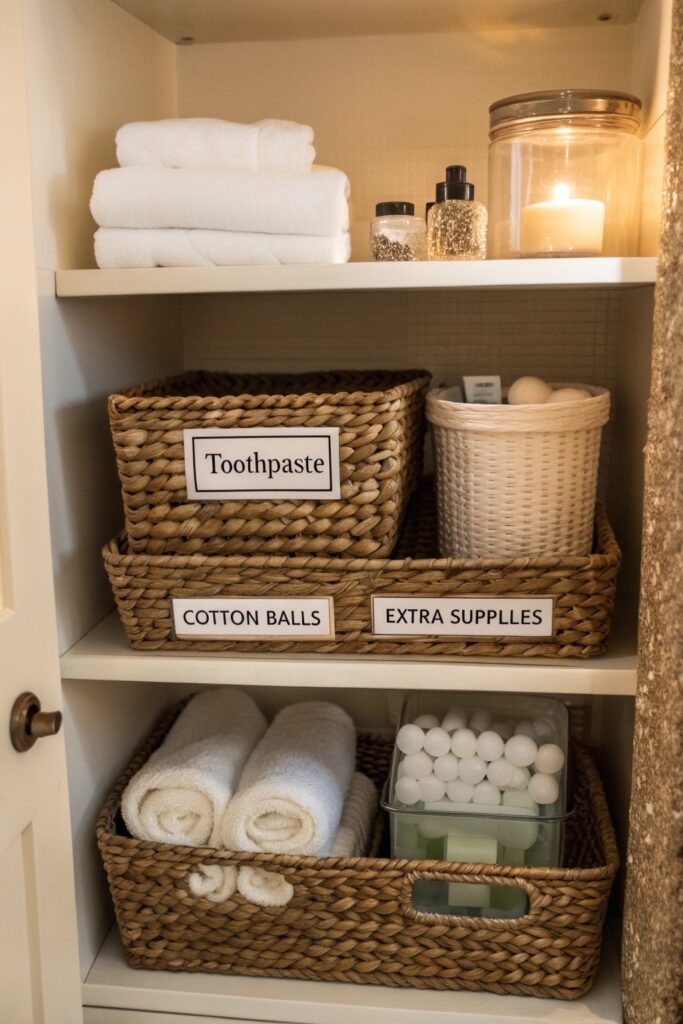
Bathrooms experience more consistent moisture exposure than most rooms, making water-resistant materials (plastic, sealed wood, metal with rust-resistant coating) worth prioritizing over materials prone to warping or mold.
This is worth considering specifically for any storage solution installed near the shower or sink, where direct water exposure is a genuine ongoing concern rather than an occasional risk.
11. Keep a Designated Spot for Medications Separate From Cosmetics
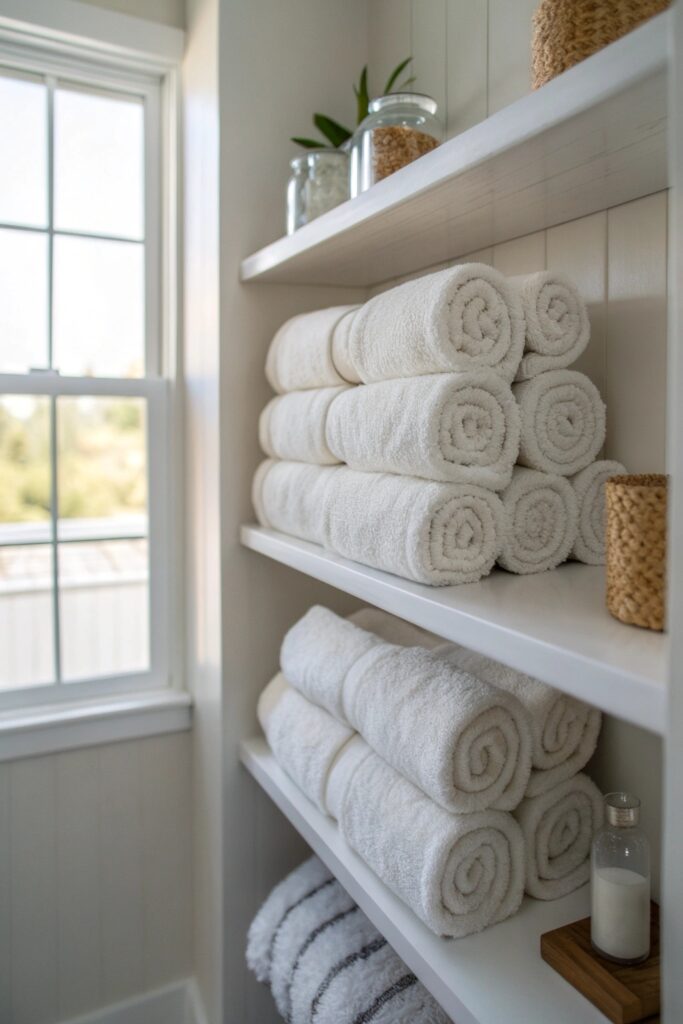
Separating medications from cosmetics and toiletries reduces the chance of confusion, particularly in a household with children who might not distinguish between the two categories.
A locked or high, out-of-reach cabinet specifically for medications is worth considering in any household with young children, beyond simple organizational separation.
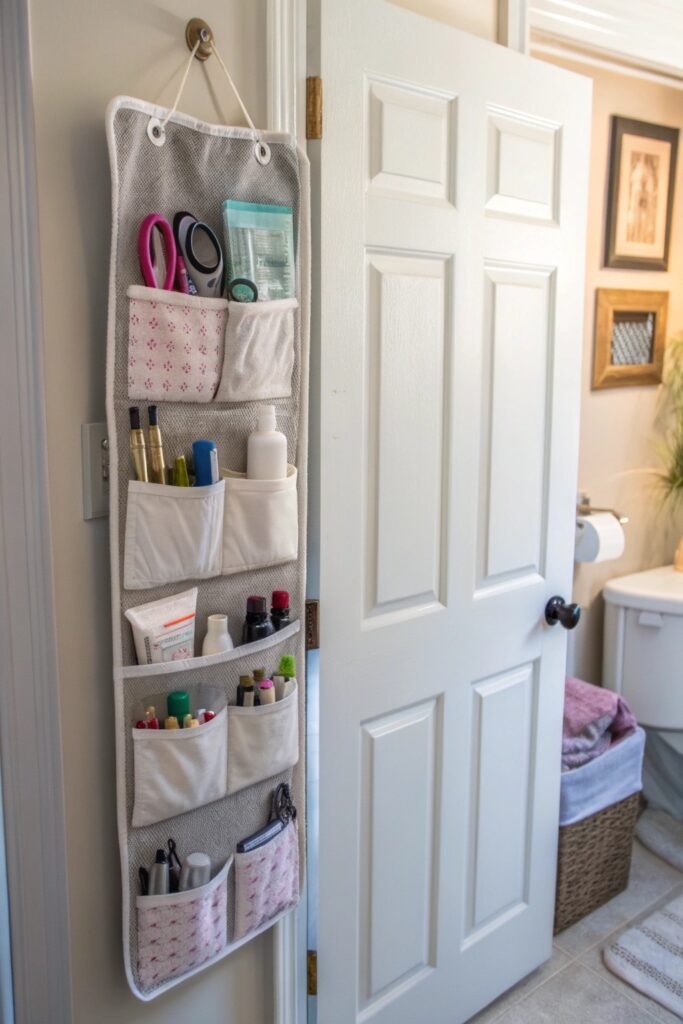
12. Use the Back of the Door for Extra Storage
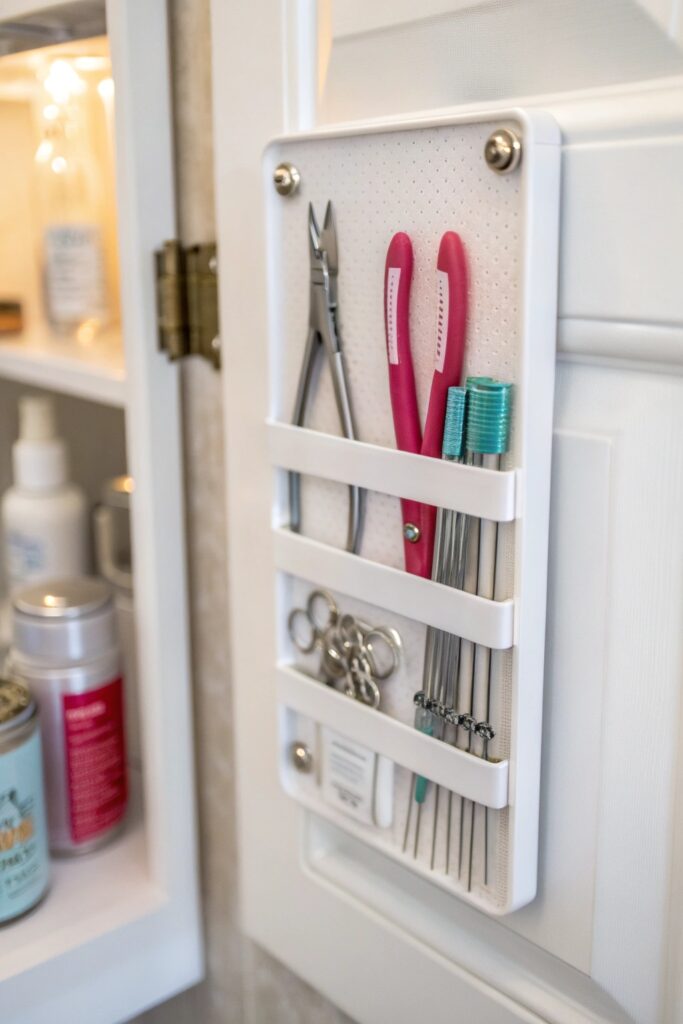
An over-the-door organizer recovers genuinely unused space that exists in nearly every bathroom, without requiring any wall modification or new furniture.
13. Store Rarely Used Items Furthest From Daily Reach

Items used only occasionally (seasonal products, backup supplies) belong in the least convenient storage spots, reserving the most accessible locations for genuinely daily-use items.
This hierarchy is a simple but frequently overlooked organizing principle — many disorganized bathrooms have rarely used items occupying prime, easily-reached storage that daily-use items actually need.
14. Reassess the Whole System Seasonally
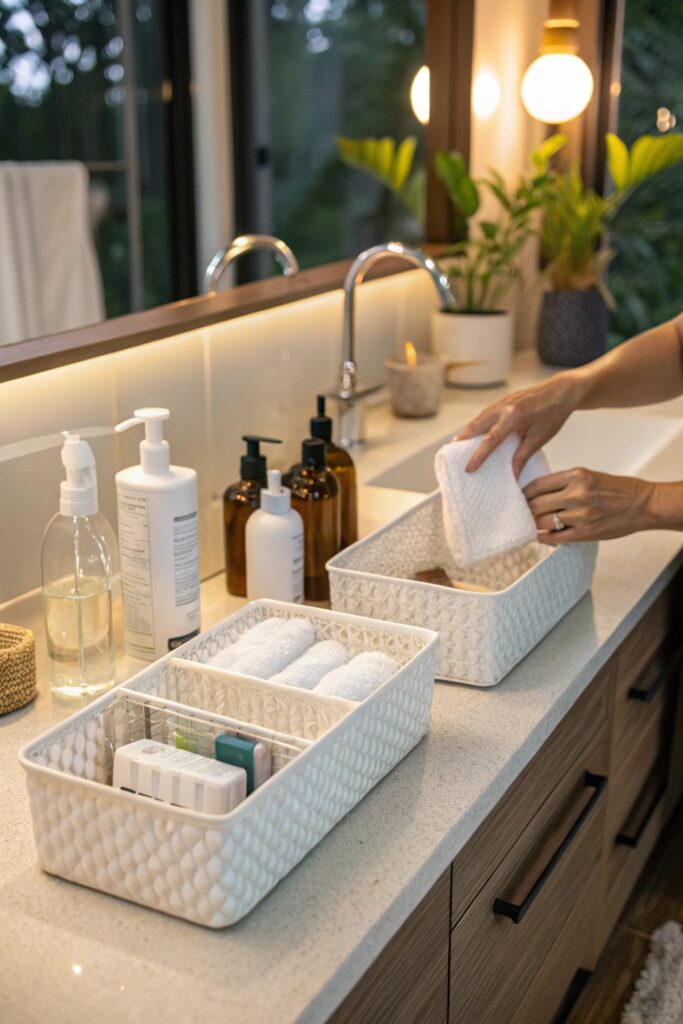
A seasonal check-in (roughly every three months) catches products that have expired, categories that have shifted, or storage that’s stopped working as household needs change over time.
This is worth treating as a recurring calendar reminder rather than something to remember on its own, since seasonal reassessment is easy to let slip without a specific prompt.
Final Thoughts
Decluttering first and assigning consistent homes for each category matter more than any specific product purchase, since both address the root causes of bathroom clutter rather than just its symptoms. A regular maintenance habit is worth establishing early, since even a well-designed system gradually breaks down without some ongoing upkeep.