
A functional mudroom doesn’t require a dedicated room — the right combination of hooks, storage, and a defined drop zone can turn even a narrow entryway into a genuinely organized transition space for a busy household.
Below are 10 ways to build that kind of space, with real costs and practical notes for each.
1. Install a Wall-Mounted Hook Rail
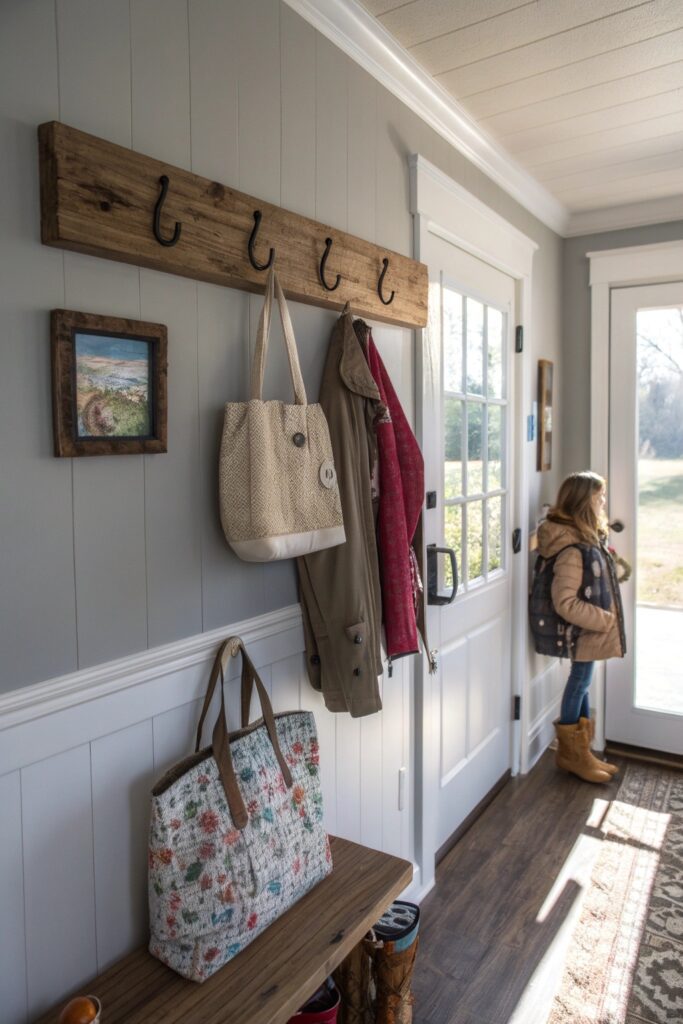
A hook rail ($20-50) mounted at a height accessible for the whole family gets coats and bags off the floor immediately, and it’s genuinely one of the fastest mudroom improvements to install.
Mount at multiple heights if kids will be using the hooks regularly, since a single adult-height rail doesn’t serve younger family members well.
2. Add a Slim Storage Bench
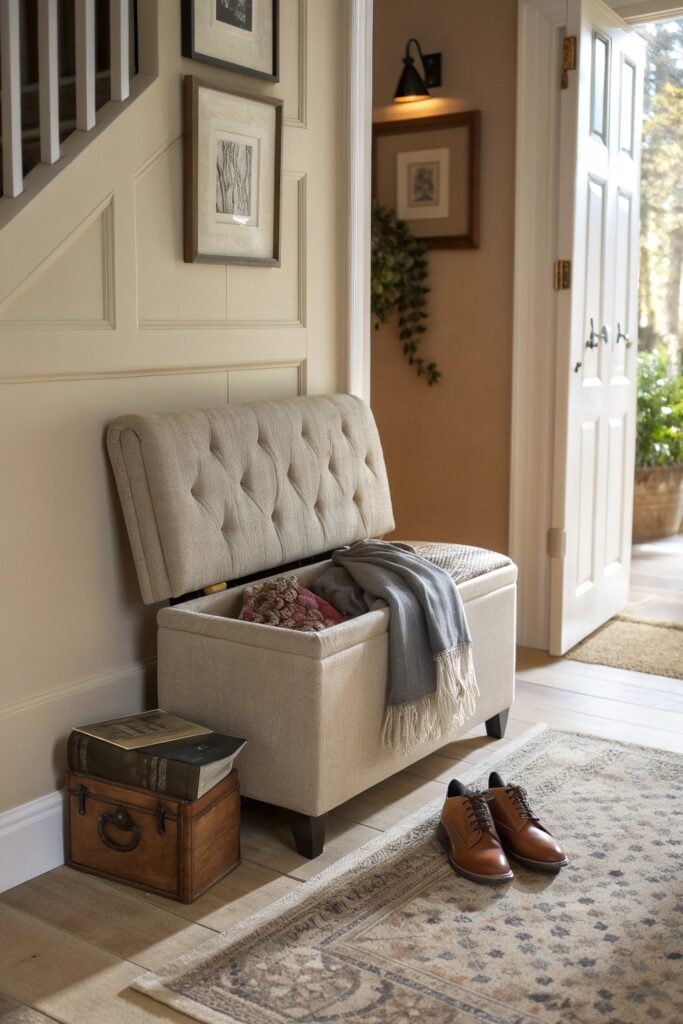
A bench with built-in storage ($100-300) provides a spot to sit while putting on shoes, plus concealed storage for items you don’t want visible in the entry.
Choose a bench with a shallow depth (14-16 inches) specifically for a narrow entryway, where a standard-depth bench would block too much walking clearance.
3. Create a Drop Zone With Labeled Bins
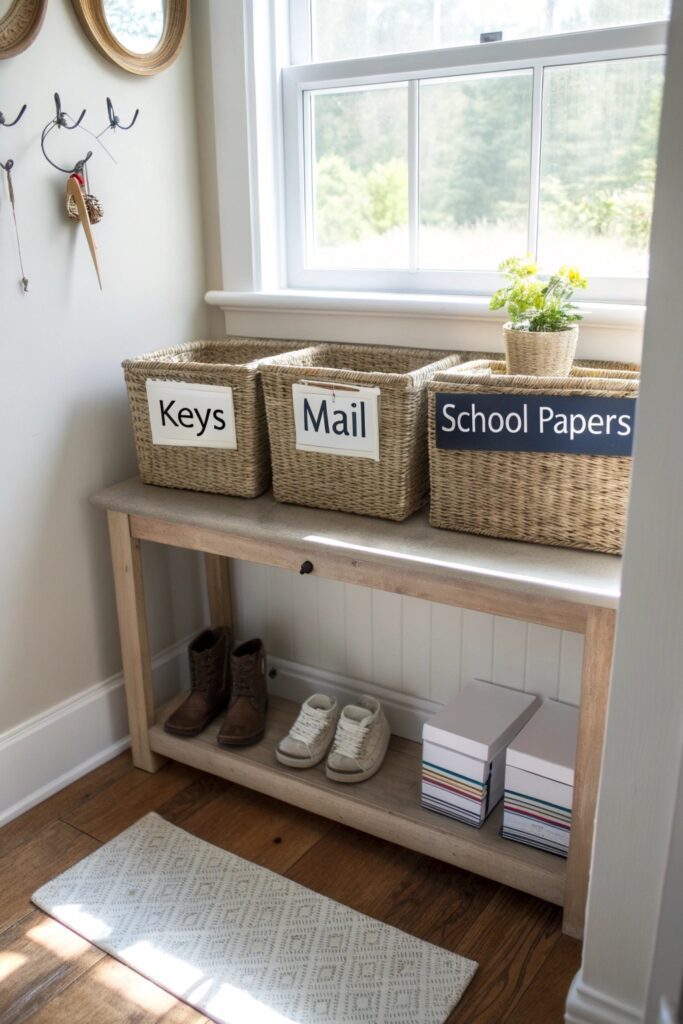
Labeled bins ($10-20 each) assigned to specific family members or categories (keys, mail, sports gear) genuinely reduce the daily clutter accumulation a shared entry space tends to accumulate.
This system works best when it’s genuinely easy to use — bins within easy reach and clearly labeled, rather than requiring effort that makes people default back to just dropping things on the floor.
4. Build a Shoe Cubby From Stackable Crates
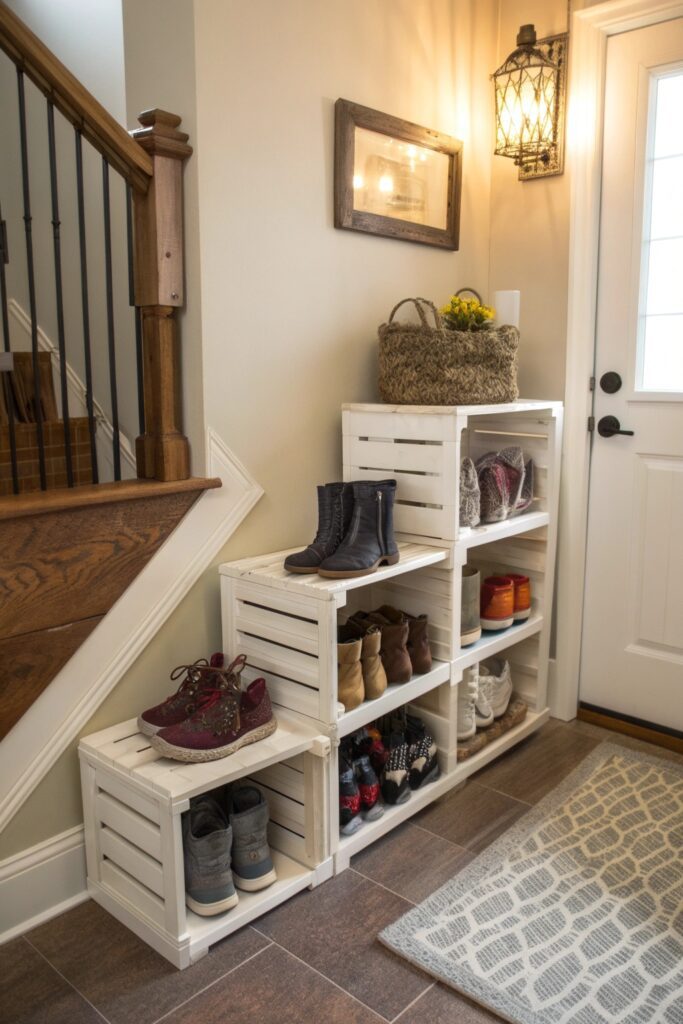
Wood or plastic crates ($10-15 each) stacked and secured together create individual shoe cubbies for a fraction of the cost of built-in cabinetry, and the modular format lets you add more as needed.
This is a genuinely approachable weekend DIY project, requiring only basic tools to secure the crates together and optionally mount them to the wall for stability.
5. Use a Pegboard for Flexible Organization
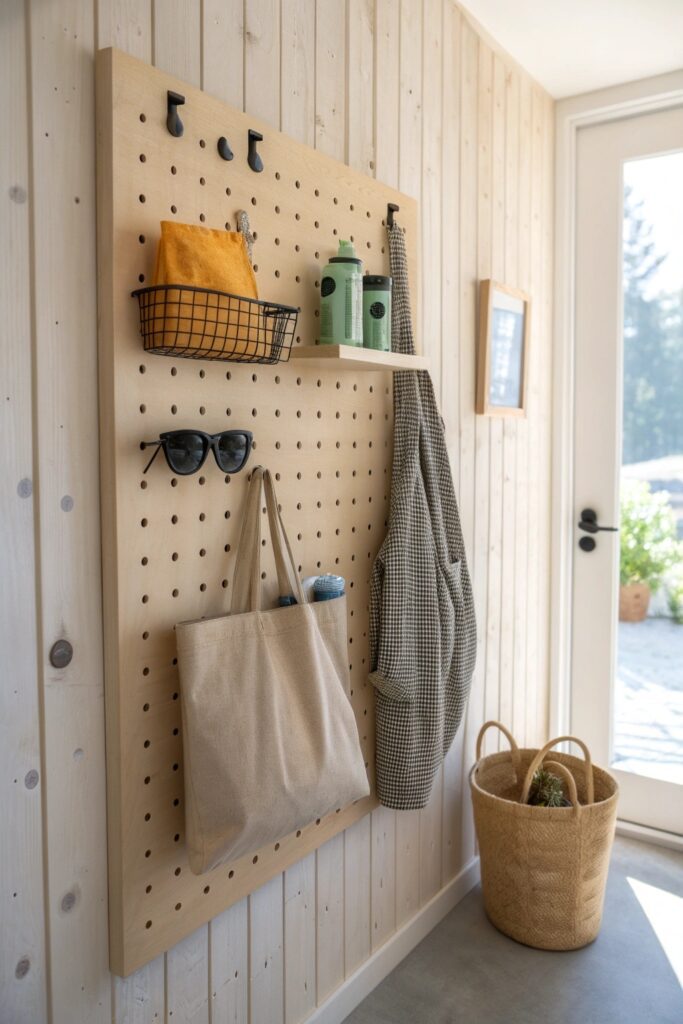
A pegboard ($30-70) with hooks and small shelves offers fully reconfigurable storage that adapts as your family’s specific mudroom needs change over time.
This is worth prioritizing over fixed shelving specifically if you’re not certain exactly what storage configuration will work best, since pegboard hardware can be rearranged without new holes or hardware.
6. Convert a Closet Into a Mini Mudroom
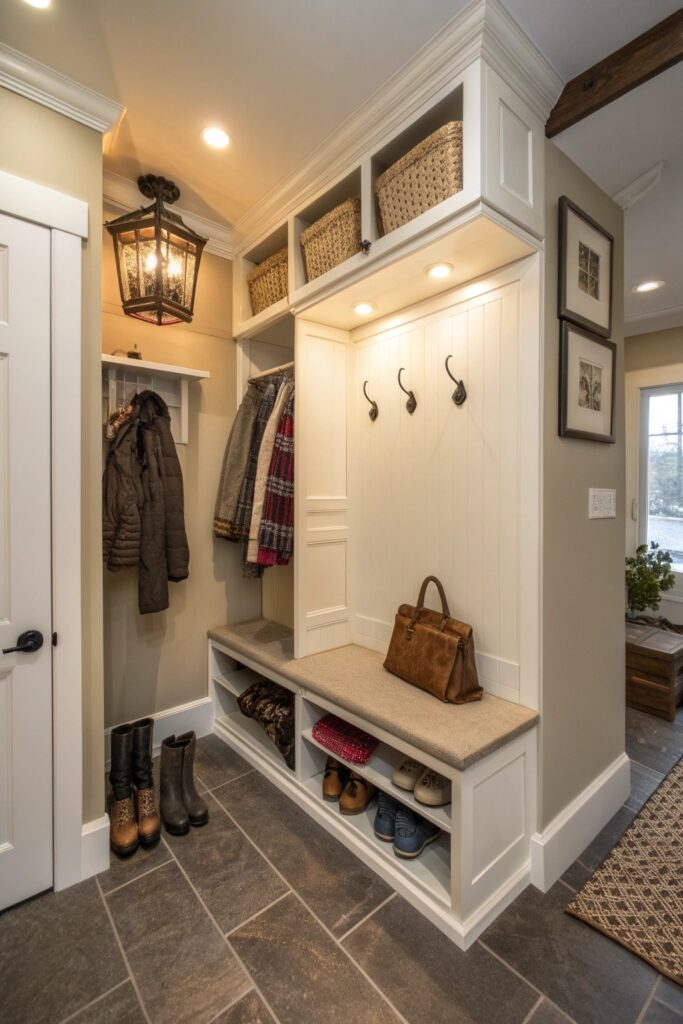
Removing the closet rod and adding hooks, a bench, and shoe storage ($150-400 depending on additions) turns an underused entry closet into a genuine dedicated mudroom space.
This works especially well for homes without a purpose-built mudroom, using existing closet square footage rather than requiring new construction.
7. Add a Fold-Down Table for Mail and Keys
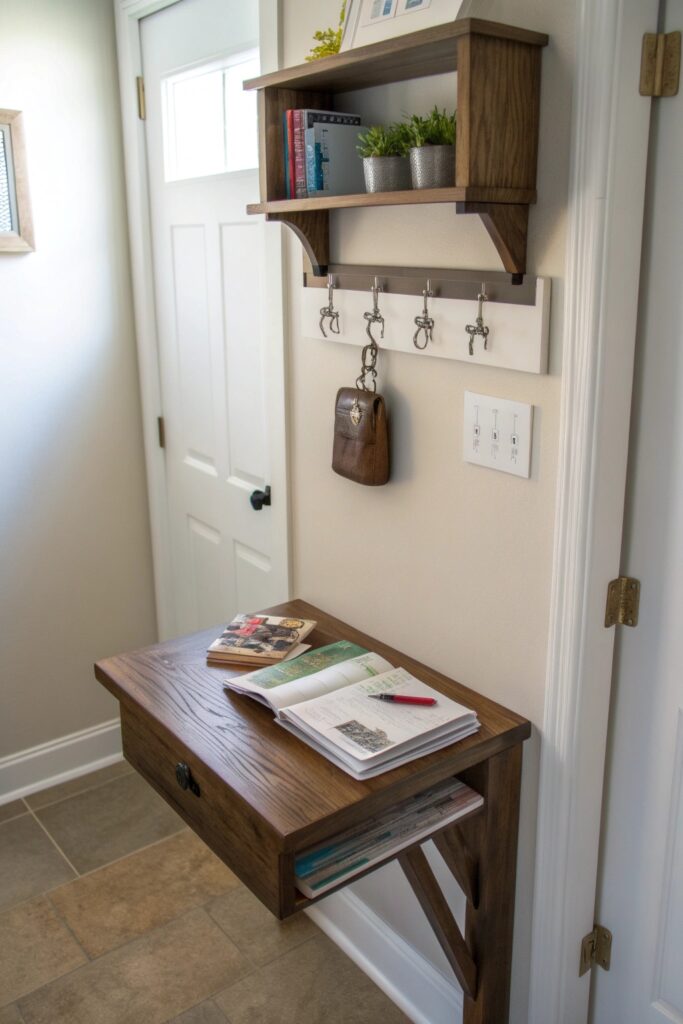
A small fold-down surface ($40-100) provides a spot to set down mail and keys when entering, then folds flat against the wall when not needed, recovering floor space in a tight entry.
This is particularly useful in a genuinely narrow mudroom where a fixed table or console would block the walking path most of the time.
8. Install a Boot Tray Near the Door
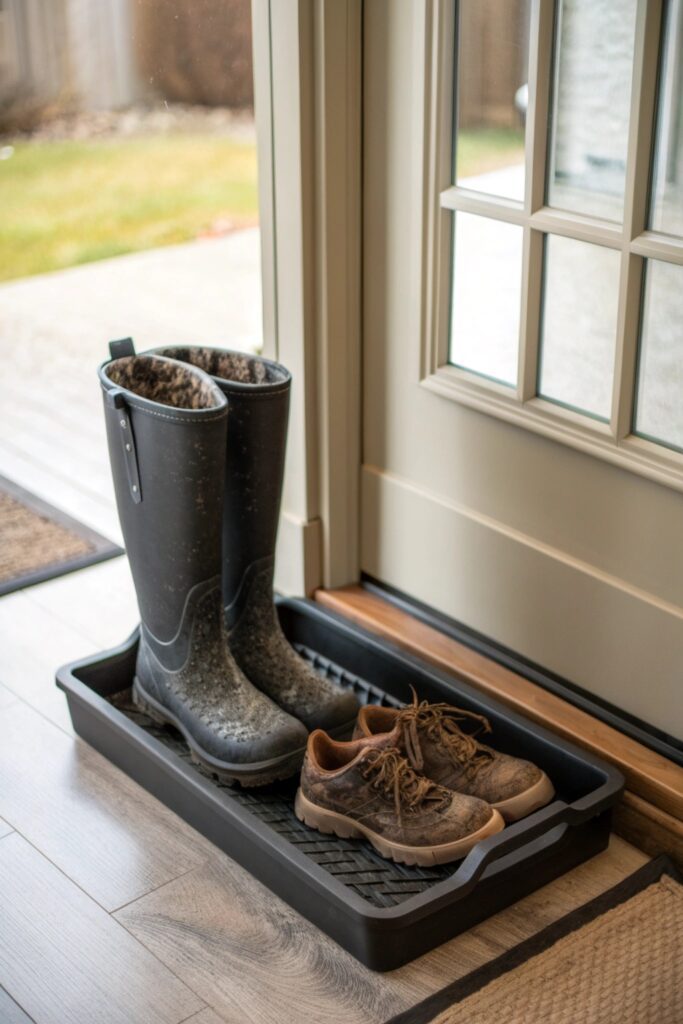
A boot tray ($15-30) catches mud, snow melt, and water from wet shoes, protecting the floor underneath and containing mess to one defined, easy-to-clean spot.
This is one of the lowest-cost additions on this list but has genuine daily functional value, particularly in climates with regular wet or snowy weather.
9. Hang a Chalkboard or Whiteboard Command Center
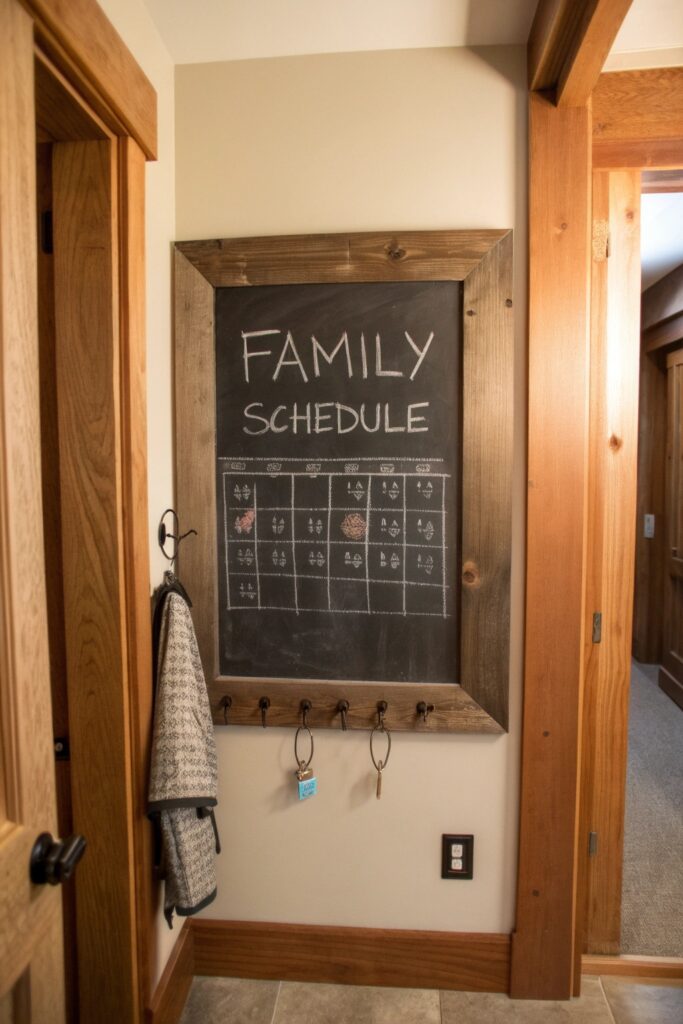
A chalkboard or whiteboard ($20-50) mounted near the entry gives the family a shared spot for reminders, schedules, and notes, which genuinely helps daily household coordination beyond pure storage.
This works especially well combined with a small shelf or hooks nearby for chalk, markers, and other small supplies to keep everything needed in one spot.
10. Use Vertical Space With a Tall Narrow Cabinet
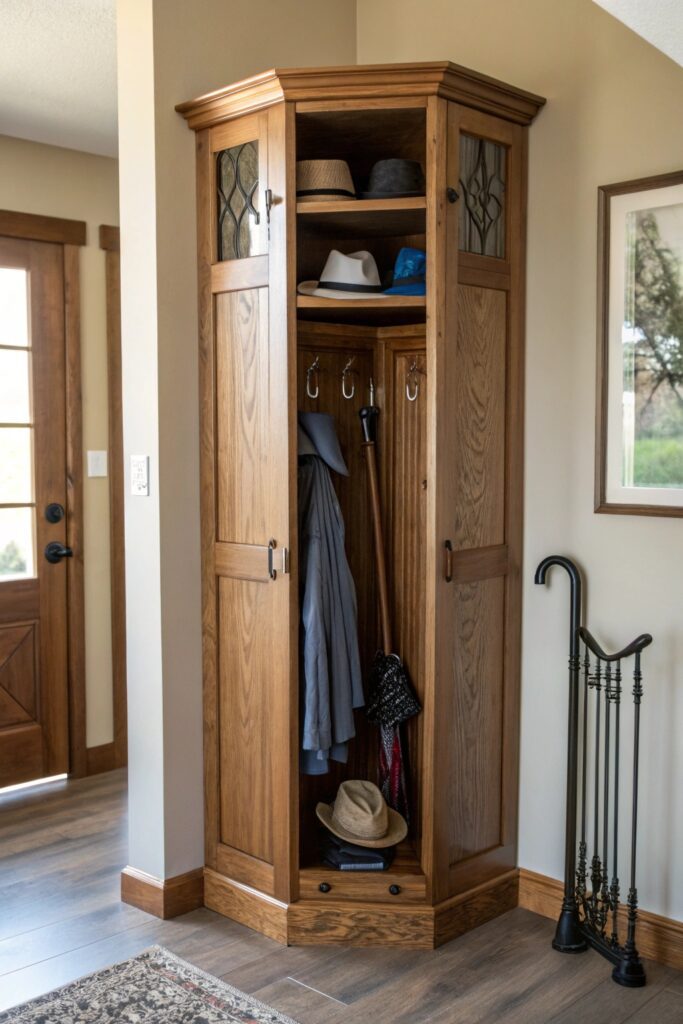
A tall, narrow cabinet ($100-300) uses height rather than floor footprint to provide genuine storage capacity, which matters considerably in a small entryway where floor space is often the tightest constraint.
Choose a cabinet with a shallow depth (10-14 inches) specifically, which preserves walking clearance while still delivering meaningful vertical storage for shoes, bags, or seasonal gear.
Starting Small vs. Doing It All at Once
If budget or time is limited, hooks and a boot tray together cost under $80 and can be installed in an afternoon, making them the most practical starting point for anyone wanting to see an immediate improvement before committing to a larger project.
A full mudroom conversion — closet repurposing, built-in bench, cabinet storage — is worth planning as a phased project rather than attempting all at once, both for budget reasons and because living with a partial setup for a few weeks often reveals which specific storage types your household actually needs most before finalizing the remaining pieces.
Choosing Materials That Hold Up to Daily Use
An entryway sees more consistent wear from wet shoes, dropped bags, and general daily traffic than almost any other spot in a home, which makes material durability worth prioritizing over pure aesthetics when choosing benches, hooks, and storage pieces for this specific space.
Metal hooks and hardware hold up better than plastic in a mudroom specifically, and a bench or cabinet in a sealed or moisture-resistant finish will show considerably less wear over time than an unsealed wood surface exposed to regular water and mud contact.
Wrapping It Up
Hooks and a boot tray matter most if you’re prioritizing only a couple of these changes, since both are low-cost and address the most common daily entry clutter — coats, bags, and wet shoes. A storage bench or tall cabinet is worth adding next, since vertical and seated storage together cover most of what a busy household actually needs from an entry space.