
A long front porch has more visual real estate to fill than a standard-sized one, which means the same decorating approach that works for a compact porch can leave a longer space feeling sparse or disconnected if applied without adjustment for scale.
Below are 12 ways to make a long porch feel intentional and cohesive rather than simply stretched out, with real costs and practical notes for each.
Looking for architectural details and vertical elements specifically? See our companion guide to long front porch decorating ideas that look straight out of a magazine.
1. Break Up the Space Into Zones
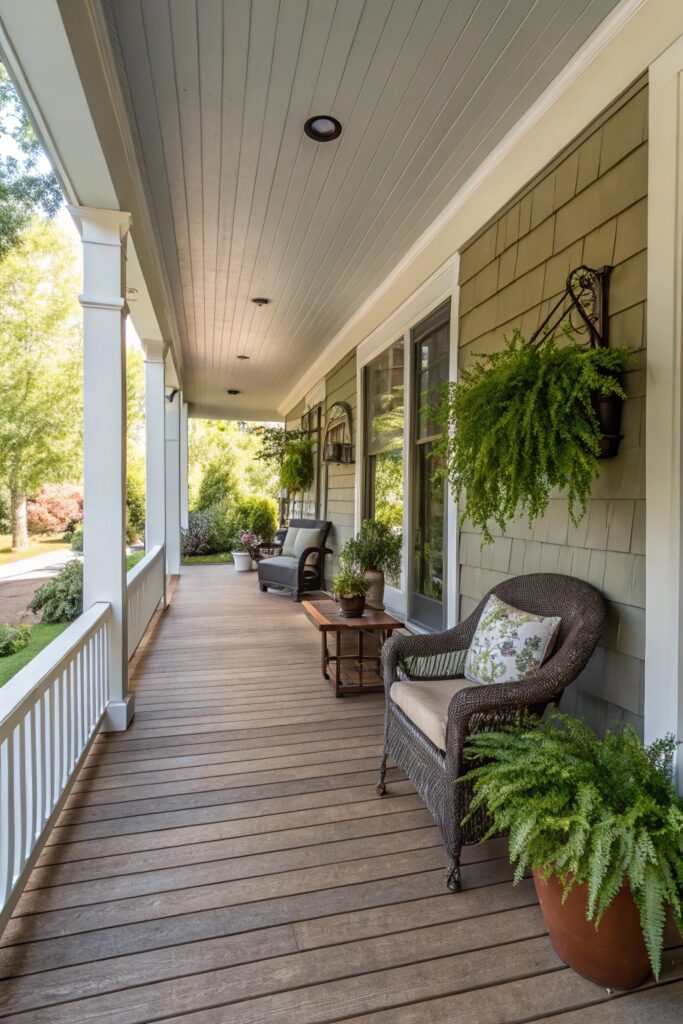
A long porch benefits from being treated as multiple distinct areas — a seating zone, a plant display zone, an entry zone — rather than one continuous stretch of furniture, which prevents the space from reading as an undifferentiated hallway.
Use rugs, furniture groupings, or even a change in plant style to visually signal where one zone ends and the next begins, similar to how zones are defined in a large open-concept interior room.
2. Add a Pair of Oversized Planters at the Entry
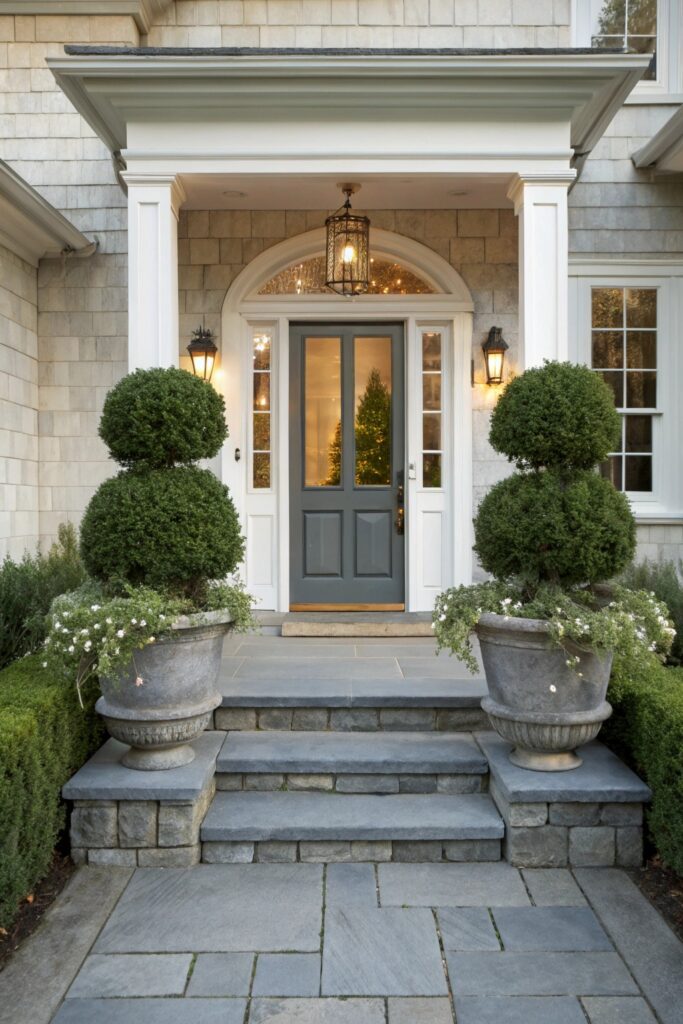
Large-scale planters ($40-100 each) flanking the front door create an immediate sense of arrival and scale that smaller pots can’t achieve on a long porch, where undersized decor tends to get visually lost across the extended space.
Choose planters with real visual weight and a cohesive material (matching pairs in stone, concrete, or matte ceramic) rather than mismatched pots, which reads more considered on a porch this size specifically.
3. Hang a Statement Light Fixture
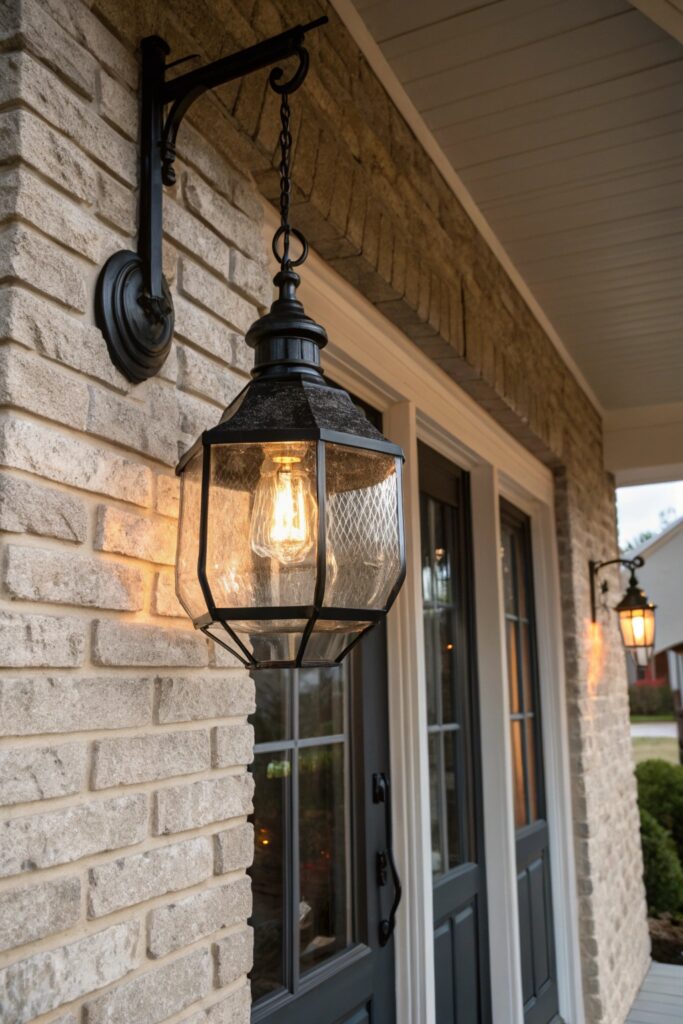
A larger pendant or lantern-style fixture at the porch’s main entry point ($60-150) anchors the space visually and provides genuine functional lighting for a porch long enough that a single small fixture wouldn’t adequately illuminate its full length.
Consider adding a second, smaller fixture at the opposite end of a genuinely long porch, which helps balance the lighting and visual weight across the entire space rather than concentrating everything near the door.
4. Create a Seating Nook Midway Down the Porch
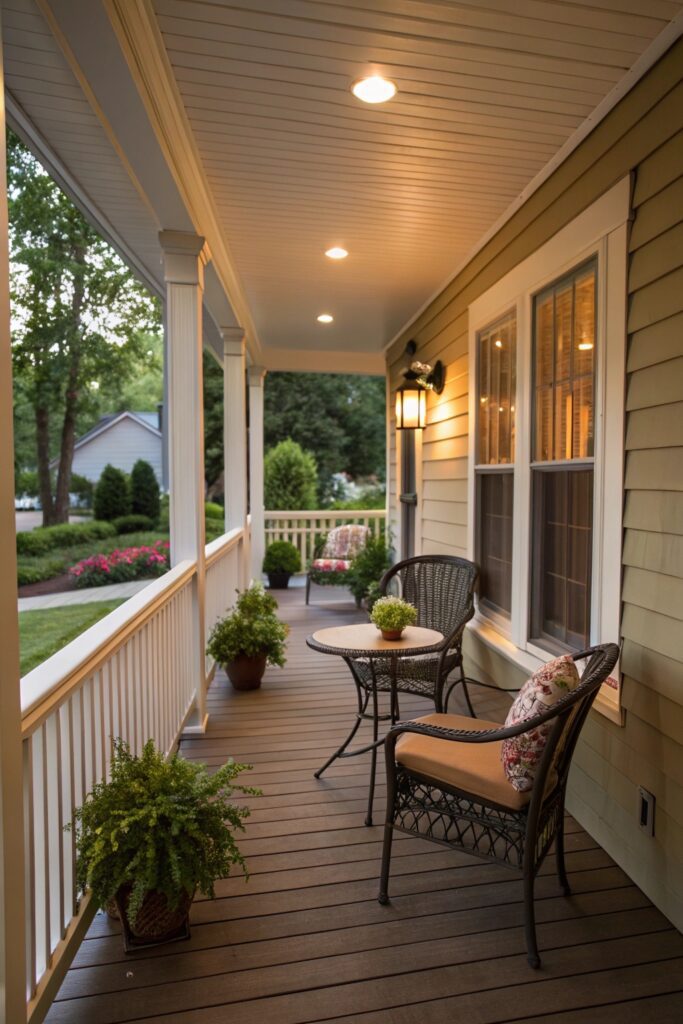
Placing a small seating cluster partway down the porch, distinct from the main entry seating, gives the space a secondary destination and breaks up what would otherwise be an unused stretch of empty floor.
This works especially well positioned near a particularly good view or a more private section of the porch, giving the secondary seating area its own reason to exist beyond simply filling space.
5. Layer in Outdoor Rugs
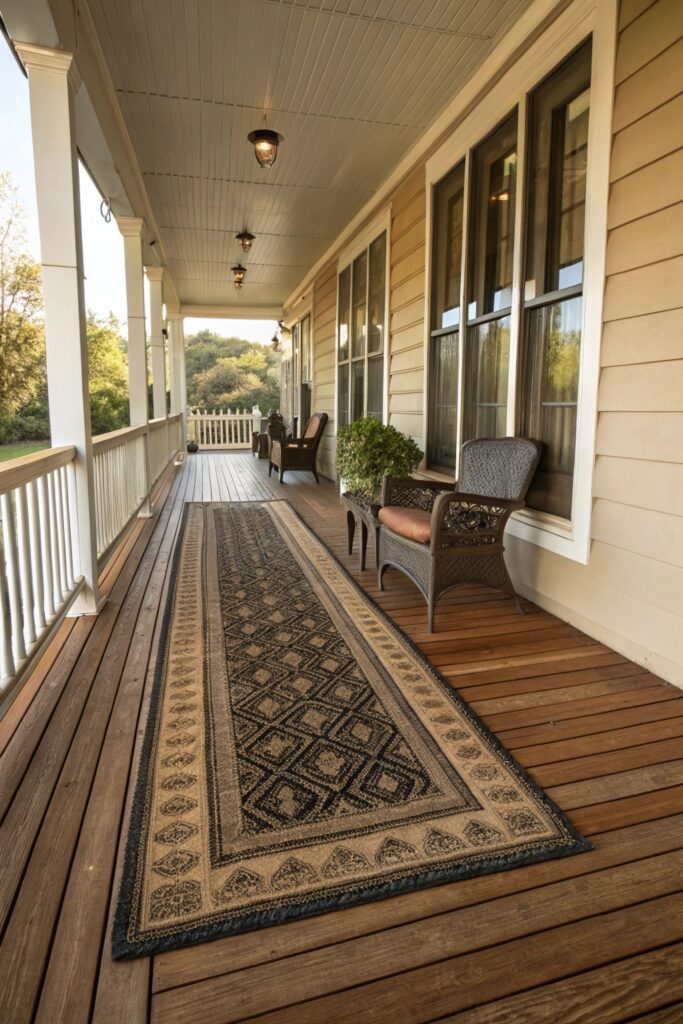
Multiple outdoor rugs placed under each furniture grouping (rather than one rug spanning the entire porch) reinforces the zone-based approach, defining each seating or display area with its own visual boundary.
Polypropylene outdoor rugs ($30-60 depending on size) hold up to weather exposure considerably better than natural fiber rugs, which matter more on an uncovered or partially covered long porch than they would in a fully enclosed space.
6. Paint Your Front Door a Bold Color
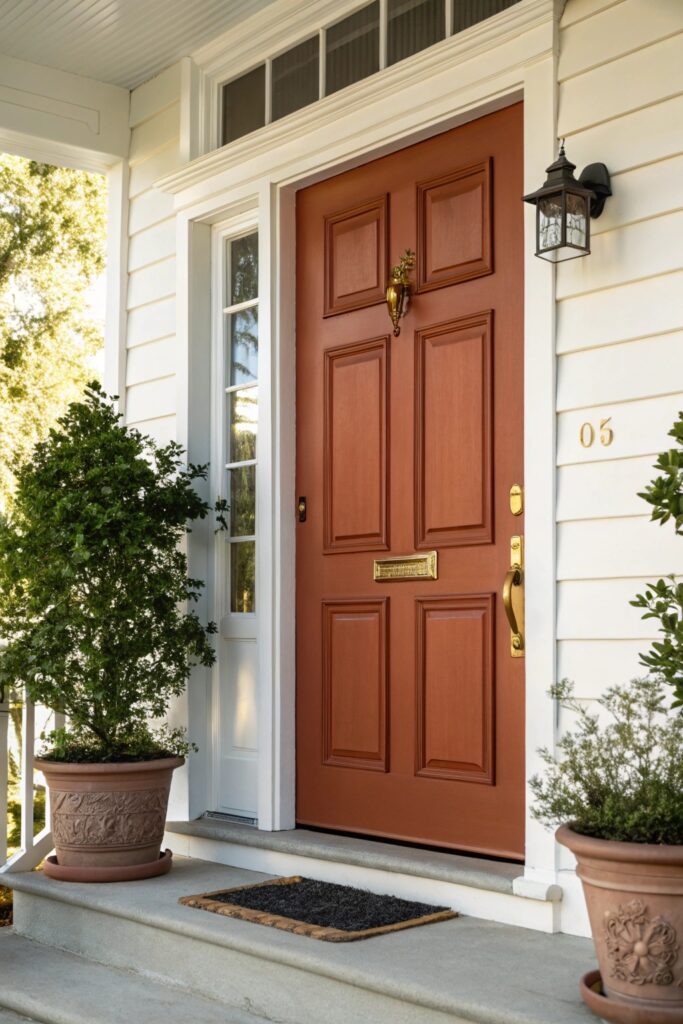
A saturated door color creates a clear visual anchor at the porch’s main entry point, which matters even more on a long porch where the door might otherwise get visually lost among an extended stretch of furniture and decor.
This is one of the highest-impact, lowest-cost changes on this list — a quart of exterior door paint ($15-25) is enough to completely transform the porch’s focal point.
7. Install Curtains or Outdoor Drapes
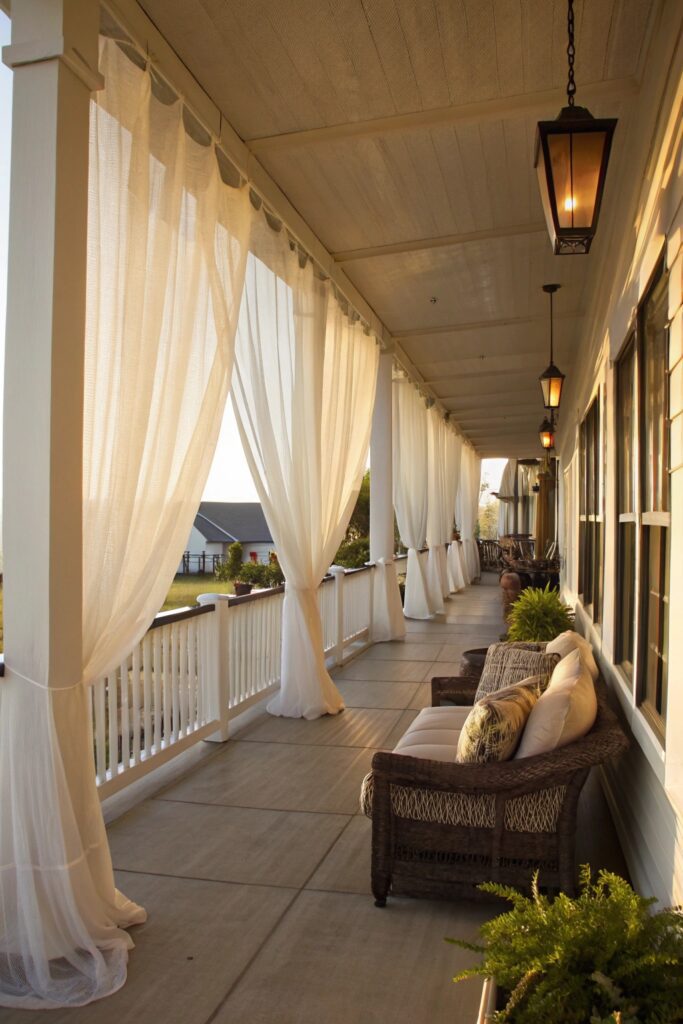
Outdoor-rated curtain panels ($30-50 per panel) hung at intervals along a covered porch add softness and can be used to visually section off different zones, while also providing adjustable shade and privacy where needed.
Choose fabric specifically rated for outdoor use (fade and mildew resistant) rather than repurposing indoor curtains, which will deteriorate considerably faster when exposed to outdoor humidity and sun.
8. Add String Lights or Lanterns for Ambiance
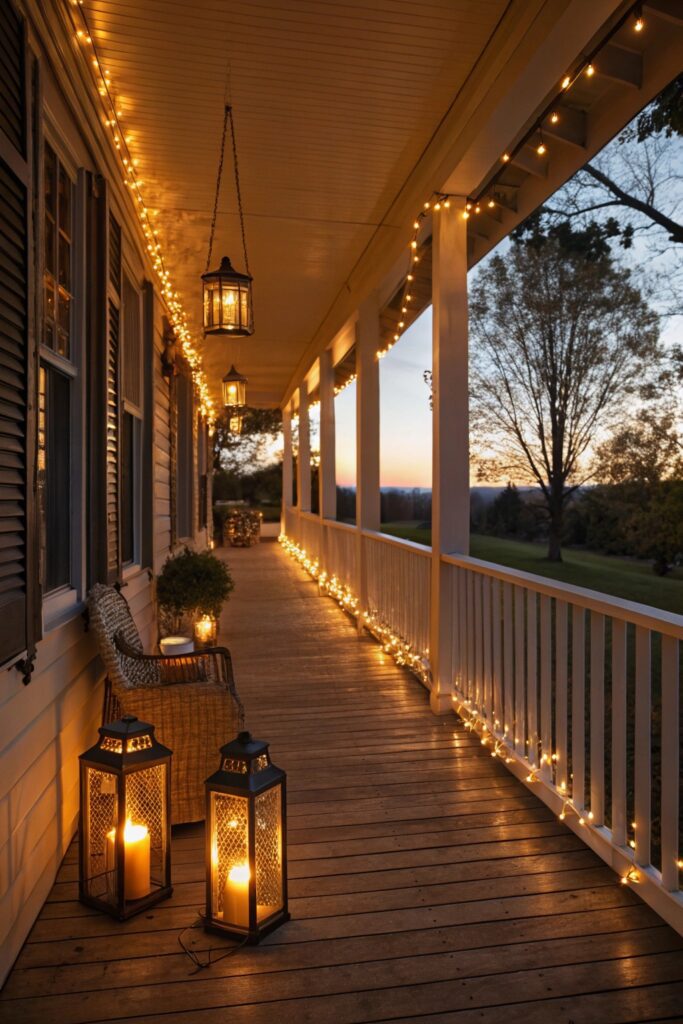
Warm string lights strung along the full length of a long porch extend its usable hours into the evening and help visually tie the extended space together as one cohesive area after dark, when zone boundaries matter less than overall ambiance.
Solar-powered string lights avoid the need for running an extension cord the full porch length, though they depend on adequate daily sun exposure to stay charged for consistent evening use.
9. Mix Furniture Textures and Materials
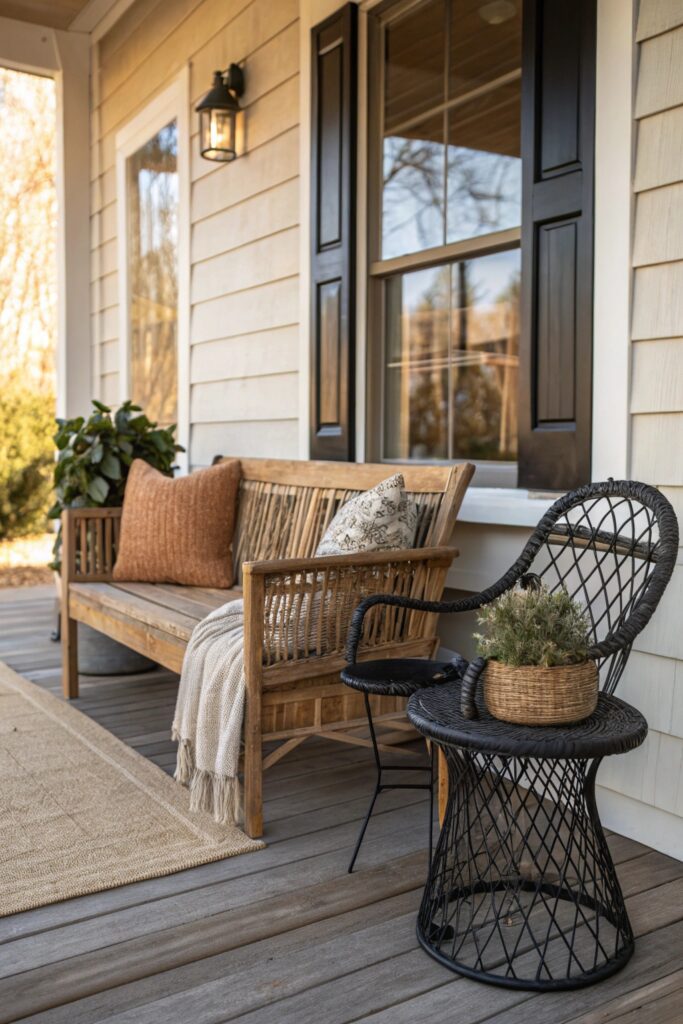
Combining wicker, wood, and metal furniture pieces across a long porch’s different zones adds visual variety that prevents the extended space from feeling monotonous, which is a genuine risk when the same furniture style repeats across a large area.
Keep a consistent color palette even while mixing materials, which maintains cohesion despite the textural variety — this is the same principle that makes eclectic interior gallery walls read as curated rather than random.
10. Use Vertical Elements to Draw the Eye Up
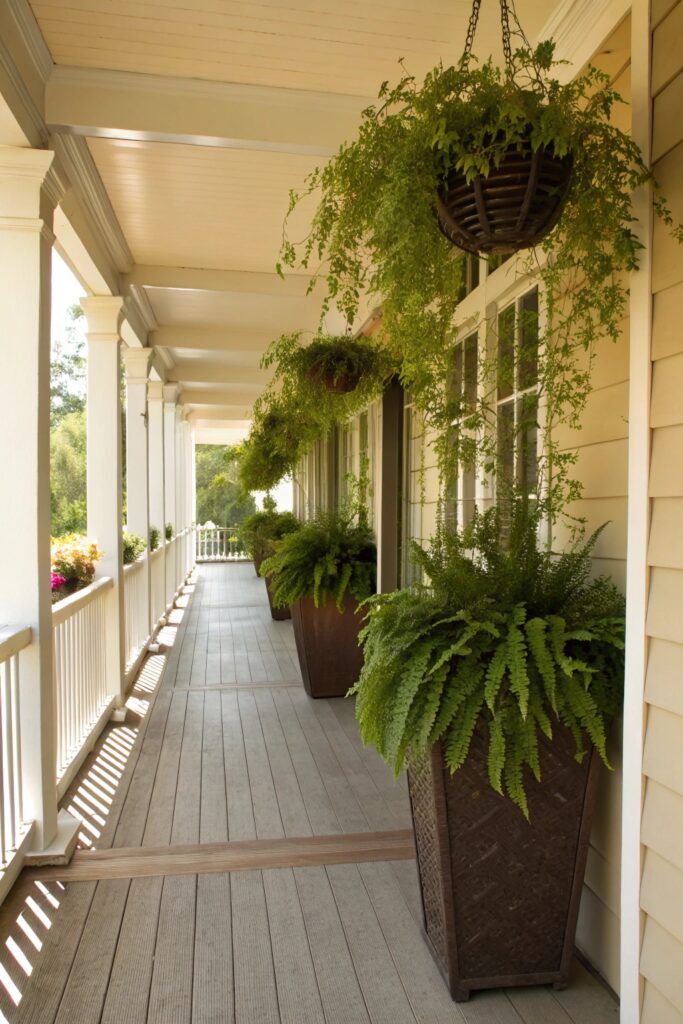
Hanging plants, tall potted trees, or vertical trellis elements add height variation that breaks up a long porch’s otherwise horizontal, one-dimensional sightline, which is a common visual flaw in extended porch spaces.
This is particularly effective at the porch’s midpoint or at zone transitions, where a vertical element can double as a subtle visual marker separating one section from the next.
11. Define the Entry With a Bold Doormat
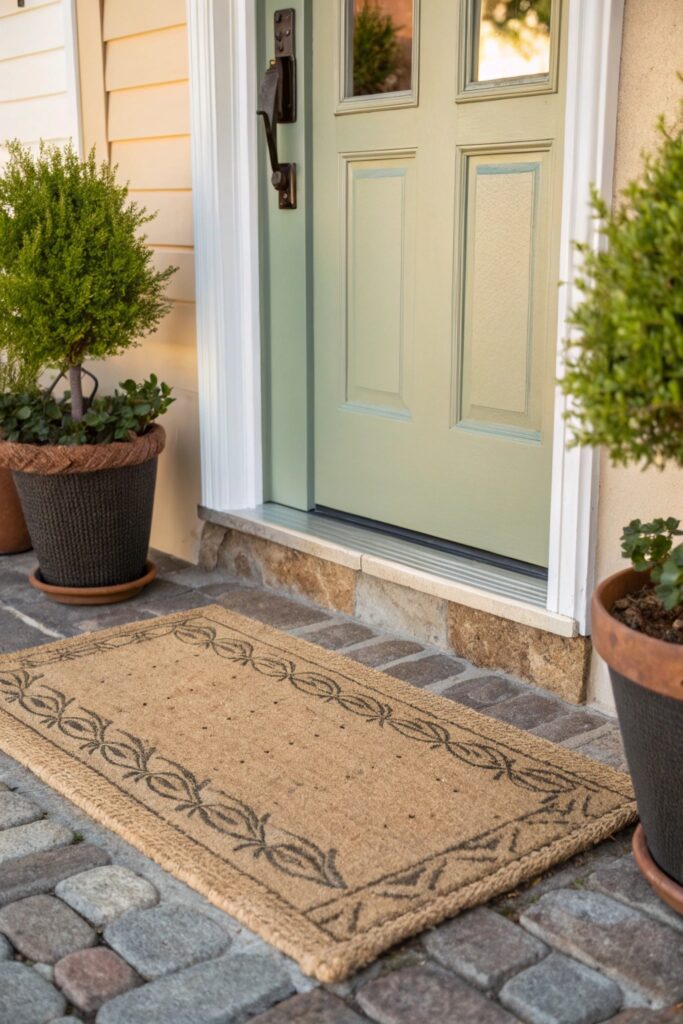
A larger, more graphic doormat ($20-40) at the main entry point reinforces where the porch’s primary arrival zone sits, which matters on a long porch where the actual front door might not be immediately obvious from a distance.
Choose a doormat sized proportionally to the porch’s scale — an undersized mat can look lost on a genuinely long, large-scale porch in the same way small planters or light fixtures do.
12. Keep It Cohesive With a Color Palette
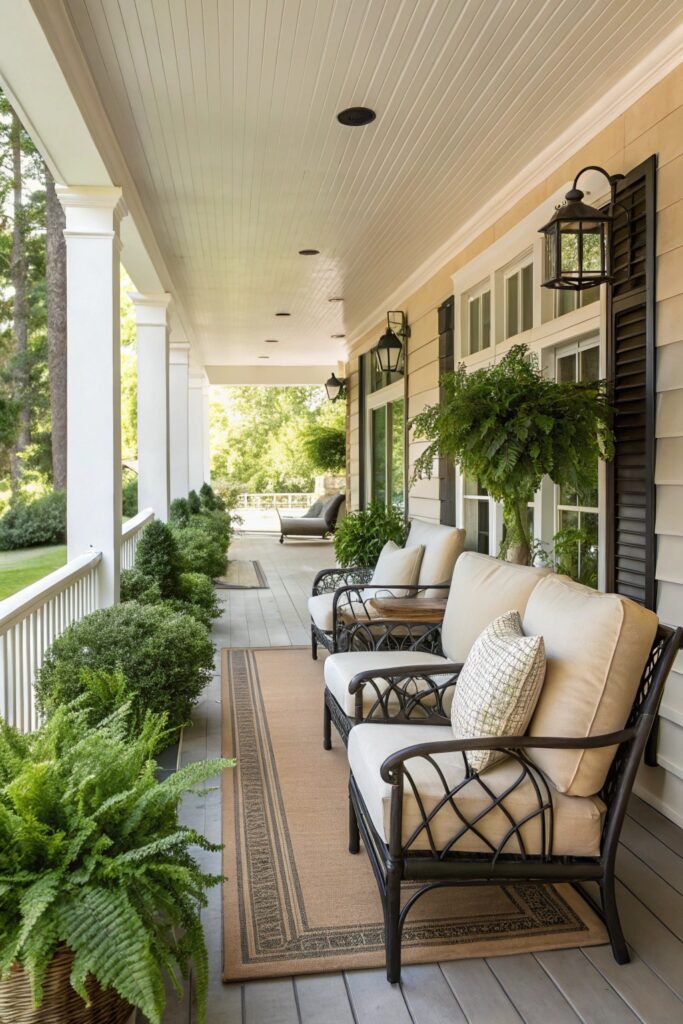
Limiting the entire porch — across all its zones — to 2-3 coordinated colors prevents an extended space with multiple furniture groupings from reading as visually chaotic, even when each individual zone has its own distinct furniture and decor.
This is the single most important unifying principle for a long porch specifically, since the sheer length makes inconsistent color choices more visually jarring than they would be in a smaller, single-glance space.
Wrapping It Up
Breaking the porch into distinct zones and maintaining a consistent color palette across all of them matter most for a long porch specifically, since these two principles directly address the scale challenge that shorter porches don’t face. Layer in lighting and vertical elements once the zone structure and color palette are established to complete the space.